×

Angola🇦🇴 | citiesChinguarRailway tracks, EN250 viewpoints, central market, highland lunch | things to do and best time to go

Explore ChitatoExplore Quela

Backpacking in Chinguar
👀 For curious travelerscity ranked #28
By Johan Kruseman 🇳🇱 | Updated October 16, 2026

Chinguar gives you a real highland Angola stop with no tour buses and no markup, and the red-dust air smells of woodsmoke and cassava frying. It sits in Bié Province, on the road and railway line running from Huambo toward Kuito. Expect a small town, corrugated roofs, motorbike taxis and few formal services. It suits patient, Portuguese-friendly travelers, not sightseers. Huambo has the hotels and cafés; Chinguar has the quiet.

Discover everything you want to know in the 📖 Angola Travel Guide.


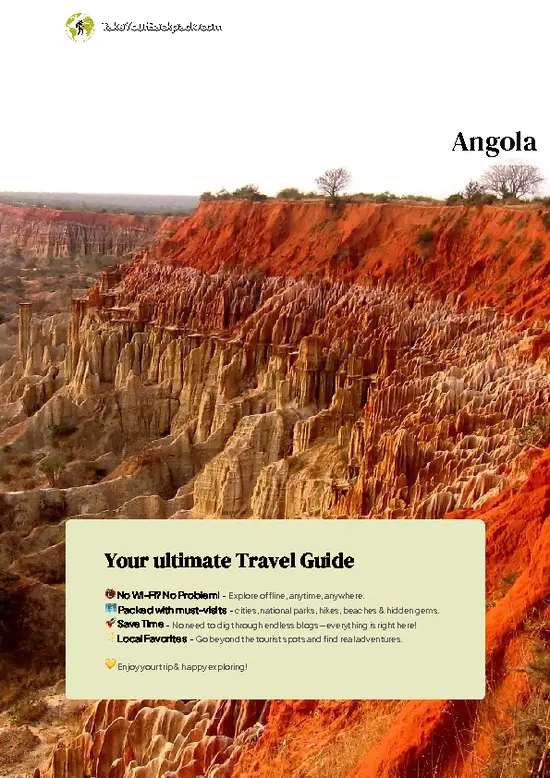
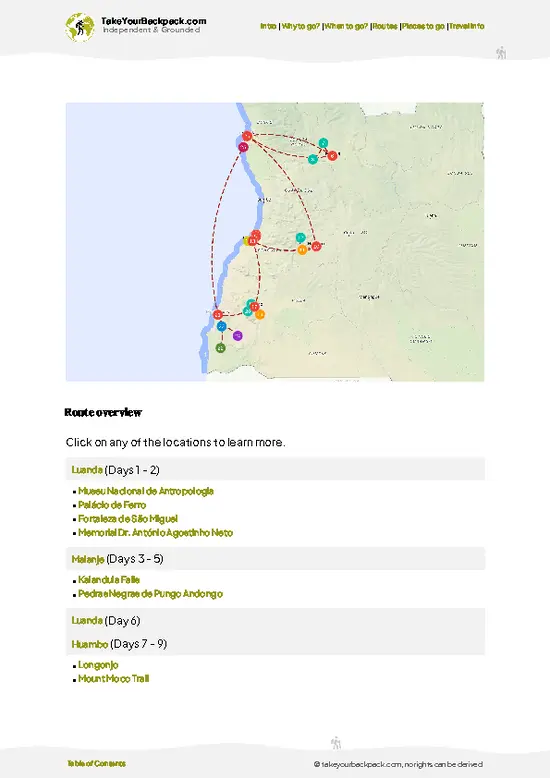
example page 0 from our offline Travel Guide for Angola
example page 1 from our offline Travel Guide for Angola
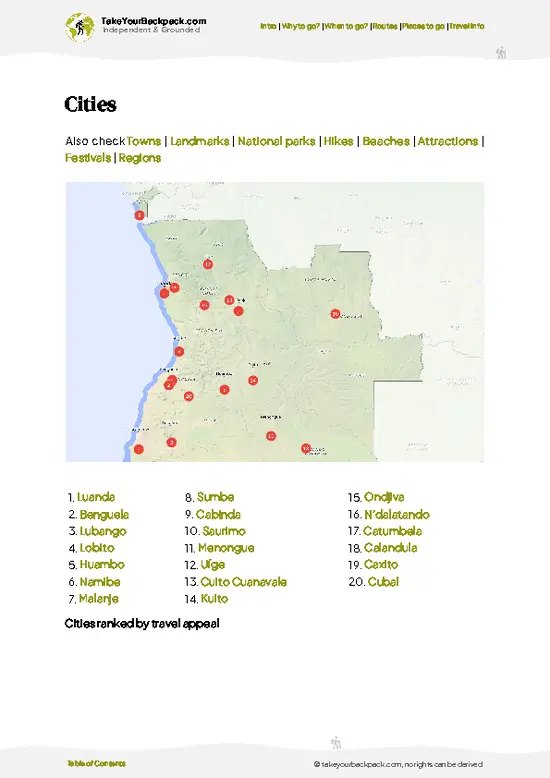
example page 2 from our offline Travel Guide for Angola
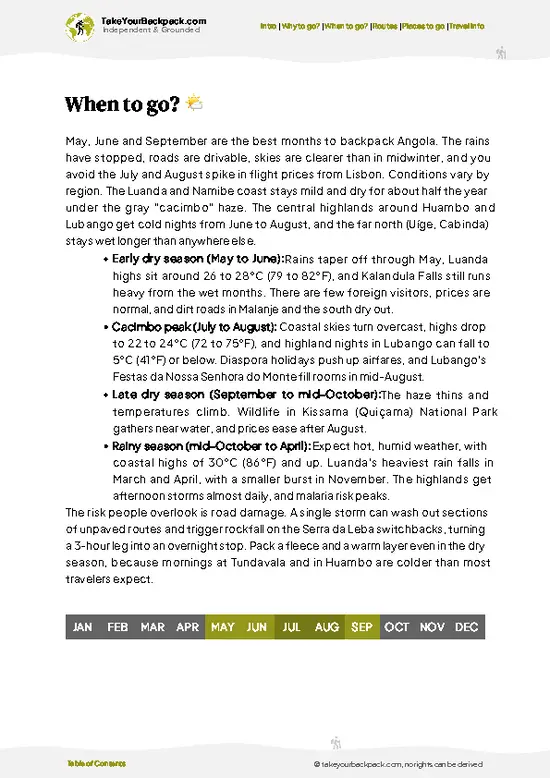
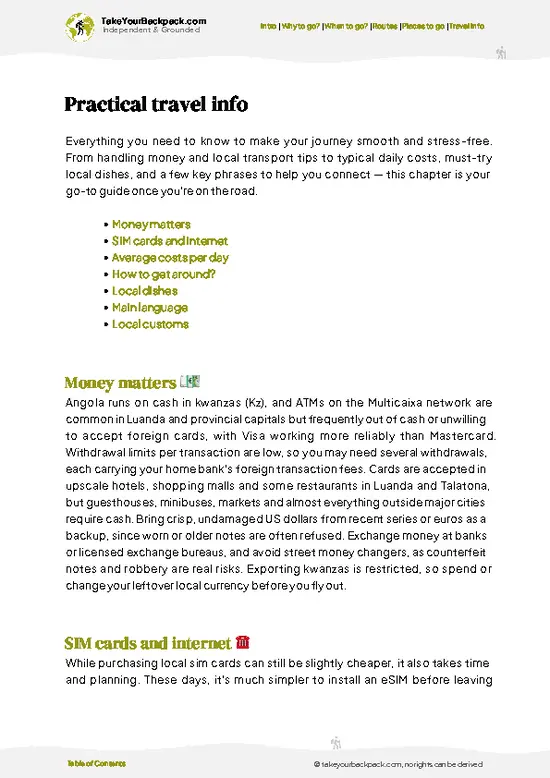
example page 3 from our offline Travel Guide for Angola
example page 4 from our offline Travel Guide for Angola
example page 5 from our offline Travel Guide for Angola
example page 6 from our offline Travel Guide for Angola
example page 7 from our offline Travel Guide for Angola
Loading the map 🌍
CLICK TO FILTER
cities
towns
landmarks
national parks
hikes
beaches
attractions
festivals
regions
SHOW COUNTRY’S BESTSHOW ALL

✨ Why go?
Ranked #28 city in Angola
Reasons people choose to visit here

Backpackers come to Chinguar as a highland breather between Huambo and Kuito, not as a destination in itself. The town gives you a look at everyday central Angola, with a daily market and a working Benguela Railway corridor, minus the polish of the bigger cities. Lodging and food options are limited, so it works best as a half-day or overnight stop. Bring cash in kwanza and basic Portuguese, and you will get more out of it than the numbers suggest.

💡 HighlightsPlaces and moments you shouldn't skip

  1. Central market: The best place to see the town working, with cassava flour, dried fish, tomatoes, secondhand clothes and phone-charging stalls. Go in the morning, when stock is freshest. Entry is free, snacks cost Kz 500 to 2,000 (about US$0.50 to 2), and an hour is plenty.
  2. Railway station and tracks: Chinguar grew along the Benguela Railway, and the platform and line still show how the corridor shaped the town. Early morning light is best for photos, and you should ask before pointing a camera at official buildings. Free, 30 to 45 minutes.
  3. Highland road viewpoints along the EN250: Pull over on the drive in to see rolling red-earth farmland, eucalyptus stands and cloud shadows. The dry season, May to September, gives the clearest air. Free, 20 to 40 minutes of stops.
  4. Town walk and local lunch:
… read more 👉
  1. Central market: The best place to see the town working, with cassava flour, dried fish, tomatoes, secondhand clothes and phone-charging stalls. Go in the morning, when stock is freshest. Entry is free, snacks cost Kz 500 to 2,000 (about US$0.50 to 2), and an hour is plenty.
  2. Railway station and tracks: Chinguar grew along the Benguela Railway, and the platform and line still show how the corridor shaped the town. Early morning light is best for photos, and you should ask before pointing a camera at official buildings. Free, 30 to 45 minutes.
  3. Highland road viewpoints along the EN250: Pull over on the drive in to see rolling red-earth farmland, eucalyptus stands and cloud shadows. The dry season, May to September, gives the clearest air. Free, 20 to 40 minutes of stops.
  4. Town walk and local lunch: A slow loop through the streets lets you eat grilled chicken or funge with stew at a simple restaurant for roughly Kz 3,000 to 6,000 (US$3 to 6). Late morning to early afternoon works best, and it takes 1 to 2 hours.
For day trips, Huambo city with its colonial-era architecture and the Kuito highlands are the closest worthwhile targets. If time is short, skip the roadside viewpoint stops and spend the hour at the market.
Spotted a mistake or missing something? Contact us.

🏘️ NeighborhoodsHow different areas shape the experience

Chinguar is a small highland town in Bié Province, so you cover it on foot in an afternoon, and the contrast between areas is mostly dust, red earth and noise level.
  • Town center around the EN-250 road: Red dust, diesel fumes and the shouts of minibus touts. Small shops sell phone credit, bread and cooking oil. Grilled chicken smoke drifts across the strip at dusk. Flat, walkable, and the best place to find food and a bank machine if it works.
  • Market area: Sacks of cassava flour, piles of tomatoes, secondhand clothes and the smell of dried fish. Mornings are best, before the heat flattens everything. Worth your time and costs nothing.
  • Outer residential bairros: Mud-brick houses, maize patches, roosters, quiet nights. Paths turn to sticky clay in the rains. Pleasant for a slow stroll, but little to see.

⌛️ 1 daySeeing the highlights in 24 hours

Chinguar is a small highland town in Bié Province, sitting on the road between Huambo and Kuito, with red earth, eucalyptus groves and a market that runs on local rhythm.
7:30 AM: Main Market
Start where the town wakes first. Vendors stack cassava, beans, tomatoes and charcoal, and women sell warm fried dough from enamel basins. Buy breakfast here, then walk five minutes along the main road toward the center.
9:30 AM: Colonial Streets and Railway Area
Wander the old Portuguese-era avenues and the Benguela Railway line that shaped the town. Faded facades and weathered station buildings make good photos in soft morning light. Ask before photographing officials or stations.
12:30 PM: Lunch at a Local Eatery
Order grilled chicken or funge with stew at a small restaurant near the road. Expect a slow … read more 👉
Chinguar is a small highland town in Bié Province, sitting on the road between Huambo and Kuito, with red earth, eucalyptus groves and a market that runs on local rhythm.
7:30 AM: Main Market
Start where the town wakes first. Vendors stack cassava, beans, tomatoes and charcoal, and women sell warm fried dough from enamel basins. Buy breakfast here, then walk five minutes along the main road toward the center.
9:30 AM: Colonial Streets and Railway Area
Wander the old Portuguese-era avenues and the Benguela Railway line that shaped the town. Faded facades and weathered station buildings make good photos in soft morning light. Ask before photographing officials or stations.
12:30 PM: Lunch at a Local Eatery
Order grilled chicken or funge with stew at a small restaurant near the road. Expect a slow kitchen, so use the wait to talk with locals.
3:00 PM: Village Fields Beyond the Town
Hire a moto-taxi for a short ride to the farmland edge, a spot few visitors see. Corn rows, clay-brick homes and wood smoke drift across the plateau. Return before dusk.
6:00 PM: Sunset on the Main Road
End with a cold drink at a roadside bar while trucks and minibuses rumble past under orange sky.

🌤️ When to go?Choosing the right time of year

  • Dry season (May to September): Best window. Days reach 24 to 27°C (75 to 81°F), nights drop to 6 to 10°C (43 to 50°F) at this altitude of about 1,700 m. Roads are firm and skies clear.
  • Rainy season (October to April): Daytime 22 to 26°C (72 to 79°F), heavy afternoon downpours, muddy tracks, slower travel.
  • Prices and crowds: Visitors are rare year-round, so prices barely shift.
Pack a warm layer for July nights.

source: climatestotravel.comJANJanuary: fair for travelingFEBFebruary: fair for travelingMARMarch: fair for travelingAPRApril: fair for travelingMAYMay: highly recommended for travelingJUNJune: highly recommended for travelingJULJuly: highly recommended for travelingAUGAugust: excellent for travelingSEPSeptember: excellent for travelingOCTOctober: fair for travelingNOVNovember: fair for travelingDECDecember: fair for traveling
when-to-go

✈️ The backpacker research shortcutAngola Travel Guide

An offline-friendly backpacking guide with optimized travel routes, ranked highlights, transport advice, and the best areas to stay.
example page 0 from our offline Travel Guide for Angola
example page 1 from our offline Travel Guide for Angola
example page 2 from our offline Travel Guide for Angola
example page 3 from our offline Travel Guide for Angola
example page 4 from our offline Travel Guide for Angola
example page 5 from our offline Travel Guide for Angola
example page 6 from our offline Travel Guide for Angola
example page 7 from our offline Travel Guide for Angola
The digital guide (246 pages) contains:
✅ 71 highlights, ranked by travel appeal
✅ Optimized 7, 14 & 21-day travel routes
✅ Cities, national parks, landmarks, beaches
✅ How to get around
✅ Offline-friendly for travel without Wi-Fi
👉 Click to see all 30+ guide features

📅 Plan smarter in minutes, not weeks
✅ Month by month travel advice
✅ Festivals & national holidays
✅ Budget expectations

🗺️ Go to the right places, skip the overrated ones
✅ Honest pros & cons of destinations
✅ Top hikes, parks & viewpoints
✅ Lesser-known places most travelers miss
✅ Clear “worth it vs skip it” guidance

🛏️ Travel smoothly without rookie mistakes
✅ Best areas to stay
✅ Transport systems explained simply
✅ Common scams & safety advice
✅ SIM cards, money & practical tips

🌍 Understand the country, not just visit it
✅ Culture & traditions
✅ 52 Essential phrases & customs
✅ Festivals worth planning around
✅ Traveler-friendly historical context
✅ Insights that make places more meaningful

📱 Built for real travel conditions
✅ Fully downloadable PDF
✅ Works completely offline
✅ Optimized for phone use
✅ Useful in remote areas & buses
✅ Everything in one place
Stop searching, start planning
Get instant access to your full guide. 30‑day money-back guarantee.
+ Add another guide for just

By proceeding you agree to our terms.
Sent to your inbox immediately after payment • 100% Secure Checkout
Best Backpacking Travel Advisor 2025 tourism awardBest Backpacking
Travel Advisor
2025
What others say about Take Your Backpack Guides:
⭐⭐⭐⭐⭐
Fantastic, amazing amount of information!
⭐⭐⭐⭐⭐
My goodness this is amazing, it's what I've been looking for hats off too you!
⭐⭐⭐⭐⭐
I think this is absolutely BRILLIANT
⭐⭐⭐⭐
Very complete and informative. It's still missing places, but I gotta to commend you
⭐⭐⭐⭐⭐
This is truly amazing, thank you, can't wait to explore it with my kids!
⭐⭐⭐⭐⭐
Awesome resource, thank you!
⭐⭐⭐⭐⭐
This is amazing! Can't wait to explore the ones I haven't seen
⭐⭐⭐⭐
I love this! Well done, great idea.
⭐⭐⭐⭐⭐
Thanks for taking the time to make this gem!
⭐⭐⭐⭐⭐
This might be the best website I've ever seen.
⭐⭐⭐⭐⭐
Congratulations, and thank you so much for your work; it's incredibly valuable.
⭐⭐⭐⭐
In all seriousness I think you did a great job pointing out the important spots
⭐⭐⭐⭐⭐
10/10 very good
⭐⭐⭐⭐⭐
As someone who's only just starting to visit regularly this is awesome, thank you.
⭐⭐⭐⭐
Thank you very much! I'm going to visit my dad, it's going to be very useful!
⭐⭐⭐⭐⭐
This is really cool! We'll be travelling for the first time and this definitely come in handy.
⭐⭐⭐⭐⭐
You are now our minister of culture, congratulations 👨‍💼
⭐⭐⭐⭐⭐
Just wanted to tell you that this is a pearl! Going to follow your recommendations.
⭐⭐⭐⭐⭐
This is so cool. I'll definitely be using the resource for my travels soon.
⭐⭐⭐⭐⭐
This is very impressive! Good work.
⭐⭐⭐⭐⭐
This is an amazing and informative site. Very well done!

🛏️ Where to stay?How to pick the right area

The town center along the main road is the best place to sleep in Chinguar, because the few guesthouses and basic rooms cluster there, along with shops, food and the minibus stops. Expect simple private rooms rather than dorms, around US$15 to 35 a night, and book ahead or ask locally since options are very limited. Noise from the road and generators starts early, so bring earplugs. It is quiet after dark and feels safe for short evening walks. If rooms are full, Huambo city, a bus ride away, has far more budget beds and better transport links.

🚌 Getting aroundGetting around like a local

A shared taxi or minibus ride around Chinguar town costs roughly Kz 200 to 500 (under US$1), paid in cash to the fare collector once you are seated. The town is small enough that you will mostly walk, and public transport is informal rather than scheduled.
  • Walking: Free and the best value, since everything sits within about 2 km. Expect red dust in the dry months and ankle-deep clay after rain.
  • Motorbike taxis (kupapatas): Roughly Kz 300 to 1,000 for a short hop, faster than waiting for a minibus but open to sun, dust and little protection. Agree the fare first.
  • Shared minibuses (candongueiros): Cramped, loud with music and the cheapest way to reach Huambo or Kuito, typically US$3 to 6 for 1.5 to 3 hours depending on road condition. They leave when full, mostly from early morning until mid-afternoon,
… read more 👉
A shared taxi or minibus ride around Chinguar town costs roughly Kz 200 to 500 (under US$1), paid in cash to the fare collector once you are seated. The town is small enough that you will mostly walk, and public transport is informal rather than scheduled.
  • Walking: Free and the best value, since everything sits within about 2 km. Expect red dust in the dry months and ankle-deep clay after rain.
  • Motorbike taxis (kupapatas): Roughly Kz 300 to 1,000 for a short hop, faster than waiting for a minibus but open to sun, dust and little protection. Agree the fare first.
  • Shared minibuses (candongueiros): Cramped, loud with music and the cheapest way to reach Huambo or Kuito, typically US$3 to 6 for 1.5 to 3 hours depending on road condition. They leave when full, mostly from early morning until mid-afternoon, so go early. Best value for intercity trips.
  • Private car with driver: Around US$40 to 80 a day if you can arrange one. Comfortable and flexible, but pricey, so it only makes sense split among several people.

👛 Costs (as of 16 October 2026)What things cost and how to budget

Chinguar is cheap by Angolan standards as long as you eat local food; choice is thin and anything imported costs more.
CategoryBudget RangeLocal Reality
Dorm accommodation (high season / off-season)USD 15 to 35 / USD 12 to 30Private basic rooms only, no true dorms
MealsUSD 5 to 12Street grills and market food
Local transportUSD 1 to 4Kupapatas and minibuses
City transport passNot availablePay per ride in cash
Basic activities/entry feesUSD 0 to 5Mostly free walking and markets
MiscellaneousUSD 3 to 8Water, phone data, snacks
Total Daily BudgetUSD 25 to 60Rises with private transport
Buy food at the market and carry small kwanza notes, since change is scarce.
⚠️ Prices can change and everyone travels differently, so take this as a rough guide. Hope it helps you plan your adventure!

🚌 Day tripsEasy escapes and nearby places

Chinguar works as a base only for self-sufficient travelers, since transport is informal and sights are scattered, but the highland scenery rewards the effort.
Huambo: Angola’s second city lies roughly 60 to 90 km west, 1.5 to 2.5 hours by minibus for US$3 to 6. Colonial-era architecture, markets and better food make it the easiest outing. Leave early to get a return seat before afternoon.
👉 Explore Huambo
Kuito: The provincial capital of Bié sits east along the same highway, about 2 to 3 hours and US$4 to 8 each way. Go in the dry season, May to September, when the road is firmest. A common mistake is leaving too late and missing the last minibus back.
👉 Explore Kuito

🍲 FoodWhat to Eat & Drink

Expect hearty highland staples. Funge, a stiff cassava or maize porridge, comes with muamba de galinha, chicken stewed in palm oil and garlic, or with grilled peixe seco. Roadside stalls sell charcoal-grilled chicken, fried cassava and sweet bolinhos for a couple of dollars. The market is the place for fruit, peanuts and fresh bread. Cold Cuca beer is the default drink, sipped in small open-air bars with loud semba music. Eat with your right hand when funge is served, and expect slow service.

🛡️ SafetySafety Tips and Common Scams in Chinguar

Chinguar is calm and low-key, and most problems are petty. Keep phones out of sight in the market and carry small cash only. After dark, streets are unlit, so use a headlamp and avoid wandering outskirts alone. Police occasionally ask to see ID, so carry a passport copy and stay polite. Old landmines remain in rural Angola, so stay on well-used paths and never walk through unmarked bush.

FAQFrequently asked questions about Chinguar

One day is enough for Chinguar, and many travelers treat it as a few hours on the way between Huambo and Kuito. The market, the railway station and a slow lunch fill a morning and early afternoon. Stay overnight only if you want to see early-morning market life, and expect basic lodging.
Chinguar is generally calm for solo backpackers, but it is a small town with limited services, so plan carefully. Carry kwanza cash in small notes, avoid walking alone after dark, and ask before photographing police or railway buildings. Basic Portuguese helps a lot, and the nearest larger medical facilities are in Huambo.
Chinguar is known as a highland town on the Benguela Railway corridor in Bié Province. It sits on the central plateau, in Ovimbundu farming country, between Huambo and Kuito. Visitors know it mainly for its market, its railway links and the red-earth farmland along the EN250 road.
⚠️ Things can change over time, so always validate details locally before you go.

Other Angolan cities near Chinguar

Explore more nearby:

  • Bailundo—Ombala royal court, Ekwikwi II monument, ridge viewpoints, mission church| 68 km away
  • Kuito—Landmine memorials, Halo Trust story, Cuíto riverbanks, mission churches| 68 km away
  • Huambo—Cathedral, Benguela railway station, Cidade Alta, provincial museum| 68 km away

💡 Not sure where to go next?
Create a personalized itinerary for Angola including Chinguar and the places that fit your trip.

Generate my itinerary

👉 Discover all cities

Or checkout all Angola has to offer (think cities, towns, villages, national parks, hikes, beaches, festivals)
Country photo of Angola

We 💚 feedbackSumming up the experience

Chinguar will suit slow travelers who enjoy talking to strangers and don’t mind simple food. Arrive with kwanza in small notes, because card machines are rare. The surprise is how welcoming a market conversation can be. Don’t plan more than a day.

✍️ Help improve this page!
The information on this page is based on in-depth research, insights shared by experienced travelers, and feedback from the local travel community in Angola. While every effort is made to keep the information accurate and current, conditions can change — so if you spot anything incorrect or outdated, please get in touch.


🙋‍♂️ Give feedback

👋 Meet the founderWho’s Behind Take Your Backpack?

Johan, backpacker and founder of TakeYourBackpackHi, I’m Johan (Netherlands 🇳🇱), the creator of TakeYourBackpack. Over the past 3 decades, I’ve backpacked through 90+ countries across six continents, gaining extensive experience with independent travel, long-term trips, and overland routes.

This site is built on a combination of firsthand travel experience and carefully curated insights from other backpackers. Many guides are based on places I’ve personally visited, while others bring together tips, observations, and practical advice shared by trusted travelers I’ve met along the way.

The goal is to provide realistic, experience-driven guidance — not generic itineraries — so you can explore destinations with better context, clearer expectations, and more confidence.