×

Angola🇦🇴 | citiesHuambocentral plateau, academic institutions, urban parks | things to do and best time to go

Explore BenguelaExplore Kuito

Backpacking in Huambo
🌟 Highlightcity ranked #5
By Johan Kruseman 🇳🇱 | Updated June 8, 2026

Most travelers only realize after leaving: Huambo’s train station is your secret weapon for crossing Angola without the agony of endless, bone-rattling bus rides. Sitting at the heart of the central highlands, Huambo is Angola’s second city—less chaotic than Luanda, but with more pulse than sleepy Lubango. For backpackers, Huambo is a study in contrasts: colonial-era architecture and leafy avenues, but also a raw, lived-in edge. The Praça da Independência is where locals actually hang out, not just pose for photos. The city’s railway museum is a quirky detour if you’re into industrial history, and the local markets are as real as it gets—no curated tourist zones here. Costs are lower than Luanda, but don’t expect bargain-basement prices. Safety is decent by Angolan standards, though you’ll want to keep your street smarts switched on. Meeting other travelers is rare; you’ll stand out, but that’s half the adventure. The vibe? Gritty, practical, and surprisingly welcoming once you break the ice.

Discover everything you want to know in the 📖 Angola Travel Guide.


Get your Angola guide
91 ranked highlights, routes & tips, works offline (347 pages)
Loading the map 🌍
CLICK TO FILTER
cities
towns
landmarks
national parks
hikes
beaches
attractions
festivals
regions
SHOW COUNTRY’S BESTSHOW ALL

✨ Why go?
Ranked #5 city in Angola
What sets this place apart

In the heart of Angola, Huambo serves as a strategic base for backpackers seeking both adventure and authenticity. The city’s walkability makes it easy to explore local markets and vibrant street life, giving you a taste of Angolan culture without the hassle of transport. Affordable hostels provide a cozy place to recharge, often buzzing with fellow travelers sharing tips and stories.

Food options range from street vendors to local eateries, offering a chance to dive into the regional cuisine without breaking the bank. While Huambo may not be the main attraction, it’s a gateway to stunning day trips, making it a smart stop on your route. The nightlife is low-key but lively, perfect for unwinding after a day of exploration.

If you’re looking for a place that balances comfort and value, … read more 👉
In the heart of Angola, Huambo serves as a strategic base for backpackers seeking both adventure and authenticity. The city’s walkability makes it easy to explore local markets and vibrant street life, giving you a taste of Angolan culture without the hassle of transport. Affordable hostels provide a cozy place to recharge, often buzzing with fellow travelers sharing tips and stories.

Food options range from street vendors to local eateries, offering a chance to dive into the regional cuisine without breaking the bank. While Huambo may not be the main attraction, it’s a gateway to stunning day trips, making it a smart stop on your route. The nightlife is low-key but lively, perfect for unwinding after a day of exploration.

If you’re looking for a place that balances comfort and value, Huambo fits the bill. It’s not just a pit stop; it’s a chance to immerse yourself in the rhythm of Angola while planning your next adventure.
Want to include Huambo in your Angola route?
Create a personalized Angola itinerary that includes Huambo and the places that fit your trip — based on your travel style, budget, and available time. Get your route in seconds.

Generate my trip

💡 HighlightsPlaces and moments you shouldn't skip

  1. Estação do Caminho de Ferro de Huambo (Benguela Railway Station) — The restored colonial station is the city’s heartbeat: impressive red-brick architecture, the historic clock tower, and the active rail hub of the Benguela Railway. Great for photos, watching local life, and understanding Huambo’s role in Angola’s transport and economic history.
  2. Sé Catedral de Huambo (Huambo Cathedral) — The city’s main cathedral dominates the skyline and offers calm architecture, stained glass, and a window into the Catholic influence that shaped Huambo through the 20th century. It’s an easy, meaningful stop to feel the city’s religious and civic center.
  3. Nova Lisboa colonial quarter (colonial-era architecture) — Walkable blocks of grand Portuguese-era buildings, wide avenues and period villas from when
read more 👉
  1. Estação do Caminho de Ferro de Huambo (Benguela Railway Station) — The restored colonial station is the city’s heartbeat: impressive red-brick architecture, the historic clock tower, and the active rail hub of the Benguela Railway. Great for photos, watching local life, and understanding Huambo’s role in Angola’s transport and economic history.
  2. Sé Catedral de Huambo (Huambo Cathedral) — The city’s main cathedral dominates the skyline and offers calm architecture, stained glass, and a window into the Catholic influence that shaped Huambo through the 20th century. It’s an easy, meaningful stop to feel the city’s religious and civic center.
  3. Nova Lisboa colonial quarter (colonial-era architecture) — Walkable blocks of grand Portuguese-era buildings, wide avenues and period villas from when Huambo was Nova Lisboa. The architecture and street layout tell the most visible part of the city’s history and are ideal for an urban stroll and photography.
  4. Universidade José Eduardo dos Santos (UJES) campus — The main public university campus gives a real sense of contemporary Huambo: students, cafés, and academic buildings. Visiting the campus shows the city’s post-war revival and youthful energy; local cultural events sometimes happen here.
  5. Mercado Municipal de Huambo — A busy, authentic market where you’ll find fresh produce, local crafts, fabrics and everyday life. It’s the best place to sample street food, buy practical souvenirs, and watch Huambo’s daily rhythms up close.
  6. Estádio dos Acácias Rubras — The city stadium hosts local football matches and community events. Catching a match is the purest way to connect with local culture, loud crowds, and passionate supporters — a lively, social experience.
A few real, visitable highlights just outside Huambo worth day trips: Mount Moco (Angola’s highest peak and great hikes), the traditional kingdom town of Bailundo, and scenic stretches of the Benguela Railway route toward Lobito.
Spotted a mistake or missing something? Contact us.

🏘️ NeighborhoodsHow different areas shape the experience

Huambo, Angola, is a city where history and culture intertwine, offering backpackers a unique experience. Here’s how the neighborhoods stack up:

Centro da Cidade: This is the heart of Huambo. It’s bustling and vibrant, perfect for those who thrive on energy. You’ll find local markets, shops, and eateries. Costs are moderate, and it’s walkable, making it easy to explore. Nightlife is lively, with bars and music venues. Ideal for short stays, as you can soak up the city’s pulse quickly.

Alto Hama: A quieter area, Alto Hama offers a more laid-back vibe. It’s less touristy, which means lower costs and a chance to interact with locals. The walkability is decent, but you might want to use public transport for longer distances. This neighborhood is great for longer stays if you prefer a slower … read more 👉
Huambo, Angola, is a city where history and culture intertwine, offering backpackers a unique experience. Here’s how the neighborhoods stack up:

Centro da Cidade: This is the heart of Huambo. It’s bustling and vibrant, perfect for those who thrive on energy. You’ll find local markets, shops, and eateries. Costs are moderate, and it’s walkable, making it easy to explore. Nightlife is lively, with bars and music venues. Ideal for short stays, as you can soak up the city’s pulse quickly.

Alto Hama: A quieter area, Alto Hama offers a more laid-back vibe. It’s less touristy, which means lower costs and a chance to interact with locals. The walkability is decent, but you might want to use public transport for longer distances. This neighborhood is great for longer stays if you prefer a slower pace and a more authentic experience.

Chivela: Known for its scenic views, Chivela is a bit removed from the hustle. It’s a peaceful retreat, making it suitable for those looking to recharge. Costs can vary, but you’ll find some budget-friendly options. While public transport is available, walking is less practical here. Perfect for longer stays focused on relaxation and nature.

Caála: Just outside Huambo, Caála offers a blend of urban and rural experiences. It’s affordable and has a unique charm. While it’s less walkable, transport options are accessible. Ideal for backpackers wanting a mix of city life and local culture, especially for longer visits.

⌛️ 1 dayWhat you can realistically do in a day

Huambo, Angola, is a city where history and culture intertwine, offering a glimpse into the heart of the country. Known for its colonial architecture and vibrant local life, it’s a place where you can feel the pulse of Angola without the tourist crowds.

Start your day in the bustling neighborhood of Central Huambo. Grab a cup of robust Angolan coffee at a local café, like Café Central, where the aroma of freshly brewed beans fills the air. This is the perfect spot to soak in the morning energy of the city. After your caffeine fix, take a stroll to the iconic Igreja da Nossa Senhora do Monte. The church, perched on a hill, offers stunning views of the city and is a serene place to reflect.

As the day unfolds, head to the Mercado Municipal. This market is a sensory overload in the best way—colorful … read more 👉
Huambo, Angola, is a city where history and culture intertwine, offering a glimpse into the heart of the country. Known for its colonial architecture and vibrant local life, it’s a place where you can feel the pulse of Angola without the tourist crowds.

Start your day in the bustling neighborhood of Central Huambo. Grab a cup of robust Angolan coffee at a local café, like Café Central, where the aroma of freshly brewed beans fills the air. This is the perfect spot to soak in the morning energy of the city. After your caffeine fix, take a stroll to the iconic Igreja da Nossa Senhora do Monte. The church, perched on a hill, offers stunning views of the city and is a serene place to reflect.

As the day unfolds, head to the Mercado Municipal. This market is a sensory overload in the best way—colorful stalls brimming with fresh produce, handmade crafts, and local delicacies. Engage with the vendors; they often have stories to share about their goods. Don’t miss trying a local dish, like funge, a staple made from cassava.

In the afternoon, make your way to the Parque da Juventude, a green oasis perfect for a leisurely walk or a quick nap under the shade of a tree. This park is often overlooked by tourists, but it’s a favorite among locals, giving you a genuine taste of everyday life in Huambo.

As evening approaches, head to the vibrant neighborhood of Bairro da Luz. Here, you can find a local eatery serving up grilled fish and traditional Angolan dishes. Enjoy your meal while listening to the sounds of laughter and music that fill the air.

End your day with a stroll through the streets, where the warm glow of street lamps illuminates the colonial buildings, reminding you of the rich history that surrounds you. In Huambo, every moment is a chance to connect with the culture and people, making your day truly memorable.
Turn your Huambo visit into an Angola adventure
Build a complete Angola route with Huambo, hidden gems, must-see destinations, and realistic travel times included.

Generate my trip

🌤️ When to go?Weather, crowds, and seasonal trade-offs


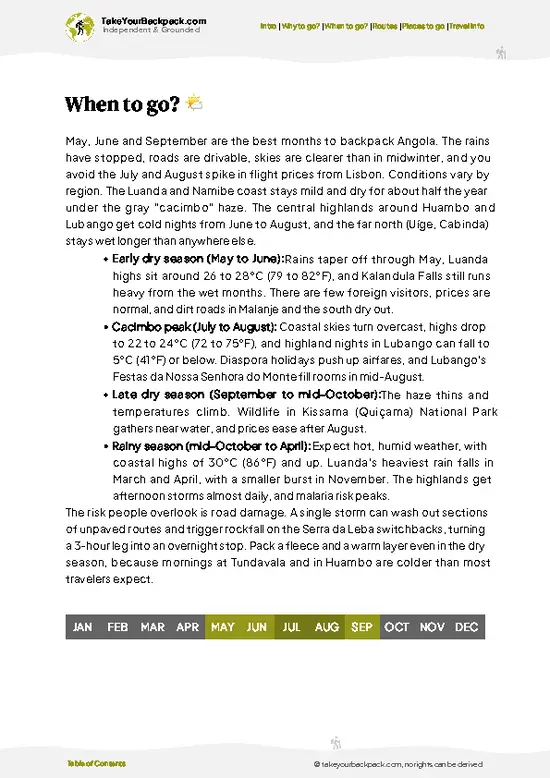
  • Weather: Huambo’s climate is mild but marked by a wet season from October to April, bringing heavy rains that can turn trails into mudslides and slow travel. The dry season, May to September, offers clearer skies and easier trekking conditions.

  • Temperature: Expect daytime highs around 22-25°C (72-77°F) during the dry months, with cooler nights dipping to 10-13°C (50-55°F). The wet season is warmer but stickier, often hitting 26-28°C (79-82°F), which can sap your energy on long hikes.

  • Daylight Hours: Daylight is fairly consistent year-round, roughly 11 to 12 hours daily, so you won’t lose much daylight regardless of when you visit. This steadiness lets you plan your days without worrying about early sunsets.

  • Crowds: Huambo is off the beaten path, so crowds are minimal year-round. However,
read more 👉

  • Weather: Huambo’s climate is mild but marked by a wet season from October to April, bringing heavy rains that can turn trails into mudslides and slow travel. The dry season, May to September, offers clearer skies and easier trekking conditions.

  • Temperature: Expect daytime highs around 22-25°C (72-77°F) during the dry months, with cooler nights dipping to 10-13°C (50-55°F). The wet season is warmer but stickier, often hitting 26-28°C (79-82°F), which can sap your energy on long hikes.

  • Daylight Hours: Daylight is fairly consistent year-round, roughly 11 to 12 hours daily, so you won’t lose much daylight regardless of when you visit. This steadiness lets you plan your days without worrying about early sunsets.

  • Crowds: Huambo is off the beaten path, so crowds are minimal year-round. However, local festivals during the dry season can bring a spike in visitors, offering a chance to engage with Angolan culture but also meaning accommodations fill up faster.

  • Seasonal Activities: Dry months are prime for hiking and exploring the surrounding highlands without weather interruptions. The wet season limits outdoor activities but brings lush landscapes and fewer tourists, ideal if you prefer solitude over convenience.

  • Price Fluctuations: Accommodation and transport costs dip during the wet season due to lower demand, but you pay in comfort and accessibility. The dry season sees a slight price bump, justified by better conditions and more reliable services.


Pro-tip: Aim for the shoulder months of May and September to balance decent weather, manageable prices, and fewer crowds—getting the best bang for your backpacking buck.


source: climatestotravel.comJANJanuary: fair for travelingFEBFebruary: fair for travelingMARMarch: fair for travelingAPRApril: fair for travelingMAYMay: highly recommended for travelingJUNJune: excellent for travelingJULJuly: excellent for travelingAUGAugust: excellent for travelingSEPSeptember: highly recommended for travelingOCTOctober: fair for travelingNOVNovember: fair for travelingDECDecember: fair for traveling
angola-city-huambo v1
© Google |

✈️ The backpacker research shortcutAngola Travel Guide

An offline-friendly backpacking guide with optimized travel routes, ranked highlights, transport advice, and the best areas to stay.
example page 0 from our offline Travel Guide for Angolaexample page 1 from our offline Travel Guide for Angolaexample page 2 from our offline Travel Guide for Angolaexample page 3 from our offline Travel Guide for Angolaexample page 4 from our offline Travel Guide for Angolaexample page 5 from our offline Travel Guide for Angolaexample page 6 from our offline Travel Guide for Angolaexample page 7 from our offline Travel Guide for Angola
The digital guide (347 pages) contains:
91 highlights, ranked by travel appeal
Optimized 7, 14 & 21-day travel routes
Cities, national parks, landmarks, beaches
How to get around
Offline-friendly for travel without Wi-Fi
👉 Click to see all 30+ guide features

📅 Plan smarter in minutes, not weeks
Month by month travel advice
Festivals & national holidays
Budget expectations

🗺️ Go to the right places, skip the overrated ones
Honest pros & cons of destinations
Top hikes, parks & viewpoints
Lesser-known places most travelers miss
Clear “worth it vs skip it” guidance

🛏️ Travel smoothly without rookie mistakes
Best areas to stay
Transport systems explained simply
Common scams & safety advice
SIM cards, money & practical tips

🌍 Understand the country, not just visit it
Culture & traditions
52 Essential phrases & customs
Festivals worth planning around
Traveler-friendly historical context
Insights that make places more meaningful

📱 Built for real travel conditions
Fully downloadable PDF
Works completely offline
Optimized for phone use
Useful in remote areas & buses
Everything in one place
Save weeks of stressful planning
Get instant access to your full guide. 30‑day money-back guarantee.


By proceeding you agree to our terms.
Sent to your inbox immediately after payment • 100% Secure Checkout
Best Backpacking Travel Advisor 2025 tourism awardBest Backpacking
Travel Advisor
2025
What others say about Take Your Backpack Guides:
⭐⭐⭐⭐⭐
Fantastic, amazing amount of information!
⭐⭐⭐⭐⭐
My goodness this is amazing, it's what I've been looking for hats off too you!
⭐⭐⭐⭐⭐
I think this is absolutely BRILLIANT
⭐⭐⭐⭐
Very complete and informative. It's still missing places, but I gotta to commend you
⭐⭐⭐⭐⭐
This is truly amazing, thank you, can't wait to explore it with my kids!
⭐⭐⭐⭐⭐
Awesome resource, thank you!
⭐⭐⭐⭐⭐
This is amazing! Can't wait to explore the ones I haven't seen
⭐⭐⭐⭐
I love this! Well done, great idea.
⭐⭐⭐⭐⭐
Thanks for taking the time to make this gem!
⭐⭐⭐⭐⭐
This might be the best website I've ever seen.
⭐⭐⭐⭐⭐
Congratulations, and thank you so much for your work; it's incredibly valuable.
⭐⭐⭐⭐
In all seriousness I think you did a great job pointing out the important spots
⭐⭐⭐⭐⭐
10/10 very good
⭐⭐⭐⭐⭐
As someone who's only just starting to visit regularly this is awesome, thank you.
⭐⭐⭐⭐
Thank you very much! I'm going to visit my dad, it's going to be very useful!
⭐⭐⭐⭐⭐
This is really cool! We'll be travelling for the first time and this definitely come in handy.
⭐⭐⭐⭐⭐
You are now our minister of culture, congratulations 👨‍💼
⭐⭐⭐⭐⭐
Just wanted to tell you that this is a pearl! Going to follow your recommendations.
⭐⭐⭐⭐⭐
This is so cool. I'll definitely be using the resource for my travels soon.
⭐⭐⭐⭐⭐
This is very impressive! Good work.
⭐⭐⭐⭐⭐
This is an amazing and informative site. Very well done!

🛏️ Where to stay?Best areas to stay in Angola

In Huambo, the best spot for backpackers is the city center, especially around Avenida 4 de Fevereiro and its nearby streets. This area strikes a smart balance between safety and social buzz. It’s where you’ll find a handful of budget guesthouses and informal hostels that cater to solo travelers and those watching their wallets. The vibe here is low-key but welcoming, with locals and fellow travelers crossing paths in small cafés and street markets. It’s not flashy, but it’s real—offering a chance to connect without the touristy gloss.

Compared to the outskirts or newer developments, the center … read more 👉
In Huambo, the best spot for backpackers is the city center, especially around Avenida 4 de Fevereiro and its nearby streets. This area strikes a smart balance between safety and social buzz. It’s where you’ll find a handful of budget guesthouses and informal hostels that cater to solo travelers and those watching their wallets. The vibe here is low-key but welcoming, with locals and fellow travelers crossing paths in small cafés and street markets. It’s not flashy, but it’s real—offering a chance to connect without the touristy gloss.

Compared to the outskirts or newer developments, the center feels more lived-in and secure, which matters when you’re navigating a city where infrastructure can be patchy. The streets are walkable, and you’re close to essential services, making it easier to manage your time and money without sacrificing comfort. Other neighborhoods tend to be quieter but less convenient or lack the social pulse that makes solo travel enjoyable. In Huambo, choosing the city center means you’re trading a bit of luxury for genuine interaction and practical ease—a classic backpacker’s win.

🚌 Getting aroundGetting around like a local

Huambo moves at its own rhythm—somewhere between the stubborn punctuality of a train timetable and the fluid improvisation of a street market haggler. The city’s pulse isn’t dictated by strict schedules but by a blend of routine and adaptability. You’ll find that time here is elastic: buses might leave on the hour or linger until they’re full, and taxis dart through traffic with a mix of urgency and patience. Understanding this flow is your first win. It means you’re not just a passenger; you’re a player in a system where time, money, and comfort constantly trade places depending on your choices.


  • Walking: The ultimate budget option. Huambo’s central areas are compact enough to explore on foot, saving you money and letting you soak in the city’s textures up close. It’s free, flexible, and
read more 👉
Huambo moves at its own rhythm—somewhere between the stubborn punctuality of a train timetable and the fluid improvisation of a street market haggler. The city’s pulse isn’t dictated by strict schedules but by a blend of routine and adaptability. You’ll find that time here is elastic: buses might leave on the hour or linger until they’re full, and taxis dart through traffic with a mix of urgency and patience. Understanding this flow is your first win. It means you’re not just a passenger; you’re a player in a system where time, money, and comfort constantly trade places depending on your choices.


  • Walking: The ultimate budget option. Huambo’s central areas are compact enough to explore on foot, saving you money and letting you soak in the city’s textures up close. It’s free, flexible, and often faster than waiting for a bus during peak hours, but it demands good shoes and a willingness to navigate uneven sidewalks and occasional dust.


  • Minibus Taxis (Candongueiros): These are the workhorses of Huambo’s transit scene. They run roughly from 6 AM to 8 PM, cost less than a dollar per ride, and cover most city routes. Expect a tight squeeze and frequent stops. They’re slow compared to private taxis but unbeatable for budget travelers who want to stretch their kwanzas without sacrificing access.


  • Private Taxis: Faster and more comfortable than minibuses, private taxis offer door-to-door service and run 24/7. Prices vary widely—negotiate before you hop in. They’re your best bet if you’re short on time or carrying heavy gear, but expect to pay a premium that can quickly eat into your budget.


  • Motorbike Taxis (Mototaxis): A nimble, cheap alternative for short distances or tricky traffic spots. They operate all day but are less safe and less comfortable than four-wheeled options. Prices are low, but the trade-off is a bumpy ride and exposure to the elements. Great for quick hops when time is tight and you’re traveling light.


  • Intercity Buses: If your trip extends beyond Huambo, these buses connect to other Angolan cities. They run on fixed schedules, usually early morning departures, and offer a balance between cost and comfort. Not ideal for inner-city travel but essential if you’re planning to explore the region without breaking the bank.


Mastering Huambo’s transit means juggling these options based on your priorities. Want to save money? Walk or catch a minibus. Need speed and comfort? Private taxis are your ace but come at a cost. Crunched for time but strapped for cash? Mototaxis fill that niche. Each choice shifts your balance of time, money, and comfort—knowing the trade-offs turns you from a tourist into a strategist.

👛 Costs (as of 16 September 2025)How expensive it really is

Backpacking in Huambo, Angola, demands a clear-eyed approach to budgeting, where every dollar or euro spent reflects a trade-off between comfort, convenience, and experience. Here’s the breakdown of what you’re likely to spend daily as an independent traveler.
  • Dorm Accommodation (High Season): Expect to pay around €15-€25 per night. Options are limited but functional, often basic with shared facilities. High season drives prices up due to demand from business travelers and local events.
  • Dorm Accommodation (Off-Season): Prices drop to about €10-€15. You’ll find fewer travelers, which can mean quieter stays but also less choice and sometimes reduced services.
  • Meals: Budget €5-€10 per day if you stick to local eateries and street food. Meals are simple but filling—think staple grains, beans,
read more 👉
Backpacking in Huambo, Angola, demands a clear-eyed approach to budgeting, where every dollar or euro spent reflects a trade-off between comfort, convenience, and experience. Here’s the breakdown of what you’re likely to spend daily as an independent traveler.
  • Dorm Accommodation (High Season): Expect to pay around €15-€25 per night. Options are limited but functional, often basic with shared facilities. High season drives prices up due to demand from business travelers and local events.
  • Dorm Accommodation (Off-Season): Prices drop to about €10-€15. You’ll find fewer travelers, which can mean quieter stays but also less choice and sometimes reduced services.
  • Meals: Budget €5-€10 per day if you stick to local eateries and street food. Meals are simple but filling—think staple grains, beans, and occasional meat or fish. Western-style restaurants will push this higher.
  • Local Transport: Short rides on shared minibuses or moto-taxis cost around €0.30-€0.50 each. It’s cheap but expect crowded conditions and irregular schedules.
  • City Transport Pass: Not commonly available or necessary in Huambo. Most travelers rely on pay-per-ride options, so no fixed pass cost here.
  • Basic Activities/Entry Fees: Museums, parks, and cultural sites typically charge €2-€5. These are modest fees but add up if you’re hitting multiple spots daily.
  • Miscellaneous Expenses: Budget around €3-€7 for water, snacks, occasional internet access, or small personal items. These costs can fluctuate depending on your habits and needs.

In total, a daily budget in Huambo ranges roughly between €25 and €50. The lower end means embracing simplicity and local rhythms, while the upper end buys a bit more comfort and flexibility. Knowing these trade-offs lets you tailor your trip to what matters most—whether that’s stretching your budget or smoothing out the rough edges.
⚠️ Prices can change and everyone travels differently, so take this as a rough guide. Hope it helps you plan your adventure!

🚌 Day tripsWhere to go beyond the main area

Huambo, Angola, is a fantastic launchpad for day trips that blend adventure with cultural immersion. Here’s how you can make the most of your time while keeping your budget in check.

Kuito
Just a two-hour drive from Huambo, Kuito offers a glimpse into Angola’s rich history and resilience. The town is dotted with remnants of its colonial past and vibrant local markets. You can grab a hearty lunch at a local eatery for under $5, making it a budget-friendly option. The best time to visit is during the dry season, from May to September, when the roads are more manageable. A common mistake is underestimating the travel time; plan for a full day to soak it all in.
👉 Explore Kuito

Cascata da Fenda
This stunning waterfall is about an hour away and is perfect for a refreshing escape. The hike … read more 👉
Huambo, Angola, is a fantastic launchpad for day trips that blend adventure with cultural immersion. Here’s how you can make the most of your time while keeping your budget in check.

Kuito
Just a two-hour drive from Huambo, Kuito offers a glimpse into Angola’s rich history and resilience. The town is dotted with remnants of its colonial past and vibrant local markets. You can grab a hearty lunch at a local eatery for under $5, making it a budget-friendly option. The best time to visit is during the dry season, from May to September, when the roads are more manageable. A common mistake is underestimating the travel time; plan for a full day to soak it all in.
👉 Explore Kuito

Cascata da Fenda
This stunning waterfall is about an hour away and is perfect for a refreshing escape. The hike to the falls is relatively easy, making it accessible for most backpackers. Bring a picnic and enjoy the natural beauty; you can easily spend a few hours here without spending a dime. The rainy season can make the trail slippery, so aim for the dry months. Many first-timers miss the turn-off, so keep your eyes peeled for local signs.


Chicala
A short 30-minute drive from Huambo, Chicala is a charming village where you can experience traditional Angolan life. Engage with locals, learn about their crafts, and maybe even join in on a dance. Costs are minimal; you can enjoy a local meal for around $4. The best time to visit is during cultural festivals, typically in the summer months. A common pitfall is not bringing enough cash, as many vendors don’t accept cards.


Cerro do Moco
For the adventurous spirit, a trip to Cerro do Moco, Angola’s highest peak, is a must. It’s about a two-hour drive, followed by a moderate hike. The panoramic views are worth every step. Pack snacks and water, as costs on the mountain can be high. The dry season is ideal for hiking, while the rainy season can make trails treacherous. First-timers often underestimate the hike’s difficulty, so come prepared.


Caculo Cabaça
This hydroelectric dam, about 90 minutes from Huambo, is an engineering marvel. The surrounding area is perfect for photography and offers insights into Angola’s energy initiatives. Entry is usually free, but transportation can add up, so consider carpooling with fellow travelers. The dry season is best for clear views. Many overlook the dam’s visitor center, which provides fascinating context about the region’s development.
Want to know what more Angola offers?
The Angola Travel Guide describes 91 highlights, from cities to national parks, from beaches to hikes

Get the Travel Guide -

🍲 FoodWhat to Eat & Drink

In Huambo, the culinary scene is a vibrant tapestry of flavors that reflects the heart of Angolan culture. You can’t miss trying funje, a staple made from cassava flour, often served with a rich, savory sauce. Pair it with muamba de galinha, a chicken dish simmered in palm oil and spices that packs a punch. The taste is a delightful explosion of local ingredients, and it’s a must for any backpacker looking to dive deep into the region’s cuisine.

Street food is where the action is. Vendors line the bustling markets, serving up grilled meats and fried snacks that are perfect for a quick bite. The aroma of sizzling skewers fills the air, drawing you in. Grab a cachaça, a local sugarcane spirit, to wash it down. It’s not just a drink; it’s a social experience. Expect to share stories and laughter … read more 👉
In Huambo, the culinary scene is a vibrant tapestry of flavors that reflects the heart of Angolan culture. You can’t miss trying funje, a staple made from cassava flour, often served with a rich, savory sauce. Pair it with muamba de galinha, a chicken dish simmered in palm oil and spices that packs a punch. The taste is a delightful explosion of local ingredients, and it’s a must for any backpacker looking to dive deep into the region’s cuisine.

Street food is where the action is. Vendors line the bustling markets, serving up grilled meats and fried snacks that are perfect for a quick bite. The aroma of sizzling skewers fills the air, drawing you in. Grab a cachaça, a local sugarcane spirit, to wash it down. It’s not just a drink; it’s a social experience. Expect to share stories and laughter with locals, who often invite you to join their tables.

When dining, embrace the communal spirit. Meals are often shared, and it’s customary to greet everyone at the table. This isn’t just about food; it’s about connection. So, dig in, savor every bite, and let the flavors of Huambo tell you their story.

🛡️ SafetyStaying Safe: What Travelers Should Know

Huambo is generally safe for backpackers, but a few smart practices can enhance your experience. Stay aware in crowded markets, especially around vendors who might try to distract you while someone else picks your pocket. Keep your valuables close and consider using a money belt.

If you’re traveling solo, exercise caution at night. Stick to well-lit areas and avoid wandering too far from your accommodation after dark. The city has a friendly vibe, but it’s wise to trust your instincts.

Common scams are rare, but be wary of overly friendly locals who might offer unsolicited help. They may expect a tip or try to lead you to shops where they earn a commission. Politely decline and keep your plans to yourself.

Overall, carry yourself confidently and engage with locals when it feels right. This … read more 👉
Huambo is generally safe for backpackers, but a few smart practices can enhance your experience. Stay aware in crowded markets, especially around vendors who might try to distract you while someone else picks your pocket. Keep your valuables close and consider using a money belt.

If you’re traveling solo, exercise caution at night. Stick to well-lit areas and avoid wandering too far from your accommodation after dark. The city has a friendly vibe, but it’s wise to trust your instincts.

Common scams are rare, but be wary of overly friendly locals who might offer unsolicited help. They may expect a tip or try to lead you to shops where they earn a commission. Politely decline and keep your plans to yourself.

Overall, carry yourself confidently and engage with locals when it feels right. This approach not only keeps you safe but also opens doors to genuine interactions.

Other Angolan cities near Huambo

Explore more nearby:

  • Bailundo—traditional kingdoms, upland valleys, rural villages| 66 km away
  • Chinguar—railway town, open grasslands, rural station| 68 km away
  • Caconda—mountain backdrop, agricultural hub, cool climate| 125 km away

💡 Not sure where to go next?
Create a personalized itinerary for Angola including Huambo and the places that fit your trip.

Generate my itinerary

👉 Discover all cities

Or checkout all Angola has to offer (think cities, towns, villages, national parks, hikes, beaches, festivals)
Country photo of Angola

We 💚 feedbackIs it worth it?

Huambo has a raw, unfiltered vibe that feels like stepping into a living history book. The best surprise? The warmth of the locals; they’re genuinely curious about you. Don’t miss the bustling markets—colors and scents collide in a way that’s intoxicating. Just a heads-up: transportation can be a bit chaotic. Embrace the unpredictability; it’s part of the adventure. You’ll leave with stories that are uniquely yours, and that’s what makes it all worthwhile.

✍️ Help improve this page!
The information on this page is based on in-depth research, insights shared by experienced travelers, and feedback from the local travel community in Angola. While every effort is made to keep the information accurate and current, conditions can change — so if you spot anything incorrect or outdated, please get in touch.


🙋‍♂️ Give feedback

👋 Meet the founderWho’s Behind Take Your Backpack?

Johan, backpacker and founder of TakeYourBackpackHi, I’m Johan (Netherlands 🇳🇱), the creator of TakeYourBackpack. Over the past decade, I’ve backpacked through 80+ countries across six continents, gaining extensive experience with independent travel, long-term trips, and overland routes.

This site is built on a combination of firsthand travel experience and carefully curated insights from other backpackers. Many guides are based on places I’ve personally visited, while others bring together tips, observations, and practical advice shared by trusted travelers I’ve met along the way.

The goal is to provide realistic, experience-driven guidance — not generic itineraries — so you can explore destinations with better context, clearer expectations, and more confidence.

Get full Angola guide •
Instant download • 91 highlights • Full Offline guide