×

Angola🇦🇴 | citiesMalanjewaterfalls, plateau farms, provincial capital | things to do and best time to go

Explore LubangoExplore Namibe

Backpacking in Malanje
👍 Recommendedcity ranked #8
By Johan Kruseman 🇳🇱 | Updated June 6, 2026

Your shirt clings with the humidity as you weave through the morning bustle outside Malanje’s central market—vendors shouting over the thrum of motorbikes, the sharp tang of dried fish mixing with the sweetness of ripe mango. Malanje sits in Angola’s north, a day’s journey east from Luanda, and it’s a city that rarely makes the backpacker’s highlight reel. That’s exactly why it’s interesting: you get the faded colonial facades, the low-key Praça Comandante Valódia, and the odd, Soviet-style hotel bar where locals actually outnumber expats. The main draw is Kalandula Falls—worth the detour, but don’t expect easy public transport or a parade of hostel-mates. Malanje is safe by Angolan standards, but solo travelers will need patience and Portuguese. Compared to Lubango or Benguela, it’s rougher around the edges, less cosmopolitan, and more rewarding if you like your travel unscripted and your stories earned.

Discover everything you want to know in the 📖 Angola Travel Guide.


Get your Angola guide
91 ranked highlights, routes & tips, works offline (347 pages)
Loading the map 🌍
CLICK TO FILTER
cities
towns
landmarks
national parks
hikes
beaches
attractions
festivals
regions
SHOW COUNTRY’S BESTSHOW ALL

✨ Why go?
Ranked #8 city in Angola
Why visitors keep coming back

Malanje is a strategic stop for backpackers weaving through Angola. It’s not just a city; it’s a basecamp for adventure. The highlights nearby are impressive, but the city itself offers a lot. You’ll find affordable hostels that cater to budget travelers, making it easy to stretch your funds. The food scene is a delightful mix of local flavors and international options, so you won’t go hungry.

Walking around is a breeze, with walkable streets that invite exploration. You can soak in the local vibe without the hassle of public transport. When the sun sets, the nightlife kicks in, offering a taste of Angolan culture through music and dance.

Plus, Malanje is well-connected for easy onward travel to other destinations. Whether you’re heading to the stunning landscapes or vibrant towns, this … read more 👉
Malanje is a strategic stop for backpackers weaving through Angola. It’s not just a city; it’s a basecamp for adventure. The highlights nearby are impressive, but the city itself offers a lot. You’ll find affordable hostels that cater to budget travelers, making it easy to stretch your funds. The food scene is a delightful mix of local flavors and international options, so you won’t go hungry.

Walking around is a breeze, with walkable streets that invite exploration. You can soak in the local vibe without the hassle of public transport. When the sun sets, the nightlife kicks in, offering a taste of Angolan culture through music and dance.

Plus, Malanje is well-connected for easy onward travel to other destinations. Whether you’re heading to the stunning landscapes or vibrant towns, this city serves as a practical hub. If you’re looking for a place that balances comfort and value, Malanje is worth your time, whether for a few days or just a quick stop.
Want to include Malanje in your Angola route?
Create a personalized Angola itinerary that includes Malanje and the places that fit your trip — based on your travel style, budget, and available time. Get your route in seconds.

Generate my trip

💡 HighlightsMust-see experiences and standout moments

  • Catedral de Malanje (Sé de Nossa Senhora da Assunção) — The diocesan cathedral sits in the city center and is the spiritual and historical heart of Malanje; visit for its colonial-era façade, Sunday mass to see local congregational life, and the calm plaza around it where people gather.
  • Mercado Municipal de Malanje — A busy, authentic market where you’ll find fresh produce, local staples, street food, and craft sellers; it’s the best place to feel the city’s pulse, photograph daily life, and try regional treats on a budget.
  • Estádio 1º de Maio — Home to local football and community events; catching a match here is the fastest way to tap into local passion, noisy crowds, and grassroots Angolan sport culture.
Outside the city, the top nearby day trips are Calandula (Kalandula) Falls, the Pedras … read more 👉
  • Catedral de Malanje (Sé de Nossa Senhora da Assunção) — The diocesan cathedral sits in the city center and is the spiritual and historical heart of Malanje; visit for its colonial-era façade, Sunday mass to see local congregational life, and the calm plaza around it where people gather.
  • Mercado Municipal de Malanje — A busy, authentic market where you’ll find fresh produce, local staples, street food, and craft sellers; it’s the best place to feel the city’s pulse, photograph daily life, and try regional treats on a budget.
  • Estádio 1º de Maio — Home to local football and community events; catching a match here is the fastest way to tap into local passion, noisy crowds, and grassroots Angolan sport culture.
Outside the city, the top nearby day trips are Calandula (Kalandula) Falls, the Pedras Negras de Pungo Andongo, and Cangandala National Park.
Spotted a mistake or missing something? Contact us.

🏘️ NeighborhoodsNeighborhood guide to Malanje

Malanje is a vibrant city that offers a mix of culture, nature, and local life, making it a compelling stop for backpackers. Here’s a breakdown of key neighborhoods to help you navigate your stay.

Centro: This is the heart of Malanje. You’ll find local markets, shops, and eateries buzzing with life. It’s walkable, with affordable accommodations. The nightlife is low-key, perfect for those who want to unwind after a day of exploration. Great for short stays.

Quilombo: A bit quieter, this area is known for its lush surroundings and local parks. It’s ideal for longer stays if you prefer a more relaxed vibe. Transport options are decent, but you might need to rely on taxis for late-night outings.

Catumbela: This neighborhood offers a mix of local culture and modern amenities. It’s slightly … read more 👉
Malanje is a vibrant city that offers a mix of culture, nature, and local life, making it a compelling stop for backpackers. Here’s a breakdown of key neighborhoods to help you navigate your stay.

Centro: This is the heart of Malanje. You’ll find local markets, shops, and eateries buzzing with life. It’s walkable, with affordable accommodations. The nightlife is low-key, perfect for those who want to unwind after a day of exploration. Great for short stays.

Quilombo: A bit quieter, this area is known for its lush surroundings and local parks. It’s ideal for longer stays if you prefer a more relaxed vibe. Transport options are decent, but you might need to rely on taxis for late-night outings.

Catumbela: This neighborhood offers a mix of local culture and modern amenities. It’s slightly pricier but worth it for the convenience. Walkability is good, and you’ll find a few lively bars. Perfect for those who want a balance of comfort and local experience.

Malanje Norte: A residential area with a more authentic feel. It’s less touristy, which means lower costs. However, it’s not as walkable, so be prepared to use public transport. Ideal for longer stays if you want to immerse yourself in daily life.

⌛️ 1 dayA smart one-day plan

Malanje, Angola, is a city that pulses with life and history, offering a unique blend of culture and natural beauty. Nestled in the heart of the country, it’s a gateway to stunning landscapes and rich traditions, making it a captivating stop for any traveler.

Start your day in the bustling neighborhood of downtown Malanje. Grab a breakfast of *pão com chouriço* (bread with sausage) at a local café. The aroma of freshly brewed coffee mingles with the sounds of morning chatter, setting a vibrant tone for your adventure. After fueling up, head to the iconic *Palácio da Justiça*, a striking colonial building that showcases the city’s architectural heritage. Spend some time wandering around, absorbing the local vibe.

As the sun climbs higher, make your way to the *Cascatas de Kalandula*, about … read more 👉
Malanje, Angola, is a city that pulses with life and history, offering a unique blend of culture and natural beauty. Nestled in the heart of the country, it’s a gateway to stunning landscapes and rich traditions, making it a captivating stop for any traveler.

Start your day in the bustling neighborhood of downtown Malanje. Grab a breakfast of *pão com chouriço* (bread with sausage) at a local café. The aroma of freshly brewed coffee mingles with the sounds of morning chatter, setting a vibrant tone for your adventure. After fueling up, head to the iconic *Palácio da Justiça*, a striking colonial building that showcases the city’s architectural heritage. Spend some time wandering around, absorbing the local vibe.

As the sun climbs higher, make your way to the *Cascatas de Kalandula*, about an hour’s drive from the city. This stunning waterfall is often overlooked by tourists, but it’s a must-see. The roar of the water and the lush surroundings create a serene escape. Bring a picnic to enjoy by the water’s edge, soaking in the beauty and tranquility.

In the afternoon, return to Malanje and explore the *Mercado Municipal*. This market is a sensory overload of colors, sounds, and smells. Engage with local vendors, sample fresh fruits, and pick up handmade crafts. It’s a perfect spot to connect with the community and find unique souvenirs.

As evening approaches, head to the *Praça da República*. This lively square is ideal for people-watching and enjoying street food. Try some *caldeirada*, a traditional fish stew, from a nearby vendor. The atmosphere is electric, filled with laughter and music, making it a fitting end to your day in Malanje. Embrace the rhythm of the city, and you’ll leave with memories that linger long after you’ve returned home.
Turn your Malanje visit into an Angola adventure
Build a complete Angola route with Malanje, hidden gems, must-see destinations, and realistic travel times included.

Generate my trip

🌤️ When to go?Choosing the right time of year


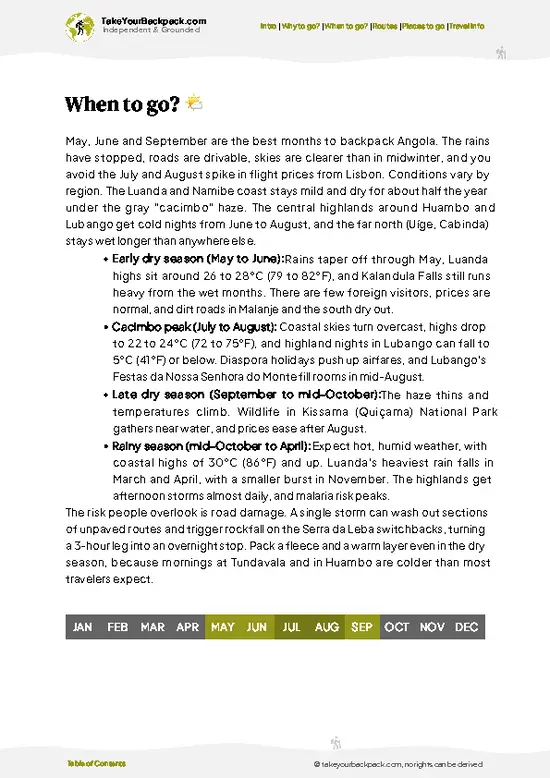
  • Topic: Weather – Malanje’s climate swings between a wet season from October to April and a dry season from May to September. The dry months offer clear skies and less mud, making trekking and exploring far easier.

  • Topic: Temperature – Expect highs around 28-30°C (82-86°F) during the dry season, with cooler nights dropping to 15-18°C (59-64°F). The wet season is warmer but stickier, often hitting 32°C (90°F) with high humidity.

  • Topic: Daylight Hours – Daylight remains fairly consistent year-round, roughly 11 to 12 hours daily. This steadiness means you can plan hikes or visits without worrying about early nightfall.

  • Topic: Crowds – Malanje is off the beaten path, so crowds are minimal year-round. However, local festivals during the dry season can bring a lively buzz, offering cultural
read more 👉

  • Topic: Weather – Malanje’s climate swings between a wet season from October to April and a dry season from May to September. The dry months offer clear skies and less mud, making trekking and exploring far easier.

  • Topic: Temperature – Expect highs around 28-30°C (82-86°F) during the dry season, with cooler nights dropping to 15-18°C (59-64°F). The wet season is warmer but stickier, often hitting 32°C (90°F) with high humidity.

  • Topic: Daylight Hours – Daylight remains fairly consistent year-round, roughly 11 to 12 hours daily. This steadiness means you can plan hikes or visits without worrying about early nightfall.

  • Topic: Crowds – Malanje is off the beaten path, so crowds are minimal year-round. However, local festivals during the dry season can bring a lively buzz, offering cultural immersion without overwhelming tourist throngs.

  • Topic: Seasonal Activities – The dry season is prime for visiting Kalandula Falls and the nearby Cangandala National Park, where wildlife spotting is at its peak. Wet months can limit access due to muddy roads but reveal lush, vibrant landscapes.

  • Topic: Price Fluctuations – Accommodation and transport costs dip slightly in the wet season due to lower demand, but the trade-off is less reliable travel conditions and fewer open attractions.


Pro-tip: Aim for the shoulder months of May and September to catch dry weather with fewer crowds and better prices—a sweet spot where comfort meets value.


source: climatestotravel.comJANJanuary: fair for travelingFEBFebruary: fair for travelingMARMarch: fair for travelingAPRApril: good for travelingMAYMay: highly recommended for travelingJUNJune: excellent for travelingJULJuly: excellent for travelingAUGAugust: excellent for travelingSEPSeptember: highly recommended for travelingOCTOctober: good for travelingNOVNovember: fair for travelingDECDecember: fair for traveling
when-to-go

✈️ The backpacker research shortcutAngola Travel Guide

An offline-friendly backpacking guide with optimized travel routes, ranked highlights, transport advice, and the best areas to stay.
example page 0 from our offline Travel Guide for Angolaexample page 1 from our offline Travel Guide for Angolaexample page 2 from our offline Travel Guide for Angolaexample page 3 from our offline Travel Guide for Angolaexample page 4 from our offline Travel Guide for Angolaexample page 5 from our offline Travel Guide for Angolaexample page 6 from our offline Travel Guide for Angolaexample page 7 from our offline Travel Guide for Angola
The digital guide (347 pages) contains:
91 highlights, ranked by travel appeal
Optimized 7, 14 & 21-day travel routes
Cities, national parks, landmarks, beaches
How to get around
Offline-friendly for travel without Wi-Fi
👉 Click to see all 30+ guide features

📅 Plan smarter in minutes, not weeks
Month by month travel advice
Festivals & national holidays
Budget expectations

🗺️ Go to the right places, skip the overrated ones
Honest pros & cons of destinations
Top hikes, parks & viewpoints
Lesser-known places most travelers miss
Clear “worth it vs skip it” guidance

🛏️ Travel smoothly without rookie mistakes
Best areas to stay
Transport systems explained simply
Common scams & safety advice
SIM cards, money & practical tips

🌍 Understand the country, not just visit it
Culture & traditions
52 Essential phrases & customs
Festivals worth planning around
Traveler-friendly historical context
Insights that make places more meaningful

📱 Built for real travel conditions
Fully downloadable PDF
Works completely offline
Optimized for phone use
Useful in remote areas & buses
Everything in one place
Save weeks of stressful planning
Get instant access to your full guide. 30‑day money-back guarantee.


By proceeding you agree to our terms.
Sent to your inbox immediately after payment • 100% Secure Checkout
Best Backpacking Travel Advisor 2025 tourism awardBest Backpacking
Travel Advisor
2025
What others say about Take Your Backpack Guides:
⭐⭐⭐⭐⭐
Fantastic, amazing amount of information!
⭐⭐⭐⭐⭐
My goodness this is amazing, it's what I've been looking for hats off too you!
⭐⭐⭐⭐⭐
I think this is absolutely BRILLIANT
⭐⭐⭐⭐
Very complete and informative. It's still missing places, but I gotta to commend you
⭐⭐⭐⭐⭐
This is truly amazing, thank you, can't wait to explore it with my kids!
⭐⭐⭐⭐⭐
Awesome resource, thank you!
⭐⭐⭐⭐⭐
This is amazing! Can't wait to explore the ones I haven't seen
⭐⭐⭐⭐
I love this! Well done, great idea.
⭐⭐⭐⭐⭐
Thanks for taking the time to make this gem!
⭐⭐⭐⭐⭐
This might be the best website I've ever seen.
⭐⭐⭐⭐⭐
Congratulations, and thank you so much for your work; it's incredibly valuable.
⭐⭐⭐⭐
In all seriousness I think you did a great job pointing out the important spots
⭐⭐⭐⭐⭐
10/10 very good
⭐⭐⭐⭐⭐
As someone who's only just starting to visit regularly this is awesome, thank you.
⭐⭐⭐⭐
Thank you very much! I'm going to visit my dad, it's going to be very useful!
⭐⭐⭐⭐⭐
This is really cool! We'll be travelling for the first time and this definitely come in handy.
⭐⭐⭐⭐⭐
You are now our minister of culture, congratulations 👨‍💼
⭐⭐⭐⭐⭐
Just wanted to tell you that this is a pearl! Going to follow your recommendations.
⭐⭐⭐⭐⭐
This is so cool. I'll definitely be using the resource for my travels soon.
⭐⭐⭐⭐⭐
This is very impressive! Good work.
⭐⭐⭐⭐⭐
This is an amazing and informative site. Very well done!

🛏️ Where to stay?How to pick the right area

Malanje’s backpacker scene is still emerging, so your best bet is to anchor yourself in the city center. This area offers a practical balance of safety, social opportunities, and budget options. It’s where local life pulses strongest—markets, street food stalls, and informal hangouts cluster here, giving you a chance to connect with both locals and fellow travelers without the isolation of more residential zones.

Compared to the quieter, more suburban neighborhoods, the city center keeps you plugged into the action, which is crucial when hostel options are limited and social spaces are scarce. … read more 👉
Malanje’s backpacker scene is still emerging, so your best bet is to anchor yourself in the city center. This area offers a practical balance of safety, social opportunities, and budget options. It’s where local life pulses strongest—markets, street food stalls, and informal hangouts cluster here, giving you a chance to connect with both locals and fellow travelers without the isolation of more residential zones.

Compared to the quieter, more suburban neighborhoods, the city center keeps you plugged into the action, which is crucial when hostel options are limited and social spaces are scarce. Hostels here tend to be modest but functional, prioritizing communal areas over luxury, which naturally fosters interaction. You’re trading off some comfort for the chance to meet people and get real-time tips on exploring Malanje’s natural wonders.

Avoid the outskirts unless you have private transport; they’re quieter but less secure and lack the social infrastructure backpackers thrive on. In Malanje, the city center is your strategic base—safe enough, lively enough, and budget-friendly enough to make your stay both practical and engaging.

🚌 Getting aroundGetting around like a local

Malanje moves at a pace that’s less about strict timetables and more about reading the room—an organic rhythm where buses might leave when full, and motos weave through traffic with a sixth sense for gaps. It’s a city where patience and flexibility aren’t just virtues; they’re survival skills. You’ll find that the flow here rewards those who can balance a bit of chaos with a clear plan. Understanding the trade-offs between time, money, and comfort isn’t just smart—it’s the key to unlocking Malanje’s real character without getting stuck in transit limbo.


  • Walking: The ultimate zero-cost option. Malanje’s central areas are compact enough to explore on foot, giving you full control over your pace and route. It’s slow but free, and you’ll catch details missed by faster modes—street vendors,
read more 👉
Malanje moves at a pace that’s less about strict timetables and more about reading the room—an organic rhythm where buses might leave when full, and motos weave through traffic with a sixth sense for gaps. It’s a city where patience and flexibility aren’t just virtues; they’re survival skills. You’ll find that the flow here rewards those who can balance a bit of chaos with a clear plan. Understanding the trade-offs between time, money, and comfort isn’t just smart—it’s the key to unlocking Malanje’s real character without getting stuck in transit limbo.


  • Walking: The ultimate zero-cost option. Malanje’s central areas are compact enough to explore on foot, giving you full control over your pace and route. It’s slow but free, and you’ll catch details missed by faster modes—street vendors, local chatter, and the city’s pulse. Ideal for short hops or when you want to soak in the atmosphere without spending a kwanza.


  • Minibus Taxis (Candongueiros): These shared minibuses are the budget traveler’s backbone. They run roughly from 6 AM to 7 PM, charging a few hundred kwanzas per ride. Expect a tight squeeze and frequent stops, but they cover most routes within and just outside the city. Speed varies with traffic and passenger load, so factor in some unpredictability. Comfort is minimal, but the price and local immersion make it a high-value trade-off.


  • Motorcycle Taxis (Motos): Fast and nimble, motos dart through traffic and can get you across town in half the time of a minibus. They operate from dawn until late evening, with fares negotiable but generally affordable. Comfort is low—helmet optional, and the ride can be bumpy—but if time is tight and you’re traveling light, they’re unbeatable. Just be ready for the adrenaline rush and a bit of dust.


  • Private Car Hire: For those who want to skip the unpredictability, renting a car or hiring a driver offers maximum comfort and flexibility. It’s the priciest option, often doubling or tripling local transport costs, but it slashes travel time and lets you explore beyond Malanje’s limits on your own schedule. Worth it if your itinerary demands efficiency and you’re traveling in a group to split costs.

👛 Costs (as of 15 September 2025)What things cost and how to budget

Backpacking in Malanje, Angola, demands a clear-eyed view of what your money actually buys in this less-touristed city. Understanding the trade-offs between time, money, and comfort here is key to making smart choices that stretch your budget without sacrificing essential experiences.
  • Dorm Accommodation (High Season): Expect to pay around €15-€20 per night. Options are limited, so prices spike during peak travel months, reflecting scarcity more than luxury.
  • Dorm Accommodation (Off-Season): Prices drop to about €10-€13 per night. Fewer travelers mean more negotiating power, but also fewer amenities and less frequent availability.
  • Meals: Local eateries offer meals for roughly €3-€6 each. Street food is cheaper but less predictable in quality, while small restaurants provide a safer bet for
read more 👉
Backpacking in Malanje, Angola, demands a clear-eyed view of what your money actually buys in this less-touristed city. Understanding the trade-offs between time, money, and comfort here is key to making smart choices that stretch your budget without sacrificing essential experiences.
  • Dorm Accommodation (High Season): Expect to pay around €15-€20 per night. Options are limited, so prices spike during peak travel months, reflecting scarcity more than luxury.
  • Dorm Accommodation (Off-Season): Prices drop to about €10-€13 per night. Fewer travelers mean more negotiating power, but also fewer amenities and less frequent availability.
  • Meals: Local eateries offer meals for roughly €3-€6 each. Street food is cheaper but less predictable in quality, while small restaurants provide a safer bet for hygiene and flavor at the upper end of this range.
  • Local Transport: Minibuses and shared taxis cost about €0.50-€1 per trip within the city. They’re slow and crowded but unbeatable for budget travelers who can handle the hustle.
  • City Transport Pass: Malanje does not have a formal city transport pass system, so budgeting for individual rides is necessary. Factor in around €3-€5 daily if you plan to move frequently.
  • Basic Activities/Entry Fees: Entrance to local attractions like the Kalandula Falls or museums typically runs €5-€10. Guided tours, if available, push this higher but add valuable context.
  • Miscellaneous Expenses: This includes bottled water, occasional snacks, and small tips, averaging €2-€4 daily. Always budget a bit extra here to avoid surprises.

Add it all up, and a realistic daily budget for backpacking in Malanje ranges from about €25 on a shoestring to €45 if you want a bit more comfort and flexibility. This range reflects the trade-off between squeezing every cent and allowing yourself some breathing room to enjoy the city’s unique offerings without constant scrimping.


source: visitangola.co.ao
⚠️ Prices can change and everyone travels differently, so take this as a rough guide. Hope it helps you plan your adventure!

🚌 Day tripsExploring the surroundings

Malanje, Angola, is a fantastic launchpad for day trips that blend adventure with cultural immersion. Here’s how to make the most of your time without breaking the bank.

Kalandula Falls
Just a two-hour drive from Malanje, Kalandula Falls is a breathtaking sight. The roar of the water crashing down is something you won’t forget. Bring a picnic and enjoy the lush surroundings. The entrance fee is minimal, making it a budget-friendly outing. Aim for the dry season (May to October) for the best views. A common rookie mistake? Underestimating the time needed for the drive; the roads can be tricky, so leave early.
👉 Explore Kalandula Falls

Pungo Andongo
About an hour away, Pungo Andongo is a geological wonder with massive rock formations that seem to rise from the earth. This site is steeped … read more 👉
Malanje, Angola, is a fantastic launchpad for day trips that blend adventure with cultural immersion. Here’s how to make the most of your time without breaking the bank.

Kalandula Falls
Just a two-hour drive from Malanje, Kalandula Falls is a breathtaking sight. The roar of the water crashing down is something you won’t forget. Bring a picnic and enjoy the lush surroundings. The entrance fee is minimal, making it a budget-friendly outing. Aim for the dry season (May to October) for the best views. A common rookie mistake? Underestimating the time needed for the drive; the roads can be tricky, so leave early.
👉 Explore Kalandula Falls

Pungo Andongo
About an hour away, Pungo Andongo is a geological wonder with massive rock formations that seem to rise from the earth. This site is steeped in local legend, and you can hike around the area to soak in the views. The trip is light on the wallet, with minimal transport costs and no entrance fees. Visit in the morning to avoid the heat and catch the best light for photos. First-timers often miss the best viewpoints, so ask locals for tips on where to go.


Quirimba Island
For a unique experience, head to Quirimba Island, roughly a two-hour drive plus a short boat ride. This island offers a glimpse into local life and stunning coastal views. You can explore the village, swim, or simply relax on the beach. Costs are low, especially if you pack your own snacks. The best time to visit is during the dry season when the waters are calm. Many overlook the boat schedules, so check ahead to avoid long waits.


Cangandala National Park
If you’re up for a bit of adventure, Cangandala National Park is about an hour’s drive from Malanje. This park is home to diverse wildlife, including the rare Palanca Negra. A guided tour is worth the investment for a deeper understanding of the ecosystem. Budget around $15 for transport and guide fees. The dry season is ideal for spotting animals. Newcomers often forget to bring enough water, so stock up before you go.
👉 Explore Cangandala National Park
Want to know what more Angola offers?
The Angola Travel Guide describes 91 highlights, from cities to national parks, from beaches to hikes

Get the Travel Guide -

🍲 FoodWhat to Eat & Drink

In Malanje, food is a vibrant tapestry of flavors that tells the story of its people. You can’t miss trying muamba de galinha, a rich chicken stew simmered with palm oil and spices, served with funje, a starchy side made from cassava flour. The taste is a warm embrace, and it’s often enjoyed with friends, making every bite a shared experience.

Street food is where the heart of Malanje beats. Vendors line the streets, offering grilled meats and fish, marinated and cooked over open flames. The aroma wafts through the air, drawing you in. Grab a skewer, and don’t be shy to dive into a bowl of caldeirada, a hearty fish stew that’s perfect for sharing.

When it comes to drinks, cuca beer is a local favorite, refreshing after a day of exploring. Sip it slowly at a casual bar, where laughter and … read more 👉
In Malanje, food is a vibrant tapestry of flavors that tells the story of its people. You can’t miss trying muamba de galinha, a rich chicken stew simmered with palm oil and spices, served with funje, a starchy side made from cassava flour. The taste is a warm embrace, and it’s often enjoyed with friends, making every bite a shared experience.

Street food is where the heart of Malanje beats. Vendors line the streets, offering grilled meats and fish, marinated and cooked over open flames. The aroma wafts through the air, drawing you in. Grab a skewer, and don’t be shy to dive into a bowl of caldeirada, a hearty fish stew that’s perfect for sharing.

When it comes to drinks, cuca beer is a local favorite, refreshing after a day of exploring. Sip it slowly at a casual bar, where laughter and stories flow as freely as the drinks.

Etiquette is simple: share your food and drink, and don’t rush. Meals are a time to connect, so take a moment to savor the flavors and the company. In Malanje, every meal is a celebration, and you’re invited to join in.

🛡️ SafetySafety Tips and Common Scams in Malanje

Malanje is generally safe for travelers, but a few situational awareness tips can enhance your experience. Stick to well-lit areas at night, especially if you’re solo. The city has a relaxed vibe, but it’s wise to avoid wandering too far off the beaten path after dark.

Watch out for common scams, like overly friendly locals who may offer unsolicited help, expecting a tip in return. If someone approaches you with a deal that seems too good to be true—like a guided tour at a bargain price—trust your instincts.

Everyday annoyances can include aggressive street vendors. A polite but firm “no, thank you” usually does the trick. Carry yourself confidently, and don’t flash valuables. This approach not only keeps you safe but also helps you blend in, making your journey through Malanje smoother and more enjoyable.

Other Angolan cities near Malanje

Explore more nearby:

  • Calandula—waterfalls, river gorge, forested surroundings| 65 km away
  • Quela—subsistence farming, rolling plateaus, small villages| 87 km away
  • N’dalatando—botanical gardens, colonial-era grid, mountain backdrop| 159 km away

💡 Not sure where to go next?
Create a personalized itinerary for Angola including Malanje and the places that fit your trip.

Generate my itinerary

👉 Discover all cities

Or checkout all Angola has to offer (think cities, towns, villages, national parks, hikes, beaches, festivals)
Country photo of Angola

We 💚 feedbackFinal thoughts on visiting Malanje

Malanje has a raw, unfiltered vibe that feels like stepping into a living postcard. The best surprise? The stunning Kalandula Falls—it’s like nature’s own amphitheater, and you can swim right up to the edge. Just a heads-up: transportation can be a bit chaotic, so plan ahead. Embrace the unpredictability; it’s part of the charm. You’ll leave with stories that outshine any guidebook. Trust me, it’s worth the adventure.

✍️ Help improve this page!
The information on this page is based on in-depth research, insights shared by experienced travelers, and feedback from the local travel community in Angola. While every effort is made to keep the information accurate and current, conditions can change — so if you spot anything incorrect or outdated, please get in touch.


🙋‍♂️ Give feedback

👋 Meet the founderWho’s Behind Take Your Backpack?

Johan, backpacker and founder of TakeYourBackpackHi, I’m Johan (Netherlands 🇳🇱), the creator of TakeYourBackpack. Over the past decade, I’ve backpacked through 80+ countries across six continents, gaining extensive experience with independent travel, long-term trips, and overland routes.

This site is built on a combination of firsthand travel experience and carefully curated insights from other backpackers. Many guides are based on places I’ve personally visited, while others bring together tips, observations, and practical advice shared by trusted travelers I’ve met along the way.

The goal is to provide realistic, experience-driven guidance — not generic itineraries — so you can explore destinations with better context, clearer expectations, and more confidence.

Get full Angola guide •
Instant download • 91 highlights • Full Offline guide