×

Angola🇦🇴 | citiesWaku Kungomountain pass, roadside stalls, fertile plateau | things to do and best time to go

Explore QuibalaExplore Calandula

Backpacking in Waku Kungo
👍 Recommendedcity ranked #9
By Johan Kruseman 🇳🇱 | Updated May 20, 2026

Steam rises from your morning mug as the sun burns off last night’s mist, and the air in Waku Kungo smells faintly of wet earth and diesel—this is the real Angola, not the polished version. Waku Kungo sits in Angola’s central highlands, a few hours’ drive east of the Atlantic coast, and it’s the kind of place that feels like a pause between bigger stories. For backpackers, it’s more crossroads than destination: a practical stopover on the way from Luanda to Huambo or Kalandula Falls, with a market square that hums at dawn and then slows to a crawl by afternoon. The town itself is compact and walkable, but don’t expect hostels or a buzzing café scene—think simple guesthouses, a couple of local eateries, and evenings that end early. Costs are lower than in the cities, and it’s safer than the capital, but you’ll need patience for slow buses and patchy transport. Compared to the bustle of Huambo or the tourist pull of Kalandula, Waku Kungo is quieter, more functional, and best for those who find beauty in the in-between.

Discover everything you want to know in the 📖 Angola Travel Guide.
Loading the map 🌍
CLICK TO FILTER
city
town
unique site
national park
hike
beach
attraction
festival
region
SHOW COUNTRY’S BESTSHOW ALL

✨ Why go?
Ranked #9 city in Angola
What makes it a must-see city

Waku Kungo serves as a gateway for backpackers exploring Angola’s rugged beauty. Its convenient location makes it a strategic stop for those heading to nearby hikes in the stunning Kwanza Sul region. The walkable streets invite you to wander, with small-scale hostels and guesthouses offering a cozy, communal vibe. You’ll find local food stalls serving up hearty dishes that reflect the culture, perfect for fueling your adventures. Travelers often linger here for a few days, soaking in the friendly atmosphere and connecting with fellow explorers. It’s ideal for slow travelers and solo adventurers looking for a blend of quiet reflection and social interaction. Waku Kungo isn’t just a stop; it’s a chance to savor the journey.
Get the complete Travel Guide for Angola
Everything organized for offline planning — routes, highlights, costs & tips

See what’s inside 👉

Get the Travel Guide -

💡 HighlightsWhat this place is best known for

  • Mercado Municipal de Waku-Kungo — The town’s bustling central market where you’ll find fresh produce, local snacks, seasonal fruit, and everyday life on full display; best place to taste street food and buy locally made goods.
  • Igreja Matriz / Paróquia do centro — The main Catholic parish in the town center, a focal point for community life and Sunday services; the building and churchyard give a clear feel for Waku-Kungo’s social rhythm and colonial-era town layout.
  • Praça Central and colonial-era public buildings — The main square surrounded by administrative buildings and cafés; good for people-watching, photographing traditional architecture, and getting a feel for civic life in the town.
  • Local coffee roças and processing sites (outskirts of town) — Working coffee estates around Waku-Kungo
read more 👉
  • Mercado Municipal de Waku-Kungo — The town’s bustling central market where you’ll find fresh produce, local snacks, seasonal fruit, and everyday life on full display; best place to taste street food and buy locally made goods.
  • Igreja Matriz / Paróquia do centro — The main Catholic parish in the town center, a focal point for community life and Sunday services; the building and churchyard give a clear feel for Waku-Kungo’s social rhythm and colonial-era town layout.
  • Praça Central and colonial-era public buildings — The main square surrounded by administrative buildings and cafés; good for people-watching, photographing traditional architecture, and getting a feel for civic life in the town.
  • Local coffee roças and processing sites (outskirts of town) — Working coffee estates around Waku-Kungo where you can see planting, harvesting, and drying/processing of beans and sample locally produced coffee that reflects the region’s agricultural heritage.
  • Artisan stalls and craft quarter — Small clusters of woodcarvers, basket weavers, and textile makers selling practical crafts and souvenirs; visiting supports local makers and gives insight into regional materials and techniques.
A few visitable highlights just outside Waku-Kungo worth day trips include the provincial capital Sumbe, the nearby town of Quibala, and the coastal/river towns toward Porto Amboim and the Kwanza River estuary.
Spotted a mistake or missing something? Contact us.
🏘️ NeighborhoodsKey areas and districts to know

Waku Kungo offers a unique blend of culture and adventure, perfect for backpackers seeking authenticity in Angola.

Centro: This is the heart of Waku Kungo. The vibe is bustling, with local markets and street vendors filling the air with the scent of grilled meats and spices. It’s walkable, making it easy to explore on foot. Budget-friendly accommodations are plentiful, and the nightlife is lively, with bars that pulse with local music. Ideal for short stays, you can soak up the local culture quickly here.

Baixa: A quieter area, Baixa is perfect for those looking to escape the hustle. The streets are lined with trees, offering a peaceful atmosphere. It’s less touristy, so prices are lower, and you can find cozy guesthouses. While nightlife is minimal, it’s a great spot for longer stays where … read more 👉
Waku Kungo offers a unique blend of culture and adventure, perfect for backpackers seeking authenticity in Angola.

Centro: This is the heart of Waku Kungo. The vibe is bustling, with local markets and street vendors filling the air with the scent of grilled meats and spices. It’s walkable, making it easy to explore on foot. Budget-friendly accommodations are plentiful, and the nightlife is lively, with bars that pulse with local music. Ideal for short stays, you can soak up the local culture quickly here.

Baixa: A quieter area, Baixa is perfect for those looking to escape the hustle. The streets are lined with trees, offering a peaceful atmosphere. It’s less touristy, so prices are lower, and you can find cozy guesthouses. While nightlife is minimal, it’s a great spot for longer stays where you can immerse yourself in daily life.

Zona Verde: This neighborhood is a bit further out but worth it for nature lovers. It’s less walkable, so consider renting a bike or using local transport. The area is serene, with parks and open spaces. Perfect for longer stays, you can unwind and recharge away from the city’s buzz.

⌛️ 1 dayHow to make the most of one day

Waku Kungo, a vibrant town in Angola, pulses with life and culture. It’s a place where the scent of grilled meat wafts through the air, mingling with the earthy aroma of the surrounding landscape. The streets are alive with chatter, and the colorful market stalls beckon with local crafts and fresh produce.

Start your morning at the bustling Mercado Municipal. The early sun casts a warm glow on the vibrant fruits and vegetables, and you can sip on a sweet, homemade juice while chatting with friendly vendors. This is where you’ll feel the town’s heartbeat—don’t rush; soak in the atmosphere.

In the afternoon, head to the nearby Parque Nacional da Quiçama. It’s a bit off the beaten path, but the journey is worth it. The park offers a chance to see Angola’s wildlife and stunning landscapes. … read more 👉
Waku Kungo, a vibrant town in Angola, pulses with life and culture. It’s a place where the scent of grilled meat wafts through the air, mingling with the earthy aroma of the surrounding landscape. The streets are alive with chatter, and the colorful market stalls beckon with local crafts and fresh produce.

Start your morning at the bustling Mercado Municipal. The early sun casts a warm glow on the vibrant fruits and vegetables, and you can sip on a sweet, homemade juice while chatting with friendly vendors. This is where you’ll feel the town’s heartbeat—don’t rush; soak in the atmosphere.

In the afternoon, head to the nearby Parque Nacional da Quiçama. It’s a bit off the beaten path, but the journey is worth it. The park offers a chance to see Angola’s wildlife and stunning landscapes. Bring a packed lunch to enjoy under the shade of a baobab tree, listening to the distant calls of birds.

As evening approaches, return to Waku Kungo and stroll through the historic neighborhood of Bairro da Paz. The sunset casts a golden hue over the colonial architecture, creating a perfect backdrop for photos. End your day at a local eatery, savoring traditional dishes like funge and caldeirada, while the sounds of laughter and music fill the air. This day in Waku Kungo isn’t just a visit; it’s a dive into the soul of Angola.
Build the Right Itinerary
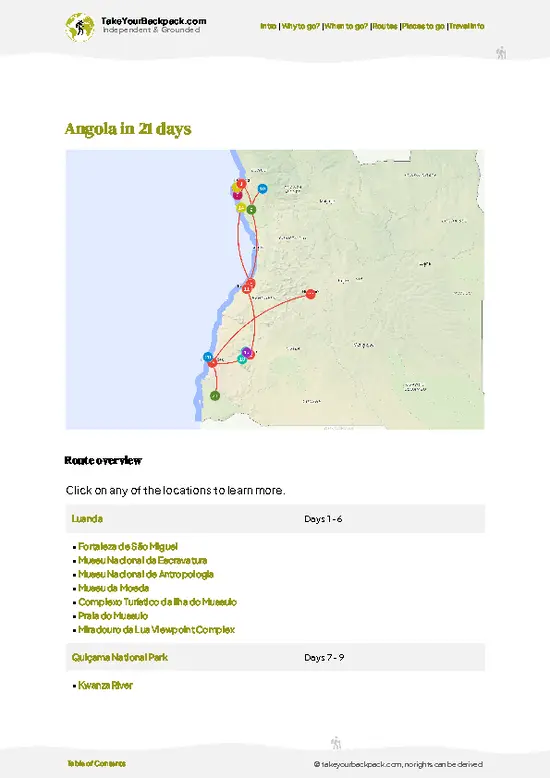
Use the Angola Travel Guide’s 7, 14 & 21-day routes as a starting point to plan a trip that actually works on the ground.

Get the Travel Guide -

🌤️ When to go?Choosing the right time of year


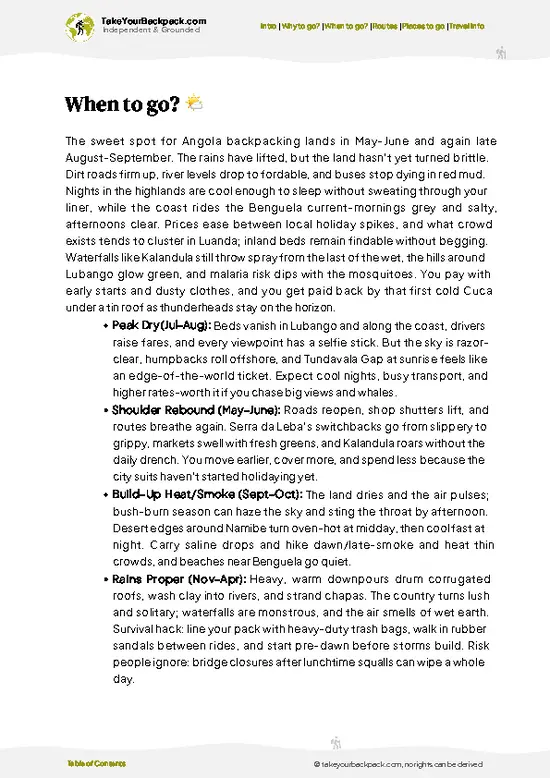
  • Topic: Weather – Waku Kungo’s dry season from May to September offers clear skies and minimal rain, making trails less slippery and the air crisp. The wet season, October to April, brings heavy rains that can turn paths into mud baths and obscure views.

  • Topic: Temperature – Expect daytime highs around 24-28°C (75-82°F) during the dry months, perfect for hiking without overheating. The wet season can feel warmer and more humid, pushing temps up to 30°C (86°F), which saps energy faster.

  • Topic: Daylight Hours – Near the equator, daylight stays steady year-round, roughly 12 hours. This consistency means you can plan hikes without worrying about early nightfall, but starting early is still key to avoid midday heat.

  • Topic: Crowds – Waku Kungo isn’t a tourist hotspot, but the dry season
read more 👉

  • Topic: Weather – Waku Kungo’s dry season from May to September offers clear skies and minimal rain, making trails less slippery and the air crisp. The wet season, October to April, brings heavy rains that can turn paths into mud baths and obscure views.

  • Topic: Temperature – Expect daytime highs around 24-28°C (75-82°F) during the dry months, perfect for hiking without overheating. The wet season can feel warmer and more humid, pushing temps up to 30°C (86°F), which saps energy faster.

  • Topic: Daylight Hours – Near the equator, daylight stays steady year-round, roughly 12 hours. This consistency means you can plan hikes without worrying about early nightfall, but starting early is still key to avoid midday heat.

  • Topic: Crowds – Waku Kungo isn’t a tourist hotspot, but the dry season sees a slight uptick in local visitors and traders, adding life without overwhelming solitude. The wet season is quieter, offering more peaceful trails but with the risk of isolation if weather worsens.

  • Topic: Seasonal Activities – Dry months are prime for exploring waterfalls and wildlife spotting, as animals gather near shrinking water sources. Wet season bursts with lush greenery and blooming flora, rewarding those willing to brave the mud.

  • Topic: Price Fluctuations – Accommodation and local transport prices tend to rise slightly during the dry season due to increased demand. The wet season offers better deals but factor in potential extra costs for gear or delays caused by rain.


Pro-tip: Aim for the shoulder months of May or September to catch dry trails, fewer crowds, and better prices—a sweet spot where the landscape is still lively but the hassle is dialed down.


source: climatestotravel.comJANJanuary: fair for travelingFEBFebruary: fair for travelingMARMarch: fair for travelingAPRApril: fair for travelingMAYMay: highly recommended for travelingJUNJune: excellent for travelingJULJuly: excellent for travelingAUGAugust: excellent for travelingSEPSeptember: highly recommended for travelingOCTOctober: fair for travelingNOVNovember: fair for travelingDECDecember: fair for traveling
angola-city-waku-kungo
© Google |

✈️ The backpacker research shortcutAngola Travel Guide

An offline-friendly backpacking guide with optimized travel routes, ranked highlights, transport advice, and the best areas to stay.
example page 0 from our offline Travel Guide for Angolaexample page 1 from our offline Travel Guide for Angolaexample page 2 from our offline Travel Guide for Angolaexample page 3 from our offline Travel Guide for Angolaexample page 4 from our offline Travel Guide for Angolaexample page 5 from our offline Travel Guide for Angolaexample page 6 from our offline Travel Guide for Angolaexample page 7 from our offline Travel Guide for Angola
The digital guide (347 pages) contains:
91 highlights, ranked by travel appeal
Optimized 7, 14 & 21-day travel routes
Cities, national parks, beaches, historical sites, ...
How to get around
Offline-friendly for travel without Wi-Fi
👉 Click to see all 30+ guide features

📅 Plan smarter in minutes, not weeks
Month by month travel advice
Festivals & national holidays
Budget expectations

🗺️ Go to the right places, skip the overrated ones
Honest pros & cons of destinations
Top hikes, parks & viewpoints
Lesser-known places most travelers miss
Clear “worth it vs skip it” guidance

🛏️ Travel smoothly without rookie mistakes
Best areas to stay
Transport systems explained simply
Common scams & safety advice
SIM cards, money & practical tips

🌍 Understand the country, not just visit it
Culture & traditions
52 Essential phrases & customs
Festivals worth planning around
Traveler-friendly historical context
Insights that make places more meaningful

📱 Built for real travel conditions
Fully downloadable PDF
Works completely offline
Optimized for phone use
Useful in remote areas & buses
Everything in one place
Save weeks of stressful planning
Get instant access to the full guide directly. 30-day money-back guarantee.


Sent to your inbox immediately after payment • 100% Secure Checkout
Best Backpacking Travel Advisor 2025 tourism awardBest Backpacking
Travel Advisor
2025
What others say about Take Your Backpack Guides:
⭐⭐⭐⭐⭐
Fantastic, amazing amount of information!
⭐⭐⭐⭐⭐
My goodness this is amazing, it's what I've been looking for hats off too you!
⭐⭐⭐⭐⭐
I think this is absolutely BRILLIANT
⭐⭐⭐⭐
Very complete and informative. It's still missing places, but I gotta to commend you
⭐⭐⭐⭐⭐
This is truly amazing, thank you, can't wait to explore it with my kids!
⭐⭐⭐⭐⭐
Awesome resource, thank you!
⭐⭐⭐⭐⭐
This is amazing! Can't wait to explore the ones I haven't seen
⭐⭐⭐⭐
I love this! Well done, great idea.
⭐⭐⭐⭐⭐
Thanks for taking the time to make this gem!
⭐⭐⭐⭐⭐
This might be the best website I've ever seen.
⭐⭐⭐⭐⭐
Congratulations, and thank you so much for your work; it's incredibly valuable.
⭐⭐⭐⭐
In all seriousness I think you did a great job pointing out the important spots
⭐⭐⭐⭐⭐
10/10 very good
⭐⭐⭐⭐⭐
As someone who's only just starting to visit regularly this is awesome, thank you.
⭐⭐⭐⭐
Thank you very much! I'm going to visit my dad, it's going to be very useful!
⭐⭐⭐⭐⭐
This is really cool! We'll be travelling for the first time and this definitely come in handy.
⭐⭐⭐⭐⭐
You are now our minister of culture, congratulations 👨‍💼
⭐⭐⭐⭐⭐
Just wanted to tell you that this is a pearl! Going to follow your recommendations.
⭐⭐⭐⭐⭐
This is so cool. I'll definitely be using the resource for my travels soon.
⭐⭐⭐⭐⭐
This is very impressive! Good work.
⭐⭐⭐⭐⭐
This is an amazing and informative site. Very well done!

🛏️ Where to stay?Choosing the right base

In Waku Kungo, the best spot for backpackers is the central district around the main market and municipal square. This area hums with daily life—the scent of grilled street food mingles with fresh produce stalls, and the chatter of locals creates a lively backdrop. It’s where you’ll find the few budget guesthouses and informal hostels that cater to solo travelers and those watching their wallets. Staying here means you’re plugged into the pulse of the town, with easy access to local eateries and transport links without the hassle of taxis or long walks.

Compared to the quieter, more residential … read more 👉
In Waku Kungo, the best spot for backpackers is the central district around the main market and municipal square. This area hums with daily life—the scent of grilled street food mingles with fresh produce stalls, and the chatter of locals creates a lively backdrop. It’s where you’ll find the few budget guesthouses and informal hostels that cater to solo travelers and those watching their wallets. Staying here means you’re plugged into the pulse of the town, with easy access to local eateries and transport links without the hassle of taxis or long walks.

Compared to the quieter, more residential neighborhoods on the outskirts, the central district offers a safer, more social environment. The streets are busier, which naturally deters petty crime and makes evening strolls feel less isolated. Plus, the chance encounters with other travelers and locals in this hub turn simple evenings into memorable exchanges. If you want to skip the sterile hotel zones and dive into the authentic rhythm of Waku Kungo, this is your base camp.

🚌 Getting aroundHow to get around Waku Kungo

Waku Kungo moves at its own rhythm—less a clock-driven city and more a place where the sun’s position and the chatter of locals set the pace. The air carries a mix of earth and distant smoke from cooking fires, while the streets hum with a blend of purposeful strides and spontaneous stops at market stalls. Here, schedules are suggestions, not rules. You’ll find that patience and a keen eye for local cues unlock the best way to get around. The town’s pulse is human, tactile, and a little unpredictable, but that’s part of the charm. Mastering its flow means blending into the ebb and flow rather than fighting it.

Walking: The most straightforward way to explore Waku Kungo is on foot. The town’s compact size means you can cover most key spots within 20 to 40 minutes. Walking lets you soak in … read more 👉
Waku Kungo moves at its own rhythm—less a clock-driven city and more a place where the sun’s position and the chatter of locals set the pace. The air carries a mix of earth and distant smoke from cooking fires, while the streets hum with a blend of purposeful strides and spontaneous stops at market stalls. Here, schedules are suggestions, not rules. You’ll find that patience and a keen eye for local cues unlock the best way to get around. The town’s pulse is human, tactile, and a little unpredictable, but that’s part of the charm. Mastering its flow means blending into the ebb and flow rather than fighting it.

Walking: The most straightforward way to explore Waku Kungo is on foot. The town’s compact size means you can cover most key spots within 20 to 40 minutes. Walking lets you soak in the smells of fresh produce, hear the rhythmic calls of street vendors, and catch the subtle shifts in light as the day progresses. It’s free, flexible, and the best way to feel the town’s heartbeat.

Shared Minibuses (Candongueiros): These are the lifeblood of local transit, running from early morning around 6:00 AM until dusk, roughly 6:00 PM. Fares hover around a few hundred Kwanzas, making them budget-friendly. They don’t run on strict timetables—expect to wait until they fill up before departure. The ride is bumpy and crowded but offers a raw, authentic snapshot of daily life.

Motorcycle Taxis (Motos): For quick hops or when time is tight, motos dart through traffic with ease. They’re available from dawn to late evening, and fares are negotiable but generally affordable. The wind, the smell of dust, and the rush of the open air make this option thrilling, though less comfortable for longer distances or in the midday heat.

Bicycle Rentals: If you want to cover more ground than walking but keep control over your schedule, renting a bike is a smart move. Rentals are inexpensive and usually available through local shops or guesthouses. The roads can be uneven, so a sturdy bike is key. Early mornings or late afternoons are the best times to pedal, avoiding the harsh sun and catching the town in softer light.

Local Taxis: Less common and pricier than other options, local taxis offer comfort and speed but rarely fit a budget traveler’s needs. They’re best reserved for urgent trips or when carrying heavy gear. Negotiating the fare upfront is essential, as meters are uncommon.

Understanding these options means you’re not just moving through Waku Kungo—you’re syncing with its tempo, turning transit from a chore into part of the adventure.

👛 Costs (as of 12 September 2025)What things cost and how to budget

Backpacking in Waku Kungo, Angola, demands a practical approach to budgeting, reflecting the town’s developing infrastructure and local economy. Here’s what you can expect to spend daily:
  • Dorm Accommodation: Options are limited and basic, often in guesthouses rather than formal hostels. Expect to pay around $10 to $15 USD per night. These places usually have simple bedding and shared bathrooms, so pack your patience along with your sleeping bag.
  • Meals: Eating local is your best bet. Street food and small local eateries serve hearty meals for about $3 to $6 USD. Think grilled meat, rice, and beans, with fresh fruit when in season. Western-style restaurants are rare and pricier, so stick to local flavors for both authenticity and savings.
  • Local Transport: Public transport is mostly informal—shared
read more 👉
Backpacking in Waku Kungo, Angola, demands a practical approach to budgeting, reflecting the town’s developing infrastructure and local economy. Here’s what you can expect to spend daily:
  • Dorm Accommodation: Options are limited and basic, often in guesthouses rather than formal hostels. Expect to pay around $10 to $15 USD per night. These places usually have simple bedding and shared bathrooms, so pack your patience along with your sleeping bag.
  • Meals: Eating local is your best bet. Street food and small local eateries serve hearty meals for about $3 to $6 USD. Think grilled meat, rice, and beans, with fresh fruit when in season. Western-style restaurants are rare and pricier, so stick to local flavors for both authenticity and savings.
  • Local Transport: Public transport is mostly informal—shared minibuses or motorcycle taxis. A typical ride within town costs around $0.50 to $1.50 USD. It’s cheap but expect crowded conditions and a bit of unpredictability in schedules.
  • Basic Activities/Entry Fees: Waku Kungo isn’t a tourist hotspot, so entry fees are minimal or nonexistent. Visiting local markets or cultural sites might cost $1 to $3 USD if there’s a small fee. Guided tours are rare and usually arranged privately, often costing $10 to $20 USD if you want a deeper dive.
  • Miscellaneous Expenses: This covers bottled water, snacks, and occasional phone credit for connectivity. Budget around $2 to $5 USD daily. Water quality varies, so buying bottled water is a must to avoid health issues.

Altogether, a realistic daily budget for backpacking in Waku Kungo ranges from about $16 to $30 USD. This keeps you comfortable without overspending, balancing the town’s modest offerings with the essentials for a smooth, grounded experience.
⚠️ Prices can change and everyone travels differently, so take this as a rough guide. Hope it helps you plan your adventure!

🚌 Day tripsShort trips worth adding

Waku Kungo is a fantastic base for day trips that reveal the heart of Angola’s landscapes and culture. Here are some standout excursions that will enrich your experience.

Kalandula Falls
Just a couple of hours from Waku Kungo, Kalandula Falls is a breathtaking sight. The roar of cascading water fills the air, and the mist creates a refreshing coolness that’s a welcome relief from the heat. The best time to visit is during the rainy season, when the falls are at their fullest. Budget around $10 for transport and a small entry fee. Many first-timers underestimate the journey; it’s not just about the destination but the stunning views along the way.
👉 Explore Kalandula Falls

Luanda
A day trip to Luanda offers a vibrant contrast to Waku Kungo’s tranquility. The bustling markets, especially … read more 👉
Waku Kungo is a fantastic base for day trips that reveal the heart of Angola’s landscapes and culture. Here are some standout excursions that will enrich your experience.

Kalandula Falls
Just a couple of hours from Waku Kungo, Kalandula Falls is a breathtaking sight. The roar of cascading water fills the air, and the mist creates a refreshing coolness that’s a welcome relief from the heat. The best time to visit is during the rainy season, when the falls are at their fullest. Budget around $10 for transport and a small entry fee. Many first-timers underestimate the journey; it’s not just about the destination but the stunning views along the way.
👉 Explore Kalandula Falls

Luanda
A day trip to Luanda offers a vibrant contrast to Waku Kungo’s tranquility. The bustling markets, especially the Mercado do Roque, are alive with the scent of grilled fish and fresh produce. It’s about a three-hour drive, so leave early to soak in the city’s energy. Expect to spend around $15 on transport and a few bucks for street food. A common mistake is sticking to tourist spots; dive into local eateries for an authentic taste of Angolan cuisine.
👉 Explore Luanda

Cangandala National Park
For nature lovers, Cangandala National Park is a must. Just under two hours away, this park is home to unique wildlife and stunning landscapes. Bring a packed lunch and enjoy a picnic while listening to the sounds of nature. The entrance fee is minimal, around $5. Many backpackers miss the chance to explore the less-traveled trails, which offer a more intimate experience with the park’s beauty.
👉 Explore Cangandala National Park

Cuito Cuanavale
This historical site, about three hours from Waku Kungo, is rich in stories from the Angolan Civil War. Walking through the remnants of the battlefield, you can almost feel the weight of history. The trip costs around $20 for transport and a guide. First-timers often overlook the importance of a local guide to provide context; it transforms the visit from a simple tour into a profound experience.
👉 Explore Cuito Cuanavale

Each of these trips offers a unique slice of Angola, making your time in Waku Kungo not just a stopover, but a gateway to unforgettable adventures.
Want to know what more Angola offers?
The Angola Travel Guide describes 91 highlights, from cities to national parks, from beaches to hikes

Get the Travel Guide -

🍲 FoodLocal Cuisine & Drinks

In Waku Kungo, food is a lively negotiation between tradition and daily hustle. The city’s signature dish, muamba de galinha, a rich chicken stew simmered in palm oil and spices, is a must-try. It’s hearty, with a smoky depth that sticks to your ribs and tells stories of local kitchens. Pair it with funge, a dense cassava or cornmeal porridge that’s less about flavor and more about texture—perfect for scooping up every last drop of sauce.

Backpackers will find themselves drawn to the markets and street stalls, where the air hums with sizzling meat and the sharp tang of fresh herbs. These spots are informal but buzzing with life, offering a chance to eat alongside locals who chat over shared plates. Casual eateries nearby serve up similar fare, often with a side of lively conversation and … read more 👉
In Waku Kungo, food is a lively negotiation between tradition and daily hustle. The city’s signature dish, muamba de galinha, a rich chicken stew simmered in palm oil and spices, is a must-try. It’s hearty, with a smoky depth that sticks to your ribs and tells stories of local kitchens. Pair it with funge, a dense cassava or cornmeal porridge that’s less about flavor and more about texture—perfect for scooping up every last drop of sauce.

Backpackers will find themselves drawn to the markets and street stalls, where the air hums with sizzling meat and the sharp tang of fresh herbs. These spots are informal but buzzing with life, offering a chance to eat alongside locals who chat over shared plates. Casual eateries nearby serve up similar fare, often with a side of lively conversation and the occasional spontaneous dance.

Drinking here is simple and social. Locals favor palm wine or cold beer, sipped slowly while stories unfold. Don’t expect formalities; it’s common to share drinks and pass around plates, breaking down barriers with every bite and sip. Respect the rhythm—meals are unhurried, and the best moments happen between bites.

🛡️ SafetyStaying Safe: What Travelers Should Know

Waku Kungo is generally safe, but a few practical tips can enhance your experience. Stay aware in crowded markets, where pickpockets might lurk. Keep your belongings close and avoid flashy accessories that draw attention.

If you’re traveling solo, consider sticking to well-lit areas after dark. The streets can feel quiet, so a little caution goes a long way.

Scams are rare, but be wary of overly friendly locals offering unsolicited help; they might expect a tip. Approach interactions with a friendly but discerning attitude. Trust your instincts, and you’ll navigate Waku Kungo like a pro, soaking in its vibrant culture without unnecessary stress.

Other Angolan cities near Waku Kungo

Explore more nearby:

  • Quibala—forest edge, agricultural center, rolling hills| 71 km away
  • Bailundo—traditional kingdoms, upland valleys, rural villages| 121 km away
  • Sumbe—Atlantic coastline, palm-lined avenues, fishing port| 140 km away

👉 Discover all cities

Or checkout all Angola has to offer (think cities, towns, villages, national parks, hikes, beaches, festivals)
Country photo of Angola

We 💚 feedbackParting advice and final tips

Waku Kungo has a raw, unfiltered vibe that pulses with life. The best surprise? The warmth of the locals; their laughter is contagious. Just be ready for the heat—it can be relentless. Embrace the sweat; it’s part of the experience. You’ll leave with stories that linger like the scent of grilled meat in the air.

✍️ Help improve this page!
The information on this page is based on in-depth research, insights shared by experienced travelers, and feedback from the local travel community in Angola. While every effort is made to keep the information accurate and current, conditions can change — so if you spot anything incorrect or outdated, please get in touch.


🙋‍♂️ Give feedback

👋 Meet the founderWho’s Behind Take Your Backpack?

Johan, backpacker and founder of TakeYourBackpackHi, I’m Johan (Netherlands 🇳🇱), the creator of TakeYourBackpack. Over the past decade, I’ve backpacked through 80+ countries across six continents, gaining extensive experience with independent travel, long-term trips, and overland routes.

This site is built on a combination of firsthand travel experience and carefully curated insights from other backpackers. Many guides are based on places I’ve personally visited, while others bring together tips, observations, and practical advice shared by trusted travelers I’ve met along the way.

The goal is to provide realistic, experience-driven guidance — not generic itineraries — so you can explore destinations with better context, clearer expectations, and more confidence.

Get full Angola guide •
Instant download • 91 highlights • Full Offline guide