×

Angola🇦🇴 | citiesSumbeAtlantic coastline, palm-lined avenues, fishing port | things to do and best time to go

Explore MenongueExplore N’dalatando

Backpacking in Sumbe
🌟 Highlightcity ranked #8
By Johan Kruseman 🇳🇱 | Updated September 3, 2026

Sumbe’s biggest surprise? It’s one of the few Angolan coastal cities where you can walk the entire waterfront without dodging heavy industry or resort barricades—just locals fishing, kids playing, and the Atlantic rolling in. Tucked between Luanda and Lobito on Angola’s central coast, Sumbe is a city that feels both lived-in and oddly peaceful. For backpackers, it’s a mixed bag: the colonial-era church and faded art deco buildings give it character, and the palm-lined promenade is genuinely pleasant at sunset. But nightlife is sparse, English is rare, and you’ll need patience for slow buses and spotty infrastructure. Costs are lower than Luanda, but don’t expect rock-bottom bargains. Safety is decent by Angolan standards, though you’ll stand out. Meeting other travelers is rare—Sumbe is off the main tourist circuit, which is either a pro or a con, depending on your appetite for solitude.

Discover everything you want to know in the 📖 Angola Travel Guide.


Get your Angola guide
90 ranked highlights, routes & tips, works offline (341 pages)
Loading the map 🌍
CLICK TO FILTER
cities
towns
landmarks
national parks
hikes
beaches
attractions
festivals
regions
SHOW COUNTRY’S BESTSHOW ALL

✨ Why go?
Ranked #8 city in Angola
What sets this place apart

Backpackers flock to Sumbe for its unique blend of affordability and accessibility. This city serves as a solid basecamp for day trips, offering a variety of activities without breaking the bank. Hostels here are not just cheap; they’re often social hubs where you can swap stories and tips with fellow travelers. The food scene is a delightful mix of local flavors and international options, keeping your taste buds entertained without draining your wallet.

Sumbe’s walkability makes it easy to explore on foot, allowing you to soak in the local vibe without the hassle of transport. When the sun sets, the nightlife offers a relaxed atmosphere, perfect for unwinding after a day of adventure. Plus, its strategic location means easy onward travel to other destinations in Angola. If you’re looking … read more 👉
Backpackers flock to Sumbe for its unique blend of affordability and accessibility. This city serves as a solid basecamp for day trips, offering a variety of activities without breaking the bank. Hostels here are not just cheap; they’re often social hubs where you can swap stories and tips with fellow travelers. The food scene is a delightful mix of local flavors and international options, keeping your taste buds entertained without draining your wallet.

Sumbe’s walkability makes it easy to explore on foot, allowing you to soak in the local vibe without the hassle of transport. When the sun sets, the nightlife offers a relaxed atmosphere, perfect for unwinding after a day of adventure. Plus, its strategic location means easy onward travel to other destinations in Angola. If you’re looking for a place that balances comfort and exploration, Sumbe is worth more than just a quick stop.
Want to include Sumbe in your Angola route?
Create a personalized Angola itinerary that includes Sumbe and the places that fit your trip — based on your travel style, budget, and available time. Get your route in seconds.

Generate my trip

💡 HighlightsMust-see experiences and standout moments

  1. Sumbe Beach (the city beaches) — Long stretches of Atlantic sand right off the town where local families and fishermen gather. Walk the shore for fresh seafood stalls, dramatic sunsets, and a real sense of coastal life in Cuanza Sul.
  2. Sumbe Port and Cais — The working fishing port and quay where boats land their catch and daily activity gives a raw, authentic feel of the town. Watching the small-scale auctions and the fishermen mending nets is a timeless local scene.
  3. Mercado Municipal de Sumbe — The main market is the place to sample local produce, fish, street food and buy everyday crafts. It’s the best spot to see the rhythms of Sumbe life, meet vendors, and taste simple Angolan dishes.
  4. Old colonial quarter (former Novo Redondo center) — The heart of town still shows Portuguese-era buildings,
read more 👉
  1. Sumbe Beach (the city beaches) — Long stretches of Atlantic sand right off the town where local families and fishermen gather. Walk the shore for fresh seafood stalls, dramatic sunsets, and a real sense of coastal life in Cuanza Sul.
  2. Sumbe Port and Cais — The working fishing port and quay where boats land their catch and daily activity gives a raw, authentic feel of the town. Watching the small-scale auctions and the fishermen mending nets is a timeless local scene.
  3. Mercado Municipal de Sumbe — The main market is the place to sample local produce, fish, street food and buy everyday crafts. It’s the best spot to see the rhythms of Sumbe life, meet vendors, and taste simple Angolan dishes.
  4. Old colonial quarter (former Novo Redondo center) — The heart of town still shows Portuguese-era buildings, municipal offices and broad avenues that tell Sumbe’s history. Strolling this area reveals layered architecture, street life, and neighborhood cafés where locals convene.
A few real, visitable highlights just outside Sumbe that make great day trips are the coastal town of Porto Amboim and the inland market town of Quibala, plus the quieter stretch of Cuanza Sul coastline and fishing villages north and south of Sumbe.
Spotted a mistake or missing something? Contact us.
🏘️ NeighborhoodsWhere things are and how it's laid out

Sumbe, a coastal city in Angola, offers a mix of vibrant culture and laid-back charm. Here’s how its neighborhoods stack up for backpackers:

Centro da Cidade: This is the heart of Sumbe. You’ll find local markets, shops, and eateries. It’s walkable, making it easy to explore. Prices are reasonable, and the nightlife is lively but not overwhelming. Perfect for short stays where you want to soak up the local vibe.

Praia da Caota: If you’re after beach time, this area is your go-to. The vibe is relaxed, with stunning ocean views. Accommodation can be pricier here, but the experience is worth it. Ideal for longer stays if you want to unwind and enjoy the sun. Transport options are limited, so plan accordingly.

Quilombo: A quieter neighborhood, Quilombo is great for those seeking peace. It’s … read more 👉
Sumbe, a coastal city in Angola, offers a mix of vibrant culture and laid-back charm. Here’s how its neighborhoods stack up for backpackers:

Centro da Cidade: This is the heart of Sumbe. You’ll find local markets, shops, and eateries. It’s walkable, making it easy to explore. Prices are reasonable, and the nightlife is lively but not overwhelming. Perfect for short stays where you want to soak up the local vibe.

Praia da Caota: If you’re after beach time, this area is your go-to. The vibe is relaxed, with stunning ocean views. Accommodation can be pricier here, but the experience is worth it. Ideal for longer stays if you want to unwind and enjoy the sun. Transport options are limited, so plan accordingly.

Quilombo: A quieter neighborhood, Quilombo is great for those seeking peace. It’s less touristy, with a local feel. Costs are lower, and it’s suitable for longer stays. Walkability is decent, but you may need to rely on taxis for further excursions.

Zona Industrial: This area is more functional than fun, with limited attractions. It’s best for budget-conscious travelers who prioritize cost over comfort. Not ideal for longer stays, but a good option if you need a quick stopover.

⌛️ 1 dayHow to make the most of one day

Sumbe, Angola, is a coastal city that offers a blend of rich culture and stunning natural beauty. With its vibrant markets, friendly locals, and picturesque beaches, it’s a place where you can truly soak in the essence of Angolan life.

Start your day in the bustling Mercado Municipal. The early morning is the best time to wander through the stalls, where vendors sell everything from fresh produce to handmade crafts. Engage with the locals; their warmth is contagious, and you might even pick up a few Portuguese phrases. Grab a quick breakfast of *pão com chouriço* (bread with sausage) from a nearby stand to fuel your adventures.

Afterward, head to the nearby Praia da Costa, a beautiful beach where you can relax and take in the ocean breeze. Spend a couple of hours here, maybe even dip your … read more 👉
Sumbe, Angola, is a coastal city that offers a blend of rich culture and stunning natural beauty. With its vibrant markets, friendly locals, and picturesque beaches, it’s a place where you can truly soak in the essence of Angolan life.

Start your day in the bustling Mercado Municipal. The early morning is the best time to wander through the stalls, where vendors sell everything from fresh produce to handmade crafts. Engage with the locals; their warmth is contagious, and you might even pick up a few Portuguese phrases. Grab a quick breakfast of *pão com chouriço* (bread with sausage) from a nearby stand to fuel your adventures.

Afterward, head to the nearby Praia da Costa, a beautiful beach where you can relax and take in the ocean breeze. Spend a couple of hours here, maybe even dip your toes in the water. The beach is a local favorite, so you’ll get a taste of everyday life.

In the afternoon, explore the historic center of Sumbe. Visit the Igreja de São Sebastião, a charming church that showcases local architecture. The surrounding neighborhood is filled with colorful buildings and street art, perfect for a leisurely stroll.

As evening approaches, make your way to the waterfront for dinner. Try a local restaurant like *Restaurante O Pescador*, where you can savor fresh seafood while watching the sunset over the Atlantic.

For a unique experience, venture to the less-traveled neighborhood of Catumbela. Here, you’ll find local artisans crafting beautiful pottery and textiles. It’s a chance to connect with the community and take home a piece of Sumbe’s soul.

This day in Sumbe is a perfect balance of culture, relaxation, and connection, making it a high-value experience you won’t forget.
Turn your Sumbe visit into an Angola adventure
Build a complete Angola route with Sumbe, hidden gems, must-see destinations, and realistic travel times included.

Generate my trip

🌤️ When to go?Weather, crowds, and seasonal trade-offs


  • Weather: Sumbe’s climate is tropical semi-arid, meaning dry and wet seasons sharply divide the year. The dry season from May to October offers clear skies and minimal rain, perfect for trekking and beach days without soggy gear.

  • Temperature: Expect daytime highs around 25-30°C (77-86°F) during the dry months, cooling off pleasantly at night. The wet season (November to April) heats up to 30-35°C (86-95°F) with high humidity, which can sap your energy fast.

  • Daylight Hours: Daylight is fairly consistent year-round, roughly 11 to 12 hours daily. This steadiness means you can plan hikes or explorations without worrying about drastically shifting sunset times.

  • Crowds: Tourist traffic peaks during the dry season, especially July and August, when locals and international visitors converge.
read more 👉

  • Weather: Sumbe’s climate is tropical semi-arid, meaning dry and wet seasons sharply divide the year. The dry season from May to October offers clear skies and minimal rain, perfect for trekking and beach days without soggy gear.

  • Temperature: Expect daytime highs around 25-30°C (77-86°F) during the dry months, cooling off pleasantly at night. The wet season (November to April) heats up to 30-35°C (86-95°F) with high humidity, which can sap your energy fast.

  • Daylight Hours: Daylight is fairly consistent year-round, roughly 11 to 12 hours daily. This steadiness means you can plan hikes or explorations without worrying about drastically shifting sunset times.

  • Crowds: Tourist traffic peaks during the dry season, especially July and August, when locals and international visitors converge. For a quieter experience, shoulder months like May or September balance decent weather with fewer people.

  • Seasonal Activities: The dry season unlocks outdoor adventures—fishing, coastal hikes, and wildlife spotting. The wet season, while lush, limits access to some trails and can disrupt transport.

  • Price Fluctuations: Accommodation and transport costs rise during the dry season’s peak months. Booking in shoulder seasons can save money without sacrificing much on comfort or weather.


Pro-tip: Aim for late May or early September to outsmart crowds and prices while still enjoying mostly dry, comfortable weather—your backpacker’s sweet spot in Sumbe.


source: climatestotravel.comJANJanuary: fair for travelingFEBFebruary: fair for travelingMARMarch: fair for travelingAPRApril: fair for travelingMAYMay: highly recommended for travelingJUNJune: excellent for travelingJULJuly: excellent for travelingAUGAugust: excellent for travelingSEPSeptember: highly recommended for travelingOCTOctober: excellent for travelingNOVNovember: fair for travelingDECDecember: fair for traveling
when-to-go

✈️ The backpacker research shortcutAngola Travel Guide

An offline-friendly backpacking guide with optimized travel routes, ranked highlights, transport advice, and the best areas to stay.
example page 0 from our offline Travel Guide for Angola
example page 1 from our offline Travel Guide for Angola
example page 2 from our offline Travel Guide for Angola
example page 3 from our offline Travel Guide for Angola
example page 4 from our offline Travel Guide for Angola
example page 5 from our offline Travel Guide for Angola
example page 6 from our offline Travel Guide for Angola
example page 7 from our offline Travel Guide for Angola
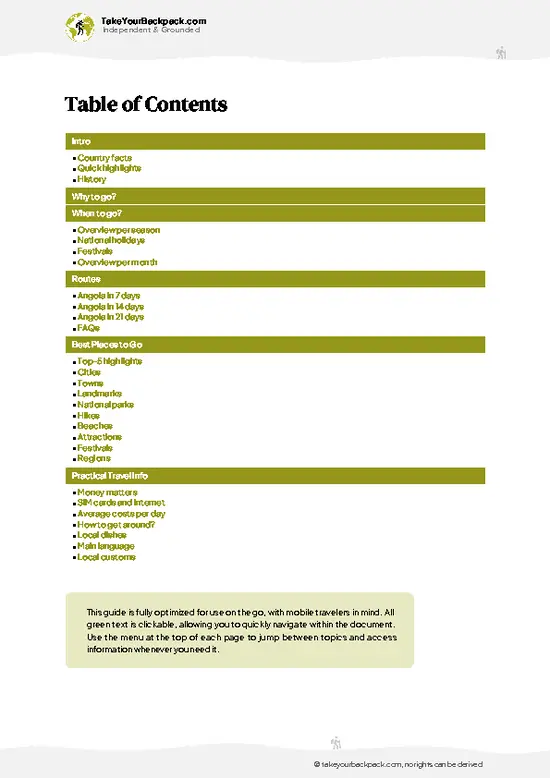
The digital guide (341 pages) contains:
90 highlights, ranked by travel appeal
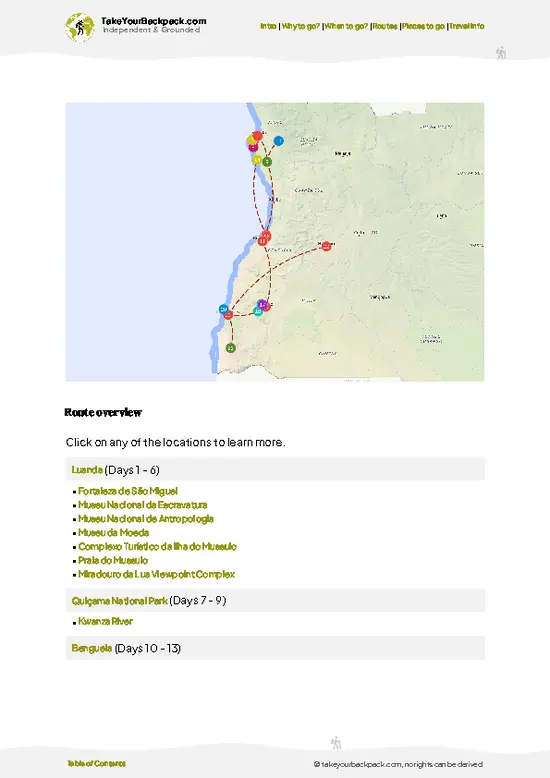
Optimized 7, 14 & 21-day travel routes
Cities, national parks, landmarks, beaches
How to get around
Offline-friendly for travel without Wi-Fi
👉 Click to see all 30+ guide features

📅 Plan smarter in minutes, not weeks
Month by month travel advice
Festivals & national holidays
Budget expectations

🗺️ Go to the right places, skip the overrated ones
Honest pros & cons of destinations
Top hikes, parks & viewpoints
Lesser-known places most travelers miss
Clear “worth it vs skip it” guidance

🛏️ Travel smoothly without rookie mistakes
Best areas to stay
Transport systems explained simply
Common scams & safety advice
SIM cards, money & practical tips

🌍 Understand the country, not just visit it
Culture & traditions
52 Essential phrases & customs
Festivals worth planning around
Traveler-friendly historical context
Insights that make places more meaningful

📱 Built for real travel conditions
Fully downloadable PDF
Works completely offline
Optimized for phone use
Useful in remote areas & buses
Everything in one place
Save weeks of stressful planning
Get instant access to your full guide. 30‑day money-back guarantee.
+ Add another guide for just US$7.80

By proceeding you agree to our terms.
Sent to your inbox immediately after payment • 100% Secure Checkout
Best Backpacking Travel Advisor 2025 tourism awardBest Backpacking
Travel Advisor
2025
What others say about Take Your Backpack Guides:
⭐⭐⭐⭐⭐
Fantastic, amazing amount of information!
⭐⭐⭐⭐⭐
My goodness this is amazing, it's what I've been looking for hats off too you!
⭐⭐⭐⭐⭐
I think this is absolutely BRILLIANT
⭐⭐⭐⭐
Very complete and informative. It's still missing places, but I gotta to commend you
⭐⭐⭐⭐⭐
This is truly amazing, thank you, can't wait to explore it with my kids!
⭐⭐⭐⭐⭐
Awesome resource, thank you!
⭐⭐⭐⭐⭐
This is amazing! Can't wait to explore the ones I haven't seen
⭐⭐⭐⭐
I love this! Well done, great idea.
⭐⭐⭐⭐⭐
Thanks for taking the time to make this gem!
⭐⭐⭐⭐⭐
This might be the best website I've ever seen.
⭐⭐⭐⭐⭐
Congratulations, and thank you so much for your work; it's incredibly valuable.
⭐⭐⭐⭐
In all seriousness I think you did a great job pointing out the important spots
⭐⭐⭐⭐⭐
10/10 very good
⭐⭐⭐⭐⭐
As someone who's only just starting to visit regularly this is awesome, thank you.
⭐⭐⭐⭐
Thank you very much! I'm going to visit my dad, it's going to be very useful!
⭐⭐⭐⭐⭐
This is really cool! We'll be travelling for the first time and this definitely come in handy.
⭐⭐⭐⭐⭐
You are now our minister of culture, congratulations 👨‍💼
⭐⭐⭐⭐⭐
Just wanted to tell you that this is a pearl! Going to follow your recommendations.
⭐⭐⭐⭐⭐
This is so cool. I'll definitely be using the resource for my travels soon.
⭐⭐⭐⭐⭐
This is very impressive! Good work.
⭐⭐⭐⭐⭐
This is an amazing and informative site. Very well done!

🛏️ Where to stay?Choosing the right base

Sumbe’s backpacker scene is compact but clear once you know where to look. The best area to base yourself is the city center, particularly around the Avenida 17 de Setembro corridor. This neighborhood strikes a solid balance between safety and social buzz, making it a natural magnet for solo travelers and budget adventurers. It’s where you’ll find the handful of hostels catering to backpackers, offering basic but reliable digs that keep your wallet intact without sacrificing a sense of community.

Compared to the quieter, more residential districts on the outskirts, the city center pulses with … read more 👉
Sumbe’s backpacker scene is compact but clear once you know where to look. The best area to base yourself is the city center, particularly around the Avenida 17 de Setembro corridor. This neighborhood strikes a solid balance between safety and social buzz, making it a natural magnet for solo travelers and budget adventurers. It’s where you’ll find the handful of hostels catering to backpackers, offering basic but reliable digs that keep your wallet intact without sacrificing a sense of community.

Compared to the quieter, more residential districts on the outskirts, the city center pulses with local life—street vendors, small cafés, and informal markets create a lively backdrop that’s both engaging and easy to navigate on foot. It’s not luxury, but it’s authentic and approachable, which is exactly what you want when you’re after connection over comfort.

Avoid the industrial zones and newer, sprawling suburbs—they’re less safe and lack the social infrastructure backpackers thrive on. In Sumbe, the trade-off is clear: stay central for safety, social opportunities, and budget options, or risk isolation and inconvenience elsewhere. The city center wins every time.

🚌 Getting aroundHow to get from A to B

Sumbe moves at its own rhythm—partly dictated by the slow pulse of the Atlantic coast, partly by the unpredictable hustle of a city still finding its feet in Angola’s evolving landscape. Here, schedules are more of a polite suggestion than a rule, and the flow of people and vehicles feels like a dance between necessity and improvisation. You’ll find moments where time stretches, and others where it snaps tight, especially when catching a ride or navigating the streets. Understanding this ebb and flow is your secret weapon to mastering Sumbe’s transit game.


  • Walking: The most reliable and cost-free way to get around Sumbe’s compact center. Streets are walkable but uneven, so sturdy shoes are a must. Walking lets you absorb the city’s texture at your own pace, no schedule needed.


  • Chapa
read more 👉
Sumbe moves at its own rhythm—partly dictated by the slow pulse of the Atlantic coast, partly by the unpredictable hustle of a city still finding its feet in Angola’s evolving landscape. Here, schedules are more of a polite suggestion than a rule, and the flow of people and vehicles feels like a dance between necessity and improvisation. You’ll find moments where time stretches, and others where it snaps tight, especially when catching a ride or navigating the streets. Understanding this ebb and flow is your secret weapon to mastering Sumbe’s transit game.


  • Walking: The most reliable and cost-free way to get around Sumbe’s compact center. Streets are walkable but uneven, so sturdy shoes are a must. Walking lets you absorb the city’s texture at your own pace, no schedule needed.


  • Chapa (Minibus Taxi): The backbone of local transit, chapas run roughly from 6:00 AM to 7:00 PM. Fares hover around 50-100 AOA (about $0.10-$0.20), making them a budget champion. They’re slow and often packed, but they’ll get you deep into neighborhoods where buses don’t go. Expect a mix of chaotic stops and informal route calls—mastering chapa timing means embracing unpredictability.


  • Motorcycle Taxi (Moto-Taxi): Available 24/7, moto-taxis offer speed and flexibility, especially when time is tight or chapas are scarce. Prices vary but usually start around 200 AOA ($0.40). Comfort is minimal, and safety standards are loose, so weigh your urgency against risk. Great for short hops or late-night returns.


  • Public Bus: Less frequent and more formal than chapas, buses run scheduled routes from about 6:30 AM to 6:00 PM. Tickets cost around 100-150 AOA ($0.20-$0.30). They’re slower but more comfortable, with fixed stops and a semblance of timetable discipline—ideal if you want predictability over speed.


  • Taxi (Private Car): The priciest option, taxis start at roughly 2,000 AOA ($4) for short trips. They offer door-to-door comfort and speed but at a steep premium. Best reserved for when you’re carrying heavy gear or need to make a tight connection. Negotiation skills come into play here; always agree on the fare upfront.

👛 Costs (as of 3 September 2026)How expensive it really is

Backpacking in Sumbe, Angola, demands a clear-eyed view of where your money goes. This isn’t a place for guesswork; every dollar or euro spent shapes your experience, so here’s the breakdown to help you strategize.
  • Dorm Accommodation (High Season): Expect to pay around €15-€20 per night. Options are limited and tend to fill up quickly during peak travel months, so prices spike accordingly.
  • Dorm Accommodation (Off-Season): Drop to about €10-€12 per night. Fewer travelers mean better deals, but also fewer choices, so book smart.
  • Meals: Local eateries offer meals for roughly €3-€6 each. Street food is cheaper but varies in quality; mid-range spots will push you toward the higher end of that range.
  • Local Transport: Minibus rides or shared taxis cost about €0.50-€1 per trip. It’s the go-to
read more 👉
Backpacking in Sumbe, Angola, demands a clear-eyed view of where your money goes. This isn’t a place for guesswork; every dollar or euro spent shapes your experience, so here’s the breakdown to help you strategize.
  • Dorm Accommodation (High Season): Expect to pay around €15-€20 per night. Options are limited and tend to fill up quickly during peak travel months, so prices spike accordingly.
  • Dorm Accommodation (Off-Season): Drop to about €10-€12 per night. Fewer travelers mean better deals, but also fewer choices, so book smart.
  • Meals: Local eateries offer meals for roughly €3-€6 each. Street food is cheaper but varies in quality; mid-range spots will push you toward the higher end of that range.
  • Local Transport: Minibus rides or shared taxis cost about €0.50-€1 per trip. It’s the go-to for getting around town but expect crowding and irregular schedules.
  • City Transport Pass: Not commonly available in Sumbe, so daily transport costs stack up based on individual rides rather than a flat pass.
  • Basic Activities/Entry Fees: Museums, local markets, and small cultural sites typically charge €2-€5. These are low-cost ways to engage with the city’s character without breaking the bank.
  • Miscellaneous Expenses: Budget around €2-€4 for essentials like water, snacks, or occasional tips. These small costs add up but are manageable with planning.

Sum it all up, and you’re looking at a daily budget between €22 and €38 for a no-frills backpacking experience in Sumbe. This range balances the essentials—sleep, eat, move, and explore—without padding for luxury or unexpected splurges. Knowing these trade-offs lets you decide where to tighten or loosen the purse strings, turning your trip into a calculated win.
⚠️ Prices can change and everyone travels differently, so take this as a rough guide. Hope it helps you plan your adventure!

🚌 Day tripsShort trips worth adding

Sumbe, Angola, is a fantastic launchpad for day trips that blend adventure with cultural immersion. Here are some standout options that will enrich your experience without draining your wallet.

Kissama National Park
Just a couple of hours from Sumbe, Kissama National Park offers a chance to see wildlife in its natural habitat. You can spot elephants, zebras, and various bird species. The park’s rugged beauty is a feast for the eyes, and the thrill of a safari is hard to beat. Expect to spend around $20 for park entry and transport, making it a budget-friendly option. The dry season, from May to October, is ideal for wildlife viewing. A common mistake? Underestimating the time needed for travel; leave early to maximize your day.


Samba de Angola
Immerse yourself in the vibrant culture … read more 👉
Sumbe, Angola, is a fantastic launchpad for day trips that blend adventure with cultural immersion. Here are some standout options that will enrich your experience without draining your wallet.

Kissama National Park
Just a couple of hours from Sumbe, Kissama National Park offers a chance to see wildlife in its natural habitat. You can spot elephants, zebras, and various bird species. The park’s rugged beauty is a feast for the eyes, and the thrill of a safari is hard to beat. Expect to spend around $20 for park entry and transport, making it a budget-friendly option. The dry season, from May to October, is ideal for wildlife viewing. A common mistake? Underestimating the time needed for travel; leave early to maximize your day.


Samba de Angola
Immerse yourself in the vibrant culture of Samba de Angola, just a short drive from Sumbe. This lively village showcases traditional music and dance, offering a unique glimpse into local life. You might even get pulled into a dance circle! Costs are minimal, around $10 for transport and a small fee for any workshops. The best time to visit is during local festivals, which can be unpredictable but are worth the wait. Many first-timers miss out on the chance to engage with locals; don’t be shy—join in!


Praia da Caota
For a beach day that feels like a mini-vacation, head to Praia da Caota. It’s about an hour’s drive from Sumbe, and the golden sands and clear waters are perfect for relaxation or a swim. Bring your own snacks to keep costs low—around $5 for transport and food. The dry season is best for beach outings. A common pitfall? Arriving too late in the day; the sunsets here are spectacular, so plan to stay until dusk.


Cabo Ledo
If you’re craving some surf, Cabo Ledo is your spot. Roughly 90 minutes from Sumbe, this beach is known for its waves and laid-back vibe. Rent a board for about $10 and enjoy the thrill of catching some waves. The best time to visit is during the dry season when conditions are ideal. First-timers often forget sunscreen; trust me, you’ll want to avoid a sunburn on your adventure.
Want to know what more Angola offers?
The Angola Travel Guide describes 90 highlights, from cities to national parks, from beaches to hikes

Get the Travel Guide -

🍲 FoodEating & Drinking in Sumbe

In Sumbe, local cuisine is a vibrant tapestry of flavors that tells the story of Angola. Dive into muamba de galinha, a rich chicken stew simmered with palm oil and spices, served with a side of funje, a starchy dish made from cassava flour. The smoky aroma wafting from street vendors grilling sardinhas (sardines) is irresistible; grab a few for a quick snack.

Backpackers will find their culinary adventures in bustling markets and lively street stalls. Here, you can savor bifana, a spicy pork sandwich, or sip on a refreshing cuca, a local beer that pairs perfectly with the heat. The atmosphere is electric, filled with laughter and the sound of sizzling food.

When dining, embrace the custom of sharing meals; it’s a way to connect with locals. Don’t be surprised if you’re offered a taste of … read more 👉
In Sumbe, local cuisine is a vibrant tapestry of flavors that tells the story of Angola. Dive into muamba de galinha, a rich chicken stew simmered with palm oil and spices, served with a side of funje, a starchy dish made from cassava flour. The smoky aroma wafting from street vendors grilling sardinhas (sardines) is irresistible; grab a few for a quick snack.

Backpackers will find their culinary adventures in bustling markets and lively street stalls. Here, you can savor bifana, a spicy pork sandwich, or sip on a refreshing cuca, a local beer that pairs perfectly with the heat. The atmosphere is electric, filled with laughter and the sound of sizzling food.

When dining, embrace the custom of sharing meals; it’s a way to connect with locals. Don’t be surprised if you’re offered a taste of someone’s dish—this is a sign of hospitality. In Sumbe, every bite is an invitation to experience the heart of Angolan culture.

🛡️ SafetyScams, Hazards, and Annoyances

Sumbe is generally safe, but like any city, it has its quirks. Stay alert in crowded markets and bus stations; petty theft can happen when you least expect it. If you’re solo, avoid wandering too far after dark. The waterfront can be lively, but stick to well-lit areas and keep your belongings close.

Scams are rare, but be cautious with street vendors who may inflate prices for tourists. Always negotiate before buying. Language barriers can lead to misunderstandings, so a few phrases in Portuguese can go a long way.

Carry yourself confidently. A relaxed demeanor often deters trouble. Trust your instincts; if something feels off, it probably is. Enjoy the vibrant culture, but stay savvy.

FAQCommon questions from travelers

2 to 3 days are sufficient to explore Sumbe, allowing time to visit its beaches, local markets, and nearby natural attractions. The town is small, so most key sites can be covered within this timeframe.
Yes, Sumbe is generally safe for solo backpackers, but standard precautions should be taken, especially at night. Avoid isolated areas and keep valuables secure to minimize risk.
Sumbe is known for its beautiful Atlantic coastline, sandy beaches, and colonial architecture. It also serves as a gateway to the Kwanza River estuary and nearby nature reserves.
⚠️ Things can change over time, so always validate details locally before you go.

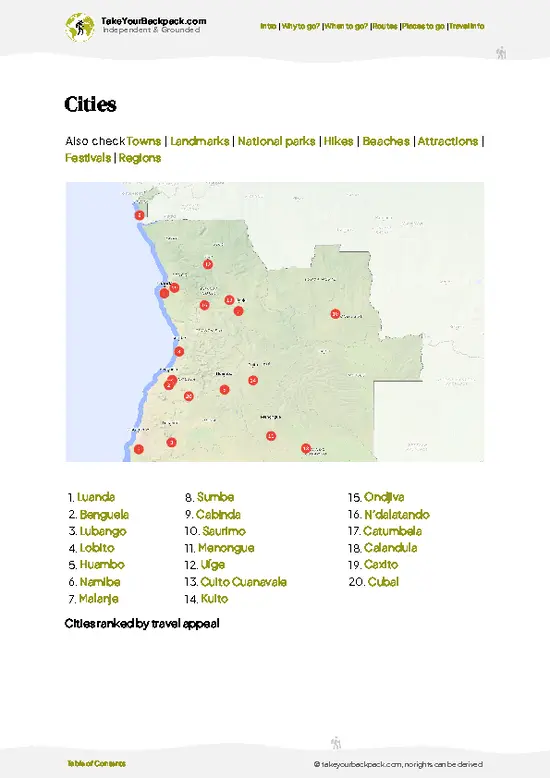
Other Angolan cities near Sumbe

Explore more nearby:

  • Lobito—deep-water port, sandspit peninsula, seafood restaurants| 133 km away
  • Quibala—forest edge, agricultural center, rolling hills| 135 km away
  • Catumbela—river estuary, colonial bridges, industrial zone| 138 km away

💡 Not sure where to go next?
Create a personalized itinerary for Angola including Sumbe and the places that fit your trip.

Generate my itinerary

👉 Discover all cities

Or checkout all Angola has to offer (think cities, towns, villages, national parks, hikes, beaches, festivals)
Country photo of Angola

We 💚 feedbackWhat to keep in mind

Sumbe has a laid-back vibe that feels like a well-kept secret. The best surprise? The local seafood—fresh and bursting with flavor, especially at the beachside shacks. Just a heads-up: the roads can be a bit rough, so don’t rush your travels. Embrace the slow pace; it’s part of the charm. You’ll find that the moments spent here linger long after you leave.

✍️ Help improve this page!
The information on this page is based on in-depth research, insights shared by experienced travelers, and feedback from the local travel community in Angola. While every effort is made to keep the information accurate and current, conditions can change — so if you spot anything incorrect or outdated, please get in touch.


🙋‍♂️ Give feedback

👋 Meet the founderWho’s Behind Take Your Backpack?

Johan, backpacker and founder of TakeYourBackpackHi, I’m Johan (Netherlands 🇳🇱), the creator of TakeYourBackpack. Over the past decade, I’ve backpacked through 80+ countries across six continents, gaining extensive experience with independent travel, long-term trips, and overland routes.

This site is built on a combination of firsthand travel experience and carefully curated insights from other backpackers. Many guides are based on places I’ve personally visited, while others bring together tips, observations, and practical advice shared by trusted travelers I’ve met along the way.

The goal is to provide realistic, experience-driven guidance — not generic itineraries — so you can explore destinations with better context, clearer expectations, and more confidence.

Get full Angola guide •
Instant download • 90 highlights • Full Offline guide