×

Argentina🇦🇷 | townsCafayateTorrontés wine, red rock canyons, adobe plaza | things to do and best time to go

Explore Valle de UcoExplore El Bolsón

Backpacking in Cafayate
🌟 Highlighttown ranked #8
By Johan Kruseman 🇳🇱 | Updated October 19, 2026

Everyone comes to Cafayate chasing the wine, but the real prize is the drive in, when the road cuts through red rock canyons that turn the color of embers at sunset. Cafayate sits in Salta Province, in northwest Argentina, at the southern end of the Calchaquí Valleys. It's a small, dusty, walkable town built around a plaza, and it works best as a base for two or three days rather than a quick photo stop. You get cheap bodega tours, thin crowds compared to Salta city and easy hostel life. On the downside, bus schedules are limited, nightlife is sparse, and you'll need buses or tours to reach the canyons that make the trip worthwhile. Compared to Salta, it's slower, smaller, and far more scenic.

Discover everything you want to know in the 📖 Argentina Travel Guide.


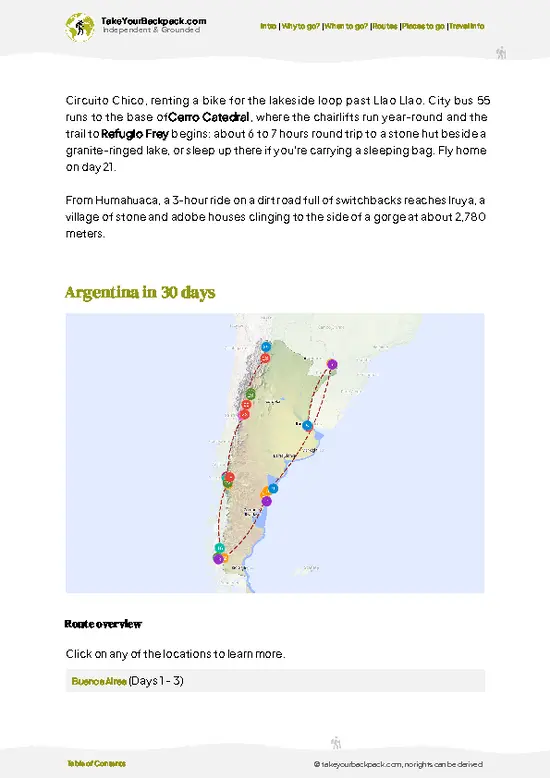
example page 0 from our offline Travel Guide for Argentina
example page 1 from our offline Travel Guide for Argentina
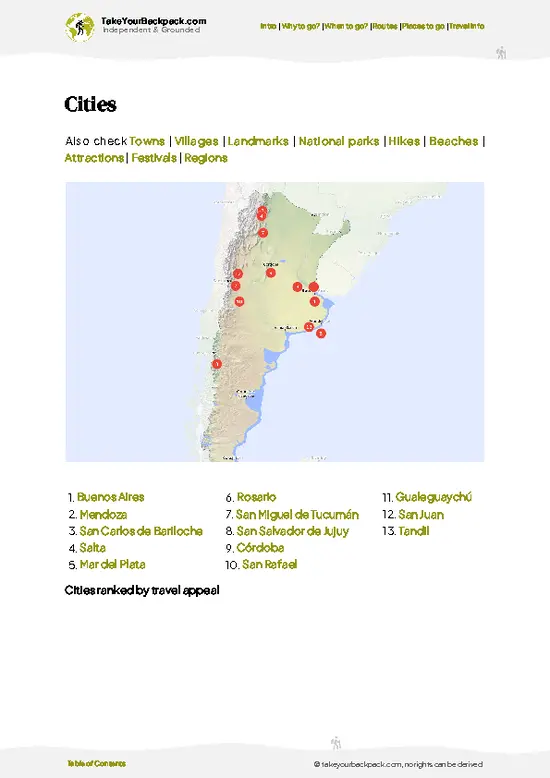
example page 2 from our offline Travel Guide for Argentina
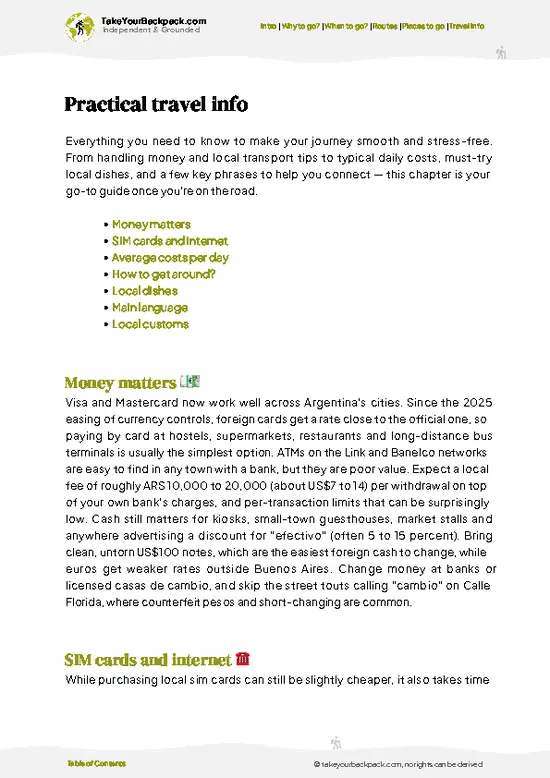
example page 3 from our offline Travel Guide for Argentina
example page 4 from our offline Travel Guide for Argentina
example page 5 from our offline Travel Guide for Argentina
example page 6 from our offline Travel Guide for Argentina
example page 7 from our offline Travel Guide for Argentina
Loading the map 🌍
CLICK TO FILTER
cities
towns
villages
landmarks
national parks
hikes
beaches
attractions
festivals
regions
SHOW COUNTRY’S BESTSHOW ALL

✨ Why go?
Ranked #8 town in Argentina
Why Cafayate should be on your travel list

Cafayate earns its spot on a backpacking route because it's the natural pause point between Salta and the Calchaquí Valleys, not because of urban attractions. The town itself is tiny and walkable, built around a shaded plaza lined with wineries you can visit on foot in an afternoon. Its real value is proximity: the Quebrada de las Conchas canyon sits right outside town, and half-day hikes or bike rides to rock formations like Garganta del Diablo are easy to arrange. Hostels here are small, family-run, and social, the kind of place where you end up sharing a bottle of torrontés with strangers on a rooftop. Most backpackers stay two to three nights, long enough to do a wine tour, a canyon excursion, and one lazy day. It suits slow travelers, hikers, and solo backpackers who want quiet evenings … read more 👉
Cafayate earns its spot on a backpacking route because it's the natural pause point between Salta and the Calchaquí Valleys, not because of urban attractions. The town itself is tiny and walkable, built around a shaded plaza lined with wineries you can visit on foot in an afternoon. Its real value is proximity: the Quebrada de las Conchas canyon sits right outside town, and half-day hikes or bike rides to rock formations like Garganta del Diablo are easy to arrange. Hostels here are small, family-run, and social, the kind of place where you end up sharing a bottle of torrontés with strangers on a rooftop. Most backpackers stay two to three nights, long enough to do a wine tour, a canyon excursion, and one lazy day. It suits slow travelers, hikers, and solo backpackers who want quiet evenings over loud bars. Don't expect nightlife; expect good food, good wine, and early mornings.

💡 HighlightsMust-see experiences and standout moments

  1. Plaza San Martín: The shaded central square where locals gather in the evening cool. Free to visit, best at sunset when the surrounding hills catch the light; fifteen to twenty minutes is enough for a first pass.
  2. Bodega El Esteco: One of the valley's oldest wineries, with tours covering torrontés production. Tours run around USD10 to 15, take about an hour, and are best booked in the morning before tour buses arrive.
  3. Museo de la Vid y el Vino: A well-curated wine museum explaining the region's high-altitude viticulture. Entry costs roughly USD3, and forty-five minutes covers it comfortably; a good rainy-day or midday-heat option.
  4. Iglesia Nuestra Señora del Rosario: The town's five-nave cathedral facing the plaza, built in the late 19th century. Free to enter, five to ten minutes, best visited
… read more 👉
  1. Plaza San Martín: The shaded central square where locals gather in the evening cool. Free to visit, best at sunset when the surrounding hills catch the light; fifteen to twenty minutes is enough for a first pass.
  2. Bodega El Esteco: One of the valley's oldest wineries, with tours covering torrontés production. Tours run around USD10 to 15, take about an hour, and are best booked in the morning before tour buses arrive.
  3. Museo de la Vid y el Vino: A well-curated wine museum explaining the region's high-altitude viticulture. Entry costs roughly USD3, and forty-five minutes covers it comfortably; a good rainy-day or midday-heat option.
  4. Iglesia Nuestra Señora del Rosario: The town's five-nave cathedral facing the plaza, built in the late 19th century. Free to enter, five to ten minutes, best visited in the early morning light.
  5. Feria Artesanal: The small artisan market near the plaza selling local weavings and leather goods. No entry cost, browsing takes thirty minutes to an hour, liveliest on weekend evenings.
Just outside town, the Quebrada de las Conchas canyon delivers the real payoff, with formations like Garganta del Diablo and Anfiteatro reachable by bike, bus, or tour. The Garganta del Diablo is a personal favorite: standing inside that narrow red-rock throat with the wind funneling through is worth the whole detour.
Spotted a mistake or missing something? Contact us.

Things to do around Cafayate

Ratings based on Tripadvisor reviews. When you book through this link, you support our work at no extra cost to you.

🏘️ NeighborhoodsNeighborhood guide to Cafayate

Cafayate is small enough that 'neighborhoods' really means a few walkable zones radiating from the plaza.
  • Plaza Central: The heart of town, where the church, tourism office, and most restaurants cluster. Staying within a few blocks means you can walk everywhere, skip taxis, and be first in line for empanadas at lunch. Best for short stays of one or two nights since it's noisy with day-tripper buses arriving midmorning.
  • Calle Colón / Wine Row: The stretch leading toward the bigger bodegas like El Esteco. Quiet at night, good for travelers prioritizing wine tours over social scenes. A ten to fifteen minute walk from the plaza, flat and safe after dark.
  • Barrio Sur (South Side): Residential streets south of the plaza where cheaper guesthouses sit. Rougher pavement, fewer streetlights, but noticeably
… read more 👉
Cafayate is small enough that 'neighborhoods' really means a few walkable zones radiating from the plaza.
  • Plaza Central: The heart of town, where the church, tourism office, and most restaurants cluster. Staying within a few blocks means you can walk everywhere, skip taxis, and be first in line for empanadas at lunch. Best for short stays of one or two nights since it's noisy with day-tripper buses arriving midmorning.
  • Calle Colón / Wine Row: The stretch leading toward the bigger bodegas like El Esteco. Quiet at night, good for travelers prioritizing wine tours over social scenes. A ten to fifteen minute walk from the plaza, flat and safe after dark.
  • Barrio Sur (South Side): Residential streets south of the plaza where cheaper guesthouses sit. Rougher pavement, fewer streetlights, but noticeably quieter and better for longer stays if you want to avoid tour-bus noise in the mornings.
  • Route 40 Fringe: The edge of town along the highway toward the canyons. Handy if you're catching early buses to the Quebrada, but it's a ten minute walk from restaurants and feels empty after sunset.

⌛️ 1 dayWhat you can realistically do in a day

8:00 AM: Plaza San Martín
Start with coffee and medialunas at a café under the plaza’s trees while the square is still quiet. The cathedral, Nuestra Señora del Rosario, has a pale facade and a calm interior, and the whole center is walkable from here.

9:30 AM: Museo de la Vid y el Vino
Walk five minutes to this museum, which explains how high-altitude Torrontés and Malbec grow at roughly 1,700 meters. Entry runs about US$3 to 5, and an hour is enough. The rooftop view over the vineyards is a good orientation.

11:00 AM: Bodega visit
Walk or rent a bike to one of the wineries on the edge of town, such as Nanni or Domingo Molina. A tour with tasting costs roughly US$6 to 15. Pick a small producer and ask for the Torrontés, which is the local calling card.

1:30 PM: Lunch on Calle Güemes
Sit down … read more 👉
8:00 AM: Plaza San Martín
Start with coffee and medialunas at a café under the plaza’s trees while the square is still quiet. The cathedral, Nuestra Señora del Rosario, has a pale facade and a calm interior, and the whole center is walkable from here.

9:30 AM: Museo de la Vid y el Vino
Walk five minutes to this museum, which explains how high-altitude Torrontés and Malbec grow at roughly 1,700 meters. Entry runs about US$3 to 5, and an hour is enough. The rooftop view over the vineyards is a good orientation.

11:00 AM: Bodega visit
Walk or rent a bike to one of the wineries on the edge of town, such as Nanni or Domingo Molina. A tour with tasting costs roughly US$6 to 15. Pick a small producer and ask for the Torrontés, which is the local calling card.

1:30 PM: Lunch on Calle Güemes
Sit down for empanadas salteñas and a goat stew, or try locro. Mains cost around US$6 to 10, so you can afford a glass of local wine.

3:30 PM: Siesta and Mercado Artesanal
Shops reopen late, so use the lull to browse the artisan market near the plaza for woven goods and sweets from nearby valleys. The cactus-wood crafts are worth a look.

5:00 PM: Río Colorado at the edge of town
Most visitors head straight to the bodegas, so few walk out to the dry riverbed on the western side. Follow it toward the foothills of the Sierra de Quilmes, where you get quiet space, red earth and long views of the Calchaquí Valley.

7:30 PM: Peña folklórica
Finish at a peña, where guitar and charango players perform folk music over empanadas and a carafe of wine. Cover is often US$3 to 8, and shows start late, so arrive hungry and stay for a couple of songs.

🌤️ When to go?Weather, crowds, and seasonal trade-offs

  • Autumn (April-May): The grape harvest runs into early April, with days around 24-27°C (75-81°F) and cool nights near 8°C (46°F). Skies stay clear, vineyards turn gold, and the Bodega tours get an extra buzz from grape-crushing activity.
  • Winter (June-August): Dry and sunny by day, 18-20°C (64-68°F), but nights drop hard, sometimes below freezing. Fewer crowds, cheaper hostel beds, and shorter daylight (roughly 10 hours) mean earlier starts for canyon hikes.
  • Spring (September-November): Warming toward 25°C (77°F), longer days, blooming landscape, moderate crowds before the summer rush.
  • Summer (December-February): Hot, 30°C+ (86°F+), occasional afternoon thunderstorms, peak Argentine holiday crowds and higher prices.
Aim for early April. The last of the harvest, mild days, and thin crowds make it the sweet spot before winter's chill sets in.

source: climatestotravel.comJANJanuary: good for travelingFEBFebruary: good for travelingMARMarch: highly recommended for travelingAPRApril: excellent for travelingMAYMay: excellent for travelingJUNJune: highly recommended for travelingJULJuly: highly recommended for travelingAUGAugust: highly recommended for travelingSEPSeptember: excellent for travelingOCTOctober: excellent for travelingNOVNovember: excellent for travelingDECDecember: good for traveling
when-to-go

✈️ The backpacker research shortcutArgentina Travel Guide

An offline-friendly backpacking guide with optimized travel routes, ranked highlights, transport advice, and the best areas to stay.
example page 0 from our offline Travel Guide for Argentina
example page 1 from our offline Travel Guide for Argentina
example page 2 from our offline Travel Guide for Argentina
example page 3 from our offline Travel Guide for Argentina
example page 4 from our offline Travel Guide for Argentina
example page 5 from our offline Travel Guide for Argentina
example page 6 from our offline Travel Guide for Argentina
example page 7 from our offline Travel Guide for Argentina
The digital guide (393 pages) contains:
✅ 131 highlights, ranked by travel appeal
✅ Optimized 14, 21 & 30-day travel routes
✅ Cities, national parks, landmarks, beaches
✅ How to get around
✅ Offline-friendly for travel without Wi-Fi
👉 Click to see all 30+ guide features

📅 Plan smarter in minutes, not weeks
✅ Month by month travel advice
✅ Festivals & national holidays
✅ Budget expectations

🗺️ Go to the right places, skip the overrated ones
✅ Honest pros & cons of destinations
✅ Top hikes, parks & viewpoints
✅ Lesser-known places most travelers miss
✅ Clear “worth it vs skip it” guidance

🛏️ Travel smoothly without rookie mistakes
✅ Best areas to stay
✅ Transport systems explained simply
✅ Common scams & safety advice
✅ SIM cards, money & practical tips

🌍 Understand the country, not just visit it
✅ Culture & traditions
✅ 52 Essential phrases & customs
✅ Festivals worth planning around
✅ Traveler-friendly historical context
✅ Insights that make places more meaningful

📱 Built for real travel conditions
✅ Fully downloadable PDF
✅ Works completely offline
✅ Optimized for phone use
✅ Useful in remote areas & buses
✅ Everything in one place
Stop searching, start planning
Get instant access to your full guide. 30‑day money-back guarantee.
+ Add another guide for just

By proceeding you agree to our terms.
Sent to your inbox immediately after payment • 100% Secure Checkout
Best Backpacking Travel Advisor 2025 tourism awardBest Backpacking
Travel Advisor
2025
What others say about Take Your Backpack Guides:
⭐⭐⭐⭐⭐
Fantastic, amazing amount of information!
⭐⭐⭐⭐⭐
My goodness this is amazing, it's what I've been looking for hats off too you!
⭐⭐⭐⭐⭐
I think this is absolutely BRILLIANT
⭐⭐⭐⭐
Very complete and informative. It's still missing places, but I gotta to commend you
⭐⭐⭐⭐⭐
This is truly amazing, thank you, can't wait to explore it with my kids!
⭐⭐⭐⭐⭐
Awesome resource, thank you!
⭐⭐⭐⭐⭐
This is amazing! Can't wait to explore the ones I haven't seen
⭐⭐⭐⭐
I love this! Well done, great idea.
⭐⭐⭐⭐⭐
Thanks for taking the time to make this gem!
⭐⭐⭐⭐⭐
This might be the best website I've ever seen.
⭐⭐⭐⭐⭐
Congratulations, and thank you so much for your work; it's incredibly valuable.
⭐⭐⭐⭐
In all seriousness I think you did a great job pointing out the important spots
⭐⭐⭐⭐⭐
10/10 very good
⭐⭐⭐⭐⭐
As someone who's only just starting to visit regularly this is awesome, thank you.
⭐⭐⭐⭐
Thank you very much! I'm going to visit my dad, it's going to be very useful!
⭐⭐⭐⭐⭐
This is really cool! We'll be travelling for the first time and this definitely come in handy.
⭐⭐⭐⭐⭐
You are now our minister of culture, congratulations 👨‍💼
⭐⭐⭐⭐⭐
Just wanted to tell you that this is a pearl! Going to follow your recommendations.
⭐⭐⭐⭐⭐
This is so cool. I'll definitely be using the resource for my travels soon.
⭐⭐⭐⭐⭐
This is very impressive! Good work.
⭐⭐⭐⭐⭐
This is an amazing and informative site. Very well done!

🛏️ Where to stay?Best areas and accommodation options

Staying within a few blocks of the plaza is the smartest move for budget travelers. It puts you within walking distance of wineries, restaurants, and the artisan market, and hostels here tend to have communal kitchens and rooftop spaces where travelers naturally mix over wine in the evening. It's social without being loud, since Cafayate doesn't really have a nightlife district. Areas slightly south of the plaza offer quieter, cheaper guesthouses, good if you're staying longer and want a break from tour-bus noise in the mornings. Avoid lodging out toward the highway fringe unless you specifically … read more 👉
Staying within a few blocks of the plaza is the smartest move for budget travelers. It puts you within walking distance of wineries, restaurants, and the artisan market, and hostels here tend to have communal kitchens and rooftop spaces where travelers naturally mix over wine in the evening. It's social without being loud, since Cafayate doesn't really have a nightlife district. Areas slightly south of the plaza offer quieter, cheaper guesthouses, good if you're staying longer and want a break from tour-bus noise in the mornings. Avoid lodging out toward the highway fringe unless you specifically need early access to canyon-bound buses; it saves little time and costs you the easy walkability that makes Cafayate pleasant in the first place.

🚌 Getting aroundHow to get from A to B

Cafayate runs on loose, sun-dictated time rather than rigid schedules. Buses leave when they leave, shops close for a midday lull, and the town's rhythm slows to match the heat radiating off the red dirt streets by early afternoon. Walking is the default mode inside town, but reaching the canyons or Salta requires patience with a thinner transit system than bigger cities.
  • Walking: The plaza, wineries, and market are all within a ten to fifteen minute walk of each other, making shoes your main transport tool in town.
  • Remise (local taxi): Best for reaching canyon viewpoints quickly; costs are negotiated upfront, typically a few thousand pesos for short hops, and drivers wait while you explore.
  • Long-distance buses: Services to Salta city run a few times daily, taking roughly three to four hours
… read more 👉
Cafayate runs on loose, sun-dictated time rather than rigid schedules. Buses leave when they leave, shops close for a midday lull, and the town's rhythm slows to match the heat radiating off the red dirt streets by early afternoon. Walking is the default mode inside town, but reaching the canyons or Salta requires patience with a thinner transit system than bigger cities.
  • Walking: The plaza, wineries, and market are all within a ten to fifteen minute walk of each other, making shoes your main transport tool in town.
  • Remise (local taxi): Best for reaching canyon viewpoints quickly; costs are negotiated upfront, typically a few thousand pesos for short hops, and drivers wait while you explore.
  • Long-distance buses: Services to Salta city run a few times daily, taking roughly three to four hours through the Quebrada de las Conchas; buy tickets a day ahead in high season.
  • Rental bikes: A popular way to reach nearer canyon formations independently; rental shops near the plaza offer daily rates, best used early morning before the heat peaks.
  • Organized canyon tours: Minivans depart mid-morning for multi-stop canyon routes, useful if you want commentary and don't want to negotiate transport yourself.

👛 Costs (as of 19 October 2026)How expensive it really is

Cafayate is one of the more affordable stops on a northwest Argentina route, with wine tastings and canyon tours costing far less than similar experiences elsewhere.
CategoryBudget RangeLocal Reality
Dorm accommodationUSD8 to 15Small family-run hostels with shared kitchens, usually clean and social.
MealsUSD5 to 12Empanadas and set-menu lunches are cheap; a la carte dinners with wine cost more.
Local transportUSD2 to 8Mostly walking; remise taxis for canyon trips add up if used daily.
Activities/entry feesUSD10 to 25Winery tours and museum entry are inexpensive compared to other wine regions.
MiscellaneousUSD3 to 10Snacks, market purchases, and small tips.
Total Daily BudgetUSD28 to 70Comfortable budget range for a solo backpacker including one activity per day.
⚠️ Prices can change and everyone travels differently, so take this as a rough guide. Hope it helps you plan your adventure!

🚌 Day tripsShort trips worth adding

Cafayate works well as a day-trip base because the best sights sit along Ruta 68 and Ruta 40, and shared taxis, tour vans and rental bikes cover most of them for US$5 to 40.
Quebrada de las Conchas:
This is the one you cannot skip. The road north toward Salta runs through red sandstone formations with names like Garganta del Diablo and El Anfiteatro, and each has a signed pullout within about 50 km of town. Joining a half-day tour costs roughly US$15 to 25, while a local remis (private taxi) with waiting time runs US$40 to 60 split among passengers. Cyclists can ride the first stretch, but the wind picks up by afternoon, so start early. Go in the morning, when the rock face glows and the buses have not arrived.

Bodegas Circuit and Tolombón:
The wineries around town are the easiest outing. … read more 👉
Cafayate works well as a day-trip base because the best sights sit along Ruta 68 and Ruta 40, and shared taxis, tour vans and rental bikes cover most of them for US$5 to 40.
Quebrada de las Conchas:
This is the one you cannot skip. The road north toward Salta runs through red sandstone formations with names like Garganta del Diablo and El Anfiteatro, and each has a signed pullout within about 50 km of town. Joining a half-day tour costs roughly US$15 to 25, while a local remis (private taxi) with waiting time runs US$40 to 60 split among passengers. Cyclists can ride the first stretch, but the wind picks up by afternoon, so start early. Go in the morning, when the rock face glows and the buses have not arrived.

Bodegas Circuit and Tolombón:
The wineries around town are the easiest outing. Several sit within a 15-minute walk or a short bike ride (rental around US$4 to 8 a day), and tastings of Torrontés and Tannat cost about US$3 to 10. The village of Tolombón, a short ride south, adds more estates and quieter tasting rooms. Harvest runs February to April, but the vines are photogenic year-round. Many first-timers try to visit four or five bodegas in one afternoon and rush; two or three is plenty.

Quilmes Ruins:
These are the remains of a large pre-Hispanic hilltop settlement, roughly 50 km south of Cafayate in Tucumán province. Allow a half day: about 1 hour each way by road, with 1.5 to 2 hours walking the terraces and stone foundations. Entry is around US$5 to 8. A taxi or tour is the practical option, typically US$10 to 20 per person when shared. Bring water and a hat, because there is almost no shade, and summer midday heat is punishing.

Río Colorado Waterfalls:
For a quieter day, head about 6 km out of town, where guided walks lead to the Río Colorado waterfalls, a short hike of a few hours through a canyon with pools. Budget about US$15 to 30 including a guide and transport. Best from spring to autumn, and skip it after heavy rain when the trail floods.

🛡️ SafetySafety Tips and Common Scams in Cafayate

Cafayate is broadly safe, and most travelers experience nothing worse than sunburn or a missed bus. Petty theft is uncommon but not impossible, so keep valuables zipped up on canyon tours where bags sit unattended in vans. Walking alone at night around the plaza is generally fine, since the town is small and quiet rather than empty and sketchy. The main annoyance is inconsistent bus schedules rather than any scam culture; confirm departure times in person rather than trusting posted timetables. Sun exposure is the real everyday risk at this altitude, so carry water and cover up during midday canyon excursions.

FAQFrequently asked questions about Cafayate

Cafayate is worth a dedicated stay rather than a quick stopover, since the surrounding canyon scenery and wineries need at least a couple of days to appreciate properly. Rushing through as a single-night stop means missing the Quebrada de las Conchas entirely, which is arguably the region's main draw.
Two to three days covers the essentials: one day for wineries and the plaza, one day for canyon exploration, and an optional third day for a further day trip like Quilmes. Solo travelers moving slowly often stretch this to four days without running out of things to do.
Cafayate can be visited as a long day trip from Salta city, about three to four hours away by bus through the Quebrada de las Conchas, but doing so means rushing both the canyon scenery and the wineries. Staying at least one night is a better use of the drive.
⚠️ Things can change over time, so always validate details locally before you go.

Other Argentine towns near Cafayate

Explore more nearby:

  • Tafí del Valle—Stone menhirs, cheese farms, highland valley| 91 km away
  • Purmamarca—Seven-color hill, llama-wool market, 2,300 meters| 263 km away
  • Capilla del Monte—Cerro Uritorco, granite sierra, creek pools| 550 km away

💡 Not sure where to go next?
Create a personalized itinerary for Argentina including Cafayate and the places that fit your trip.

Generate my itinerary

👉 Discover all towns

Or checkout all Argentina has to offer (think cities, towns, villages, national parks, hikes, beaches, festivals)
Country photo of Argentina

We 💚 feedbackParting advice and final tips

Cafayate is worth it for the canyon light alone, that red-rock glow at sunset near Garganta del Diablo. The drawback: bus schedules are unreliable and infrequent, so build slack into your plans rather than cutting it close to your next destination.

✈️ When did I visit Argentina?
I have visited Argentina, together with Chile, in September 2012.

✍️ Help improve this page!
The information on this page is based on my own backpacking experience in Argentina, supplemented with up-to-date research and feedback from other travelers. Travel details can change, so if you notice anything outdated or incomplete, feel free to let me know.


🙋‍♂️ Give feedback

👋 Meet the founderWho’s Behind Take Your Backpack?

Johan, backpacker and founder of TakeYourBackpackHi, I’m Johan (Netherlands 🇳🇱), the creator of TakeYourBackpack. Over the past 3 decades, I’ve backpacked through 90+ countries across six continents, gaining extensive experience with independent travel, long-term trips, and overland routes.

This site is built on a combination of firsthand travel experience and carefully curated insights from other backpackers. Many guides are based on places I’ve personally visited, while others bring together tips, observations, and practical advice shared by trusted travelers I’ve met along the way.

The goal is to provide realistic, experience-driven guidance — not generic itineraries — so you can explore destinations with better context, clearer expectations, and more confidence.