×

Argentina🇦🇷 | regionsValle de UcoBoutique cellars, Tupungato sunsets, San Martín pass, small producers | things to do and best time to go

Explore TucumánExplore Cafayate

Backpacking in Valle de Uco
By Johan Kruseman 🇳🇱 | Updated October 19, 2026

Everyone talks about the Andes backdrop framing every vineyard in Valle de Uco, but that view is free and constant. What actually matters is how you time your days here, because this region runs on winery reservations and infrequent buses, not walk-in spontaneity. Valle de Uco sits southwest of Mendoza city, roughly an hour and a half by road, spread across the towns of Tunuyan, Tupungato, and San Carlos. The trade-off is stark: skip the tour-bus wineries clustered near the highway (cheap, crowded, forgettable) and spend a bit more on a bike-and-remis combo to reach the smaller producers tucked on dirt roads, where you'll taste better wine for less than a Mendoza city restaurant markup. I remember sitting on a wooden deck in Tupungato at 6pm, malbec in hand, watching the sun drop behind Cerro El Plata while the temperature dropped ten degrees in twenty minutes. That's the real currency here: patience over pace. It's quieter and more authentic than Mendoza's wine circuit, but you'll sacrifice nightlife and easy transport for it.

Discover everything you want to know in the 📖 Argentina Travel Guide.


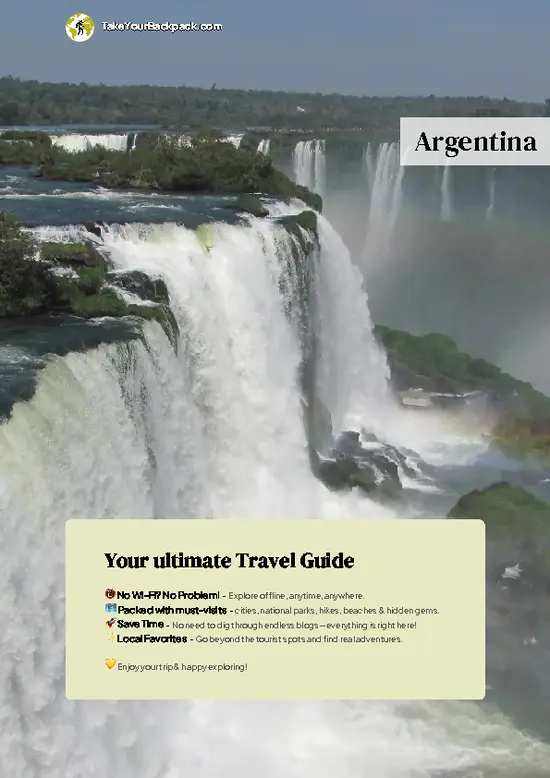
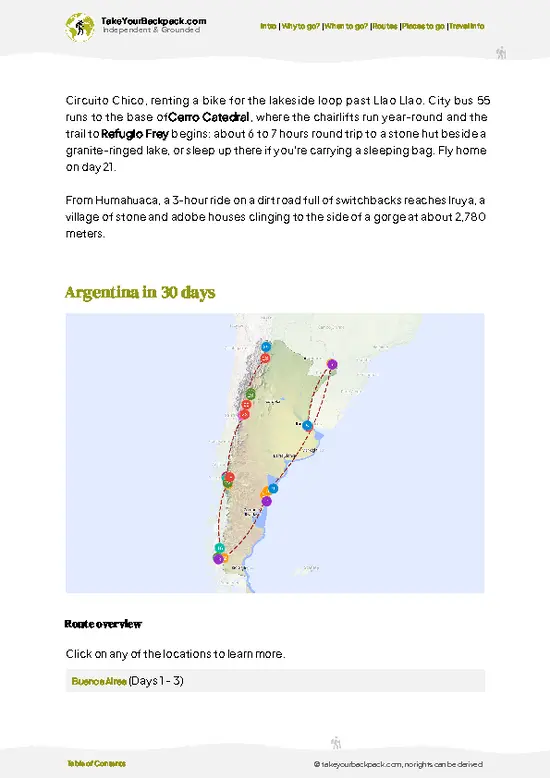
example page 0 from our offline Travel Guide for Argentina
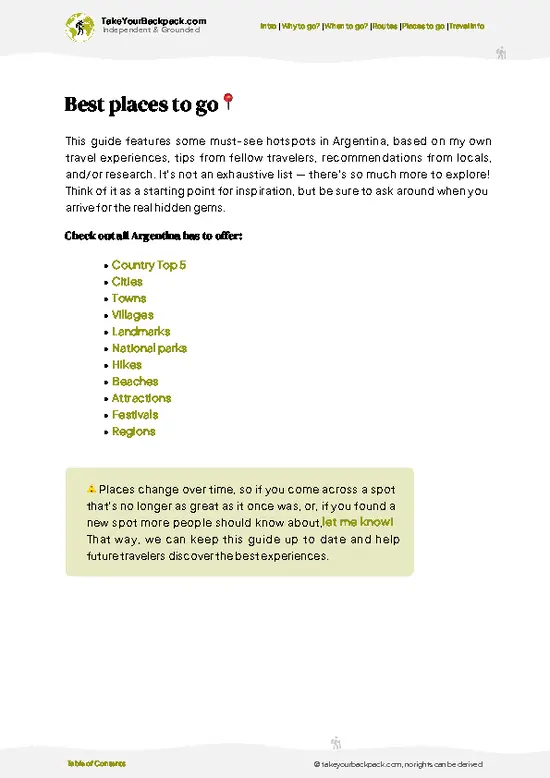
example page 1 from our offline Travel Guide for Argentina
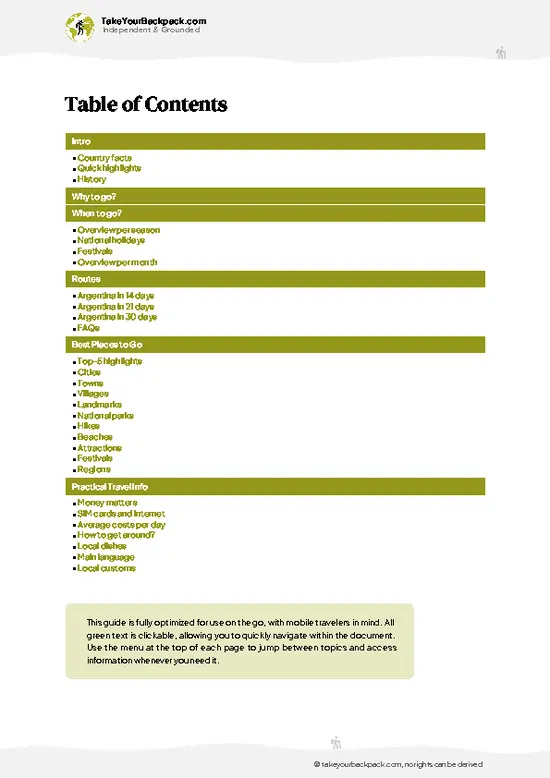
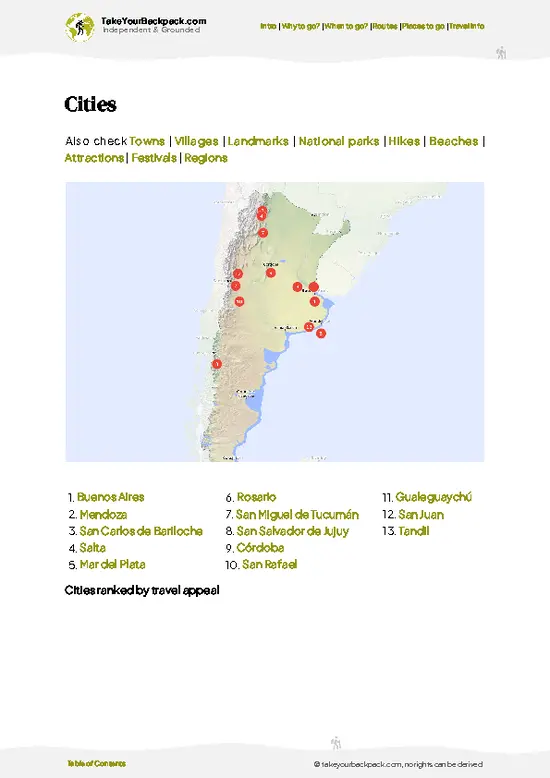
example page 2 from our offline Travel Guide for Argentina
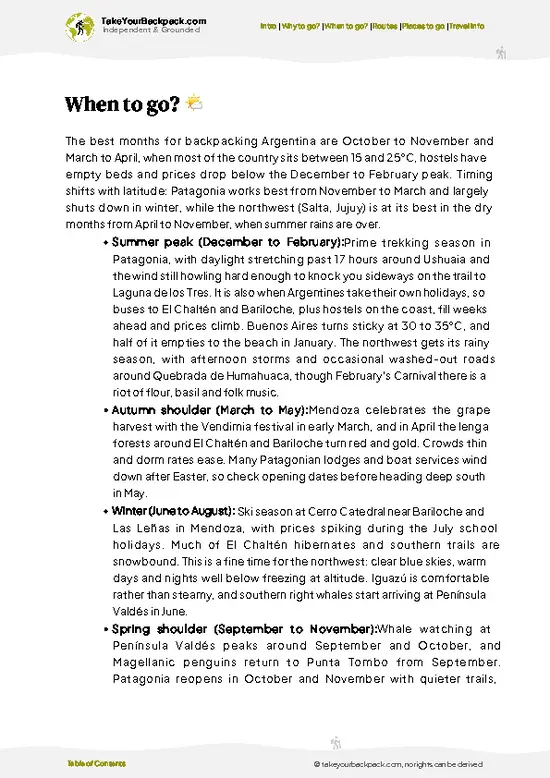
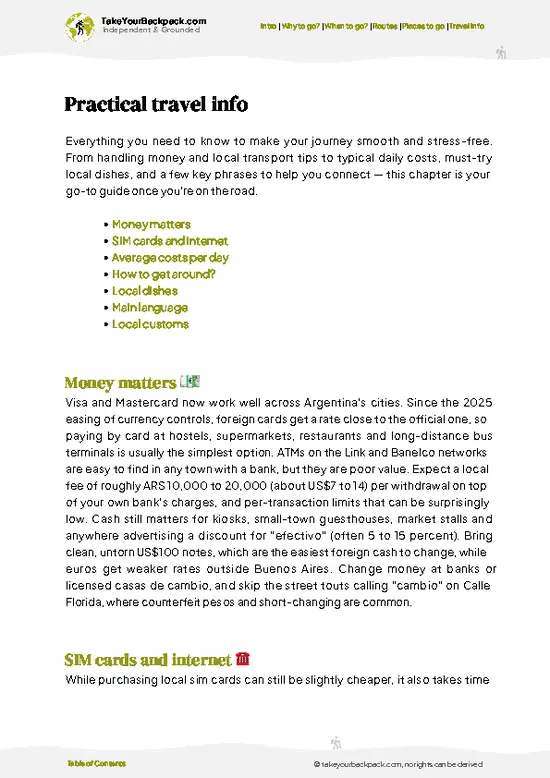
example page 3 from our offline Travel Guide for Argentina
example page 4 from our offline Travel Guide for Argentina
example page 5 from our offline Travel Guide for Argentina
example page 6 from our offline Travel Guide for Argentina
example page 7 from our offline Travel Guide for Argentina
Loading the map 🌍
CLICK TO FILTER
cities
towns
villages
landmarks
national parks
hikes
beaches
attractions
festivals
regions
SHOW COUNTRY’S BESTSHOW ALL

✨ Why go?
Ranked #99 region in Argentina
Why Valle de Uco should be on your travel list

Backpackers linger in Valle de Uco because it packs genuine landscape variety into a compact stretch: snow-capped Andes peaks, high-altitude vineyards, and dry scrubland all within a short drive. You get multiple experiences without constant relocation, wine tasting in the morning, a hike near Tupungato in the afternoon, a family-run parrilla at night, all without packing a bag each day. Transport flexibility matters too: renting a bike or hiring a remis for a half-day lets you design your own pace instead of following a fixed bus schedule. This is a region built for slow travel, where mixing nature and culture happens naturally rather than through forced sightseeing. Unlike backpacker hubs that demand hopping between towns every night, Uco rewards travelers who post up in one base for three … read more 👉
Backpackers linger in Valle de Uco because it packs genuine landscape variety into a compact stretch: snow-capped Andes peaks, high-altitude vineyards, and dry scrubland all within a short drive. You get multiple experiences without constant relocation, wine tasting in the morning, a hike near Tupungato in the afternoon, a family-run parrilla at night, all without packing a bag each day. Transport flexibility matters too: renting a bike or hiring a remis for a half-day lets you design your own pace instead of following a fixed bus schedule. This is a region built for slow travel, where mixing nature and culture happens naturally rather than through forced sightseeing. Unlike backpacker hubs that demand hopping between towns every night, Uco rewards travelers who post up in one base for three or four days and explore outward. That rhythm, plus the lower cost of wine and food compared to touristy circuits elsewhere in Argentina, makes it a smart stop for anyone stretching a budget while still wanting real depth.

💡 HighlightsMust-see experiences and standout moments

  1. Bodega Salentein: A working winery with an underground cellar built like a cross, plus an on-site art museum. The scale of the barrel room alone is worth the visit.
  2. Cerro El Plata viewpoint (Tupungato): A lesser-known lookout locals use for sunset, unmarked on most tourist maps, reachable by a short drive outside town.
  3. Bodega O. Fournier: Striking modern architecture with a gravity-flow design, wine tastings on a terrace facing the mountains.
  4. Manzano Historico: A foothill site at about 1,200 meters where General San Martín returned from Chile in 1823, marked by the Retorno a la Patria monument; quiet, cold, and dramatic, with almost no tour buses.
  5. Tunuyan Sunday market: A small local market where farmers sell produce and preserves; a good place to see daily life away from wine tourism.
  6. Andeluna
… read more 👉
  1. Bodega Salentein: A working winery with an underground cellar built like a cross, plus an on-site art museum. The scale of the barrel room alone is worth the visit.
  2. Cerro El Plata viewpoint (Tupungato): A lesser-known lookout locals use for sunset, unmarked on most tourist maps, reachable by a short drive outside town.
  3. Bodega O. Fournier: Striking modern architecture with a gravity-flow design, wine tastings on a terrace facing the mountains.
  4. Manzano Historico: A foothill site at about 1,200 meters where General San Martín returned from Chile in 1823, marked by the Retorno a la Patria monument; quiet, cold, and dramatic, with almost no tour buses.
  5. Tunuyan Sunday market: A small local market where farmers sell produce and preserves; a good place to see daily life away from wine tourism.
  6. Andeluna Cellars: Family-run winery known for personal, unrushed tastings and a small restaurant with mountain views.
  7. La Carmelina Vineyards: A biodynamic producer that locals recommend over bigger names for its honest, small-batch approach.
  8. Los Chacayes trails: Informal walking paths through stony vineyard terrain near San Carlos, good for a self-guided afternoon walk.
  9. Tupungato Divino restaurant grounds: Set among vines with direct Andes views, popular for a slow lunch after a morning of tastings.
  10. Piedra Infernal: A rock formation and river spot outside Tunuyan where local families picnic on weekends, rarely mentioned in guidebooks.
Spotted a mistake or missing something? Contact us.

Things to do around Valle de Uco

Ratings based on Tripadvisor reviews. When you book through this link, you support our work at no extra cost to you.

⌛️ 5 daysSeeing the highlights in 5 days

Day 1: Tunuyan: Base yourself here first since it sits centrally and has the most frequent bus connections to Mendoza city. Use the day to settle in, rent a bike, and scout the local market for produce and a cheap lunch.Day 2: San Carlos: A short remis ride south gets you to smaller, family-run wineries that don't see tour buses. Ask a winery host for a referral to a neighboring producer, since many aren't listed online.Day 3: Tupungato: Move north for the mountain views and the higher-altitude vineyards. Buses between Uco towns run only a few times a day, so plan this move for morning to avoid getting stuck.Day 4: Manzano Historico: Hire a remis or join a shared van for the half-day trip up into the Andes foothills. The road is unpaved past a certain point, so this only works with good weather … read more 👉
Day 1: Tunuyan: Base yourself here first since it sits centrally and has the most frequent bus connections to Mendoza city. Use the day to settle in, rent a bike, and scout the local market for produce and a cheap lunch.Day 2: San Carlos: A short remis ride south gets you to smaller, family-run wineries that don't see tour buses. Ask a winery host for a referral to a neighboring producer, since many aren't listed online.Day 3: Tupungato: Move north for the mountain views and the higher-altitude vineyards. Buses between Uco towns run only a few times a day, so plan this move for morning to avoid getting stuck.Day 4: Manzano Historico: Hire a remis or join a shared van for the half-day trip up into the Andes foothills. The road is unpaved past a certain point, so this only works with good weather and a driver who knows the route.Day 5: Tunuyan (return): Loop back to your base for an easy departure toward Mendoza city, since most onward buses run from there rather than the smaller towns.The must-do day is Manzano Historico. It's the one day that pulls you completely out of wine-country comfort and into the raw, cold landscape that explains why this whole region exists.

🌤️ When to go?When to go for the best experience

  • Autumn (March to May): Harvest season, daytime temps around 20-25°C (68-77°F), grape-picking activities at wineries, moderate crowds, and the best light for photos as vine leaves turn gold and red.
  • Winter (June to August): Cold and dry, 5-15°C (41-59°F) days with sharp night drops near freezing, fewer tourists, some wineries reduce hours, but prices on accommodation dip noticeably.
  • Spring (September to November): Mild, 15-22°C (59-72°F), vines budding, fewer crowds than harvest season, good hiking weather before summer heat arrives.
  • Summer (December to February): Hot, up to 30°C (86°F) with long daylight hours, higher prices, and more Argentine domestic tourists on holiday.
Go in April if you can: harvest energy, cooler nights for sleeping, and wineries actually want to talk with you instead of rushing you through a tasting line.

source: climatestotravel.comJANJanuary: highly recommended for travelingFEBFebruary: highly recommended for travelingMARMarch: excellent for travelingAPRApril: highly recommended for travelingMAYMay: highly recommended for travelingJUNJune: fair for travelingJULJuly: fair for travelingAUGAugust: fair for travelingSEPSeptember: highly recommended for travelingOCTOctober: highly recommended for travelingNOVNovember: highly recommended for travelingDECDecember: highly recommended for traveling

✈️ The backpacker research shortcutArgentina Travel Guide

An offline-friendly backpacking guide with optimized travel routes, ranked highlights, transport advice, and the best areas to stay.
example page 0 from our offline Travel Guide for Argentina
example page 1 from our offline Travel Guide for Argentina
example page 2 from our offline Travel Guide for Argentina
example page 3 from our offline Travel Guide for Argentina
example page 4 from our offline Travel Guide for Argentina
example page 5 from our offline Travel Guide for Argentina
example page 6 from our offline Travel Guide for Argentina
example page 7 from our offline Travel Guide for Argentina
The digital guide (393 pages) contains:
✅ 131 highlights, ranked by travel appeal
✅ Optimized 14, 21 & 30-day travel routes
✅ Cities, national parks, landmarks, beaches
✅ How to get around
✅ Offline-friendly for travel without Wi-Fi
👉 Click to see all 30+ guide features

📅 Plan smarter in minutes, not weeks
✅ Month by month travel advice
✅ Festivals & national holidays
✅ Budget expectations

🗺️ Go to the right places, skip the overrated ones
✅ Honest pros & cons of destinations
✅ Top hikes, parks & viewpoints
✅ Lesser-known places most travelers miss
✅ Clear “worth it vs skip it” guidance

🛏️ Travel smoothly without rookie mistakes
✅ Best areas to stay
✅ Transport systems explained simply
✅ Common scams & safety advice
✅ SIM cards, money & practical tips

🌍 Understand the country, not just visit it
✅ Culture & traditions
✅ 52 Essential phrases & customs
✅ Festivals worth planning around
✅ Traveler-friendly historical context
✅ Insights that make places more meaningful

📱 Built for real travel conditions
✅ Fully downloadable PDF
✅ Works completely offline
✅ Optimized for phone use
✅ Useful in remote areas & buses
✅ Everything in one place
Stop searching, start planning
Get instant access to your full guide. 30‑day money-back guarantee.
+ Add another guide for just

By proceeding you agree to our terms.
Sent to your inbox immediately after payment • 100% Secure Checkout
Best Backpacking Travel Advisor 2025 tourism awardBest Backpacking
Travel Advisor
2025
What others say about Take Your Backpack Guides:
⭐⭐⭐⭐⭐
Fantastic, amazing amount of information!
⭐⭐⭐⭐⭐
My goodness this is amazing, it's what I've been looking for hats off too you!
⭐⭐⭐⭐⭐
I think this is absolutely BRILLIANT
⭐⭐⭐⭐
Very complete and informative. It's still missing places, but I gotta to commend you
⭐⭐⭐⭐⭐
This is truly amazing, thank you, can't wait to explore it with my kids!
⭐⭐⭐⭐⭐
Awesome resource, thank you!
⭐⭐⭐⭐⭐
This is amazing! Can't wait to explore the ones I haven't seen
⭐⭐⭐⭐
I love this! Well done, great idea.
⭐⭐⭐⭐⭐
Thanks for taking the time to make this gem!
⭐⭐⭐⭐⭐
This might be the best website I've ever seen.
⭐⭐⭐⭐⭐
Congratulations, and thank you so much for your work; it's incredibly valuable.
⭐⭐⭐⭐
In all seriousness I think you did a great job pointing out the important spots
⭐⭐⭐⭐⭐
10/10 very good
⭐⭐⭐⭐⭐
As someone who's only just starting to visit regularly this is awesome, thank you.
⭐⭐⭐⭐
Thank you very much! I'm going to visit my dad, it's going to be very useful!
⭐⭐⭐⭐⭐
This is really cool! We'll be travelling for the first time and this definitely come in handy.
⭐⭐⭐⭐⭐
You are now our minister of culture, congratulations 👨‍💼
⭐⭐⭐⭐⭐
Just wanted to tell you that this is a pearl! Going to follow your recommendations.
⭐⭐⭐⭐⭐
This is so cool. I'll definitely be using the resource for my travels soon.
⭐⭐⭐⭐⭐
This is very impressive! Good work.
⭐⭐⭐⭐⭐
This is an amazing and informative site. Very well done!

🛏️ Where to stay?Best areas to stay in Argentina

Tunuyan works best as a home base for most backpackers. It's central, has the most reliable bus connections toward Mendoza city, and carries a lived-in, unpolished feel rather than a resort atmosphere. Tupungato suits travelers who want mountain views right outside their window and don't mind fewer amenities; it's quieter and more spread out, good for those prioritizing scenery over social buzz. San Carlos is smaller still, with a slower pace and closer access to boutique wineries, appealing to travelers who've already done the social hostel circuit elsewhere in Argentina and want something calmer. … read more 👉
Tunuyan works best as a home base for most backpackers. It's central, has the most reliable bus connections toward Mendoza city, and carries a lived-in, unpolished feel rather than a resort atmosphere. Tupungato suits travelers who want mountain views right outside their window and don't mind fewer amenities; it's quieter and more spread out, good for those prioritizing scenery over social buzz. San Carlos is smaller still, with a slower pace and closer access to boutique wineries, appealing to travelers who've already done the social hostel circuit elsewhere in Argentina and want something calmer. All three towns are safe by any reasonable standard, with low visible crime and a relaxed small-town feel. None of them have a heavy backpacker nightlife scene, so if that's your priority, treat Uco as a few-day detour from Mendoza city rather than your main stop.

🚌 Getting aroundHow to get from A to B

Valle de Uco doesn't run on rigid timetables so much as loose intuition. Buses exist between towns, but they're infrequent and locals treat schedules as suggestions, not promises. You'll get further here by building relationships with remis drivers than by hunting for a printed timetable. Buses save money but cost you flexibility and time; remis rides cost more but buy back your day.
  • Local buses (Tunuyan-Tupungato-San Carlos): Run a handful of times daily, roughly starting around 7am and tapering off by early evening, cheap but slow and infrequent, so check return times before you leave.
  • Remis (private taxi): The workhorse of the region, negotiated per trip or per half-day, faster and door-to-door, essential for reaching wineries off the main road.
  • Bicycle rental: Popular in Tunuyan and around
… read more 👉
Valle de Uco doesn't run on rigid timetables so much as loose intuition. Buses exist between towns, but they're infrequent and locals treat schedules as suggestions, not promises. You'll get further here by building relationships with remis drivers than by hunting for a printed timetable. Buses save money but cost you flexibility and time; remis rides cost more but buy back your day.
  • Local buses (Tunuyan-Tupungato-San Carlos): Run a handful of times daily, roughly starting around 7am and tapering off by early evening, cheap but slow and infrequent, so check return times before you leave.
  • Remis (private taxi): The workhorse of the region, negotiated per trip or per half-day, faster and door-to-door, essential for reaching wineries off the main road.
  • Bicycle rental: Popular in Tunuyan and around wineries close to town, cheap and flexible for short distances, but the region's roads are flat and exposed with little shade.
  • Shared vans/tours: Useful for day trips to Manzano Historico or multi-winery routes, moderate cost, saves you from arranging multiple remis rides.
  • Hitching with winery staff: Not official, but common in smaller towns when a remis isn't available; always offer to pay something for gas.
Negotiate a remis driver for a half-day rate in the morning rather than booking single trips. You'll pay a bit more upfront, but you'll have a driver on call, avoid waiting around for buses that may not show, and often get local recommendations you won't find in a guidebook.

🍲 FoodWhat to Eat & Drink

Malbec is the obvious draw, but Valle de Uco's high-altitude vineyards produce a sharper, more mineral version than what you'll find lower in Mendoza. Pair it with asado, slow-grilled meat cooked over wood coals, often served with chimichurri on the side. For something regional, look for empanadas mendocinas, baked rather than fried, with a slightly sweeter dough than versions elsewhere in the country. Backpackers eat well at small parrillas in Tunuyan, where a full meal costs a fraction of a Mendoza city restaurant, or at Sunday markets where farmers sell homemade preserves, cheese, and bread straight from the table. Coffee culture is modest here; expect simple cafés rather than specialty roasters. One quirk worth knowing: dinner rarely starts before 9pm, and asking for an earlier table can … read more 👉
Malbec is the obvious draw, but Valle de Uco's high-altitude vineyards produce a sharper, more mineral version than what you'll find lower in Mendoza. Pair it with asado, slow-grilled meat cooked over wood coals, often served with chimichurri on the side. For something regional, look for empanadas mendocinas, baked rather than fried, with a slightly sweeter dough than versions elsewhere in the country. Backpackers eat well at small parrillas in Tunuyan, where a full meal costs a fraction of a Mendoza city restaurant, or at Sunday markets where farmers sell homemade preserves, cheese, and bread straight from the table. Coffee culture is modest here; expect simple cafés rather than specialty roasters. One quirk worth knowing: dinner rarely starts before 9pm, and asking for an earlier table can confuse local staff. Meals are social and unhurried, so don't expect fast service, and tipping around 10% is standard.

FAQFrequently asked questions about Valle de Uco

Three to four days is enough to cover the main towns of Tunuyan, Tupungato, and San Carlos without rushing, including winery visits and at least one day trip to a mountain site like Manzano Historico. Five days gives more breathing room if you want to explore smaller, family-run wineries off the main road.
Local buses connect the main towns a handful of times daily, but schedules are limited and best confirmed in person rather than online. Most backpackers rely on remis (private taxis) for winery visits and day trips, often negotiating a half-day rate with a driver rather than booking single rides.
Valle de Uco is known for high-altitude Malbec wine production, with vineyards sitting at elevations often above 1,000 meters, giving the wine a distinct minerality compared to lower Mendoza vineyards. It's also recognized for its Andes mountain views, particularly around Tupungato, and for a quieter, less touristy alternative to Mendoza's main wine circuit.
⚠️ Things can change over time, so always validate details locally before you go.

Other Argentine regions near Valle de Uco

Explore more nearby:

  • Mendoza wine region—Malbec bodegas, Maipú bikes, Andes terraces, thermal pools| 9 km away
  • Sierras Chicas—Swimming holes, car-free village, Uritorco summit, folk festival| 506 km away
  • La Pampa—Gaucho ranch towns, flat pampa horizons, granite hills, salt flats| 553 km away

💡 Not sure where to go next?
Create a personalized itinerary for Argentina including Valle de Uco and the places that fit your trip.

Generate my itinerary

👉 Discover all regions

Or checkout all Argentina has to offer (think cities, towns, villages, national parks, hikes, beaches, festivals)
Country photo of Argentina

We 💚 feedbackSumming up the experience

Valle de Uco is worth it for the quiet, high-altitude vineyard scenery you won't find crowded like Mendoza's main wine roads. The drawback is real: transport is sparse, and without patience or a remis budget, you'll waste hours waiting instead of exploring. Go slow, plan your moves, and it delivers.

✈️ When did I visit Argentina?
I have visited Argentina, together with Chile, in September 2012.

✍️ Help improve this page!
The information on this page is based on my own backpacking experience in Argentina, supplemented with up-to-date research and feedback from other travelers. Travel details can change, so if you notice anything outdated or incomplete, feel free to let me know.


🙋‍♂️ Give feedback

👋 Meet the founderWho’s Behind Take Your Backpack?

Johan, backpacker and founder of TakeYourBackpackHi, I’m Johan (Netherlands 🇳🇱), the creator of TakeYourBackpack. Over the past 3 decades, I’ve backpacked through 90+ countries across six continents, gaining extensive experience with independent travel, long-term trips, and overland routes.

This site is built on a combination of firsthand travel experience and carefully curated insights from other backpackers. Many guides are based on places I’ve personally visited, while others bring together tips, observations, and practical advice shared by trusted travelers I’ve met along the way.

The goal is to provide realistic, experience-driven guidance — not generic itineraries — so you can explore destinations with better context, clearer expectations, and more confidence.