×

Argentina🇦🇷 | festivalsFiesta Nacional del InmigranteImmigrant pavilions, folk costumes, Misiones kitchens, polka meets chamamé | things to do and best time to go

Explore Fiesta Nacional del ChamaméExplore Fiesta Nacional de la Cerveza

Backpacking in Fiesta Nacional del Inmigrante
👌 Worth visitingfestival ranked #10
By Johan Kruseman 🇳🇱 | Updated October 19, 2026

Here's a detail most visitors miss: the festival's collectivities pavilions are staffed almost entirely by descendants of immigrants still speaking fragments of their ancestral tongues, a living thread most people walk past on their way to the food stalls. Fiesta Nacional del Inmigrante happens in Oberá, Misiones, deep in Argentina's northeast near the Brazilian and Paraguayan borders. For backpackers, it's a folk-music-and-food marathon celebrating the dozens of immigrant communities that built this region, drawing families, regional tourists and a growing trickle of foreign travelers over roughly ten days. I remember standing in the Ukrainian pavilion at midnight, borscht in one hand, watching a polka band launch into a chamamé crossover, and realizing this is exactly the kind of cultural collision you can't script. Pace yourself: skip the overpriced entrance-gate snacks and save your pesos for the pavilion food, where real value and real flavor live.

Discover everything you want to know in the 📖 Argentina Travel Guide.


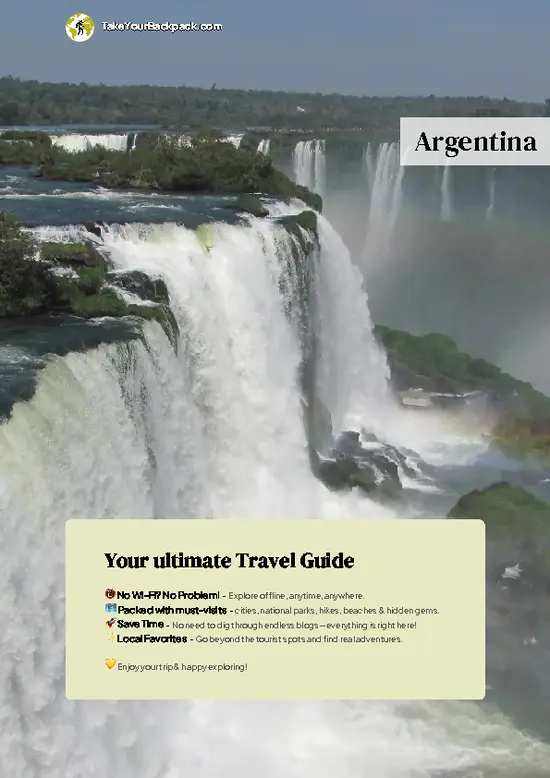
example page 0 from our offline Travel Guide for Argentina
example page 1 from our offline Travel Guide for Argentina
example page 2 from our offline Travel Guide for Argentina
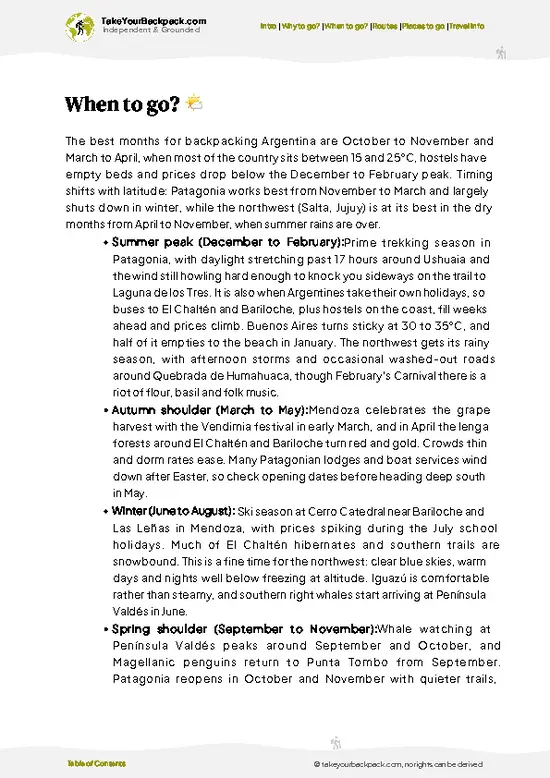
example page 3 from our offline Travel Guide for Argentina
example page 4 from our offline Travel Guide for Argentina
example page 5 from our offline Travel Guide for Argentina
example page 6 from our offline Travel Guide for Argentina
example page 7 from our offline Travel Guide for Argentina
Loading the map 🌍
CLICK TO FILTER
cities
towns
villages
landmarks
national parks
hikes
beaches
attractions
festivals
regions
SHOW COUNTRY’S BESTSHOW ALL

✨ Why go?
Ranked #10 festival in Argentina
What makes this festival worth celebrating

Backpackers build entire Misiones routes around this festival because it delivers a rare kind of temporary community: dozens of immigrant collectivities, each running its own pavilion, food, and dance troupe, all crammed into one town for about ten days. It's social by design, you end up sharing tables and dance floors with strangers within minutes. Compared to bigger national festivals, it's remarkably affordable, with food and drink priced for local families, not tourists. It also offers genuine cultural immersion without the performative gloss of more commercialized events, since most performers are actual descendants of the communities they represent. Slot it into a longer Iguazú Falls loop (Oberá sits a few hours away) and you get a cultural counterweight to all that natural scenery, … read more 👉
Backpackers build entire Misiones routes around this festival because it delivers a rare kind of temporary community: dozens of immigrant collectivities, each running its own pavilion, food, and dance troupe, all crammed into one town for about ten days. It's social by design, you end up sharing tables and dance floors with strangers within minutes. Compared to bigger national festivals, it's remarkably affordable, with food and drink priced for local families, not tourists. It also offers genuine cultural immersion without the performative gloss of more commercialized events, since most performers are actual descendants of the communities they represent. Slot it into a longer Iguazú Falls loop (Oberá sits a few hours away) and you get a cultural counterweight to all that natural scenery, plus a good excuse to break up long bus days with music, dumplings, and strong coffee.

💡 HighlightsEssential experiences to have while celebrating the Fiesta Nacional del Inmigrante

  1. The Collectivities Pavilions: Each immigrant community, German, Ukrainian, Japanese, Swiss, Polish, Arab, and more, runs its own themed pavilion with food, costume, and decor. Wandering between them feels like a rapid-fire world tour compressed into one park.
  2. Live Folk Dance Performances: Groups perform traditional dances in full period costume, often passed down through generations. The choreography is precise and the costumes are hand-sewn, not costume-shop rentals.
  3. Chamamé and Regional Music Sets: The accordion-driven chamamé sound, native to this Litoral region, blends with polka, waltz, and other imported styles brought by settlers. The music tells the region's migration history better than any placard could.
  4. Pavilion Food Sampling: Rather than one food court, you get dozens of small kitchens
… read more 👉
  1. The Collectivities Pavilions: Each immigrant community, German, Ukrainian, Japanese, Swiss, Polish, Arab, and more, runs its own themed pavilion with food, costume, and decor. Wandering between them feels like a rapid-fire world tour compressed into one park.
  2. Live Folk Dance Performances: Groups perform traditional dances in full period costume, often passed down through generations. The choreography is precise and the costumes are hand-sewn, not costume-shop rentals.
  3. Chamamé and Regional Music Sets: The accordion-driven chamamé sound, native to this Litoral region, blends with polka, waltz, and other imported styles brought by settlers. The music tells the region's migration history better than any placard could.
  4. Pavilion Food Sampling: Rather than one food court, you get dozens of small kitchens each serving their community's specialties, from Ukrainian varenikes to German sausages. Grazing across pavilions in one night is half the fun.
  5. The Immigrant Monument and Parade: A ceremonial parade and visit to the town's immigrant monument anchors the festival in its actual purpose: honoring the waves of European and Asian settlers who shaped Misiones agriculture and culture. It's a grounding moment among all the music and food.
Spotted a mistake or missing something? Contact us.

🌤️ When to go?When is the celebration of Fiesta Nacional del Inmigrante?

The Fiesta Nacional del Inmigrante runs for about ten days in early September in Oberá, Misiones, with events centered on the Parque de las Naciones and the Anfiteatro Parque de las Naciones.
  • Best day: The opening parade of immigrant communities and the final weekend galas draw the biggest crowds and the most dancing; weekdays are calmer and easier for talking with the groups cooking at their stands.
  • Weather: Late winter into spring brings roughly 10 to 25°C (50 to 77°F), with cool nights and sudden red-earth rain. Pack a light rain jacket and a warm layer.
  • Booking: Reserve beds two to three months ahead, since Oberá fills up and prices can climb 30 to 50 percent on peak weekends.
  • Roads and buses: Arrive by midday on weekends, as Ruta 14 and the terminal get packed after evening shows.
Buy gala … read more 👉
The Fiesta Nacional del Inmigrante runs for about ten days in early September in Oberá, Misiones, with events centered on the Parque de las Naciones and the Anfiteatro Parque de las Naciones.
  • Best day: The opening parade of immigrant communities and the final weekend galas draw the biggest crowds and the most dancing; weekdays are calmer and easier for talking with the groups cooking at their stands.
  • Weather: Late winter into spring brings roughly 10 to 25°C (50 to 77°F), with cool nights and sudden red-earth rain. Pack a light rain jacket and a warm layer.
  • Booking: Reserve beds two to three months ahead, since Oberá fills up and prices can climb 30 to 50 percent on peak weekends.
  • Roads and buses: Arrive by midday on weekends, as Ruta 14 and the terminal get packed after evening shows.
Buy gala tickets early, then leave the weekdays for wandering the stands.


source: climatestotravel.comJANJanuary: not recommended for travelingFEBFebruary: not recommended for travelingMARMarch: not recommended for travelingAPRApril: not recommended for travelingMAYMay: not recommended for travelingJUNJune: not recommended for travelingJULJuly: not recommended for travelingAUGAugust: not recommended for travelingSEPSeptember: excellent for travelingOCTOctober: not recommended for travelingNOVNovember: not recommended for travelingDECDecember: not recommended for traveling

✈️ The backpacker research shortcutArgentina Travel Guide

An offline-friendly backpacking guide with optimized travel routes, ranked highlights, transport advice, and the best areas to stay.
example page 0 from our offline Travel Guide for Argentina
example page 1 from our offline Travel Guide for Argentina
example page 2 from our offline Travel Guide for Argentina
example page 3 from our offline Travel Guide for Argentina
example page 4 from our offline Travel Guide for Argentina
example page 5 from our offline Travel Guide for Argentina
example page 6 from our offline Travel Guide for Argentina
example page 7 from our offline Travel Guide for Argentina
The digital guide (393 pages) contains:
✅ 131 highlights, ranked by travel appeal
✅ Optimized 14, 21 & 30-day travel routes
✅ Cities, national parks, landmarks, beaches
✅ How to get around
✅ Offline-friendly for travel without Wi-Fi
👉 Click to see all 30+ guide features

📅 Plan smarter in minutes, not weeks
✅ Month by month travel advice
✅ Festivals & national holidays
✅ Budget expectations

🗺️ Go to the right places, skip the overrated ones
✅ Honest pros & cons of destinations
✅ Top hikes, parks & viewpoints
✅ Lesser-known places most travelers miss
✅ Clear “worth it vs skip it” guidance

🛏️ Travel smoothly without rookie mistakes
✅ Best areas to stay
✅ Transport systems explained simply
✅ Common scams & safety advice
✅ SIM cards, money & practical tips

🌍 Understand the country, not just visit it
✅ Culture & traditions
✅ 52 Essential phrases & customs
✅ Festivals worth planning around
✅ Traveler-friendly historical context
✅ Insights that make places more meaningful

📱 Built for real travel conditions
✅ Fully downloadable PDF
✅ Works completely offline
✅ Optimized for phone use
✅ Useful in remote areas & buses
✅ Everything in one place
Stop searching, start planning
Get instant access to your full guide. 30‑day money-back guarantee.
+ Add another guide for just

By proceeding you agree to our terms.
Sent to your inbox immediately after payment • 100% Secure Checkout
Best Backpacking Travel Advisor 2025 tourism awardBest Backpacking
Travel Advisor
2025
What others say about Take Your Backpack Guides:
⭐⭐⭐⭐⭐
Fantastic, amazing amount of information!
⭐⭐⭐⭐⭐
My goodness this is amazing, it's what I've been looking for hats off too you!
⭐⭐⭐⭐⭐
I think this is absolutely BRILLIANT
⭐⭐⭐⭐
Very complete and informative. It's still missing places, but I gotta to commend you
⭐⭐⭐⭐⭐
This is truly amazing, thank you, can't wait to explore it with my kids!
⭐⭐⭐⭐⭐
Awesome resource, thank you!
⭐⭐⭐⭐⭐
This is amazing! Can't wait to explore the ones I haven't seen
⭐⭐⭐⭐
I love this! Well done, great idea.
⭐⭐⭐⭐⭐
Thanks for taking the time to make this gem!
⭐⭐⭐⭐⭐
This might be the best website I've ever seen.
⭐⭐⭐⭐⭐
Congratulations, and thank you so much for your work; it's incredibly valuable.
⭐⭐⭐⭐
In all seriousness I think you did a great job pointing out the important spots
⭐⭐⭐⭐⭐
10/10 very good
⭐⭐⭐⭐⭐
As someone who's only just starting to visit regularly this is awesome, thank you.
⭐⭐⭐⭐
Thank you very much! I'm going to visit my dad, it's going to be very useful!
⭐⭐⭐⭐⭐
This is really cool! We'll be travelling for the first time and this definitely come in handy.
⭐⭐⭐⭐⭐
You are now our minister of culture, congratulations 👨‍💼
⭐⭐⭐⭐⭐
Just wanted to tell you that this is a pearl! Going to follow your recommendations.
⭐⭐⭐⭐⭐
This is so cool. I'll definitely be using the resource for my travels soon.
⭐⭐⭐⭐⭐
This is very impressive! Good work.
⭐⭐⭐⭐⭐
This is an amazing and informative site. Very well done!

🛏️ Where to stay?Where staying makes the most sense

Stay in central Oberá itself rather than trying to commute from Posadas or nearby towns; the festival grounds are walkable or a short local bus ride from downtown, which matters when late-night pavilion hopping leaves you exhausted. The blocks around the main plaza and the bus terminal are the most practical base, with small guesthouses and family-run lodgings that fill up fast during the festival dates. These areas stay lively but not chaotic, and you'll find yourself sharing breakfast tables with other travelers who came for the same reason you did. Because Oberá is a working regional town rather … read more 👉
Stay in central Oberá itself rather than trying to commute from Posadas or nearby towns; the festival grounds are walkable or a short local bus ride from downtown, which matters when late-night pavilion hopping leaves you exhausted. The blocks around the main plaza and the bus terminal are the most practical base, with small guesthouses and family-run lodgings that fill up fast during the festival dates. These areas stay lively but not chaotic, and you'll find yourself sharing breakfast tables with other travelers who came for the same reason you did. Because Oberá is a working regional town rather than a resort, budget options are genuinely budget, not inflated tourist-trap prices. Book as early as you can though, since the town's lodging capacity is limited and festival week sells out.

👛 Costs (as of 19 October 2026)Money, prices, and spending tips

Attending Fiesta Nacional del Inmigrante is inexpensive by international standards, though prices have risen with Argentina's inflation, so budget in a mix of pesos and a card as backup.
CategoryBudget RangeLocal Reality
Festival TicketsUSD 3 to 8 per entryMulti-day passes sometimes offered at a discount over single-day entries
AccommodationUSD 10 to 25 per nightBudget guesthouses in Oberá fill fast during festival week, so prices rise closer to the dates
Local TransportUSD 1 to 3 per rideLocal buses are cheap; taxis from the bus terminal to lodging cost a bit more
Food & DrinksUSD 5 to 15 per dayPavilion food is priced for locals, so grazing across stalls stays affordable
MiscellaneousUSD 5 to 10 per dayCovers souvenirs, extra drinks, and small pavilion crafts
⚠️ Prices can change and everyone travels differently, so take this as a rough guide. Hope it helps you plan your adventure!

🍲 FoodLocal Flavors for Backpackers

Forget generic festival food carts, here the pavilion system means each immigrant community cooks its own specialties on-site. Expect Ukrainian varenikes, German sausages and strudel, Japanese dumplings, Swiss cheese dishes, and Arab mezze, all within a short walk of each other. The must-try move is grazing: order small portions across three or four pavilions instead of committing to one big meal. Drinks lean toward regional beer, local wine, and mate shared communally, so don't be surprised if someone hands you a gourd mid-conversation. Cash is still king at most pavilion counters, though some larger stalls now take cards; keep small bills handy to avoid line delays. Portions are generous but pavilion-style, meant for sampling rather than a single sit-down feast, so pace yourself across the … read more 👉
Forget generic festival food carts, here the pavilion system means each immigrant community cooks its own specialties on-site. Expect Ukrainian varenikes, German sausages and strudel, Japanese dumplings, Swiss cheese dishes, and Arab mezze, all within a short walk of each other. The must-try move is grazing: order small portions across three or four pavilions instead of committing to one big meal. Drinks lean toward regional beer, local wine, and mate shared communally, so don't be surprised if someone hands you a gourd mid-conversation. Cash is still king at most pavilion counters, though some larger stalls now take cards; keep small bills handy to avoid line delays. Portions are generous but pavilion-style, meant for sampling rather than a single sit-down feast, so pace yourself across the night rather than filling up at the first stall you find.

FAQTraveler FAQ

Fiesta Nacional del Inmigrante takes place in Oberá, Misiones, typically in early-to-mid September, running for about ten days, though exact dates shift slightly year to year.
Attending is cheap by international standards: entry tickets run roughly USD 3 to 8, and a full day of food, drinks, and local transport can be covered comfortably within USD 20 to 40.
Advance tickets aren't usually necessary for general entry, since tickets are typically sold at the gate, but booking accommodation in Oberá well ahead is essential since lodging is limited and sells out during festival week.
⚠️ Things can change over time, so always validate details locally before you go.

Other Argentine festivals near Fiesta Nacional del Inmigrante

Explore more nearby:


💡 Not sure where to go next?
Create a personalized itinerary for Argentina including Fiesta Nacional del Inmigrante and the places that fit your trip.

Generate my itinerary

👉 Discover all festivals

Or checkout all Argentina has to offer (think cities, towns, villages, national parks, hikes, beaches, festivals)
Country photo of Argentina

We 💚 feedbackSumming up the experience

Worth it for the sheer density of living cultural history packed into one small town, you genuinely taste and hear Argentina's immigration story rather than reading about it. The drawback: Oberá isn't set up for tourists, so lodging is limited and fills fast. Book early or you'll be commuting from farther away than you'd like.

✈️ When did I visit Argentina?
I have visited Argentina, together with Chile, in September 2012.

✍️ Help improve this page!
The information on this page is based on my own backpacking experience in Argentina, supplemented with up-to-date research and feedback from other travelers. Travel details can change, so if you notice anything outdated or incomplete, feel free to let me know.


🙋‍♂️ Give feedback

👋 Meet the founderWho’s Behind Take Your Backpack?

Johan, backpacker and founder of TakeYourBackpackHi, I’m Johan (Netherlands 🇳🇱), the creator of TakeYourBackpack. Over the past 3 decades, I’ve backpacked through 90+ countries across six continents, gaining extensive experience with independent travel, long-term trips, and overland routes.

This site is built on a combination of firsthand travel experience and carefully curated insights from other backpackers. Many guides are based on places I’ve personally visited, while others bring together tips, observations, and practical advice shared by trusted travelers I’ve met along the way.

The goal is to provide realistic, experience-driven guidance — not generic itineraries — so you can explore destinations with better context, clearer expectations, and more confidence.