×

Argentina🇦🇷 | best festivalsEssential 10 festivals to Explore in Argentina

Festivals in Argentina are mostly about music, land and mate, not costumes and parades. The country is huge, so the experience changes sharply by region. In the northwest (Salta, Jujuy, Tucumán), the calendar follows Andean and Catholic traditions: small-town celebrations, folk peñas, empanadas and a lot of homemade charm. Entry is often free and the crowds are mostly locals. Córdoba province and the Pampas run the big folklore and gaucho events, which draw hundreds of thousands, fill every bed and push prices up by 50 to 100 percent. Buenos Aires holds tango, film and cultural festivals that are easy to reach, easy to pay for and scattered through the year. Patagonia and Cuyo lean on harvest and food celebrations, usually tied to a local crop, and are more relaxed.

For backpacking or any independent trip, the big folklore weeks reward early booking and a tent, while northern town fiestas reward showing up with no plan. Skip anything in a major tourist hub that charges for a staged “folk show” dinner. The real thing is cheaper, louder and happens in a plaza, a field or a peña with no ticket booth.

By Johan Kruseman 🇳🇱 | Updated October 20, 2026
Explore the best regions in Argentina

Why go?Why These festival Stand Out

Argentina suits festivals because community gatherings are part of ordinary life, not a performance for visitors. Waves of Spanish and Italian immigration, gaucho ranching culture and Indigenous Andean traditions in the northwest each left their own calendar, and none of them cancels the others. The result is a country where a small town will close its main street for a weekend to play zambas and chacareras, grill meat and pass around the same mate gourd. Tourists are welcome, but nobody is arranging things around them.

Geography is the first thing to understand. The country stretches roughly 3,700 kilometers from north to south and spans subtropical, desert, mountain and subpolar climates. A festival in Jujuy at 2,500 meters and one in Patagonian wine or fruit country share almost nothing … read more 👉
Argentina suits festivals because community gatherings are part of ordinary life, not a performance for visitors. Waves of Spanish and Italian immigration, gaucho ranching culture and Indigenous Andean traditions in the northwest each left their own calendar, and none of them cancels the others. The result is a country where a small town will close its main street for a weekend to play zambas and chacareras, grill meat and pass around the same mate gourd. Tourists are welcome, but nobody is arranging things around them.

Geography is the first thing to understand. The country stretches roughly 3,700 kilometers from north to south and spans subtropical, desert, mountain and subpolar climates. A festival in Jujuy at 2,500 meters and one in Patagonian wine or fruit country share almost nothing in weather, price or style. Treat Argentina as several festival countries, not one.

The second point is distance and cost of movement. Long-distance buses are comfortable and well organized, with reclining cama seats, but 12 to 24 hour rides are normal between regions. Domestic flights are possible but usually cost more than backpackers expect, and the exchange-rate swings that Argentina is known for can change prices quickly. Check current rates in pesos rather than trusting last year’s numbers.

Third, big events sell out lodging. The major folklore weeks and tourist-season celebrations fill hostels, campsites and spare rooms months ahead in small host towns. Waiting until the week before usually means paying double or sleeping an hour away.

Finally, know what is less well suited. Argentina has few of the huge, ticketed, camping-style music festivals found in North America or Europe, and the staged shows aimed at tourists in Buenos Aires are not worth your time compared with free street and plaza events. Late-night timing is another thing to plan around: things start after 10 p.m., dinner is at 9 or later, and music often runs until dawn. Arrive rested, with a flexible morning, and the country gives you much more than a standard festival circuit would.
Evaluating the Top Choices
The list of best festivals in Argentina is created based on energy, traditions, crowd experience, activities, and overall excitement. If you feel a festival is missing in this list, please let us know.

When to go?Timing Your Visit for the Best Experience

Best months by region: The best months for festivals in Argentina are January to March and September to November, because summer fills the Pampas, Córdoba and Cuyo calendars while spring brings mild weather almost everywhere. Argentina is in the Southern Hemisphere, so seasons are reversed from Europe and North America.
Summer and peak season: January and February are the peak. Buenos Aires hits 28 to 32°C with heavy humidity, and Córdoba and the central provinces are similar with afternoon thunderstorms that can briefly soak open-air events. The northwest also gets its rainy season from about December to March, with mud, washed-out roads and occasional landslides in Salta and Jujuy. Coastal and Patagonian areas are far milder, around 18 to 25°C. Summer holidays push prices up, and festival … read more 👉
Best months by region: The best months for festivals in Argentina are January to March and September to November, because summer fills the Pampas, Córdoba and Cuyo calendars while spring brings mild weather almost everywhere. Argentina is in the Southern Hemisphere, so seasons are reversed from Europe and North America.
Summer and peak season: January and February are the peak. Buenos Aires hits 28 to 32°C with heavy humidity, and Córdoba and the central provinces are similar with afternoon thunderstorms that can briefly soak open-air events. The northwest also gets its rainy season from about December to March, with mud, washed-out roads and occasional landslides in Salta and Jujuy. Coastal and Patagonian areas are far milder, around 18 to 25°C. Summer holidays push prices up, and festival towns often add 50 to 100 percent to accommodation. Book hostels and campsites at least two to three months ahead for the biggest weeks.
Shoulder seasons: March to May and September to November are the practical choice for most backpackers. Temperatures in Buenos Aires run roughly 14 to 25°C, with less humidity and lower prices. The northwest is dry from about April to October, with clear skies and sharp sunlight at altitude, so spring and early autumn are safer for road trips there. Cuyo’s harvest celebrations fall in late summer and early autumn, when grapes are being picked and days are warm and dry.
Winter: June to August is cold in the south. Patagonia can drop below 0°C, daylight is short, and some roads and services close. Mountain festivals are limited. The northwest is dry and sunny in winter but freezing at night above 3,000 meters, often around 0°C or lower. Buenos Aires is cool at 8 to 16°C and still active for cultural events, so the capital works as a winter fallback. Winter school holidays, usually in July, add domestic crowds at some destinations.
What to skip: Skip the northwest in the height of the rainy season unless you have spare days for delays. Skip Patagonia in deep winter if you want outdoor events. Check dates directly with local tourism offices, since many celebrations follow movable religious dates or weekends rather than a fixed day.

festival hoppingSuggested Travel Strategies

How long a combined trip takes: A trip combining several festivals in Argentina needs 14 to 28 days, and anything under 12 days limits you to one or two regions. Distances are the reason. Buenos Aires to Salta is about 1,300 kilometers, roughly 20 to 22 hours by bus or about two hours by plane, and Buenos Aires to Córdoba is about 9 to 10 hours by bus.
Which regions group well: The most sensible clusters are Buenos Aires with the Pampas, Córdoba with Cuyo (Mendoza is around 9 to 10 hours from Córdoba by bus), and Salta with Jujuy and Tucumán, where towns are 1.5 to 5 hours apart. Patagonia stands alone. Buses from Buenos Aires to Bariloche run about 20 to 22 hours, and flights are the only sane option if your time is short.
Direction of travel: Start in Buenos Aires, the main flight hub, then … read more 👉
How long a combined trip takes: A trip combining several festivals in Argentina needs 14 to 28 days, and anything under 12 days limits you to one or two regions. Distances are the reason. Buenos Aires to Salta is about 1,300 kilometers, roughly 20 to 22 hours by bus or about two hours by plane, and Buenos Aires to Córdoba is about 9 to 10 hours by bus.
Which regions group well: The most sensible clusters are Buenos Aires with the Pampas, Córdoba with Cuyo (Mendoza is around 9 to 10 hours from Córdoba by bus), and Salta with Jujuy and Tucumán, where towns are 1.5 to 5 hours apart. Patagonia stands alone. Buses from Buenos Aires to Bariloche run about 20 to 22 hours, and flights are the only sane option if your time is short.
Direction of travel: Start in Buenos Aires, the main flight hub, then work in a loop: Córdoba, then north to Tucumán and Salta, then back by flight or a long overnight bus. A second option goes west from Córdoba to Mendoza, then returns to Buenos Aires or crosses to Chile. Moving north to south during the warmer months avoids the worst of the northwest rains and the cold in Patagonia.
Time per stop: Allow 2 to 4 days for a big festival town, since the main events run late and you will need a recovery morning. A smaller northwest fiesta fits in 1 to 2 days, and a city festival in Buenos Aires or Córdoba is fine with 2 to 3 days alongside regular sightseeing. Add at least a full day of buffer for every 15 hours or more of travel.
Planning mistakes: The first mistake is packing four festivals into ten days. Overnight buses feel efficient, but arriving tired and starting a night that ends at 5 a.m. is miserable. Pick two regions and go deeper.

The second is ignoring altitude. Moving from Buenos Aires to Salta and then to places above 3,000 meters in a day or two causes headaches and fatigue, so add a gentler day.

The third is booking transport and lodging late. Cama seats and rooms for the big weeks sell out, so buy bus tickets two to three weeks ahead in peak months, and book lodging earlier.

The fourth is relying on fixed dates. Many events move by weekend or religious calendar, so confirm before reserving anything non-refundable.

The ListTop festivals of Argentina

1 Carnaval de Gualeguaychú

Corsodromo stadium, rival comparsas, live drumlines, feathered headdresses

Grab a seat along the purpose-built runway to watch two rival troupes compete in heavy feathered costumes, with eighty drummers driving every pass.

2 Fiesta Nacional de la Vendimia

Via Blanca, hillside amphitheater, department queens, harvest bodegas

Line the night parade of grape-covered floats, attend the large hillside show beneath the Andes, and tour vineyards while the real harvest is underway.

3 Buenos Aires Tango Festival

Free milongas, Usina del Arte, world tango championship, orquesta típica

Catch world-title dance finals and live orquestas at Usina del Arte, then join free outdoor milongas in the plazas and take a workshop.

4 Fiesta Nacional de la Cerveza

Liter steins, brass marches, German-Argentine kitchens, Calamuchita Valley

Walk between microbrewery gardens for stout and bock, follow brass bands through the tents, and pair goulash or smoked sausage with local asado.

5 Fiesta Nacional del Chocolate

Giant chocolate bar, submarino, Civic Center samples, Nahuel Huapi

Taste alfajores and bombones around the Civic Center, stir a chocolate bar into hot milk, and watch a giant chocolate bar broken up and shared.

6 Fiesta Nacional del Poncho

Catamarca looms, poncho weavers, folklore nights, northwest artisan market

Watch weavers work looms on site, browse hundreds of textile and silver stalls, and stay for open-air folklore concerts running into the early hours.

7 Fiesta Nacional del Chamamé

Chamamé marathons, sapukay shouts, accordion duels, Corrientes dancers

Stay past 2am for accordion-led sets, listen for the sharp sapukay cry, and watch couples of every age dance the close-hold chamamé.

8 Festival de Cosquín

Plaza Próspero Molina, folk peñas, chacarera and zamba, late-night guitar circles

Spend nine nights in an open-air plaza of folk acts, then follow the crowd into town peñas and street guitar circles after the main stage closes.

9 Fiesta Nacional del Asado

Patagonian lamb, ember building, gaucho grill line, Cholila

Arrive early to see asadores build their coal beds, then walk the rows of fires tasting lamb on the cross and wood-smoked beef ribs.

10 Fiesta Nacional del Inmigrante

Immigrant pavilions, folk costumes, Misiones kitchens, polka meets chamamé

Move from pavilion to pavilion sampling Ukrainian, German, Japanese and Polish dishes while dance groups in hand-sewn costume perform on the grounds.

11 Fiesta Nacional del Sol

Sun Queen election, San Juan wine, folk marathons, Pocito grounds

Follow four late nights of folklore, provincial parades and a crowned national queen, with local Syrah and empanadas between acts.

12 Fiesta Nacional de la Manzana

Apple floats, Río Negro orchards, cider stalls, festival queen

Watch floats built from apples roll down the main streets, then visit open orchards around General Roca and sample cider and apple desserts.

13 Fiesta Nacional del Mate

Mate circles, free entry, two folk nights, riverside lawn

Join a passing gourd on the lawns above the Paraná River, then stay for chamamé, regional dance troupes and carved-gourd stalls.

14 Fiesta Nacional del Surubí

Fishing fleet, grilled catfish, chamamé accordions, Goya riverfront

Watch over 1,000 boats launch for the fishing contest, then eat grilled surubí at the riverside grounds while chamamé plays into the night.

15 Festival de Jesús María

Doma horse-breaking, peña tents, carrozas parade, asado stalls

Watch gauchos ride unbroken horses in the arena, then eat coal-grilled meat and dance chacarera in the smaller tents once the show ends.

Think you know Argentina?

Prove you’re a true local — uncover 5 lesser-known festivals in Argentina that locals tend to keep to themselves.
Loading the map 🌍

Expert viewTips and Advice from Travelers

How many festivals to visit: For most backpackers, two to four festivals in a single trip is the right number. Each major event takes two to four days once travel, late nights and recovery are included, and Argentina’s distances make every extra stop expensive in both time and bus fares. One large folklore or harvest week plus one or two smaller town fiestas gives variety without turning the trip into a race. Packing in more than four tends to give you a blur of bus stations and tired mornings. Fewer than two wastes the chance to compare how different regions celebrate.
Which kind suits which traveler: Budget travelers get the most from small town fiestas and free city events. They cost little or nothing to enter, accommodation is cheaper, and the food (empanadas, asado, locro) is sold at neighborhood … read more 👉
How many festivals to visit: For most backpackers, two to four festivals in a single trip is the right number. Each major event takes two to four days once travel, late nights and recovery are included, and Argentina’s distances make every extra stop expensive in both time and bus fares. One large folklore or harvest week plus one or two smaller town fiestas gives variety without turning the trip into a race. Packing in more than four tends to give you a blur of bus stations and tired mornings. Fewer than two wastes the chance to compare how different regions celebrate.
Which kind suits which traveler: Budget travelers get the most from small town fiestas and free city events. They cost little or nothing to enter, accommodation is cheaper, and the food (empanadas, asado, locro) is sold at neighborhood prices. They also put you among locals instead of tour groups. The big folklore weeks are worth the money if live music is the main reason you travel, since the lineups and atmosphere cannot be matched elsewhere, but they cost far more in lodging and sell out early. Culture-focused travelers should look at Buenos Aires events, where tango, film and arts programs are easy to reach and often free or low-cost, and you avoid long bus rides. Wine and food celebrations in Cuyo suit couples or anyone who wants a slower pace, but expect to spend more on tastings. Skip packaged folk dinner shows in tourist districts. They charge US$50 to 100 or more for a staged version of what a peña or plaza gives you for a few dollars.
What it costs: Plan on US$30 to 60 a day in a basic backpacker setup outside the major festival weeks: a hostel dorm at roughly US$10 to 20, meals at US$10 to 20 and local transport at a few dollars. During big festivals, expect US$50 to 90 a day because beds and campsites can double in price. Entry to small town events is often free, while larger music events may charge about US$10 to 40 per night, and multi-day passes cost more. Guided tours tied to festivals, where offered, usually run US$25 to 60. Long-distance buses cost about US$25 to 70 per leg depending on distance and seat class, and cama seats are worth the extra for overnight rides, since sleeping properly saves you a night’s lodging and a ruined next day. Budget around US$100 to 250 on transport across a multi-region trip. Prices shift with the peso, so check current figures and carry both cash and a card. Many small towns and food stalls prefer cash, and ATMs can have withdrawal limits and fees.
Staying safe: Festivals are generally friendly and family-oriented, with grandparents and kids out until midnight. The main risks are the usual ones: pickpocketing and phone snatching in dense crowds, especially in Buenos Aires and big events. Carry only the cash and one card you need, keep your phone in a front pocket or zipped bag, and leave the passport at your lodging with a photo copy on you. Avoid walking alone at 3 or 4 a.m. in unfamiliar towns. Arrange rides ahead or travel with other people. In the northwest, altitude and cold nights matter more than crime, so bring warm layers, sun protection and water.
Cultural considerations: Timing is the biggest adjustment. Events often start after 10 p.m., and the music peaks well after midnight. Arriving at the posted time means empty spaces. Mate is shared from one gourd and one straw, so if you are offered, accept, say gracias when done and do not stir the straw. Dress is casual, but churches and religious processions call for modest clothing and quiet respect. In northwest events tied to Andean traditions, ask before photographing ceremonies or people, and do not treat offerings or rituals as a backdrop. Ordering food from local stalls and buying from small vendors is the best way to give back, and tipping around 10 percent in sit-down places is customary.
Practical priorities: If only one decision matters, make it booking lodging early for the big weeks and staying flexible for the small ones. Pay for good bus seats, skip tourist-trap dinner shows, and keep rest days between events. That combination costs less than most visitors expect and gives far more than a packed schedule.

✈️ The backpacker research shortcutArgentina Travel Guide

An offline-friendly backpacking guide with optimized travel routes, ranked highlights, transport advice, and the best areas to stay.
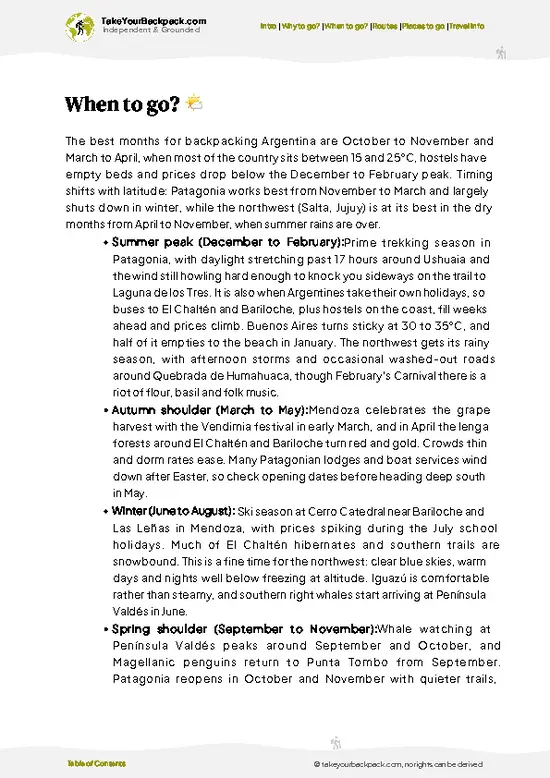
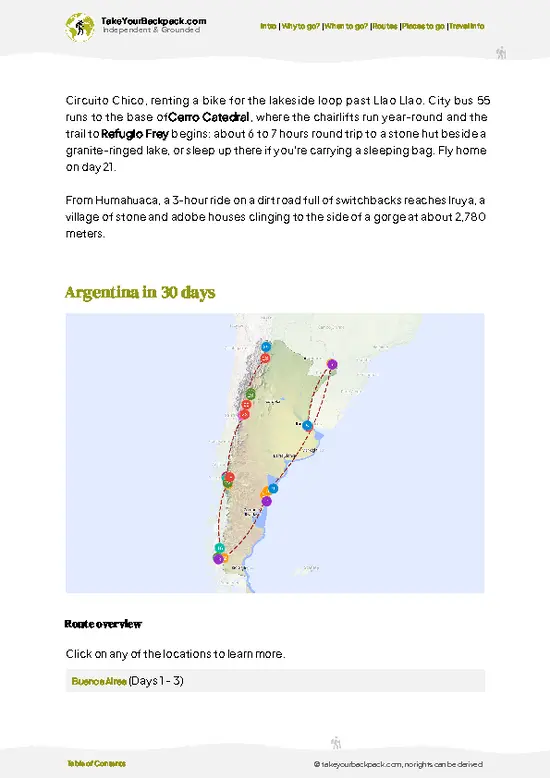
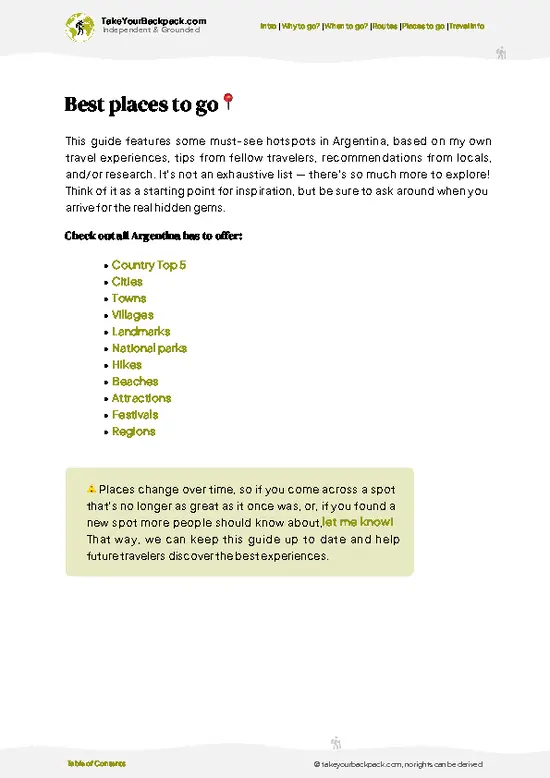
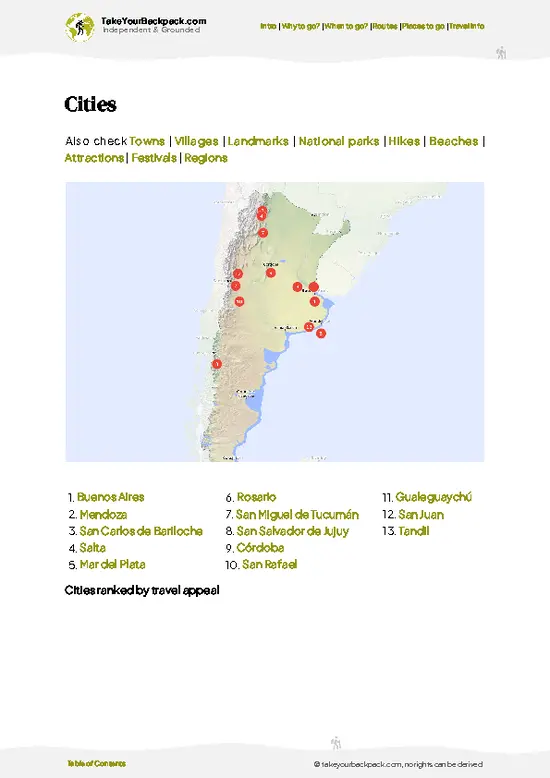
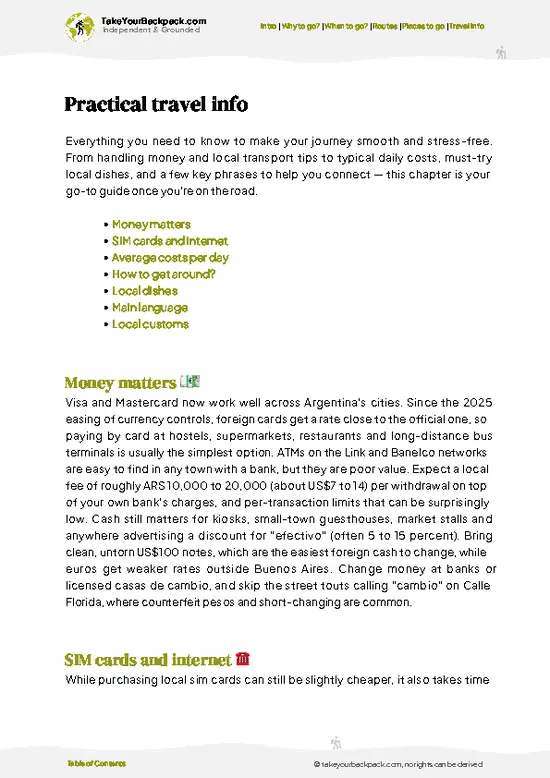
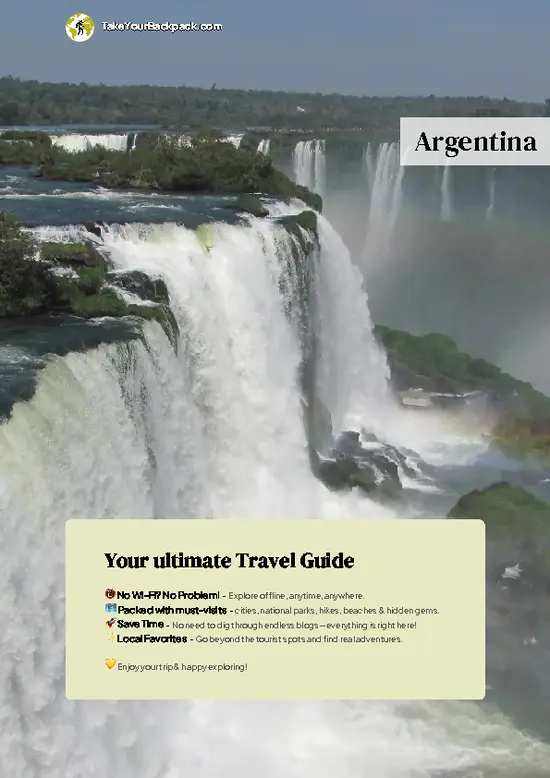
example page 0 from our offline Travel Guide for Argentina
example page 1 from our offline Travel Guide for Argentina
example page 2 from our offline Travel Guide for Argentina
example page 3 from our offline Travel Guide for Argentina
example page 4 from our offline Travel Guide for Argentina
example page 5 from our offline Travel Guide for Argentina
example page 6 from our offline Travel Guide for Argentina
example page 7 from our offline Travel Guide for Argentina
The digital guide (393 pages) contains:
✅ 131 highlights, ranked by travel appeal
✅ Optimized 14, 21 & 30-day travel routes
✅ Cities, national parks, landmarks, beaches
✅ How to get around
✅ Offline-friendly for travel without Wi-Fi
👉 Click to see all 30+ guide features

📅 Plan smarter in minutes, not weeks
✅ Month by month travel advice
✅ Festivals & national holidays
✅ Budget expectations

🗺️ Go to the right places, skip the overrated ones
✅ Honest pros & cons of destinations
✅ Top hikes, parks & viewpoints
✅ Lesser-known places most travelers miss
✅ Clear “worth it vs skip it” guidance

🛏️ Travel smoothly without rookie mistakes
✅ Best areas to stay
✅ Transport systems explained simply
✅ Common scams & safety advice
✅ SIM cards, money & practical tips

🌍 Understand the country, not just visit it
✅ Culture & traditions
✅ 52 Essential phrases & customs
✅ Festivals worth planning around
✅ Traveler-friendly historical context
✅ Insights that make places more meaningful

📱 Built for real travel conditions
✅ Fully downloadable PDF
✅ Works completely offline
✅ Optimized for phone use
✅ Useful in remote areas & buses
✅ Everything in one place
Stop searching, start planning
Get instant access to your full guide. 30‑day money-back guarantee.
+ Add another guide for just

By proceeding you agree to our terms.
Sent to your inbox immediately after payment • 100% Secure Checkout
Best Backpacking Travel Advisor 2025 tourism awardBest Backpacking
Travel Advisor
2025
What others say about Take Your Backpack Guides:
⭐⭐⭐⭐⭐
Fantastic, amazing amount of information!
⭐⭐⭐⭐⭐
My goodness this is amazing, it's what I've been looking for hats off too you!
⭐⭐⭐⭐⭐
I think this is absolutely BRILLIANT
⭐⭐⭐⭐
Very complete and informative. It's still missing places, but I gotta to commend you
⭐⭐⭐⭐⭐
This is truly amazing, thank you, can't wait to explore it with my kids!
⭐⭐⭐⭐⭐
Awesome resource, thank you!
⭐⭐⭐⭐⭐
This is amazing! Can't wait to explore the ones I haven't seen
⭐⭐⭐⭐
I love this! Well done, great idea.
⭐⭐⭐⭐⭐
Thanks for taking the time to make this gem!
⭐⭐⭐⭐⭐
This might be the best website I've ever seen.
⭐⭐⭐⭐⭐
Congratulations, and thank you so much for your work; it's incredibly valuable.
⭐⭐⭐⭐
In all seriousness I think you did a great job pointing out the important spots
⭐⭐⭐⭐⭐
10/10 very good
⭐⭐⭐⭐⭐
As someone who's only just starting to visit regularly this is awesome, thank you.
⭐⭐⭐⭐
Thank you very much! I'm going to visit my dad, it's going to be very useful!
⭐⭐⭐⭐⭐
This is really cool! We'll be travelling for the first time and this definitely come in handy.
⭐⭐⭐⭐⭐
You are now our minister of culture, congratulations 👨‍💼
⭐⭐⭐⭐⭐
Just wanted to tell you that this is a pearl! Going to follow your recommendations.
⭐⭐⭐⭐⭐
This is so cool. I'll definitely be using the resource for my travels soon.
⭐⭐⭐⭐⭐
This is very impressive! Good work.
⭐⭐⭐⭐⭐
This is an amazing and informative site. Very well done!

🛏️ Where to stay?Where to Stay in Argentina

Argentina has plenty of hostels and budget guesthouses, with dorm beds typically around US$12 to 25 a night and the widest choice in Buenos Aires, Mendoza, Salta and Bariloche. In Buenos Aires, Palermo has the most options, leafy streets, the best bars and clubs, and feels safe late at night, but it sits a 20 to 30 minute subway ride from the historic center. San Telmo is cheaper and closer to the old city and the Sunday market, though its quieter blocks get sketchy after dark, while Recoleta is the calm, safe pick with fewer hostels and slightly higher prices.

If you enjoy meeting fellow travelers, consider choosing hostels with high ratings for atmosphere. On the other hand, if you prefer having … read more 👉
Argentina has plenty of hostels and budget guesthouses, with dorm beds typically around US$12 to 25 a night and the widest choice in Buenos Aires, Mendoza, Salta and Bariloche. In Buenos Aires, Palermo has the most options, leafy streets, the best bars and clubs, and feels safe late at night, but it sits a 20 to 30 minute subway ride from the historic center. San Telmo is cheaper and closer to the old city and the Sunday market, though its quieter blocks get sketchy after dark, while Recoleta is the calm, safe pick with fewer hostels and slightly higher prices.

If you enjoy meeting fellow travelers, consider choosing hostels with high ratings for atmosphere. On the other hand, if you prefer having your own space, a hotel might be a better option.

ArgentinaMore of Argentina

👋 Meet the founderWho’s Behind Take Your Backpack?

Johan, backpacker and founder of TakeYourBackpackHi, I’m Johan (Netherlands 🇳🇱), the creator of TakeYourBackpack. Over the past 3 decades, I’ve backpacked through 90+ countries across six continents, gaining extensive experience with independent travel, long-term trips, and overland routes.

This site is built on a combination of firsthand travel experience and carefully curated insights from other backpackers. Many guides are based on places I’ve personally visited, while others bring together tips, observations, and practical advice shared by trusted travelers I’ve met along the way.

The goal is to provide realistic, experience-driven guidance — not generic itineraries — so you can explore destinations with better context, clearer expectations, and more confidence.