×

Argentina🇦🇷 | national parksLa Payunia Provincial Reserve800 volcanic cones, black lava plains, guanaco herds, 4x4 circuit | things to do and best time to go

Explore Patagonia National ParkExplore Quebrada del Condorito National Park

Backpacking in La Payunia Provincial Reserve
🌟 Highlightnational park ranked #13
By Johan Kruseman 🇳🇱 | Updated October 19, 2026

People assume this is a park with trails, rangers at every gate, and a visitor center handing out maps. It isn't. La Payunia sits in southern Mendoza province, a volcanic steppe with over 800 cones scattered across black lava fields, and you explore it almost entirely by 4x4 with a licensed guide, not on foot. That's the first gotcha: independent hiking is limited, so budget backpackers need to team up with others in Malargüe to split vehicle costs. The payoff is real though. I stood on a ridge of solidified lava at dusk, wind cutting sideways, watching a herd of guanaco move across a red cinder field while the volcano Payún Matrú glowed rust-colored behind them, and I felt genuinely small in a good way. Compared to Los Glaciares or Nahuel Huapi, this place gets far fewer crowds, has no real camping infrastructure inside the reserve, and rewards patience over spontaneity.

Discover everything you want to know in the 📖 Argentina Travel Guide.


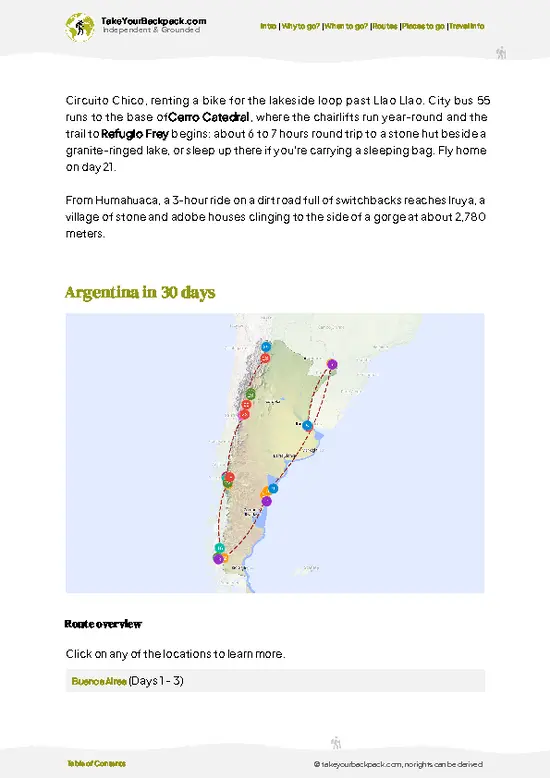
example page 0 from our offline Travel Guide for Argentina
example page 1 from our offline Travel Guide for Argentina
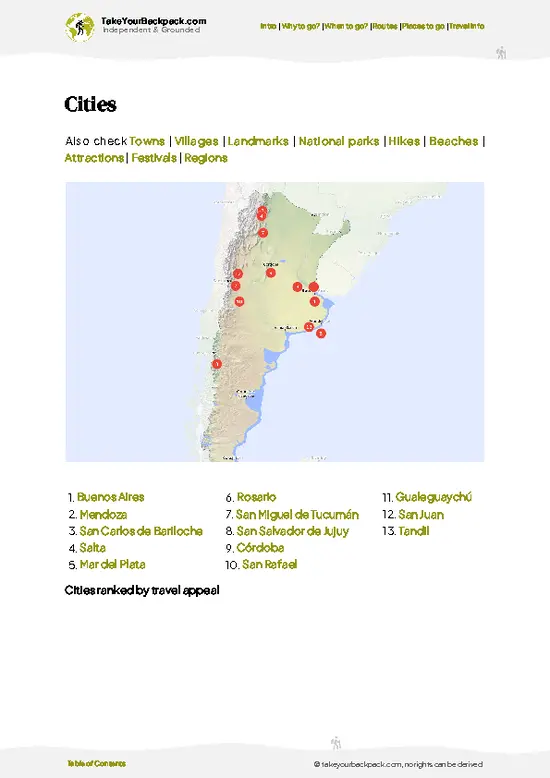
example page 2 from our offline Travel Guide for Argentina
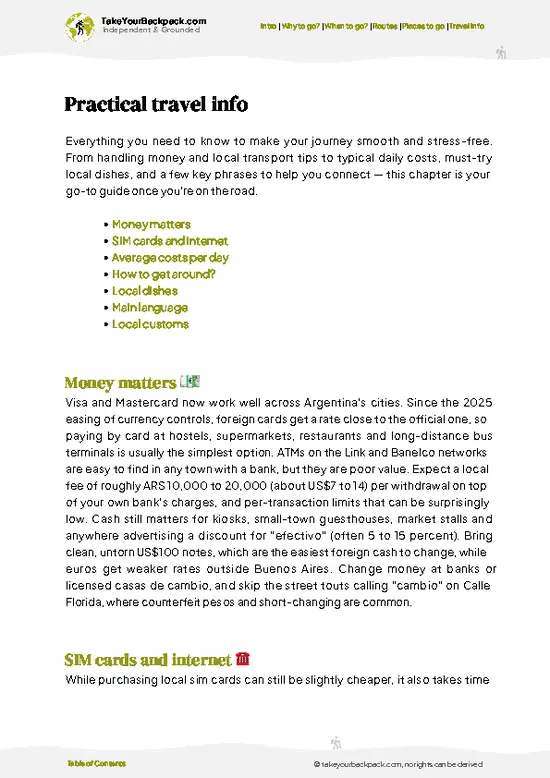
example page 3 from our offline Travel Guide for Argentina
example page 4 from our offline Travel Guide for Argentina
example page 5 from our offline Travel Guide for Argentina
example page 6 from our offline Travel Guide for Argentina
example page 7 from our offline Travel Guide for Argentina
Loading the map 🌍
CLICK TO FILTER
cities
towns
villages
landmarks
national parks
hikes
beaches
attractions
festivals
regions
SHOW COUNTRY’S BESTSHOW ALL

✨ Why go?
Ranked #13 national park in Argentina
Why La Payunia Provincial Reserve should be on your travel list

Backpackers gravitate here because it delivers raw volcanic scenery without the queues of Argentina's bigger parks. You won't find manicured trail networks, but that's the draw for travelers chasing independent exploration over packaged tourism. Budget-minded visitors base themselves in Malargüe, where hostels and campgrounds run cheap, then arrange shared 4x4 trips into the reserve to cut costs. The trail variety is limited but the terrain variety isn't: black lava fields, red cinder cones, and wind-carved rock formations all sit within a few hours of each other. It's not ideal for self-guided travelers wanting solo treks, since access requires a guide, but for those willing to coordinate logistics themselves rather than book an all-inclusive tour, it delivers a genuinely different Patagonian-adjacent landscape.

💡 HighlightsDon't-miss highlights and experiences

  1. Payún Matrú Volcano: A massive shield volcano with a caldera roughly 8 km wide, forming the visual anchor of the whole reserve. Seeing its scale from a distance puts the surrounding lava fields into context.
  2. Los Volcanes Complex: A cluster of over 800 volcanic cones spread across the steppe, ranging from small scoria mounds to larger structures. Few places in South America pack this density of visible volcanism into one landscape.
  3. Guanaco Herds: La Payunia holds one of Argentina's largest wild guanaco populations, and sightings of groups numbering in the dozens are common along the main routes. Watching them move as a unit across black rock is something photos never quite capture.
  4. Pampas Negras (Black Plains): Vast stretches of dark volcanic sand and gravel that create a stark, almost lunar surface
… read more 👉
  1. Payún Matrú Volcano: A massive shield volcano with a caldera roughly 8 km wide, forming the visual anchor of the whole reserve. Seeing its scale from a distance puts the surrounding lava fields into context.
  2. Los Volcanes Complex: A cluster of over 800 volcanic cones spread across the steppe, ranging from small scoria mounds to larger structures. Few places in South America pack this density of visible volcanism into one landscape.
  3. Guanaco Herds: La Payunia holds one of Argentina's largest wild guanaco populations, and sightings of groups numbering in the dozens are common along the main routes. Watching them move as a unit across black rock is something photos never quite capture.
  4. Pampas Negras (Black Plains): Vast stretches of dark volcanic sand and gravel that create a stark, almost lunar surface underfoot. The contrast with the pale sky above makes for striking wide shots.
  5. La Carbonilla Lava Field: An extensive flow of jagged, dark basalt that requires careful footing if you get out to walk sections of it. The texture up close, all ropey and cracked, tells you how the surface cooled.
  6. Colorado and Santa María Cones: Reddish cinder cones whose iron oxide content stains the slopes rust and ochre, offering a color contrast to the black fields nearby.
  7. Sunset Viewpoints along the Circuit: Several pull-off points along the standard 4x4 route catch late light hitting the cones at low angles, when shadows exaggerate every ridge and crater rim.
Spotted a mistake or missing something? Contact us.

🌤️ When to go?Best time to explore La Payunia Provincial Reserve

  • Spring (October to November): Mild days around 15-22°C (59-72°F), stable weather, and fewer visitors than summer make this the sweet spot for photography and wildlife spotting.
  • Summer (December to February): Daytime temps hit 25-30°C (77-86°F) with long daylight hours, but winds pick up in the afternoon and this is peak season for regional tourism, so guided trips book faster.
  • Autumn (March to April): Cooling to 10-18°C (50-64°F), calmer winds, and thinner crowds, though some operators reduce trip frequency.
  • Winter (May to September): Cold, often below freezing at night, with snow possible at higher elevations; some routes close entirely.
In shoulder season you can book your 4x4 trip a day ahead in Malargüe, and prices soften when demand is low.

source: climatestotravel.comJANJanuary: highly recommended for travelingFEBFebruary: highly recommended for travelingMARMarch: highly recommended for travelingAPRApril: excellent for travelingMAYMay: excellent for travelingJUNJune: good for travelingJULJuly: fair for travelingAUGAugust: fair for travelingSEPSeptember: excellent for travelingOCTOctober: excellent for travelingNOVNovember: highly recommended for travelingDECDecember: highly recommended for traveling
argentina-national-park-la-payunia-provincial-reserve
© Google | Facundo De Martino

✈️ The backpacker research shortcutArgentina Travel Guide

An offline-friendly backpacking guide with optimized travel routes, ranked highlights, transport advice, and the best areas to stay.
example page 0 from our offline Travel Guide for Argentina
example page 1 from our offline Travel Guide for Argentina
example page 2 from our offline Travel Guide for Argentina
example page 3 from our offline Travel Guide for Argentina
example page 4 from our offline Travel Guide for Argentina
example page 5 from our offline Travel Guide for Argentina
example page 6 from our offline Travel Guide for Argentina
example page 7 from our offline Travel Guide for Argentina
The digital guide (393 pages) contains:
✅ 131 highlights, ranked by travel appeal
✅ Optimized 14, 21 & 30-day travel routes
✅ Cities, national parks, landmarks, beaches
✅ How to get around
✅ Offline-friendly for travel without Wi-Fi
👉 Click to see all 30+ guide features

📅 Plan smarter in minutes, not weeks
✅ Month by month travel advice
✅ Festivals & national holidays
✅ Budget expectations

🗺️ Go to the right places, skip the overrated ones
✅ Honest pros & cons of destinations
✅ Top hikes, parks & viewpoints
✅ Lesser-known places most travelers miss
✅ Clear “worth it vs skip it” guidance

🛏️ Travel smoothly without rookie mistakes
✅ Best areas to stay
✅ Transport systems explained simply
✅ Common scams & safety advice
✅ SIM cards, money & practical tips

🌍 Understand the country, not just visit it
✅ Culture & traditions
✅ 52 Essential phrases & customs
✅ Festivals worth planning around
✅ Traveler-friendly historical context
✅ Insights that make places more meaningful

📱 Built for real travel conditions
✅ Fully downloadable PDF
✅ Works completely offline
✅ Optimized for phone use
✅ Useful in remote areas & buses
✅ Everything in one place
Stop searching, start planning
Get instant access to your full guide. 30‑day money-back guarantee.
+ Add another guide for just

By proceeding you agree to our terms.
Sent to your inbox immediately after payment • 100% Secure Checkout
Best Backpacking Travel Advisor 2025 tourism awardBest Backpacking
Travel Advisor
2025
What others say about Take Your Backpack Guides:
⭐⭐⭐⭐⭐
Fantastic, amazing amount of information!
⭐⭐⭐⭐⭐
My goodness this is amazing, it's what I've been looking for hats off too you!
⭐⭐⭐⭐⭐
I think this is absolutely BRILLIANT
⭐⭐⭐⭐
Very complete and informative. It's still missing places, but I gotta to commend you
⭐⭐⭐⭐⭐
This is truly amazing, thank you, can't wait to explore it with my kids!
⭐⭐⭐⭐⭐
Awesome resource, thank you!
⭐⭐⭐⭐⭐
This is amazing! Can't wait to explore the ones I haven't seen
⭐⭐⭐⭐
I love this! Well done, great idea.
⭐⭐⭐⭐⭐
Thanks for taking the time to make this gem!
⭐⭐⭐⭐⭐
This might be the best website I've ever seen.
⭐⭐⭐⭐⭐
Congratulations, and thank you so much for your work; it's incredibly valuable.
⭐⭐⭐⭐
In all seriousness I think you did a great job pointing out the important spots
⭐⭐⭐⭐⭐
10/10 very good
⭐⭐⭐⭐⭐
As someone who's only just starting to visit regularly this is awesome, thank you.
⭐⭐⭐⭐
Thank you very much! I'm going to visit my dad, it's going to be very useful!
⭐⭐⭐⭐⭐
This is really cool! We'll be travelling for the first time and this definitely come in handy.
⭐⭐⭐⭐⭐
You are now our minister of culture, congratulations 👨‍💼
⭐⭐⭐⭐⭐
Just wanted to tell you that this is a pearl! Going to follow your recommendations.
⭐⭐⭐⭐⭐
This is so cool. I'll definitely be using the resource for my travels soon.
⭐⭐⭐⭐⭐
This is very impressive! Good work.
⭐⭐⭐⭐⭐
This is an amazing and informative site. Very well done!

🛏️ Where to stay?Where staying makes the most sense

There's no lodging or camping infrastructure inside La Payunia itself, so Malargüe, roughly 150 km north, is the practical base for backpackers. The town has budget hostels, guesthouses, and a municipal campground, plus tour operators who run the 4x4 circuits into the reserve. Prices run noticeably lower than Patagonia's tourist hubs like El Calafate. Some travelers base in San Rafael instead, a larger city a few hours further north with more transport connections, though it adds distance to reserve access. For a genuine budget approach, Malargüe's hostels often help arrange shared vehicle costs … read more 👉
There's no lodging or camping infrastructure inside La Payunia itself, so Malargüe, roughly 150 km north, is the practical base for backpackers. The town has budget hostels, guesthouses, and a municipal campground, plus tour operators who run the 4x4 circuits into the reserve. Prices run noticeably lower than Patagonia's tourist hubs like El Calafate. Some travelers base in San Rafael instead, a larger city a few hours further north with more transport connections, though it adds distance to reserve access. For a genuine budget approach, Malargüe's hostels often help arrange shared vehicle costs with other travelers, which cuts the biggest expense of visiting. There's no realistic way to camp inside the reserve boundaries due to access restrictions, so plan for a day-trip structure rather than multi-day treks with overnight stops inside the park.

👛 Costs (as of 19 October 2026)How expensive it really is

Visiting La Payunia is inexpensive by Argentine national park standards, though the guided 4x4 requirement is the main cost driver rather than park fees themselves.
CategoryBudget RangeLocal Reality
Entrance FeeVariesBook the entry ticket and time slot online with Mendoza’s Ministry of Energy and Environment
Guided 4x4 TourUSD 40 to 80 per personPrice drops when shared among 4 to 6 people; book through Malargüe operators
Accommodation (Malargüe)USD 10 to 25 per nightHostel dorms cheapest, private guesthouses slightly more
Camping (Malargüe area)USD 5 to 10 per nightMunicipal campground with basic facilities
Food/SuppliesUSD 10 to 20 per dayGrocery stores in Malargüe cheaper than restaurant meals
Local TransportUSD 15 to 30Bus fare to/from Malargüe from larger cities like San Rafael or Mendoza
⚠️ Prices can change and everyone travels differently, so take this as a rough guide. Hope it helps you plan your adventure!

🥾 TrailsScenic routes and wildlife spotting in La Payunia Provincial Reserve

Hiking inside La Payunia is restricted and mostly informal since there are no designated, marked trails in the conventional sense. Visitors access the reserve via guided 4x4 circuits, and short walks (typically 20 to 40 minutes) are taken at designated stops to examine lava formations, cinder cones, or wildlife viewing areas up close. The terrain is uneven, sharp volcanic rock, loose scoria, and hardened lava, so sturdy boots with ankle support matter more than technical hiking gear.
  • Terrain: Volcanic steppe with black basalt fields, red cinder cones, and open plains, mostly flat but with sharp,
… read more 👉
Hiking inside La Payunia is restricted and mostly informal since there are no designated, marked trails in the conventional sense. Visitors access the reserve via guided 4x4 circuits, and short walks (typically 20 to 40 minutes) are taken at designated stops to examine lava formations, cinder cones, or wildlife viewing areas up close. The terrain is uneven, sharp volcanic rock, loose scoria, and hardened lava, so sturdy boots with ankle support matter more than technical hiking gear.
  • Terrain: Volcanic steppe with black basalt fields, red cinder cones, and open plains, mostly flat but with sharp, uneven footing near lava flows.
  • Difficulty: Easy walking distances but physically demanding underfoot due to loose rock; not technical, but not casual either.
  • Wildlife: Guanaco, foxes, and various steppe birds including condors at higher elevations.
  • Key Features: Payún Matrú caldera, extensive cone fields, and stark color contrasts between lava types.
Public transport does not reach the reserve directly. Travelers take a bus to Malargüe, then arrange a guided vehicle tour, since the full circuit requires a licensed guide; without one you can drive only a partial route on Ruta Provincial 183. Crowds stay light year-round compared to Argentina's major parks. Entry tickets are booked online in advance.
⚠️ Hiking info can sometimes be outdated or inaccurate. Before you hit the trail, check the latest conditions with locals. If you do spot anything that's off, I'd love to hear from you, so I can update it for fellow travelers.

🛡️ SafetySafety Tips and Common Scams in La Payunia Provincial Reserve

This reserve is straightforward from a safety standpoint since access is guided and vehicle-based rather than independent trekking, which removes most navigation risk. Wind is the main weather factor, gusts can be strong and sudden, so layer up even on warm days. Footing on lava fields is the real hazard: sharp, uneven rock can twist ankles if you're not paying attention during the short walks at stops. Guanaco and other wildlife keep their distance naturally, no aggressive encounters to worry about. First-timers sometimes underestimate the cold at night if they misjudge which season they're visiting in, so check the specific month's temperature range before packing.

FAQCommon questions from travelers

Most backpackers see the highlights in a single full-day guided trip, roughly 6 to 8 hours, though basing yourself in Malargüe for 2 days gives buffer time for weather delays or booking a tour with limited daily departures.
Not independently in the sense of driving yourself in; private vehicle access is restricted and a licensed guide is required for the 4x4 circuit. You can reach Malargüe, the gateway town, by public bus from Mendoza or San Rafael, then join a shared guided tour from there.
Yes, there’s an entrance fee, and you book the ticket and a time slot online with Mendoza’s Ministry of Energy and Environment. Retirees, people with disabilities and Malvinas veterans enter free.
⚠️ Things can change over time, so always validate details locally before you go.

Other Argentine national parks near La Payunia Provincial Reserve

Explore more nearby:


💡 Not sure where to go next?
Create a personalized itinerary for Argentina including La Payunia Provincial Reserve and the places that fit your trip.

Generate my itinerary

👉 Discover all national parks

Or checkout all Argentina has to offer (think cities, towns, villages, national parks, hikes, beaches, festivals)
Country photo of Argentina

We 💚 feedbackWhat to keep in mind

Worth it for the sheer density of volcanic cones and the guanaco herds moving through black lava fields, unlike anything else in Argentina. The drawback: no independent hiking, so you're locked into guided 4x4 trips, which limits spontaneity and adds cost if you can't find others to split the vehicle with.

✈️ When did I visit Argentina?
I have visited Argentina, together with Chile, in September 2012.

✍️ Help improve this page!
The information on this page is based on my own backpacking experience in Argentina, supplemented with up-to-date research and feedback from other travelers. Travel details can change, so if you notice anything outdated or incomplete, feel free to let me know.


🙋‍♂️ Give feedback

👋 Meet the founderWho’s Behind Take Your Backpack?

Johan, backpacker and founder of TakeYourBackpackHi, I’m Johan (Netherlands 🇳🇱), the creator of TakeYourBackpack. Over the past 3 decades, I’ve backpacked through 90+ countries across six continents, gaining extensive experience with independent travel, long-term trips, and overland routes.

This site is built on a combination of firsthand travel experience and carefully curated insights from other backpackers. Many guides are based on places I’ve personally visited, while others bring together tips, observations, and practical advice shared by trusted travelers I’ve met along the way.

The goal is to provide realistic, experience-driven guidance — not generic itineraries — so you can explore destinations with better context, clearer expectations, and more confidence.