×

Argentina🇦🇷 | villagesPotrerillosTurquoise reservoir, kayak rentals, Cerro Cocodrilo, Andean foothills | things to do and best time to go

Explore La CumbrecitaExplore Tolar Grande

Backpacking in Potrerillos
👌 Worth visitingvillage ranked #4
By Johan Kruseman 🇳🇱 | Updated October 19, 2026

People assume Potrerillos is just a dam and a reservoir you glimpse from a bus window on the way to Chile. It's actually a proper village, tucked in the Andean foothills of Mendoza province, about an hour west of Mendoza city. For backpackers, it's a mixed bag in the honest sense: no hostels lining a main strip, no nightlife, but genuinely dark skies, river sound at night, and access to hikes that don't require a guide company markup. Evenings are quiet, communal dinners at guesthouses, early to bed. You'll meet other travelers if you're staying somewhere social, but it's smaller-scale than Mendoza city or even Uspallata. I remember sitting by the reservoir at dusk, wind dropping suddenly, watching the water turn the color of the surrounding rock, and realizing I hadn't heard a car engine in twenty minutes. That silence is the whole pitch.

Discover everything you want to know in the 📖 Argentina Travel Guide.


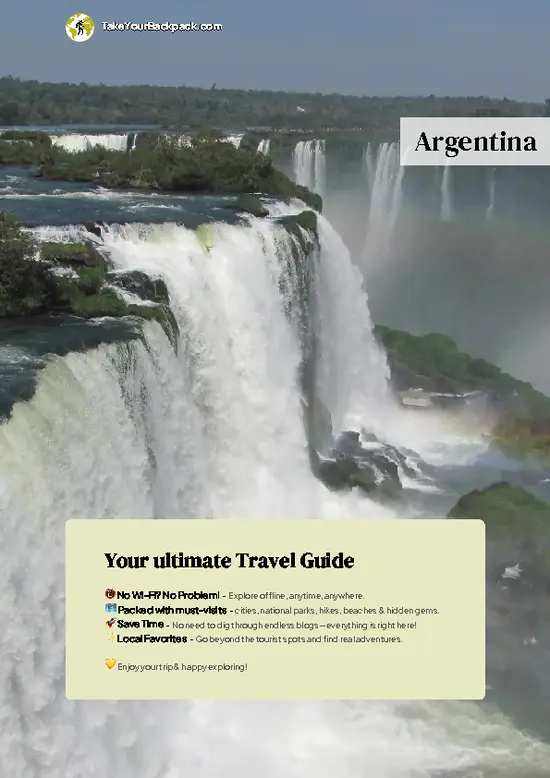
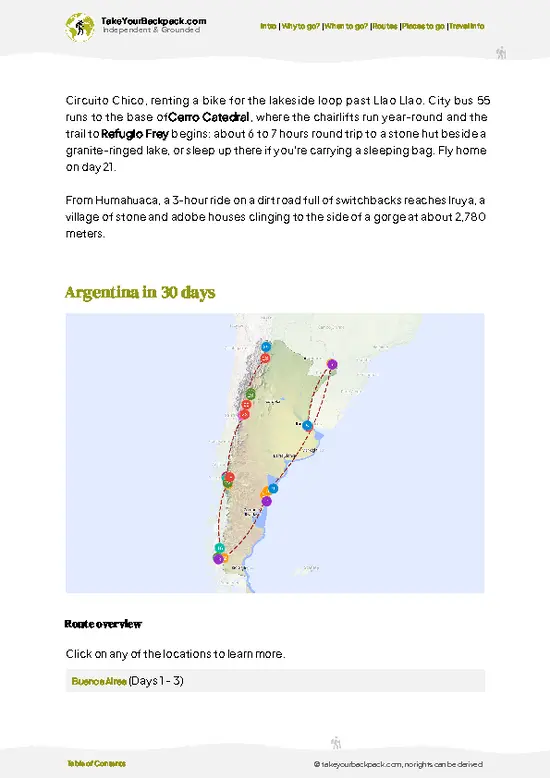
example page 0 from our offline Travel Guide for Argentina
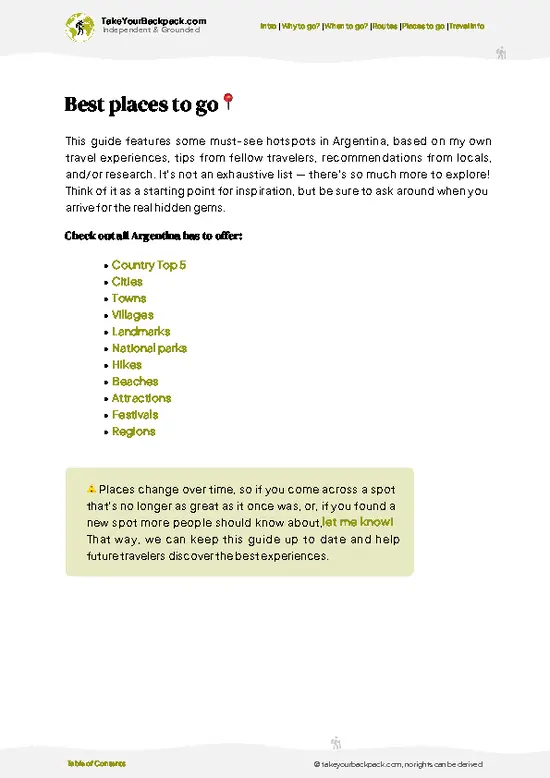
example page 1 from our offline Travel Guide for Argentina
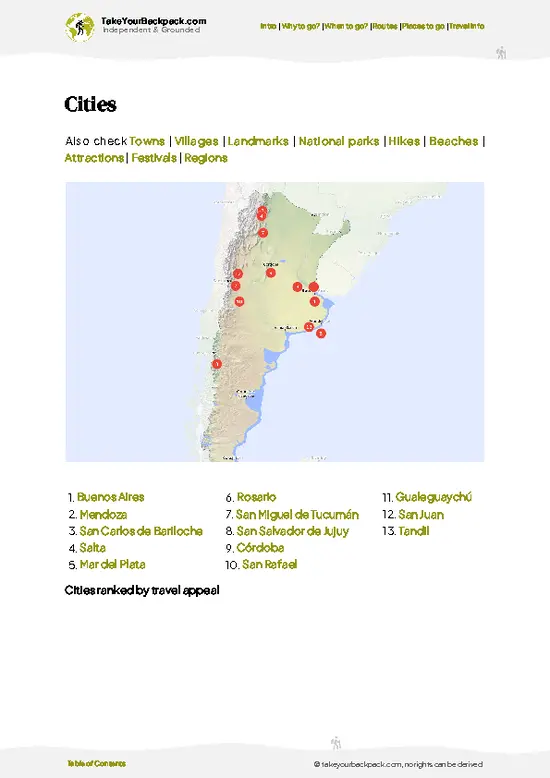
example page 2 from our offline Travel Guide for Argentina
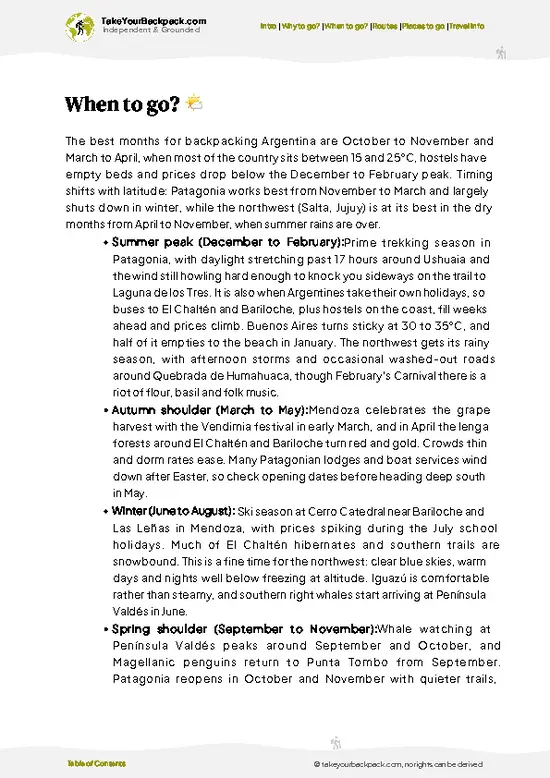
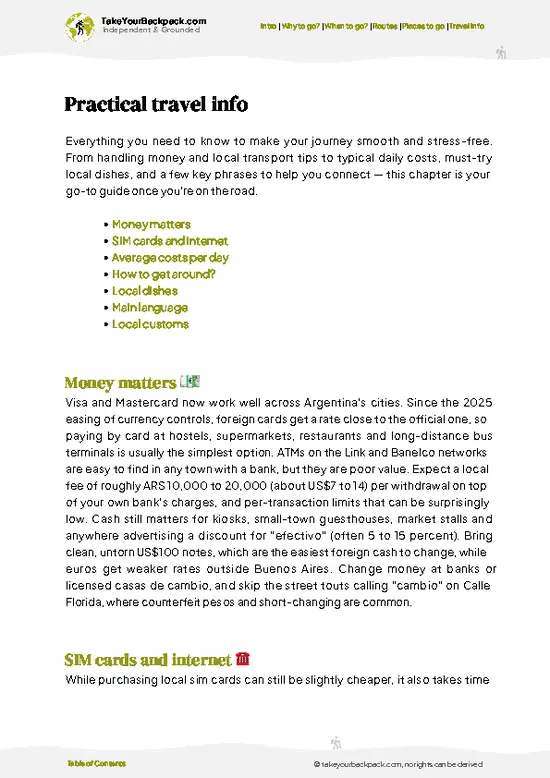
example page 3 from our offline Travel Guide for Argentina
example page 4 from our offline Travel Guide for Argentina
example page 5 from our offline Travel Guide for Argentina
example page 6 from our offline Travel Guide for Argentina
example page 7 from our offline Travel Guide for Argentina
Loading the map 🌍
CLICK TO FILTER
cities
towns
villages
landmarks
national parks
hikes
beaches
attractions
festivals
regions
SHOW COUNTRY’S BESTSHOW ALL

✨ Why go?
Ranked #4 village in Argentina
What sets this place apart

Backpackers stop in Potrerillos mostly as a breather between Mendoza's wine-and-hostel circuit and the rougher, higher-altitude stretches toward Uspallata or the Chilean border. The village works as a slow-travel pause: no major sights to rush toward, just river access, short-to-moderate hiking trails, and a reservoir used for kayaking and windsurfing in warmer months. It suits hikers, couples wanting a quiet night away from dorm noise, and solo travelers who don't mind a low-key evening. It's not a party stop, and most people stay one or two nights rather than lingering a week. The atmosphere leans calm and residential rather than touristic, so don't expect a packed hostel common room every night, though a few guesthouses do attract a steady trickle of travelers heading the Mendoza-to-Santiago … read more 👉
Backpackers stop in Potrerillos mostly as a breather between Mendoza's wine-and-hostel circuit and the rougher, higher-altitude stretches toward Uspallata or the Chilean border. The village works as a slow-travel pause: no major sights to rush toward, just river access, short-to-moderate hiking trails, and a reservoir used for kayaking and windsurfing in warmer months. It suits hikers, couples wanting a quiet night away from dorm noise, and solo travelers who don't mind a low-key evening. It's not a party stop, and most people stay one or two nights rather than lingering a week. The atmosphere leans calm and residential rather than touristic, so don't expect a packed hostel common room every night, though a few guesthouses do attract a steady trickle of travelers heading the Mendoza-to-Santiago route. If you need constant stimulation, this isn't your spot. If you want a genuine pause with mountain air and unhurried mornings, it delivers exactly that.

💡 HighlightsThe experiences that define the visit

  1. Embalse Potrerillos (the reservoir): The centerpiece of the village, this turquoise-green reservoir is surrounded by dry Andean hills and offers kayaking, stand-up paddleboarding, and windsurfing rentals from small operators near the shore. Best visited in summer (December to February) for water activities, or early morning in any season for photography. Renting a kayak typically costs a modest hourly fee, and a paddle session runs about one to two hours.
  2. Cerro Cocodrilo viewpoint hike: An easy trail near the dam climbing to a wide panorama over the reservoir and surrounding peaks. It takes roughly 1.5 to 2 hours round trip and costs nothing beyond good shoes and water. Go in the cooler morning hours, especially in autumn or spring, to avoid midday sun.
Beyond the village itself, Cacheuta hot … read more 👉
  1. Embalse Potrerillos (the reservoir): The centerpiece of the village, this turquoise-green reservoir is surrounded by dry Andean hills and offers kayaking, stand-up paddleboarding, and windsurfing rentals from small operators near the shore. Best visited in summer (December to February) for water activities, or early morning in any season for photography. Renting a kayak typically costs a modest hourly fee, and a paddle session runs about one to two hours.
  2. Cerro Cocodrilo viewpoint hike: An easy trail near the dam climbing to a wide panorama over the reservoir and surrounding peaks. It takes roughly 1.5 to 2 hours round trip and costs nothing beyond good shoes and water. Go in the cooler morning hours, especially in autumn or spring, to avoid midday sun.
Beyond the village itself, Cacheuta hot springs and the Uspallata valley make excellent day trips, both reachable within an hour or so; Cacheuta, with its riverside thermal pools, is my personal favorite for an afternoon of doing absolutely nothing productive.
Spotted a mistake or missing something? Contact us.

Things to do around Potrerillos

Ratings based on Tripadvisor reviews. When you book through this link, you support our work at no extra cost to you.

🌤️ When to go?Seasonal considerations and timing

  • Summer (December to February): Warm days around 28-32°C (82-90°F), good for reservoir activities like kayaking and windsurfing, but also peak domestic tourism from Mendoza city, so weekends get busier and prices rise slightly.
  • Autumn (March to May): Mild days near 18-22°C (64-72°F), clear skies, fewer visitors, ideal for hiking without heat exhaustion.
  • Winter (June to August): Cold, often 5-12°C (41-54°F) during the day and near freezing at night, quiet season with lower guesthouse rates, but some trails and water activities shut down.
  • Spring (September to November): Comfortable 15-20°C (59-68°F), wildflowers along the trails, moderate crowds, good daylight hours for full-day hikes.
Aim for a weekday in autumn, when the reservoir viewpoints are often empty, unlike on a summer Saturday.

source: climatestotravel.comJANJanuary: excellent for travelingFEBFebruary: excellent for travelingMARMarch: highly recommended for travelingAPRApril: highly recommended for travelingMAYMay: good for travelingJUNJune: fair for travelingJULJuly: fair for travelingAUGAugust: fair for travelingSEPSeptember: good for travelingOCTOctober: highly recommended for travelingNOVNovember: excellent for travelingDECDecember: excellent for traveling
when-to-go

✈️ The backpacker research shortcutArgentina Travel Guide

An offline-friendly backpacking guide with optimized travel routes, ranked highlights, transport advice, and the best areas to stay.
example page 0 from our offline Travel Guide for Argentina
example page 1 from our offline Travel Guide for Argentina
example page 2 from our offline Travel Guide for Argentina
example page 3 from our offline Travel Guide for Argentina
example page 4 from our offline Travel Guide for Argentina
example page 5 from our offline Travel Guide for Argentina
example page 6 from our offline Travel Guide for Argentina
example page 7 from our offline Travel Guide for Argentina
The digital guide (393 pages) contains:
✅ 131 highlights, ranked by travel appeal
✅ Optimized 14, 21 & 30-day travel routes
✅ Cities, national parks, landmarks, beaches
✅ How to get around
✅ Offline-friendly for travel without Wi-Fi
👉 Click to see all 30+ guide features

📅 Plan smarter in minutes, not weeks
✅ Month by month travel advice
✅ Festivals & national holidays
✅ Budget expectations

🗺️ Go to the right places, skip the overrated ones
✅ Honest pros & cons of destinations
✅ Top hikes, parks & viewpoints
✅ Lesser-known places most travelers miss
✅ Clear “worth it vs skip it” guidance

🛏️ Travel smoothly without rookie mistakes
✅ Best areas to stay
✅ Transport systems explained simply
✅ Common scams & safety advice
✅ SIM cards, money & practical tips

🌍 Understand the country, not just visit it
✅ Culture & traditions
✅ 52 Essential phrases & customs
✅ Festivals worth planning around
✅ Traveler-friendly historical context
✅ Insights that make places more meaningful

📱 Built for real travel conditions
✅ Fully downloadable PDF
✅ Works completely offline
✅ Optimized for phone use
✅ Useful in remote areas & buses
✅ Everything in one place
Stop searching, start planning
Get instant access to your full guide. 30‑day money-back guarantee.
+ Add another guide for just

By proceeding you agree to our terms.
Sent to your inbox immediately after payment • 100% Secure Checkout
Best Backpacking Travel Advisor 2025 tourism awardBest Backpacking
Travel Advisor
2025
What others say about Take Your Backpack Guides:
⭐⭐⭐⭐⭐
Fantastic, amazing amount of information!
⭐⭐⭐⭐⭐
My goodness this is amazing, it's what I've been looking for hats off too you!
⭐⭐⭐⭐⭐
I think this is absolutely BRILLIANT
⭐⭐⭐⭐
Very complete and informative. It's still missing places, but I gotta to commend you
⭐⭐⭐⭐⭐
This is truly amazing, thank you, can't wait to explore it with my kids!
⭐⭐⭐⭐⭐
Awesome resource, thank you!
⭐⭐⭐⭐⭐
This is amazing! Can't wait to explore the ones I haven't seen
⭐⭐⭐⭐
I love this! Well done, great idea.
⭐⭐⭐⭐⭐
Thanks for taking the time to make this gem!
⭐⭐⭐⭐⭐
This might be the best website I've ever seen.
⭐⭐⭐⭐⭐
Congratulations, and thank you so much for your work; it's incredibly valuable.
⭐⭐⭐⭐
In all seriousness I think you did a great job pointing out the important spots
⭐⭐⭐⭐⭐
10/10 very good
⭐⭐⭐⭐⭐
As someone who's only just starting to visit regularly this is awesome, thank you.
⭐⭐⭐⭐
Thank you very much! I'm going to visit my dad, it's going to be very useful!
⭐⭐⭐⭐⭐
This is really cool! We'll be travelling for the first time and this definitely come in handy.
⭐⭐⭐⭐⭐
You are now our minister of culture, congratulations 👨‍💼
⭐⭐⭐⭐⭐
Just wanted to tell you that this is a pearl! Going to follow your recommendations.
⭐⭐⭐⭐⭐
This is so cool. I'll definitely be using the resource for my travels soon.
⭐⭐⭐⭐⭐
This is very impressive! Good work.
⭐⭐⭐⭐⭐
This is an amazing and informative site. Very well done!

🛏️ Where to stay?Best areas and accommodation options

Guesthouses (hospedajes) and small cabañas dominate the lodging scene here rather than traditional hostels, so budget travelers should look for shared cabañas or rooms in family-run properties near the reservoir road, which tend to run cheaper and often include breakfast. A few properties cater specifically to backpackers and cyclists passing through on the Mendoza-to-Chile route, offering dorm-style rooms or shared kitchens. Camping is also viable in designated areas near the reservoir during warmer months, and it's the cheapest option by far if you have your own gear. Because the village is … read more 👉
Guesthouses (hospedajes) and small cabañas dominate the lodging scene here rather than traditional hostels, so budget travelers should look for shared cabañas or rooms in family-run properties near the reservoir road, which tend to run cheaper and often include breakfast. A few properties cater specifically to backpackers and cyclists passing through on the Mendoza-to-Chile route, offering dorm-style rooms or shared kitchens. Camping is also viable in designated areas near the reservoir during warmer months, and it's the cheapest option by far if you have your own gear. Because the village is small, availability can be tight during summer weekends and Argentine holiday periods, so booking a day or two ahead helps. Staying closer to the reservoir puts you near kayak rentals and the main viewpoint trail, while accommodations slightly further up the valley offer quieter nights and better stargazing. Don't expect late check-in flexibility everywhere; many hosts are small-scale and keep early hours, so confirm arrival times in advance, especially if you're coming in on a late bus from Mendoza city.

🚌 Day tripsExploring the surroundings

Potrerillos works well as a base for day trips because Ruta 7 runs straight through the valley, and buses between Mendoza and the Chilean border stop on the highway, so most outings take 30 minutes to 2 hours each way.
Cacheuta Hot Springs:
The thermal pools sit about 20 km east along the Mendoza river, in a canyon with steaming water and cold air at the edges. Allow a half day. Local buses toward Mendoza drop you at the Cacheuta turnoff for roughly US$1 to 2, and day entry to the thermal complexes runs about US$25 to 45. Visit from May to September, when soaking in cold air feels best. First-timers often arrive without a swimsuit and towel, and renting them adds up.

Uspallata Valley:
Head west for about 1.5 hours on Ruta 7 to reach a wide, dry valley ringed by multicolored hills, the setting … read more 👉
Potrerillos works well as a base for day trips because Ruta 7 runs straight through the valley, and buses between Mendoza and the Chilean border stop on the highway, so most outings take 30 minutes to 2 hours each way.
Cacheuta Hot Springs:
The thermal pools sit about 20 km east along the Mendoza river, in a canyon with steaming water and cold air at the edges. Allow a half day. Local buses toward Mendoza drop you at the Cacheuta turnoff for roughly US$1 to 2, and day entry to the thermal complexes runs about US$25 to 45. Visit from May to September, when soaking in cold air feels best. First-timers often arrive without a swimsuit and towel, and renting them adds up.

Uspallata Valley:
Head west for about 1.5 hours on Ruta 7 to reach a wide, dry valley ringed by multicolored hills, the setting of film scenes and old Inca trail traces. Buses toward Chile pass the area, and a round trip costs around US$8 to 14. The shoulder months of October to November and March to April give clear skies without the summer heat. Many people stay too short; plan at least three hours on the ground, because the last bus back leaves earlier than expected.

Puente del Inca:
A natural rock bridge stained orange and yellow by mineral springs spans the river at 2,720 m, with the ruins of an old spa hotel beside it. The ride takes about 2.5 to 3 hours each way, so start early. Expect US$12 to 20 return on a regular bus, plus a few dollars for snacks. December to March is the safest window, since snow can close the pass in winter. The common error is skipping layers; the wind at this altitude is sharp even in January.

Mendoza City and Wineries:
The city lies about 50 km east, around 1 to 1.5 hours by bus, and gives you wine tastings in Luján de Cuyo plus a walkable center of plazas. A bus return is about US$3 to 5, bikes rent for roughly US$10 to 15, and a tasting costs US$8 to 25. Harvest season, February to April, is liveliest. Book wineries in advance, because many refuse walk-ins.
👉 Explore Mendoza

FAQTraveler FAQ

Potrerillos is reached most easily from Mendoza city, about an hour away by regular bus service or remise (private car), with buses running multiple times daily from Mendoza's main terminal. There's no train service, and most backpackers combine the trip with onward travel toward Uspallata or the Chilean border. A one-way bus ticket typically costs only a few hundred Argentine pesos.
It's worth it if you want a quiet, scenic pause with hiking and reservoir access rather than sightseeing-dense days. It won't satisfy travelers looking for nightlife, museums, or a bustling social scene, since the village is genuinely small and low-key. For slow travelers or hikers passing through Mendoza province, one or two nights delivers real value.
Yes, it's easily done as a day trip from Mendoza city given the roughly one-hour bus ride each way, and many travelers visit just to hike or see the reservoir before returning the same evening. That said, staying at least one night lets you catch the reservoir at sunset and sunrise, which day-trippers miss entirely.
⚠️ Things can change over time, so always validate details locally before you go.

Other Argentine villages near Potrerillos

Explore more nearby:

  • La Cumbrecita—Car-free lanes, wooden footbridges, Cascada Grande, pine forest| 432 km away
  • Villa Pehuenia—Lago Aluminé, araucaria forest, Mapuche crafts, kayaking| 683 km away
  • Tolar Grande—Puna altitude, stromatolite springs, adobe chapel, sunset lookout| 946 km away

💡 Not sure where to go next?
Create a personalized itinerary for Argentina including Potrerillos and the places that fit your trip.

Generate my itinerary

👉 Discover all villages

Or checkout all Argentina has to offer (think cities, towns, villages, national parks, hikes, beaches, festivals)
Country photo of Argentina

We 💚 feedbackParting advice and final tips

Potrerillos earns its place on a slower Mendoza itinerary because of the quiet, the reservoir light at dusk, and hikes you can do without booking a tour. The drawback: there's genuinely little to do after dark, and if you crave hostel energy or nightlife, one night here will feel like plenty.

✈️ When did I visit Argentina?
I have visited Argentina, together with Chile, in September 2012.

✍️ Help improve this page!
The information on this page is based on my own backpacking experience in Argentina, supplemented with up-to-date research and feedback from other travelers. Travel details can change, so if you notice anything outdated or incomplete, feel free to let me know.


🙋‍♂️ Give feedback

👋 Meet the founderWho’s Behind Take Your Backpack?

Johan, backpacker and founder of TakeYourBackpackHi, I’m Johan (Netherlands 🇳🇱), the creator of TakeYourBackpack. Over the past 3 decades, I’ve backpacked through 90+ countries across six continents, gaining extensive experience with independent travel, long-term trips, and overland routes.

This site is built on a combination of firsthand travel experience and carefully curated insights from other backpackers. Many guides are based on places I’ve personally visited, while others bring together tips, observations, and practical advice shared by trusted travelers I’ve met along the way.

The goal is to provide realistic, experience-driven guidance — not generic itineraries — so you can explore destinations with better context, clearer expectations, and more confidence.