×

Argentina🇦🇷 | villagesTolar GrandePuna altitude, stromatolite springs, adobe chapel, sunset lookout | things to do and best time to go

Explore PotrerillosExplore Villa Pehuenia

Backpacking in Tolar Grande
👀 For curious travelersvillage ranked #5
By Johan Kruseman 🇳🇱 | Updated October 19, 2026

Fuel up before you arrive, both your body and your tank, because Tolar Grande sits on the western edge of Salta province, deep in the Puna, and the nearest gas station or real grocery run is hours away. This is a village of maybe a few hundred people at over 3,500 meters, ringed by volcanoes, salt flats, and a wind that never fully quits. You get total quiet, star fields that make you dizzy and guesthouses run by families who'll cook you dinner. In return, the altitude hits hard, ATMs don't exist, and buses are sparse. I remember sitting on a gravel step at dusk, my hands wrapped around a tin cup of coca tea, watching the Cono de Arita go from tan to rust to black. Compared to San Antonio de los Cobres, this place feels smaller, rawer, less passed-through. Evenings mean shared tables, early sleep, easy conversation with the handful of other travelers who made it this far.

Discover everything you want to know in the 📖 Argentina Travel Guide.


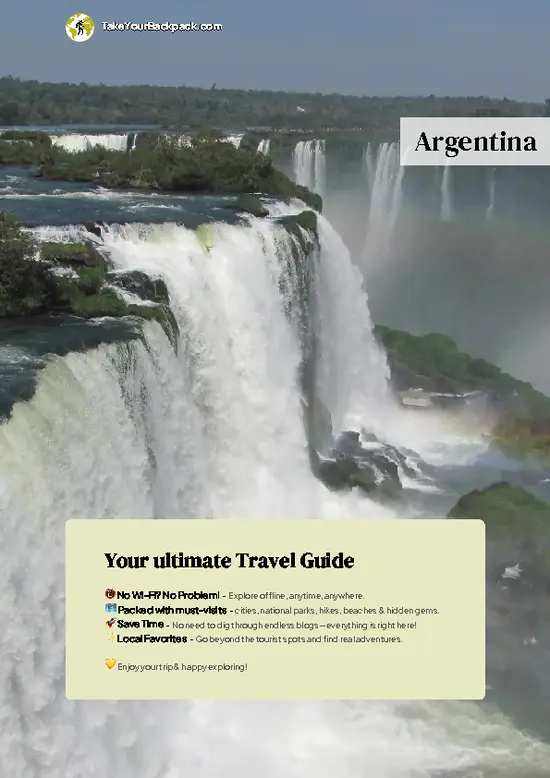
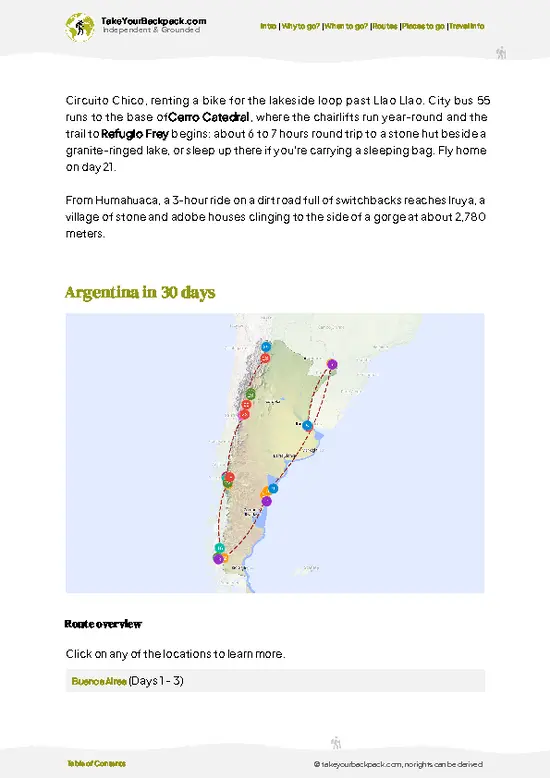
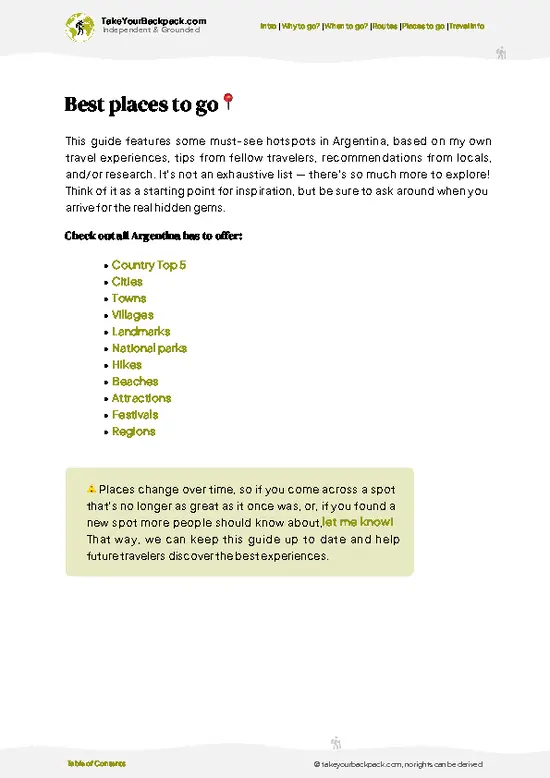
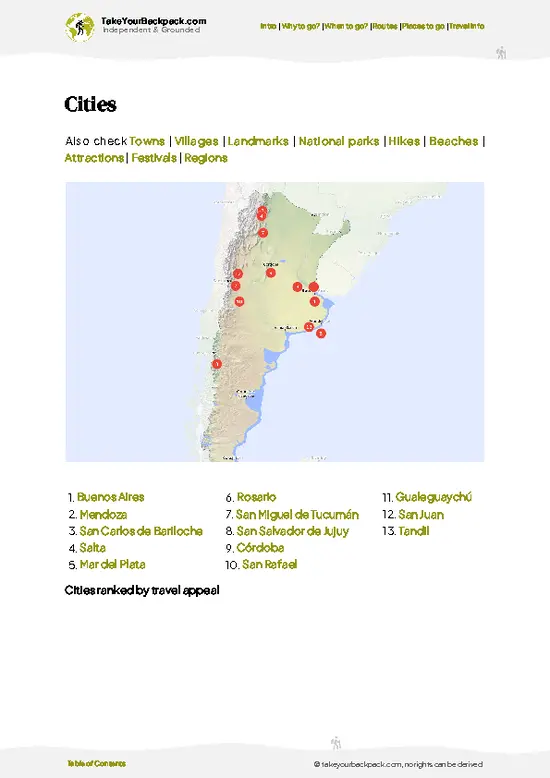
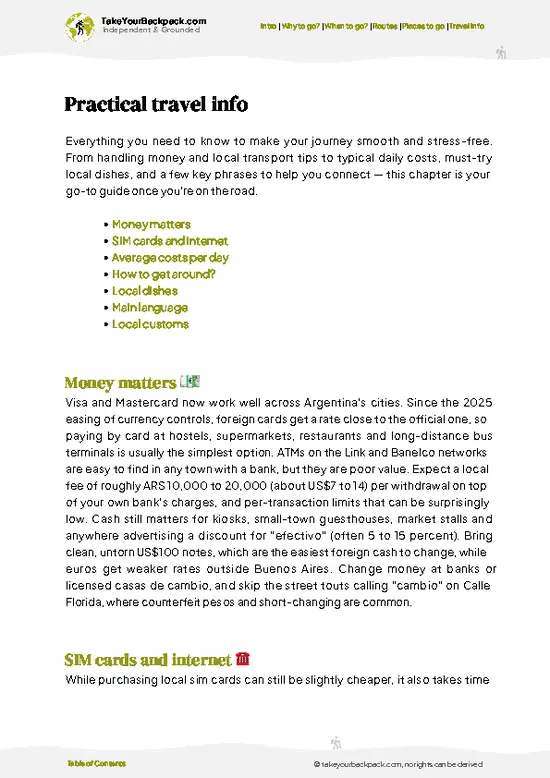
example page 0 from our offline Travel Guide for Argentina
example page 1 from our offline Travel Guide for Argentina
example page 2 from our offline Travel Guide for Argentina
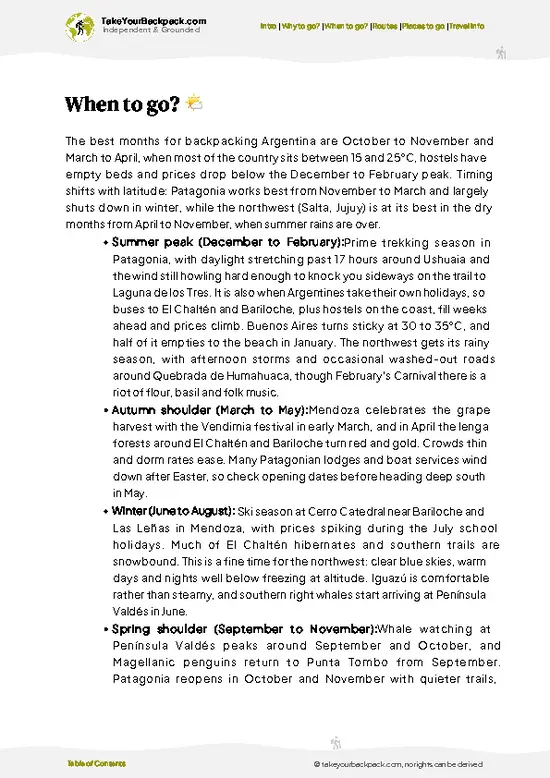
example page 3 from our offline Travel Guide for Argentina
example page 4 from our offline Travel Guide for Argentina
example page 5 from our offline Travel Guide for Argentina
example page 6 from our offline Travel Guide for Argentina
example page 7 from our offline Travel Guide for Argentina
Loading the map 🌍
CLICK TO FILTER
cities
towns
villages
landmarks
national parks
hikes
beaches
attractions
festivals
regions
SHOW COUNTRY’S BESTSHOW ALL

✨ Why go?
Ranked #5 village in Argentina
Reasons people choose to visit here

Backpackers stop in Tolar Grande because it delivers genuine isolation without requiring a guide or a tour package, something rare on the Andean circuit. The altitude and silence filter out casual tourists, leaving a village that feels lived-in rather than staged. It works well as a pause point between Salta's busier colonial streets and the salt-flat crossings toward Chile, a place to slow your pulse and adjust your lungs before pushing higher. Most travelers linger two to three nights, enough time to visit the nearby lagoons and volcanic cone without rushing. The village itself is quiet and social at once: small enough that you'll recognize every face in the one or two eateries, friendly enough that dinner conversations turn into shared jeep rides the next morning. It suits slow travelers, … read more 👉
Backpackers stop in Tolar Grande because it delivers genuine isolation without requiring a guide or a tour package, something rare on the Andean circuit. The altitude and silence filter out casual tourists, leaving a village that feels lived-in rather than staged. It works well as a pause point between Salta's busier colonial streets and the salt-flat crossings toward Chile, a place to slow your pulse and adjust your lungs before pushing higher. Most travelers linger two to three nights, enough time to visit the nearby lagoons and volcanic cone without rushing. The village itself is quiet and social at once: small enough that you'll recognize every face in the one or two eateries, friendly enough that dinner conversations turn into shared jeep rides the next morning. It suits slow travelers, hikers, and those craving stark landscapes over nightlife. Solo travelers find it easy to connect here precisely because there's nowhere else to be. If you need buzz or variety, this isn't it, but if you want a genuine high-desert breather, it delivers.

💡 HighlightsTop highlights of Tolar Grande

  1. Ojos de Mar, a cluster of small, startlingly blue and green natural springs about 5 km from the village, formed by ancient microbial structures called stromatolites. Early morning light makes the colors pop most. It's free to visit and takes about 30-45 minutes to walk around and photograph.
  2. Iglesia de Tolar Grande, the village's modest adobe chapel, simple in construction but a genuine gathering point for local life and occasional small festivities. Visiting takes 10-15 minutes, no cost, and it's worth a look any time of day since it reflects the understated architecture typical of Puna settlements.
  3. Mirador del Pueblo, a short rise just outside the village center offering a full panoramic sweep of the surrounding volcanic plain and the village's scattered rooftops. Best visited at sunset when
… read more 👉
  1. Ojos de Mar, a cluster of small, startlingly blue and green natural springs about 5 km from the village, formed by ancient microbial structures called stromatolites. Early morning light makes the colors pop most. It's free to visit and takes about 30-45 minutes to walk around and photograph.
  2. Iglesia de Tolar Grande, the village's modest adobe chapel, simple in construction but a genuine gathering point for local life and occasional small festivities. Visiting takes 10-15 minutes, no cost, and it's worth a look any time of day since it reflects the understated architecture typical of Puna settlements.
  3. Mirador del Pueblo, a short rise just outside the village center offering a full panoramic sweep of the surrounding volcanic plain and the village's scattered rooftops. Best visited at sunset when the light turns the desert floor orange and pink. Free, and takes about 20-30 minutes round trip on foot.
Beyond the village itself, the real payoff comes from day trips: the Cono de Arita, a near-perfect volcanic cone rising from the Salar de Arizaro, and the high-altitude Lagunas de Santa María with their flamingos are both accessible by hired 4x4 from Tolar Grande. My personal favorite is the Cono de Arita at first light, when the salt flat surface reflects the cone's silhouette with almost no wind disturbance yet.
Spotted a mistake or missing something? Contact us.
🌤️ When to go?When to go for the best experience

  • Dry Season (April to November): This is the most reliable window, with clear skies, near-zero rainfall, and daytime temperatures around 15-20°C (59-68°F), dropping sharply after dark to below freezing, sometimes -10°C (14°F) in June and July.
  • Summer Wet Season (December to March): Occasional afternoon storms roll through, roads can wash out temporarily, and humidity rises slightly, though it's still arid by most standards.
  • Daylight: Roughly 11 hours in winter, up to 13-14 in summer, so plan hikes and lagoon visits for midday warmth.
  • Crowds and Prices: July and August see a small bump in visitors due to Argentine winter holidays, nudging guesthouse rates up slightly, though this remains a low-traffic destination year-round.
Pack for both a desert noon and a mountain midnight, the temperature swing … read more 👉
  • Dry Season (April to November): This is the most reliable window, with clear skies, near-zero rainfall, and daytime temperatures around 15-20°C (59-68°F), dropping sharply after dark to below freezing, sometimes -10°C (14°F) in June and July.
  • Summer Wet Season (December to March): Occasional afternoon storms roll through, roads can wash out temporarily, and humidity rises slightly, though it's still arid by most standards.
  • Daylight: Roughly 11 hours in winter, up to 13-14 in summer, so plan hikes and lagoon visits for midday warmth.
  • Crowds and Prices: July and August see a small bump in visitors due to Argentine winter holidays, nudging guesthouse rates up slightly, though this remains a low-traffic destination year-round.
Pack for both a desert noon and a mountain midnight, the temperature swing here is more dramatic than the calendar suggests.


source: climatestotravel.comJANJanuary: highly recommended for travelingFEBFebruary: highly recommended for travelingMARMarch: highly recommended for travelingAPRApril: highly recommended for travelingMAYMay: good for travelingJUNJune: fair for travelingJULJuly: fair for travelingAUGAugust: fair for travelingSEPSeptember: good for travelingOCTOctober: highly recommended for travelingNOVNovember: highly recommended for travelingDECDecember: highly recommended for traveling

✈️ The backpacker research shortcutArgentina Travel Guide

An offline-friendly backpacking guide with optimized travel routes, ranked highlights, transport advice, and the best areas to stay.
example page 0 from our offline Travel Guide for Argentina
example page 1 from our offline Travel Guide for Argentina
example page 2 from our offline Travel Guide for Argentina
example page 3 from our offline Travel Guide for Argentina
example page 4 from our offline Travel Guide for Argentina
example page 5 from our offline Travel Guide for Argentina
example page 6 from our offline Travel Guide for Argentina
example page 7 from our offline Travel Guide for Argentina
The digital guide (393 pages) contains:
✅ 131 highlights, ranked by travel appeal
✅ Optimized 14, 21 & 30-day travel routes
✅ Cities, national parks, landmarks, beaches
✅ How to get around
✅ Offline-friendly for travel without Wi-Fi
👉 Click to see all 30+ guide features

📅 Plan smarter in minutes, not weeks
✅ Month by month travel advice
✅ Festivals & national holidays
✅ Budget expectations

🗺️ Go to the right places, skip the overrated ones
✅ Honest pros & cons of destinations
✅ Top hikes, parks & viewpoints
✅ Lesser-known places most travelers miss
✅ Clear “worth it vs skip it” guidance

🛏️ Travel smoothly without rookie mistakes
✅ Best areas to stay
✅ Transport systems explained simply
✅ Common scams & safety advice
✅ SIM cards, money & practical tips

🌍 Understand the country, not just visit it
✅ Culture & traditions
✅ 52 Essential phrases & customs
✅ Festivals worth planning around
✅ Traveler-friendly historical context
✅ Insights that make places more meaningful

📱 Built for real travel conditions
✅ Fully downloadable PDF
✅ Works completely offline
✅ Optimized for phone use
✅ Useful in remote areas & buses
✅ Everything in one place
Stop searching, start planning
Get instant access to your full guide. 30‑day money-back guarantee.
+ Add another guide for just

By proceeding you agree to our terms.
Sent to your inbox immediately after payment • 100% Secure Checkout
Best Backpacking Travel Advisor 2025 tourism awardBest Backpacking
Travel Advisor
2025
What others say about Take Your Backpack Guides:
⭐⭐⭐⭐⭐
Fantastic, amazing amount of information!
⭐⭐⭐⭐⭐
My goodness this is amazing, it's what I've been looking for hats off too you!
⭐⭐⭐⭐⭐
I think this is absolutely BRILLIANT
⭐⭐⭐⭐
Very complete and informative. It's still missing places, but I gotta to commend you
⭐⭐⭐⭐⭐
This is truly amazing, thank you, can't wait to explore it with my kids!
⭐⭐⭐⭐⭐
Awesome resource, thank you!
⭐⭐⭐⭐⭐
This is amazing! Can't wait to explore the ones I haven't seen
⭐⭐⭐⭐
I love this! Well done, great idea.
⭐⭐⭐⭐⭐
Thanks for taking the time to make this gem!
⭐⭐⭐⭐⭐
This might be the best website I've ever seen.
⭐⭐⭐⭐⭐
Congratulations, and thank you so much for your work; it's incredibly valuable.
⭐⭐⭐⭐
In all seriousness I think you did a great job pointing out the important spots
⭐⭐⭐⭐⭐
10/10 very good
⭐⭐⭐⭐⭐
As someone who's only just starting to visit regularly this is awesome, thank you.
⭐⭐⭐⭐
Thank you very much! I'm going to visit my dad, it's going to be very useful!
⭐⭐⭐⭐⭐
This is really cool! We'll be travelling for the first time and this definitely come in handy.
⭐⭐⭐⭐⭐
You are now our minister of culture, congratulations 👨‍💼
⭐⭐⭐⭐⭐
Just wanted to tell you that this is a pearl! Going to follow your recommendations.
⭐⭐⭐⭐⭐
This is so cool. I'll definitely be using the resource for my travels soon.
⭐⭐⭐⭐⭐
This is very impressive! Good work.
⭐⭐⭐⭐⭐
This is an amazing and informative site. Very well done!

🛏️ Where to stay?Best areas to stay in Argentina

Guesthouses (hospedajes) run by local families are the standard here, and they're genuinely the best option for backpackers since hotels barely exist. Expect simple rooms, shared bathrooms in some cases, and home-cooked dinners included or offered for a small extra charge. Prices typically run in the range of 15,000 to 30,000 Argentine pesos per night for a basic private room, though this fluctuates with inflation, so budget flexibly. Wifi is patchy at best, and hot water often depends on solar heating, so don't expect it reliably in the evening. The social upside is real: shared dining tables … read more 👉
Guesthouses (hospedajes) run by local families are the standard here, and they're genuinely the best option for backpackers since hotels barely exist. Expect simple rooms, shared bathrooms in some cases, and home-cooked dinners included or offered for a small extra charge. Prices typically run in the range of 15,000 to 30,000 Argentine pesos per night for a basic private room, though this fluctuates with inflation, so budget flexibly. Wifi is patchy at best, and hot water often depends on solar heating, so don't expect it reliably in the evening. The social upside is real: shared dining tables mean you'll likely meet the other handful of travelers in town within your first evening. Book ahead if arriving during the Argentine winter holiday bump (July-August), since there are only a limited number of beds in the entire village. Otherwise, arriving without a reservation and asking around works fine most of the year, given how small and personal the lodging scene remains.

🚌 Day tripsExploring the surroundings

Tolar Grande works well as a base for day trips, because the best sights sit 20 to 160 km away on gravel and sand tracks, but you will almost certainly need a local 4x4 and driver, since no public transport runs to any of them.
Salar de Arizaro and Cono de Arita:
The Cono de Arita is a natural black-and-white pyramid of rock rising from the salt flat, about 75 km from town. Local agencies run it as a full day, usually at US$40 to 70 per person in a shared vehicle, with a driver-guide included. Go in the morning when the salt crust is brightest, and bring a hat and sunglasses, because the glare is brutal and first-timers often leave them in the hostel.
👉 Explore Cono de Arita
Ojos de Mar:
These small, round, mineral-rich ponds sit in the salt flat about 5 km from the village, so it is the easiest … read more 👉
Tolar Grande works well as a base for day trips, because the best sights sit 20 to 160 km away on gravel and sand tracks, but you will almost certainly need a local 4x4 and driver, since no public transport runs to any of them.
Salar de Arizaro and Cono de Arita:
The Cono de Arita is a natural black-and-white pyramid of rock rising from the salt flat, about 75 km from town. Local agencies run it as a full day, usually at US$40 to 70 per person in a shared vehicle, with a driver-guide included. Go in the morning when the salt crust is brightest, and bring a hat and sunglasses, because the glare is brutal and first-timers often leave them in the hostel.
👉 Explore Cono de Arita
Ojos de Mar:
These small, round, mineral-rich ponds sit in the salt flat about 5 km from the village, so it is the easiest outing you can make. Tours take around an hour or two and often cost US$10 to 20, while some travelers cycle or hire a short transfer. The ponds look best at midday under clear sky, and a common mistake is walking on the thin salt crust near the edges, which can break.

Desierto del Laberinto:
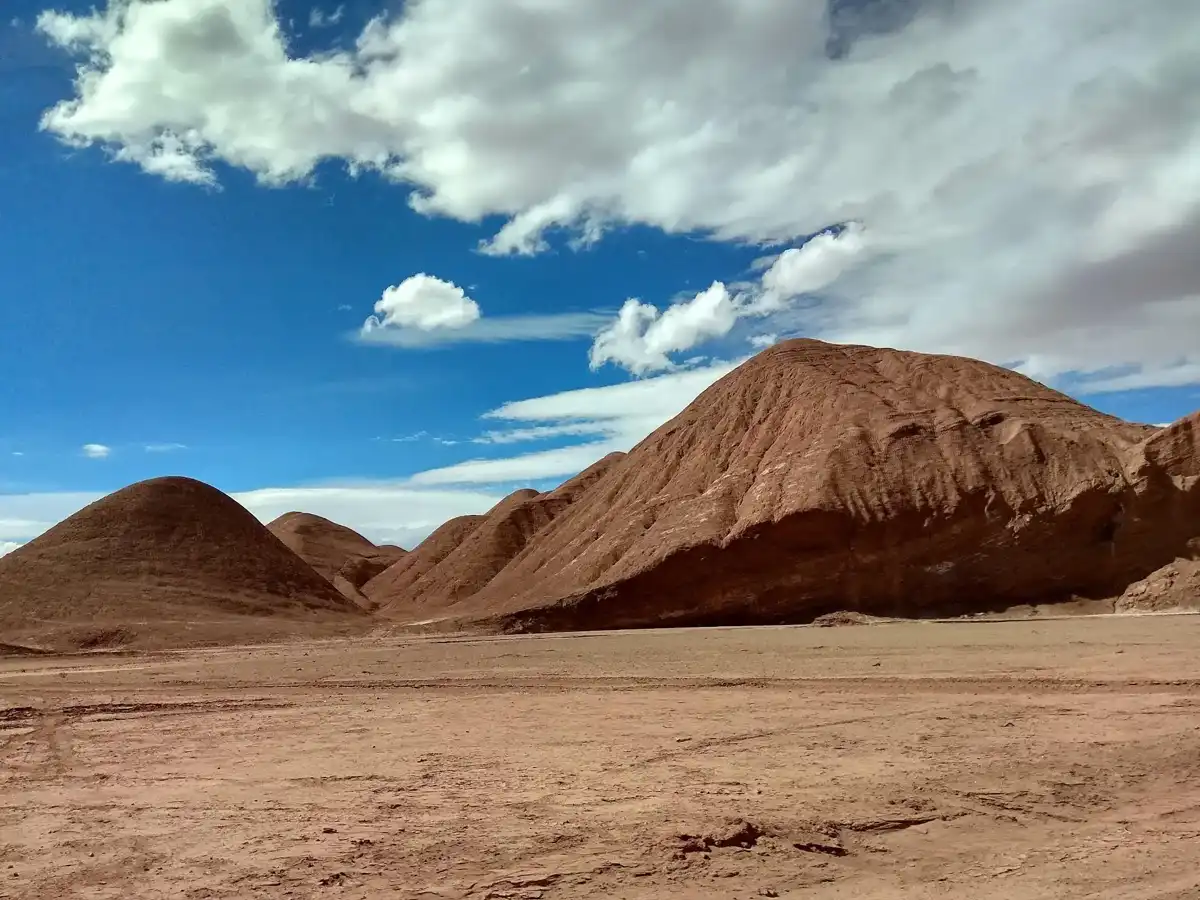
This maze of fossil clay and gypsum dunes lies on the approach road just before Tolar Grande. Most visitors combine it with other stops on a half-day tour for around US$20 to 40. It is at its best late afternoon, when the low light deepens the colors. The sand is soft, so stay with your driver and keep to marked tracks.

Volcán Llullaillaco viewpoint and Salar de Pocitos:
A longer day heads toward the Chilean border to see the huge volcano and the wide Pocitos flat, about 70 km away and 1.5 to 2 hours each way. Expect to pay US$60 to 100 per person on a shared tour. Summer, roughly November to March, gives the most reliable access, since winter snow and wind can block tracks. Altitude is above 3,500 meters, so drink water and move slowly on your first day.

FAQTraveler FAQ

Reaching Tolar Grande usually means catching a bus or shared vehicle from Salta city to San Antonio de los Cobres first, then arranging a connecting ride or hired 4x4 for the remaining stretch, since public transport directly into the village is limited and infrequent. Many backpackers join a shared minivan service or hire a driver in San Antonio de los Cobres for the final leg. The full journey from Salta typically takes 6-8 hours depending on road conditions and stops.
It's worth the trip if you value genuine isolation, dramatic high-desert scenery, and sights like the stromatolite springs and the Cono de Arita, none of which feel crowded or commercialized. It's less worthwhile if you're short on time or uncomfortable with high altitude, sparse services, and long travel hours to get there. For travelers already crossing the Puna toward Chile or exploring Salta's backcountry, it fits naturally into the route.
A day trip from Salta city isn't realistic given the 6-8 hour travel time each way and the need for altitude acclimatization. It works better as an overnight stop of at least one or two nights, ideally based in San Antonio de los Cobres or Tolar Grande itself, from which you can then day-trip to the Cono de Arita or the Lagunas de Santa María.
⚠️ Things can change over time, so always validate details locally before you go.

Other Argentine villages near Tolar Grande

Explore more nearby:

  • La Cumbrecita—Car-free lanes, wooden footbridges, Cascada Grande, pine forest| 852 km away
  • Potrerillos—Turquoise reservoir, kayak rentals, Cerro Cocodrilo, Andean foothills| 946 km away
  • Villa Pehuenia—Lago Aluminé, araucaria forest, Mapuche crafts, kayaking| 1629 km away

💡 Not sure where to go next?
Create a personalized itinerary for Argentina including Tolar Grande and the places that fit your trip.

Generate my itinerary

👉 Discover all villages

Or checkout all Argentina has to offer (think cities, towns, villages, national parks, hikes, beaches, festivals)
Country photo of Argentina

We 💚 feedbackIs it worth it?

Tolar Grande earns its place on a Puna itinerary through sheer silence and those blue-green stromatolite springs you won't see elsewhere. The drawback: altitude hits fast, services are thin, and if you arrive unprepared for cold nights or cash shortages, you'll feel it. Come rested, come stocked, and it pays off.

✈️ When did I visit Argentina?
I have visited Argentina, together with Chile, in September 2012.

✍️ Help improve this page!
The information on this page is based on my own backpacking experience in Argentina, supplemented with up-to-date research and feedback from other travelers. Travel details can change, so if you notice anything outdated or incomplete, feel free to let me know.


🙋‍♂️ Give feedback

👋 Meet the founderWho’s Behind Take Your Backpack?

Johan, backpacker and founder of TakeYourBackpackHi, I’m Johan (Netherlands 🇳🇱), the creator of TakeYourBackpack. Over the past 3 decades, I’ve backpacked through 90+ countries across six continents, gaining extensive experience with independent travel, long-term trips, and overland routes.

This site is built on a combination of firsthand travel experience and carefully curated insights from other backpackers. Many guides are based on places I’ve personally visited, while others bring together tips, observations, and practical advice shared by trusted travelers I’ve met along the way.

The goal is to provide realistic, experience-driven guidance — not generic itineraries — so you can explore destinations with better context, clearer expectations, and more confidence.