×

Argentina🇦🇷 | national parksProvincial Reserve La Payuniablack lava fields, volcanic cones, pampas, guanacos | things to do and best time to go

Explore Patagonia National ParkExplore Quebrada del Condorito National Park

Backpacking in Provincial Reserve La Payunia
🌟 Highlightnational park ranked #13
By Johan Kruseman 🇳🇱 | Updated September 4, 2026

Your boots crunch on black volcanic gravel, wind pushing fine ash against your shins while guanacos watch from a distance, perfectly still against a horizon of dead cones and red ridges. This is Provincial Reserve La Payunia, in southern Mendoza Province, central-west Argentina. For backpackers, it’s harsh, beautiful, and logistically annoying in equal measure. The hiking is more about long, exposed rambles over lava fields than classic summit trails, with big skies and almost no shade, plus skittish wildlife and birds of prey if you’re patient. Access is the real tax: rough roads, usually a tour or private transport, entrance fees that feel high for the minimal infrastructure, and almost no true budget accommodation or casual camping compared with places like Lanín or Nahuel Huapi. The payoff is the emptiness; unlike the busier Andean parks, you’re likely sharing the landscape with more guanacos than people, which I love, but it demands planning and a tolerance for discomfort.

Discover everything you want to know in the 📖 Argentina Travel Guide.
Loading the map 🌍
CLICK TO FILTER
cities
towns
villages
landmarks
national parks
hikes
beaches
attractions
festivals
regions
SHOW COUNTRY’S BESTSHOW ALL

✨ Why go?
Ranked #13 national park in Argentina
The unique appeal for travelers

Backpackers flock to Provincial Reserve La Payunia for its independent exploration opportunities. The park offers a range of budget camping and nearby hostels, making it accessible for all. With trail variety, you can choose from easy walks to more challenging treks, catering to different skill levels. This park is particularly suited for self-guided travelers, allowing you to set your own pace without the constraints of tours. The open landscapes and unique volcanic formations provide a backdrop that feels both vast and intimate, ensuring your experience is as enriching as it is affordable.
Want to include Provincial Reserve La Payunia in your Argentina route?
Create a personalized Argentina itinerary that includes Provincial Reserve La Payunia and the places that fit your trip — based on your travel style, budget, and available time. Get your route in seconds.

Generate my trip

💡 HighlightsDon't-miss highlights and experiences

  • Payún Matrú volcano (caldera and rim) — A massive shield volcano with a wide caldera you can walk to viewpoints around; the scale is rare in Argentina and the rim views over black lava fields and distant Andes are unforgettable. (Personal favorite: sunrise on the caldera — quiet, otherworldly light.)
  • Field of volcanic cones — La Payunia hosts one of the densest concentrations of volcanic cones on Earth (hundreds of cinder cones); wandering between them feels like exploring a lunar fairground of little mountains and craters.
  • Basaltic lava flows and lava “bombs” — Thick, dark lava blankets huge tracts here and you’ll spot giant, rounded chunks of cooled molten rock (lava bombs) scattered across the plains — great texture for photos and weird to touch.
  • Black plains and sculpted landscapes
read more 👉
  • Payún Matrú volcano (caldera and rim) — A massive shield volcano with a wide caldera you can walk to viewpoints around; the scale is rare in Argentina and the rim views over black lava fields and distant Andes are unforgettable. (Personal favorite: sunrise on the caldera — quiet, otherworldly light.)
  • Field of volcanic cones — La Payunia hosts one of the densest concentrations of volcanic cones on Earth (hundreds of cinder cones); wandering between them feels like exploring a lunar fairground of little mountains and craters.
  • Basaltic lava flows and lava “bombs” — Thick, dark lava blankets huge tracts here and you’ll spot giant, rounded chunks of cooled molten rock (lava bombs) scattered across the plains — great texture for photos and weird to touch.
  • Black plains and sculpted landscapes — Wind-carved basalt pavements, ridges and isolated cones create stark, minimalist panoramas that change color at sunset — a photographer’s dream and great for low-effort day hikes.
  • Wildlife on the steppe — Open, arid grasslands support guanacos, greater rheas (ñandúes), foxes and a surprising array of birds (keep an eye skyward for condors); animals are used to the remoteness, so sightings are common if you move quietly.
  • Simple hiking tracks and 4x4 routes — There aren’t many formal trails, but a network of tracks leads to key viewpoints and lava fields; bring water, a map or a local guide, and plan for long, exposed walking in high plains.
  • Stargazing and open-sky solitude — Very low light pollution and high, dry air make the park excellent for night-sky viewing — Milky Way, shooting stars, crisp constellations and total quiet.
Spotted a mistake or missing something? Contact us.
🌤️ When to go?When to go for the best experience


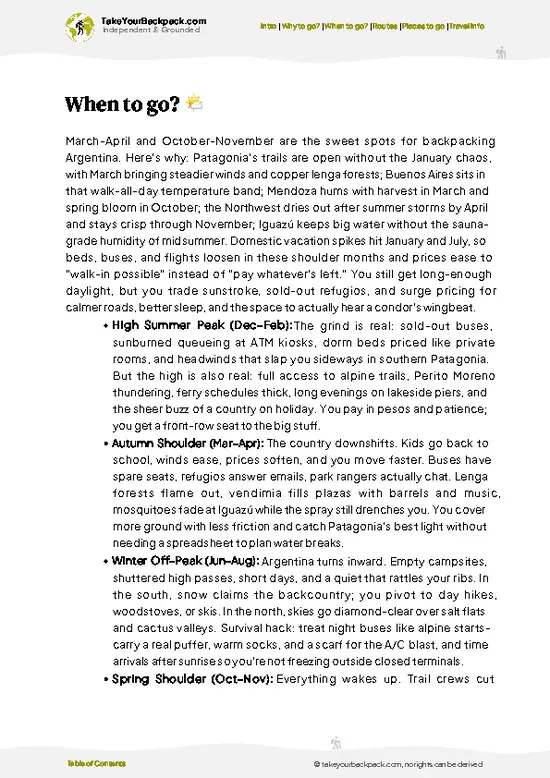
  • Weather: The dry season from November to March offers the most stable conditions. Rainfall is scarce, but summer heat can push daytime temperatures above 30°C (86°F), making midday hikes tough.

  • Temperature: Winter months (June to August) bring cold nights, often below freezing (-5°C/23°F), with mild days around 15°C (59°F). Layering is essential if you visit then.

  • Daylight Hours: Summer provides long days—up to 14 hours of light—ideal for extended treks. Winter days shrink to about 10 hours, limiting exploration time.

  • Crowds: The park is rarely crowded year-round, but summer sees a slight uptick from local tourists. Expect solitude in shoulder seasons.

  • Seasonal Activities: Summer is best for volcanic landscape exploration and wildlife spotting. Winter’s harsher conditions limit
read more 👉

  • Weather: The dry season from November to March offers the most stable conditions. Rainfall is scarce, but summer heat can push daytime temperatures above 30°C (86°F), making midday hikes tough.

  • Temperature: Winter months (June to August) bring cold nights, often below freezing (-5°C/23°F), with mild days around 15°C (59°F). Layering is essential if you visit then.

  • Daylight Hours: Summer provides long days—up to 14 hours of light—ideal for extended treks. Winter days shrink to about 10 hours, limiting exploration time.

  • Crowds: The park is rarely crowded year-round, but summer sees a slight uptick from local tourists. Expect solitude in shoulder seasons.

  • Seasonal Activities: Summer is best for volcanic landscape exploration and wildlife spotting. Winter’s harsher conditions limit access to some trails.

  • Price Fluctuations: Accommodation and guided tours peak in summer, with prices rising 20-30%. Off-season offers better deals but fewer services.


Pro-tip: Aim for late spring or early autumn to dodge extreme temperatures, enjoy decent daylight, and keep costs manageable—perfect for a balanced backpacking experience.


source: climatestotravel.comJANJanuary: highly recommended for travelingFEBFebruary: highly recommended for travelingMARMarch: highly recommended for travelingAPRApril: excellent for travelingMAYMay: excellent for travelingJUNJune: good for travelingJULJuly: fair for travelingAUGAugust: fair for travelingSEPSeptember: excellent for travelingOCTOctober: excellent for travelingNOVNovember: highly recommended for travelingDECDecember: highly recommended for traveling
argentina-national-park-provincial-reserve-la-payunia
© Google | Facundo De Martino

✈️ The backpacker research shortcutArgentina Travel Guide

An offline-friendly backpacking guide with optimized travel routes, ranked highlights, transport advice, and the best areas to stay.
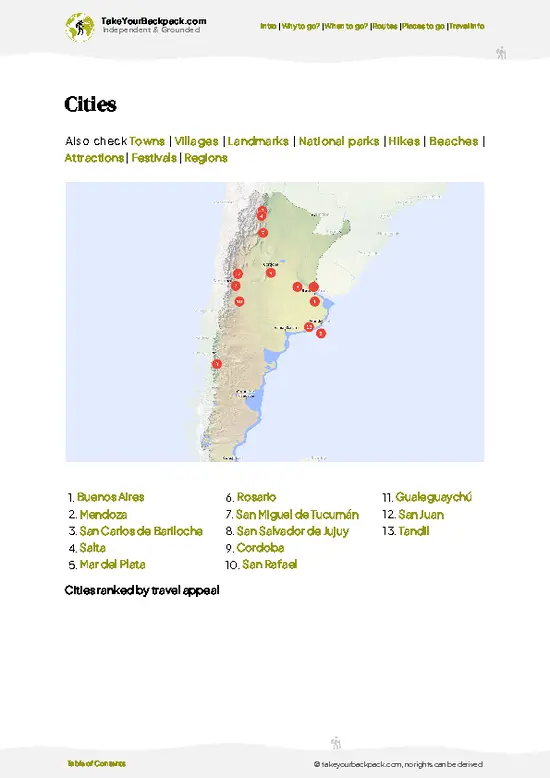
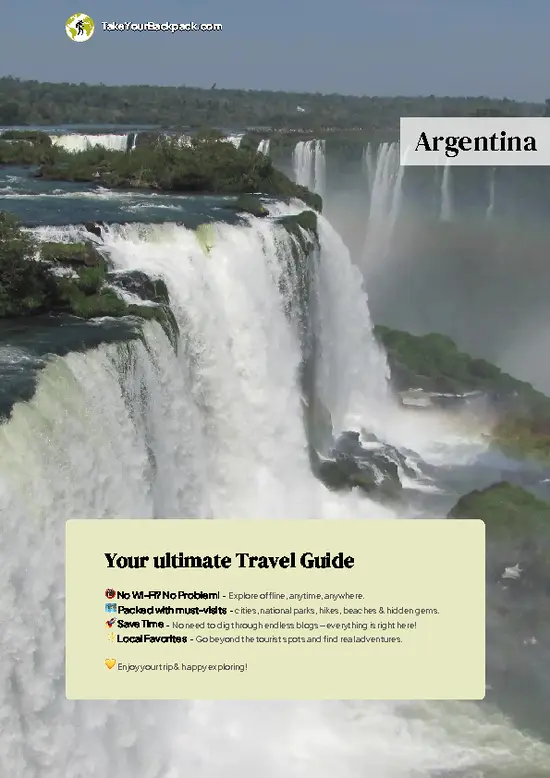
example page 0 from our offline Travel Guide for Argentina
example page 1 from our offline Travel Guide for Argentina
example page 2 from our offline Travel Guide for Argentina
example page 3 from our offline Travel Guide for Argentina
example page 4 from our offline Travel Guide for Argentina
example page 5 from our offline Travel Guide for Argentina
example page 6 from our offline Travel Guide for Argentina
example page 7 from our offline Travel Guide for Argentina
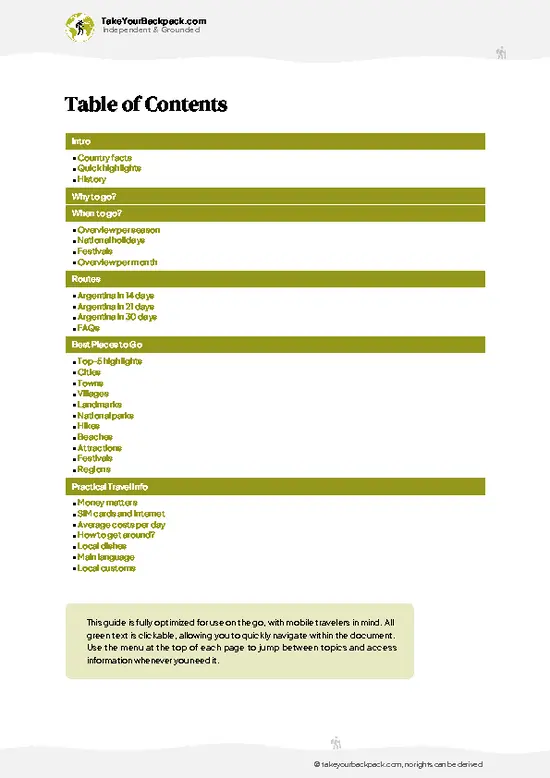
The digital guide (505 pages) contains:
135 highlights, ranked by travel appeal
Optimized 14, 21 & 30-day travel routes
Cities, national parks, landmarks, beaches
How to get around
Offline-friendly for travel without Wi-Fi
👉 Click to see all 30+ guide features

📅 Plan smarter in minutes, not weeks
Month by month travel advice
Festivals & national holidays
Budget expectations

🗺️ Go to the right places, skip the overrated ones
Honest pros & cons of destinations
Top hikes, parks & viewpoints
Lesser-known places most travelers miss
Clear “worth it vs skip it” guidance

🛏️ Travel smoothly without rookie mistakes
Best areas to stay
Transport systems explained simply
Common scams & safety advice
SIM cards, money & practical tips

🌍 Understand the country, not just visit it
Culture & traditions
52 Essential phrases & customs
Festivals worth planning around
Traveler-friendly historical context
Insights that make places more meaningful

📱 Built for real travel conditions
Fully downloadable PDF
Works completely offline
Optimized for phone use
Useful in remote areas & buses
Everything in one place
Save weeks of stressful planning
Get instant access to your full guide. 30‑day money-back guarantee.
+ Add another guide for just US$7.80

By proceeding you agree to our terms.
Sent to your inbox immediately after payment • 100% Secure Checkout
Best Backpacking Travel Advisor 2025 tourism awardBest Backpacking
Travel Advisor
2025
What others say about Take Your Backpack Guides:
⭐⭐⭐⭐⭐
Fantastic, amazing amount of information!
⭐⭐⭐⭐⭐
My goodness this is amazing, it's what I've been looking for hats off too you!
⭐⭐⭐⭐⭐
I think this is absolutely BRILLIANT
⭐⭐⭐⭐
Very complete and informative. It's still missing places, but I gotta to commend you
⭐⭐⭐⭐⭐
This is truly amazing, thank you, can't wait to explore it with my kids!
⭐⭐⭐⭐⭐
Awesome resource, thank you!
⭐⭐⭐⭐⭐
This is amazing! Can't wait to explore the ones I haven't seen
⭐⭐⭐⭐
I love this! Well done, great idea.
⭐⭐⭐⭐⭐
Thanks for taking the time to make this gem!
⭐⭐⭐⭐⭐
This might be the best website I've ever seen.
⭐⭐⭐⭐⭐
Congratulations, and thank you so much for your work; it's incredibly valuable.
⭐⭐⭐⭐
In all seriousness I think you did a great job pointing out the important spots
⭐⭐⭐⭐⭐
10/10 very good
⭐⭐⭐⭐⭐
As someone who's only just starting to visit regularly this is awesome, thank you.
⭐⭐⭐⭐
Thank you very much! I'm going to visit my dad, it's going to be very useful!
⭐⭐⭐⭐⭐
This is really cool! We'll be travelling for the first time and this definitely come in handy.
⭐⭐⭐⭐⭐
You are now our minister of culture, congratulations 👨‍💼
⭐⭐⭐⭐⭐
Just wanted to tell you that this is a pearl! Going to follow your recommendations.
⭐⭐⭐⭐⭐
This is so cool. I'll definitely be using the resource for my travels soon.
⭐⭐⭐⭐⭐
This is very impressive! Good work.
⭐⭐⭐⭐⭐
This is an amazing and informative site. Very well done!

🛏️ Where to stay?Where staying makes the most sense

For backpackers heading to Provincial Reserve La Payunia, options are limited but solid. There’s no accommodation directly inside the park, so your best bet is to stay in nearby towns like Malargüe or Bardas Blancas.

Malargüe offers a few hostels and budget hotels, providing a good base for exploring the reserve. Bardas Blancas is quieter, with basic lodging options.

Be prepared for limited amenities. Stock up on supplies before heading into the park. The real beauty lies in the landscapes, so save your energy and budget for the experiences that matter—like hiking through the unique volcanic terrain.

👛 Costs (as of 4 September 2026)Money, prices, and spending tips

Visiting Provincial Reserve La Payunia in Argentina requires some planning, especially regarding costs.

Entrance fees typically range from $5 to $10 USD per person. This fee helps maintain the park and its facilities. If you’re driving, expect to pay around $20 to $30 USD for vehicle access.

Guided tours can enhance your experience, especially if you want to explore the unique volcanic landscapes. These tours usually cost between $50 and $100 USD, depending on the length and inclusions.

Accommodation options vary. Camping is a budget-friendly choice, often costing around $10 to $15 USD per night. If you prefer a more comfortable stay, nearby lodges can range from $50 to $100 USD per night.

Food costs can also add up. Expect to spend about $10 to $20 USD per meal at local eateries. … read more 👉
Visiting Provincial Reserve La Payunia in Argentina requires some planning, especially regarding costs.

Entrance fees typically range from $5 to $10 USD per person. This fee helps maintain the park and its facilities. If you’re driving, expect to pay around $20 to $30 USD for vehicle access.

Guided tours can enhance your experience, especially if you want to explore the unique volcanic landscapes. These tours usually cost between $50 and $100 USD, depending on the length and inclusions.

Accommodation options vary. Camping is a budget-friendly choice, often costing around $10 to $15 USD per night. If you prefer a more comfortable stay, nearby lodges can range from $50 to $100 USD per night.

Food costs can also add up. Expect to spend about $10 to $20 USD per meal at local eateries. Stocking up on snacks and water before entering the reserve can save you money and keep you energized during your adventures.

Plan for additional expenses like fuel, which can be higher in remote areas. Always carry cash, as card payments may not be accepted everywhere.

Being aware of these costs helps you budget wisely, ensuring you have the resources for the experiences that truly matter in this stunning landscape.


source: argentina.gob.ar
⚠️ Prices can change and everyone travels differently, so take this as a rough guide. Hope it helps you plan your adventure!

🥾 TrailsHiking Provincial Reserve La Payunia national park: highlights and difficulty

The hiking opportunities in Provincial Reserve La Payunia are pretty unique, offering a mix of volcanic landscapes, expansive plains, and the occasional glimpse of wildlife. You’ll find yourself surrounded by striking black lava fields, colorful rock formations, and even some ancient petroglyphs if you keep your eyes peeled. The terrain can vary quite a bit, from flat stretches that let you soak in the views to more rugged areas that might get your heart racing a bit.

One of the standout hikes here is the Volcan Payún Matru Trail. It’s a solid choice for those looking to explore the volcanic … read more 👉
The hiking opportunities in Provincial Reserve La Payunia are pretty unique, offering a mix of volcanic landscapes, expansive plains, and the occasional glimpse of wildlife. You’ll find yourself surrounded by striking black lava fields, colorful rock formations, and even some ancient petroglyphs if you keep your eyes peeled. The terrain can vary quite a bit, from flat stretches that let you soak in the views to more rugged areas that might get your heart racing a bit.

One of the standout hikes here is the Volcan Payún Matru Trail. It’s a solid choice for those looking to explore the volcanic landscape up close. Here are the details:
  • Length: 10 km
  • Estimated Duration: 4-5 hours
  • Difficulty Level: Moderate
  • Key Features: Stunning views of the volcano, unique geological formations, and chances to spot wildlife like guanacos and various bird species.
  • Terrain: A mix of rocky paths and open plains, with some steeper sections as you approach the summit.

Getting to the park can be a bit of an adventure in itself. Public transport options are limited, so you might need to rely on a combination of buses and hitchhiking to get there from nearby towns like Malargüe. It’s not usually crowded, which is a bonus if you prefer solitude on your hikes. Just keep in mind that there’s a small entrance fee, so be prepared for that when you arrive. Overall, it’s a fantastic spot for those looking to connect with nature without the usual tourist hustle.
⚠️ Hiking info can sometimes be outdated or inaccurate. Before you hit the trail, check the latest conditions with locals. If you do spot anything that's off, I'd love to hear from you, so I can update it for fellow travelers.

🛡️ SafetySafety Tips and Common Scams in Provincial Reserve La Payunia

La Payunia is generally a straightforward park for backpackers, but a few realities can catch you off guard. Weather can shift quickly; be ready for sun, wind, and sudden chills. The terrain is mostly manageable, but some trails can be steep and rocky, so good footwear is essential. Altitude isn’t extreme, yet pacing yourself is wise. Wildlife is present, but encounters are rare; respect their space and keep food secured. Prepare for the elements, and you’ll preserve your energy for the stunning landscapes that await.

FAQFrequently asked questions about Provincial Reserve La Payunia

3 to 4 days are recommended to explore Provincial Reserve La Payunia thoroughly. This allows time for visiting volcanic landscapes, lava fields, and wildlife spotting. Longer stays are beneficial for hiking and photography.
No, visiting Provincial Reserve La Payunia without a car is very difficult. The reserve is remote with limited public transport options, and most attractions require a 4x4 vehicle for access. Guided tours with transportation are the best alternative.
Yes, an entrance fee or permit is required to visit Provincial Reserve La Payunia. Fees are typically around 500 Argentine pesos, but prices can vary. Permits are managed by the local park authority and must be obtained before entry.
⚠️ Things can change over time, so always validate details locally before you go.

Other Argentinian national parks near Provincial Reserve La Payunia

Explore more nearby:


💡 Not sure where to go next?
Create a personalized itinerary for Argentina including Provincial Reserve La Payunia and the places that fit your trip.

Generate my itinerary

👉 Discover all national parks

Or checkout all Argentina has to offer (think cities, towns, villages, national parks, hikes, beaches, festivals)
Country photo of Argentina

We 💚 feedbackWhat to keep in mind

La Payunia is a volcanic wonderland, where the stark beauty of black lava fields meets vibrant wildflowers. But be prepared: the remoteness means limited services and tricky access. Plan ahead, and you’ll save energy for the breathtaking views that make it all worthwhile.

✈️ When did I visit Argentina?
I have visited Argentina, together with Chile, in September 2012.

✍️ Help improve this page!
The information on this page is based on my own backpacking experience in Argentina, supplemented with up-to-date research and feedback from other travelers. Travel details can change, so if you notice anything outdated or incomplete, feel free to let me know.


🙋‍♂️ Give feedback

👋 Meet the founderWho’s Behind Take Your Backpack?

Johan, backpacker and founder of TakeYourBackpackHi, I’m Johan (Netherlands 🇳🇱), the creator of TakeYourBackpack. Over the past decade, I’ve backpacked through 80+ countries across six continents, gaining extensive experience with independent travel, long-term trips, and overland routes.

This site is built on a combination of firsthand travel experience and carefully curated insights from other backpackers. Many guides are based on places I’ve personally visited, while others bring together tips, observations, and practical advice shared by trusted travelers I’ve met along the way.

The goal is to provide realistic, experience-driven guidance — not generic itineraries — so you can explore destinations with better context, clearer expectations, and more confidence.

Get full Argentina guide •
Instant download • 135 highlights • Full Offline guide