×

Argentina🇦🇷 | townsSan Martín de los AndesLago Lácar, Lanín gateway, chocolate shops | things to do and best time to go

Explore Villa de MerloExplore Villa La Angostura

Backpacking in San Martín de los Andes
🏆 Top picktown ranked #4
By Johan Kruseman 🇳🇱 | Updated October 19, 2026

Twenty years ago, San Martín de los Andes was a quiet Patagonian outpost where you'd wait an extra day for the right bus and nobody minded. Today it's a well-oiled gateway town in Neuquén province, southern Argentina, and the road's paved smooth right into Parque Nacional Lanín. The upside: chocolate shops, cozy hostels, and a lake, Lácar, that turns the color of hammered pewter at dusk. The downside: summer (December to February) packs the place with Argentine holidaymakers, and prices climb accordingly. This town works best as a base, not a destination in itself. You come for the hiking, the drives, the lake beaches, then retreat to a warm kitchen and cheap malbec at night. It's compact enough to walk everywhere, buses connect it reliably to Bariloche and Junín de los Andes, and the hostel scene makes solo travel easy. Compared to brasher Bariloche, San Martín feels smaller, calmer, and more genuine.

Discover everything you want to know in the 📖 Argentina Travel Guide.


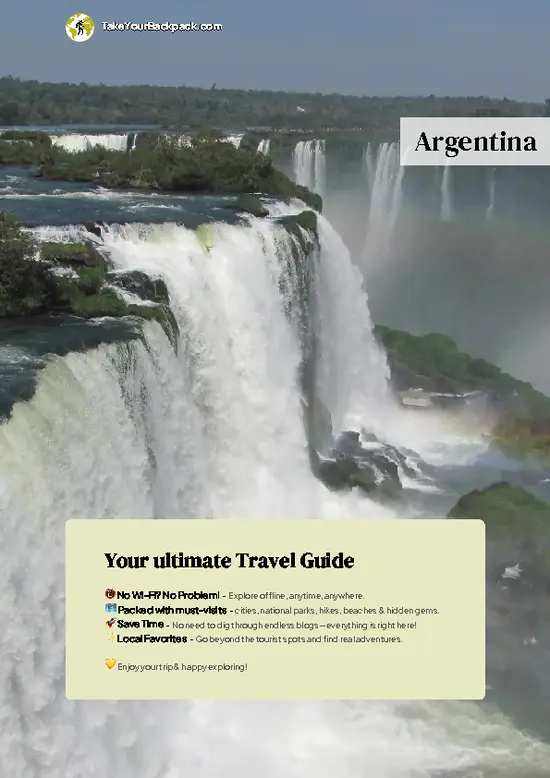
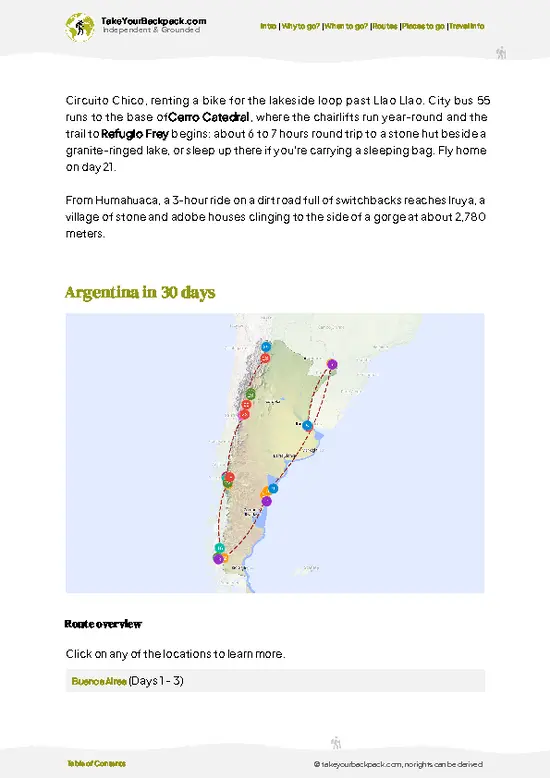
example page 0 from our offline Travel Guide for Argentina
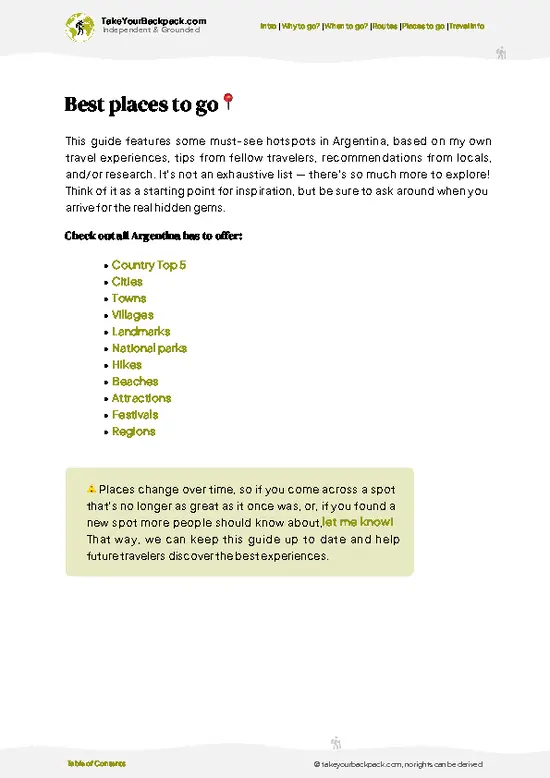
example page 1 from our offline Travel Guide for Argentina
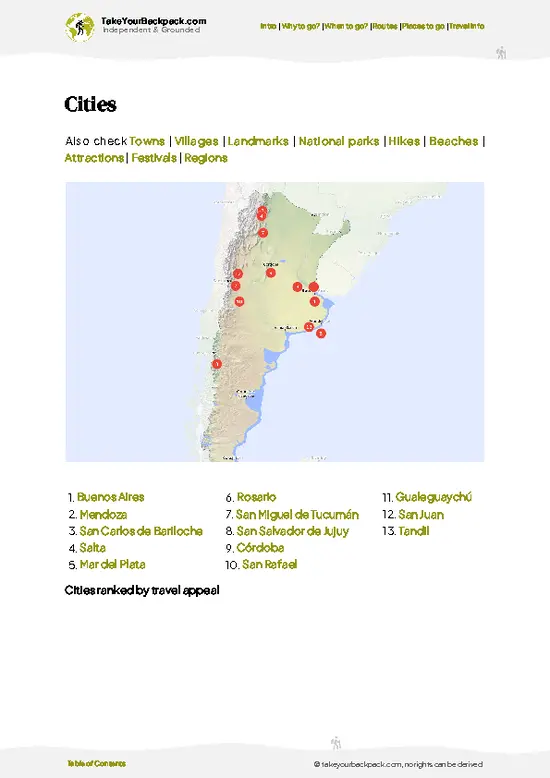
example page 2 from our offline Travel Guide for Argentina
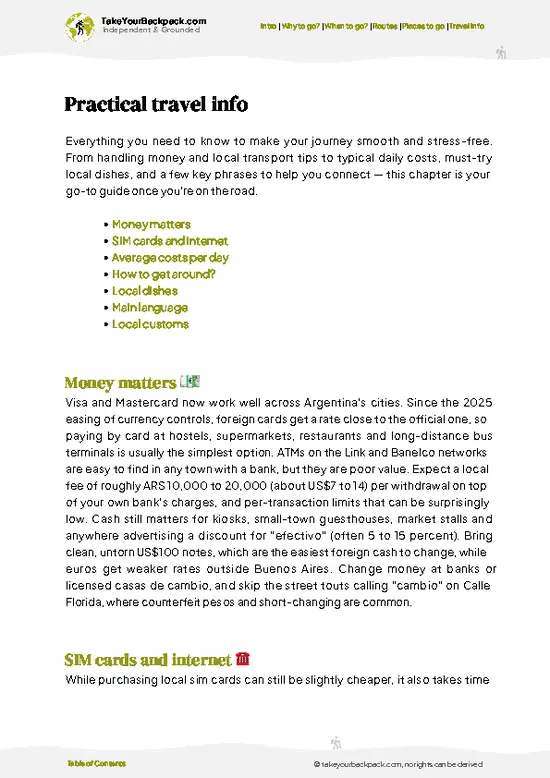
example page 3 from our offline Travel Guide for Argentina
example page 4 from our offline Travel Guide for Argentina
example page 5 from our offline Travel Guide for Argentina
example page 6 from our offline Travel Guide for Argentina
example page 7 from our offline Travel Guide for Argentina
Loading the map 🌍
CLICK TO FILTER
cities
towns
villages
landmarks
national parks
hikes
beaches
attractions
festivals
regions
SHOW COUNTRY’S BESTSHOW ALL

✨ Why go?
Ranked #4 town in Argentina
The unique appeal for travelers

The real pull here is access, not the town itself. San Martín sits at the edge of Parque Nacional Lanín, meaning volcano views, alpine lakes, and trailheads are a short bus or hitch away rather than a full day's travel. Hostels are small-scale and family-run, the kind where the owner draws you a hiking map by hand. The walkable center means you don't need transport for daily life: bakeries, gear shops, and parrillas sit within a few blocks. Chocolate shops line the main drag, a genuine local specialty worth the indulgence. Food-wise, expect lamb, trout, and German-Patagonian influenced baking rather than flashy restaurants. Socially, it's warm but not rowdy, more shared asados and trip-planning chatter than bar crawls. Hikers and slow travelers get the most out of it, especially those willing … read more 👉
The real pull here is access, not the town itself. San Martín sits at the edge of Parque Nacional Lanín, meaning volcano views, alpine lakes, and trailheads are a short bus or hitch away rather than a full day's travel. Hostels are small-scale and family-run, the kind where the owner draws you a hiking map by hand. The walkable center means you don't need transport for daily life: bakeries, gear shops, and parrillas sit within a few blocks. Chocolate shops line the main drag, a genuine local specialty worth the indulgence. Food-wise, expect lamb, trout, and German-Patagonian influenced baking rather than flashy restaurants. Socially, it's warm but not rowdy, more shared asados and trip-planning chatter than bar crawls. Hikers and slow travelers get the most out of it, especially those willing to stay three or four days to actually use the surrounding trails. If you want nightlife or urban buzz, this isn't it, but as a functional, friendly base for outdoor days, it earns its spot on the route.

💡 HighlightsMust-see experiences and standout moments

  1. Plaza San Martín and the Centro Cívico: The town's social hub, ringed by chocolate shops and craft stores. Free to visit, best in the late afternoon when locals gather. Give it 30 to 45 minutes.
  2. Avenida Costanera along Lago Lácar: A lakeside walk with clear mountain reflections on calm mornings. Free, best at sunrise or sunset, roughly an hour round trip on foot.
  3. Museo Primeros Pobladores: A small municipal museum covering Mapuche history and early settler life in the region. Entry is a few hundred Argentine pesos, takes about 45 minutes, worth it for context on the area's indigenous roots.
  4. Mirador Bandurrias: A moderate trail starting from the edge of town, climbing to a viewpoint over Lago Lácar and the surrounding peaks. Free, takes 2 to 3 hours round trip, best done in the morning before
… read more 👉
  1. Plaza San Martín and the Centro Cívico: The town's social hub, ringed by chocolate shops and craft stores. Free to visit, best in the late afternoon when locals gather. Give it 30 to 45 minutes.
  2. Avenida Costanera along Lago Lácar: A lakeside walk with clear mountain reflections on calm mornings. Free, best at sunrise or sunset, roughly an hour round trip on foot.
  3. Museo Primeros Pobladores: A small municipal museum covering Mapuche history and early settler life in the region. Entry is a few hundred Argentine pesos, takes about 45 minutes, worth it for context on the area's indigenous roots.
  4. Mirador Bandurrias: A moderate trail starting from the edge of town, climbing to a viewpoint over Lago Lácar and the surrounding peaks. Free, takes 2 to 3 hours round trip, best done in the morning before afternoon wind picks up.
  5. Feria de Artesanos (craft market, Plaza San Martín area): Local wool goods, woodwork, and Mapuche-influenced crafts sold on weekends and summer evenings. Prices vary, browsing takes 30 minutes to an hour.
Just outside town, the drive around Lago Lácar toward Hua Hum, the Siete Lagos route toward Villa La Angostura, and Parque Nacional Lanín with its volcano views all make excellent day trips. My personal favorite is the Siete Lagos drive: the light shifts across seven different lakes in a single afternoon, and it's one of those drives where you keep pulling over because the last viewpoint wasn't actually the best one.
Spotted a mistake or missing something? Contact us.

Things to do around San Martín de los Andes

Ratings based on Tripadvisor reviews. When you book through this link, you support our work at no extra cost to you.

🏘️ NeighborhoodsUnderstanding the local layout

San Martín de los Andes is small enough that orientation takes about an hour on foot, but knowing where things cluster saves backpackers real time and money.
  • Centro (around Plaza San Martín): This is where hostels, bus terminal access, and chocolate shops concentrate, all within five or six blocks. It's the obvious base for short stays since you can walk to everything, including the tourist info office that has genuinely useful trail maps. Prices here run slightly higher than the outskirts, but the time saved is worth it if you're only around for two or three nights.
  • Costanera (lakefront along Lácar): A ten-minute walk from Centro, this strip along the water is where you go for the sunset light hitting the lake, quieter cafés, and the departure point for boat trips. It's residential and calm
… read more 👉
San Martín de los Andes is small enough that orientation takes about an hour on foot, but knowing where things cluster saves backpackers real time and money.
  • Centro (around Plaza San Martín): This is where hostels, bus terminal access, and chocolate shops concentrate, all within five or six blocks. It's the obvious base for short stays since you can walk to everything, including the tourist info office that has genuinely useful trail maps. Prices here run slightly higher than the outskirts, but the time saved is worth it if you're only around for two or three nights.
  • Costanera (lakefront along Lácar): A ten-minute walk from Centro, this strip along the water is where you go for the sunset light hitting the lake, quieter cafés, and the departure point for boat trips. It's residential and calm at night, better suited to travelers who want sleep over social scenes.
  • Barrio Chapelco / outskirts toward the ski area: Further out, cheaper, and requiring a short bus ride or bike into town. Makes sense only if you're staying a week or more and prioritizing budget over convenience, or if you're specifically here for the Chapelco ski/hike access.
  • Km 4 / Bella Vista area: Some budget cabañas and campgrounds sit here, popular with travelers who have their own vehicle or don't mind hitching, trading walkability for lower nightly rates and quieter mornings.

⌛️ 1 dayHow to make the most of one day

This is a lake-and-hill day, built around water, a steep climb and a long dinner, with a café stop in the middle to break it up.
8:30 AM: Costanera and Lago Lácar Start on the lakefront while the water is flat and the pier is quiet. Walk the shoreline past the small beach and the docked boats, then turn up toward the center for coffee and medialunas at any café on the main streets near the plaza.
10:00 AM: Plaza San Martín and Museo Primeros Pobladores The museum sits in a 1930 wooden house facing the Centro Cívico, with natural history and Mapuche and local settlement displays. Allow about an hour. Entry is small, roughly US$1 to 3. From there, walk five minutes uphill through the grid of chalet-style stone and timber buildings.
12:00 PM: Mirador Bandurrias Head for the viewpoint above town. … read more 👉
This is a lake-and-hill day, built around water, a steep climb and a long dinner, with a café stop in the middle to break it up.
8:30 AM: Costanera and Lago Lácar Start on the lakefront while the water is flat and the pier is quiet. Walk the shoreline past the small beach and the docked boats, then turn up toward the center for coffee and medialunas at any café on the main streets near the plaza.
10:00 AM: Plaza San Martín and Museo Primeros Pobladores The museum sits in a 1930 wooden house facing the Centro Cívico, with natural history and Mapuche and local settlement displays. Allow about an hour. Entry is small, roughly US$1 to 3. From there, walk five minutes uphill through the grid of chalet-style stone and timber buildings.
12:00 PM: Mirador Bandurrias Head for the viewpoint above town. The path climbs steadily through trees for a wide view over the lake and the town’s red roofs. Allow about 45 minutes up and a bit less down. Bring water.
1:30 PM: Lunch on Calle Villegas Back in town, find a trout or venison plate in a small restaurant on or near Villegas. Smoked meats and local cheeses make a good picnic if you would rather eat by the lake.
3:30 PM: Playa Catritre and the quiet shore Skip the busy main beach and walk or take a short taxi toward the quieter pebbly coves along the lakefront road. Few visitors stop here, and in summer the water is cold but clean enough for a quick dip. Stay an hour or so with a book.
5:30 PM: Craft beer and chocolate Return to town for a local brew at a small taproom, then browse chocolate shops for a bar to carry along.
8:00 PM: Dinner and hostel common room Finish with a grill dinner, then walk back to your hostel and trade plans for tomorrow’s lake routes with other travelers.

🌤️ When to go?When to go for the best experience

  • Summer (December to February): Warm days averaging 20 to 25°C (68 to 77°F), ideal for hiking and lake swimming, but also peak crowds and highest hostel prices due to Argentine domestic tourism.
  • Autumn (March to April): Cooler, 10 to 18°C (50 to 64°F), fewer crowds, and the surrounding forests turn gold and red, arguably the most photogenic window.
  • Winter (June to August): Cold, often below freezing at night, snow closes some trails but opens the nearby Chapelco ski resort, drawing a different, smaller crowd.
  • Spring (September to November): Unpredictable weather, melting snow can limit high trails until November, but prices are low and the town feels unhurried.
Aim for late February into March, when summer crowds thin but the weather still holds warm enough for full-day hikes.

source: climatestotravel.comJANJanuary: excellent for travelingFEBFebruary: excellent for travelingMARMarch: highly recommended for travelingAPRApril: highly recommended for travelingMAYMay: good for travelingJUNJune: highly recommended for travelingJULJuly: highly recommended for travelingAUGAugust: highly recommended for travelingSEPSeptember: good for travelingOCTOctober: highly recommended for travelingNOVNovember: highly recommended for travelingDECDecember: excellent for traveling
when-to-go

✈️ The backpacker research shortcutArgentina Travel Guide

An offline-friendly backpacking guide with optimized travel routes, ranked highlights, transport advice, and the best areas to stay.
example page 0 from our offline Travel Guide for Argentina
example page 1 from our offline Travel Guide for Argentina
example page 2 from our offline Travel Guide for Argentina
example page 3 from our offline Travel Guide for Argentina
example page 4 from our offline Travel Guide for Argentina
example page 5 from our offline Travel Guide for Argentina
example page 6 from our offline Travel Guide for Argentina
example page 7 from our offline Travel Guide for Argentina
The digital guide (393 pages) contains:
✅ 131 highlights, ranked by travel appeal
✅ Optimized 14, 21 & 30-day travel routes
✅ Cities, national parks, landmarks, beaches
✅ How to get around
✅ Offline-friendly for travel without Wi-Fi
👉 Click to see all 30+ guide features

📅 Plan smarter in minutes, not weeks
✅ Month by month travel advice
✅ Festivals & national holidays
✅ Budget expectations

🗺️ Go to the right places, skip the overrated ones
✅ Honest pros & cons of destinations
✅ Top hikes, parks & viewpoints
✅ Lesser-known places most travelers miss
✅ Clear “worth it vs skip it” guidance

🛏️ Travel smoothly without rookie mistakes
✅ Best areas to stay
✅ Transport systems explained simply
✅ Common scams & safety advice
✅ SIM cards, money & practical tips

🌍 Understand the country, not just visit it
✅ Culture & traditions
✅ 52 Essential phrases & customs
✅ Festivals worth planning around
✅ Traveler-friendly historical context
✅ Insights that make places more meaningful

📱 Built for real travel conditions
✅ Fully downloadable PDF
✅ Works completely offline
✅ Optimized for phone use
✅ Useful in remote areas & buses
✅ Everything in one place
Stop searching, start planning
Get instant access to your full guide. 30‑day money-back guarantee.
+ Add another guide for just

By proceeding you agree to our terms.
Sent to your inbox immediately after payment • 100% Secure Checkout
Best Backpacking Travel Advisor 2025 tourism awardBest Backpacking
Travel Advisor
2025
What others say about Take Your Backpack Guides:
⭐⭐⭐⭐⭐
Fantastic, amazing amount of information!
⭐⭐⭐⭐⭐
My goodness this is amazing, it's what I've been looking for hats off too you!
⭐⭐⭐⭐⭐
I think this is absolutely BRILLIANT
⭐⭐⭐⭐
Very complete and informative. It's still missing places, but I gotta to commend you
⭐⭐⭐⭐⭐
This is truly amazing, thank you, can't wait to explore it with my kids!
⭐⭐⭐⭐⭐
Awesome resource, thank you!
⭐⭐⭐⭐⭐
This is amazing! Can't wait to explore the ones I haven't seen
⭐⭐⭐⭐
I love this! Well done, great idea.
⭐⭐⭐⭐⭐
Thanks for taking the time to make this gem!
⭐⭐⭐⭐⭐
This might be the best website I've ever seen.
⭐⭐⭐⭐⭐
Congratulations, and thank you so much for your work; it's incredibly valuable.
⭐⭐⭐⭐
In all seriousness I think you did a great job pointing out the important spots
⭐⭐⭐⭐⭐
10/10 very good
⭐⭐⭐⭐⭐
As someone who's only just starting to visit regularly this is awesome, thank you.
⭐⭐⭐⭐
Thank you very much! I'm going to visit my dad, it's going to be very useful!
⭐⭐⭐⭐⭐
This is really cool! We'll be travelling for the first time and this definitely come in handy.
⭐⭐⭐⭐⭐
You are now our minister of culture, congratulations 👨‍💼
⭐⭐⭐⭐⭐
Just wanted to tell you that this is a pearl! Going to follow your recommendations.
⭐⭐⭐⭐⭐
This is so cool. I'll definitely be using the resource for my travels soon.
⭐⭐⭐⭐⭐
This is very impressive! Good work.
⭐⭐⭐⭐⭐
This is an amazing and informative site. Very well done!

🛏️ Where to stay?Best areas to stay in Argentina

The Centro area around Plaza San Martín is the obvious base for backpackers. Hostels cluster within a few blocks of each other, meaning you can hostel-hop for the best deal or simply wander in with a backpack and compare on the spot. It's social by nature: shared kitchens, common trip-planning over breakfast, and easy proximity to the bus terminal for onward travel. Streets here feel safe to walk after dark, with restaurants and shops open into the evening.

The Costanera, along the lakefront, offers a quieter alternative a short walk from Centro, appealing to those who want lake views and calmer … read more 👉
The Centro area around Plaza San Martín is the obvious base for backpackers. Hostels cluster within a few blocks of each other, meaning you can hostel-hop for the best deal or simply wander in with a backpack and compare on the spot. It's social by nature: shared kitchens, common trip-planning over breakfast, and easy proximity to the bus terminal for onward travel. Streets here feel safe to walk after dark, with restaurants and shops open into the evening.

The Costanera, along the lakefront, offers a quieter alternative a short walk from Centro, appealing to those who want lake views and calmer mornings without sacrificing walkability. It's slightly less social but still close enough to everything.

Avoid staying too far out toward Km 4 or the ski area unless you have your own transport or don't mind a daily bus ride, since the savings on accommodation get eaten up by time and transport costs. For most backpackers, especially solo travelers wanting easy social contact and quick access to trailheads and buses, Centro remains the practical choice.

🚌 Getting aroundHow to get from A to B

San Martín de los Andes runs on a loose, sunlit rhythm rather than rigid timetables. Locals amble, buses leave close to schedule but not obsessively so, and most of daily life happens on foot within a compact grid centered on Plaza San Martín. The real logic here: use your feet in town, use buses for regional hops, and rent a bike or join a shared excursion for the national park stretches that public transport doesn't reach. Trying to see Parque Nacional Lanín without a plan means wasted hours waiting for infrequent rural buses, so book an organized excursion or arrange a shared remis (car) in advance instead.
  • Walking: The Centro and Costanera are entirely walkable, with most hostels, bakeries, and the bus terminal within a 10 to 15 minute radius, free and often the fastest option for short
… read more 👉
San Martín de los Andes runs on a loose, sunlit rhythm rather than rigid timetables. Locals amble, buses leave close to schedule but not obsessively so, and most of daily life happens on foot within a compact grid centered on Plaza San Martín. The real logic here: use your feet in town, use buses for regional hops, and rent a bike or join a shared excursion for the national park stretches that public transport doesn't reach. Trying to see Parque Nacional Lanín without a plan means wasted hours waiting for infrequent rural buses, so book an organized excursion or arrange a shared remis (car) in advance instead.
  • Walking: The Centro and Costanera are entirely walkable, with most hostels, bakeries, and the bus terminal within a 10 to 15 minute radius, free and often the fastest option for short distances.
  • Long-distance buses: Companies like Vía Bariloche and Albus connect San Martín to Bariloche (around 3 to 4 hours) and Junín de los Andes (about 45 minutes), with several departures daily from the town's bus terminal, reasonably priced and comfortable for budget travelers.
  • Local excursions/shared vans: For Parque Nacional Lanín, Hua Hum, or the Siete Lagos route, shared minivan excursions depart mid-morning from town, typically running a half or full day, and are far more reliable than waiting on sparse rural bus schedules.
  • Bicycle rental: Available in Centro by the day, useful for reaching the Costanera's far end or nearby trailheads without paying for a taxi, though hills around town can be steep.
  • Remis (local taxi): Handy for reaching trailheads like Mirador Bandurrias quickly in the early morning before organized transport options start running, priced per trip rather than metered in most cases.

👛 Costs (as of 19 October 2026)How expensive it really is

Backpacking in San Martín de los Andes costs more than budget hubs like Bariloche's outskirts, largely due to its smaller, more tourist-oriented lodging market, but it remains manageable for independent travelers who plan around peak summer pricing.
CategoryBudget RangeLocal Reality
Dorm accommodationUSD 12 to 20Prices spike in January and February; book ahead in summer
MealsUSD 6 to 15Empanadas and set lunch menus (menú del día) are the cheapest options; parrilla dinners cost more
Local transportUSD 1 to 3Town is walkable; costs come mainly from occasional taxis or bike rental
Basic activities/entry feesUSD 5 to 15Museum entry is cheap; shared excursions to Lanín or Siete Lagos cost more
MiscellaneousUSD 5 to 10Chocolate, snacks, and small souvenirs add up quickly given the town's specialty
Total
… read more 👉
Backpacking in San Martín de los Andes costs more than budget hubs like Bariloche's outskirts, largely due to its smaller, more tourist-oriented lodging market, but it remains manageable for independent travelers who plan around peak summer pricing.
CategoryBudget RangeLocal Reality
Dorm accommodationUSD 12 to 20Prices spike in January and February; book ahead in summer
MealsUSD 6 to 15Empanadas and set lunch menus (menú del día) are the cheapest options; parrilla dinners cost more
Local transportUSD 1 to 3Town is walkable; costs come mainly from occasional taxis or bike rental
Basic activities/entry feesUSD 5 to 15Museum entry is cheap; shared excursions to Lanín or Siete Lagos cost more
MiscellaneousUSD 5 to 10Chocolate, snacks, and small souvenirs add up quickly given the town's specialty
Total Daily BudgetUSD 30 to 60Lower end achievable outside summer with self-catering and free hikes
⚠️ Prices can change and everyone travels differently, so take this as a rough guide. Hope it helps you plan your adventure!

🚌 Day tripsEasy escapes and nearby places

San Martín de los Andes works well as a day-trip base, since Parque Nacional Lanín and several lake routes sit within a couple of hours, all doable without an overnight stay.
Parque Nacional Lanín and Volcán Lanín viewpoints: The volcano's near-symmetrical cone dominates views from various points inside the park, and short trails near Tromen or Lago Paimún let you get close without committing to a multi-day trek. Budget a full day, roughly 6 to 8 hours round trip depending on how far you go, with costs around USD 20 to 40 for transport or a shared excursion. Best visited December through March when snow has cleared from lower trails. A common mistake is underestimating driving distances inside the park, since roads are unpaved and slower than they look on a map.

Siete Lagos Route toward Villa … read more 👉
San Martín de los Andes works well as a day-trip base, since Parque Nacional Lanín and several lake routes sit within a couple of hours, all doable without an overnight stay.
Parque Nacional Lanín and Volcán Lanín viewpoints: The volcano's near-symmetrical cone dominates views from various points inside the park, and short trails near Tromen or Lago Paimún let you get close without committing to a multi-day trek. Budget a full day, roughly 6 to 8 hours round trip depending on how far you go, with costs around USD 20 to 40 for transport or a shared excursion. Best visited December through March when snow has cleared from lower trails. A common mistake is underestimating driving distances inside the park, since roads are unpaved and slower than they look on a map.

Siete Lagos Route toward Villa La Angostura: This scenic drive passes seven lakes with distinct colors and settings, best done as a full-day round trip rather than a one-way transfer. Renting a car or joining a shared van costs roughly USD 30 to 50 per person, and the light is best mid-morning to early afternoon. First-timers often try to fit it into a half day and end up rushing the best viewpoints.

Hua Hum and the Chilean border area: A quieter alternative, following the shore of Lago Lácar to Hua Hum near the Chilean frontier, with waterfalls and forest walks along the way. It takes about 3 to 4 hours round trip by car and costs little beyond fuel or a shared taxi, roughly USD 15 to 25. Spring and autumn keep the crowds light here compared to peak summer.

Lago Lolog: Closer than Lanín, just 20 minutes from town, this lake offers a quieter beach and picnic option for a half-day trip, costing next to nothing if you go by bike or shared taxi. Best in summer for swimming, though the water stays cold year-round.

🛡️ SafetySafety Tips and Common Scams in San Martín de los Andes

San Martín de los Andes is broadly safe, and most travelers pass through without incident. The main things that actually catch people out are practical rather than criminal: underestimating trail distances, getting caught by sudden weather shifts in the mountains, or misjudging return bus times from day trips. Walking solo at night in Centro is generally fine, streets stay lit and populated into the evening, though the outer, quieter Costanera stretch is best avoided alone very late. Petty theft exists but isn't rampant, so standard care with bags in the bus terminal or crowded markets is enough. There's no notable scam culture targeting tourists here compared to bigger Argentine cities. Keep cash secured, watch weather forecasts before hikes, and you'll have an easy time.

FAQFrequently asked questions about San Martín de los Andes

San Martín de los Andes is worth visiting in its own right, not just as a stopover, thanks to direct access to Parque Nacional Lanín, Lago Lácar, and the Siete Lagos route, all reachable without backtracking through Bariloche. That said, some backpackers do treat it as a one-night stop between Bariloche and Chile via Hua Hum, which shortchanges what the area offers.
Three to four days lets you fit in one solid hike like Mirador Bandurrias, a full-day excursion to Lanín or Siete Lagos, and enough downtime to enjoy the town's chocolate shops and lakefront walks without rushing.
It can be visited as a long day trip from Junín de los Andes, about 45 minutes away by bus, but from Bariloche, roughly 3 to 4 hours each way, a day trip is technically possible but leaves little time to actually explore, so an overnight stay is more practical.
⚠️ Things can change over time, so always validate details locally before you go.

Other Argentine towns near San Martín de los Andes

Explore more nearby:

  • Villa La Angostura—Arrayán forest, Nahuel Huapi shore, lake beaches| 72 km away
  • El Bolsón—Craft beer, Andean foothills, river swims| 202 km away
  • Caviahue-Copahue—Volcanic caldera, sulfur springs, araucaria forest| 261 km away

💡 Not sure where to go next?
Create a personalized itinerary for Argentina including San Martín de los Andes and the places that fit your trip.

Generate my itinerary

👉 Discover all towns

Or checkout all Argentina has to offer (think cities, towns, villages, national parks, hikes, beaches, festivals)
Country photo of Argentina

We 💚 feedbackFinal thoughts on visiting San Martín de los Andes

Worth it for the easy access to Lanín's trails and lakes without needing your own car, and for hostels that feel genuinely welcoming rather than transactional. The drawback: summer prices and crowds can undercut the peaceful, small-town feel that makes this place special in the first place. Go in shoulder season if you can.

✈️ When did I visit Argentina?
I have visited Argentina, together with Chile, in September 2012.

✍️ Help improve this page!
The information on this page is based on my own backpacking experience in Argentina, supplemented with up-to-date research and feedback from other travelers. Travel details can change, so if you notice anything outdated or incomplete, feel free to let me know.


🙋‍♂️ Give feedback

👋 Meet the founderWho’s Behind Take Your Backpack?

Johan, backpacker and founder of TakeYourBackpackHi, I’m Johan (Netherlands 🇳🇱), the creator of TakeYourBackpack. Over the past 3 decades, I’ve backpacked through 90+ countries across six continents, gaining extensive experience with independent travel, long-term trips, and overland routes.

This site is built on a combination of firsthand travel experience and carefully curated insights from other backpackers. Many guides are based on places I’ve personally visited, while others bring together tips, observations, and practical advice shared by trusted travelers I’ve met along the way.

The goal is to provide realistic, experience-driven guidance — not generic itineraries — so you can explore destinations with better context, clearer expectations, and more confidence.