×

Argentina🇦🇷 | national parksTalampaya National Parktowering red cliffs, petroglyphs, desert canyon, sculpted rock towers | things to do and best time to go

Explore Sierra del Tigre Natural ReserveExplore Tierra del Fuego National Park

Backpacking in Talampaya
UNESCO World Heritage site
🏆 Top picknational park ranked #6
By Johan Kruseman 🇳🇱 | Updated September 4, 2026

Most people realize too late that Talampaya is where you actually get space and silence in Argentina’s desert country, instead of fighting for elbow room like in more famous parks. It sits in La Rioja province, in the arid northwest, often paired with Ischigualasto (Valle de la Luna) just across the provincial border. For backpackers, Talampaya is visually harsh in the best way: sheer red cliffs, a canyon that feels oversized, condors overhead, guanacos in the distance. The catch is access and cost. Hiking is tightly controlled; you can’t just wander off on your own, and guided circuits and park shuttles add up fast. Public transport is thin, camping options are limited and basic, and hitching isn’t guaranteed. Compared with Ischigualasto, Talampaya feels wilder, more vertical, and a bit less “museum-like,” but also less flexible for independent roaming.

Discover everything you want to know in the 📖 Argentina Travel Guide.
Loading the map 🌍
CLICK TO FILTER
cities
towns
villages
landmarks
national parks
hikes
beaches
attractions
festivals
regions
SHOW COUNTRY’S BESTSHOW ALL

✨ Why go?
Ranked #6 national park in Argentina
Why visitors keep coming back

Talampaya National Park in Argentina attracts backpackers for several compelling reasons. Independent exploration is a major draw; the park’s vast landscapes invite you to wander at your own pace. You can easily navigate the trails without a guide, making it perfect for self-guided travelers.

Budget-conscious adventurers will appreciate the camping options and nearby hostels, which keep costs low while providing a chance to connect with fellow travelers. The park offers a variety of trails, from easy walks to more challenging hikes, catering to different skill levels and interests.

However, be aware that some areas may require a guided tour for deeper insights, especially if you want to explore the fascinating rock formations and ancient petroglyphs. This can feel like a hidden cost, but … read more 👉
Talampaya National Park in Argentina attracts backpackers for several compelling reasons. Independent exploration is a major draw; the park’s vast landscapes invite you to wander at your own pace. You can easily navigate the trails without a guide, making it perfect for self-guided travelers.

Budget-conscious adventurers will appreciate the camping options and nearby hostels, which keep costs low while providing a chance to connect with fellow travelers. The park offers a variety of trails, from easy walks to more challenging hikes, catering to different skill levels and interests.

However, be aware that some areas may require a guided tour for deeper insights, especially if you want to explore the fascinating rock formations and ancient petroglyphs. This can feel like a hidden cost, but it’s worth it for the context it provides. By planning wisely, you can preserve your energy and budget for the moments that truly matter in this stunning landscape.
Want to include Talampaya National Park in your Argentina route?
Create a personalized Argentina itinerary that includes Talampaya National Park and the places that fit your trip — based on your travel style, budget, and available time. Get your route in seconds.

Generate my trip

💡 HighlightsThe experiences that define the visit

  • Talampaya Canyon — The heart of the park: towering red sandstone walls, a looming, narrow riverbed and epic geological strata that make you feel tiny. Most visits are on park-guided trucks or walks into the canyon, and the sense of scale is unforgettable — my favorite spot for watching light play on the rock.
  • Rock Art (Petroglyphs & Pictographs) — Scattered panels of ancient paintings and engravings left by pre-Columbian peoples. Up close they’re delicate and haunting; they show that humans have been reading this landscape for thousands of years.
  • Paleontological Layers & Fossil Sites — Talampaya is part of the Ischigualasto-Talampaya World Heritage area, with fossil-rich rock layers that record deep time. You won’t find a museum exhibit on every trail, but the geology screams “dinosaur
read more 👉
  • Talampaya Canyon — The heart of the park: towering red sandstone walls, a looming, narrow riverbed and epic geological strata that make you feel tiny. Most visits are on park-guided trucks or walks into the canyon, and the sense of scale is unforgettable — my favorite spot for watching light play on the rock.
  • Rock Art (Petroglyphs & Pictographs) — Scattered panels of ancient paintings and engravings left by pre-Columbian peoples. Up close they’re delicate and haunting; they show that humans have been reading this landscape for thousands of years.
  • Paleontological Layers & Fossil Sites — Talampaya is part of the Ischigualasto-Talampaya World Heritage area, with fossil-rich rock layers that record deep time. You won’t find a museum exhibit on every trail, but the geology screams “dinosaur country” and the strata are a paradise for anyone into earth history.
  • Eroded Rock Sculptures — Wind and water have carved bizarre, photogenic shapes: arches, columns, and hoodoos that look like sculptures. They change appearance with the light, so bring a camera — or just stare for a while.
  • Wildlife Viewing — Look for guanacos trotting over the flats, foxes and a surprising variety of desert birds and raptors. Early morning and late afternoon are best; animals are shy so quiet observation pays off.
  • Sunrise & Sunset Vistas — The canyon walls flush from burnt orange to deep red at golden hour. Short, accessible viewpoints make this an easy reward after an early start or a long day in the heat.
  • Hikes & Riverbed Walks — There are short, runnable walks along the riverbed and rim, plus longer guided routes that teach you about geology and archaeology as you go. Trails aren’t lush but they’re ruggedly beautiful; bring shade, water, and sensible shoes.
Spotted a mistake or missing something? Contact us.

Things to do near Talampaya National Park

Ratings based on Tripadvisor reviews. When you book through this link, you support our work at no extra cost to you.

🌤️ When to go?When to go for the best experience


  • Topic: Weather and Temperature: The best time to visit Talampaya is during the shoulder seasons—spring (September to November) and autumn (March to May). Daytime temperatures hover around 20-25°C (68-77°F), which is comfortable for hiking. Summers can scorch above 35°C (95°F), making midday treks exhausting and risky. Winters drop to near freezing at night, around 0°C (32°F), which can be harsh without proper gear.

  • Topic: Daylight Hours: Spring and autumn offer balanced daylight, roughly 11-13 hours, enough to explore without rushing. Summer days stretch longer but bring intense heat, while winter days are shorter, limiting exploration time.

  • Topic: Crowds: Peak tourist season aligns with Argentine summer holidays (December to February), so expect more visitors and higher prices. Shoulder
read more 👉

  • Topic: Weather and Temperature: The best time to visit Talampaya is during the shoulder seasons—spring (September to November) and autumn (March to May). Daytime temperatures hover around 20-25°C (68-77°F), which is comfortable for hiking. Summers can scorch above 35°C (95°F), making midday treks exhausting and risky. Winters drop to near freezing at night, around 0°C (32°F), which can be harsh without proper gear.

  • Topic: Daylight Hours: Spring and autumn offer balanced daylight, roughly 11-13 hours, enough to explore without rushing. Summer days stretch longer but bring intense heat, while winter days are shorter, limiting exploration time.

  • Topic: Crowds: Peak tourist season aligns with Argentine summer holidays (December to February), so expect more visitors and higher prices. Shoulder seasons see fewer crowds, letting you enjoy the park’s vastness in relative solitude.

  • Topic: Seasonal Activities: Spring and autumn are ideal for trekking and wildlife spotting, as flora blooms and fauna is more active. Summer’s heat restricts daytime activity, and winter’s cold can limit access to some trails.

  • Topic: Price Fluctuations: Accommodation and guided tours spike in summer. Visiting in shoulder seasons often means better rates and more availability, helping you stretch your budget without sacrificing experience.


Pro-tip: Aim for early spring or late autumn to dodge the heat and crowds, ensuring your energy goes toward the landscape, not battling weather or tourist traffic.


source: climatestotravel.comJANJanuary: fair for travelingFEBFebruary: fair for travelingMARMarch: highly recommended for travelingAPRApril: excellent for travelingMAYMay: highly recommended for travelingJUNJune: good for travelingJULJuly: good for travelingAUGAugust: good for travelingSEPSeptember: excellent for travelingOCTOctober: excellent for travelingNOVNovember: highly recommended for travelingDECDecember: fair for traveling
argentina-national-park-talampaya-national-park
© Google | Marcelo Ceballos

✈️ The backpacker research shortcutArgentina Travel Guide

An offline-friendly backpacking guide with optimized travel routes, ranked highlights, transport advice, and the best areas to stay.
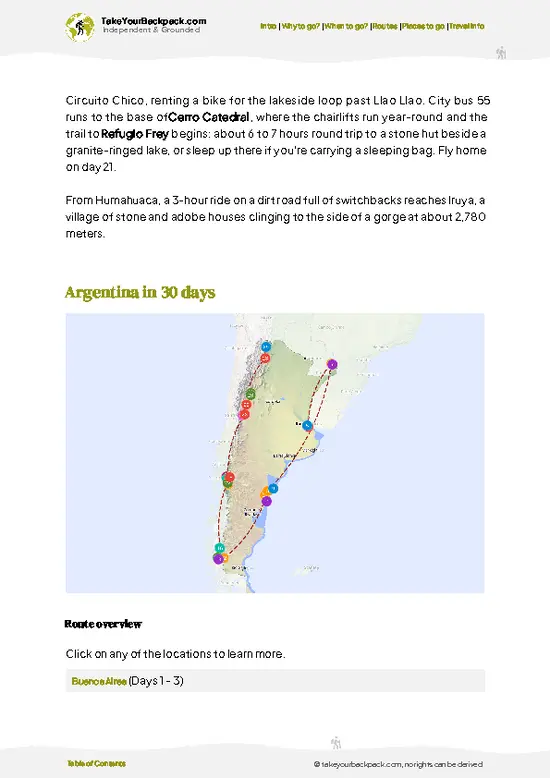
example page 0 from our offline Travel Guide for Argentina
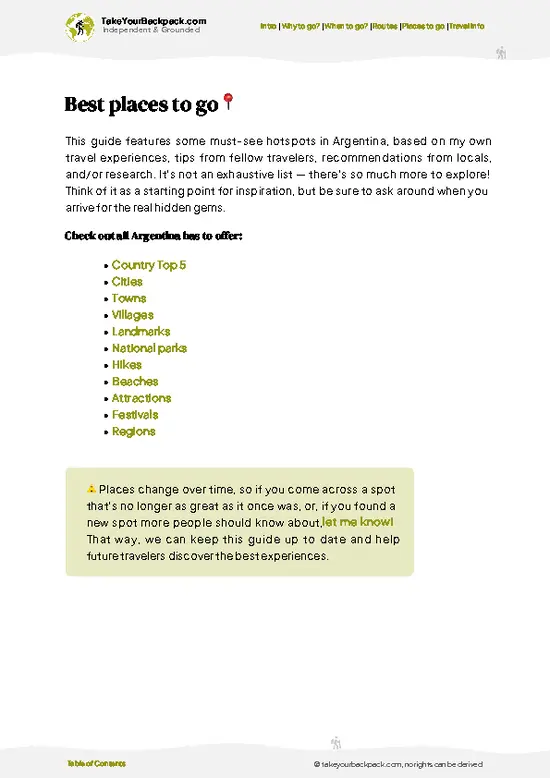
example page 1 from our offline Travel Guide for Argentina
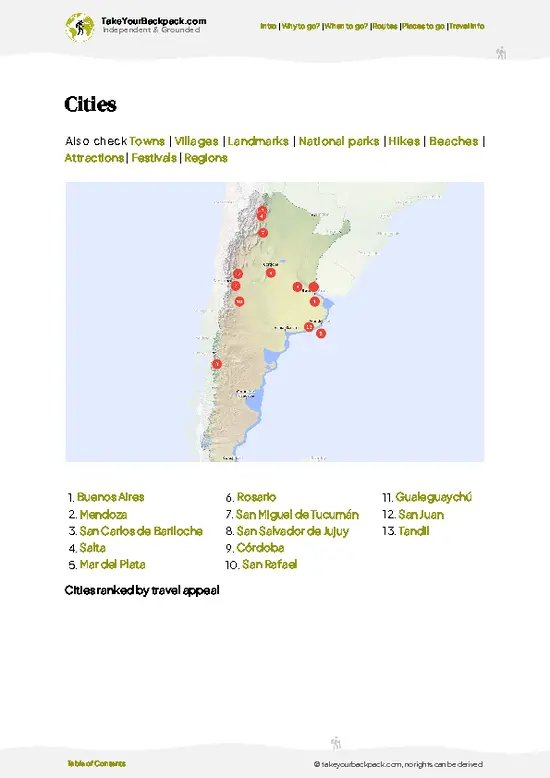
example page 2 from our offline Travel Guide for Argentina
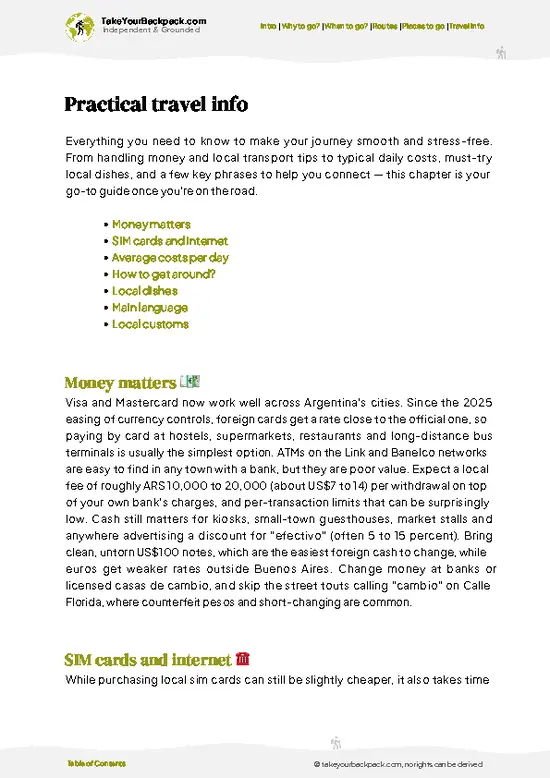
example page 3 from our offline Travel Guide for Argentina
example page 4 from our offline Travel Guide for Argentina
example page 5 from our offline Travel Guide for Argentina
example page 6 from our offline Travel Guide for Argentina
example page 7 from our offline Travel Guide for Argentina
The digital guide (505 pages) contains:
135 highlights, ranked by travel appeal
Optimized 14, 21 & 30-day travel routes
Cities, national parks, landmarks, beaches
How to get around
Offline-friendly for travel without Wi-Fi
👉 Click to see all 30+ guide features

📅 Plan smarter in minutes, not weeks
Month by month travel advice
Festivals & national holidays
Budget expectations

🗺️ Go to the right places, skip the overrated ones
Honest pros & cons of destinations
Top hikes, parks & viewpoints
Lesser-known places most travelers miss
Clear “worth it vs skip it” guidance

🛏️ Travel smoothly without rookie mistakes
Best areas to stay
Transport systems explained simply
Common scams & safety advice
SIM cards, money & practical tips

🌍 Understand the country, not just visit it
Culture & traditions
52 Essential phrases & customs
Festivals worth planning around
Traveler-friendly historical context
Insights that make places more meaningful

📱 Built for real travel conditions
Fully downloadable PDF
Works completely offline
Optimized for phone use
Useful in remote areas & buses
Everything in one place
Save weeks of stressful planning
Get instant access to your full guide. 30‑day money-back guarantee.
+ Add another guide for just US$7.80

By proceeding you agree to our terms.
Sent to your inbox immediately after payment • 100% Secure Checkout
Best Backpacking Travel Advisor 2025 tourism awardBest Backpacking
Travel Advisor
2025
What others say about Take Your Backpack Guides:
⭐⭐⭐⭐⭐
Fantastic, amazing amount of information!
⭐⭐⭐⭐⭐
My goodness this is amazing, it's what I've been looking for hats off too you!
⭐⭐⭐⭐⭐
I think this is absolutely BRILLIANT
⭐⭐⭐⭐
Very complete and informative. It's still missing places, but I gotta to commend you
⭐⭐⭐⭐⭐
This is truly amazing, thank you, can't wait to explore it with my kids!
⭐⭐⭐⭐⭐
Awesome resource, thank you!
⭐⭐⭐⭐⭐
This is amazing! Can't wait to explore the ones I haven't seen
⭐⭐⭐⭐
I love this! Well done, great idea.
⭐⭐⭐⭐⭐
Thanks for taking the time to make this gem!
⭐⭐⭐⭐⭐
This might be the best website I've ever seen.
⭐⭐⭐⭐⭐
Congratulations, and thank you so much for your work; it's incredibly valuable.
⭐⭐⭐⭐
In all seriousness I think you did a great job pointing out the important spots
⭐⭐⭐⭐⭐
10/10 very good
⭐⭐⭐⭐⭐
As someone who's only just starting to visit regularly this is awesome, thank you.
⭐⭐⭐⭐
Thank you very much! I'm going to visit my dad, it's going to be very useful!
⭐⭐⭐⭐⭐
This is really cool! We'll be travelling for the first time and this definitely come in handy.
⭐⭐⭐⭐⭐
You are now our minister of culture, congratulations 👨‍💼
⭐⭐⭐⭐⭐
Just wanted to tell you that this is a pearl! Going to follow your recommendations.
⭐⭐⭐⭐⭐
This is so cool. I'll definitely be using the resource for my travels soon.
⭐⭐⭐⭐⭐
This is very impressive! Good work.
⭐⭐⭐⭐⭐
This is an amazing and informative site. Very well done!

🛏️ Where to stay?Where staying makes the most sense

Talampaya National Park is a stunning expanse of red rock formations and ancient fossils, but your accommodation options are limited. There are no lodges or hotels directly inside the park. Instead, you’ll want to base yourself in nearby towns like Villa Unión or San Juan.

Villa Unión is the most convenient choice. It’s about a 45-minute drive from the park entrance. Here, you’ll find a mix of budget hostels and modest hotels. Look for places like Hotel Talampaya, which offers basic amenities and a friendly atmosphere. It’s a solid option for backpackers who want to recharge after a day of exploring. … read more 👉
Talampaya National Park is a stunning expanse of red rock formations and ancient fossils, but your accommodation options are limited. There are no lodges or hotels directly inside the park. Instead, you’ll want to base yourself in nearby towns like Villa Unión or San Juan.

Villa Unión is the most convenient choice. It’s about a 45-minute drive from the park entrance. Here, you’ll find a mix of budget hostels and modest hotels. Look for places like Hotel Talampaya, which offers basic amenities and a friendly atmosphere. It’s a solid option for backpackers who want to recharge after a day of exploring.

San Juan, while further away, has more options and a vibrant local scene. It’s about a two-hour drive from the park. If you choose this route, consider staying at a hostel like Hostel San Juan, where you can meet fellow travelers and share tips.

Be mindful of transportation costs. Renting a car is often the best way to navigate the area, but check for hidden fees. This way, you’ll preserve your energy and budget for the breathtaking moments that await in Talampaya.

👛 Costs (as of 4 September 2026)What things cost and how to budget

Visiting Talampaya National Park in Argentina requires some planning, especially when it comes to costs. The entrance fee typically ranges from $10 to $15 USD per person. This fee grants you access to the park’s stunning landscapes and geological formations.

Guided tours are highly recommended to fully appreciate the park’s features. Expect to pay between $30 and $60 USD for a half-day tour. Full-day tours can go up to $100 USD, depending on the inclusions and the operator.

If you’re considering transportation, budget for around $50 to $100 USD for a round trip from nearby towns like Villa Unión or San Juan. Accommodations in the area vary, with basic hostels starting at about $20 USD per night, while mid-range hotels can range from $50 to $100 USD.

Food costs are reasonable. You can find … read more 👉
Visiting Talampaya National Park in Argentina requires some planning, especially when it comes to costs. The entrance fee typically ranges from $10 to $15 USD per person. This fee grants you access to the park’s stunning landscapes and geological formations.

Guided tours are highly recommended to fully appreciate the park’s features. Expect to pay between $30 and $60 USD for a half-day tour. Full-day tours can go up to $100 USD, depending on the inclusions and the operator.

If you’re considering transportation, budget for around $50 to $100 USD for a round trip from nearby towns like Villa Unión or San Juan. Accommodations in the area vary, with basic hostels starting at about $20 USD per night, while mid-range hotels can range from $50 to $100 USD.

Food costs are reasonable. You can find meals for around $10 to $20 USD at local restaurants. Keep in mind that prices can fluctuate, especially during peak tourist seasons.

Plan ahead to avoid unexpected expenses. Knowing these costs helps you allocate your budget wisely, ensuring you have the energy and funds for the experiences that truly matter.


source: argentina.gob.ar
⚠️ Prices can change and everyone travels differently, so take this as a rough guide. Hope it helps you plan your adventure!

🥾 TrailsExploring Talampaya: trails, terrain, and views

In Talampaya National Park, you’re diving into a world of stunning red rock formations, deep canyons, and unique wildlife. The park is a visual feast, with towering cliffs and ancient fossils that tell tales of a distant past. The terrain is mostly rocky and arid, which means you’ll want sturdy shoes and plenty of water. Keep an eye out for guanacos and various bird species—if you’re lucky, you might even spot a condor soaring overhead.

There are a couple of designated trails, but the standout is the Cañon del Talampaya. Here’s the scoop:
  • Trail Name: Cañon del Talampaya
  • Length: 7 km
  • Estimated Duration:
read more 👉
In Talampaya National Park, you’re diving into a world of stunning red rock formations, deep canyons, and unique wildlife. The park is a visual feast, with towering cliffs and ancient fossils that tell tales of a distant past. The terrain is mostly rocky and arid, which means you’ll want sturdy shoes and plenty of water. Keep an eye out for guanacos and various bird species—if you’re lucky, you might even spot a condor soaring overhead.

There are a couple of designated trails, but the standout is the Cañon del Talampaya. Here’s the scoop:
  • Trail Name: Cañon del Talampaya
  • Length: 7 km
  • Estimated Duration: 3-4 hours
  • Difficulty Level: Moderate
  • Key Features: Spectacular canyon views, ancient petroglyphs, and diverse wildlife
  • Terrain: Rocky paths with some steep sections

Getting to the park isn’t too tricky. You can catch a bus from nearby towns like Villa Unión, and they usually run a few times a day. Just be prepared for a bit of a wait, as schedules can be erratic. The park can get busy, especially during peak season, so if you prefer a quieter experience, aim for the shoulder months. As for the entrance fee, it’s generally affordable, but it’s a good idea to check ahead to avoid surprises.
⚠️ Hiking info can sometimes be outdated or inaccurate. Before you hit the trail, check the latest conditions with locals. If you do spot anything that's off, I'd love to hear from you, so I can update it for fellow travelers.

🛡️ SafetyScams, Hazards, and Annoyances

Talampaya National Park offers a straightforward hiking experience, but a few practical considerations can enhance your adventure. The weather can shift quickly, so layering is key. Mornings might be cool, but afternoons can heat up, so pack a lightweight jacket and plenty of water.

The terrain is generally manageable, with well-marked trails, but be mindful of rocky sections that can challenge your footing. Navigation is usually clear, yet a map or GPS can help if you stray from the main paths.

Wildlife encounters are rare but possible. If you spot a guanaco or a condor, keep your distance and observe quietly.

Most importantly, start your hikes early to avoid the midday heat and ensure you have ample daylight for your return. With these tips, you’ll preserve your energy and budget for the moments that truly matter.

FAQCommon questions from travelers

2 to 3 days are sufficient to explore Talampaya National Park thoroughly. This allows time for guided tours, hiking, and visiting key sites like the Canyon and the Petroglyphs. Longer stays are recommended if you want to explore nearby attractions or take multiple tours.
Yes, you can visit Talampaya National Park without a car. Organized tours and shuttle services operate from nearby towns like Villa Unión, which is about 50 km from the park entrance. Local tour operators provide transportation and guided visits, making a car unnecessary.
Yes, there is an entrance fee for Talampaya National Park. The fee is approximately 400 Argentine Pesos for foreign tourists, payable at the park entrance. Permits are included with the entrance fee, and guided tours are mandatory inside the park for safety and preservation reasons.
⚠️ Things can change over time, so always validate details locally before you go.

Other Argentinian national parks near Talampaya

Explore more nearby:


💡 Not sure where to go next?
Create a personalized itinerary for Argentina including Talampaya and the places that fit your trip.

Generate my itinerary

👉 Discover all national parks

Or checkout all Argentina has to offer (think cities, towns, villages, national parks, hikes, beaches, festivals)
Country photo of Argentina

We 💚 feedbackIs it worth it?

Talampaya National Park is a marvel of nature, with its striking red rock formations and ancient fossils whispering stories of the past. But be prepared: the heat can be relentless, especially in summer. Bring plenty of water and plan your hikes for early morning or late afternoon. Embrace the quiet beauty and the chance to connect with a landscape that feels untouched. It’s worth every ounce of effort.

✈️ When did I visit Argentina?
I have visited Argentina, together with Chile, in September 2012.

✍️ Help improve this page!
The information on this page is based on my own backpacking experience in Argentina, supplemented with up-to-date research and feedback from other travelers. Travel details can change, so if you notice anything outdated or incomplete, feel free to let me know.


🙋‍♂️ Give feedback

👋 Meet the founderWho’s Behind Take Your Backpack?

Johan, backpacker and founder of TakeYourBackpackHi, I’m Johan (Netherlands 🇳🇱), the creator of TakeYourBackpack. Over the past decade, I’ve backpacked through 80+ countries across six continents, gaining extensive experience with independent travel, long-term trips, and overland routes.

This site is built on a combination of firsthand travel experience and carefully curated insights from other backpackers. Many guides are based on places I’ve personally visited, while others bring together tips, observations, and practical advice shared by trusted travelers I’ve met along the way.

The goal is to provide realistic, experience-driven guidance — not generic itineraries — so you can explore destinations with better context, clearer expectations, and more confidence.

Get full Argentina guide •
Instant download • 135 highlights • Full Offline guide