×

Argentina🇦🇷 | national parksTierra del Fuego National Parksubantarctic forest, beaver dams, peat bogs, coastal inlets | things to do and best time to go

Explore Talampaya National ParkExplore Laguna Blanca National Park

Backpacking in Tierra del Fuego
🏆 Top picknational park ranked #3
By Johan Kruseman 🇳🇱 | Updated September 4, 2026

Most people arrive in Ushuaia thinking Tierra del Fuego National Park is some wild, trackless “end of the world” epic. It isn’t. It’s a compact, well-managed park at Argentina’s southern tip, just west of Ushuaia in Tierra del Fuego province, with roads, day-trippers, and a clear price tag. For backpackers, it’s a solid, if not life-changing, stop: short to medium hikes through lenga forest, peat bogs, and coastal bays, good chances of foxes and birds, but no big-mountain drama like Los Glaciares or Torres del Paine across the border. Access is easy by shuttle or even hitching, but entrance fees are high for what you get and the main trails can feel crowded on cruise-ship days. Camping is basic and cheap but not especially atmospheric. I treat it as a one- or two-day warm-up, not the core of a Patagonia trip.

Discover everything you want to know in the 📖 Argentina Travel Guide.
Loading the map 🌍
CLICK TO FILTER
cities
towns
villages
landmarks
national parks
hikes
beaches
attractions
festivals
regions
SHOW COUNTRY’S BESTSHOW ALL

✨ Why go?
Ranked #3 national park in Argentina
Reasons people choose to explore here

Tierra del Fuego National Park attracts backpackers for several compelling reasons. First, the independent exploration is a major draw. You can wander the trails at your own pace, soaking in the rugged beauty without a guide. This freedom allows for spontaneous detours to hidden viewpoints or quiet spots.

Budget-conscious travelers appreciate the camping and hostel options nearby. Affordable campsites let you stretch your funds while still enjoying the park’s stunning landscapes. Hostels provide a social atmosphere, perfect for meeting fellow adventurers.

The trail variety is another highlight. From easy walks to challenging hikes, there’s something for everyone. You can choose a leisurely stroll along the coast or tackle the more demanding routes that lead to breathtaking vistas.

Finally, … read more 👉
Tierra del Fuego National Park attracts backpackers for several compelling reasons. First, the independent exploration is a major draw. You can wander the trails at your own pace, soaking in the rugged beauty without a guide. This freedom allows for spontaneous detours to hidden viewpoints or quiet spots.

Budget-conscious travelers appreciate the camping and hostel options nearby. Affordable campsites let you stretch your funds while still enjoying the park’s stunning landscapes. Hostels provide a social atmosphere, perfect for meeting fellow adventurers.

The trail variety is another highlight. From easy walks to challenging hikes, there’s something for everyone. You can choose a leisurely stroll along the coast or tackle the more demanding routes that lead to breathtaking vistas.

Finally, the park is well-suited for self-guided travelers. Clear signage and well-marked paths make navigation straightforward, allowing you to focus on the experience rather than logistics. This combination of factors makes Tierra del Fuego a top choice for backpackers seeking authenticity and adventure.
Want to include Tierra del Fuego National Park in your Argentina route?
Create a personalized Argentina itinerary that includes Tierra del Fuego National Park and the places that fit your trip — based on your travel style, budget, and available time. Get your route in seconds.

Generate my trip

💡 HighlightsWhat this place is best known for

  • Bahía Lapataia — The classic postcard: the end point of the Pan-American Highway, tidal flats, boardwalks and those jagged mountain silhouettes across the water. Great for easy walks, sunset light and that “I-made-it” photo without having to hike for days.
  • Senda Costera — The coastal trail that hugs bays, beaches and lenga forest; lots of changing light, birdlife and small coves to stop and stare. Easy to tailor (short section or a full hike), and my personal favorite because it feels wild but never punishing.
  • Lago Roca (Acigami) — A mirror-calm Patagonian lake with sandy/peaty edges, picnic spots and short circuits. It’s a lovely place to sit, watch waterfowl and soak up wide, unobstructed mountain views without a long climb.
  • Pampa Alta / Mirador — Open meadow and uphill viewpoints that
read more 👉
  • Bahía Lapataia — The classic postcard: the end point of the Pan-American Highway, tidal flats, boardwalks and those jagged mountain silhouettes across the water. Great for easy walks, sunset light and that “I-made-it” photo without having to hike for days.
  • Senda Costera — The coastal trail that hugs bays, beaches and lenga forest; lots of changing light, birdlife and small coves to stop and stare. Easy to tailor (short section or a full hike), and my personal favorite because it feels wild but never punishing.
  • Lago Roca (Acigami) — A mirror-calm Patagonian lake with sandy/peaty edges, picnic spots and short circuits. It’s a lovely place to sit, watch waterfowl and soak up wide, unobstructed mountain views without a long climb.
  • Pampa Alta / Mirador — Open meadow and uphill viewpoints that reward a steady walk with sweeping panoramas of lakes, forests and the Beagle Channel. Good for a half-day push if you want a proper vista and fewer people.
  • Peat bogs and boardwalks — One of the park’s signature ecosystems: spongy bogs, colorful mosses and lichens crossed by carefully built walkways. Strange, quiet and fragile — stay on the boards and you’ll see why it’s special.
  • Beaver ponds and altered landscapes — Not a native storybook wildlife feature, but fascinating: introduced beavers have reshaped streams and created mirror ponds that now host birds and new microhabitats. It’s an odd, clearly human-shaped chapter of the park’s ecology worth seeing.
  • Tren del Fin del Mundo (End of the World Train) — The heritage train that runs through lenga forest into the park. It’s part natural history, part human history — fun, photogenic and a nice way to access trails if you don’t want to walk in from the road.
Spotted a mistake or missing something? Contact us.

Things to do around Tierra del Fuego National Park

Ratings based on Tripadvisor reviews. When you book through this link, you support our work at no extra cost to you.

🌤️ When to go?Seasonal considerations and timing


  • Weather: The park’s weather is notoriously unpredictable. Summer (December to February) offers the mildest conditions, with temperatures ranging from 5°C to 15°C (41°F to 59°F). Outside these months, expect cold winds, rain, and even snow, which can make trails slippery and less accessible.

  • Temperature: Summer days are cool but bearable for hiking. Spring and autumn bring chillier temps, often dipping below freezing at night. Winter is harsh, with temperatures frequently below 0°C (32°F), limiting outdoor activities.

  • Daylight Hours: Summer provides long daylight—up to 17 hours—maximizing your hiking window. In contrast, winter days shrink to about 7 hours, forcing early stops and reducing exploration time.

  • Crowds: Peak season means more visitors, especially in January. Trails and
read more 👉

  • Weather: The park’s weather is notoriously unpredictable. Summer (December to February) offers the mildest conditions, with temperatures ranging from 5°C to 15°C (41°F to 59°F). Outside these months, expect cold winds, rain, and even snow, which can make trails slippery and less accessible.

  • Temperature: Summer days are cool but bearable for hiking. Spring and autumn bring chillier temps, often dipping below freezing at night. Winter is harsh, with temperatures frequently below 0°C (32°F), limiting outdoor activities.

  • Daylight Hours: Summer provides long daylight—up to 17 hours—maximizing your hiking window. In contrast, winter days shrink to about 7 hours, forcing early stops and reducing exploration time.

  • Crowds: Peak season means more visitors, especially in January. Trails and campsites fill up, so book ahead. Shoulder seasons (late spring and early autumn) offer quieter experiences but with more variable weather.

  • Seasonal Activities: Summer is prime for trekking, kayaking, and wildlife spotting. Winter limits activities mostly to short walks and photography, as many trails close due to snow and ice.

  • Price Fluctuations: Accommodation and transport costs spike in summer. Off-season rates drop significantly, but some services may be unavailable or reduced.


For the best balance of weather, daylight, and fewer crowds, plan your trip for late November or early March—just before or after peak season—so you avoid the worst weather and the busiest trails without paying summer prices.


source: climatestotravel.comJANJanuary: highly recommended for travelingFEBFebruary: highly recommended for travelingMARMarch: highly recommended for travelingAPRApril: fair for travelingMAYMay: fair for travelingJUNJune: below average for travelingJULJuly: below average for travelingAUGAugust: below average for travelingSEPSeptember: fair for travelingOCTOctober: good for travelingNOVNovember: highly recommended for travelingDECDecember: highly recommended for traveling
when-to-go

✈️ The backpacker research shortcutArgentina Travel Guide

An offline-friendly backpacking guide with optimized travel routes, ranked highlights, transport advice, and the best areas to stay.
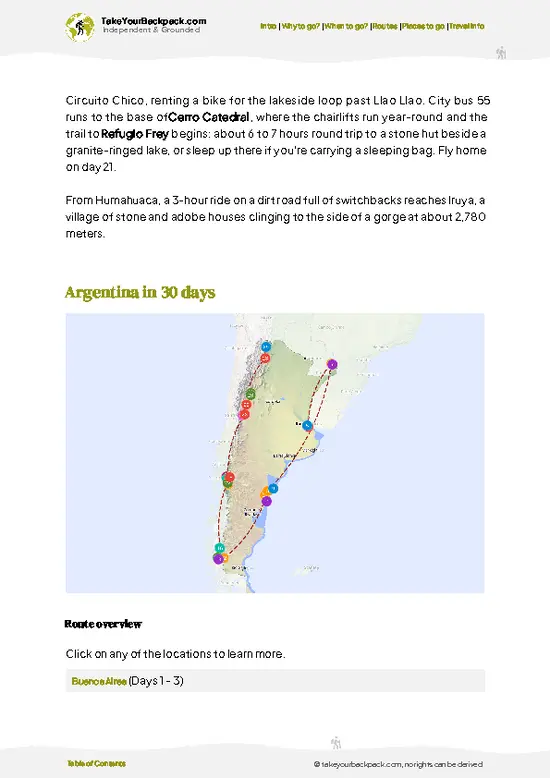
example page 0 from our offline Travel Guide for Argentina
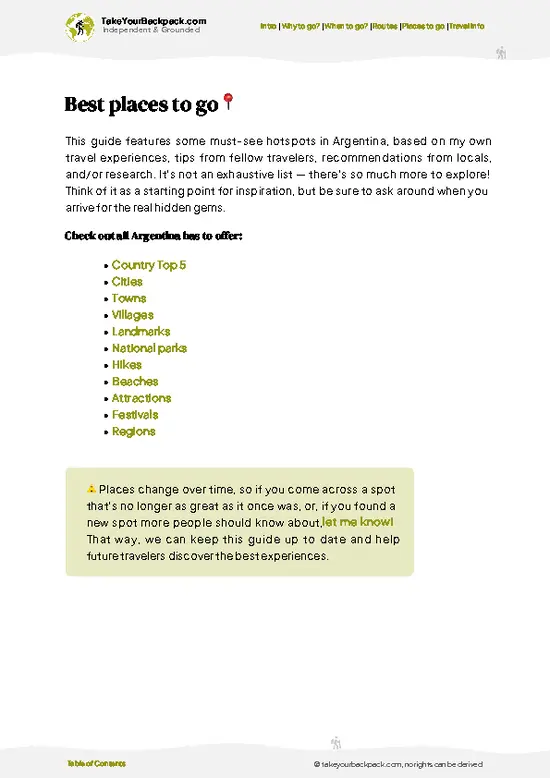
example page 1 from our offline Travel Guide for Argentina
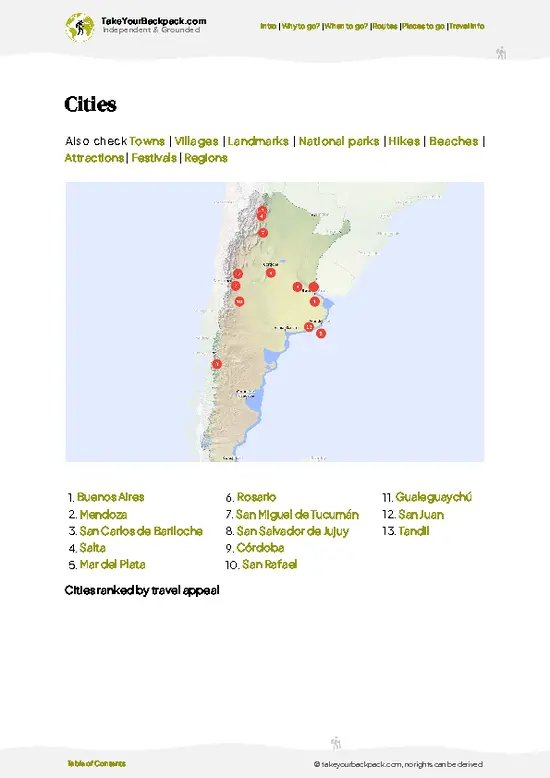
example page 2 from our offline Travel Guide for Argentina
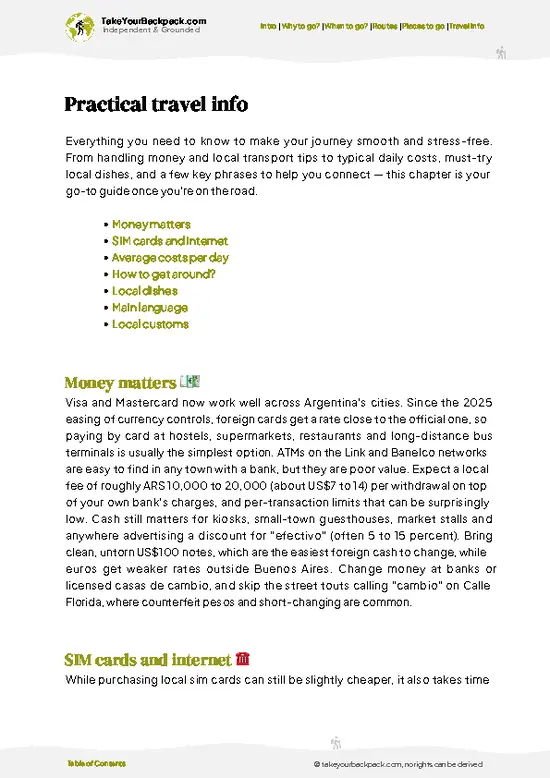
example page 3 from our offline Travel Guide for Argentina
example page 4 from our offline Travel Guide for Argentina
example page 5 from our offline Travel Guide for Argentina
example page 6 from our offline Travel Guide for Argentina
example page 7 from our offline Travel Guide for Argentina
The digital guide (505 pages) contains:
135 highlights, ranked by travel appeal
Optimized 14, 21 & 30-day travel routes
Cities, national parks, landmarks, beaches
How to get around
Offline-friendly for travel without Wi-Fi
👉 Click to see all 30+ guide features

📅 Plan smarter in minutes, not weeks
Month by month travel advice
Festivals & national holidays
Budget expectations

🗺️ Go to the right places, skip the overrated ones
Honest pros & cons of destinations
Top hikes, parks & viewpoints
Lesser-known places most travelers miss
Clear “worth it vs skip it” guidance

🛏️ Travel smoothly without rookie mistakes
Best areas to stay
Transport systems explained simply
Common scams & safety advice
SIM cards, money & practical tips

🌍 Understand the country, not just visit it
Culture & traditions
52 Essential phrases & customs
Festivals worth planning around
Traveler-friendly historical context
Insights that make places more meaningful

📱 Built for real travel conditions
Fully downloadable PDF
Works completely offline
Optimized for phone use
Useful in remote areas & buses
Everything in one place
Save weeks of stressful planning
Get instant access to your full guide. 30‑day money-back guarantee.
+ Add another guide for just US$7.80

By proceeding you agree to our terms.
Sent to your inbox immediately after payment • 100% Secure Checkout
Best Backpacking Travel Advisor 2025 tourism awardBest Backpacking
Travel Advisor
2025
What others say about Take Your Backpack Guides:
⭐⭐⭐⭐⭐
Fantastic, amazing amount of information!
⭐⭐⭐⭐⭐
My goodness this is amazing, it's what I've been looking for hats off too you!
⭐⭐⭐⭐⭐
I think this is absolutely BRILLIANT
⭐⭐⭐⭐
Very complete and informative. It's still missing places, but I gotta to commend you
⭐⭐⭐⭐⭐
This is truly amazing, thank you, can't wait to explore it with my kids!
⭐⭐⭐⭐⭐
Awesome resource, thank you!
⭐⭐⭐⭐⭐
This is amazing! Can't wait to explore the ones I haven't seen
⭐⭐⭐⭐
I love this! Well done, great idea.
⭐⭐⭐⭐⭐
Thanks for taking the time to make this gem!
⭐⭐⭐⭐⭐
This might be the best website I've ever seen.
⭐⭐⭐⭐⭐
Congratulations, and thank you so much for your work; it's incredibly valuable.
⭐⭐⭐⭐
In all seriousness I think you did a great job pointing out the important spots
⭐⭐⭐⭐⭐
10/10 very good
⭐⭐⭐⭐⭐
As someone who's only just starting to visit regularly this is awesome, thank you.
⭐⭐⭐⭐
Thank you very much! I'm going to visit my dad, it's going to be very useful!
⭐⭐⭐⭐⭐
This is really cool! We'll be travelling for the first time and this definitely come in handy.
⭐⭐⭐⭐⭐
You are now our minister of culture, congratulations 👨‍💼
⭐⭐⭐⭐⭐
Just wanted to tell you that this is a pearl! Going to follow your recommendations.
⭐⭐⭐⭐⭐
This is so cool. I'll definitely be using the resource for my travels soon.
⭐⭐⭐⭐⭐
This is very impressive! Good work.
⭐⭐⭐⭐⭐
This is an amazing and informative site. Very well done!

🛏️ Where to stay?Best areas and accommodation options

Tierra del Fuego National Park offers a few solid options for backpackers. Inside the park, you can find the Camping Lago Roca, which is a straightforward spot with basic amenities. It’s a great way to immerse yourself in nature without breaking the bank. Just remember to bring your own gear and food; the nearest supplies are a trek away.

If you prefer a bit more comfort, head to Ushuaia, the southernmost city in the world, just a short drive from the park. Here, you’ll find hostels like Hostel Los Cormoranes or Hostel Tierra del Fuego, both offering affordable beds and a chance to meet fellow … read more 👉
Tierra del Fuego National Park offers a few solid options for backpackers. Inside the park, you can find the Camping Lago Roca, which is a straightforward spot with basic amenities. It’s a great way to immerse yourself in nature without breaking the bank. Just remember to bring your own gear and food; the nearest supplies are a trek away.

If you prefer a bit more comfort, head to Ushuaia, the southernmost city in the world, just a short drive from the park. Here, you’ll find hostels like Hostel Los Cormoranes or Hostel Tierra del Fuego, both offering affordable beds and a chance to meet fellow travelers.

Be aware that prices can spike during peak season, so booking ahead is wise. Also, factor in transportation costs; public buses can be infrequent. By planning your stay wisely, you’ll save energy and cash for the real adventures—hiking the stunning trails and soaking in the breathtaking views.

👛 Costs (as of 4 September 2026)How expensive it really is

Visiting Tierra del Fuego National Park in Argentina requires some budgeting awareness. The entrance fee is around $10 to $15 USD per person. This fee grants you access to the park’s trails and facilities, but keep in mind that it can vary slightly depending on the season.

If you’re planning to camp, expect to pay about $5 to $10 USD per night for a campsite. Reservations are recommended, especially during peak season, which runs from December to February.

Transportation can be a hidden cost. If you’re driving, factor in fuel prices, which can be higher in remote areas. Public transport options are limited, so a rental car might be your best bet, costing around $40 to $70 USD per day.

Food options within the park are sparse. Bring your own supplies to avoid paying inflated prices at nearby … read more 👉
Visiting Tierra del Fuego National Park in Argentina requires some budgeting awareness. The entrance fee is around $10 to $15 USD per person. This fee grants you access to the park’s trails and facilities, but keep in mind that it can vary slightly depending on the season.

If you’re planning to camp, expect to pay about $5 to $10 USD per night for a campsite. Reservations are recommended, especially during peak season, which runs from December to February.

Transportation can be a hidden cost. If you’re driving, factor in fuel prices, which can be higher in remote areas. Public transport options are limited, so a rental car might be your best bet, costing around $40 to $70 USD per day.

Food options within the park are sparse. Bring your own supplies to avoid paying inflated prices at nearby towns. A meal at a local restaurant can range from $10 to $25 USD, depending on your choice.

Lastly, guided tours can enhance your experience but come at a premium. Expect to pay anywhere from $50 to $150 USD, depending on the length and inclusions of the tour.

Plan ahead to avoid surprises. This way, you can focus on enjoying the breathtaking landscapes without worrying about your wallet.


source: argentina.gob.ar
⚠️ Prices can change and everyone travels differently, so take this as a rough guide. Hope it helps you plan your adventure!

🥾 TrailsHiking Tierra del Fuego national park: highlights and difficulty

Tierra del Fuego National Park is a hidden gem at the southern tip of Argentina, where the Andes meet the sea. The scenery is a stunning mix of rugged mountains, dense forests, and the sparkling Beagle Channel. You’ll find trails that cater to various skill levels, so whether you’re a novice or a seasoned hiker, there’s something for you.

One of the standout trails is the Costera Trail. It’s a relatively easy walk, about 4 kilometers long, and can be completed in around 1.5 to 2 hours. Here’s the scoop:
  • Length: 4 km
  • Estimated Duration: 1.5 to 2 hours
  • Difficulty Level: Easy
  • Key Features: Spectacular
read more 👉
Tierra del Fuego National Park is a hidden gem at the southern tip of Argentina, where the Andes meet the sea. The scenery is a stunning mix of rugged mountains, dense forests, and the sparkling Beagle Channel. You’ll find trails that cater to various skill levels, so whether you’re a novice or a seasoned hiker, there’s something for you.

One of the standout trails is the Costera Trail. It’s a relatively easy walk, about 4 kilometers long, and can be completed in around 1.5 to 2 hours. Here’s the scoop:
  • Length: 4 km
  • Estimated Duration: 1.5 to 2 hours
  • Difficulty Level: Easy
  • Key Features: Spectacular views of the Beagle Channel, unique flora, and opportunities for birdwatching.
  • Terrain: Mostly flat with some wooden boardwalks.

If you’re looking for a bit more challenge, the Laguna de los Témpanos Trail is a great choice. It’s about 7 kilometers and takes roughly 3 to 4 hours to complete:
  • Length: 7 km
  • Estimated Duration: 3 to 4 hours
  • Difficulty Level: Moderate
  • Key Features: Beautiful glacial lake views, chance to see wildlife like guanacos and foxes.
  • Terrain: Varied, with some steep sections and rocky paths.

Reaching the park is pretty straightforward. You can take a bus from Ushuaia, which runs regularly and takes about an hour. Just be aware that it can get crowded, especially during the summer months, so starting early is a smart move. As for the entrance fee, it’s generally quite reasonable, but it’s worth checking the latest info before you go. Enjoy the wild beauty of Tierra del Fuego!
⚠️ Hiking info can sometimes be outdated or inaccurate. Before you hit the trail, check the latest conditions with locals. If you do spot anything that's off, I'd love to hear from you, so I can update it for fellow travelers.

🛡️ SafetySafety Tips and Common Scams in Tierra del Fuego

Tierra del Fuego National Park offers a stunning backdrop for backpackers, but it’s wise to stay grounded in reality. The weather can shift rapidly; sunny skies can turn to rain or wind in minutes. Dress in layers and be prepared for anything.

The trails are generally well-marked, but some sections can be steep or muddy, especially after rain. Good footwear is essential; leave the flip-flops at home. River crossings are manageable, but watch for slippery rocks.

Wildlife encounters are rare, but if you spot a guanaco or a fox, keep your distance. Feeding animals is a big no-no; it disrupts their natural behavior.

Plan your hikes for early in the day to avoid afternoon weather changes. With the right preparation, you can focus on the beauty around you, not the pitfalls.

FAQTraveler FAQ

2 to 3 days are sufficient to explore Tierra del Fuego National Park thoroughly. This allows time for hiking trails, visiting the coastal areas, and enjoying the scenic views without rushing. Longer stays are possible but not necessary for a complete visit.
Yes, you can visit Tierra del Fuego National Park without a car. Public buses and taxis from Ushuaia provide access to the park entrance, and there are shuttle services during peak tourist seasons. Many trails and points of interest are reachable on foot or by local transport.
Yes, there is an entrance fee to Tierra del Fuego National Park. The fee is approximately 700 Argentine Pesos for foreign visitors, payable at the park entrance. No special permit is required beyond the entrance ticket.
⚠️ Things can change over time, so always validate details locally before you go.

Other Argentinian national parks near Tierra del Fuego

Explore more nearby:


💡 Not sure where to go next?
Create a personalized itinerary for Argentina including Tierra del Fuego and the places that fit your trip.

Generate my itinerary

👉 Discover all national parks

Or checkout all Argentina has to offer (think cities, towns, villages, national parks, hikes, beaches, festivals)
Country photo of Argentina

We 💚 feedbackFinal thoughts on exploring Tierra del Fuego

Tierra del Fuego National Park is a wild, breathtaking escape where the Andes meet the sea. You’ll find trails that lead to stunning vistas and wildlife that feels untouched. But be ready for the weather; it can shift from sunny to stormy in minutes. Pack layers and embrace the unpredictability. This park rewards those who come prepared, ensuring your adventure is as memorable as the landscapes.

✈️ When did I visit Argentina?
I have visited Argentina, together with Chile, in September 2012.

✍️ Help improve this page!
The information on this page is based on my own backpacking experience in Argentina, supplemented with up-to-date research and feedback from other travelers. Travel details can change, so if you notice anything outdated or incomplete, feel free to let me know.


🙋‍♂️ Give feedback

👋 Meet the founderWho’s Behind Take Your Backpack?

Johan, backpacker and founder of TakeYourBackpackHi, I’m Johan (Netherlands 🇳🇱), the creator of TakeYourBackpack. Over the past decade, I’ve backpacked through 80+ countries across six continents, gaining extensive experience with independent travel, long-term trips, and overland routes.

This site is built on a combination of firsthand travel experience and carefully curated insights from other backpackers. Many guides are based on places I’ve personally visited, while others bring together tips, observations, and practical advice shared by trusted travelers I’ve met along the way.

The goal is to provide realistic, experience-driven guidance — not generic itineraries — so you can explore destinations with better context, clearer expectations, and more confidence.

Get full Argentina guide •
Instant download • 135 highlights • Full Offline guide