×

Aruba🇦🇼 | beachesMangel HaltoMangrove cove, wooden pier, shallow lagoon, weekend picnics | things to do and best time to go

Explore Manchebo BeachExplore Palm Beach

Backpacking in Mangel Halto
👍 Recommendedbeach ranked #5
By Johan Kruseman 🇳🇱 | Updated October 20, 2026

Parking is free and sits steps from the water, so you can roll in with a snorkel bag and be floating in two minutes. Mangel Halto beach is on the southeast coast of Aruba, a short drive from Oranjestad past the Pos Chiquito stretch and just before Savaneta. The water is calm and shallow behind a reef, clear enough that you see your own toes at chest depth. Mangroves frame the cove, and the sand is soft and narrow, so shade comes mostly from trees. Expect no surf and few waves, which suits kids and nervous swimmers. Facilities are thin, with a small snack stand at best, so bring water and lunch. Go on a weekday morning and you may share the cove with a handful of locals. At the far end, a wooden pier leads out over the shallows, perfect for watching fish scatter below.

Discover everything you want to know in the 📖 Aruba Travel Guide.


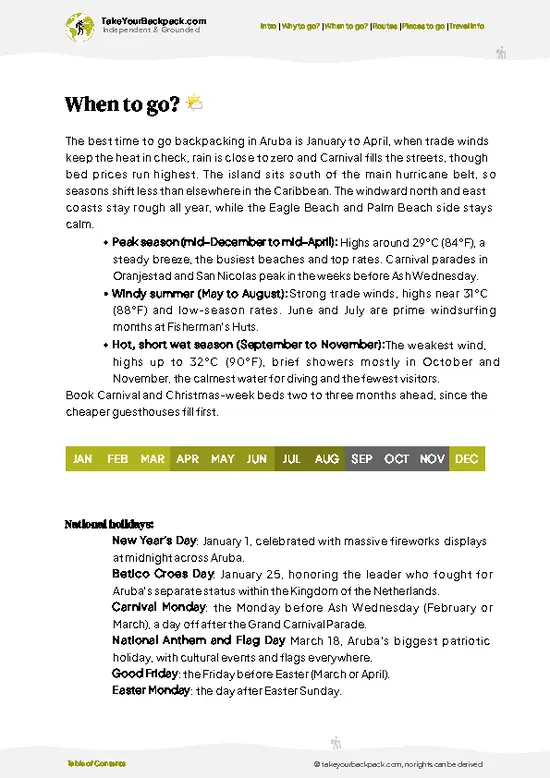
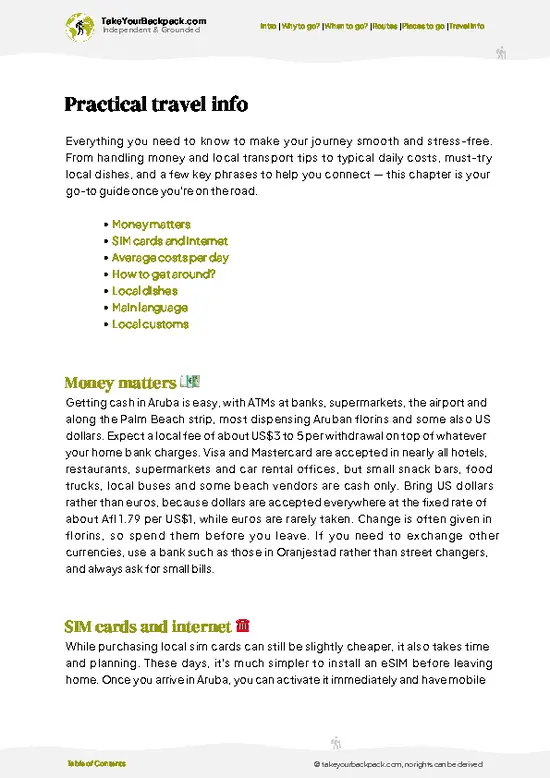
example page 0 from our offline Travel Guide for Aruba
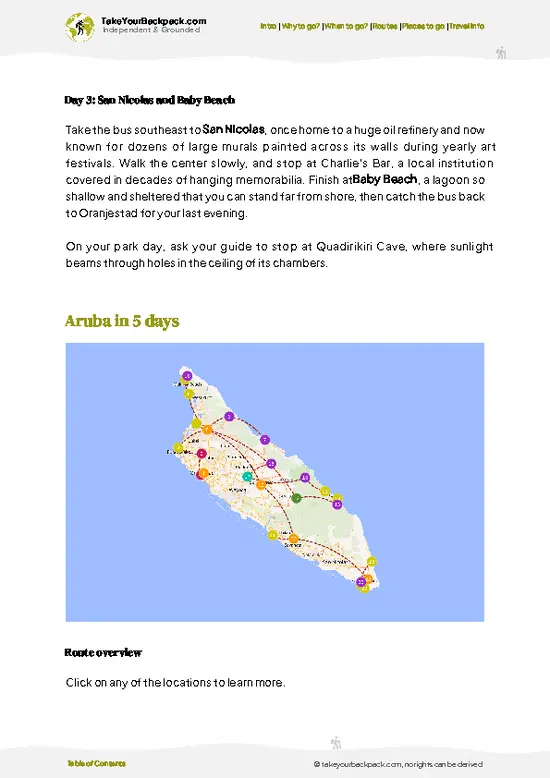
example page 1 from our offline Travel Guide for Aruba
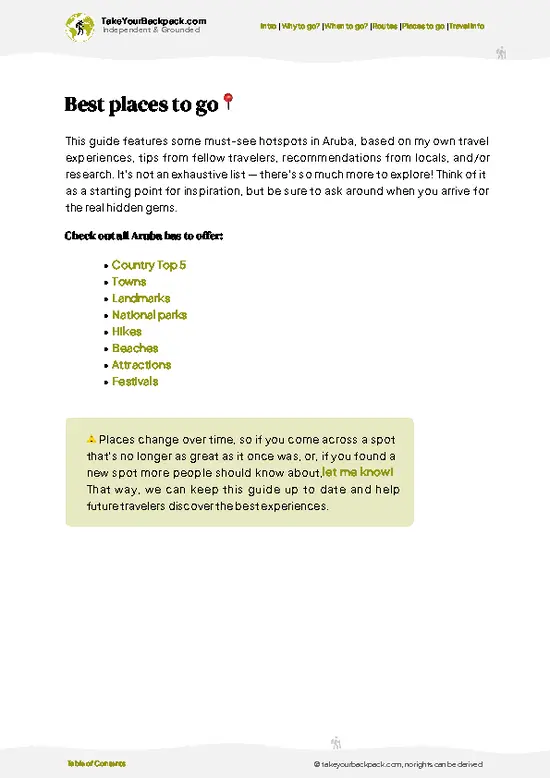
example page 2 from our offline Travel Guide for Aruba
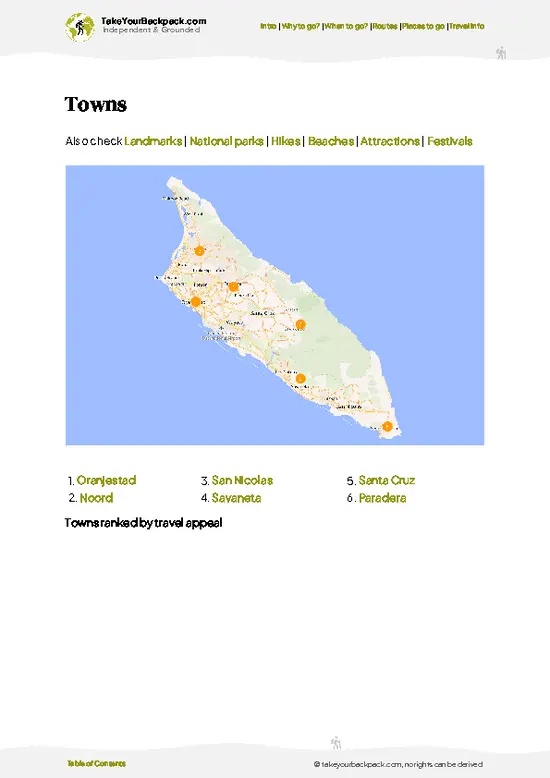
example page 3 from our offline Travel Guide for Aruba
example page 4 from our offline Travel Guide for Aruba
example page 5 from our offline Travel Guide for Aruba
example page 6 from our offline Travel Guide for Aruba
example page 7 from our offline Travel Guide for Aruba
Loading the map 🌍
CLICK TO FILTER
towns
landmarks
national parks
hikes
beaches
attractions
festivals
SHOW COUNTRY’S BESTSHOW ALL

✨ Why go?
Ranked #5 beach in Aruba
Reasons people choose to visit here

Mangel Halto beach pulls backpackers who are tired of the busy resort strip on the west coast. The cove has a local feel, with Aruban families grilling under the trees on weekends and almost nobody selling you anything. The main draw is the reef-protected shallows, where you can wade in from the sand and snorkel over small fish, sea fans and the odd mangrove nursery at the edge of the bay. It costs nothing to get in, which matters on an island where most comfortable swimming spots come with a beach club bill. It also works as a pause on a loop along the quiet southeast coast, easy to combine with the fishing village of Savaneta nearby. You arrive hot, swim, eat something simple, and move on without feeling you have skipped anything.

💡 HighlightsWhat this place is best known for

  1. Snorkeling the reef edge: The calm, shallow lagoon is the reason people come. Swim out a short way and you cross seagrass and coral rubble where parrotfish, sergeant majors and small barracuda hang around. Currents are gentle, which makes it a good first snorkel.
  2. The mangrove shoreline: Trees crowd the water on one side of the cove, and their roots shelter juvenile fish. Float along the edge slowly and look down into the root tangle. It is a quieter, greener contrast to the open reef.
  3. The wooden pier and shallows: A short pier stretches over clear water, good for watching fish from above or for photos without anyone in the frame. Kids like jumping in beside it where the water is shallow.
  4. Weekend picnic scene: On Saturdays and Sundays local families set up under the trees with coolers and music.
… read more 👉
  1. Snorkeling the reef edge: The calm, shallow lagoon is the reason people come. Swim out a short way and you cross seagrass and coral rubble where parrotfish, sergeant majors and small barracuda hang around. Currents are gentle, which makes it a good first snorkel.
  2. The mangrove shoreline: Trees crowd the water on one side of the cove, and their roots shelter juvenile fish. Float along the edge slowly and look down into the root tangle. It is a quieter, greener contrast to the open reef.
  3. The wooden pier and shallows: A short pier stretches over clear water, good for watching fish from above or for photos without anyone in the frame. Kids like jumping in beside it where the water is shallow.
  4. Weekend picnic scene: On Saturdays and Sundays local families set up under the trees with coolers and music. It is the best way to see how Arubans actually spend time at the beach, and a polite hello often gets you a friendly chat.
  5. Shaded swimming and lounging: The water stays flat and warm, so you can float for an hour without being pushed around. Bring a mat or towel and settle under the trees by the sand when the sun gets strong.
Start with the snorkel soon after arriving, because the water is clearest and calmest before wind ruffles the surface and other swimmers stir up the sand.
Spotted a mistake or missing something? Contact us.

Things to do near Mangel Halto

Ratings based on Tripadvisor reviews. When you book through this link, you support our work at no extra cost to you.

🌤️ When to go?Best time to visit Mangel Halto

The best window for Mangel Halto is April to early August, when trade winds keep the shallow lagoon calm and the water clear.
  • Dry Season (Feb to Sept): Rain is rare and days run 29 to 32°C (84 to 90°F), with a steady breeze that makes midday tolerable. Lagoon visibility is at its best.
  • Rainy Season (Oct to Jan): Short, heavy showers arrive, mostly November and December. Temperatures hold at 27 to 31°C (81 to 88°F), and showers usually pass within an hour. Flights and rooms cost less.
  • Peak Crowds (Dec to April): North American winter visitors fill the island and prices climb. This beach stays quieter than Eagle or Palm Beach, though weekends bring local families with grills.
  • Snorkeling Season: Calm mornings from spring through summer are best for the mangrove edge and the reef just offshore.
Arrive … read more 👉
The best window for Mangel Halto is April to early August, when trade winds keep the shallow lagoon calm and the water clear.
  • Dry Season (Feb to Sept): Rain is rare and days run 29 to 32°C (84 to 90°F), with a steady breeze that makes midday tolerable. Lagoon visibility is at its best.
  • Rainy Season (Oct to Jan): Short, heavy showers arrive, mostly November and December. Temperatures hold at 27 to 31°C (81 to 88°F), and showers usually pass within an hour. Flights and rooms cost less.
  • Peak Crowds (Dec to April): North American winter visitors fill the island and prices climb. This beach stays quieter than Eagle or Palm Beach, though weekends bring local families with grills.
  • Snorkeling Season: Calm mornings from spring through summer are best for the mangrove edge and the reef just offshore.
Arrive on a weekday morning, before the weekend picnic crowd claims the shaded spots.


source: climatestotravel.comJANJanuary: highly recommended for travelingFEBFebruary: highly recommended for travelingMARMarch: highly recommended for travelingAPRApril: highly recommended for travelingMAYMay: highly recommended for travelingJUNJune: good for travelingJULJuly: good for travelingAUGAugust: good for travelingSEPSeptember: good for travelingOCTOctober: good for travelingNOVNovember: good for travelingDECDecember: highly recommended for traveling

✈️ The backpacker research shortcutAruba Travel Guide

An offline-friendly backpacking guide with optimized travel routes, ranked highlights, transport advice, and the best areas to stay.
example page 0 from our offline Travel Guide for Aruba
example page 1 from our offline Travel Guide for Aruba
example page 2 from our offline Travel Guide for Aruba
example page 3 from our offline Travel Guide for Aruba
example page 4 from our offline Travel Guide for Aruba
example page 5 from our offline Travel Guide for Aruba
example page 6 from our offline Travel Guide for Aruba
example page 7 from our offline Travel Guide for Aruba
The digital guide (138 pages) contains:
✅ 34 highlights, ranked by travel appeal
✅ Optimized 2, 3 & 5-day travel routes
✅ Cities, national parks, landmarks, beaches
✅ How to get around
✅ Offline-friendly for travel without Wi-Fi
👉 Click to see all 30+ guide features

📅 Plan smarter in minutes, not weeks
✅ Month by month travel advice
✅ Festivals & national holidays
✅ Budget expectations

🗺️ Go to the right places, skip the overrated ones
✅ Honest pros & cons of destinations
✅ Top hikes, parks & viewpoints
✅ Lesser-known places most travelers miss
✅ Clear “worth it vs skip it” guidance

🛏️ Travel smoothly without rookie mistakes
✅ Best areas to stay
✅ Transport systems explained simply
✅ Common scams & safety advice
✅ SIM cards, money & practical tips

🌍 Understand the country, not just visit it
✅ Culture & traditions
✅ 52 Essential phrases & customs
✅ Festivals worth planning around
✅ Traveler-friendly historical context
✅ Insights that make places more meaningful

📱 Built for real travel conditions
✅ Fully downloadable PDF
✅ Works completely offline
✅ Optimized for phone use
✅ Useful in remote areas & buses
✅ Everything in one place
Stop searching, start planning
Get instant access to your full guide. 30‑day money-back guarantee.
+ Add another guide for just

By proceeding you agree to our terms.
Sent to your inbox immediately after payment • 100% Secure Checkout
Best Backpacking Travel Advisor 2025 tourism awardBest Backpacking
Travel Advisor
2025
What others say about Take Your Backpack Guides:
⭐⭐⭐⭐⭐
Fantastic, amazing amount of information!
⭐⭐⭐⭐⭐
My goodness this is amazing, it's what I've been looking for hats off too you!
⭐⭐⭐⭐⭐
I think this is absolutely BRILLIANT
⭐⭐⭐⭐
Very complete and informative. It's still missing places, but I gotta to commend you
⭐⭐⭐⭐⭐
This is truly amazing, thank you, can't wait to explore it with my kids!
⭐⭐⭐⭐⭐
Awesome resource, thank you!
⭐⭐⭐⭐⭐
This is amazing! Can't wait to explore the ones I haven't seen
⭐⭐⭐⭐
I love this! Well done, great idea.
⭐⭐⭐⭐⭐
Thanks for taking the time to make this gem!
⭐⭐⭐⭐⭐
This might be the best website I've ever seen.
⭐⭐⭐⭐⭐
Congratulations, and thank you so much for your work; it's incredibly valuable.
⭐⭐⭐⭐
In all seriousness I think you did a great job pointing out the important spots
⭐⭐⭐⭐⭐
10/10 very good
⭐⭐⭐⭐⭐
As someone who's only just starting to visit regularly this is awesome, thank you.
⭐⭐⭐⭐
Thank you very much! I'm going to visit my dad, it's going to be very useful!
⭐⭐⭐⭐⭐
This is really cool! We'll be travelling for the first time and this definitely come in handy.
⭐⭐⭐⭐⭐
You are now our minister of culture, congratulations 👨‍💼
⭐⭐⭐⭐⭐
Just wanted to tell you that this is a pearl! Going to follow your recommendations.
⭐⭐⭐⭐⭐
This is so cool. I'll definitely be using the resource for my travels soon.
⭐⭐⭐⭐⭐
This is very impressive! Good work.
⭐⭐⭐⭐⭐
This is an amazing and informative site. Very well done!

🛏️ Where to stay?Where staying makes the most sense

Most backpackers sleep in Oranjestad or Savaneta, both within a 15 to 25 minute drive of Mangel Halto, and Savaneta is the closest.
Savaneta is a quiet fishing village on the south coast. Seafood shacks sit along the water, and the beach is about 5 minutes away by car or bike. It has few beds and little nightlife, so it suits people who want calm mornings and cheap local meals (US$10 to 18 for a fish plate).
Oranjestad is the budget hub. It has the widest choice of guesthouses, apartments and the odd dorm, from about US$35 to 90 a night depending on season. The main bus terminal sits downtown, with … read more 👉
Most backpackers sleep in Oranjestad or Savaneta, both within a 15 to 25 minute drive of Mangel Halto, and Savaneta is the closest.
Savaneta is a quiet fishing village on the south coast. Seafood shacks sit along the water, and the beach is about 5 minutes away by car or bike. It has few beds and little nightlife, so it suits people who want calm mornings and cheap local meals (US$10 to 18 for a fish plate).
Oranjestad is the budget hub. It has the widest choice of guesthouses, apartments and the odd dorm, from about US$35 to 90 a night depending on season. The main bus terminal sits downtown, with Arubus routes running along the coast toward the south. Restaurants, supermarkets and ATMs are all within walking distance, and it is easy to meet other travelers.
Palm Beach and Eagle Beach are livelier and more social, but they are resort territory, with prices roughly double. Splitting an apartment with two or three people there can still work out well.
Without a rental car or scooter, base yourself in Oranjestad, where buses and taxis are simplest. With wheels, Savaneta gives you the shortest trip to Mangel Halto.

🛡️ SafetyScams, Hazards, and Annoyances

Mangel Halto is one of the calmer places to swim on Aruba, because a reef sits just offshore and breaks the swell. The water is shallow and warm, with little current inside the lagoon, though wind picks up in the afternoon and can make the outer edge choppy. Beyond the reef, currents get stronger, so keep to the sheltered side. Sea urchins live among the rocks and mangrove roots, so wear water shoes when you wade in. Entry is rocky in places and coral can scratch. The sun is intense year-round, and shade is limited to mangrove and a few trees, so bring reef-safe sunscreen and water. Locals swim and picnic here, especially on weekends, which keeps the place feeling watched and relaxed. Petty theft from parked cars does happen at Aruba’s beach lots, so leave nothing visible and carry only what you need to the shoreline.

FAQTraveler FAQ

Mangel Halto beach sits on Aruba’s south coast, about 15 to 20 minutes by car from Oranjestad and roughly 5 minutes from Savaneta. Rental cars, scooters and taxis are the simplest options, with a taxi from Oranjestad running around US$25 to 35 one way. Arubus has southern routes toward Savaneta, but you will need to walk the final stretch.
Mangel Halto beach is excellent for snorkeling and relaxed swimming, but it is not a surf spot. The shallow lagoon behind the offshore reef is calm, with clear water, small fish and the mangrove edge to explore. Bring your own mask and fins, since there is no major rental shop on site, and rentals in Oranjestad cost about US$10 to 20 a day.
Mangel Halto beach is free to visit, with no entrance fee and open public access. Parking is generally free too, though there are few facilities, so bring water, food and shade. Nearby Savaneta has snack shacks and restaurants, where a meal costs roughly US$10 to 20.
⚠️ Things can change over time, so always validate details locally before you go.

Other Aruban beaches near Mangel Halto

Explore more nearby:

  • Dos Playa—Twin coves, limestone cliffs, park entry, no vendors| 7 km away
  • Boca Prins—Steep pale dune, Arikok park, rough surf, dark rock shelf| 8 km away
  • Rodgers Beach—Quiet southeast cove, sand parking, rocky edges, San Nicolas murals| 11 km away

💡 Not sure where to go next?
Create a personalized itinerary for Aruba including Mangel Halto and the places that fit your trip.

Generate my itinerary

👉 Discover all beaches

Or checkout all Aruba has to offer (think cities, towns, villages, national parks, hikes, beaches, festivals)
Country photo of Aruba

We 💚 feedbackWhat to keep in mind

Mangel Halto beach catches people out when they show up expecting a full-service beach, then spend the afternoon hungry, thirsty and sunburned. Pack water, food and a cap, and claim a shady spot under the trees early. I would also bring reef-safe sunscreen and your own mask, because the clear shallows are the whole point.

✍️ Help improve this page!
The information on this page is based on in-depth research, insights shared by experienced travelers, and feedback from the local travel community in Aruba. While every effort is made to keep the information accurate and current, conditions can change — so if you spot anything incorrect or outdated, please get in touch.


🙋‍♂️ Give feedback

👋 Meet the founderWho’s Behind Take Your Backpack?

Johan, backpacker and founder of TakeYourBackpackHi, I’m Johan (Netherlands 🇳🇱), the creator of TakeYourBackpack. Over the past 3 decades, I’ve backpacked through 90+ countries across six continents, gaining extensive experience with independent travel, long-term trips, and overland routes.

This site is built on a combination of firsthand travel experience and carefully curated insights from other backpackers. Many guides are based on places I’ve personally visited, while others bring together tips, observations, and practical advice shared by trusted travelers I’ve met along the way.

The goal is to provide realistic, experience-driven guidance — not generic itineraries — so you can explore destinations with better context, clearer expectations, and more confidence.