×

Australia🇦🇺 | national parksBlue Mountainseucalyptus forests, dramatic escarpments, misty valleys | things to do and best time to go

Explore Fraser Island Great WalkExplore Booderee National Park

Backpacking in Blue Mountains
🌟 Highlightnational park ranked #7
By Johan Kruseman 🇳🇱 | Updated July 30, 2026

Many people arrive in the Blue Mountains expecting remote wilderness and silence; in reality, big chunks feel more like a wild edge to Sydney’s suburbs than an isolated frontier. The Blue Mountains sit just west of Sydney in New South Wales, a few hours by train, which makes them one of the easiest national parks in Australia to reach on a backpacker budget. You get serious cliff-and-gorge scenery, classic day hikes like the National Pass and Grand Canyon, lyrebirds scratching in the undergrowth, and usually no entrance fee if you come by public transport. The trade-off is crowds around Katoomba and Leura, limited free camping, and budget beds that book out fast on weekends. Compared with the more rugged Kanangra-Boyd or the coast-heavy Royal National Park, the Blue Mountains feel busier but more practical: big views, simple logistics, less true escape.

Discover everything you want to know in the 📖 Australia Travel Guide.
Loading the map 🌍
CLICK TO FILTER
cities
towns
villages
landmarks
national parks
hikes
beaches
attractions
festivals
regions
SHOW COUNTRY’S BESTSHOW ALL

✨ Why go?
Ranked #7 national park in Australia
Why visitors keep coming back

The Blue Mountains in Australia attract backpackers for several solid reasons. First, the park offers independent exploration. You can wander through its vast landscapes without the constraints of a guided tour, allowing for a more personal experience.

Budget-conscious travelers appreciate the camping options and hostels nearby. You can pitch a tent or find a cozy dorm, keeping costs low while soaking in the natural beauty.

The trail variety is another draw. From easy walks to challenging hikes, there’s something for everyone. You can tackle the iconic Three Sisters or venture into less-traveled paths, making it easy to customize your adventure.

This park is particularly suited for self-guided travelers. With well-marked trails and plenty of resources available, you can navigate the area … read more 👉
The Blue Mountains in Australia attract backpackers for several solid reasons. First, the park offers independent exploration. You can wander through its vast landscapes without the constraints of a guided tour, allowing for a more personal experience.

Budget-conscious travelers appreciate the camping options and hostels nearby. You can pitch a tent or find a cozy dorm, keeping costs low while soaking in the natural beauty.

The trail variety is another draw. From easy walks to challenging hikes, there’s something for everyone. You can tackle the iconic Three Sisters or venture into less-traveled paths, making it easy to customize your adventure.

This park is particularly suited for self-guided travelers. With well-marked trails and plenty of resources available, you can navigate the area confidently. Just be aware of the weather; conditions can change quickly, so pack accordingly.

By choosing the Blue Mountains, you’re setting yourself up for an enriching experience without the hidden costs that often come with more commercial destinations.
Want to include Blue Mountains in your Australia route?
Create a personalized Australia itinerary that includes Blue Mountains and the places that fit your trip — based on your travel style, budget, and available time. Get your route in seconds.

Generate my trip

💡 HighlightsPlaces and moments you shouldn't skip

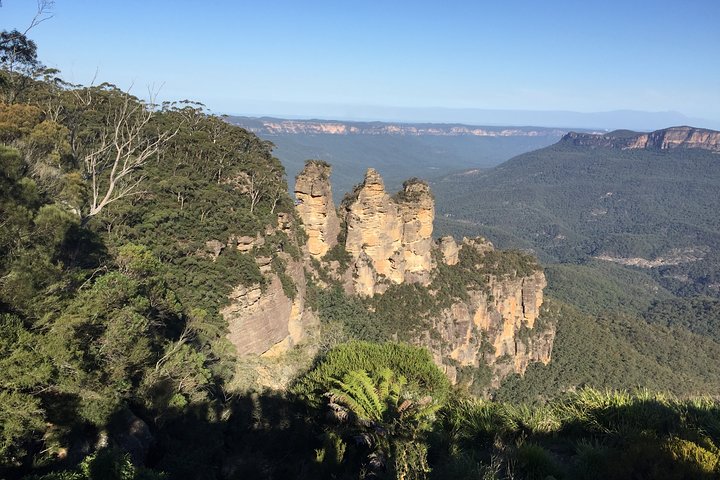
  • The Three Sisters (Echo Point) — The iconic sandstone trio that everyone thinks of when they hear ”Blue Mountains.” Amazing for sunrise or sunset photos, easy lookout access, and steep views over the Jamison Valley; there’s also short walking routes down toward the valley rim if you want to feel the scale up close.
  • Jamison Valley Lookouts — A string of lookouts (Echo Point, Sublime Point, etc.) giving those endless eucalypt-cloaked ridges and the famous blue haze caused by eucalyptus oil. Perfect for panoramic views, cliff-side snaps, and spotting lyrebirds or wedge-tailed eagles on calm mornings.
  • Wentworth Falls & National Pass — One of the best waterfall-plus-cliff-walk combos in the park: tiered falls, rocky platforms, and the National Pass (historic cliff-edge track) that threads along
read more 👉
  • The Three Sisters (Echo Point) — The iconic sandstone trio that everyone thinks of when they hear ”Blue Mountains.” Amazing for sunrise or sunset photos, easy lookout access, and steep views over the Jamison Valley; there’s also short walking routes down toward the valley rim if you want to feel the scale up close.
  • Jamison Valley Lookouts — A string of lookouts (Echo Point, Sublime Point, etc.) giving those endless eucalypt-cloaked ridges and the famous blue haze caused by eucalyptus oil. Perfect for panoramic views, cliff-side snaps, and spotting lyrebirds or wedge-tailed eagles on calm mornings.
  • Wentworth Falls & National Pass — One of the best waterfall-plus-cliff-walk combos in the park: tiered falls, rocky platforms, and the National Pass (historic cliff-edge track) that threads along the escarpment. Bring decent shoes—the steps and roots get technical but the payoff is huge.
  • Grand Canyon Walk (Blackheath) — A lush loop through a rainforested gorge with mossy rock walls, creek crossings and small falls. Cool, shady and very different from the exposed lookouts—great in hot weather and for wildlife/plant lovers.
  • Govetts Leap & Bridal Veil Falls — Dramatic cliff-top views into the Grose Valley and a sheer waterfall dropping into the valley below. The lookout is spectacular at dusk and a launching point for deeper hikes if you want quieter, wilder country.
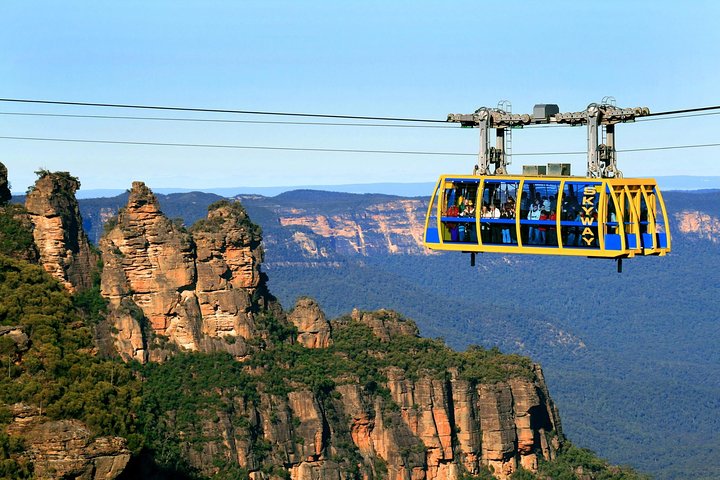
  • Scenic World (Katoomba) — Not a “wild” attraction but unique: take the world’s steepest passenger railway, the Skyway (glass floor), and forest boardwalks for different perspectives of the rainforest and cliff faces without a long hike. Handy if you’ve got limited time or bad knees.
  • Narrow Neck Plateau & Ruined Castle — A proper ridge walk with huge open views, rock-hopping and a chance to feel remote without leaving the park. The Ruined Castle rocks are great for scrambling and sunset — a classic multi-hour day hike for backpackers.
  • Aboriginal rock art & cultural sites (e.g., Red Hands Cave) — Small, ancient art sites and cultural places scattered through the park that connect the landscape to its Indigenous stories. Respect the sites, stick to marked trails, and read the interpretation signs—these places add a deep cultural layer to the scenery.
Spotted a mistake or missing something? Contact us.

Things to do near Blue Mountains

Ratings based on Tripadvisor reviews. When you book through this link, you support our work at no extra cost to you.

🌤️ When to go?Weather, crowds, and seasonal trade-offs


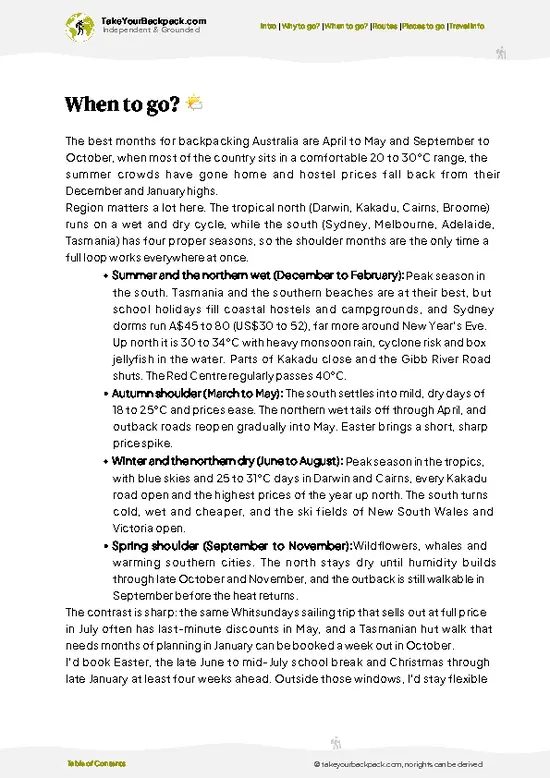
  • Weather: The Blue Mountains have a temperate climate, but winter (June to August) can be cold and wet, with temperatures often dropping below 5°C (41°F). Spring (September to November) and autumn (March to May) offer milder, drier conditions, ideal for hiking without the risk of sudden storms.

  • Temperature: Summer (December to February) temperatures range from 15°C to 25°C (59°F to 77°F), which is comfortable but can feel hotter on exposed trails. Winters are chilly, often between 2°C and 12°C (36°F to 54°F), so pack layers if you go then.

  • Daylight Hours: Longer days in summer provide up to 14 hours of light, perfect for extended treks. Winter days shrink to about 9-10 hours, limiting your hiking window and increasing the need for early starts.

  • Crowds: School holidays and weekends
read more 👉

  • Weather: The Blue Mountains have a temperate climate, but winter (June to August) can be cold and wet, with temperatures often dropping below 5°C (41°F). Spring (September to November) and autumn (March to May) offer milder, drier conditions, ideal for hiking without the risk of sudden storms.

  • Temperature: Summer (December to February) temperatures range from 15°C to 25°C (59°F to 77°F), which is comfortable but can feel hotter on exposed trails. Winters are chilly, often between 2°C and 12°C (36°F to 54°F), so pack layers if you go then.

  • Daylight Hours: Longer days in summer provide up to 14 hours of light, perfect for extended treks. Winter days shrink to about 9-10 hours, limiting your hiking window and increasing the need for early starts.

  • Crowds: School holidays and weekends in summer and autumn attract the most visitors, making popular spots busy. Visiting midweek or in shoulder seasons reduces crowd stress and improves trail access.

  • Seasonal Activities: Autumn brings vibrant foliage, a rare treat in Australia, while spring bursts with wildflowers. Winter offers a chance to see frost and occasional snow on higher ridges, but some trails may be slippery.

  • Price Fluctuations: Accommodation and tours spike in summer and school holidays. Booking in shoulder seasons often nets better deals and availability, letting you stretch your budget further.


Pro-tip: Aim for late spring or early autumn—weather is stable, crowds thin, and you’ll catch the Blue Mountains at their most authentic without paying a premium.


source: climatestotravel.comJANJanuary: highly recommended for travelingFEBFebruary: highly recommended for travelingMARMarch: highly recommended for travelingAPRApril: excellent for travelingMAYMay: excellent for travelingJUNJune: fair for travelingJULJuly: fair for travelingAUGAugust: fair for travelingSEPSeptember: excellent for travelingOCTOctober: excellent for travelingNOVNovember: highly recommended for travelingDECDecember: highly recommended for traveling
australia-national-park-blue-mountains
© Google | Robert Moore

✈️ The backpacker research shortcutAustralia Travel Guide

An offline-friendly backpacking guide with optimized travel routes, ranked highlights, transport advice, and the best areas to stay.
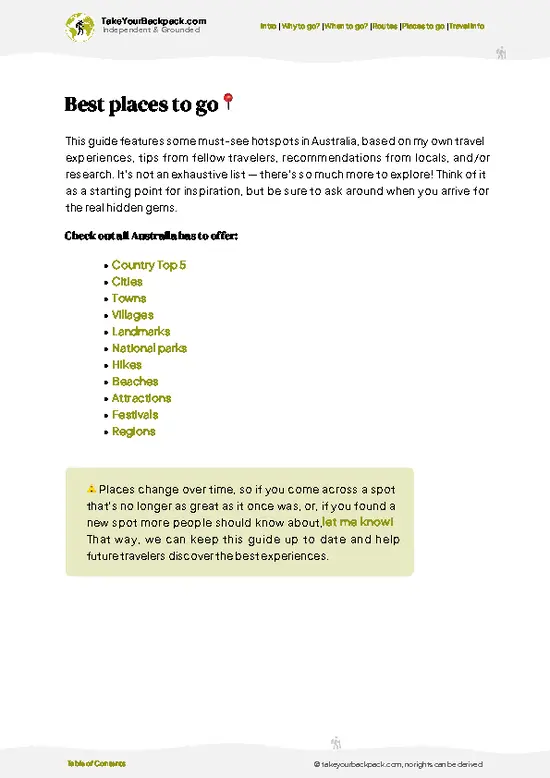
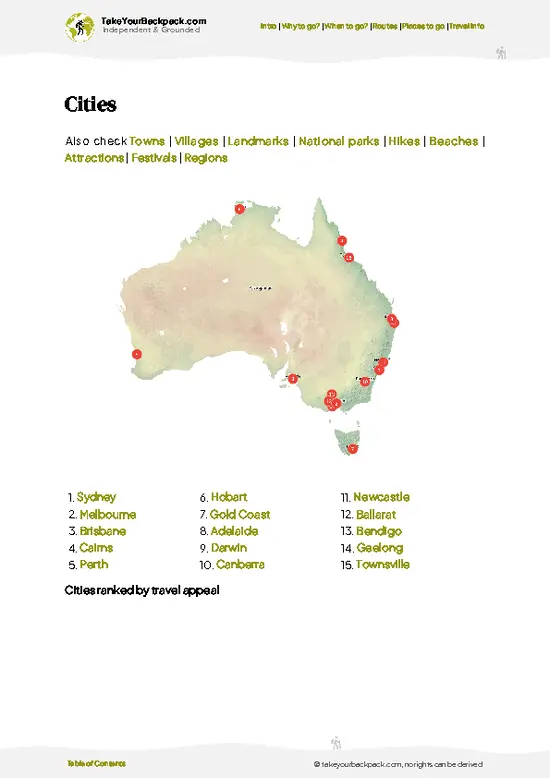
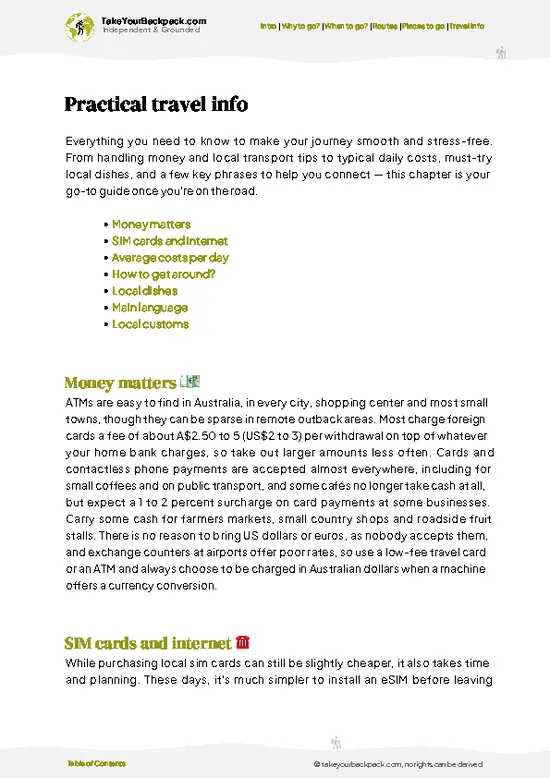
example page 0 from our offline Travel Guide for Australia
example page 1 from our offline Travel Guide for Australia
example page 2 from our offline Travel Guide for Australia
example page 3 from our offline Travel Guide for Australia
example page 4 from our offline Travel Guide for Australia
example page 5 from our offline Travel Guide for Australia
example page 6 from our offline Travel Guide for Australia
example page 7 from our offline Travel Guide for Australia
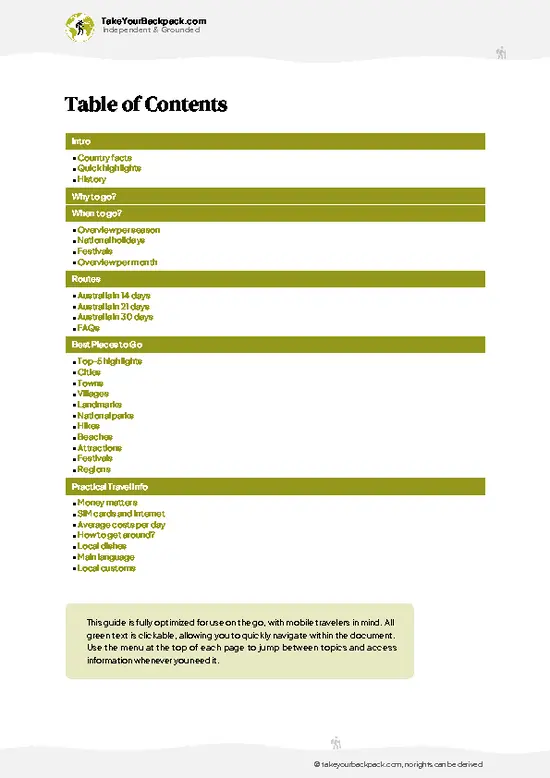
The digital guide (544 pages) contains:
149 highlights, ranked by travel appeal
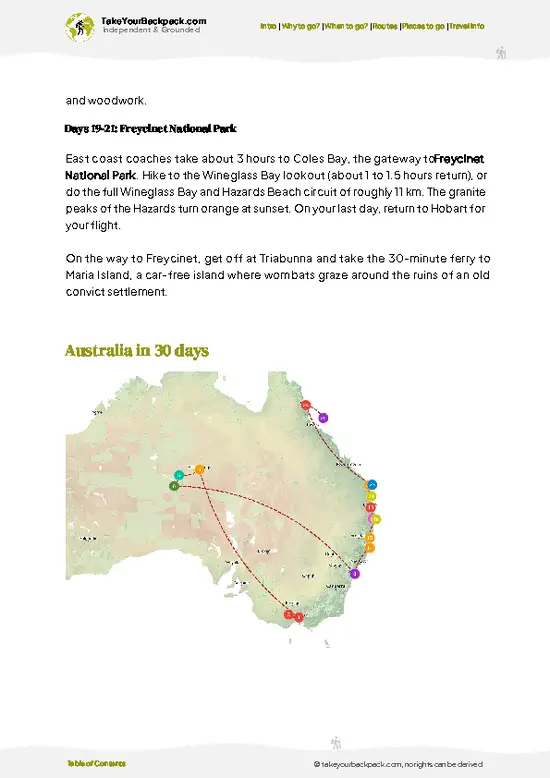
Optimized 14, 21 & 30-day travel routes
Cities, national parks, landmarks, beaches
How to get around
Offline-friendly for travel without Wi-Fi
👉 Click to see all 30+ guide features

📅 Plan smarter in minutes, not weeks
Month by month travel advice
Festivals & national holidays
Budget expectations

🗺️ Go to the right places, skip the overrated ones
Honest pros & cons of destinations
Top hikes, parks & viewpoints
Lesser-known places most travelers miss
Clear “worth it vs skip it” guidance

🛏️ Travel smoothly without rookie mistakes
Best areas to stay
Transport systems explained simply
Common scams & safety advice
SIM cards, money & practical tips

🌍 Understand the country, not just visit it
Culture & traditions
Local customs
Festivals worth planning around
Traveler-friendly historical context
Insights that make places more meaningful

📱 Built for real travel conditions
Fully downloadable PDF
Works completely offline
Optimized for phone use
Useful in remote areas & buses
Everything in one place
Save weeks of stressful planning
Get instant access to your full guide. 30‑day money-back guarantee.
+ Add another guide for just US$7.80

By proceeding you agree to our terms.
Sent to your inbox immediately after payment • 100% Secure Checkout
Best Backpacking Travel Advisor 2025 tourism awardBest Backpacking
Travel Advisor
2025
What others say about Take Your Backpack Guides:
⭐⭐⭐⭐⭐
Fantastic, amazing amount of information!
⭐⭐⭐⭐⭐
My goodness this is amazing, it's what I've been looking for hats off too you!
⭐⭐⭐⭐⭐
I think this is absolutely BRILLIANT
⭐⭐⭐⭐
Very complete and informative. It's still missing places, but I gotta to commend you
⭐⭐⭐⭐⭐
This is truly amazing, thank you, can't wait to explore it with my kids!
⭐⭐⭐⭐⭐
Awesome resource, thank you!
⭐⭐⭐⭐⭐
This is amazing! Can't wait to explore the ones I haven't seen
⭐⭐⭐⭐
I love this! Well done, great idea.
⭐⭐⭐⭐⭐
Thanks for taking the time to make this gem!
⭐⭐⭐⭐⭐
This might be the best website I've ever seen.
⭐⭐⭐⭐⭐
Congratulations, and thank you so much for your work; it's incredibly valuable.
⭐⭐⭐⭐
In all seriousness I think you did a great job pointing out the important spots
⭐⭐⭐⭐⭐
10/10 very good
⭐⭐⭐⭐⭐
As someone who's only just starting to visit regularly this is awesome, thank you.
⭐⭐⭐⭐
Thank you very much! I'm going to visit my dad, it's going to be very useful!
⭐⭐⭐⭐⭐
This is really cool! We'll be travelling for the first time and this definitely come in handy.
⭐⭐⭐⭐⭐
You are now our minister of culture, congratulations 👨‍💼
⭐⭐⭐⭐⭐
Just wanted to tell you that this is a pearl! Going to follow your recommendations.
⭐⭐⭐⭐⭐
This is so cool. I'll definitely be using the resource for my travels soon.
⭐⭐⭐⭐⭐
This is very impressive! Good work.
⭐⭐⭐⭐⭐
This is an amazing and informative site. Very well done!

🛏️ Where to stay?How to pick the right area

For backpackers heading to the Blue Mountains, you’ve got solid options that balance comfort and budget. Inside the national park, the Blue Mountains YHA in Katoomba is a top pick. It’s clean, affordable, and has a communal vibe that’s perfect for meeting fellow travelers. Plus, it’s close to the Three Sisters and other trails, so you can hit the ground running.

If you prefer a bit more character, check out Echo Point Discovery Motel. It’s not a hostel, but it offers budget-friendly rooms with stunning views. You’ll appreciate the short walk to the lookout, especially at sunrise.

For a more … read more 👉
For backpackers heading to the Blue Mountains, you’ve got solid options that balance comfort and budget. Inside the national park, the Blue Mountains YHA in Katoomba is a top pick. It’s clean, affordable, and has a communal vibe that’s perfect for meeting fellow travelers. Plus, it’s close to the Three Sisters and other trails, so you can hit the ground running.

If you prefer a bit more character, check out Echo Point Discovery Motel. It’s not a hostel, but it offers budget-friendly rooms with stunning views. You’ll appreciate the short walk to the lookout, especially at sunrise.

For a more local experience, consider staying in Leura, a charming village just a stone’s throw from Katoomba. It’s quieter, with lovely cafes and shops. The Leura Gardens Resort is a good option, offering a peaceful retreat after a day of hiking.

Avoid the temptation of staying in Sydney. The commute can eat into your adventure time. Focus on these local spots to maximize your energy and budget for the breathtaking experiences that await in the park.

👛 Costs (as of 30 July 2026)Money, prices, and spending tips

Visiting the Blue Mountains National Park in Australia can be a rewarding experience, but it’s essential to budget wisely to avoid surprises.

Entry to the park is free, which is a great start. However, if you’re planning to use the Scenic World attractions, expect to pay around $50 to $60 USD for a day pass. This includes access to the Scenic Railway, Skyway, and Cableway. It’s worth it for the views, but factor this into your overall budget.

If you’re considering guided tours, prices can vary significantly. Group tours typically range from $100 to $200 USD per person, depending on the inclusions like meals or additional activities. Private tours will cost more, often starting around $300 USD.

Accommodation options are plentiful, from budget hostels at about $30 to $50 USD per night to … read more 👉
Visiting the Blue Mountains National Park in Australia can be a rewarding experience, but it’s essential to budget wisely to avoid surprises.

Entry to the park is free, which is a great start. However, if you’re planning to use the Scenic World attractions, expect to pay around $50 to $60 USD for a day pass. This includes access to the Scenic Railway, Skyway, and Cableway. It’s worth it for the views, but factor this into your overall budget.

If you’re considering guided tours, prices can vary significantly. Group tours typically range from $100 to $200 USD per person, depending on the inclusions like meals or additional activities. Private tours will cost more, often starting around $300 USD.

Accommodation options are plentiful, from budget hostels at about $30 to $50 USD per night to mid-range hotels averaging $100 to $200 USD. If you’re looking for something more upscale, expect to pay upwards of $250 USD.

Food costs can also add up. Casual dining might run you $15 to $30 USD per meal, while nicer restaurants could push that to $50 USD or more. If you’re camping, groceries will be your best bet for saving money.

Transportation is another factor. If you’re driving, budget for fuel and parking fees, which can be around $10 to $20 USD per day. Public transport from Sydney is available, with train fares costing about $10 to $15 USD one way.

Keep these costs in mind to ensure you have enough budget for the experiences that truly matter. Planning ahead will help you enjoy the natural beauty without the stress of unexpected expenses.


source: nationalparks.nsw.gov.au
⚠️ Prices can change and everyone travels differently, so take this as a rough guide. Hope it helps you plan your adventure!

🥾 TrailsBest hikes in Blue Mountains national park

The Blue Mountains in Australia are a hiker’s dream, offering stunning vistas, lush forests, and a variety of terrains that cater to all skill levels. You’ll find everything from easy strolls to challenging treks. Wildlife is abundant, with chances to spot kangaroos, wallabies, and a bunch of colorful bird species. Just keep your eyes peeled and your camera ready!

One of the standout trails is the Three Sisters Walk. This is a short but sweet hike that gives you a close-up view of the iconic rock formations. Here are the details:
  • Length: 1 km
  • Estimated Duration: 30 minutes
  • Difficulty Level: Easy
  • Key
read more 👉
The Blue Mountains in Australia are a hiker’s dream, offering stunning vistas, lush forests, and a variety of terrains that cater to all skill levels. You’ll find everything from easy strolls to challenging treks. Wildlife is abundant, with chances to spot kangaroos, wallabies, and a bunch of colorful bird species. Just keep your eyes peeled and your camera ready!

One of the standout trails is the Three Sisters Walk. This is a short but sweet hike that gives you a close-up view of the iconic rock formations. Here are the details:
  • Length: 1 km
  • Estimated Duration: 30 minutes
  • Difficulty Level: Easy
  • Key Features: Stunning views of the Three Sisters, lookout points, and interpretive signs about local Indigenous culture.
  • Terrain: Paved paths with some stairs, suitable for most fitness levels.

If you’re up for something a bit more strenuous, check out the Grand Canyon Track. It’s a bit longer and more rugged, but the scenery is totally worth it:
  • Length: 6.3 km
  • Estimated Duration: 3-4 hours
  • Difficulty Level: Moderate
  • Key Features: Dramatic canyon views, lush rainforest, and waterfalls.
  • Terrain: Steep descents and ascents, with some rocky sections.

Getting to the Blue Mountains is pretty straightforward. You can hop on a train from Sydney, and in about two hours, you’ll be amidst the natural beauty. Just a heads-up—weekends can get crowded, especially around popular spots. As for entrance fees, most trails are free, but some specific areas or attractions might charge a small fee. Always good to check ahead!
⚠️ Hiking info can sometimes be outdated or inaccurate. Before you hit the trail, check the latest conditions with locals. If you do spot anything that's off, I'd love to hear from you, so I can update it for fellow travelers.

🛡️ SafetyScams, Hazards, and Annoyances

The Blue Mountains offer a rewarding experience, but a few practical realities can enhance your adventure. Weather can shift quickly; be ready for sun, rain, or even sudden chills. Layering is key.

The terrain varies, with some trails steep and rocky. Good footwear is essential—think sturdy hiking boots with grip. Navigation can be tricky in dense bushland; a map or GPS is your friend.

Wildlife encounters are common, but keep your distance. Kangaroos and wallabies are curious, but feeding them is a no-go. Respect their space.

First-timers often underestimate the physical demands. Pace yourself, especially on longer hikes. Carry enough water and snacks to keep your energy up.

Overall, the park is well-maintained, making it accessible for most hikers. Just stay aware, prepare thoughtfully, and you’ll enjoy the journey.

Other Australian national parks near Blue Mountains

Explore more nearby:


💡 Not sure where to go next?
Create a personalized itinerary for Australia including Blue Mountains and the places that fit your trip.

Generate my itinerary

👉 Discover all national parks

Or checkout all Australia has to offer (think cities, towns, villages, national parks, hikes, beaches, festivals)
Country photo of Australia

We 💚 feedbackWhat to keep in mind

The Blue Mountains are worth every step for their breathtaking views and the chance to connect with nature on a deeper level. But be prepared: the weather can turn on a dime. One moment it’s sunny, the next you’re caught in a downpour. Pack layers and a solid rain jacket to keep your spirits high. Embrace the unpredictability; it’s part of the adventure. Just don’t let it dampen your enthusiasm.

✈️ When did I visit Australia?
On my trip to New Zealand in 1993, I had a short stop in Australia as well.

✍️ Help improve this page!
The information on this page is based on my own backpacking experience in Australia, supplemented with up-to-date research and feedback from other travelers. Travel details can change, so if you notice anything outdated or incomplete, feel free to let me know.


🙋‍♂️ Give feedback

👋 Meet the founderWho’s Behind Take Your Backpack?

Johan, backpacker and founder of TakeYourBackpackHi, I’m Johan (Netherlands 🇳🇱), the creator of TakeYourBackpack. Over the past decade, I’ve backpacked through 80+ countries across six continents, gaining extensive experience with independent travel, long-term trips, and overland routes.

This site is built on a combination of firsthand travel experience and carefully curated insights from other backpackers. Many guides are based on places I’ve personally visited, while others bring together tips, observations, and practical advice shared by trusted travelers I’ve met along the way.

The goal is to provide realistic, experience-driven guidance — not generic itineraries — so you can explore destinations with better context, clearer expectations, and more confidence.

Get full Australia guide •
Instant download • 149 highlights • Full Offline guide