×

Australia🇦🇺 | national parksCoffin Bay National Parkcoastal dunes, wild beaches, oyster farms | things to do and best time to go

Explore Bunya Mountains National ParkExplore Daintree National Parks

Backpacking in Coffin Bay
👌 Worth visitingnational park ranked #19
By Johan Kruseman 🇳🇱 | Updated July 6, 2026

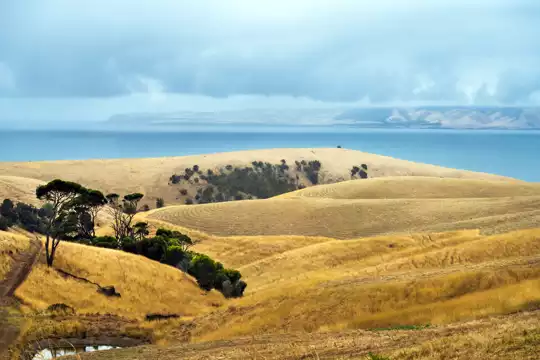
Most people only realize after leaving that Coffin Bay National Park quietly saves you money and stress: once you’re in, the walks, beaches, and camps are your entertainment, not your expenses. It sits on the tip of the Eyre Peninsula in South Australia, a long way from anywhere, which keeps crowds low but makes access tricky without a car. Trails range from short coastal wanders to serious multi-hour slogs through sand and scrub, with big Southern Ocean views, dunes, and emus wandering through camp like they own the place. Camping is basic, exposed, and often windy, and you’ll need to be self-sufficient with water and food, but fees are reasonable compared with more famous parks. Compared with Lincoln National Park across the bay, Coffin Bay feels wilder and more remote, less about viewpoints and more about slow, sandy effort; if you want infrastructure and easy wins, you’ll be happier elsewhere, but if you like quiet, long horizons, and a bit of work for your rewards, it’s worth the detour.

Discover everything you want to know in the 📖 Australia Travel Guide.
Loading the map 🌍
CLICK TO FILTER
cities
towns
villages
landmarks
national parks
hikes
beaches
attractions
festivals
regions
SHOW COUNTRY’S BESTSHOW ALL

✨ Why go?
Ranked #19 national park in Australia
What sets this place apart

Backpackers flock to Coffin Bay National Park for its blend of independent exploration and budget-friendly options. The park offers a range of campsites and nearby hostels, making it easy to stretch your dollars. You’ll find trail variety here, from coastal walks to inland hikes, catering to all skill levels. This isn’t a place for guided tours; it’s designed for self-guided travelers who want to set their own pace. The chance to spot wildlife, like kangaroos and emus, adds to the allure. Just be prepared for the elements—bring enough water and sun protection. By planning wisely, you’ll preserve your energy and budget for the moments that truly matter.
Want to include Coffin Bay National Park in your Australia route?
Create a personalized Australia itinerary that includes Coffin Bay National Park and the places that fit your trip — based on your travel style, budget, and available time. Get your route in seconds.

Generate my trip

💡 HighlightsEssential experiences to have while exploring Coffin Bay

  • Coffin Bay Peninsula — the park’s backbone: a wild, low-lying peninsula of sand dunes, scrub and turquoise bays that feels properly remote. It’s where you get those classic wide-open coastal landscapes that make you slow down and stare.
  • Long white beaches and sand dunes — miles of powdery sand with big dunes to climb and stalky wind-sculpted shapes. Perfect for beach walks, sunset photos and watching waves pound a nearly deserted shore.
  • Limestone cliffs and rocky headlands — jagged limestone outcrops drop into clear water, offering dramatic viewpoints and sheltered coves. Great for short cliff strolls, rock-hopping and scans for dolphins or seals offshore.
  • Mangroves, tidal flats and oyster country — tidal ecosystems full of life: mudflats teem with waders and crabs, mangrove creeks hide
read more 👉
  • Coffin Bay Peninsula — the park’s backbone: a wild, low-lying peninsula of sand dunes, scrub and turquoise bays that feels properly remote. It’s where you get those classic wide-open coastal landscapes that make you slow down and stare.
  • Long white beaches and sand dunes — miles of powdery sand with big dunes to climb and stalky wind-sculpted shapes. Perfect for beach walks, sunset photos and watching waves pound a nearly deserted shore.
  • Limestone cliffs and rocky headlands — jagged limestone outcrops drop into clear water, offering dramatic viewpoints and sheltered coves. Great for short cliff strolls, rock-hopping and scans for dolphins or seals offshore.
  • Mangroves, tidal flats and oyster country — tidal ecosystems full of life: mudflats teem with waders and crabs, mangrove creeks hide baby fish, and nearby oyster leases remind you the water here is seriously rich.
  • Wildlife and birdwatching — kangaroos and emus cruise the dunes, while shorebirds, ospreys and sea birds patrol the coast. It’s one of those places where animals are part of the scenery, not just a check on a list.
  • Walking tracks and lookouts — a mix of short coastal walks and longer bush trails that put you on headlands, behind dunes or at quiet bays. Hike a ridge at sunrise and you’ll understand why so many people camp here.
  • Kayaking, snorkeling and fishing — clear sheltered bays make for easy paddles and good snorkeling; the water’s alive with fish, shells and the occasional dolphin. Bring a snorkel or hire a kayak and get onto the water early.
Spotted a mistake or missing something? Contact us.

Things to do near Coffin Bay National Park

Ratings based on Tripadvisor reviews. When you book through this link, you support our work at no extra cost to you.

🌤️ When to go?Weather, crowds, and seasonal trade-offs


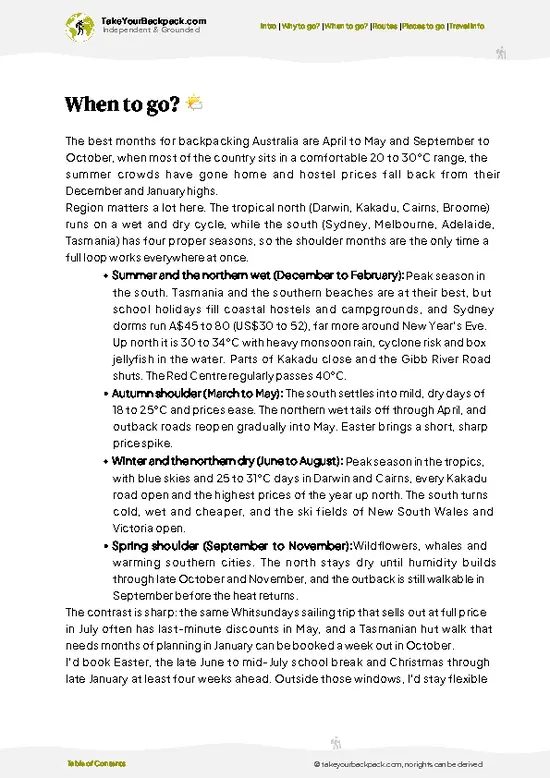
  • Weather: The best window is late spring to early autumn (October to April). Summers can be hot, hitting 30–35°C (86–95°F), which drains energy fast. Winters are mild but can be windy and damp.

  • Temperature: Daytime temps range from 15°C (59°F) in winter to 35°C (95°F) in summer. Nights cool off sharply, so pack layers.

  • Daylight Hours: Longer days in summer mean more hiking time, but the heat can be brutal midday. Winter days are shorter, limiting exploration.

  • Crowds: Peak season is December to February, when locals and tourists flood in. Shoulder seasons offer quieter trails and campsites.

  • Seasonal Activities: Summer is prime for water activities like kayaking and fishing. Spring brings wildflowers but watch for windy days.

  • Price Fluctuations: Accommodation and tours spike in summer.
read more 👉

  • Weather: The best window is late spring to early autumn (October to April). Summers can be hot, hitting 30–35°C (86–95°F), which drains energy fast. Winters are mild but can be windy and damp.

  • Temperature: Daytime temps range from 15°C (59°F) in winter to 35°C (95°F) in summer. Nights cool off sharply, so pack layers.

  • Daylight Hours: Longer days in summer mean more hiking time, but the heat can be brutal midday. Winter days are shorter, limiting exploration.

  • Crowds: Peak season is December to February, when locals and tourists flood in. Shoulder seasons offer quieter trails and campsites.

  • Seasonal Activities: Summer is prime for water activities like kayaking and fishing. Spring brings wildflowers but watch for windy days.

  • Price Fluctuations: Accommodation and tours spike in summer. Booking in shoulder seasons can save money and avoid sold-out spots.


Pro-tip: Aim for late spring or early autumn to dodge the heat and crowds—your energy and wallet will thank you.


source: climatestotravel.comJANJanuary: highly recommended for travelingFEBFebruary: highly recommended for travelingMARMarch: excellent for travelingAPRApril: excellent for travelingMAYMay: good for travelingJUNJune: fair for travelingJULJuly: fair for travelingAUGAugust: good for travelingSEPSeptember: good for travelingOCTOctober: excellent for travelingNOVNovember: excellent for travelingDECDecember: highly recommended for traveling

✈️ The backpacker research shortcutAustralia Travel Guide

An offline-friendly backpacking guide with optimized travel routes, ranked highlights, transport advice, and the best areas to stay.
example page 0 from our offline Travel Guide for Australia
example page 1 from our offline Travel Guide for Australia
example page 2 from our offline Travel Guide for Australia
example page 3 from our offline Travel Guide for Australia
example page 4 from our offline Travel Guide for Australia
example page 5 from our offline Travel Guide for Australia
example page 6 from our offline Travel Guide for Australia
example page 7 from our offline Travel Guide for Australia
The digital guide (544 pages) contains:
149 highlights, ranked by travel appeal
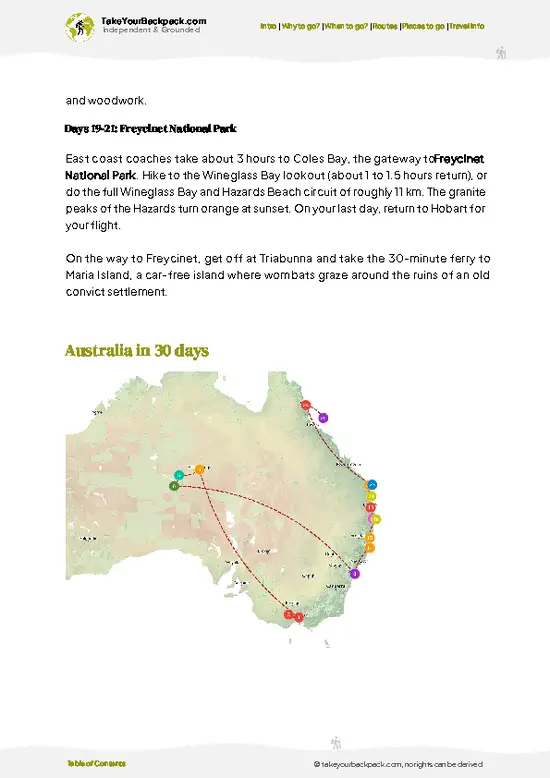
Optimized 14, 21 & 30-day travel routes
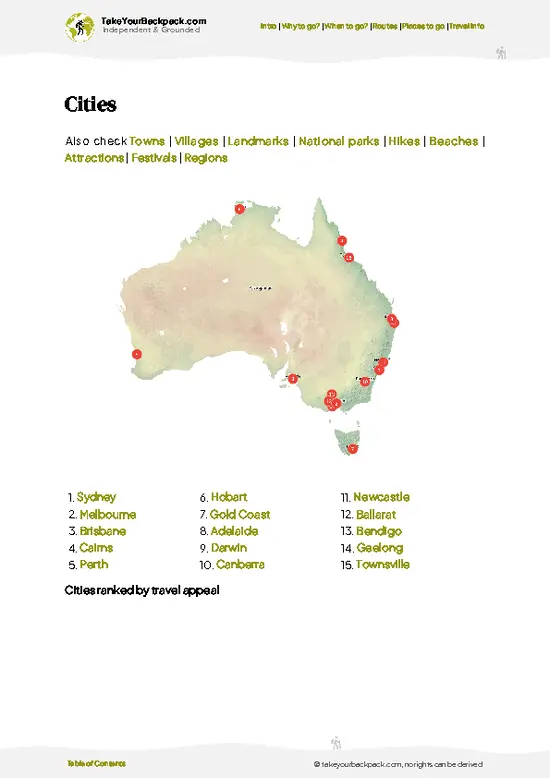
Cities, national parks, landmarks, beaches
How to get around
Offline-friendly for travel without Wi-Fi
👉 Click to see all 30+ guide features

📅 Plan smarter in minutes, not weeks
Month by month travel advice
Festivals & national holidays
Budget expectations

🗺️ Go to the right places, skip the overrated ones
Honest pros & cons of destinations
Top hikes, parks & viewpoints
Lesser-known places most travelers miss
Clear “worth it vs skip it” guidance

🛏️ Travel smoothly without rookie mistakes
Best areas to stay
Transport systems explained simply
Common scams & safety advice
SIM cards, money & practical tips

🌍 Understand the country, not just visit it
Culture & traditions
Local customs
Festivals worth planning around
Traveler-friendly historical context
Insights that make places more meaningful

📱 Built for real travel conditions
Fully downloadable PDF
Works completely offline
Optimized for phone use
Useful in remote areas & buses
Everything in one place
Save weeks of stressful planning
Get instant access to your full guide. 30‑day money-back guarantee.


By proceeding you agree to our terms.
Sent to your inbox immediately after payment • 100% Secure Checkout
Best Backpacking Travel Advisor 2025 tourism awardBest Backpacking
Travel Advisor
2025
What others say about Take Your Backpack Guides:
⭐⭐⭐⭐⭐
Fantastic, amazing amount of information!
⭐⭐⭐⭐⭐
My goodness this is amazing, it's what I've been looking for hats off too you!
⭐⭐⭐⭐⭐
I think this is absolutely BRILLIANT
⭐⭐⭐⭐
Very complete and informative. It's still missing places, but I gotta to commend you
⭐⭐⭐⭐⭐
This is truly amazing, thank you, can't wait to explore it with my kids!
⭐⭐⭐⭐⭐
Awesome resource, thank you!
⭐⭐⭐⭐⭐
This is amazing! Can't wait to explore the ones I haven't seen
⭐⭐⭐⭐
I love this! Well done, great idea.
⭐⭐⭐⭐⭐
Thanks for taking the time to make this gem!
⭐⭐⭐⭐⭐
This might be the best website I've ever seen.
⭐⭐⭐⭐⭐
Congratulations, and thank you so much for your work; it's incredibly valuable.
⭐⭐⭐⭐
In all seriousness I think you did a great job pointing out the important spots
⭐⭐⭐⭐⭐
10/10 very good
⭐⭐⭐⭐⭐
As someone who's only just starting to visit regularly this is awesome, thank you.
⭐⭐⭐⭐
Thank you very much! I'm going to visit my dad, it's going to be very useful!
⭐⭐⭐⭐⭐
This is really cool! We'll be travelling for the first time and this definitely come in handy.
⭐⭐⭐⭐⭐
You are now our minister of culture, congratulations 👨‍💼
⭐⭐⭐⭐⭐
Just wanted to tell you that this is a pearl! Going to follow your recommendations.
⭐⭐⭐⭐⭐
This is so cool. I'll definitely be using the resource for my travels soon.
⭐⭐⭐⭐⭐
This is very impressive! Good work.
⭐⭐⭐⭐⭐
This is an amazing and informative site. Very well done!

🛏️ Where to stay?How to pick the right area

Coffin Bay National Park offers limited accommodation options directly within its boundaries. The park is primarily about the wild landscapes and outdoor experiences, not luxury stays. For backpackers, the best bet is to camp at the park’s designated campgrounds, like Yangie Bay. These spots provide basic amenities and a chance to immerse yourself in nature.

If you prefer more comfort or amenities, head to Coffin Bay township, just a short drive away. Here, you’ll find budget-friendly motels and holiday parks. Port Lincoln, about 30 minutes from the park, has a wider range of accommodations, … read more 👉
Coffin Bay National Park offers limited accommodation options directly within its boundaries. The park is primarily about the wild landscapes and outdoor experiences, not luxury stays. For backpackers, the best bet is to camp at the park’s designated campgrounds, like Yangie Bay. These spots provide basic amenities and a chance to immerse yourself in nature.

If you prefer more comfort or amenities, head to Coffin Bay township, just a short drive away. Here, you’ll find budget-friendly motels and holiday parks. Port Lincoln, about 30 minutes from the park, has a wider range of accommodations, from hostels to hotels. Just keep in mind that during peak seasons, prices can spike, so booking ahead is wise. Prioritize your budget for experiences, not just a place to sleep.

👛 Costs (as of 2 June 2026)How expensive it really is

Coffin Bay National Park in Australia offers a mix of experiences, but be prepared for some costs that can sneak up on you.

Entry fees are straightforward. A vehicle permit typically costs around AUD 12 (about USD 8) for a day. If you plan to stay longer, consider a multi-day pass, which can be around AUD 30 (USD 20).

Camping is another aspect to factor in. Campsites within the park usually charge between AUD 15 to AUD 25 (USD 10 to USD 17) per night. Some sites might require booking in advance, especially during peak seasons, so check ahead to avoid disappointment.

Food and supplies are essential to budget for. There are limited facilities in the park, so stock up on groceries before you arrive. Expect to pay higher prices at local shops if you need to buy anything on-site.

Fuel costs … read more 👉
Coffin Bay National Park in Australia offers a mix of experiences, but be prepared for some costs that can sneak up on you.

Entry fees are straightforward. A vehicle permit typically costs around AUD 12 (about USD 8) for a day. If you plan to stay longer, consider a multi-day pass, which can be around AUD 30 (USD 20).

Camping is another aspect to factor in. Campsites within the park usually charge between AUD 15 to AUD 25 (USD 10 to USD 17) per night. Some sites might require booking in advance, especially during peak seasons, so check ahead to avoid disappointment.

Food and supplies are essential to budget for. There are limited facilities in the park, so stock up on groceries before you arrive. Expect to pay higher prices at local shops if you need to buy anything on-site.

Fuel costs can add up too. The nearest fuel stations are outside the park, so fill up before heading in. Prices can vary, but expect to pay around AUD 1.50 to AUD 2.00 (USD 1.00 to USD 1.35) per liter.

Lastly, activities like guided tours or boat rentals can range significantly. A guided tour might set you back AUD 100 to AUD 200 (USD 67 to USD 134) per person, depending on the length and inclusions.

Plan your budget wisely. Knowing these costs helps you focus on enjoying the park without unexpected financial stress.


source: parks.sa.gov.au
⚠️ Prices can change and everyone travels differently, so take this as a rough guide. Hope it helps you plan your adventure!

🥾 TrailsDiscover Coffin Bay's top trails and natural wonders

Coffin Bay National Park is a gem for anyone looking to soak in some stunning coastal scenery while getting a good hike in. The park features a mix of rugged cliffs, sandy beaches, and beautiful estuaries, making it a feast for the eyes and a playground for outdoor enthusiasts. Wildlife is abundant here, so keep your eyes peeled for kangaroos, emus, and a variety of bird species flitting about.

One of the standout trails is the Yanerbie Beach Walk. Here are the details:
  • Length: 4 km
  • Estimated Duration: 1.5 hours
  • Difficulty Level: Easy
  • Key Features: Stunning coastal views, diverse birdlife, and the
read more 👉
Coffin Bay National Park is a gem for anyone looking to soak in some stunning coastal scenery while getting a good hike in. The park features a mix of rugged cliffs, sandy beaches, and beautiful estuaries, making it a feast for the eyes and a playground for outdoor enthusiasts. Wildlife is abundant here, so keep your eyes peeled for kangaroos, emus, and a variety of bird species flitting about.

One of the standout trails is the Yanerbie Beach Walk. Here are the details:
  • Length: 4 km
  • Estimated Duration: 1.5 hours
  • Difficulty Level: Easy
  • Key Features: Stunning coastal views, diverse birdlife, and the chance to spot marine animals.
  • Terrain: Mostly flat with some sandy stretches, making it accessible for most hikers.

Another great option is the Glen-Forest Walk:
  • Length: 6 km
  • Estimated Duration: 2 hours
  • Difficulty Level: Moderate
  • Key Features: Unique coastal vegetation and panoramic views of the bay.
  • Terrain: A mix of sandy paths and some rocky areas, so a bit of care is needed.

Getting to the park is pretty straightforward. While public transport options can be limited, you can usually find a bus from Port Lincoln that will drop you off nearby. The park doesn’t tend to get overly crowded, especially if you’re willing to explore some of the less-traveled trails. As for the entrance fee, it’s usually around AUD 11 per vehicle, which is pretty reasonable considering the breathtaking views you’ll get. Just be sure to bring some water and snacks, and you’re all set for a great day out!
⚠️ Hiking info can sometimes be outdated or inaccurate. Before you hit the trail, check the latest conditions with locals. If you do spot anything that's off, I'd love to hear from you, so I can update it for fellow travelers.

🛡️ SafetyStaying Safe: What Travelers Should Know

Coffin Bay National Park is generally straightforward for backpackers, but a few practical tips can enhance your experience. Weather can shift quickly, so pack layers and be ready for sun or sudden rain. The terrain is mostly manageable, but some trails can be steep or rocky, so good footwear is essential.

Wildlife is part of the charm here; keep a respectful distance from kangaroos and emus. They’re curious but can be unpredictable. Always carry enough water, as some areas lack reliable sources. Timing your hikes for early morning or late afternoon can help you avoid the heat and crowds, allowing you to enjoy the park’s serene beauty.

Other Australian national parks near Coffin Bay

Explore more nearby:


💡 Not sure where to go next?
Create a personalized itinerary for Australia including Coffin Bay and the places that fit your trip.

Generate my itinerary

👉 Discover all national parks

Or checkout all Australia has to offer (think cities, towns, villages, national parks, hikes, beaches, festivals)
Country photo of Australia

We 💚 feedbackSumming up the experience

Coffin Bay National Park is a treasure for its raw coastal beauty and the chance to spot wildlife in their natural habitat. But be prepared: the weather can shift quickly, and that can dampen your plans. Embrace the unpredictability, and you’ll find the park’s charm shines brightest when you adapt and explore.

✈️ When did I visit Australia?
On my trip to New Zealand in 1993, I had a short stop in Australia as well.

✍️ Help improve this page!
The information on this page is based on my own backpacking experience in Australia, supplemented with up-to-date research and feedback from other travelers. Travel details can change, so if you notice anything outdated or incomplete, feel free to let me know.


🙋‍♂️ Give feedback

👋 Meet the founderWho’s Behind Take Your Backpack?

Johan, backpacker and founder of TakeYourBackpackHi, I’m Johan (Netherlands 🇳🇱), the creator of TakeYourBackpack. Over the past decade, I’ve backpacked through 80+ countries across six continents, gaining extensive experience with independent travel, long-term trips, and overland routes.

This site is built on a combination of firsthand travel experience and carefully curated insights from other backpackers. Many guides are based on places I’ve personally visited, while others bring together tips, observations, and practical advice shared by trusted travelers I’ve met along the way.

The goal is to provide realistic, experience-driven guidance — not generic itineraries — so you can explore destinations with better context, clearer expectations, and more confidence.

Get full Australia guide •
Instant download • 149 highlights • Full Offline guide