×

Australia🇦🇺 | national parksFlinders Ranges National ParkWilpena Pound, St Mary Peak, rock-wallabies, Adnyamathanha rock art | things to do and best time to go

Explore Daintree National ParkExplore Gawler Ranges National Park

Backpacking in Flinders Ranges
👍 Recommendednational park ranked #13
By Johan Kruseman 🇳🇱 | Updated October 15, 2026

Flinders Ranges National Park has no mobile coverage across most of its interior, so the map on your phone is decoration. It sits in South Australia, roughly 450 kilometers north of Adelaide, where red quartzite ridges rise out of saltbush plains. Wilpena Pound is the headline act, with yellow-footed rock-wallabies, emus and wedge-tailed eagles as supporting cast. Roads are mostly sealed, but crowds thin fast once you leave the Wilpena area. My mistake was trusting a dirt-road shortcut on a map; it ended at a locked station gate, and I now ask at the visitor center first because track conditions change. Best for self-sufficient walkers who like space; skip it if you need nightlife.

Discover everything you want to know in the 📖 Australia Travel Guide.


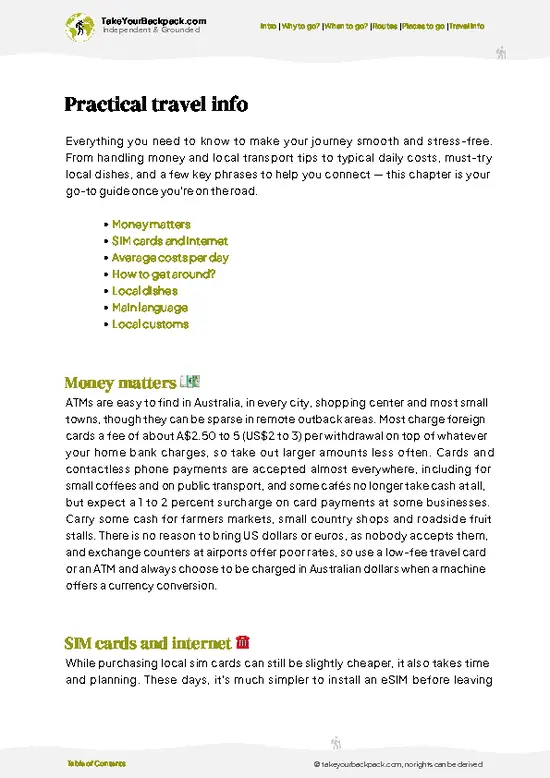
example page 0 from our offline Travel Guide for Australia
example page 1 from our offline Travel Guide for Australia
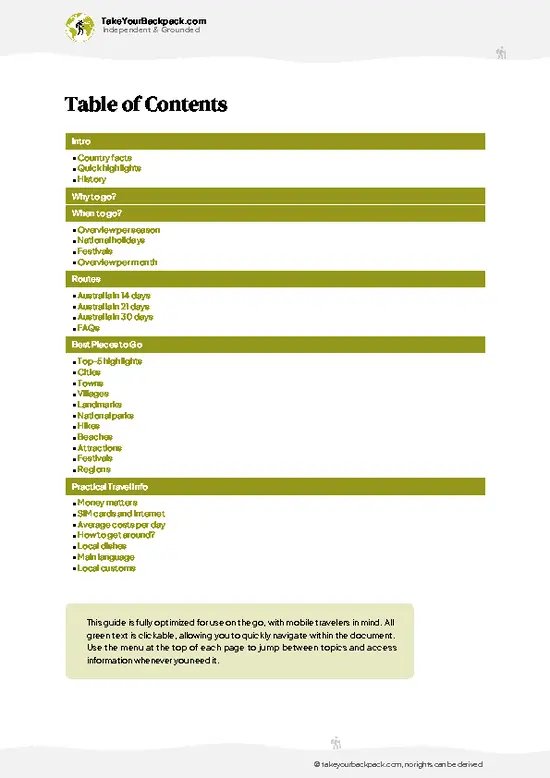
example page 2 from our offline Travel Guide for Australia
example page 3 from our offline Travel Guide for Australia
example page 4 from our offline Travel Guide for Australia
example page 5 from our offline Travel Guide for Australia
example page 6 from our offline Travel Guide for Australia
example page 7 from our offline Travel Guide for Australia
Loading the map 🌍
CLICK TO FILTER
cities
towns
villages
landmarks
national parks
hikes
beaches
attractions
festivals
regions
SHOW COUNTRY’S BESTSHOW ALL

✨ Why go?
Ranked #13 national park in Australia
Reasons people choose to explore here

Backpackers come here because the park rewards going it alone. Rangers at the visitor center hand out current track information, and the trail network means you can string together a half-day stroll or a multi-day push without booking a single tour. Wilpena Pound, a natural amphitheater about 17 kilometers long, gives you ridge walks with views that tour buses never reach. The Heysen Trail, Australia’s long-distance walking route through South Australia, cuts through the region, so you can dip into a section for a few days or just take a taste. Wildlife is dependable, with rock-wallabies on the gorges and kangaroos grazing at dusk. Self-guided travelers get the better deal, since the best moments are quiet ones that no itinerary schedules.

💡 HighlightsMust-see experiences and standout moments

  1. Wilpena Pound: The ringed bowl of ranges is the park’s signature, a vast natural basin best understood from above, and it anchors most walks.
  2. St Mary Peak: At about 1,170 meters it is the highest point in the ranges, with a steep, rocky climb and a 360-degree payoff of pound and plains.
  3. Wangara Lookout: A shorter walk to an elevated view over the pound’s interior, good for those saving legs.
  4. Hills Homestead: The restored Hill family home, built in the early 1900s, shows how settlers farmed inside the pound, and a short trail leads there.
  5. Brachina Gorge Geological Trail: A drive through layered rock walls with signs marking hundreds of millions of years of geology, and a reliable place to spot yellow-footed rock-wallabies.
  6. Bunyeroo Gorge and Razorback Lookout: A rutted drive through river red gums
… read more 👉
  1. Wilpena Pound: The ringed bowl of ranges is the park’s signature, a vast natural basin best understood from above, and it anchors most walks.
  2. St Mary Peak: At about 1,170 meters it is the highest point in the ranges, with a steep, rocky climb and a 360-degree payoff of pound and plains.
  3. Wangara Lookout: A shorter walk to an elevated view over the pound’s interior, good for those saving legs.
  4. Hills Homestead: The restored Hill family home, built in the early 1900s, shows how settlers farmed inside the pound, and a short trail leads there.
  5. Brachina Gorge Geological Trail: A drive through layered rock walls with signs marking hundreds of millions of years of geology, and a reliable place to spot yellow-footed rock-wallabies.
  6. Bunyeroo Gorge and Razorback Lookout: A rutted drive through river red gums ends at a lookout over the ridges, glowing red near sunset.
  7. Sacred Canyon: Carved rock art from the Adnyamathanha people lines the walls of this narrow gorge, a short, gentle walk that carries real cultural weight.
Allow three to four days to see the lot, or two if you skip St Mary Peak.
Spotted a mistake or missing something? Contact us.

🌤️ When to go?When to go for the best experience

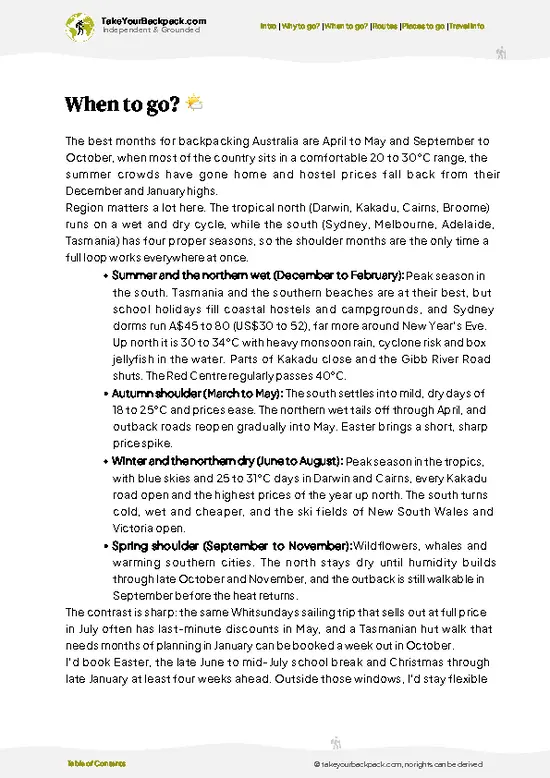
May to September is the window for hiking Flinders Ranges National Park, when daytime highs sit around 15 to 22°C (59 to 72°F) and nights can dip to 3 to 5°C (37 to 41°F).
  • Winter (June to August): Crisp, clear days and about 10 hours of daylight. Frost at dawn, occasional rain, and the best conditions for Wilpena Pound and St Mary Peak. Accommodation is busiest and priciest during school holidays.
  • Spring (September to October): Wildflowers appear after good rain, temperatures reach 20 to 28°C (68 to 82°F), and flies start building.
  • Summer (December to February): Highs of 35 to 42°C (95 to 108°F), with total fire bans common. Walking closes down by midday, but prices drop and crowds vanish.
  • Autumn (March to April): Warm days of 25 to 30°C (77 to 86°F), cooling nights, and easing prices.
Book Easter … read more 👉
May to September is the window for hiking Flinders Ranges National Park, when daytime highs sit around 15 to 22°C (59 to 72°F) and nights can dip to 3 to 5°C (37 to 41°F).
  • Winter (June to August): Crisp, clear days and about 10 hours of daylight. Frost at dawn, occasional rain, and the best conditions for Wilpena Pound and St Mary Peak. Accommodation is busiest and priciest during school holidays.
  • Spring (September to October): Wildflowers appear after good rain, temperatures reach 20 to 28°C (68 to 82°F), and flies start building.
  • Summer (December to February): Highs of 35 to 42°C (95 to 108°F), with total fire bans common. Walking closes down by midday, but prices drop and crowds vanish.
  • Autumn (March to April): Warm days of 25 to 30°C (77 to 86°F), cooling nights, and easing prices.
Book Easter and July school-holiday stays several months ahead, since options are few.


source: climatestotravel.comJANJanuary: below average for travelingFEBFebruary: below average for travelingMARMarch: good for travelingAPRApril: excellent for travelingMAYMay: excellent for travelingJUNJune: highly recommended for travelingJULJuly: highly recommended for travelingAUGAugust: highly recommended for travelingSEPSeptember: excellent for travelingOCTOctober: good for travelingNOVNovember: fair for travelingDECDecember: below average for traveling

✈️ The backpacker research shortcutAustralia Travel Guide

An offline-friendly backpacking guide with optimized travel routes, ranked highlights, transport advice, and the best areas to stay.
example page 0 from our offline Travel Guide for Australia
example page 1 from our offline Travel Guide for Australia
example page 2 from our offline Travel Guide for Australia
example page 3 from our offline Travel Guide for Australia
example page 4 from our offline Travel Guide for Australia
example page 5 from our offline Travel Guide for Australia
example page 6 from our offline Travel Guide for Australia
example page 7 from our offline Travel Guide for Australia
The digital guide (414 pages) contains:
✅ 143 highlights, ranked by travel appeal
✅ Optimized 14, 21 & 30-day travel routes
✅ Cities, national parks, landmarks, beaches
✅ How to get around
✅ Offline-friendly for travel without Wi-Fi
👉 Click to see all 30+ guide features

📅 Plan smarter in minutes, not weeks
✅ Month by month travel advice
✅ Festivals & national holidays
✅ Budget expectations

🗺️ Go to the right places, skip the overrated ones
✅ Honest pros & cons of destinations
✅ Top hikes, parks & viewpoints
✅ Lesser-known places most travelers miss
✅ Clear “worth it vs skip it” guidance

🛏️ Travel smoothly without rookie mistakes
✅ Best areas to stay
✅ Transport systems explained simply
✅ Common scams & safety advice
✅ SIM cards, money & practical tips

🌍 Understand the country, not just visit it
✅ Culture & traditions
✅ Local customs
✅ Festivals worth planning around
✅ Traveler-friendly historical context
✅ Insights that make places more meaningful

📱 Built for real travel conditions
✅ Fully downloadable PDF
✅ Works completely offline
✅ Optimized for phone use
✅ Useful in remote areas & buses
✅ Everything in one place
Stop searching, start planning
Get instant access to your full guide. 30‑day money-back guarantee.
+ Add another guide for just

By proceeding you agree to our terms.
Sent to your inbox immediately after payment • 100% Secure Checkout
Best Backpacking Travel Advisor 2025 tourism awardBest Backpacking
Travel Advisor
2025
What others say about Take Your Backpack Guides:
⭐⭐⭐⭐⭐
Fantastic, amazing amount of information!
⭐⭐⭐⭐⭐
My goodness this is amazing, it's what I've been looking for hats off too you!
⭐⭐⭐⭐⭐
I think this is absolutely BRILLIANT
⭐⭐⭐⭐
Very complete and informative. It's still missing places, but I gotta to commend you
⭐⭐⭐⭐⭐
This is truly amazing, thank you, can't wait to explore it with my kids!
⭐⭐⭐⭐⭐
Awesome resource, thank you!
⭐⭐⭐⭐⭐
This is amazing! Can't wait to explore the ones I haven't seen
⭐⭐⭐⭐
I love this! Well done, great idea.
⭐⭐⭐⭐⭐
Thanks for taking the time to make this gem!
⭐⭐⭐⭐⭐
This might be the best website I've ever seen.
⭐⭐⭐⭐⭐
Congratulations, and thank you so much for your work; it's incredibly valuable.
⭐⭐⭐⭐
In all seriousness I think you did a great job pointing out the important spots
⭐⭐⭐⭐⭐
10/10 very good
⭐⭐⭐⭐⭐
As someone who's only just starting to visit regularly this is awesome, thank you.
⭐⭐⭐⭐
Thank you very much! I'm going to visit my dad, it's going to be very useful!
⭐⭐⭐⭐⭐
This is really cool! We'll be travelling for the first time and this definitely come in handy.
⭐⭐⭐⭐⭐
You are now our minister of culture, congratulations 👨‍💼
⭐⭐⭐⭐⭐
Just wanted to tell you that this is a pearl! Going to follow your recommendations.
⭐⭐⭐⭐⭐
This is so cool. I'll definitely be using the resource for my travels soon.
⭐⭐⭐⭐⭐
This is very impressive! Good work.
⭐⭐⭐⭐⭐
This is an amazing and informative site. Very well done!

🛏️ Where to stay?Choosing the right base

Wilpena Pound Resort, at the park’s center, is the main place to stay inside Flinders Ranges National Park, with a campground (powered and unpowered sites), glamping-style safari tents, motel rooms and a small store. Most hikes start nearby, so you can walk to the Wilpena Pound trailheads. Bush camping is also available in the park at Wilpena, Aroona and Trezona, and at Brachina Gorge and Wilkawillina Gorge, where basic sites need a pre-booked permit through the park system. Fuel and supplies are limited, so stock up before arriving.
Outside the park, Hawker (about 55 km or 34 miles south) has … read more 👉
Wilpena Pound Resort, at the park’s center, is the main place to stay inside Flinders Ranges National Park, with a campground (powered and unpowered sites), glamping-style safari tents, motel rooms and a small store. Most hikes start nearby, so you can walk to the Wilpena Pound trailheads. Bush camping is also available in the park at Wilpena, Aroona and Trezona, and at Brachina Gorge and Wilkawillina Gorge, where basic sites need a pre-booked permit through the park system. Fuel and supplies are limited, so stock up before arriving.
Outside the park, Hawker (about 55 km or 34 miles south) has a caravan park, a pub with rooms and fuel. Rawnsley Park Station, just south of Wilpena, offers cabins, camping and a restaurant with views over the Pound. Quorn and Port Augusta are bigger bases for supplies and have more hostels and motels, though both lie a long drive away.

👛 Costs (as of 15 October 2026)Travel costs and budget guide for Flinders Ranges

A realistic daily budget for Flinders Ranges National Park is about US$75 to 95 with camping and self-catering, and the total below uses the high-season figures.
CategoryBudget RangeLocal Reality
Park entryUS$7 to 10 per vehicle per dayFees are paid per vehicle through the park’s booking system or at Wilpena Pound; walkers without a vehicle at Wilpena still generally pay a day or overnight fee.
Camping (high season)US$15 to 35 per nightBush camping in the park costs less than powered sites at Wilpena Pound Resort. Book ahead for April to October.
Budget accommodation (low season)US$10 to 25 per nightSummer is quiet and cheaper, but heat makes camping unpleasant.
Local transportUS$25 to 40 per dayThere is no public transport, so costs mean fuel for a rental or own car, or shuttle fares when available.
… read more 👉
A realistic daily budget for Flinders Ranges National Park is about US$75 to 95 with camping and self-catering, and the total below uses the high-season figures.
CategoryBudget RangeLocal Reality
Park entryUS$7 to 10 per vehicle per dayFees are paid per vehicle through the park’s booking system or at Wilpena Pound; walkers without a vehicle at Wilpena still generally pay a day or overnight fee.
Camping (high season)US$15 to 35 per nightBush camping in the park costs less than powered sites at Wilpena Pound Resort. Book ahead for April to October.
Budget accommodation (low season)US$10 to 25 per nightSummer is quiet and cheaper, but heat makes camping unpleasant.
Local transportUS$25 to 40 per dayThere is no public transport, so costs mean fuel for a rental or own car, or shuttle fares when available. Distances between Hawker and Blinman add up.
Food and suppliesUS$25 to 35 per dayStock up in Hawker or Port Augusta, as prices are higher at the resort store and the Prairie Hotel. Pay in Australian dollars.
Total Daily BudgetUS$75 to 95Based on high-season camping, entry, fuel and self-catered food.


source: parks.sa.gov.au
⚠️ Prices can change and everyone travels differently, so take this as a rough guide. Hope it helps you plan your adventure!

🥾 TrailsScenic routes and wildlife spotting in Flinders Ranges

The hiking here runs through the ancient, folded quartzite of the Heysen Range, with rocky ridgelines, dry creek beds lined with river red gums, and a good chance of seeing yellow-footed rock-wallabies, emus and wedge-tailed eagles. Tracks are mostly rough and exposed, with little shade.
  • Wilpena Pound Lookout Walk: about 8 km return, around 3 hours, moderate. It follows the Wilpena Creek track through cypress pine and red gum to Hills Homestead, then climbs to a lookout over the Pound's bowl.
  • Mount Ohlssen Bagge Trail: about 6.4 km return, 3 to 4 hours, moderate to hard. A steady climb with loose
… read more 👉
The hiking here runs through the ancient, folded quartzite of the Heysen Range, with rocky ridgelines, dry creek beds lined with river red gums, and a good chance of seeing yellow-footed rock-wallabies, emus and wedge-tailed eagles. Tracks are mostly rough and exposed, with little shade.
  • Wilpena Pound Lookout Walk: about 8 km return, around 3 hours, moderate. It follows the Wilpena Creek track through cypress pine and red gum to Hills Homestead, then climbs to a lookout over the Pound's bowl.
  • Mount Ohlssen Bagge Trail: about 6.4 km return, 3 to 4 hours, moderate to hard. A steady climb with loose stone gives sweeping views over the Pound and out across the plains.
  • St Mary Peak: about 14 to 15 km return, 6 to 7 hours, hard. This is the highest point in the ranges at 1,171 meters, with a steep, rocky final section and open summit views. Start early.
  • Brachina Gorge Geological Trail: a short drive with roadside stops rather than a walk, passing rock layers hundreds of millions of years old. Rock-wallabies are often seen on the cliffs.
  • Heysen Trail: this long-distance route crosses the park. Many walkers tackle sections lasting a few days, carrying all water and food.
The park sits a long drive north of Adelaide, and there is no regular public transport to Wilpena Pound, so most visitors arrive by car or on a tour. Roads inside the park include gravel sections that can close after rain. Entry is charged per vehicle, and there are separate fees for camping and some activities. Crowds stay modest outside school holidays, and walks near Wilpena are the busiest. Carry plenty of water and check for fire bans or trail closures before setting off.
⚠️ Hiking info can sometimes be outdated or inaccurate. Before you hit the trail, check the latest conditions with locals. If you do spot anything that's off, I'd love to hear from you, so I can update it for fellow travelers.

🛡️ SafetyTraveler Safety Guide

The ranges are well managed and straightforward, but heat and remoteness are what catch people out. Summer temperatures regularly top 40°C (104°F), so walk early or not at all, and carry at least 3 liters of water per person since little is available on trails. St Mary Peak is steep and rocky with loose footing in places, so allow 6 to 7 hours return. Mobile coverage is patchy, so leave your plans with someone and sign in for longer walks. Snakes are present in warm months; stay on tracks and wear closed shoes. Kangaroos and emus are common but keep your distance. Gravel roads can turn slick after rain, and flash flooding may close creek crossings.

FAQTraveler FAQ

Three days is a comfortable minimum for Flinders Ranges National Park. That gives you one day for the Wilpena Pound and St Mary Peak hikes, one for the Brachina Gorge geology drive and the Bunyeroo Valley, and one for Arkaroola-style quieter walks such as Aroona Valley. Hikers tackling the multiday Heysen Trail sections need four to six days.
Not easily, because there is no public transport to the park. The nearest bus and train hubs are Port Augusta and Quorn, roughly 3 hours by road from Wilpena Pound, and Hawker is about 55 km away. Some operators run multiday tours from Adelaide (about 5 hours' drive), but most backpackers hire a car or join a guided trip.
Yes, a park entry fee applies per vehicle, around AU$12 to 15 per day, and it is usually paid at the Wilpena Pound visitor center or online. Camping needs a booking and costs about AU$15 to 40 per site per night, depending on the campground. Walking permits are not required for day hikes, but bush camping and some long-distance routes need a pre-booked permit.
⚠️ Things can change over time, so always validate details locally before you go.

Other Australian national parks near Flinders Ranges

Explore more nearby:


💡 Not sure where to go next?
Create a personalized itinerary for Australia including Flinders Ranges and the places that fit your trip.

Generate my itinerary

👉 Discover all national parks

Or checkout all Australia has to offer (think cities, towns, villages, national parks, hikes, beaches, festivals)
Country photo of Australia

We 💚 feedbackWhat to keep in mind

Most visitors rush past the gorge drives to hit Wilpena, but the quiet creek beds along Brachina and Bunyeroo are where the wallabies hang out. I would carry extra water and spend a full afternoon there, parked and still, instead of ticking off one more lookout.

✈️ When did I visit Australia?
On my trip to New Zealand in 1993, I had a short stop in Australia as well.

✍️ Help improve this page!
The information on this page is based on my own backpacking experience in Australia, supplemented with up-to-date research and feedback from other travelers. Travel details can change, so if you notice anything outdated or incomplete, feel free to let me know.


🙋‍♂️ Give feedback

👋 Meet the founderWho’s Behind Take Your Backpack?

Johan, backpacker and founder of TakeYourBackpackHi, I’m Johan (Netherlands 🇳🇱), the creator of TakeYourBackpack. Over the past 3 decades, I’ve backpacked through 90+ countries across six continents, gaining extensive experience with independent travel, long-term trips, and overland routes.

This site is built on a combination of firsthand travel experience and carefully curated insights from other backpackers. Many guides are based on places I’ve personally visited, while others bring together tips, observations, and practical advice shared by trusted travelers I’ve met along the way.

The goal is to provide realistic, experience-driven guidance — not generic itineraries — so you can explore destinations with better context, clearer expectations, and more confidence.