×

Australia🇦🇺 | attractionsGreat Barrier Reef Marine tourism experiencesCoral reefs, snorkeling tours, dive sites, marine biodiversity | things to do and best time to go

Explore Taronga ZooExplore MONA

Backpacking in Great Barrier Reef Marine tourism experiences
By Johan Kruseman 🇳🇱 | Updated October 15, 2026

Let’s kill the postcard fantasy: the Great Barrier Reef isn’t a private aquarium where you’ll float alone with sea turtles and neon fish. The reality? You’re sharing the world’s largest coral system—off the coast of Queensland, northeastern Australia—with boatloads of day-trippers, selfie sticks, and a price tag that’ll make your wallet sweat. But here’s the kicker: it’s still absolutely worth it. The sheer scale is mind-bending—2,300 kilometers of living reef, visible from space, and pulsing with life that feels prehistoric. Yes, the crowds are real, especially around Cairns and Airlie Beach, and yes, the cheapest tours can feel like a conveyor belt. But if you dig deeper—maybe splurge on a liveaboard or hop a boat from a less-hyped port—you’ll find moments of raw, unscripted magic: a reef shark gliding past, the silence when you duck beneath the surface, the shock of color after a rainstorm. It’s not cheap, and it’s not always serene, but the Great Barrier Reef delivers a sense of scale and fragility you won’t get at Uluru or the Sydney Opera House. For backpackers, it’s a rite of passage—just don’t expect solitude, and don’t expect bargains.

Discover everything you want to know in the 📖 Australia Travel Guide.


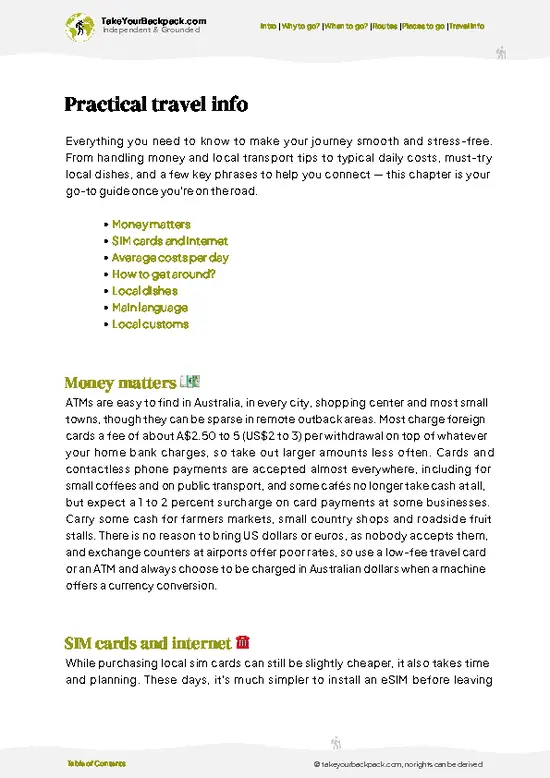
example page 0 from our offline Travel Guide for Australia
example page 1 from our offline Travel Guide for Australia
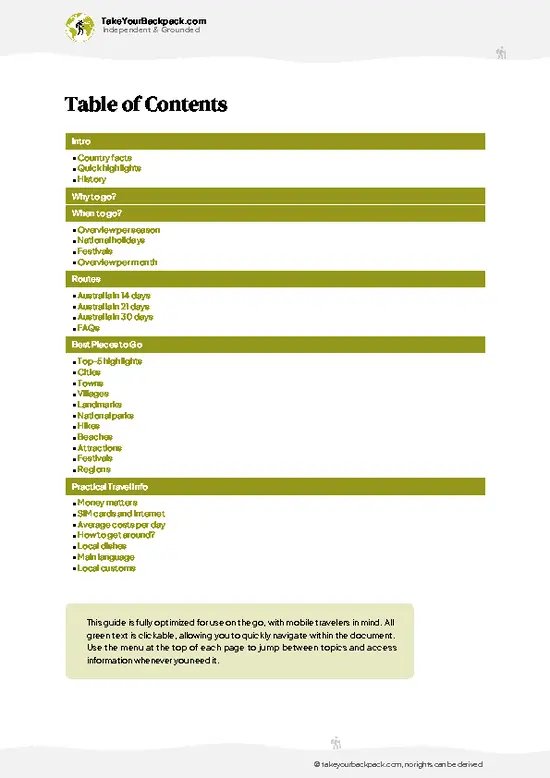
example page 2 from our offline Travel Guide for Australia
example page 3 from our offline Travel Guide for Australia
example page 4 from our offline Travel Guide for Australia
example page 5 from our offline Travel Guide for Australia
example page 6 from our offline Travel Guide for Australia
example page 7 from our offline Travel Guide for Australia
Loading the map 🌍
CLICK TO FILTER
cities
towns
villages
landmarks
national parks
hikes
beaches
attractions
festivals
regions
SHOW COUNTRY’S BESTSHOW ALL

✨ Why go?
Ranked #99 attraction in Australia
Reasons people choose to visit here

The Great Barrier Reef is the kind of place that gets plastered all over Instagram, and yes, it’s crowded and can be pricey. But here’s the real deal: backpackers don’t just come for the postcard-perfect shots—they come because this is a milestone experience, a raw encounter with one of the planet’s most complex ecosystems. The reef isn’t just a pretty face; it’s a living archive of marine life, stretching back millions of years, and it’s a frontline in the fight against climate change. You’ll find yourself swimming alongside creatures that have survived epochs, not just seasons.

Sure, the tourist boats can feel like a conveyor belt, but if you dig a little deeper—think smaller operators or night dives—you tap into something far more intimate and wild. The adrenaline rush of diving into … read more 👉
The Great Barrier Reef is the kind of place that gets plastered all over Instagram, and yes, it’s crowded and can be pricey. But here’s the real deal: backpackers don’t just come for the postcard-perfect shots—they come because this is a milestone experience, a raw encounter with one of the planet’s most complex ecosystems. The reef isn’t just a pretty face; it’s a living archive of marine life, stretching back millions of years, and it’s a frontline in the fight against climate change. You’ll find yourself swimming alongside creatures that have survived epochs, not just seasons.

Sure, the tourist boats can feel like a conveyor belt, but if you dig a little deeper—think smaller operators or night dives—you tap into something far more intimate and wild. The adrenaline rush of diving into crystal-clear waters, surrounded by kaleidoscopic coral and curious sea turtles, is unmatched. It’s a test of your effort-to-reward ratio: the sweat of the journey, the cost, and the crowds melt away when you’re face-to-face with this underwater cathedral. For backpackers trekking through Australia, the Great Barrier Reef is a rite of passage, a vivid reminder that nature’s masterpieces don’t always come easy, but they’re worth every second.

💡 HighlightsThe experiences that define the visit

1. Outer Reef Snorkeling (Not Just the Postcard Shallows)
Forget the filtered GoPro shots of empty turquoise lagoons. The real action is out on the Outer Reef—hours offshore, where the coral is alive, the fish are fearless, and the crowds thin out fast. Yes, you’ll pay for the boat ride, and yes, you’ll share the pontoon with a few dozen others, but the moment you drop your face in the water and a parrotfish the size of your thigh glides past, you’ll understand why people cross the planet for this. The colors are wild, the scale is epic, and the sense of floating above a living city is pure adrenaline. If you’ve only snorkeled off a beach, this is a different universe.

2. Liveaboard Diving (The 3AM Minke Whale Encounter)
Day trips are fine, but sleeping on a boat out on the reef is where the … read more 👉
1. Outer Reef Snorkeling (Not Just the Postcard Shallows)
Forget the filtered GoPro shots of empty turquoise lagoons. The real action is out on the Outer Reef—hours offshore, where the coral is alive, the fish are fearless, and the crowds thin out fast. Yes, you’ll pay for the boat ride, and yes, you’ll share the pontoon with a few dozen others, but the moment you drop your face in the water and a parrotfish the size of your thigh glides past, you’ll understand why people cross the planet for this. The colors are wild, the scale is epic, and the sense of floating above a living city is pure adrenaline. If you’ve only snorkeled off a beach, this is a different universe.

2. Liveaboard Diving (The 3AM Minke Whale Encounter)
Day trips are fine, but sleeping on a boat out on the reef is where the magic gets weird and wonderful. You’ll wake up to sunrise over open water, dive before breakfast, and—if you’re lucky—find yourself in the water with dwarf minke whales or a cruising reef shark. Night dives are a fever dream: flashlight beams catch clouds of plankton, and the reef’s nightlife comes out to hunt. It’s not cheap, but it’s the closest you’ll get to feeling like you’re living inside a nature documentary. This is my personal favorite—nothing else on the reef comes close to the sense of immersion.

3. Helicopter or Seaplane Flight (The Aerial Perspective)
Here’s the dirty secret: the reef’s true scale and beauty are almost impossible to grasp from sea level. From the air, you see the wild geometry—turquoise patches, deep blue drop-offs, swirling sand cays. It’s a splurge, but if you want the “I can’t believe this is real” moment, this is it. Ten minutes in a chopper beats a hundred Instagram scrolls.

4. Indigenous Cultural Tours (The Reef’s Human Story)
Most visitors miss this entirely, but the reef isn’t just a natural wonder—it’s a living cultural landscape. Go with a local Indigenous guide and you’ll hear stories that predate European maps, learn about traditional reef stewardship, and see the place through a lens that’s deeper than any biology textbook. It’s humbling, grounding, and a reminder that the reef’s magic isn’t just underwater.

5. Reef Islands (The Castaway Fantasy, With Real Sandflies)
Fitzroy, Green, and Lady Elliot Islands promise the “desert island” dream, but here’s the truth: you’ll share the sand with other day-trippers, and yes, the bugs are real. Still, if you stay overnight, you get the reef at dawn and dusk, when the day crowds vanish and the place feels wild again. The snorkeling is solid, the sunsets are the real deal, and you’ll finally get that sense of isolation the brochures promise—just bring repellent.
Spotted a mistake or missing something? Contact us.

🌤️ When to go?Weather, crowds, and seasonal trade-offs

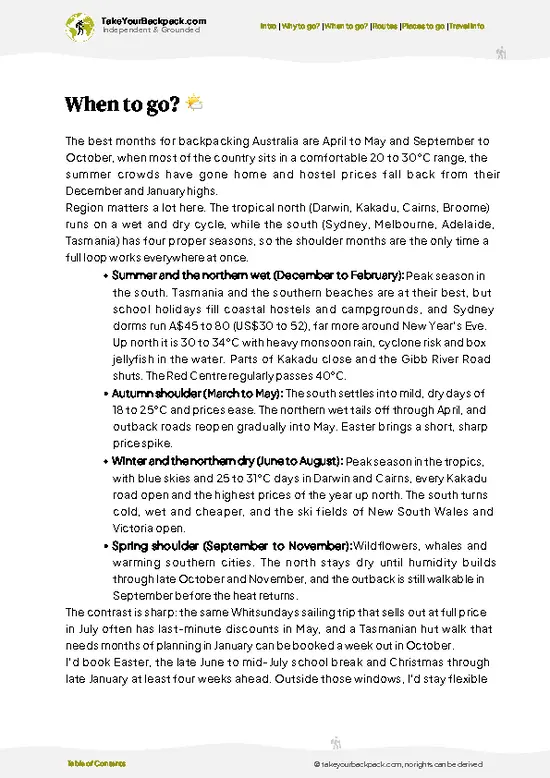
  • Topic: Weather and Temperature - The Great Barrier Reef’s weather swings between hot, humid summers (December to February) with temps around 29-31°C (84-88°F) and milder, drier winters (June to August) hitting 21-24°C (70-75°F). Summers bring stifling humidity and a higher chance of cyclones, while winter offers clearer skies and calmer seas.
  • Topic: Daylight Hours - From November to February, you get long days with up to 13-14 hours of daylight, perfect for squeezing in multiple dives or snorkel sessions. In winter months, daylight shrinks to about 10-11 hours, which means less time underwater but more comfortable temperatures.
  • Topic: Crowds - Peak tourist season aligns with Australian school holidays and summer (December to January), so expect packed boats and inflated prices. The shoulder
… read more 👉
  • Topic: Weather and Temperature - The Great Barrier Reef’s weather swings between hot, humid summers (December to February) with temps around 29-31°C (84-88°F) and milder, drier winters (June to August) hitting 21-24°C (70-75°F). Summers bring stifling humidity and a higher chance of cyclones, while winter offers clearer skies and calmer seas.
  • Topic: Daylight Hours - From November to February, you get long days with up to 13-14 hours of daylight, perfect for squeezing in multiple dives or snorkel sessions. In winter months, daylight shrinks to about 10-11 hours, which means less time underwater but more comfortable temperatures.
  • Topic: Crowds - Peak tourist season aligns with Australian school holidays and summer (December to January), so expect packed boats and inflated prices. The shoulder months of April-May and September-October offer a sweet spot with fewer tourists and still decent weather.
  • Topic: Seasonal Activities - March to May is prime for spotting migrating humpback whales, adding a rare spectacle to your reef experience. November to April is stinger season, so you’ll need protective gear for swimming, which can be a hassle but keeps the reef safe.
  • Topic: Price Fluctuations - Expect prices to spike during the Australian summer and school holidays. Booking in the shoulder seasons (April-May, September-October) can save you a solid chunk of cash without sacrificing much in terms of experience quality.
Pro-tip: Aim for late April or early October—weather’s decent, crowds thin, and prices drop. You’ll dodge the worst heat and stingers while still getting the reef’s full magic without the tourist circus.


source: climatestotravel.comJANJanuary: good for travelingFEBFebruary: good for travelingMARMarch: highly recommended for travelingAPRApril: highly recommended for travelingMAYMay: highly recommended for travelingJUNJune: excellent for travelingJULJuly: excellent for travelingAUGAugust: excellent for travelingSEPSeptember: highly recommended for travelingOCTOctober: highly recommended for travelingNOVNovember: good for travelingDECDecember: good for traveling
when-to-go

✈️ The backpacker research shortcutAustralia Travel Guide

An offline-friendly backpacking guide with optimized travel routes, ranked highlights, transport advice, and the best areas to stay.
example page 0 from our offline Travel Guide for Australia
example page 1 from our offline Travel Guide for Australia
example page 2 from our offline Travel Guide for Australia
example page 3 from our offline Travel Guide for Australia
example page 4 from our offline Travel Guide for Australia
example page 5 from our offline Travel Guide for Australia
example page 6 from our offline Travel Guide for Australia
example page 7 from our offline Travel Guide for Australia
The digital guide (414 pages) contains:
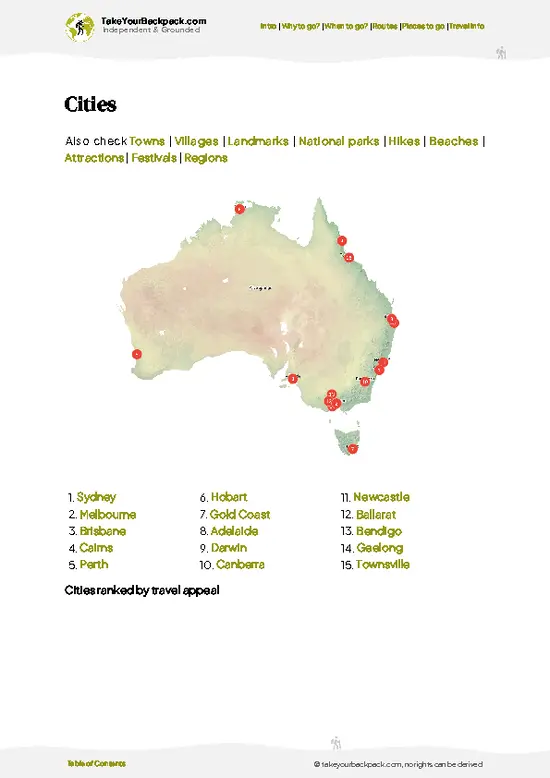
✅ 143 highlights, ranked by travel appeal
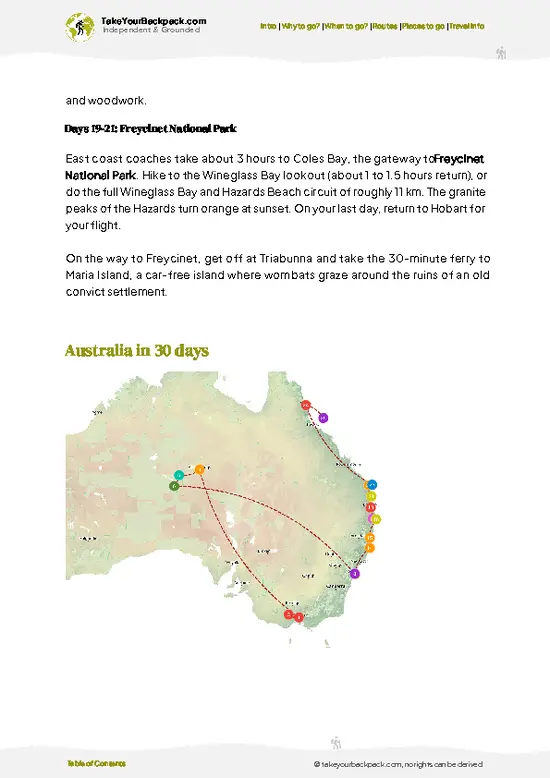
✅ Optimized 14, 21 & 30-day travel routes
✅ Cities, national parks, landmarks, beaches
✅ How to get around
✅ Offline-friendly for travel without Wi-Fi
👉 Click to see all 30+ guide features

📅 Plan smarter in minutes, not weeks
✅ Month by month travel advice
✅ Festivals & national holidays
✅ Budget expectations

🗺️ Go to the right places, skip the overrated ones
✅ Honest pros & cons of destinations
✅ Top hikes, parks & viewpoints
✅ Lesser-known places most travelers miss
✅ Clear “worth it vs skip it” guidance

🛏️ Travel smoothly without rookie mistakes
✅ Best areas to stay
✅ Transport systems explained simply
✅ Common scams & safety advice
✅ SIM cards, money & practical tips

🌍 Understand the country, not just visit it
✅ Culture & traditions
✅ Local customs
✅ Festivals worth planning around
✅ Traveler-friendly historical context
✅ Insights that make places more meaningful

📱 Built for real travel conditions
✅ Fully downloadable PDF
✅ Works completely offline
✅ Optimized for phone use
✅ Useful in remote areas & buses
✅ Everything in one place
Stop searching, start planning
Get instant access to your full guide. 30‑day money-back guarantee.
+ Add another guide for just

By proceeding you agree to our terms.
Sent to your inbox immediately after payment • 100% Secure Checkout
Best Backpacking Travel Advisor 2025 tourism awardBest Backpacking
Travel Advisor
2025
What others say about Take Your Backpack Guides:
⭐⭐⭐⭐⭐
Fantastic, amazing amount of information!
⭐⭐⭐⭐⭐
My goodness this is amazing, it's what I've been looking for hats off too you!
⭐⭐⭐⭐⭐
I think this is absolutely BRILLIANT
⭐⭐⭐⭐
Very complete and informative. It's still missing places, but I gotta to commend you
⭐⭐⭐⭐⭐
This is truly amazing, thank you, can't wait to explore it with my kids!
⭐⭐⭐⭐⭐
Awesome resource, thank you!
⭐⭐⭐⭐⭐
This is amazing! Can't wait to explore the ones I haven't seen
⭐⭐⭐⭐
I love this! Well done, great idea.
⭐⭐⭐⭐⭐
Thanks for taking the time to make this gem!
⭐⭐⭐⭐⭐
This might be the best website I've ever seen.
⭐⭐⭐⭐⭐
Congratulations, and thank you so much for your work; it's incredibly valuable.
⭐⭐⭐⭐
In all seriousness I think you did a great job pointing out the important spots
⭐⭐⭐⭐⭐
10/10 very good
⭐⭐⭐⭐⭐
As someone who's only just starting to visit regularly this is awesome, thank you.
⭐⭐⭐⭐
Thank you very much! I'm going to visit my dad, it's going to be very useful!
⭐⭐⭐⭐⭐
This is really cool! We'll be travelling for the first time and this definitely come in handy.
⭐⭐⭐⭐⭐
You are now our minister of culture, congratulations 👨‍💼
⭐⭐⭐⭐⭐
Just wanted to tell you that this is a pearl! Going to follow your recommendations.
⭐⭐⭐⭐⭐
This is so cool. I'll definitely be using the resource for my travels soon.
⭐⭐⭐⭐⭐
This is very impressive! Good work.
⭐⭐⭐⭐⭐
This is an amazing and informative site. Very well done!

🛏️ Where to stay?Where staying makes the most sense

Let’s cut through the postcard-perfect hype around the Great Barrier Reef. Yes, it’s a bucket-list marvel, but it’s also a magnet for crowds and a wallet-buster if you’re not careful. The reef itself is offshore, so where you stay matters big time—not just for your budget but for your vibe and access.

Cairns is the obvious base camp. It’s loud, lively, and packed with backpackers from every corner of the globe. The city’s social scene is unbeatable if you want to swap stories over cheap beers after a day of snorkeling or diving. It’s also the hub for reef tours, so you’ll find plenty of budget-friendly … read more 👉
Let’s cut through the postcard-perfect hype around the Great Barrier Reef. Yes, it’s a bucket-list marvel, but it’s also a magnet for crowds and a wallet-buster if you’re not careful. The reef itself is offshore, so where you stay matters big time—not just for your budget but for your vibe and access.

Cairns is the obvious base camp. It’s loud, lively, and packed with backpackers from every corner of the globe. The city’s social scene is unbeatable if you want to swap stories over cheap beers after a day of snorkeling or diving. It’s also the hub for reef tours, so you’ll find plenty of budget-friendly operators. But don’t expect tranquility—Cairns is a bustling tourist town, and the reef trips can feel like a conveyor belt. Still, it’s safe, well-connected, and the easiest launch point.

If you want something quieter but still social, Port Douglas is your next best bet. It’s smaller, more laid-back, and has a more local feel without losing the backpacker crowd. The vibe here leans toward chill evenings and beach bonfires rather than nightclub chaos. It’s pricier than Cairns but worth it if you want to escape the tourist stampede while staying close to the reef.

For the real magic, skip the packaged tours and connect with local dive shops or community groups. They’ll take you to lesser-known spots where the reef’s colors pop without the crowds. Staying in Cairns or Port Douglas gives you the choice: dive into the social buzz or slip into a quieter rhythm, all while being a stone’s throw from one of the world’s most extraordinary natural wonders.

👛 Costs (as of 15 October 2026)How expensive it really is

As of April 1, 2026, the Environmental Management Charge (EMC) for full-day passengers is AU$8.50 per day, and for part-day passengers, it's AU$4.25 per day. Additionally, full-day outer reef tours typically cost between AU$180 and AU$280 per adult, including boat transfers, equipment, lunch, and presentations. Therefore, the total average daily cost for visiting the Great Barrier Reef, including the EMC and tour expenses, ranges from approximately €150 to €250.
⚠️ Prices can change and everyone travels differently, so take this as a rough guide. Hope it helps you plan your adventure!

FAQFrequently asked questions about Great Barrier Reef Marine tourism experiences

A typical visit to Great Barrier Reef Marine tourism experiences requires at least one full day, though 2-3 days are recommended to explore multiple sites and activities like snorkeling and diving. Tours often start early in the morning and last 6-8 hours. Overnight liveaboard trips are available for extended exploration.
Yes, the entrance fee and tour costs are generally worth it due to the reef's unique biodiversity and stunning underwater views. Prices for day tours range from 150 to 300 AUD, which includes equipment and guided activities. The experience offers rare marine wildlife encounters and vibrant coral formations.
You get to the Great Barrier Reef from coastal cities like Cairns or Port Douglas in Queensland. Most visitors take a boat or seaplane from these hubs, with boat trips typically lasting 1.5 to 2 hours to reach popular reef sites. Cairns is about a 1.5-hour flight from Brisbane, the nearest major city.
⚠️ Things can change over time, so always validate details locally before you go.

Other Australian attractions near Great Barrier Reef Marine tourism experiences

Explore more nearby:

  • Queensland Museum—Whale Mall, megafauna fossils, Sciencentre, South Bank| 1157 km away
  • Lone Pine Koala Sanctuary—Koala photo, roo paddock, platypus house, sheep dog show| 1161 km away
  • Dreamworld—Tiger Island, Steel Taipan, Giant Drop, Whitewater World| 1209 km away

💡 Not sure where to go next?
Create a personalized itinerary for Australia including Great Barrier Reef Marine tourism experiences and the places that fit your trip.

Generate my itinerary

👉 Discover all attractions

Or checkout all Australia has to offer (think cities, towns, villages, national parks, hikes, beaches, festivals)
Country photo of Australia

We 💚 feedbackKey takeaways before you go

The Great Barrier Reef isn’t just a postcard—it’s a living, breathing ecosystem that punches way above its weight in sheer biodiversity. Snorkeling here, you’re swimming through a kaleidoscope of life that’s impossible to replicate anywhere else. But let’s be real: it’s crowded and pricey, especially during peak season. If you want the magic, plan for early mornings or off-peak months to dodge the tourist crush and see the reef’s true colors without the noise.

✈️ When did I visit Australia?
On my trip to New Zealand in 1993, I had a short stop in Australia as well.

✍️ Help improve this page!
The information on this page is based on my own backpacking experience in Australia, supplemented with up-to-date research and feedback from other travelers. Travel details can change, so if you notice anything outdated or incomplete, feel free to let me know.


🙋‍♂️ Give feedback

👋 Meet the founderWho’s Behind Take Your Backpack?

Johan, backpacker and founder of TakeYourBackpackHi, I’m Johan (Netherlands 🇳🇱), the creator of TakeYourBackpack. Over the past 3 decades, I’ve backpacked through 90+ countries across six continents, gaining extensive experience with independent travel, long-term trips, and overland routes.

This site is built on a combination of firsthand travel experience and carefully curated insights from other backpackers. Many guides are based on places I’ve personally visited, while others bring together tips, observations, and practical advice shared by trusted travelers I’ve met along the way.

The goal is to provide realistic, experience-driven guidance — not generic itineraries — so you can explore destinations with better context, clearer expectations, and more confidence.