×

Australia🇦🇺 | beachesPalm CoveTimber jetty, paperbark foreshore, stinger net, esplanade dining | things to do and best time to go

Explore Noosa Main BeachExplore Shark Bay

Backpacking in Palm Cove
👍 Recommendedbeach ranked #13
By Johan Kruseman 🇳🇱 | Updated October 15, 2026

Palm Cove beach has a long, shaded paperbark and melaleuca-lined foreshore where you can eat, swim and sleep within a few minutes' walk of each other. It sits in the north of Australia, on Queensland's coast about 25 kilometers north of Cairns. The sand is clean, the crowds are mostly resort guests, and prices lean pricey for the region. At dusk, I once stood under the old melaleuca trees while thousands of flying foxes shrieked overhead and the jetty creaked, and I felt oddly like the only unreserved guest at a very loud wedding. Swimming is limited by stinger season, so the netted area matters. Unlike Cairns Esplanade, whose tidal mudflats rule out swimming, Palm Cove gives you real sand and a jetty.

Discover everything you want to know in the 📖 Australia Travel Guide.


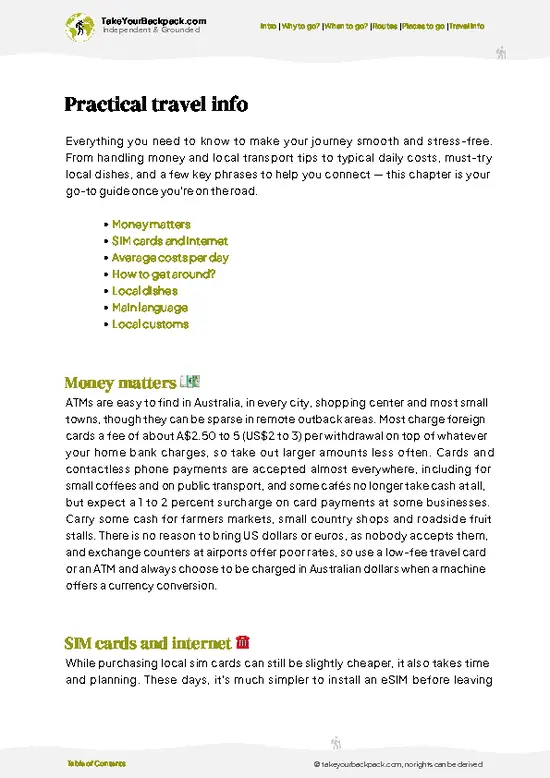
example page 0 from our offline Travel Guide for Australia
example page 1 from our offline Travel Guide for Australia
example page 2 from our offline Travel Guide for Australia
example page 3 from our offline Travel Guide for Australia
example page 4 from our offline Travel Guide for Australia
example page 5 from our offline Travel Guide for Australia
example page 6 from our offline Travel Guide for Australia
example page 7 from our offline Travel Guide for Australia
Loading the map 🌍
CLICK TO FILTER
cities
towns
villages
landmarks
national parks
hikes
beaches
attractions
festivals
regions
SHOW COUNTRY’S BESTSHOW ALL

✨ Why go?
Ranked #13 beach in Australia
What makes it a must-see beach

Backpackers stop here because Palm Cove is the calm counterweight to Cairns. The beachfront is a single paperbark-shaded foreshore where you can sit on the grass with a cheap takeaway and watch the light change over Double Island, without paying resort prices for the view. The water is also easy to read, with the stinger net enclosure in the warmer months making a swim possible when open ocean is off limits. It works well as a recovery stop between Great Barrier Reef trips or before heading north to Port Douglas, and the early sunrises make it a good place to run or walk before the heat builds. Most beds are pricey, so many travelers visit for the day and sleep elsewhere.

💡 HighlightsThe experiences that define the visit

  1. Palm Cove Jetty: The timber jetty is the beach's best-known landmark, with views back to the palms and out to Double Island. It is a favorite for sunrise photos and for watching fishers cast lines.
  2. Melaleuca tree-lined foreshore walk: Ancient paperbark trees arch over the esplanade, giving shade and a flat, easy stroll along the sand. Flying foxes and kookaburras add noise at dusk.
  3. Swimming in the stinger net: During the warmer months the netted area makes swimming safe from marine stingers, and the water is calm and clear enough to see your feet.
  4. Sunrise on the sand: The beach faces east, so the sky glows pink over Double Island while the sand is still empty. Bring a coffee from one of the esplanade cafés.
  5. Evening esplanade dining: After dark the strip fills with open-air restaurants and lit
… read more 👉
  1. Palm Cove Jetty: The timber jetty is the beach's best-known landmark, with views back to the palms and out to Double Island. It is a favorite for sunrise photos and for watching fishers cast lines.
  2. Melaleuca tree-lined foreshore walk: Ancient paperbark trees arch over the esplanade, giving shade and a flat, easy stroll along the sand. Flying foxes and kookaburras add noise at dusk.
  3. Swimming in the stinger net: During the warmer months the netted area makes swimming safe from marine stingers, and the water is calm and clear enough to see your feet.
  4. Sunrise on the sand: The beach faces east, so the sky glows pink over Double Island while the sand is still empty. Bring a coffee from one of the esplanade cafés.
  5. Evening esplanade dining: After dark the strip fills with open-air restaurants and lit trees, and a seafood plate under the palms is a pleasant way to end the day. Prices are higher than in Cairns.
If time is short, skip the evening esplanade meal and have a coffee on the jetty at sunrise instead.
Spotted a mistake or missing something? Contact us.

Things to do around Palm Cove

Ratings based on Tripadvisor reviews. When you book through this link, you support our work at no extra cost to you.

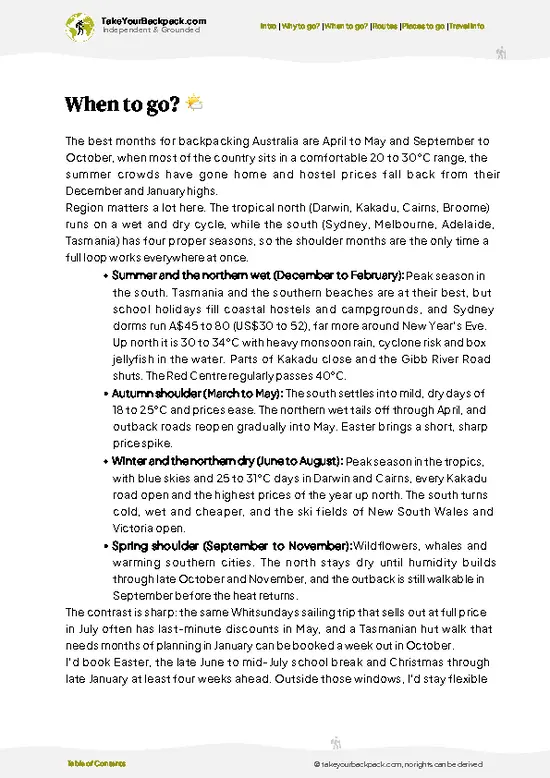
🌤️ When to go?Seasonal considerations and timing

  • Dry Season (May to October): Palm Cove runs 17 to 27°C (63 to 81°F) with sunny skies and low humidity, and days of about 11 to 12 hours of light. This is peak time, so beds and tours cost the most.
  • Stinger Season (November to May): Expect 24 to 32°C (75 to 90°F), heavy humidity and afternoon downpours. Box jellyfish close the sea to swimming without a stinger suit, though the netted swimming area helps. Prices drop and the esplanade empties.
  • Wet Peak (January to March): Cyclones and flooding can disrupt roads and reef trips. Sunrise comes early, around 5:30 am.
Aim for June to September, and book Cairns reef trips a week ahead.

source: climatestotravel.comJANJanuary: fair for travelingFEBFebruary: fair for travelingMARMarch: fair for travelingAPRApril: fair for travelingMAYMay: highly recommended for travelingJUNJune: excellent for travelingJULJuly: excellent for travelingAUGAugust: excellent for travelingSEPSeptember: excellent for travelingOCTOctober: highly recommended for travelingNOVNovember: fair for travelingDECDecember: fair for traveling
australia-beach-palm-cove
© Google | Hagen Dufner

✈️ The backpacker research shortcutAustralia Travel Guide

An offline-friendly backpacking guide with optimized travel routes, ranked highlights, transport advice, and the best areas to stay.
example page 0 from our offline Travel Guide for Australia
example page 1 from our offline Travel Guide for Australia
example page 2 from our offline Travel Guide for Australia
example page 3 from our offline Travel Guide for Australia
example page 4 from our offline Travel Guide for Australia
example page 5 from our offline Travel Guide for Australia
example page 6 from our offline Travel Guide for Australia
example page 7 from our offline Travel Guide for Australia
The digital guide (414 pages) contains:
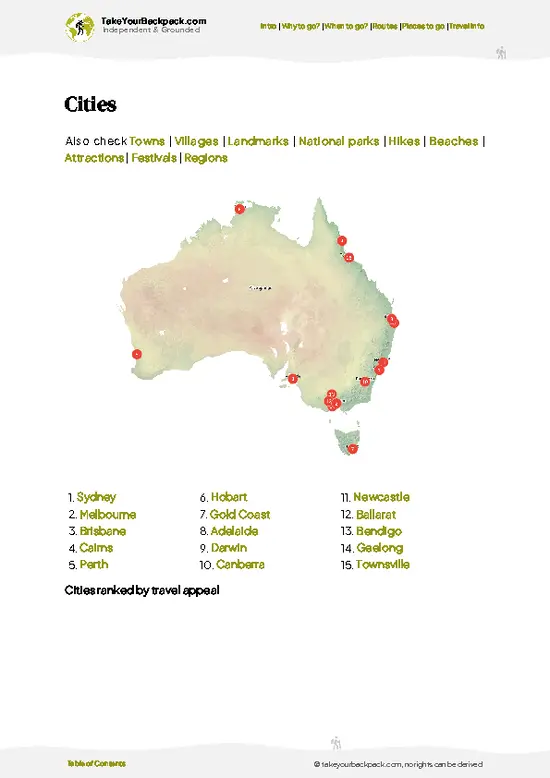
✅ 143 highlights, ranked by travel appeal
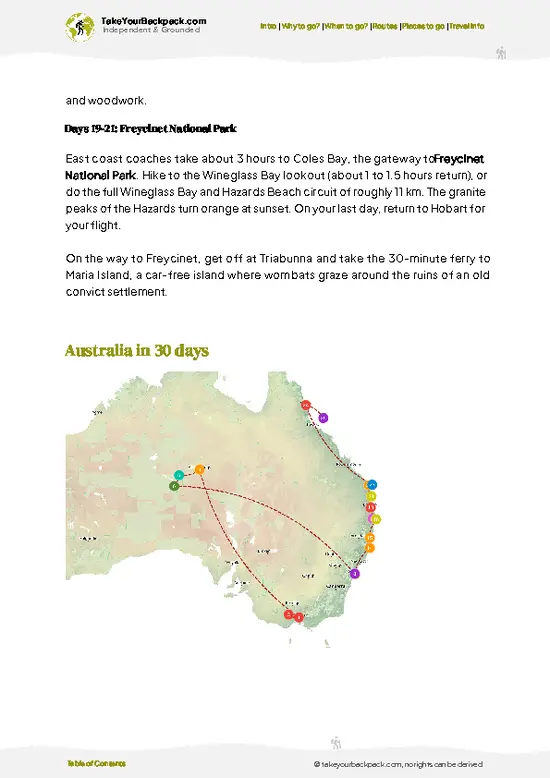
✅ Optimized 14, 21 & 30-day travel routes
✅ Cities, national parks, landmarks, beaches
✅ How to get around
✅ Offline-friendly for travel without Wi-Fi
👉 Click to see all 30+ guide features

📅 Plan smarter in minutes, not weeks
✅ Month by month travel advice
✅ Festivals & national holidays
✅ Budget expectations

🗺️ Go to the right places, skip the overrated ones
✅ Honest pros & cons of destinations
✅ Top hikes, parks & viewpoints
✅ Lesser-known places most travelers miss
✅ Clear “worth it vs skip it” guidance

🛏️ Travel smoothly without rookie mistakes
✅ Best areas to stay
✅ Transport systems explained simply
✅ Common scams & safety advice
✅ SIM cards, money & practical tips

🌍 Understand the country, not just visit it
✅ Culture & traditions
✅ Local customs
✅ Festivals worth planning around
✅ Traveler-friendly historical context
✅ Insights that make places more meaningful

📱 Built for real travel conditions
✅ Fully downloadable PDF
✅ Works completely offline
✅ Optimized for phone use
✅ Useful in remote areas & buses
✅ Everything in one place
Stop searching, start planning
Get instant access to your full guide. 30‑day money-back guarantee.
+ Add another guide for just

By proceeding you agree to our terms.
Sent to your inbox immediately after payment • 100% Secure Checkout
Best Backpacking Travel Advisor 2025 tourism awardBest Backpacking
Travel Advisor
2025
What others say about Take Your Backpack Guides:
⭐⭐⭐⭐⭐
Fantastic, amazing amount of information!
⭐⭐⭐⭐⭐
My goodness this is amazing, it's what I've been looking for hats off too you!
⭐⭐⭐⭐⭐
I think this is absolutely BRILLIANT
⭐⭐⭐⭐
Very complete and informative. It's still missing places, but I gotta to commend you
⭐⭐⭐⭐⭐
This is truly amazing, thank you, can't wait to explore it with my kids!
⭐⭐⭐⭐⭐
Awesome resource, thank you!
⭐⭐⭐⭐⭐
This is amazing! Can't wait to explore the ones I haven't seen
⭐⭐⭐⭐
I love this! Well done, great idea.
⭐⭐⭐⭐⭐
Thanks for taking the time to make this gem!
⭐⭐⭐⭐⭐
This might be the best website I've ever seen.
⭐⭐⭐⭐⭐
Congratulations, and thank you so much for your work; it's incredibly valuable.
⭐⭐⭐⭐
In all seriousness I think you did a great job pointing out the important spots
⭐⭐⭐⭐⭐
10/10 very good
⭐⭐⭐⭐⭐
As someone who's only just starting to visit regularly this is awesome, thank you.
⭐⭐⭐⭐
Thank you very much! I'm going to visit my dad, it's going to be very useful!
⭐⭐⭐⭐⭐
This is really cool! We'll be travelling for the first time and this definitely come in handy.
⭐⭐⭐⭐⭐
You are now our minister of culture, congratulations 👨‍💼
⭐⭐⭐⭐⭐
Just wanted to tell you that this is a pearl! Going to follow your recommendations.
⭐⭐⭐⭐⭐
This is so cool. I'll definitely be using the resource for my travels soon.
⭐⭐⭐⭐⭐
This is very impressive! Good work.
⭐⭐⭐⭐⭐
This is an amazing and informative site. Very well done!

🛏️ Where to stay?Best areas to stay in Australia

The best base for backpackers is Cairns, about 25 kilometers south, because Palm Cove itself is a resort village with almost no dorm beds. Cairns city center (the Esplanade and Shields Street) has the densest cluster of social hostels, from US$25 to 40 (A$35 to 60) for a dorm bed, plus tour desks, cheap eats and nightlife. Buses to Palm Cove run from the city, about 40 to 50 minutes. Trinity Beach and Clifton Beach, a few minutes south of Palm Cove, have a few quieter budget apartments and caravan parks suited to people with a car or campervan. Staying right on Palm Cove’s paperbark-lined beachfront … read more 👉
The best base for backpackers is Cairns, about 25 kilometers south, because Palm Cove itself is a resort village with almost no dorm beds. Cairns city center (the Esplanade and Shields Street) has the densest cluster of social hostels, from US$25 to 40 (A$35 to 60) for a dorm bed, plus tour desks, cheap eats and nightlife. Buses to Palm Cove run from the city, about 40 to 50 minutes. Trinity Beach and Clifton Beach, a few minutes south of Palm Cove, have a few quieter budget apartments and caravan parks suited to people with a car or campervan. Staying right on Palm Cove’s paperbark-lined beachfront means self-catering apartments at A$150 and up, so most travelers visit for the day. Book Cairns ahead from June to September.

🛡️ SafetyStaying Safe: What Travelers Should Know

Palm Cove is a safe, well-run beach, and the main thing to plan around is jellyfish. From roughly November to May, box and Irukandji jellyfish are present, and swimming is best inside the stinger net near the jetty or in a stinger suit. Vinegar stations sit along the beach, and the surf club patrols the flagged area. Saltwater crocodiles live in this region, so heed signs and skip swimming at dusk or in river mouths. The sea is calm and sheltered, with little wave energy. Sun is strong all year, so wear a hat and reef-safe sunscreen. Leave valuables locked in the car or at your hostel; petty theft is rare but possible.

FAQFrequently asked questions about Palm Cove

Take a bus from Cairns, since Palm Cove sits about 25 kilometers north on the Captain Cook Highway. Sunbus route 110 runs from Cairns city to Palm Cove in around 40 to 50 minutes for a flat 50-cent fare. A taxi or rideshare takes about 25 minutes and costs A$50 to 70, and Cairns Airport is only 15 to 20 minutes away by car.
Swimming is good, but surfing and snorkeling are not the draw. The water is calm with almost no surf, and the stinger net by the jetty gives a safe swimming area from November to May. Snorkeling is poor close to shore, so head to Cairns reef trips to the Great Barrier Reef (full-day tours around A$150 to 250). Paddleboards and kayaks can be rented on the beachfront.
Yes, the beach, esplanade, jetty and picnic areas cost nothing to enter. Parking along Williams Esplanade is free but time-limited in places, usually two to four hours. Showers and toilets are public, while paddleboard hire runs around A$30 to 50 an hour. Cafes line the road behind the beach.
⚠️ Things can change over time, so always validate details locally before you go.

Other Australian beaches near Palm Cove

Explore more nearby:

  • Whitehaven Beach—Hill Inlet swirls, 7 km silica sand, stinger season, bush campground| 530 km away
  • Seventy-Five Mile Beach—Sand highway, Maheno wreck, Eli Creek, Pinnacles cliffs| 1237 km away
  • Noosa Main Beach—Laguna Bay calm, First Point longboards, national park walk, Hastings Street| 1317 km away

💡 Not sure where to go next?
Create a personalized itinerary for Australia including Palm Cove and the places that fit your trip.

Generate my itinerary

👉 Discover all beaches

Or checkout all Australia has to offer (think cities, towns, villages, national parks, hikes, beaches, festivals)
Country photo of Australia

We 💚 feedbackIs it worth it?

Give Palm Cove one night, or two if you need recovery time between reef trips. I would pick the sunrise walk and a swim in the net, then head back to Cairns for cheaper beds and food. A day is enough for most backpackers.

✈️ When did I visit Australia?
On my trip to New Zealand in 1993, I had a short stop in Australia as well.

✍️ Help improve this page!
The information on this page is based on my own backpacking experience in Australia, supplemented with up-to-date research and feedback from other travelers. Travel details can change, so if you notice anything outdated or incomplete, feel free to let me know.


🙋‍♂️ Give feedback

👋 Meet the founderWho’s Behind Take Your Backpack?

Johan, backpacker and founder of TakeYourBackpackHi, I’m Johan (Netherlands 🇳🇱), the creator of TakeYourBackpack. Over the past 3 decades, I’ve backpacked through 90+ countries across six continents, gaining extensive experience with independent travel, long-term trips, and overland routes.

This site is built on a combination of firsthand travel experience and carefully curated insights from other backpackers. Many guides are based on places I’ve personally visited, while others bring together tips, observations, and practical advice shared by trusted travelers I’ve met along the way.

The goal is to provide realistic, experience-driven guidance — not generic itineraries — so you can explore destinations with better context, clearer expectations, and more confidence.