×

Australia🇦🇺 | national parksWilsons PromontorySqueaky Beach, Mount Oberon, Tidal River wombats, Sealers Cove | things to do and best time to go

Explore Wet Tropics of QueenslandExplore Freycinet National Park

Backpacking in Wilsons Promontory
👍 Recommendednational park ranked #12
By Johan Kruseman 🇳🇱 | Updated October 15, 2026

The real decision at Wilsons Promontory is day trip or overnight, and the tipping point is the Tidal River campground booking system, which sells out fast in summer. Day-trippers spend three hours driving for one view, then queue for parking. The park sits in Victoria, Australia, southeast of Melbourne. Beaches are squeaky white, granite peaks are steep, and wombats stroll through camp like unpaid inspectors. A bakery pie in Foster cost me about A$7 and was demolished before I reached the gate, which taught me to stock up well before the gate. Pack food, book early, and watch for the pink-orange granite at Squeaky Beach.

Discover everything you want to know in the 📖 Australia Travel Guide.


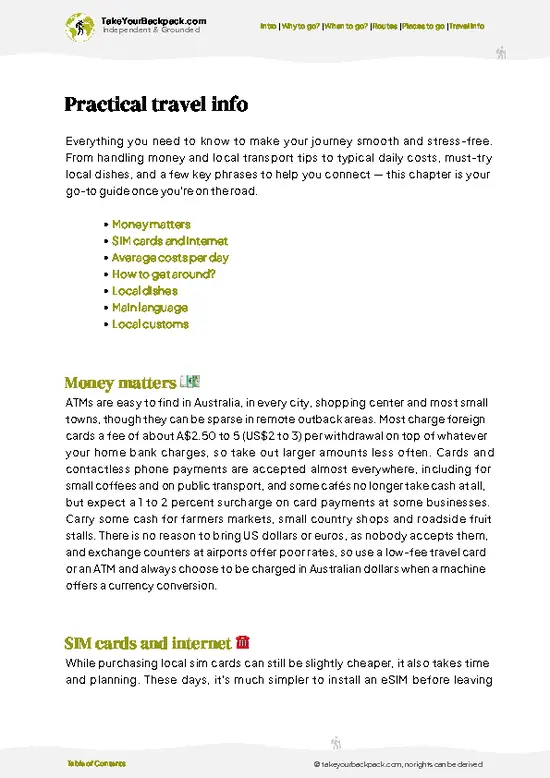
example page 0 from our offline Travel Guide for Australia
example page 1 from our offline Travel Guide for Australia
example page 2 from our offline Travel Guide for Australia
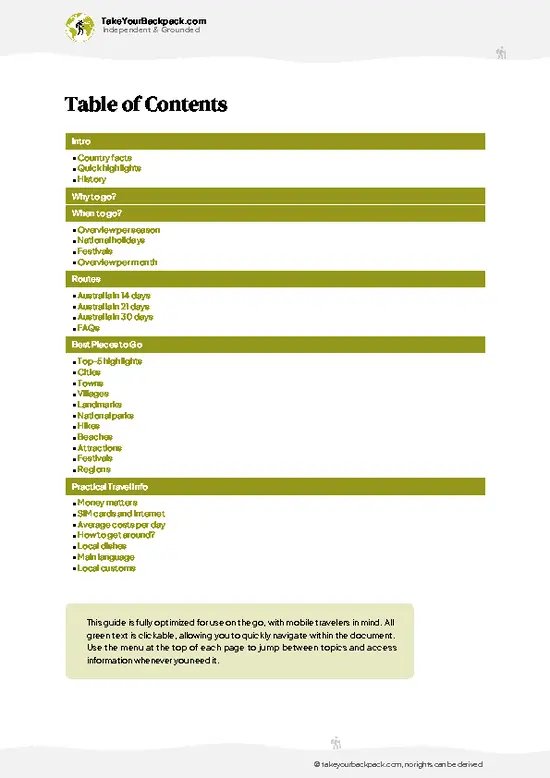
example page 3 from our offline Travel Guide for Australia
example page 4 from our offline Travel Guide for Australia
example page 5 from our offline Travel Guide for Australia
example page 6 from our offline Travel Guide for Australia
example page 7 from our offline Travel Guide for Australia
Loading the map 🌍
CLICK TO FILTER
cities
towns
villages
landmarks
national parks
hikes
beaches
attractions
festivals
regions
SHOW COUNTRY’S BESTSHOW ALL

✨ Why go?
Ranked #12 national park in Australia
Why visitors keep coming back

Backpackers choose the Prom because it rewards self-sufficiency. The Southern Circuit and Northern Circuit link into overnight loops, and you carry your own gear between basic hike-in campsites with permits instead of paying for guided packages. Trails range from flat boardwalks to granite scrambles, so you can build a route around your legs and your mood. The Lighthouse Track, a three-day round trip, ends at a remote 1859 lighthouse with heritage cottages for guests. Public tours mostly cover the front door, so self-guided is the way to see the quiet parts, where emus, wombats and kangaroos outnumber people by dusk.

💡 HighlightsThe experiences that define the visit

  1. Squeaky Beach: Quartz sand that literally squeaks underfoot, framed by rounded orange granite boulders. Calm, clear water makes it the park’s signature swim spot.
  2. Mount Oberon Summit: A steady climb to a granite peak with views across the whole peninsula and the islands offshore. Sunrise and sunset visits show the coast at its best.
  3. Tidal River: The park hub, where wombats wander between tents and a tannin-stained river meets the sea. Sheltered water suits easy swims.
  4. Whisky Bay and Picnic Bay: Pale sand coves connected by short coastal tracks, good for a quieter paddle than the main beach.
  5. Sealers Cove: A remote beach reached by a long walk through forest and boardwalk, with a campground behind it and almost no day-trip crowds.
  6. Wilsons Promontory Lighthouse: Remote granite headland station with
… read more 👉
  1. Squeaky Beach: Quartz sand that literally squeaks underfoot, framed by rounded orange granite boulders. Calm, clear water makes it the park’s signature swim spot.
  2. Mount Oberon Summit: A steady climb to a granite peak with views across the whole peninsula and the islands offshore. Sunrise and sunset visits show the coast at its best.
  3. Tidal River: The park hub, where wombats wander between tents and a tannin-stained river meets the sea. Sheltered water suits easy swims.
  4. Whisky Bay and Picnic Bay: Pale sand coves connected by short coastal tracks, good for a quieter paddle than the main beach.
  5. Sealers Cove: A remote beach reached by a long walk through forest and boardwalk, with a campground behind it and almost no day-trip crowds.
  6. Wilsons Promontory Lighthouse: Remote granite headland station with historic cottages at the southern tip of mainland Australia.
  7. Norman Bay: Wide, gentle shallows beside Tidal River, handy for families and for a first swim after a long walk.
Start with Mount Oberon early, since the car park fills and the views are clearest before the afternoon haze.
Spotted a mistake or missing something? Contact us.

Things to do around Wilsons Promontory

Ratings based on Tripadvisor reviews. When you book through this link, you support our work at no extra cost to you.

🌤️ When to go?Seasonal considerations and timing

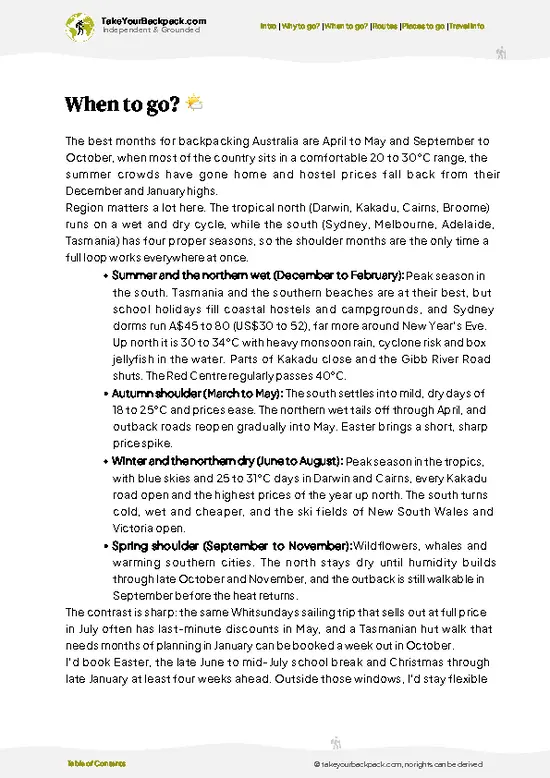
  • Summer (Dec to Feb): Daytime highs run 20 to 24°C (68 to 75°F), with long light until about 8:30 pm. Beaches and campgrounds fill, school holidays book Tidal River out by ballot, and prices peak.
  • Autumn (Mar to May): Highs of 16 to 21°C (61 to 70°F), settled weather, far fewer people, and golden light by about 6 pm in April.
  • Winter (Jun to Aug): 9 to 14°C (48 to 57°F), rain and wind, dark by 5 pm. Tracks are quiet and accommodation is easy to find.
  • Spring (Sep to Nov): 14 to 19°C (57 to 66°F), wildflowers, and nesting birds. Weather swings quickly.
Book Tidal River for summer or Easter months ahead, and walk midweek for solitude.

source: climatestotravel.comJANJanuary: excellent for travelingFEBFebruary: excellent for travelingMARMarch: highly recommended for travelingAPRApril: highly recommended for travelingMAYMay: good for travelingJUNJune: fair for travelingJULJuly: fair for travelingAUGAugust: fair for travelingSEPSeptember: highly recommended for travelingOCTOctober: highly recommended for travelingNOVNovember: highly recommended for travelingDECDecember: excellent for traveling
australia-national-park-wilsons-promontory
© Google | Tristan Heinig

✈️ The backpacker research shortcutAustralia Travel Guide

An offline-friendly backpacking guide with optimized travel routes, ranked highlights, transport advice, and the best areas to stay.
example page 0 from our offline Travel Guide for Australia
example page 1 from our offline Travel Guide for Australia
example page 2 from our offline Travel Guide for Australia
example page 3 from our offline Travel Guide for Australia
example page 4 from our offline Travel Guide for Australia
example page 5 from our offline Travel Guide for Australia
example page 6 from our offline Travel Guide for Australia
example page 7 from our offline Travel Guide for Australia
The digital guide (414 pages) contains:
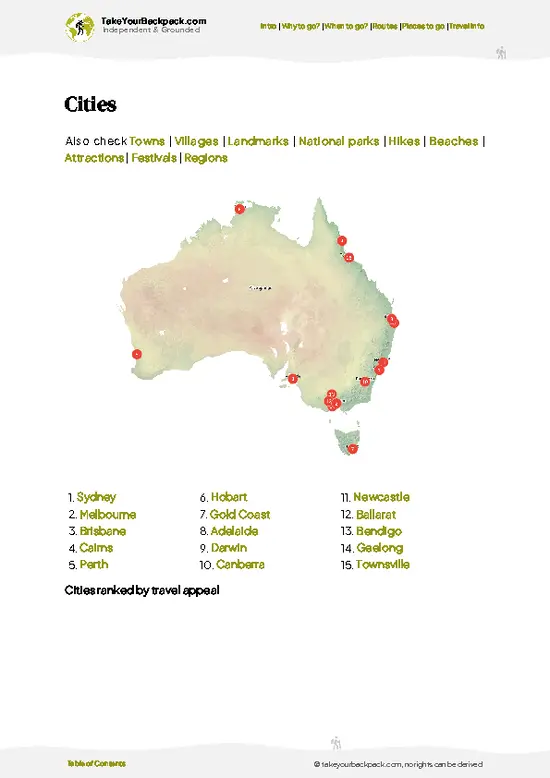
✅ 143 highlights, ranked by travel appeal
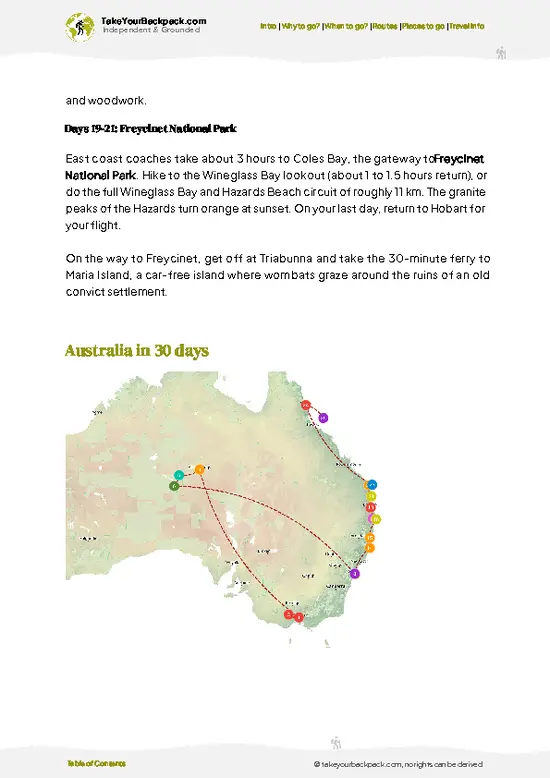
✅ Optimized 14, 21 & 30-day travel routes
✅ Cities, national parks, landmarks, beaches
✅ How to get around
✅ Offline-friendly for travel without Wi-Fi
👉 Click to see all 30+ guide features

📅 Plan smarter in minutes, not weeks
✅ Month by month travel advice
✅ Festivals & national holidays
✅ Budget expectations

🗺️ Go to the right places, skip the overrated ones
✅ Honest pros & cons of destinations
✅ Top hikes, parks & viewpoints
✅ Lesser-known places most travelers miss
✅ Clear “worth it vs skip it” guidance

🛏️ Travel smoothly without rookie mistakes
✅ Best areas to stay
✅ Transport systems explained simply
✅ Common scams & safety advice
✅ SIM cards, money & practical tips

🌍 Understand the country, not just visit it
✅ Culture & traditions
✅ Local customs
✅ Festivals worth planning around
✅ Traveler-friendly historical context
✅ Insights that make places more meaningful

📱 Built for real travel conditions
✅ Fully downloadable PDF
✅ Works completely offline
✅ Optimized for phone use
✅ Useful in remote areas & buses
✅ Everything in one place
Stop searching, start planning
Get instant access to your full guide. 30‑day money-back guarantee.
+ Add another guide for just

By proceeding you agree to our terms.
Sent to your inbox immediately after payment • 100% Secure Checkout
Best Backpacking Travel Advisor 2025 tourism awardBest Backpacking
Travel Advisor
2025
What others say about Take Your Backpack Guides:
⭐⭐⭐⭐⭐
Fantastic, amazing amount of information!
⭐⭐⭐⭐⭐
My goodness this is amazing, it's what I've been looking for hats off too you!
⭐⭐⭐⭐⭐
I think this is absolutely BRILLIANT
⭐⭐⭐⭐
Very complete and informative. It's still missing places, but I gotta to commend you
⭐⭐⭐⭐⭐
This is truly amazing, thank you, can't wait to explore it with my kids!
⭐⭐⭐⭐⭐
Awesome resource, thank you!
⭐⭐⭐⭐⭐
This is amazing! Can't wait to explore the ones I haven't seen
⭐⭐⭐⭐
I love this! Well done, great idea.
⭐⭐⭐⭐⭐
Thanks for taking the time to make this gem!
⭐⭐⭐⭐⭐
This might be the best website I've ever seen.
⭐⭐⭐⭐⭐
Congratulations, and thank you so much for your work; it's incredibly valuable.
⭐⭐⭐⭐
In all seriousness I think you did a great job pointing out the important spots
⭐⭐⭐⭐⭐
10/10 very good
⭐⭐⭐⭐⭐
As someone who's only just starting to visit regularly this is awesome, thank you.
⭐⭐⭐⭐
Thank you very much! I'm going to visit my dad, it's going to be very useful!
⭐⭐⭐⭐⭐
This is really cool! We'll be travelling for the first time and this definitely come in handy.
⭐⭐⭐⭐⭐
You are now our minister of culture, congratulations 👨‍💼
⭐⭐⭐⭐⭐
Just wanted to tell you that this is a pearl! Going to follow your recommendations.
⭐⭐⭐⭐⭐
This is so cool. I'll definitely be using the resource for my travels soon.
⭐⭐⭐⭐⭐
This is very impressive! Good work.
⭐⭐⭐⭐⭐
This is an amazing and informative site. Very well done!

🛏️ Where to stay?How to pick the right area

The best base for backpackers is Tidal River, the only developed settlement inside the park, with a campground, powered sites, huts, cabins and a general store. Summer and Easter spots go through a ballot or sell out months ahead, so apply early. Outside peak periods you can usually book a few weeks out.

Hike-in campsites at places like Sealers Cove, Refuge Cove, Little Waterloo Bay and Oberon Bay need a permit and are the way to go for overnight walkers. Most are basic, with tank water or creeks and a toilet.

Outside the park, Foster (about 30 minutes from the gate) has motels, a caravan park … read more 👉
The best base for backpackers is Tidal River, the only developed settlement inside the park, with a campground, powered sites, huts, cabins and a general store. Summer and Easter spots go through a ballot or sell out months ahead, so apply early. Outside peak periods you can usually book a few weeks out.

Hike-in campsites at places like Sealers Cove, Refuge Cove, Little Waterloo Bay and Oberon Bay need a permit and are the way to go for overnight walkers. Most are basic, with tank water or creeks and a toilet.

Outside the park, Foster (about 30 minutes from the gate) has motels, a caravan park and cafes. Yanakie, just before the entrance, offers holiday cabins, a caravan park and a few farm stays. Fish Creek has a hostel-style lodge and pubs. Self-catering is wise, as supplies are limited the closer you get.

👛 Costs (as of 15 October 2026)Typical daily expenses

A realistic daily budget for Wilsons Promontory is about US$75 for a backpacker who camps and cooks. Park entry is currently free, which helps, but getting here and eating well keeps the total up.
CategoryBudget RangeLocal Reality
Entrance feeUS$0No day-entry charge for walkers and vehicles. Overnight hiking needs a booked permit or campsite.
CampingUS$22 to 45Tidal River sites cost more in school holidays and summer, and sell out months ahead. Hike-in sites on the Southern Circuit are cheaper. Budget US$35 for high season.
Hostel or cabinUS$35 to 60Dorm beds exist in nearby towns such as Foster, Fish Creek and Yanakie. Park cabins and huts cost far more.
Local transportUS$0 to 20The Tidal River shuttle bus is cheap when running. Coach connections from Melbourne are limited, so most people drive
… read more 👉
A realistic daily budget for Wilsons Promontory is about US$75 for a backpacker who camps and cooks. Park entry is currently free, which helps, but getting here and eating well keeps the total up.
CategoryBudget RangeLocal Reality
Entrance feeUS$0No day-entry charge for walkers and vehicles. Overnight hiking needs a booked permit or campsite.
CampingUS$22 to 45Tidal River sites cost more in school holidays and summer, and sell out months ahead. Hike-in sites on the Southern Circuit are cheaper. Budget US$35 for high season.
Hostel or cabinUS$35 to 60Dorm beds exist in nearby towns such as Foster, Fish Creek and Yanakie. Park cabins and huts cost far more.
Local transportUS$0 to 20The Tidal River shuttle bus is cheap when running. Coach connections from Melbourne are limited, so most people drive or share fuel.
Food and suppliesUS$15 to 30Stock up in Foster or Meeners Corner before entering. The Tidal River general store is small and pricey, so bring camping meals and gas.
Total Daily BudgetUS$72 to 110Based on US$35 camping, US$12 transport share and US$25 food, about US$72, plus extras like gas and park shuttle.


source: parks.vic.gov.au
⚠️ Prices can change and everyone travels differently, so take this as a rough guide. Hope it helps you plan your adventure!

🥾 TrailsPlan your hike in Wilsons Promontory: routes, terrain, and sights

Trails here are well marked and range from short strolls to multi-day walks.
  • Mount Oberon Summit Walk: about 7 km return, 2.5 to 3 hours, moderate. Steady climb on a granite track with coastal views at the top.
  • Squeaky Beach Nature Walk: about 5 km return, 1.5 hours, easy. Gentle forest and coastal track to a white sand beach.
  • Sealers Cove Track: about 19 km return, 6 to 7 hours, moderate. Rainforest, wetland boardwalks and a quiet beach with camping.
  • Lighthouse Track: about 38 km return, usually 2 to 3 days, moderate to hard. Granite headlands and coast, overnight camping in between.
  • Northern Circuit:
… read more 👉
Trails here are well marked and range from short strolls to multi-day walks.
  • Mount Oberon Summit Walk: about 7 km return, 2.5 to 3 hours, moderate. Steady climb on a granite track with coastal views at the top.
  • Squeaky Beach Nature Walk: about 5 km return, 1.5 hours, easy. Gentle forest and coastal track to a white sand beach.
  • Sealers Cove Track: about 19 km return, 6 to 7 hours, moderate. Rainforest, wetland boardwalks and a quiet beach with camping.
  • Lighthouse Track: about 38 km return, usually 2 to 3 days, moderate to hard. Granite headlands and coast, overnight camping in between.
  • Northern Circuit: about 60 km, usually 4 to 5 days, hard. Forest, estuaries and beach sections, much of it unmarked.
Wildlife is easy to spot: wombats at dusk, kangaroos on open flats, emus and many birds. Terrain includes boardwalks, sand and rocky granite, with some slippery sections after rain.
Public transport to the park is limited, so most hikers drive. Summer and school holidays are very crowded, while midweek winter days are quiet. A park entry fee applies, and overnight hikers need booked camping permits.
⚠️ Hiking info can sometimes be outdated or inaccurate. Before you hit the trail, check the latest conditions with locals. If you do spot anything that's off, I'd love to hear from you, so I can update it for fellow travelers.

🛡️ SafetyScams, Hazards, and Annoyances

The Prom is well managed and most tracks are straightforward, but weather changes fast, so pack a rain shell and warm layer even in summer. Tiger snakes and other snakes appear in warm months, particularly on grassy tracks and near water, so wear closed shoes and give them space. Wombats and kangaroos are used to people near Tidal River, yet should never be fed or approached. Lock food away in camp, since possums raid tents. Overnight hikers must carry a permit, plenty of water for dry stretches, and a tide table for crossings like Sealers Cove. Rip currents make most beaches risky for swimming, so stay close to shore. Mobile coverage is patchy.

FAQFrequently asked questions about Wilsons Promontory

Plan on two to three days for the main highlights, or four to five if you want an overnight hike. A day trip from Melbourne is possible (about 3 hours each way), but it only allows Tidal River, Squeaky Beach and Mount Oberon. Three days adds the Lilly Pilly Gully loop and a walk to Sealers Cove.
Without a car it is difficult, because no regular public transport runs into the park. V/Line coaches reach Foster or Meeniyan from Melbourne, and from there you need a taxi, hire car or organized tour. Several operators run guided day tours or multi-day hiking trips from Melbourne for about A$130 to 200 per day.
Entry is free, with no gate fee for visitors. Overnight hikers need a permit and a booking for a hike-in campsite, costing roughly A$15 to 30 per person per night. Tidal River camping also requires a reservation, and summer sites are allocated by ballot.
⚠️ Things can change over time, so always validate details locally before you go.

Other Australian national parks near Wilsons Promontory

Explore more nearby:


💡 Not sure where to go next?
Create a personalized itinerary for Australia including Wilsons Promontory and the places that fit your trip.

Generate my itinerary

👉 Discover all national parks

Or checkout all Australia has to offer (think cities, towns, villages, national parks, hikes, beaches, festivals)
Country photo of Australia

We 💚 feedbackKey takeaways before you go

The classic mistake is turning up on a summer weekend expecting to find a campsite. Book Tidal River or hike-in permits well ahead, or go midweek. I would skip the crowded car parks entirely and walk to Sealers Cove, where the beach is far quieter.

✈️ When did I visit Australia?
On my trip to New Zealand in 1993, I had a short stop in Australia as well.

✍️ Help improve this page!
The information on this page is based on my own backpacking experience in Australia, supplemented with up-to-date research and feedback from other travelers. Travel details can change, so if you notice anything outdated or incomplete, feel free to let me know.


🙋‍♂️ Give feedback

👋 Meet the founderWho’s Behind Take Your Backpack?

Johan, backpacker and founder of TakeYourBackpackHi, I’m Johan (Netherlands 🇳🇱), the creator of TakeYourBackpack. Over the past 3 decades, I’ve backpacked through 90+ countries across six continents, gaining extensive experience with independent travel, long-term trips, and overland routes.

This site is built on a combination of firsthand travel experience and carefully curated insights from other backpackers. Many guides are based on places I’ve personally visited, while others bring together tips, observations, and practical advice shared by trusted travelers I’ve met along the way.

The goal is to provide realistic, experience-driven guidance — not generic itineraries — so you can explore destinations with better context, clearer expectations, and more confidence.