How many regions to visit: Plan on
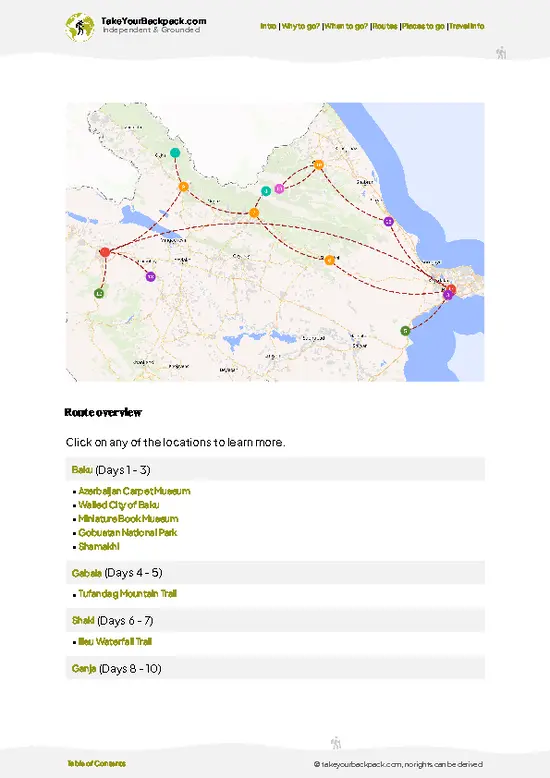
three or four regions on a first trip of two weeks. Roads are slow, intercity transport is often a shared minibus that leaves when full, and each area needs two to three nights to be worth the transfer. Fewer than three wastes the variety, while more than five means mostly sitting in vehicles.
Choosing by travel style: Hikers and photographers should prioritize
mountain regions, accepting rougher transport and basic guesthouses. If you want food, wine, history and easy walking, favor the
lowland towns, which have more guesthouses and regular buses. A short trip with limited time suits the Baku-centered coast, which has the best connections. The south and Nakhchivan reward travelers with extra time, as they need separate transport legs.
Budget: Outside Baku, …
read more 👉 How many regions to visit: Plan on three or four regions on a first trip of two weeks. Roads are slow, intercity transport is often a shared minibus that leaves when full, and each area needs two to three nights to be worth the transfer. Fewer than three wastes the variety, while more than five means mostly sitting in vehicles.
Choosing by travel style: Hikers and photographers should prioritize mountain regions, accepting rougher transport and basic guesthouses. If you want food, wine, history and easy walking, favor the lowland towns, which have more guesthouses and regular buses. A short trip with limited time suits the Baku-centered coast, which has the best connections. The south and Nakhchivan reward travelers with extra time, as they need separate transport legs.
Budget: Outside Baku, a backpacker can manage on US$30 to 50 a day (roughly 50 to 85 AZN). Guesthouse or hostel beds run about 15 to 40 AZN, and a full meal in a local restaurant is 8 to 20 AZN. Marshrutka fares between regions are typically 5 to 20 AZN per leg, while shared taxis cost two to three times that. Museum and site entry is commonly 2 to 10 AZN, and a local driver or guide for a mountain day costs about 80 to 200 AZN depending on the road and distance. A mid-range traveler should plan on US$60 to 100 a day. Carry cash, since cards are accepted mainly in larger towns and ATMs are scarce in villages.
Safety and conduct: Azerbaijan has low violent crime, and the main risks are road-related: fast driving, poor lighting and winding mountain surfaces. Avoid night travel on rural roads. Stay away from the border zones and former conflict areas, where landmines remain and entry is restricted. Photographing military sites or border posts can draw attention from police. Carry your passport for checkpoints, which are routine.
Cultural considerations: The country is largely secular and Muslim by heritage. In villages, cover shoulders and knees, and dress modestly at mosques and shrines, removing shoes at entrances. Hospitality is strong, and accepting tea is normal. Refusing repeatedly can offend. Bargain politely at markets, but not in shops with set prices. Russian helps more than English in rural areas, and a translation app and a few Azerbaijani phrases will go far.
Book the first night after arrival ahead, and confirm mountain road status with your host, since conditions change quickly. Travel insurance should cover hiking and, in winter, snow-related disruption.

 Best Backpacking
 Hi, I’m Johan (Netherlands 🇳🇱), the creator of TakeYourBackpack. Over the past 3 decades, I’ve backpacked through 90+ countries across six continents, gaining extensive experience with independent travel, long-term trips, and overland routes.