×

Bangladesh🇧🇩 | citiesDhakarickshaw traffic, Mughal relics, street food | things to do and best time to go

Explore Cox’s BazarExplore Khulna

Backpacking in Dhaka
🏆 Top pickcity ranked #1
By Johan Kruseman 🇳🇱 | Updated June 5, 2026

Ten years ago Dhaka felt like pure chaos: fewer flyovers, more rickshaws, almost no metro, and backpackers were unicorns. Today it’s still intense, but the edges are a bit sanded down: a growing metro system, more mid-range cafés, better rideshare apps. You’re in central Bangladesh, on the Buriganga River, in the country’s political and economic brain. For a backpacker, Dhaka is high-friction, high-reward: Old Dhaka’s lanes around Ahsan Manzil and Lalbagh Fort are dense with history and street food, the Liberation War Museum hits hard, and Ramna Park or Hatirjheel give you a breather. It’s cheap once you’re in, but traffic taxes your time and nerves. Meeting other travelers is harder than in Sylhet or Cox’s Bazar; you’ll meet curious locals instead. Safety is mostly about traffic and petty hassle, not violent crime. Compared to Chittagong or Khulna, Dhaka is louder, heavier, and more addictive.

Discover everything you want to know in the 📖 Bangladesh Travel Guide.
Loading the map 🌍
CLICK TO FILTER
cities
towns
landmarks
national parks
hikes
beaches
attractions
festivals
regions
SHOW COUNTRY’S BESTSHOW ALL

✨ Why go?
Ranked #1 city in Bangladesh
The unique appeal for travelers

Dhaka is a backpacker’s hub that offers a unique blend of affordability and vibrancy. It’s not just a stopover; it’s a basecamp for exploring Bangladesh. The hostel scene is thriving, with budget-friendly options that foster a sense of community. You’ll find fellow travelers swapping stories over street food that’s both delicious and cheap.

The city’s walkability makes it easy to dive into local life. You can wander through bustling markets or sip tea with locals, soaking in the culture without breaking the bank. For those who crave a bit of nightlife, Dhaka has a surprising array of bars and cafes that cater to all tastes, from laid-back hangouts to lively spots.

When it comes to day trips, Dhaka serves as a strategic launchpad. You can easily venture out to explore the countryside or … read more 👉
Dhaka is a backpacker’s hub that offers a unique blend of affordability and vibrancy. It’s not just a stopover; it’s a basecamp for exploring Bangladesh. The hostel scene is thriving, with budget-friendly options that foster a sense of community. You’ll find fellow travelers swapping stories over street food that’s both delicious and cheap.

The city’s walkability makes it easy to dive into local life. You can wander through bustling markets or sip tea with locals, soaking in the culture without breaking the bank. For those who crave a bit of nightlife, Dhaka has a surprising array of bars and cafes that cater to all tastes, from laid-back hangouts to lively spots.

When it comes to day trips, Dhaka serves as a strategic launchpad. You can easily venture out to explore the countryside or nearby attractions, maximizing your time. The city’s transport links are decent, making onward travel straightforward. If you’re looking for a place that balances excitement with value, Dhaka is worth your time, whether for a few days or just a quick stop.
Want to include Dhaka in your Bangladesh route?
Create a personalized Bangladesh itinerary that includes Dhaka and the places that fit your trip — based on your travel style, budget, and available time. Get your route in seconds.

Generate my trip

💡 HighlightsMust-see experiences and standout moments

  • Lalbagh Fort — A 17th-century Mughal riverside fort complex in Old Dhaka with gardens, a small museum and atmospheric brickwork; great for history and wandering lanes that still feel like the city’s older heartbeat.
  • Ahsan Manzil — The pink “Nawab” palace on the Buriganga, restored as a museum showing colonial-era prosperity and family life; excellent photos and a clear sense of Dhaka’s riverine past.
  • Sadarghat Riverfront (Buriganga Ghats) — Noisy, crowded boat terminals where you can hop on a launch or just watch the river economy in action; pure, chaotic Dhaka life and unbeatable for sunrise/sunset people-watching.
  • Star Mosque (Tara Masjid) — A tiny Old Dhaka gem covered in star-shaped mosaics and glazed tiles; the interior mosaics are surprisingly intricate and peaceful compared with
read more 👉
  • Lalbagh Fort — A 17th-century Mughal riverside fort complex in Old Dhaka with gardens, a small museum and atmospheric brickwork; great for history and wandering lanes that still feel like the city’s older heartbeat.
  • Ahsan Manzil — The pink “Nawab” palace on the Buriganga, restored as a museum showing colonial-era prosperity and family life; excellent photos and a clear sense of Dhaka’s riverine past.
  • Sadarghat Riverfront (Buriganga Ghats) — Noisy, crowded boat terminals where you can hop on a launch or just watch the river economy in action; pure, chaotic Dhaka life and unbeatable for sunrise/sunset people-watching.
  • Star Mosque (Tara Masjid) — A tiny Old Dhaka gem covered in star-shaped mosaics and glazed tiles; the interior mosaics are surprisingly intricate and peaceful compared with the bustle outside.
  • Dhakeshwari Temple — The national temple that gave the city its name; a living place of worship with ritual, festivals and layers of history tucked into a compact downtown site.
  • Liberation War Museum — Clear, well-curated exhibits on 1971 with personal testimonies, artifacts and photos; essential for understanding modern Bangladesh beyond headlines.
  • Jatiyo Sangsad Bhaban (National Parliament Complex) — Louis Kahn’s monumental architecture set in peaceful lawns; the exterior and visitor center alone are worth it, and the guided interior visit (permit required) is memorable.
  • Baldha Garden — A small, old botanical garden in Wari with a surprising collection of rare plants and a quiet, shady feel — a good escape from traffic without leaving the old city.
  • Shankhari Bazaar — A narrow winding lane of artisans, conch-carvers and tiny shops in Old Dhaka; it’s less a polished attraction and more a stroll through living heritage and cramped urban charm.
  • Shaheed Minar (Central Monument) — The central monument to the 1952 language movement; visiting gives a strong civic and emotional context to Bangla identity, and the site is one of the city’s most photographed public spaces.
A few great day trips just outside Dhaka: Sonargaon (Panam City ruins and Folk Art Museum), the National Martyrs’ Memorial at Savar, and Bhawal National Park for a quick nature escape.
Spotted a mistake or missing something? Contact us.

Things to do in Dhaka

Ratings based on Tripadvisor reviews. When you book through this link, you support our work at no extra cost to you.

🏘️ NeighborhoodsNeighborhood guide to Dhaka

Dhaka is a bustling metropolis where every corner offers a new experience. Here’s a breakdown of key neighborhoods for backpackers to navigate the city’s vibrant pulse.

Old Dhaka: This area is the heart of the city, rich in history and culture. Expect narrow streets filled with street vendors and historic mosques. It’s a sensory overload, perfect for those who thrive on energy. Costs are low, but accommodations can be basic. Walkability is high, but be prepared for chaotic traffic. Nightlife is minimal, leaning more towards local eateries than bars. Ideal for short stays to soak in the local vibe.

Gulshan: A more upscale neighborhood, Gulshan offers a different flavor of Dhaka. It’s quieter and more organized, with a mix of cafes and restaurants. Prices are higher here, but you’ll find better … read more 👉
Dhaka is a bustling metropolis where every corner offers a new experience. Here’s a breakdown of key neighborhoods for backpackers to navigate the city’s vibrant pulse.

Old Dhaka: This area is the heart of the city, rich in history and culture. Expect narrow streets filled with street vendors and historic mosques. It’s a sensory overload, perfect for those who thrive on energy. Costs are low, but accommodations can be basic. Walkability is high, but be prepared for chaotic traffic. Nightlife is minimal, leaning more towards local eateries than bars. Ideal for short stays to soak in the local vibe.

Gulshan: A more upscale neighborhood, Gulshan offers a different flavor of Dhaka. It’s quieter and more organized, with a mix of cafes and restaurants. Prices are higher here, but you’ll find better amenities. Walkability is decent, and it’s a hub for expats. Nightlife is subdued, with a few bars and lounges. Great for longer stays if you prefer a more relaxed environment.

Mirpur: Known for its local markets and vibrant street life, Mirpur is a budget-friendly option. It’s less touristy, giving you a genuine feel of daily life in Dhaka. Costs are low, and you can find affordable guesthouses. Walkability varies, but public transport is accessible. Nightlife is quiet, making it suitable for those who want to unwind. Perfect for longer stays to immerse yourself in local culture.

Motijheel: The business district of Dhaka, Motijheel is bustling during the day but quiets down at night. It’s a practical choice for those needing easy access to transport and amenities. Costs are moderate, with a range of accommodations. Walkability is good, and you’ll find plenty of food options. Ideal for short stays, especially for business travelers.

⌛️ 1 dayA smart one-day plan

Dhaka, the bustling capital of Bangladesh, is a city where the past and present collide in a whirlwind of color, sound, and flavor. It’s a place where ancient mosques stand alongside modern skyscrapers, and the aroma of street food fills the air. Spending a day here is like diving into a vibrant tapestry of life.

Start your morning in the historic neighborhood of Old Dhaka. Grab a cup of strong Bangladeshi tea at a local stall, then wander over to the stunning Lalbagh Fort. This 17th-century Mughal fort is a serene escape from the chaos outside, with its lush gardens and intricate architecture. Spend an hour exploring, soaking in the history and the peaceful atmosphere.

As the sun climbs higher, make your way to the bustling streets of Shankhari Bazar. This area is known for its traditional … read more 👉
Dhaka, the bustling capital of Bangladesh, is a city where the past and present collide in a whirlwind of color, sound, and flavor. It’s a place where ancient mosques stand alongside modern skyscrapers, and the aroma of street food fills the air. Spending a day here is like diving into a vibrant tapestry of life.

Start your morning in the historic neighborhood of Old Dhaka. Grab a cup of strong Bangladeshi tea at a local stall, then wander over to the stunning Lalbagh Fort. This 17th-century Mughal fort is a serene escape from the chaos outside, with its lush gardens and intricate architecture. Spend an hour exploring, soaking in the history and the peaceful atmosphere.

As the sun climbs higher, make your way to the bustling streets of Shankhari Bazar. This area is known for its traditional crafts and vibrant markets. Here, you can find everything from handwoven textiles to intricate woodwork. Don’t miss the chance to chat with local artisans; their stories add depth to your experience. Grab a quick lunch at a nearby eatery—try the biryani or a plate of pitha, a traditional rice cake.

In the afternoon, head to the National Museum in Shahbagh. It’s often overlooked by tourists but offers a fascinating glimpse into Bangladesh’s rich heritage. The exhibits range from ancient artifacts to contemporary art, providing a well-rounded view of the country’s culture.

As evening approaches, stroll along the banks of the Buriganga River. The sunset casts a golden hue over the water, and you’ll see local life unfold—fishing boats, families enjoying the cool breeze, and vendors selling snacks. For dinner, venture to the Gulshan neighborhood, where you can find a mix of local and international cuisine.

This day in Dhaka is a blend of history, culture, and the everyday rhythm of life. Each moment is a chance to connect with the city’s soul, making your visit not just a checklist but a rich experience.
Turn your Dhaka visit into an Bangladesh adventure
Build a complete Bangladesh route with Dhaka, hidden gems, must-see destinations, and realistic travel times included.

Generate my trip

🌤️ When to go?Best time to visit Dhaka


  • Topic: Weather – Dhaka’s climate swings between a hot, humid summer and a wet monsoon season. The dry winter months from November to February offer the most comfortable conditions, with temperatures ranging from 12°C to 25°C (54°F to 77°F). This is your sweet spot for avoiding sweat-soaked misery and relentless rain.

  • Topic: Temperature – Summer (March to June) can push highs above 35°C (95°F), making daytime trekking and city exploration exhausting. Winters are mild and pleasant, perfect for long days on foot without overheating or shivering.

  • Topic: Daylight Hours – Dhaka enjoys roughly 11 to 12 hours of daylight year-round, but the dry season’s clearer skies mean more reliable sunshine, which is crucial for early starts and late strolls.

  • Topic: Crowds – Tourist numbers peak during
read more 👉

  • Topic: Weather – Dhaka’s climate swings between a hot, humid summer and a wet monsoon season. The dry winter months from November to February offer the most comfortable conditions, with temperatures ranging from 12°C to 25°C (54°F to 77°F). This is your sweet spot for avoiding sweat-soaked misery and relentless rain.

  • Topic: Temperature – Summer (March to June) can push highs above 35°C (95°F), making daytime trekking and city exploration exhausting. Winters are mild and pleasant, perfect for long days on foot without overheating or shivering.

  • Topic: Daylight Hours – Dhaka enjoys roughly 11 to 12 hours of daylight year-round, but the dry season’s clearer skies mean more reliable sunshine, which is crucial for early starts and late strolls.

  • Topic: Crowds – Tourist numbers peak during the dry season, especially around December and January holidays. Expect busier markets and higher accommodation prices, but also more vibrant street life and events.

  • Topic: Seasonal Activities – The winter months coincide with cultural festivals like the Dhaka International Film Festival and Pohela Boishakh (Bengali New Year), offering rich local experiences that vanish in the off-season.

  • Topic: Price Fluctuations – Accommodation and flights spike during the dry season’s peak months. Traveling just before or after this window can save money while still enjoying decent weather.


Pro-tip: Aim for late November or February to balance comfort, crowd levels, and cost—this timing lets you hack Dhaka’s rhythm like a pro.


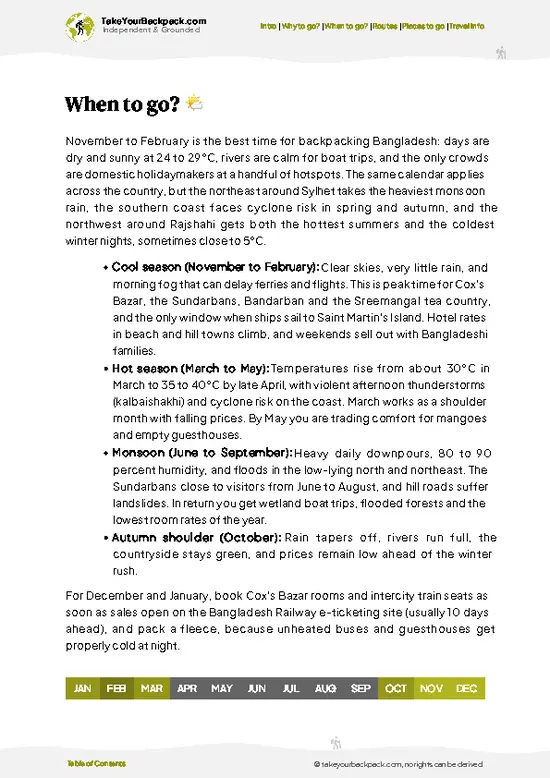
source: climatestotravel.comJANJanuary: highly recommended for travelingFEBFebruary: highly recommended for travelingMARMarch: good for travelingAPRApril: fair for travelingMAYMay: fair for travelingJUNJune: fair for travelingJULJuly: below average for travelingAUGAugust: below average for travelingSEPSeptember: below average for travelingOCTOctober: fair for travelingNOVNovember: highly recommended for travelingDECDecember: highly recommended for traveling
bangladesh-city-dhaka v1
© Google |

✈️ The backpacker research shortcutBangladesh Travel Guide

An offline-friendly backpacking guide with optimized travel routes, ranked highlights, transport advice, and the best areas to stay.
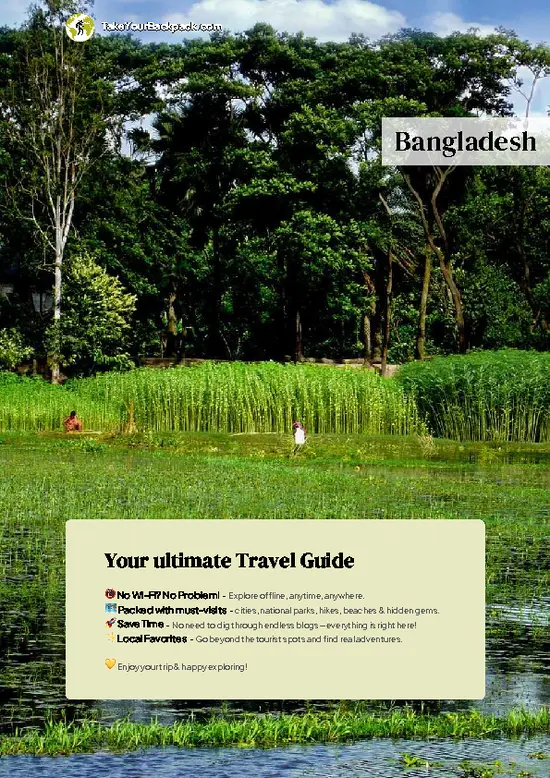
example page 0 from our offline Travel Guide for Bangladesh
example page 1 from our offline Travel Guide for Bangladesh
example page 2 from our offline Travel Guide for Bangladesh
example page 3 from our offline Travel Guide for Bangladesh
example page 4 from our offline Travel Guide for Bangladesh
example page 5 from our offline Travel Guide for Bangladesh
example page 6 from our offline Travel Guide for Bangladesh
example page 7 from our offline Travel Guide for Bangladesh
The digital guide (369 pages) contains:
107 highlights, ranked by travel appeal
Optimized 7, 14 & 21-day travel routes
Cities, national parks, landmarks, beaches
How to get around
Offline-friendly for travel without Wi-Fi
👉 Click to see all 30+ guide features

📅 Plan smarter in minutes, not weeks
Month by month travel advice
Festivals & national holidays
Budget expectations

🗺️ Go to the right places, skip the overrated ones
Honest pros & cons of destinations
Top hikes, parks & viewpoints
Lesser-known places most travelers miss
Clear “worth it vs skip it” guidance

🛏️ Travel smoothly without rookie mistakes
Best areas to stay
Transport systems explained simply
Common scams & safety advice
SIM cards, money & practical tips

🌍 Understand the country, not just visit it
Culture & traditions
52 Essential phrases & customs
Festivals worth planning around
Traveler-friendly historical context
Insights that make places more meaningful

📱 Built for real travel conditions
Fully downloadable PDF
Works completely offline
Optimized for phone use
Useful in remote areas & buses
Everything in one place
Save weeks of stressful planning
Get instant access to your full guide. 30‑day money-back guarantee.


By proceeding you agree to our terms.
Sent to your inbox immediately after payment • 100% Secure Checkout
Best Backpacking Travel Advisor 2025 tourism awardBest Backpacking
Travel Advisor
2025
What others say about Take Your Backpack Guides:
⭐⭐⭐⭐⭐
Fantastic, amazing amount of information!
⭐⭐⭐⭐⭐
My goodness this is amazing, it's what I've been looking for hats off too you!
⭐⭐⭐⭐⭐
I think this is absolutely BRILLIANT
⭐⭐⭐⭐
Very complete and informative. It's still missing places, but I gotta to commend you
⭐⭐⭐⭐⭐
This is truly amazing, thank you, can't wait to explore it with my kids!
⭐⭐⭐⭐⭐
Awesome resource, thank you!
⭐⭐⭐⭐⭐
This is amazing! Can't wait to explore the ones I haven't seen
⭐⭐⭐⭐
I love this! Well done, great idea.
⭐⭐⭐⭐⭐
Thanks for taking the time to make this gem!
⭐⭐⭐⭐⭐
This might be the best website I've ever seen.
⭐⭐⭐⭐⭐
Congratulations, and thank you so much for your work; it's incredibly valuable.
⭐⭐⭐⭐
In all seriousness I think you did a great job pointing out the important spots
⭐⭐⭐⭐⭐
10/10 very good
⭐⭐⭐⭐⭐
As someone who's only just starting to visit regularly this is awesome, thank you.
⭐⭐⭐⭐
Thank you very much! I'm going to visit my dad, it's going to be very useful!
⭐⭐⭐⭐⭐
This is really cool! We'll be travelling for the first time and this definitely come in handy.
⭐⭐⭐⭐⭐
You are now our minister of culture, congratulations 👨‍💼
⭐⭐⭐⭐⭐
Just wanted to tell you that this is a pearl! Going to follow your recommendations.
⭐⭐⭐⭐⭐
This is so cool. I'll definitely be using the resource for my travels soon.
⭐⭐⭐⭐⭐
This is very impressive! Good work.
⭐⭐⭐⭐⭐
This is an amazing and informative site. Very well done!

🛏️ Where to stay?Best areas to stay in Bangladesh

Old Dhaka is where the city’s pulse beats strongest for backpackers who want to dive into authentic chaos without losing their heads. It’s a dense maze of narrow streets, vibrant markets, and street food stalls that never sleep. The vibe here is raw and social—perfect for solo travelers eager to connect with locals and fellow wanderers. Hostels are fewer but tend to be small, family-run, and budget-friendly, offering a chance to trade comfort for immersion. Safety can be a mixed bag, so sticking to well-trodden paths and traveling in daylight hours is smart. The payoff is a cultural deep-dive … read more 👉
Old Dhaka is where the city’s pulse beats strongest for backpackers who want to dive into authentic chaos without losing their heads. It’s a dense maze of narrow streets, vibrant markets, and street food stalls that never sleep. The vibe here is raw and social—perfect for solo travelers eager to connect with locals and fellow wanderers. Hostels are fewer but tend to be small, family-run, and budget-friendly, offering a chance to trade comfort for immersion. Safety can be a mixed bag, so sticking to well-trodden paths and traveling in daylight hours is smart. The payoff is a cultural deep-dive that’s hard to match elsewhere.

Gulshan and Banani are the upscale counterpoints, popular with expats and wealthier travelers. For backpackers, these neighborhoods offer a safer, cleaner environment with more reliable infrastructure and a handful of hostels and guesthouses that lean toward comfort over grit. The social scene here is more polished—cafés, bars, and international eateries where you can meet other travelers without the sensory overload of Old Dhaka. The trade-off is paying a premium for peace of mind and modern amenities.

Motijheel and New Market areas serve as practical hubs for budget travelers focused on convenience. They’re busy commercial zones with plenty of affordable lodging options and easy access to transport. The vibe is less about socializing and more about efficiency—ideal if you want to maximize your time exploring rather than hanging out.

In Dhaka, your choice boils down to what you’re willing to trade: immersive chaos and social buzz in Old Dhaka, polished safety and comfort in Gulshan/Banani, or straightforward, budget-friendly logistics in Motijheel/New Market. Each area shapes your experience distinctly, so pick your base like a chess move—strategic and aligned with your travel goals.

🚌 Getting aroundTransportation options and practical tips

Dhaka moves like a river with unpredictable currents—sometimes a steady flow, sometimes a chaotic surge. The city’s pulse isn’t dictated by rigid timetables but by a blend of honking horns, bargaining voices, and the ebb and flow of crowds. Here, time bends around traffic snarls and the human rhythm of the street. If you want to master Dhaka’s transit, you need to think less like a clock and more like a local reading the mood of the city. Your choices between time, money, and comfort will shape how you experience this sprawling metropolis, and knowing the trade-offs means you’re not just surviving the chaos—you’re winning it.


  • Rickshaw: The quintessential Dhaka ride. Cheap (around 20-50 BDT per short trip), slow but flexible, and perfect for weaving through narrow alleys where bigger vehicles
read more 👉
Dhaka moves like a river with unpredictable currents—sometimes a steady flow, sometimes a chaotic surge. The city’s pulse isn’t dictated by rigid timetables but by a blend of honking horns, bargaining voices, and the ebb and flow of crowds. Here, time bends around traffic snarls and the human rhythm of the street. If you want to master Dhaka’s transit, you need to think less like a clock and more like a local reading the mood of the city. Your choices between time, money, and comfort will shape how you experience this sprawling metropolis, and knowing the trade-offs means you’re not just surviving the chaos—you’re winning it.


  • Rickshaw: The quintessential Dhaka ride. Cheap (around 20-50 BDT per short trip), slow but flexible, and perfect for weaving through narrow alleys where bigger vehicles can’t go. No schedules here—just flag one down and negotiate. Comfort is minimal; expect a bumpy, open-air ride with the city’s smells and sounds all around you.


  • Bus: The budget traveler’s backbone. Fares range from 10 to 30 BDT depending on distance. Buses run roughly from 6 AM to 10 PM but expect irregular intervals and packed conditions during rush hours. Speed varies wildly—traffic jams can turn a 30-minute trip into an hour or more. Comfort is basic; standing room is common, and air conditioning is rare.


  • Tempo (Auto-rickshaw): Faster than a rickshaw and more comfortable, with a metal frame and sometimes a roof. Fares start around 30 BDT. Tempos follow semi-fixed routes but don’t run on strict schedules. They’re a good middle ground if you want to save time without breaking the bank, though traffic still dictates your pace.


  • Walking: The ultimate low-cost option and often the fastest way through congested neighborhoods. Dhaka’s sidewalks can be uneven and crowded, so watch your step and your belongings. Walking lets you soak in the city’s texture, but it’s not for covering long distances or during the midday heat. Plan your route carefully to avoid getting stuck in traffic bottlenecks.


  • Ride-Sharing Apps (Uber, Pathao): A modern convenience that offers comfort and relative speed, with fares starting around 150 BDT for short trips. Available 24/7 but surge pricing can spike costs during peak hours. These rides provide air conditioning and a more predictable experience, but you trade off some budget for comfort and reliability.

👛 Costs (as of 29 March 2026)What things cost and how to budget

Backpacking in Dhaka, Bangladesh, offers a fascinating blend of affordability and urban chaos, but understanding the cost trade-offs is key to mastering your budget and comfort.
  • Dorm Accommodation (High Season): Expect to pay around $8 to $12 per night for a bed in a basic dormitory. High season can push prices slightly higher due to demand, especially in popular guesthouses near central areas.
  • Dorm Accommodation (Off-Season): Prices drop to about $5 to $8 per night when fewer travelers are around. This is the sweet spot for budget-conscious backpackers who don’t mind a quieter vibe.
  • Meals: Street food and local eateries dominate the scene, with meals typically costing between $1 and $3. A filling plate of rice, lentils, and vegetables or a local snack like fuchka keeps costs low without
read more 👉
Backpacking in Dhaka, Bangladesh, offers a fascinating blend of affordability and urban chaos, but understanding the cost trade-offs is key to mastering your budget and comfort.
  • Dorm Accommodation (High Season): Expect to pay around $8 to $12 per night for a bed in a basic dormitory. High season can push prices slightly higher due to demand, especially in popular guesthouses near central areas.
  • Dorm Accommodation (Off-Season): Prices drop to about $5 to $8 per night when fewer travelers are around. This is the sweet spot for budget-conscious backpackers who don’t mind a quieter vibe.
  • Meals: Street food and local eateries dominate the scene, with meals typically costing between $1 and $3. A filling plate of rice, lentils, and vegetables or a local snack like fuchka keeps costs low without sacrificing flavor or authenticity.
  • Local Transport: Rickshaws and CNG auto-rickshaws are the go-to options, costing roughly $0.20 to $0.50 per short trip. Negotiating fares is part of the game, and it’s a cheap way to navigate the city’s dense traffic.
  • City Transport Pass: Dhaka doesn’t have a widespread public transit pass system like metros or buses common in other cities. Most travelers rely on individual rides, so budgeting for daily local transport fares is more practical than a pass.
  • Basic Activities/Entry Fees: Entry to museums or historical sites typically ranges from $1 to $3. Many cultural spots are inexpensive but offer a rich dive into Dhaka’s heritage, making these small fees worthwhile.
  • Miscellaneous Expenses: Budget around $1 to $3 for essentials like bottled water, snacks, or occasional internet cafes. These small costs add up but remain manageable within a tight budget.

In total, a backpacker in Dhaka can expect to spend roughly $10 to $20 per day, depending on season and personal choices. This range balances basic comfort with the city’s low-cost lifestyle, letting you decide where to save and where to splurge for a memorable experience.
⚠️ Prices can change and everyone travels differently, so take this as a rough guide. Hope it helps you plan your adventure!

🚌 Day tripsExploring the surroundings

Dhaka serves as a vibrant launchpad for day trips that reveal the rich tapestry of Bangladesh. Each journey offers unique experiences, allowing you to dive deeper into the culture, history, and natural beauty of the region.

Bagerhat
Just a few hours from Dhaka, Bagerhat is home to the stunning Sixty Dome Mosque, a UNESCO World Heritage site. The mosque’s intricate architecture and serene surroundings make it a must-see. The journey takes about 4 hours by bus, costing around 300 BDT. Aim for the cooler months from November to February for the best experience. A common mistake is underestimating the heat; pack plenty of water and a hat to stay comfortable.


Sundarbans
The Sundarbans, the largest mangrove forest in the world, is a bit more ambitious but absolutely worth it. You can reach … read more 👉
Dhaka serves as a vibrant launchpad for day trips that reveal the rich tapestry of Bangladesh. Each journey offers unique experiences, allowing you to dive deeper into the culture, history, and natural beauty of the region.

Bagerhat
Just a few hours from Dhaka, Bagerhat is home to the stunning Sixty Dome Mosque, a UNESCO World Heritage site. The mosque’s intricate architecture and serene surroundings make it a must-see. The journey takes about 4 hours by bus, costing around 300 BDT. Aim for the cooler months from November to February for the best experience. A common mistake is underestimating the heat; pack plenty of water and a hat to stay comfortable.


Sundarbans
The Sundarbans, the largest mangrove forest in the world, is a bit more ambitious but absolutely worth it. You can reach the entry point in about 5 hours by bus, with costs around 600 BDT. This UNESCO site is famous for its Royal Bengal Tigers and unique ecosystem. The best time to visit is between November and February when wildlife spotting is optimal. Many first-timers overlook the need for a guide; don’t skip this step to enhance your experience and safety.
👉 Explore Sundarbans

Narayanganj
Just an hour away, Narayanganj offers a glimpse into the local textile industry. You can explore vibrant markets and even visit a few factories. The trip costs around 100 BDT, making it a budget-friendly option. The best time to go is early morning to avoid the heat and crowds. A common pitfall is not bargaining in the markets; it’s part of the experience and can save you some cash.
👉 Explore Narayanganj

Sonargaon
Once the capital of Bengal, Sonargaon is rich in history and culture. It’s about 1.5 hours from Dhaka, costing around 200 BDT. The Panam City ruins and the Folk Art Museum are highlights. Visit during the cooler months for a more pleasant experience. First-timers often miss the museum’s opening hours; check ahead to make the most of your visit.


Each of these trips offers a unique slice of Bangladesh, making them high-value experiences that enrich your journey. Choose wisely, and you’ll walk away with stories that last a lifetime.
Want to know what more Bangladesh offers?
The Bangladesh Travel Guide describes 107 highlights, from cities to national parks, from beaches to hikes

Get the Travel Guide -

🍲 FoodEating & Drinking in Dhaka

In Dhaka, the food scene is a vibrant tapestry of flavors that beckons every backpacker. Start with biriyani, a fragrant rice dish layered with marinated meat, spices, and sometimes boiled eggs. The aroma alone is enough to pull you into a bustling market, where vendors serve it fresh, steaming, and full of character.

Don’t miss puchka, the local take on street food. These crispy, hollow puris filled with spiced water and chickpeas are a burst of flavor in every bite. You’ll find them at street stalls, surrounded by locals laughing and sharing stories. It’s a communal experience, so dive in and join the fun.

For a refreshing drink, try lassi, a yogurt-based beverage that’s both cooling and satisfying. You’ll often see it served in clay pots, adding an earthy touch to your experience.

Eating … read more 👉
In Dhaka, the food scene is a vibrant tapestry of flavors that beckons every backpacker. Start with biriyani, a fragrant rice dish layered with marinated meat, spices, and sometimes boiled eggs. The aroma alone is enough to pull you into a bustling market, where vendors serve it fresh, steaming, and full of character.

Don’t miss puchka, the local take on street food. These crispy, hollow puris filled with spiced water and chickpeas are a burst of flavor in every bite. You’ll find them at street stalls, surrounded by locals laughing and sharing stories. It’s a communal experience, so dive in and join the fun.

For a refreshing drink, try lassi, a yogurt-based beverage that’s both cooling and satisfying. You’ll often see it served in clay pots, adding an earthy touch to your experience.

Eating customs here are as rich as the food itself. Sharing is common; don’t be surprised if someone offers you a taste of their meal. And when it comes to etiquette, using your right hand for eating is the norm—an important cultural touchstone.

In Dhaka, every meal is an adventure, a chance to connect with the city’s soul. Embrace the chaos, savor the flavors, and let the local cuisine guide your journey.

🛡️ SafetyTraveler Safety Guide

Dhaka is generally safe for backpackers, but a few areas and situations require extra awareness. Stick to well-lit streets in neighborhoods like Gulshan and Banani after dark. Solo travelers should avoid wandering too far off the beaten path at night; it’s all about staying in the flow of people and activity.

Common scams include overly friendly locals who might offer to guide you but then expect payment. Politely decline and keep your plans to yourself. Rickshaw drivers can also inflate fares, so agree on a price before hopping in.

Everyday annoyances like traffic jams can test your patience, but they’re part of the city’s pulse. Embrace the chaos; it’s a unique experience. Carry a small amount of cash and keep your belongings close. With a little awareness and a confident stride, you’ll navigate Dhaka like a pro.

Other Bangladeshi cities near Dhaka

Explore more nearby:

  • Narayanganj—industrial docks, textile mills, riverfront eateries| 11 km away
  • Gazipur—factory zones, national park, roadside eateries| 31 km away
  • Narsingdi—loom factories, fruit orchards, rural highways| 39 km away

💡 Not sure where to go next?
Create a personalized itinerary for Bangladesh including Dhaka and the places that fit your trip.

Generate my itinerary

👉 Discover all cities

Or checkout all Bangladesh has to offer (think cities, towns, villages, national parks, hikes, beaches, festivals)
Country photo of Bangladesh

We 💚 feedbackParting advice and final tips

Dhaka’s energy is a whirlwind—chaotic yet captivating. The best surprise? The food scene. Street vendors serve up everything from spicy fuchka to sweet mishti, and it’s all an adventure for your taste buds. But here’s a heads-up: the traffic can be a beast. Plan your outings wisely; what looks close on a map might take ages to reach. Embrace the hustle, and you’ll find the city’s heart beats in the unexpected moments. Trust me, it’s worth it.

✍️ Help improve this page!
The information on this page is based on in-depth research, insights shared by experienced travelers, and feedback from the local travel community in Bangladesh. While every effort is made to keep the information accurate and current, conditions can change — so if you spot anything incorrect or outdated, please get in touch.


🙋‍♂️ Give feedback

👋 Meet the founderWho’s Behind Take Your Backpack?

Johan, backpacker and founder of TakeYourBackpackHi, I’m Johan (Netherlands 🇳🇱), the creator of TakeYourBackpack. Over the past decade, I’ve backpacked through 80+ countries across six continents, gaining extensive experience with independent travel, long-term trips, and overland routes.

This site is built on a combination of firsthand travel experience and carefully curated insights from other backpackers. Many guides are based on places I’ve personally visited, while others bring together tips, observations, and practical advice shared by trusted travelers I’ve met along the way.

The goal is to provide realistic, experience-driven guidance — not generic itineraries — so you can explore destinations with better context, clearer expectations, and more confidence.

Get full Bangladesh guide •
Instant download • 107 highlights • Full Offline guide