×

Bangladesh🇧🇩 | citiesCox’s Bazarlong beach, fishing boats, seaside resorts | things to do and best time to go

Explore ChittagongExplore Dhaka

Backpacking in Cox’s Bazar
🏆 Top pickcity ranked #2
By Johan Kruseman 🇳🇱 | Updated June 3, 2026

You land in Cox’s Bazar and hit your first real fork: do you burn time and energy chasing the absolute cheapest bus and bare-bones guesthouse, or pay more for a quick CNG ride to a quieter stretch of beach and a mid-range room where you’ll actually sleep? That choice matters, because this town rewards people who protect their energy; the main drag can drain you fast. Cox’s Bazar sits in southeastern Bangladesh, on the Bay of Bengal, south of Chattogram and not far from the Myanmar border. For backpackers, it’s a curious mix: a long, busy beach, local holiday chaos, some laid-back seafood shacks, and a few calmer corners like Himchari and Inani. It’s cheap, fairly safe, and easy enough to navigate, but less social and polished than Sylhet or Dhaka’s traveler hubs. The vibe: domestic beach resort meets small port town, more real life than postcard.

Discover everything you want to know in the 📖 Bangladesh Travel Guide.
Loading the map 🌍
CLICK TO FILTER
cities
towns
landmarks
national parks
hikes
beaches
attractions
festivals
regions
SHOW COUNTRY’S BESTSHOW ALL

✨ Why go?
Ranked #2 city in Bangladesh
What makes it a must-see city

Cox’s Bazar is a backpacker’s hub that offers a unique blend of experiences, making it a worthy stop on your journey through Bangladesh. The beachfront is a major draw, stretching for miles and providing a perfect backdrop for relaxation or adventure. You’ll find a variety of hostels that cater to different budgets, offering a social atmosphere where you can swap stories with fellow travelers.

The walkability of the city is a bonus; you can easily explore local markets, street food stalls, and vibrant neighborhoods on foot. Speaking of food, the local cuisine is a feast for the senses, with fresh seafood and spicy dishes that will keep your taste buds dancing.

As for nightlife, it’s laid-back but lively, with beachside cafes and bars where you can unwind after a day of exploration. Plus, … read more 👉
Cox’s Bazar is a backpacker’s hub that offers a unique blend of experiences, making it a worthy stop on your journey through Bangladesh. The beachfront is a major draw, stretching for miles and providing a perfect backdrop for relaxation or adventure. You’ll find a variety of hostels that cater to different budgets, offering a social atmosphere where you can swap stories with fellow travelers.

The walkability of the city is a bonus; you can easily explore local markets, street food stalls, and vibrant neighborhoods on foot. Speaking of food, the local cuisine is a feast for the senses, with fresh seafood and spicy dishes that will keep your taste buds dancing.

As for nightlife, it’s laid-back but lively, with beachside cafes and bars where you can unwind after a day of exploration. Plus, Cox’s Bazar serves as a basecamp for day trips to nearby attractions, making it easy to dive deeper into the region.

If you’re looking for a place that balances comfort and affordability, while still offering a taste of adventure, Cox’s Bazar fits the bill. It’s not just a stop; it’s a strategic point in your travel route.
Want to include Cox’s Bazar in your Bangladesh route?
Create a personalized Bangladesh itinerary that includes Cox’s Bazar and the places that fit your trip — based on your travel style, budget, and available time. Get your route in seconds.

Generate my trip

💡 HighlightsEssential experiences to have while visiting Cox’s Bazar

  1. Cox’s Bazar Sea Beach — The reason you’re here: an uninterrupted sandy ribbon that’s great for long walks at sunrise, cheap beach snacks, people-watching and that odd sense of being nowhere and everywhere at once.
  2. Laboni Beach / Laboni Point — The town’s main beach access and energy hub: boat rides start here, vendors and souvenir stalls cluster nearby, and it’s the easiest spot to feel the local beach culture up close.
  3. Kolatoli Beach — The busier, more tourist-facing stretch inside the city with water-sport kiosks, beachfront cafés and the evening crowd; good for a lively sunset and grabbing a plastic chair with a view.
  4. Ramer Point (Ramer Pahar) — A jagged rock outcrop at the southern end of the town beach that makes for dramatic photos and a quieter place to watch the sun sink behind
read more 👉
  1. Cox’s Bazar Sea Beach — The reason you’re here: an uninterrupted sandy ribbon that’s great for long walks at sunrise, cheap beach snacks, people-watching and that odd sense of being nowhere and everywhere at once.
  2. Laboni Beach / Laboni Point — The town’s main beach access and energy hub: boat rides start here, vendors and souvenir stalls cluster nearby, and it’s the easiest spot to feel the local beach culture up close.
  3. Kolatoli Beach — The busier, more tourist-facing stretch inside the city with water-sport kiosks, beachfront cafés and the evening crowd; good for a lively sunset and grabbing a plastic chair with a view.
  4. Ramer Point (Ramer Pahar) — A jagged rock outcrop at the southern end of the town beach that makes for dramatic photos and a quieter place to watch the sun sink behind the sea.
  5. Burmese Market — A compact maze of stalls selling carved wood, textiles, lacquerware and tribal handicrafts with a distinct Arakan/Burmese influence — perfect for browsing and bargain-hunting.
  6. Fish Landing Center & Early-Morning Seafood Market — Come before dawn to see the boats arrive, the auctions and the frantic bargaining; you can buy ridiculously fresh seafood and have it cooked nearby.
  7. Marine Drive (city end) — The paved coastal stretch that begins in town: short drives or motorbike rides here are scenic, with easy pull-offs for photos and sea breeze therapy without leaving the city.
  8. Cox’s Bazar Lighthouse — A small but photogenic landmark near the beachfront that gives a local perspective on the coast; climb nearby rises for good panorama shots of the bay.
  9. Beachfront Food Stalls & Night Market (Kolatoli/Laboni area) — Fried seafood, sugarcane juice, nandahari sweets and grilled prawns along the sand — eating with your feet almost in the surf is the real local evening pastime.
  10. Town Markets & Sadar Bazaar (local bazaars) — Walk away from the beachfront into the town’s markets to see everyday life: spice stalls, cheap clothing, tea shops and friendly vendors — great for practical bargains and people-watching.
A few nearby day-trip highlights outside the city that are easy to combine with a stay here: Himchari National Park, Inani Beach, the Ramu Buddhist temples, and the offshore St. Martin’s Island.
Spotted a mistake or missing something? Contact us.

Things to do near Cox’s Bazar

Ratings based on Tripadvisor reviews. When you book through this link, you support our work at no extra cost to you.

🏘️ NeighborhoodsWhere things are and how it's laid out

Cox’s Bazar is a vibrant coastal city where the world’s longest natural sea beach meets a rich local culture. Here’s how to navigate its neighborhoods for the best backpacking experience.

Kolatoli Beach: This area is the heart of the backpacker scene. Expect a lively vibe with budget-friendly hostels and eateries lining the beach. Walkability is excellent; you can easily stroll to nearby attractions. The nightlife here is buzzing, with beachside bars and live music. Perfect for short stays, but you might want to linger longer if you enjoy the social atmosphere.

Laboni Beach: A bit more laid-back than Kolatoli, Laboni offers a mix of local charm and tourist amenities. It’s quieter, making it suitable for those seeking relaxation after a day of exploration. Accommodation ranges from budget … read more 👉
Cox’s Bazar is a vibrant coastal city where the world’s longest natural sea beach meets a rich local culture. Here’s how to navigate its neighborhoods for the best backpacking experience.

Kolatoli Beach: This area is the heart of the backpacker scene. Expect a lively vibe with budget-friendly hostels and eateries lining the beach. Walkability is excellent; you can easily stroll to nearby attractions. The nightlife here is buzzing, with beachside bars and live music. Perfect for short stays, but you might want to linger longer if you enjoy the social atmosphere.

Laboni Beach: A bit more laid-back than Kolatoli, Laboni offers a mix of local charm and tourist amenities. It’s quieter, making it suitable for those seeking relaxation after a day of exploration. Accommodation ranges from budget to mid-range, and you can find local food stalls nearby. Walkability is decent, but you’ll need transport for some attractions. Ideal for longer stays if you want to unwind.

Himchari National Park: This area is a must-visit for nature lovers. While not a traditional backpacker hub, it offers stunning trails and secluded beaches. Accommodations are limited, so it’s best for those willing to camp or stay in basic lodgings. The vibe is tranquil, perfect for a break from the bustling city. Transport access is more challenging, making it better for longer stays focused on outdoor adventures.

Shahparan: A local neighborhood that gives you a taste of everyday life in Cox’s Bazar. It’s less touristy, with street food and markets that are budget-friendly. Walkability is good, but be prepared for a more authentic experience. Nightlife is minimal, making it suitable for those who prefer a quieter stay. Ideal for longer visits if you want to immerse yourself in local culture.

⌛️ 1 dayA smart one-day plan

Cox’s Bazar, with its sprawling sandy beaches stretching over 120 kilometers, is a unique blend of natural beauty and local culture. It’s not just a destination; it’s an experience where the rhythm of the waves meets the vibrant pulse of Bangladeshi life.

Start your day early at Laboni Beach. The sunrise here is a spectacle, painting the sky in hues of orange and pink. Grab a cup of local tea from a nearby stall and soak in the serene atmosphere. As the sun rises, you’ll see fishermen casting their nets, a perfect moment for some candid photography.

After the morning calm, head to Himchari National Park, just a short drive away. This area is often overlooked by tourists, but it offers lush greenery and stunning views of the coastline. Take a leisurely hike along the trails, where you might … read more 👉
Cox’s Bazar, with its sprawling sandy beaches stretching over 120 kilometers, is a unique blend of natural beauty and local culture. It’s not just a destination; it’s an experience where the rhythm of the waves meets the vibrant pulse of Bangladeshi life.

Start your day early at Laboni Beach. The sunrise here is a spectacle, painting the sky in hues of orange and pink. Grab a cup of local tea from a nearby stall and soak in the serene atmosphere. As the sun rises, you’ll see fishermen casting their nets, a perfect moment for some candid photography.

After the morning calm, head to Himchari National Park, just a short drive away. This area is often overlooked by tourists, but it offers lush greenery and stunning views of the coastline. Take a leisurely hike along the trails, where you might spot some local wildlife. The fresh air and the sound of rustling leaves will invigorate you, making the trek worthwhile.

For lunch, return to the city and dive into the local cuisine at a small eatery in the Kolatoli area. Try the fresh seafood—grilled prawns or fish curry—served with rice. This is where you’ll taste the essence of Cox’s Bazar, away from the tourist traps.

In the afternoon, stroll along the beach, letting the waves kiss your feet. Engage with local vendors selling handmade crafts; this is a great way to support the community while picking up unique souvenirs.

As evening approaches, find a spot on the beach to watch the sunset. The sky transforms again, this time into a canvas of deep purples and blues. For dinner, consider a beachfront restaurant where you can enjoy fresh catch while listening to the soothing sounds of the ocean.

Cox’s Bazar is not just about the sights; it’s about the moments you create. Embrace the trade-offs of time and comfort here, and you’ll leave with memories that linger long after the trip ends.
Turn your Cox’s Bazar visit into an Bangladesh adventure
Build a complete Bangladesh route with Cox’s Bazar, hidden gems, must-see destinations, and realistic travel times included.

Generate my trip

🌤️ When to go?Best time to visit Cox’s Bazar


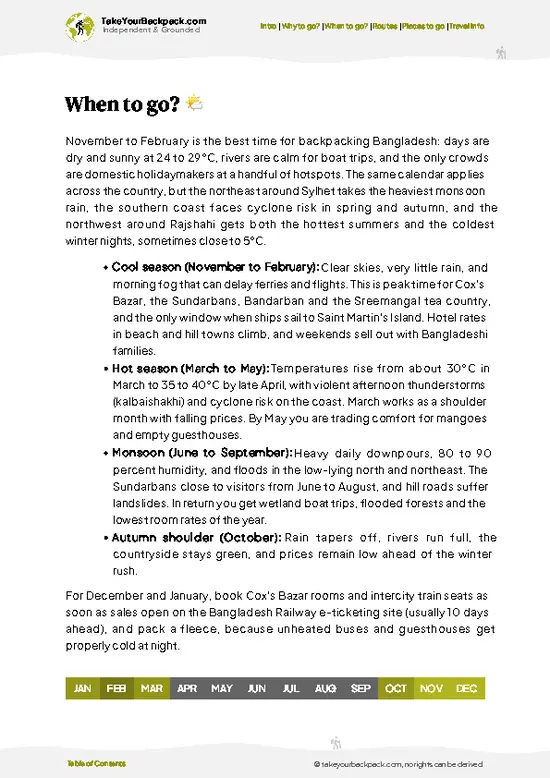
  • Weather: The prime window is from November to February when the monsoon retreats, leaving behind clear skies and dry air. Avoid June to September, the monsoon season, when heavy rains can turn the beach into a soggy slog.

  • Temperature: In the best months, expect daytime highs around 25-30°C (77-86°F), perfect for beach lounging without melting. The off-season heats up to 35°C (95°F) or more, which can drain your energy fast.

  • Daylight Hours: Daylight is fairly consistent year-round, roughly 11-12 hours daily. This means you can plan long beach days or early morning hikes without worrying about losing light too soon.

  • Crowds: Peak season brings a surge of local tourists and some international visitors, especially around December and January holidays. If you want fewer people, aim for
read more 👉

  • Weather: The prime window is from November to February when the monsoon retreats, leaving behind clear skies and dry air. Avoid June to September, the monsoon season, when heavy rains can turn the beach into a soggy slog.

  • Temperature: In the best months, expect daytime highs around 25-30°C (77-86°F), perfect for beach lounging without melting. The off-season heats up to 35°C (95°F) or more, which can drain your energy fast.

  • Daylight Hours: Daylight is fairly consistent year-round, roughly 11-12 hours daily. This means you can plan long beach days or early morning hikes without worrying about losing light too soon.

  • Crowds: Peak season brings a surge of local tourists and some international visitors, especially around December and January holidays. If you want fewer people, aim for late November or February.

  • Seasonal Activities: Winter months offer calmer seas ideal for swimming and boat trips. The monsoon season limits water activities but can be a good time for solitude and lower prices if you don’t mind the wet.

  • Price Fluctuations: Expect accommodation and transport costs to spike during peak season (Nov-Feb). Off-season rates can be half or less, but you trade that for less reliable weather and fewer services.


Pro-tip: Target the shoulder months—late November or February—for a sweet spot of good weather, manageable crowds, and better prices.


source: climatestotravel.comJANJanuary: excellent for travelingFEBFebruary: highly recommended for travelingMARMarch: good for travelingAPRApril: fair for travelingMAYMay: fair for travelingJUNJune: below average for travelingJULJuly: below average for travelingAUGAugust: below average for travelingSEPSeptember: below average for travelingOCTOctober: fair for travelingNOVNovember: highly recommended for travelingDECDecember: excellent for traveling
when-to-go

✈️ The backpacker research shortcutBangladesh Travel Guide

An offline-friendly backpacking guide with optimized travel routes, ranked highlights, transport advice, and the best areas to stay.
example page 0 from our offline Travel Guide for Bangladesh
example page 1 from our offline Travel Guide for Bangladesh
example page 2 from our offline Travel Guide for Bangladesh
example page 3 from our offline Travel Guide for Bangladesh
example page 4 from our offline Travel Guide for Bangladesh
example page 5 from our offline Travel Guide for Bangladesh
example page 6 from our offline Travel Guide for Bangladesh
example page 7 from our offline Travel Guide for Bangladesh
The digital guide (369 pages) contains:
107 highlights, ranked by travel appeal
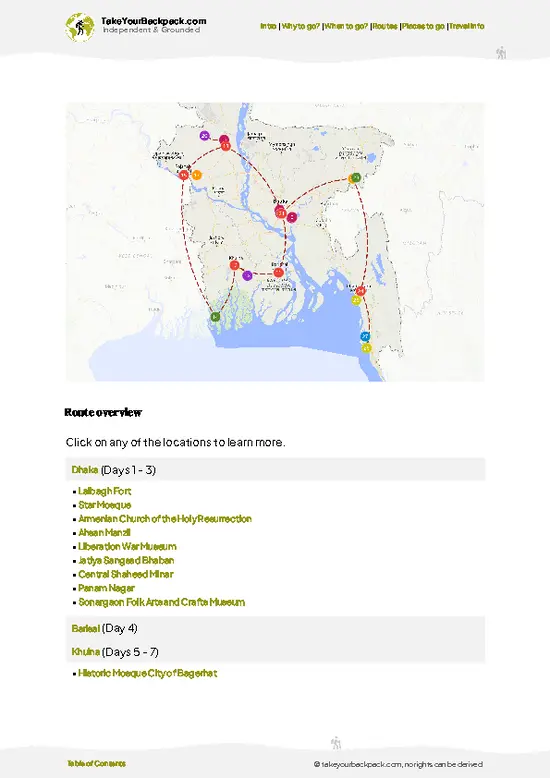
Optimized 7, 14 & 21-day travel routes
Cities, national parks, landmarks, beaches
How to get around
Offline-friendly for travel without Wi-Fi
👉 Click to see all 30+ guide features

📅 Plan smarter in minutes, not weeks
Month by month travel advice
Festivals & national holidays
Budget expectations

🗺️ Go to the right places, skip the overrated ones
Honest pros & cons of destinations
Top hikes, parks & viewpoints
Lesser-known places most travelers miss
Clear “worth it vs skip it” guidance

🛏️ Travel smoothly without rookie mistakes
Best areas to stay
Transport systems explained simply
Common scams & safety advice
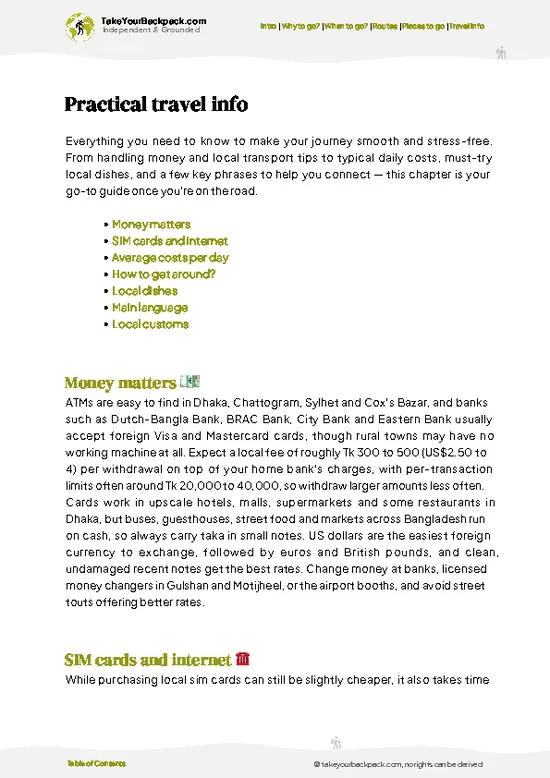
SIM cards, money & practical tips

🌍 Understand the country, not just visit it
Culture & traditions
52 Essential phrases & customs
Festivals worth planning around
Traveler-friendly historical context
Insights that make places more meaningful

📱 Built for real travel conditions
Fully downloadable PDF
Works completely offline
Optimized for phone use
Useful in remote areas & buses
Everything in one place
Save weeks of stressful planning
Get instant access to your full guide. 30‑day money-back guarantee.


By proceeding you agree to our terms.
Sent to your inbox immediately after payment • 100% Secure Checkout
Best Backpacking Travel Advisor 2025 tourism awardBest Backpacking
Travel Advisor
2025
What others say about Take Your Backpack Guides:
⭐⭐⭐⭐⭐
Fantastic, amazing amount of information!
⭐⭐⭐⭐⭐
My goodness this is amazing, it's what I've been looking for hats off too you!
⭐⭐⭐⭐⭐
I think this is absolutely BRILLIANT
⭐⭐⭐⭐
Very complete and informative. It's still missing places, but I gotta to commend you
⭐⭐⭐⭐⭐
This is truly amazing, thank you, can't wait to explore it with my kids!
⭐⭐⭐⭐⭐
Awesome resource, thank you!
⭐⭐⭐⭐⭐
This is amazing! Can't wait to explore the ones I haven't seen
⭐⭐⭐⭐
I love this! Well done, great idea.
⭐⭐⭐⭐⭐
Thanks for taking the time to make this gem!
⭐⭐⭐⭐⭐
This might be the best website I've ever seen.
⭐⭐⭐⭐⭐
Congratulations, and thank you so much for your work; it's incredibly valuable.
⭐⭐⭐⭐
In all seriousness I think you did a great job pointing out the important spots
⭐⭐⭐⭐⭐
10/10 very good
⭐⭐⭐⭐⭐
As someone who's only just starting to visit regularly this is awesome, thank you.
⭐⭐⭐⭐
Thank you very much! I'm going to visit my dad, it's going to be very useful!
⭐⭐⭐⭐⭐
This is really cool! We'll be travelling for the first time and this definitely come in handy.
⭐⭐⭐⭐⭐
You are now our minister of culture, congratulations 👨‍💼
⭐⭐⭐⭐⭐
Just wanted to tell you that this is a pearl! Going to follow your recommendations.
⭐⭐⭐⭐⭐
This is so cool. I'll definitely be using the resource for my travels soon.
⭐⭐⭐⭐⭐
This is very impressive! Good work.
⭐⭐⭐⭐⭐
This is an amazing and informative site. Very well done!

🛏️ Where to stay?How to pick the right area

Cox’s Bazar is a sprawling beach city, but for backpackers, the real action and safety converge in a few key pockets. The main stretch along the beach—often called the Cox’s Bazar Beach area—is the undeniable hub for budget travelers. It’s where you’ll find a dense cluster of hostels, guesthouses, and small eateries. This zone scores high on social vibes because it’s packed with fellow backpackers and solo travelers, making it easy to strike up conversations or join group outings. The energy here is casual, with a steady hum of beachside chatter and the occasional bonfire gathering.

Compared … read more 👉
Cox’s Bazar is a sprawling beach city, but for backpackers, the real action and safety converge in a few key pockets. The main stretch along the beach—often called the Cox’s Bazar Beach area—is the undeniable hub for budget travelers. It’s where you’ll find a dense cluster of hostels, guesthouses, and small eateries. This zone scores high on social vibes because it’s packed with fellow backpackers and solo travelers, making it easy to strike up conversations or join group outings. The energy here is casual, with a steady hum of beachside chatter and the occasional bonfire gathering.

Compared to the quieter, more residential neighborhoods inland, the beach area offers a clear trade-off: you sacrifice some peace and quiet for convenience and connection. The inland zones might feel safer and less touristy, but they lack the social pulse and easy access to the beach that define the backpacker experience here. Plus, transportation options are more limited away from the beach strip, which can eat into your time and comfort.

If you want to maximize your time meeting people and soaking in the beach culture without breaking the bank, the beach area is your best bet. It’s a compact, walkable zone where budget accommodations cluster, and the vibe is relaxed but lively—perfect for those who want to blend comfort with social energy.

🚌 Getting aroundGetting around like a local

Cox’s Bazar moves at its own rhythm—less a metronome and more a loose drumbeat. It’s a place where schedules exist but bend, where the flow of people and vehicles is a dance between necessity and improvisation. You won’t find the rigid timetables of a big city transit system here. Instead, you’ll navigate a blend of informal networks and local know-how, where timing is part intuition, part patience. Understanding this flow is your first win: it means you’re not just a passenger but a player in the city’s daily game of time, money, and comfort.


  • Walking: The most straightforward and cost-free way to explore Cox’s Bazar, especially along the beach and local markets. It’s slow but immersive, letting you soak in the salty air and street life. Perfect for short distances and when you want to
read more 👉
Cox’s Bazar moves at its own rhythm—less a metronome and more a loose drumbeat. It’s a place where schedules exist but bend, where the flow of people and vehicles is a dance between necessity and improvisation. You won’t find the rigid timetables of a big city transit system here. Instead, you’ll navigate a blend of informal networks and local know-how, where timing is part intuition, part patience. Understanding this flow is your first win: it means you’re not just a passenger but a player in the city’s daily game of time, money, and comfort.


  • Walking: The most straightforward and cost-free way to explore Cox’s Bazar, especially along the beach and local markets. It’s slow but immersive, letting you soak in the salty air and street life. Perfect for short distances and when you want to save every taka.


  • Rickshaw: These three-wheeled workhorses are everywhere, offering flexible routes and a chance to negotiate fares. Expect to pay around 30-50 taka for short trips. They’re slow and bumpy but provide shade and a front-row seat to street scenes. Rickshaws run all day, no fixed schedule, so you can hop on whenever.


  • Local Bus: The cheapest motorized option for longer distances, like trips to nearby towns or the bus terminal. Buses start early, around 6 AM, and run until dusk, with fares typically under 100 taka. They’re crowded and noisy, with no guaranteed seat, but they cover ground fast compared to rickshaws and walking.


  • Shared CNG Auto-Rickshaw: A step up from the pedal rickshaw, these compressed natural gas vehicles zip through traffic faster and cost about 50-70 taka per ride. They follow semi-fixed routes but don’t run on strict schedules—more like “when full, go.” They balance speed and price well but offer limited comfort.


  • Private Taxi: For those moments when time is tight or comfort is non-negotiable, private taxis are available but pricier, often 500+ taka for longer trips. They provide air conditioning and direct routes, saving you time and hassle but at a significant cost premium. Best reserved for airport transfers or late-night rides.


Mastering Cox’s Bazar transit means weighing these options like a chess player. You trade money for speed or comfort for flexibility. Walking costs nothing but demands time and energy. Rickshaws offer shade and local flavor but crawl through traffic. Buses are cheap and fast but chaotic. Shared CNGs hit a middle ground, and taxis buy you peace of mind at a price. Your mission: pick your battles wisely, knowing exactly what you’re giving up with each choice. That’s how you win the game.

👛 Costs (as of 24 March 2026)What things cost and how to budget

Backpacking in Cox’s Bazar, Bangladesh, is a balancing act between affordability and comfort, with costs that shift depending on the season and your travel style. Here’s how the daily expenses typically break down for an independent traveler:
  • Dorm Accommodation (High Season): Expect to pay around $8 to $12 per night. High season drives prices up due to demand, especially in popular beachside hostels with basic amenities and fan rooms.
  • Dorm Accommodation (Off-Season): Prices drop to about $4 to $7 per night. You’ll find quieter hostels with fewer crowds, sometimes with better deals if you negotiate directly.
  • Meals: Street food and local eateries dominate here. Budget around $3 to $6 daily for three meals, focusing on rice, fish, and lentil dishes. Western-style meals or restaurants catering
read more 👉
Backpacking in Cox’s Bazar, Bangladesh, is a balancing act between affordability and comfort, with costs that shift depending on the season and your travel style. Here’s how the daily expenses typically break down for an independent traveler:
  • Dorm Accommodation (High Season): Expect to pay around $8 to $12 per night. High season drives prices up due to demand, especially in popular beachside hostels with basic amenities and fan rooms.
  • Dorm Accommodation (Off-Season): Prices drop to about $4 to $7 per night. You’ll find quieter hostels with fewer crowds, sometimes with better deals if you negotiate directly.
  • Meals: Street food and local eateries dominate here. Budget around $3 to $6 daily for three meals, focusing on rice, fish, and lentil dishes. Western-style meals or restaurants catering to tourists will push costs higher.
  • Local Transport: Rickshaws and CNG auto-rickshaws are the main modes. A typical short ride costs between $0.20 and $0.50. Budget $1 to $2 per day if you move around moderately.
  • City Transport Pass: Cox’s Bazar doesn’t have a formal city transport pass system. Transport costs are pay-as-you-go, so factor in daily rickshaw fares instead.
  • Basic Activities/Entry Fees: Most beach access is free, but expect to pay $1 to $3 for entry to certain viewpoints or local attractions. Activities like boat rides or visiting nearby islands can cost $5 to $10.
  • Miscellaneous Expenses: This covers bottled water, snacks, occasional internet cafes, or small tips. Set aside about $1 to $3 daily.

In total, a realistic daily budget for backpacking in Cox’s Bazar ranges from roughly $10 on the leanest days in the off-season to about $25 if you lean into more comfort and activities during peak times. This range lets you decide where to tighten or loosen your grip on time, money, and comfort.
⚠️ Prices can change and everyone travels differently, so take this as a rough guide. Hope it helps you plan your adventure!

🚌 Day tripsShort trips worth adding

Cox’s Bazar is a fantastic launchpad for day trips that blend adventure with cultural immersion. You’ll find plenty of options that won’t break the bank, allowing you to explore the rich tapestry of Bangladesh without sacrificing comfort or time.

Himchari National Park
Just a short 30-minute ride from Cox’s Bazar, Himchari National Park offers lush greenery and stunning coastal views. The park is a haven for nature lovers, with trails that lead you through dense forests and down to secluded beaches. Keep an eye out for the local wildlife, including monkeys and various bird species. The entrance fee is minimal, and you can easily spend a day hiking and soaking in the scenery. A common mistake is underestimating the time needed to explore; plan for at least half a day to truly enjoy it. … read more 👉
Cox’s Bazar is a fantastic launchpad for day trips that blend adventure with cultural immersion. You’ll find plenty of options that won’t break the bank, allowing you to explore the rich tapestry of Bangladesh without sacrificing comfort or time.

Himchari National Park
Just a short 30-minute ride from Cox’s Bazar, Himchari National Park offers lush greenery and stunning coastal views. The park is a haven for nature lovers, with trails that lead you through dense forests and down to secluded beaches. Keep an eye out for the local wildlife, including monkeys and various bird species. The entrance fee is minimal, and you can easily spend a day hiking and soaking in the scenery. A common mistake is underestimating the time needed to explore; plan for at least half a day to truly enjoy it.


Inani Beach
About 40 minutes south of Cox’s Bazar, Inani Beach is less crowded and boasts some of the clearest waters you’ll find in the area. The beach is famous for its coral stones and tranquil atmosphere, making it perfect for a relaxing day. Bring your own snacks or grab something from a local vendor to keep costs low. The best time to visit is during the dry season from November to February. Many first-timers miss the chance to explore the nearby fishing villages, which offer a glimpse into local life.
👉 Explore Inani Beach

Ramu Village
A 30-minute drive from Cox’s Bazar, Ramu Village is a cultural treasure trove. Known for its Buddhist temples and traditional handicrafts, it’s a great spot to learn about the local culture. You can visit the impressive 100-foot Buddha statue and explore artisan workshops. Costs are minimal, with transport and food easily fitting into a budget. The best time to visit is early morning to avoid the heat and crowds. A common oversight is not allowing enough time to chat with locals; their stories are often the highlight of the visit.


Teknaf
A bit further afield, about an hour and a half from Cox’s Bazar, Teknaf is where the Naf River meets the Bay of Bengal. This area is rich in biodiversity and offers stunning views of Myanmar across the river. You can take a boat ride or simply enjoy the local markets. Costs are still manageable, but be prepared for a longer travel day. The ideal time to visit is during the cooler months. First-timers often overlook the vibrant local food scene; don’t miss trying the fresh seafood!


Each of these trips offers a unique slice of Bangladesh, making your base in Cox’s Bazar not just a beach getaway, but a gateway to adventure.
Want to know what more Bangladesh offers?
The Bangladesh Travel Guide describes 107 highlights, from cities to national parks, from beaches to hikes

Get the Travel Guide -

🍲 FoodLocal Flavors for Backpackers

In Cox’s Bazar, the food scene is a vibrant tapestry of flavors that beckons you to dive in. Start with the signature dish: panta bhat, a fermented rice dish often served with fried hilsa fish. It’s a breakfast staple, and locals swear by its refreshing qualities after a long night. Pair it with green chilies and a sprinkle of salt for a kick that wakes up your taste buds.

Street food is where the magic happens. Stroll through bustling markets and you’ll find vendors selling fuchka—crispy shells filled with spicy tamarind water and chickpeas. It’s a communal experience; you’ll see locals huddled around, sharing laughter and bites. Don’t miss out on chotpoti, a tangy mix of potatoes, eggs, and spices that’s perfect for a quick snack.

As the sun sets, the beach bars come alive. Grab a coconut read more 👉
In Cox’s Bazar, the food scene is a vibrant tapestry of flavors that beckons you to dive in. Start with the signature dish: panta bhat, a fermented rice dish often served with fried hilsa fish. It’s a breakfast staple, and locals swear by its refreshing qualities after a long night. Pair it with green chilies and a sprinkle of salt for a kick that wakes up your taste buds.

Street food is where the magic happens. Stroll through bustling markets and you’ll find vendors selling fuchka—crispy shells filled with spicy tamarind water and chickpeas. It’s a communal experience; you’ll see locals huddled around, sharing laughter and bites. Don’t miss out on chotpoti, a tangy mix of potatoes, eggs, and spices that’s perfect for a quick snack.

As the sun sets, the beach bars come alive. Grab a coconut water straight from the shell or sip on a local lassi—a yogurt-based drink that’s both refreshing and filling. The drinking culture here is laid-back; it’s all about enjoying the moment with friends, often accompanied by the sound of waves crashing nearby.

Etiquette is simple: share your food, and don’t hesitate to try what others are having. It’s a way to bond and experience the local culture. Embrace the flavors, and let the culinary adventure unfold.

🛡️ SafetySafety Tips and Common Scams in Cox’s Bazar

Cox’s Bazar is generally safe for backpackers, but a few situational awareness tips can enhance your experience. Stick to well-lit areas at night, especially along the beach. While the main tourist spots are lively, quieter streets can feel a bit isolated after dark. If you’re solo, consider joining a group for evening strolls or dining.

Scams are rare but not nonexistent. Be cautious when approached by overly friendly locals offering unsolicited help or guiding services. Politely decline and trust your instincts. Always negotiate prices upfront for taxis or rickshaws to avoid surprises later.

Annoyances can include persistent vendors and street hawkers. A firm but friendly “no, thank you” usually does the trick. Keep your belongings secure, especially in crowded areas, and use a money … read more 👉
Cox’s Bazar is generally safe for backpackers, but a few situational awareness tips can enhance your experience. Stick to well-lit areas at night, especially along the beach. While the main tourist spots are lively, quieter streets can feel a bit isolated after dark. If you’re solo, consider joining a group for evening strolls or dining.

Scams are rare but not nonexistent. Be cautious when approached by overly friendly locals offering unsolicited help or guiding services. Politely decline and trust your instincts. Always negotiate prices upfront for taxis or rickshaws to avoid surprises later.

Annoyances can include persistent vendors and street hawkers. A firm but friendly “no, thank you” usually does the trick. Keep your belongings secure, especially in crowded areas, and use a money belt for extra peace of mind. With these strategies, you’ll navigate Cox’s Bazar like a pro, focusing on the vibrant culture rather than potential pitfalls.

Other Bangladeshi cities near Cox’s Bazar

Explore more nearby:

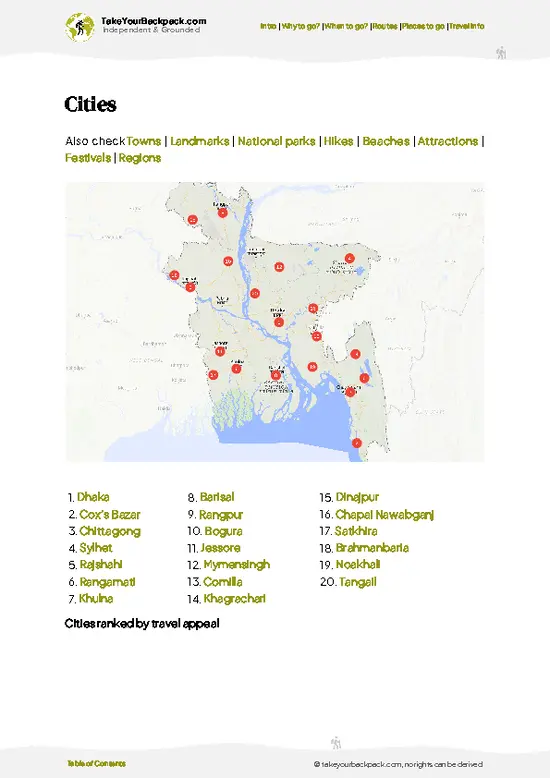
  • Chittagong—port city, hill tracks, seafood markets| 109 km away
  • Rangamati—lake islands, tribal villages, hanging bridges| 138 km away
  • Noakhali—char islands, cyclone shelters, delta landscapes| 186 km away

💡 Not sure where to go next?
Create a personalized itinerary for Bangladesh including Cox’s Bazar and the places that fit your trip.

Generate my itinerary

👉 Discover all cities

Or checkout all Bangladesh has to offer (think cities, towns, villages, national parks, hikes, beaches, festivals)
Country photo of Bangladesh

We 💚 feedbackIs it worth it?

Cox’s Bazar is a wild mix of beach vibes and local hustle. The best surprise? The seafood. Fresh catch grilled right on the beach is a game changer. You’ll want to dive into that. Just a heads-up: the crowds can swell, especially on weekends. If you can, aim for a weekday visit to soak in the sunset without the chaos. Embrace the energy, but don’t forget to carve out your quiet moments. That’s where the magic lies.

✍️ Help improve this page!
The information on this page is based on in-depth research, insights shared by experienced travelers, and feedback from the local travel community in Bangladesh. While every effort is made to keep the information accurate and current, conditions can change — so if you spot anything incorrect or outdated, please get in touch.


🙋‍♂️ Give feedback

👋 Meet the founderWho’s Behind Take Your Backpack?

Johan, backpacker and founder of TakeYourBackpackHi, I’m Johan (Netherlands 🇳🇱), the creator of TakeYourBackpack. Over the past decade, I’ve backpacked through 80+ countries across six continents, gaining extensive experience with independent travel, long-term trips, and overland routes.

This site is built on a combination of firsthand travel experience and carefully curated insights from other backpackers. Many guides are based on places I’ve personally visited, while others bring together tips, observations, and practical advice shared by trusted travelers I’ve met along the way.

The goal is to provide realistic, experience-driven guidance — not generic itineraries — so you can explore destinations with better context, clearer expectations, and more confidence.

Get full Bangladesh guide •
Instant download • 107 highlights • Full Offline guide