×

Belgium🇧🇪 | national parksHigh Fens Nature Reservepeat bogs, raised moors, wooden boardwalks | things to do and best time to go

Explore Kalmthoutse HeideExplore Westhoek Nature Reserve

Backpacking in High Fens Nature Reserve
🏆 Top picknational park ranked #2
By Johan Kruseman 🇳🇱 | Updated June 1, 2026

Most online blurbs sell the High Fens as endless wild bog, but the surprise for backpackers is how managed and restricted it actually is: long sections are on boardwalks, many side trails are closed in dry season, and rangers do check. The High Fens Nature Reserve sits in eastern Belgium, on the Hautes Fagnes plateau between Eupen, Malmedy, and the German border. For hikers, it’s a compact hit of moorland, spruce forest, and misty peat bogs, with clearly marked day routes and some longer links toward Eifel and Ardennes trails. Wildlife is subtle—think birds and deer, not big mammals. Access by bus and train is workable but slower than you’d expect in Belgium, and there’s no entrance fee, which helps. The catch: wild camping is banned, budget beds cluster in nearby villages, and on sunny weekends the main loops feel bus-tour heavy compared with quieter corners of the Ardennes.

Discover everything you want to know in the 📖 Belgium Travel Guide.


Get your Belgium guide
90 ranked highlights, routes & tips, works offline (355 pages)
Loading the map 🌍
CLICK TO FILTER
cities
towns
landmarks
national parks
hikes
beaches
attractions
festivals
regions
SHOW COUNTRY’S BESTSHOW ALL

✨ Why go?
Ranked #2 national park in Belgium
Why visitors keep coming back

High Fens Nature Reserve in Belgium attracts backpackers for several compelling reasons. First, the independent exploration is a major draw. With over 150 kilometers of trails, you can wander at your own pace, soaking in the unique moorland landscapes and diverse wildlife without the constraints of a guided tour.

Budget-conscious travelers appreciate the affordable camping options and nearby hostels, making it easy to stretch your funds while enjoying the great outdoors. The park’s variety of trails caters to all skill levels, from leisurely walks to more challenging hikes, ensuring that everyone finds their perfect route.

Self-guided travelers thrive here; the well-marked paths and informative signage allow for a seamless experience. You won’t feel lost or overwhelmed, which is crucial … read more 👉
High Fens Nature Reserve in Belgium attracts backpackers for several compelling reasons. First, the independent exploration is a major draw. With over 150 kilometers of trails, you can wander at your own pace, soaking in the unique moorland landscapes and diverse wildlife without the constraints of a guided tour.

Budget-conscious travelers appreciate the affordable camping options and nearby hostels, making it easy to stretch your funds while enjoying the great outdoors. The park’s variety of trails caters to all skill levels, from leisurely walks to more challenging hikes, ensuring that everyone finds their perfect route.

Self-guided travelers thrive here; the well-marked paths and informative signage allow for a seamless experience. You won’t feel lost or overwhelmed, which is crucial when you’re trying to conserve energy for those breathtaking views.

In essence, High Fens offers a blend of freedom, affordability, and natural beauty that resonates with backpackers looking for an authentic experience without the frills.
Want to include High Fens Nature Reserve in your Belgium route?
Create a personalized Belgium itinerary that includes High Fens Nature Reserve and the places that fit your trip — based on your travel style, budget, and available time. Get your route in seconds.

Generate my trip

💡 HighlightsEssential experiences to have while exploring High Fens Nature Reserve

  • Signal de Botrange — The highest point in Belgium (about 694 m) and a weirdly dramatic place: wide, often misty horizons and interpretive panels. It’s a handy trailhead for moorland walks and the easiest place to get a quick feel for the whole plateau.
  • Baraque Michel — A historic mountain hut/meeting point that’s become the classic starting spot for hikes across the bogs. There’s usually info, maps and a café vibe in season, plus direct access to several boardwalk loops.
  • Raised bogs and plankways (boardwalk trails) — The iconic sight: wooden boardwalks threading over fragile peat bogs full of sphagnum, cottongrass and sundews. These trails let you walk right above a rare ecosystem without destroying it — perfect for close-up nature watching and atmospheric photos.
  • Moorland panoramas and
read more 👉
  • Signal de Botrange — The highest point in Belgium (about 694 m) and a weirdly dramatic place: wide, often misty horizons and interpretive panels. It’s a handy trailhead for moorland walks and the easiest place to get a quick feel for the whole plateau.
  • Baraque Michel — A historic mountain hut/meeting point that’s become the classic starting spot for hikes across the bogs. There’s usually info, maps and a café vibe in season, plus direct access to several boardwalk loops.
  • Raised bogs and plankways (boardwalk trails) — The iconic sight: wooden boardwalks threading over fragile peat bogs full of sphagnum, cottongrass and sundews. These trails let you walk right above a rare ecosystem without destroying it — perfect for close-up nature watching and atmospheric photos.
  • Moorland panoramas and seasonal moods — Open, windswept heaths that change dramatically with weather: glowing purple heather in late summer, silver frost or snow in winter, or low-lying mist for spooky, cinematic mornings. Great for simple, empty-sky hikes and long views.
  • Birdlife and bog specialists — Keep an eye out for heathland and ground-nesting birds (golden plovers, woodcock and similar species), dragonflies, frogs and small mammals. The bog plants are showy too — insect-eating sundews and unusual peat specialists are a highlight for plant nerds.
  • Lac de Robertville and the reservoir shoreline — A short drive from the core moors, this lake offers softer forested walks, picnic spots and reflections of the hills — a nice contrast to the open bogs and an easy place to stretch your legs after peatland hikes.
  • Cross-border trails and cycling (Vennbahn/Eifel links) — The park is part of bigger long-distance routes, so you can tack on multi-day hikes or cycle along the old Vennbahn rail-trail. Good for backpackers who want to stitch the High Fens into a longer, cross-border itinerary.
Spotted a mistake or missing something? Contact us.

Things to do near High Fens Nature Reserve

Ratings based on Tripadvisor reviews. When you book through this link, you support our work at no extra cost to you.

🌤️ When to go?Weather, crowds, and seasonal trade-offs


  • Weather: The High Fens are notoriously wet and foggy outside summer. Spring and autumn bring persistent drizzle and muddy trails, which can sap your energy. Summer offers the driest, most stable weather, but expect occasional rain.

  • Temperature: Summer highs hover around 18-22°C (64-72°F), pleasant for hiking without overheating. Winters plunge below freezing, often dipping to -5°C (23°F) or colder, making trails icy and less accessible.

  • Daylight Hours: Long summer days stretch daylight to about 16 hours, giving you ample time to explore without rushing. Winter days shrink to under 8 hours, limiting your window for safe trekking.

  • Crowds: The reserve is never packed, but weekends in summer see a noticeable uptick in visitors. Weekdays and shoulder seasons offer more solitude, though
read more 👉

  • Weather: The High Fens are notoriously wet and foggy outside summer. Spring and autumn bring persistent drizzle and muddy trails, which can sap your energy. Summer offers the driest, most stable weather, but expect occasional rain.

  • Temperature: Summer highs hover around 18-22°C (64-72°F), pleasant for hiking without overheating. Winters plunge below freezing, often dipping to -5°C (23°F) or colder, making trails icy and less accessible.

  • Daylight Hours: Long summer days stretch daylight to about 16 hours, giving you ample time to explore without rushing. Winter days shrink to under 8 hours, limiting your window for safe trekking.

  • Crowds: The reserve is never packed, but weekends in summer see a noticeable uptick in visitors. Weekdays and shoulder seasons offer more solitude, though weather can be less forgiving.

  • Seasonal Activities: Summer is prime for hiking and birdwatching. Autumn colors add a visual bonus but bring wetter conditions. Winter’s snow can transform the landscape but demands proper gear and experience.

  • Price Fluctuations: Accommodation and transport costs peak slightly in summer, especially July and August. Booking ahead can save you from last-minute price hikes.


Pro-tip: Aim for late June or early September—weather is kinder, crowds thinner, and prices more reasonable, letting you focus your energy on the trails, not the hassles.


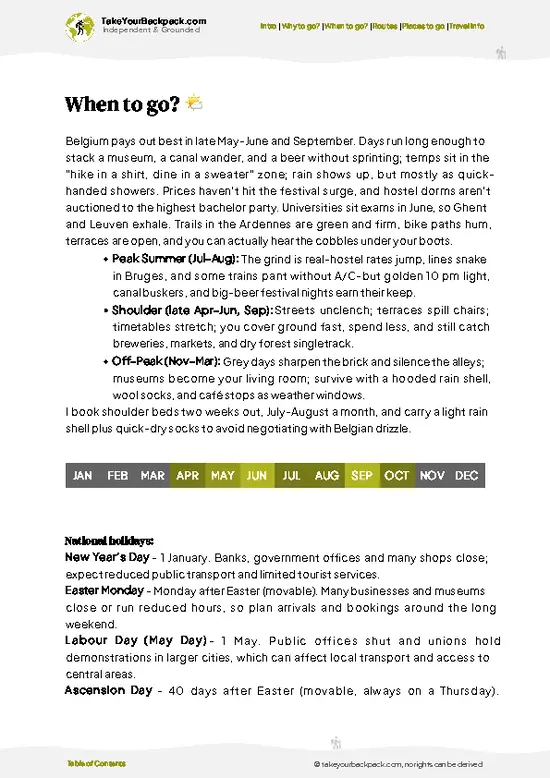
source: climatestotravel.comJANJanuary: fair for travelingFEBFebruary: fair for travelingMARMarch: fair for travelingAPRApril: good for travelingMAYMay: good for travelingJUNJune: highly recommended for travelingJULJuly: excellent for travelingAUGAugust: excellent for travelingSEPSeptember: highly recommended for travelingOCTOctober: good for travelingNOVNovember: fair for travelingDECDecember: fair for traveling
when-to-go

✈️ The backpacker research shortcutBelgium Travel Guide

An offline-friendly backpacking guide with optimized travel routes, ranked highlights, transport advice, and the best areas to stay.
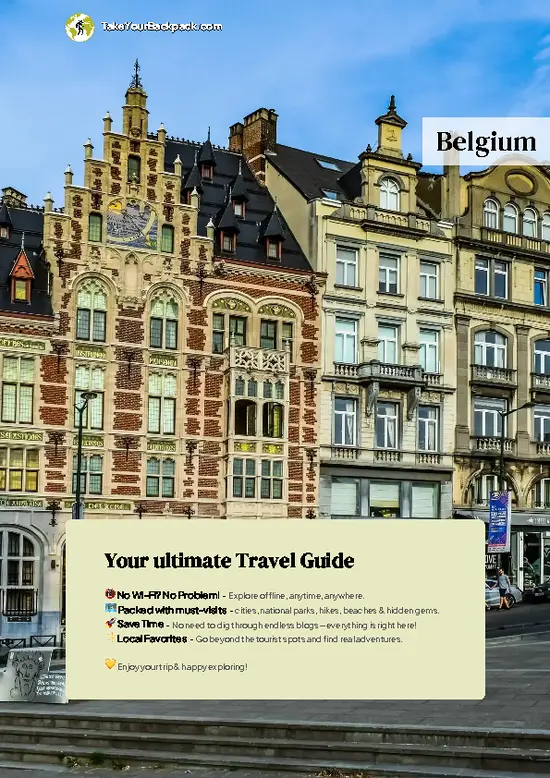
example page 0 from our offline Travel Guide for Belgium
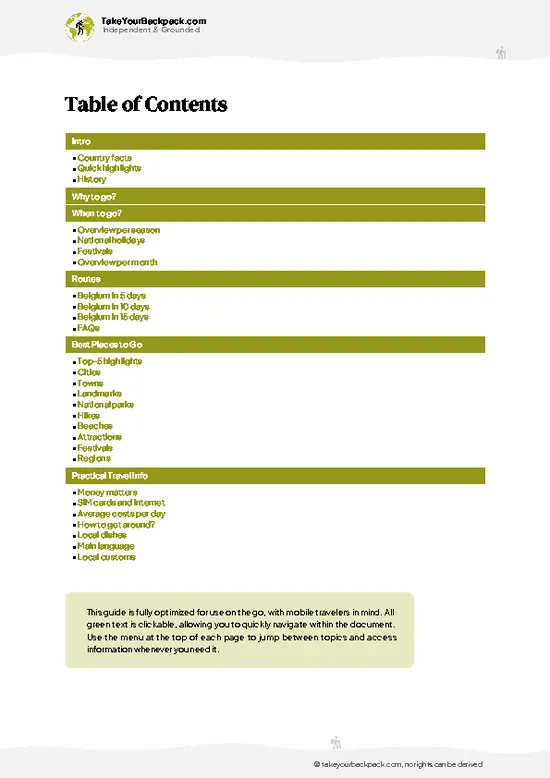
example page 1 from our offline Travel Guide for Belgium
example page 2 from our offline Travel Guide for Belgium
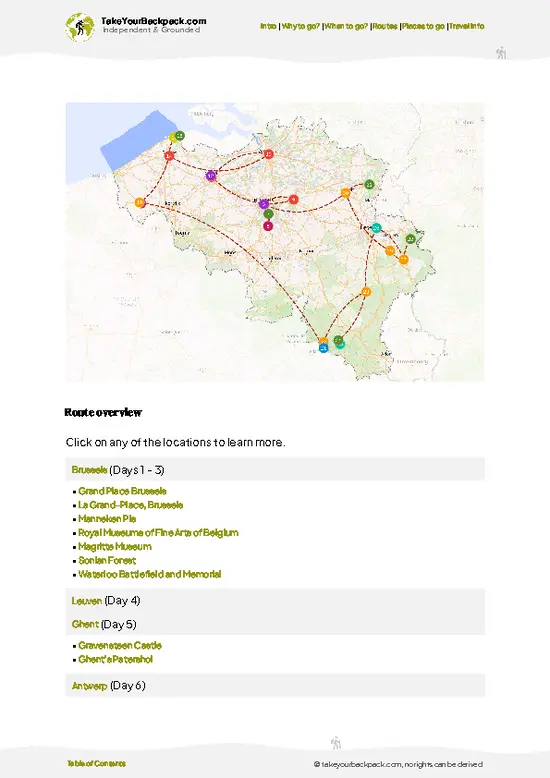
example page 3 from our offline Travel Guide for Belgium
example page 4 from our offline Travel Guide for Belgium
example page 5 from our offline Travel Guide for Belgium
example page 6 from our offline Travel Guide for Belgium
example page 7 from our offline Travel Guide for Belgium
The digital guide (355 pages) contains:
90 highlights, ranked by travel appeal
Optimized 5, 10 & 15-day travel routes
Cities, national parks, landmarks, beaches
How to get around
Offline-friendly for travel without Wi-Fi
👉 Click to see all 30+ guide features

📅 Plan smarter in minutes, not weeks
Month by month travel advice
Festivals & national holidays
Budget expectations

🗺️ Go to the right places, skip the overrated ones
Honest pros & cons of destinations
Top hikes, parks & viewpoints
Lesser-known places most travelers miss
Clear “worth it vs skip it” guidance

🛏️ Travel smoothly without rookie mistakes
Best areas to stay
Transport systems explained simply
Common scams & safety advice
SIM cards, money & practical tips

🌍 Understand the country, not just visit it
Culture & traditions
52 Essential phrases & customs
Festivals worth planning around
Traveler-friendly historical context
Insights that make places more meaningful

📱 Built for real travel conditions
Fully downloadable PDF
Works completely offline
Optimized for phone use
Useful in remote areas & buses
Everything in one place
Save weeks of stressful planning
Get instant access to your full guide. 30‑day money-back guarantee.


By proceeding you agree to our terms.
Sent to your inbox immediately after payment • 100% Secure Checkout
Best Backpacking Travel Advisor 2025 tourism awardBest Backpacking
Travel Advisor
2025
What others say about Take Your Backpack Guides:
⭐⭐⭐⭐⭐
Fantastic, amazing amount of information!
⭐⭐⭐⭐⭐
My goodness this is amazing, it's what I've been looking for hats off too you!
⭐⭐⭐⭐⭐
I think this is absolutely BRILLIANT
⭐⭐⭐⭐
Very complete and informative. It's still missing places, but I gotta to commend you
⭐⭐⭐⭐⭐
This is truly amazing, thank you, can't wait to explore it with my kids!
⭐⭐⭐⭐⭐
Awesome resource, thank you!
⭐⭐⭐⭐⭐
This is amazing! Can't wait to explore the ones I haven't seen
⭐⭐⭐⭐
I love this! Well done, great idea.
⭐⭐⭐⭐⭐
Thanks for taking the time to make this gem!
⭐⭐⭐⭐⭐
This might be the best website I've ever seen.
⭐⭐⭐⭐⭐
Congratulations, and thank you so much for your work; it's incredibly valuable.
⭐⭐⭐⭐
In all seriousness I think you did a great job pointing out the important spots
⭐⭐⭐⭐⭐
10/10 very good
⭐⭐⭐⭐⭐
As someone who's only just starting to visit regularly this is awesome, thank you.
⭐⭐⭐⭐
Thank you very much! I'm going to visit my dad, it's going to be very useful!
⭐⭐⭐⭐⭐
This is really cool! We'll be travelling for the first time and this definitely come in handy.
⭐⭐⭐⭐⭐
You are now our minister of culture, congratulations 👨‍💼
⭐⭐⭐⭐⭐
Just wanted to tell you that this is a pearl! Going to follow your recommendations.
⭐⭐⭐⭐⭐
This is so cool. I'll definitely be using the resource for my travels soon.
⭐⭐⭐⭐⭐
This is very impressive! Good work.
⭐⭐⭐⭐⭐
This is an amazing and informative site. Very well done!

🛏️ Where to stay?Best areas to stay in Belgium

For backpackers heading to High Fens Nature Reserve, options are limited within the park itself. There are no official accommodations directly inside the reserve, but that doesn’t mean you’re out of luck.

The nearby town of Malmedy is a solid choice. It’s about a 20-minute drive from the park and offers a range of budget-friendly hostels and guesthouses. Check out Hostellerie de la Poste for a cozy vibe and decent prices. It’s a great base for exploring the area.

Another option is the town of Eupen, roughly 30 minutes away. Here, you’ll find a mix of hotels and B&Bs, like Hotel de la Station, … read more 👉
For backpackers heading to High Fens Nature Reserve, options are limited within the park itself. There are no official accommodations directly inside the reserve, but that doesn’t mean you’re out of luck.

The nearby town of Malmedy is a solid choice. It’s about a 20-minute drive from the park and offers a range of budget-friendly hostels and guesthouses. Check out Hostellerie de la Poste for a cozy vibe and decent prices. It’s a great base for exploring the area.

Another option is the town of Eupen, roughly 30 minutes away. Here, you’ll find a mix of hotels and B&Bs, like Hotel de la Station, which is both affordable and conveniently located.

If you prefer a more rustic experience, consider camping. There are designated camping areas near the park, but be sure to check local regulations.

Plan ahead for meals; dining options within the park are sparse. Stock up on snacks and water before heading out. This way, you’ll keep your energy up for those stunning hikes without worrying about hidden costs.

👛 Costs (as of 22 December 2025)What things cost and how to budget

Cost snapshot — High Fens Nature Reserve (Hautes Fagnes), Belgium
Access to the reserve itself is free; no park entrance fee applies for independent hikers.
Public transport from nearby cities (Liège, Eupen, Verviers) typically runs €5-20 one-way depending on distance and whether you use regional trains plus a connecting bus; expect €8-15 for most common routes.
If you drive, most car parks are free but main visitor/parking lots sometimes charge a small fee — plan €0-5 per day and carry a few euros in case a machine is cash-only.
Visitor centres and small exhibitions are usually free to low-cost; budget €0-5 if there’s a temporary exhibit or a small entry fee.
Organised guided walks offered by park staff or local outfits run about €5-15 per person for scheduled group hikes; private guides … read more 👉
Cost snapshot — High Fens Nature Reserve (Hautes Fagnes), Belgium
Access to the reserve itself is free; no park entrance fee applies for independent hikers.
Public transport from nearby cities (Liège, Eupen, Verviers) typically runs €5-20 one-way depending on distance and whether you use regional trains plus a connecting bus; expect €8-15 for most common routes.
If you drive, most car parks are free but main visitor/parking lots sometimes charge a small fee — plan €0-5 per day and carry a few euros in case a machine is cash-only.
Visitor centres and small exhibitions are usually free to low-cost; budget €0-5 if there’s a temporary exhibit or a small entry fee.
Organised guided walks offered by park staff or local outfits run about €5-15 per person for scheduled group hikes; private guides or tailor-made tours cost €60-120 per group, useful in winter or for birding specialists.
Winter gear rentals (snowshoes, cross-country skis) are common in season; expect roughly €10-25 per day for basic rental equipment.
Nearby accommodation — if you stay overnight in Eupen, Malmedy or a local B&B — ranges from €20-40 for hostel/dorm beds, €60-120 for standard guestrooms, and €80-150+ for higher-end hotels in peak season.
Campsites near the park charge roughly €8-25 per tent per night; wild camping inside the reserve is prohibited and enforceable.
Food and drink: pack a picnic to save money; café lunches in villages or at visitor hubs run €8-15, while a restaurant meal typically costs €15-30.
Hidden costs to avoid: fines or penalties if you walk off boardwalks, seasonal road closures that add transport time and expense, and higher weekend/holiday accommodation rates — factor a contingency of €10-30 per day for these risks.


source: visitwallonia.be
⚠️ Prices can change and everyone travels differently, so take this as a rough guide. Hope it helps you plan your adventure!

🥾 TrailsDiscover High Fens Nature Reserve's top trails and natural wonders

The High Fens Nature Reserve in Belgium is a hidden gem for hikers looking to immerse themselves in breathtaking landscapes. With its unique mix of bogs, heathlands, and dense forests, you’ll find a variety of scenic highlights around every corner. The terrain can be a bit challenging, with some muddy patches and uneven ground, but that just adds to the adventure. Keep your eyes peeled for wildlife—deer, foxes, and a plethora of bird species call this place home.

One of the standout trails is Signal de Botrange, which offers a solid mix of scenery and terrain. Here’s the lowdown:
  • Length: 8 km
  • Estimated
read more 👉
The High Fens Nature Reserve in Belgium is a hidden gem for hikers looking to immerse themselves in breathtaking landscapes. With its unique mix of bogs, heathlands, and dense forests, you’ll find a variety of scenic highlights around every corner. The terrain can be a bit challenging, with some muddy patches and uneven ground, but that just adds to the adventure. Keep your eyes peeled for wildlife—deer, foxes, and a plethora of bird species call this place home.

One of the standout trails is Signal de Botrange, which offers a solid mix of scenery and terrain. Here’s the lowdown:
  • Length: 8 km
  • Estimated Duration: 2-3 hours
  • Difficulty Level: Moderate
  • Key Features: Stunning viewpoints, diverse flora, and the highest point in Belgium
  • Terrain: Mixed; includes boardwalks, dirt paths, and some rocky areas

Getting to the park is pretty straightforward. You can hop on a train to Eupen or Malmedy, and then catch a local bus to the reserve. It’s a popular spot, especially on weekends, so expect some company on the trails. As for entrance fees, the park is free to enter, which is a nice bonus for budget travelers. Just pack some snacks and enjoy the natural beauty without breaking the bank!
⚠️ Hiking info can sometimes be outdated or inaccurate. Before you hit the trail, check the latest conditions with locals. If you do spot anything that's off, I'd love to hear from you, so I can update it for fellow travelers.

🛡️ SafetyStaying Safe: What Travelers Should Know

High Fens Nature Reserve is a beautiful spot for backpackers, but it comes with its own set of realities that can catch you off guard if you’re not prepared. The weather here can change on a dime. One moment, you’re basking in sunshine, and the next, you’re caught in a downpour. Layering is key. A breathable, waterproof jacket will save you from getting soaked and chilled. Don’t underestimate the chill factor, especially in the early morning or late evening.

The terrain is generally manageable, but there are sections that can be tricky. Expect some uneven footing and muddy patches, especially after rain. Sturdy hiking boots with good grip are essential. If you’re navigating the trails, keep an eye on your map or GPS; the paths can twist and turn, and it’s easy to lose your way if you’re not … read more 👉
High Fens Nature Reserve is a beautiful spot for backpackers, but it comes with its own set of realities that can catch you off guard if you’re not prepared. The weather here can change on a dime. One moment, you’re basking in sunshine, and the next, you’re caught in a downpour. Layering is key. A breathable, waterproof jacket will save you from getting soaked and chilled. Don’t underestimate the chill factor, especially in the early morning or late evening.

The terrain is generally manageable, but there are sections that can be tricky. Expect some uneven footing and muddy patches, especially after rain. Sturdy hiking boots with good grip are essential. If you’re navigating the trails, keep an eye on your map or GPS; the paths can twist and turn, and it’s easy to lose your way if you’re not paying attention.

Wildlife encounters are rare but possible. You might spot deer or various bird species, which is a treat. If you do come across any animals, keep your distance. Respect their space and don’t feed them. It’s tempting to get a closer look for that perfect photo, but it’s not worth the risk to you or the wildlife.

Timing your hikes is also crucial. The trails can get busy, especially on weekends. If you want a quieter experience, aim for early mornings or weekdays. This not only gives you a chance to enjoy the solitude but also helps preserve the natural environment by reducing foot traffic.

Lastly, don’t overlook the importance of hydration and snacks. The trails might not seem long, but you’ll be surprised how quickly energy can drain. Carry enough water and some high-energy snacks to keep you fueled.

By being mindful of these factors, you’ll preserve your energy and budget for the moments that truly matter—taking in the serene beauty of High Fens.

Other Belgian national parks near High Fens Nature Reserve

Explore more nearby:


💡 Not sure where to go next?
Create a personalized itinerary for Belgium including High Fens Nature Reserve and the places that fit your trip.

Generate my itinerary

👉 Discover all national parks

Or checkout all Belgium has to offer (think cities, towns, villages, national parks, hikes, beaches, festivals)
Country photo of Belgium

We 💚 feedbackWhat to keep in mind

High Fens Nature Reserve is a treasure for those who crave solitude and the raw beauty of nature. The unique landscape, with its vast peat bogs and diverse wildlife, offers a refreshing escape from the everyday hustle. However, be prepared for unpredictable weather; rain can roll in fast, turning trails muddy and challenging. Pack accordingly, and you’ll save your energy for the moments that truly matter—like watching the mist rise over the fens at dawn.

✈️ When did I visit Belgium?
Belgium being my neighbour country, I have visited it many times, mainly for weekend city trips.

✍️ Help improve this page!
The information on this page is based on my own backpacking experience in Belgium, supplemented with up-to-date research and feedback from other travelers. Travel details can change, so if you notice anything outdated or incomplete, feel free to let me know.


🙋‍♂️ Give feedback

👋 Meet the founderWho’s Behind Take Your Backpack?

Johan, backpacker and founder of TakeYourBackpackHi, I’m Johan (Netherlands 🇳🇱), the creator of TakeYourBackpack. Over the past decade, I’ve backpacked through 80+ countries across six continents, gaining extensive experience with independent travel, long-term trips, and overland routes.

This site is built on a combination of firsthand travel experience and carefully curated insights from other backpackers. Many guides are based on places I’ve personally visited, while others bring together tips, observations, and practical advice shared by trusted travelers I’ve met along the way.

The goal is to provide realistic, experience-driven guidance — not generic itineraries — so you can explore destinations with better context, clearer expectations, and more confidence.

Get full Belgium guide •
Instant download • 90 highlights • Full Offline guide