×

Belgium🇧🇪 | national parksHoge Kempen National Parkheathland, pine plantations, panoramic viewpoints | things to do and best time to go

Explore ArdennesExplore Meuse Valley Regional Park

Backpacking in Hoge Kempen
🏆 Top picknational park ranked #1
By Johan Kruseman 🇳🇱 | Updated May 26, 2026

Your boots crunch on pale gravel, heathland wind pushing dry heather against your shins, the low thrum of a freight train somewhere beyond the pine line while a mountain biker hisses past and a skylark whistles overhead. This is Hoge Kempen National Park, in Belgian Limburg, close to Genk and Maasmechelen, and it feels more like a reclaimed industrial fringe than a postcard wilderness. For backpackers, that’s both the charm and the catch: well-marked loop trails, sandy ridges, quiet forests, and decent chances of spotting deer or wild ponies, but no big-mountain drama and plenty of highway noise in places. Access is easy by train and bus, day-entrance fees are modest, and crowds cluster near main gates on sunny weekends. Wild camping is basically off the table, so you’re looking at official campsites or budget guesthouses in nearby towns. Compared with Belgium’s smaller forest reserves like the Ardennes pockets, Hoge Kempen is more organized, less wild, and better for low-stress day hiking than for a full-on backcountry escape.

Discover everything you want to know in the 📖 Belgium Travel Guide.


Get your Belgium guide
90 ranked highlights, routes & tips, works offline (357 pages)
Loading the map 🌍
CLICK TO FILTER
cities
towns
landmarks
national parks
hikes
beaches
attractions
festivals
regions
SHOW COUNTRY’S BESTSHOW ALL

✨ Why go?
Ranked #1 national park in Belgium
Why visitors keep coming back

Hoge Kempen National Park attracts backpackers for several compelling reasons. First, independent exploration is a major draw. The park’s extensive trail network allows you to wander at your own pace, soaking in the diverse landscapes without the constraints of guided tours.

Budget-conscious travelers appreciate the affordable camping options and hostels nearby. You can pitch a tent or find a cozy bed without breaking the bank, leaving more funds for local experiences.

The variety of trails caters to all skill levels, from easy strolls to more challenging hikes. This means you can tailor your adventure based on your energy and mood.

Hoge Kempen is particularly suited for self-guided travelers. The well-marked paths and informative signage make navigation straightforward, so you won’t … read more 👉
Hoge Kempen National Park attracts backpackers for several compelling reasons. First, independent exploration is a major draw. The park’s extensive trail network allows you to wander at your own pace, soaking in the diverse landscapes without the constraints of guided tours.

Budget-conscious travelers appreciate the affordable camping options and hostels nearby. You can pitch a tent or find a cozy bed without breaking the bank, leaving more funds for local experiences.

The variety of trails caters to all skill levels, from easy strolls to more challenging hikes. This means you can tailor your adventure based on your energy and mood.

Hoge Kempen is particularly suited for self-guided travelers. The well-marked paths and informative signage make navigation straightforward, so you won’t waste time or energy getting lost.

However, be mindful of the weather; it can change quickly, so pack accordingly. Overall, this park offers a blend of freedom and affordability, making it a solid choice for backpackers looking to immerse themselves in nature without the frills.
Want to include Hoge Kempen National Park in your Belgium route?
Create a personalized Belgium itinerary that includes Hoge Kempen National Park and the places that fit your trip — based on your travel style, budget, and available time. Get your route in seconds.

Generate my trip

💡 HighlightsEssential experiences to have while exploring Hoge Kempen

  • Connecterra (the mined-lake viewpoint) — A dramatic example of landscape recovery: a deep blue lake carved from former coal mining, big gravel paths and a tall viewing platform that gives sweeping panoramas over water, heath and forest. Great for photos and to see how industry turned into wide-open nature.
  • Kattevennen visitor area and MTB trails — The park’s main entry point with clear info, marked hiking loops and some of the best mountain-bike trails in the region. Handy if you want maps, toilets and a firm start to a half- or full-day route.
  • Heather and open heathlands — In late summer the heaths flush purple; the low, open habitat feels very different from stuffed forests and hosts special insects and plants. Walks across these expanses are oddly spacious for Belgium.
  • Inland dunes
read more 👉
  • Connecterra (the mined-lake viewpoint) — A dramatic example of landscape recovery: a deep blue lake carved from former coal mining, big gravel paths and a tall viewing platform that gives sweeping panoramas over water, heath and forest. Great for photos and to see how industry turned into wide-open nature.
  • Kattevennen visitor area and MTB trails — The park’s main entry point with clear info, marked hiking loops and some of the best mountain-bike trails in the region. Handy if you want maps, toilets and a firm start to a half- or full-day route.
  • Heather and open heathlands — In late summer the heaths flush purple; the low, open habitat feels very different from stuffed forests and hosts special insects and plants. Walks across these expanses are oddly spacious for Belgium.
  • Inland dunes and drifting sands — Rare for an inland park, you’ll find sandy ridges and patches of shifting sand tucked between pines and heather. It’s a photographer’s playground and a reminder of the park’s geological variety.
  • Lakes, ponds and wetlands — Scattered water bodies and fens create excellent birdwatching and dragonfly spots. Expect to see dabbling ducks, warblers and plenty of wetland life around quiet edges and small hides.
  • Mosaic forests and long trail network — Pines, birch and mixed woodland stitched with a dense network of waymarked hikes and cycle routes (loops from easy to full-day). Perfect if you want to stitch together a route that mixes views, quiet trails and varied terrain.
  • Wildlife watching (deer, birds of prey and reptiles) — Early morning or dusk brings roe deer grazing, kestrels or buzzards hunting, and sun-basking sand-loving reptiles. Not zoo-close, but patient walkers get good, real wildlife encounters.
Spotted a mistake or missing something? Contact us.

Things to do near Hoge Kempen National Park

Ratings based on Tripadvisor reviews. When you book through this link, you support our work at no extra cost to you.

🌤️ When to go?Choosing the right time of year


  • Weather: Spring and early autumn offer the most stable weather. Summers can be warm but occasionally muggy, with temperatures often hitting 22-25°C (72-77°F). Winters are cold and damp, not ideal for long hikes.

  • Temperature: Expect mild conditions from April to June, averaging 12-20°C (54-68°F). July and August peak around 23°C (73°F), while November through February can dip to 0-5°C (32-41°F), often with rain.

  • Daylight Hours: Long days from May to August give you up to 16 hours of light—perfect for extended treks. Winter days shrink to about 8 hours, limiting your hiking window.

  • Crowds: The park sees a surge in visitors during summer weekends and Belgian holidays. To avoid the busiest times, aim for weekdays in shoulder seasons.

  • Seasonal Activities: Spring blooms and autumn foliage
read more 👉

  • Weather: Spring and early autumn offer the most stable weather. Summers can be warm but occasionally muggy, with temperatures often hitting 22-25°C (72-77°F). Winters are cold and damp, not ideal for long hikes.

  • Temperature: Expect mild conditions from April to June, averaging 12-20°C (54-68°F). July and August peak around 23°C (73°F), while November through February can dip to 0-5°C (32-41°F), often with rain.

  • Daylight Hours: Long days from May to August give you up to 16 hours of light—perfect for extended treks. Winter days shrink to about 8 hours, limiting your hiking window.

  • Crowds: The park sees a surge in visitors during summer weekends and Belgian holidays. To avoid the busiest times, aim for weekdays in shoulder seasons.

  • Seasonal Activities: Spring blooms and autumn foliage are the park’s highlights. Summer offers guided tours and cycling events, but these can mean more people on trails.

  • Price Fluctuations: Accommodation and transport costs rise in summer. Booking in shoulder seasons can save you a noticeable chunk without sacrificing experience quality.


Pro-tip: Visit in late spring or early autumn to dodge crowds, enjoy comfortable weather, and stretch your daylight hours—your legs and wallet will thank you.


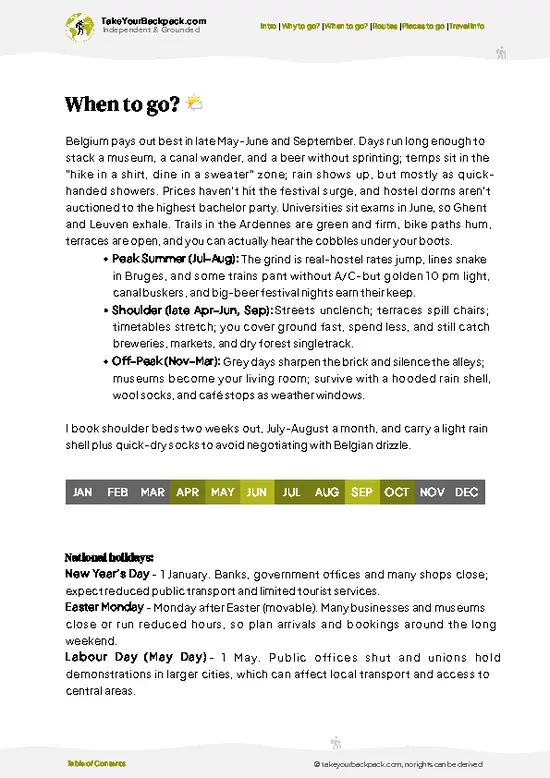
source: climatestotravel.comJANJanuary: below average for travelingFEBFebruary: below average for travelingMARMarch: good for travelingAPRApril: highly recommended for travelingMAYMay: excellent for travelingJUNJune: highly recommended for travelingJULJuly: good for travelingAUGAugust: good for travelingSEPSeptember: excellent for travelingOCTOctober: highly recommended for travelingNOVNovember: fair for travelingDECDecember: below average for traveling

✈️ The backpacker research shortcutBelgium Travel Guide

An offline-friendly backpacking guide with optimized travel routes, ranked highlights, transport advice, and the best areas to stay.
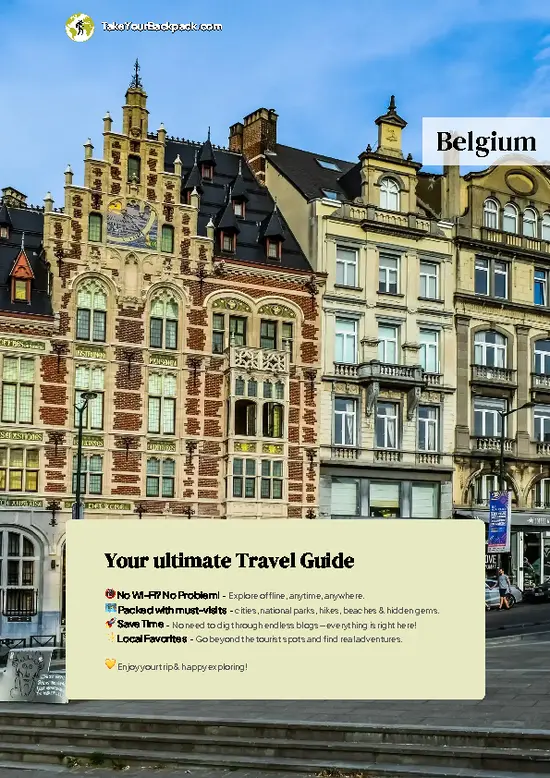
example page 0 from our offline Travel Guide for Belgium
example page 1 from our offline Travel Guide for Belgium
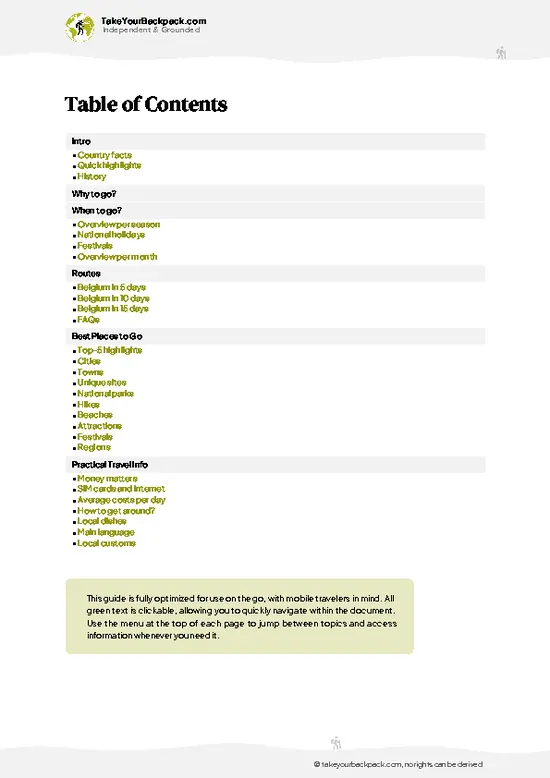
example page 2 from our offline Travel Guide for Belgium
example page 3 from our offline Travel Guide for Belgium
example page 4 from our offline Travel Guide for Belgium
example page 5 from our offline Travel Guide for Belgium
example page 6 from our offline Travel Guide for Belgium
example page 7 from our offline Travel Guide for Belgium
The digital guide (357 pages) contains:
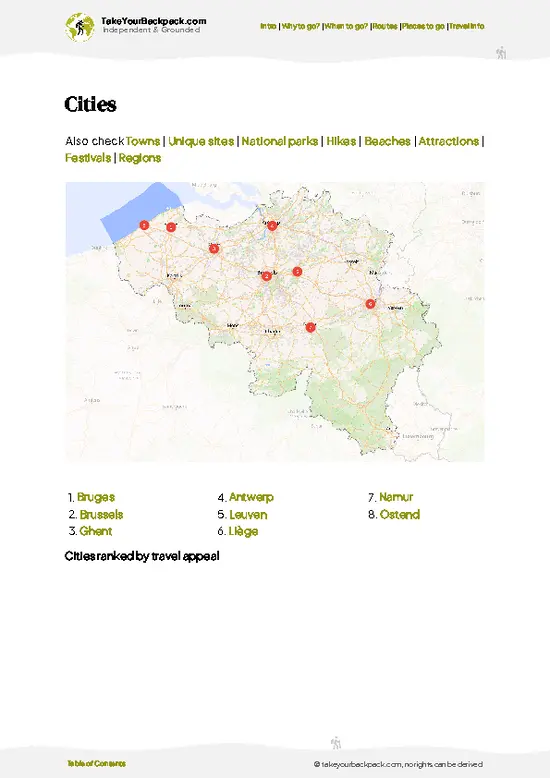
90 highlights, ranked by travel appeal
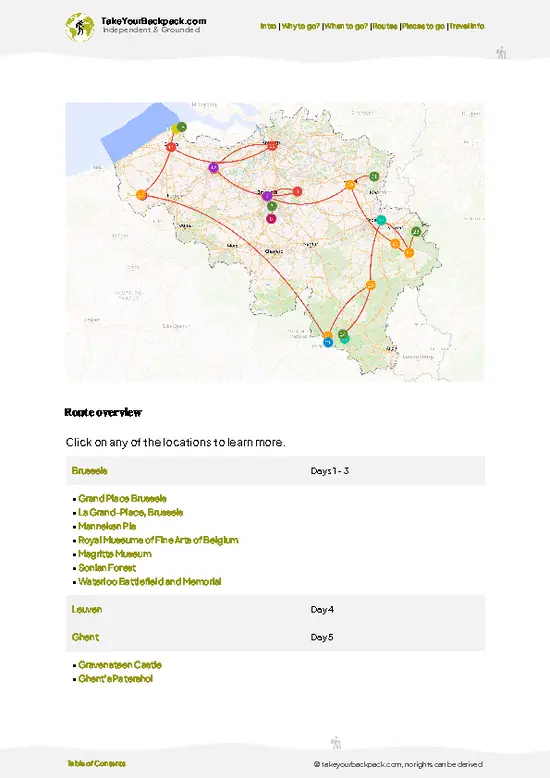
Optimized 5, 10 & 15-day travel routes
Cities, national parks, landmarks, beaches
How to get around
Offline-friendly for travel without Wi-Fi
👉 Click to see all 30+ guide features

📅 Plan smarter in minutes, not weeks
Month by month travel advice
Festivals & national holidays
Budget expectations

🗺️ Go to the right places, skip the overrated ones
Honest pros & cons of destinations
Top hikes, parks & viewpoints
Lesser-known places most travelers miss
Clear “worth it vs skip it” guidance

🛏️ Travel smoothly without rookie mistakes
Best areas to stay
Transport systems explained simply
Common scams & safety advice
SIM cards, money & practical tips

🌍 Understand the country, not just visit it
Culture & traditions
52 Essential phrases & customs
Festivals worth planning around
Traveler-friendly historical context
Insights that make places more meaningful

📱 Built for real travel conditions
Fully downloadable PDF
Works completely offline
Optimized for phone use
Useful in remote areas & buses
Everything in one place
Save weeks of stressful planning
Get instant access to your full guide. 30‑day money-back guarantee.


By proceeding you agree to our terms.
Sent to your inbox immediately after payment • 100% Secure Checkout
Best Backpacking Travel Advisor 2025 tourism awardBest Backpacking
Travel Advisor
2025
What others say about Take Your Backpack Guides:
⭐⭐⭐⭐⭐
Fantastic, amazing amount of information!
⭐⭐⭐⭐⭐
My goodness this is amazing, it's what I've been looking for hats off too you!
⭐⭐⭐⭐⭐
I think this is absolutely BRILLIANT
⭐⭐⭐⭐
Very complete and informative. It's still missing places, but I gotta to commend you
⭐⭐⭐⭐⭐
This is truly amazing, thank you, can't wait to explore it with my kids!
⭐⭐⭐⭐⭐
Awesome resource, thank you!
⭐⭐⭐⭐⭐
This is amazing! Can't wait to explore the ones I haven't seen
⭐⭐⭐⭐
I love this! Well done, great idea.
⭐⭐⭐⭐⭐
Thanks for taking the time to make this gem!
⭐⭐⭐⭐⭐
This might be the best website I've ever seen.
⭐⭐⭐⭐⭐
Congratulations, and thank you so much for your work; it's incredibly valuable.
⭐⭐⭐⭐
In all seriousness I think you did a great job pointing out the important spots
⭐⭐⭐⭐⭐
10/10 very good
⭐⭐⭐⭐⭐
As someone who's only just starting to visit regularly this is awesome, thank you.
⭐⭐⭐⭐
Thank you very much! I'm going to visit my dad, it's going to be very useful!
⭐⭐⭐⭐⭐
This is really cool! We'll be travelling for the first time and this definitely come in handy.
⭐⭐⭐⭐⭐
You are now our minister of culture, congratulations 👨‍💼
⭐⭐⭐⭐⭐
Just wanted to tell you that this is a pearl! Going to follow your recommendations.
⭐⭐⭐⭐⭐
This is so cool. I'll definitely be using the resource for my travels soon.
⭐⭐⭐⭐⭐
This is very impressive! Good work.
⭐⭐⭐⭐⭐
This is an amazing and informative site. Very well done!

🛏️ Where to stay?Where staying makes the most sense

Hoge Kempen National Park is a treasure for backpackers, but finding the right place to stay can make or break your experience. Inside the park, options are limited. There are a few basic campsites, like the one at Mechelse Heide, which offers a no-frills experience close to nature. Just remember to book in advance, especially during peak season, as spots can fill up quickly.

For a bit more comfort, consider nearby towns like Genk or Maasmechelen. Genk has a range of hostels and budget hotels, making it a solid base. The atmosphere is friendly, and you’ll find local eateries that won’t break … read more 👉
Hoge Kempen National Park is a treasure for backpackers, but finding the right place to stay can make or break your experience. Inside the park, options are limited. There are a few basic campsites, like the one at Mechelse Heide, which offers a no-frills experience close to nature. Just remember to book in advance, especially during peak season, as spots can fill up quickly.

For a bit more comfort, consider nearby towns like Genk or Maasmechelen. Genk has a range of hostels and budget hotels, making it a solid base. The atmosphere is friendly, and you’ll find local eateries that won’t break the bank. Maasmechelen, on the other hand, is quieter but has some charming guesthouses.

Be aware of the hidden costs. Some campsites charge extra for amenities like showers or firewood. If you’re staying in town, factor in transportation costs to get to the park. Public transport is decent, but having a bike can save you time and energy.

Ultimately, choose a place that aligns with your adventure style. Prioritize proximity to the park and local charm to enhance your experience without draining your budget.

👛 Costs (as of 21 December 2025)How expensive it really is

Entrance
Hoge Kempen has no general entrance fee — access to trails and most open areas is free year-round, so budget €0 for park entry. Every visit should still assume costs for transit, parking, or paid activities; treating entry as free preserves your energy for the things that cost money.

Parking
Official park car parks typically charge; expect about €2-€6 per day at the main lots (some smaller lots are free). Pay machines increasingly accept cards, but carry a few euros in cash in case a machine is offline.

Visitor centres & exhibits
Most visitor centres (interpretive displays) are free or ask a small voluntary contribution; guided exhibits or special temporary exhibitions cost roughly €2-€8 per person. Plan on a modest extra if you want the formal interpretation.

Guided walks and ranger read more 👉
Entrance
Hoge Kempen has no general entrance fee — access to trails and most open areas is free year-round, so budget €0 for park entry. Every visit should still assume costs for transit, parking, or paid activities; treating entry as free preserves your energy for the things that cost money.

Parking
Official park car parks typically charge; expect about €2-€6 per day at the main lots (some smaller lots are free). Pay machines increasingly accept cards, but carry a few euros in cash in case a machine is offline.

Visitor centres & exhibits
Most visitor centres (interpretive displays) are free or ask a small voluntary contribution; guided exhibits or special temporary exhibitions cost roughly €2-€8 per person. Plan on a modest extra if you want the formal interpretation.

Guided walks and ranger programmes
Park-led group walks are usually low-cost: €5-€15 per person for organised walks or themed events. Private guided hikes or full-day specialty tours run about €80-€180 per group (2-6 people); hire a guide only if you want deeper local insight.

Bike, e-bike and mountain-bike costs
Standard bike rental: €10-€20 per day. E-bike rental: €30-€60 per day. Mountain-bike rental and helmet: €20-€40 per day. Most trails are open without a trail pass; renting locally is faster than hauling your own gear if you’re arriving by train.

Transport to the park (independent traveler estimates)
Train or bus to nearby towns (Genk, Maasmechelen) from Brussels/Antwerp typically costs €12-€25 return depending on advance booking and discounts. Local bus or taxi to trailheads is usually €2-€8 one way; budget extra for off-peak or late returns.

Accommodation nearby
Camping / small park campsites: €10-€25 per tent per night. Budget hotels / guesthouses: €60-€100 per double room per night. Midrange hotels / comfortable B&Bs: €90-€150 per night. Overnight costs vary strongly by season and weekend demand.

Food & drink
Picnic supplies from a supermarket: €4-€12 per person per day. Onsite cafés or park restaurants: €6-€20 per meal depending on a snack versus a hot dish. Plan for higher prices at visitor-facing cafés that serve quick meals.

Extras and potential hidden costs
Event or shuttle fees (special seasonal services) can add €5-€15 per person. Bicycle locks, minor repairs, or extra layers for changing weather: budget €5-€15 as contingency. Fines for ignoring rules (e.g., off-limits areas, drone use where banned) can be significant — avoid risks by following signage.

How to keep costs low
Bring food and water from town, use public transport to nearby hubs, rent a regular bike instead of an e-bike, and pick free guided programmes when available; sensible choices can keep a day-visit below €20 per person excluding travel, while a more comfortable day with rentals and meals will typically run €40-€90 per person.

Bottom line
Plan for €0 entry, €2-€6 parking, €10-€60 for any bike rental, €5-€15 for guided walks, and €10-€150 for accommodation per night depending on comfort. These ranges let you decide quickly what to skip and where it’s worth spending.


source: nationaalparkhogekempen.be
⚠️ Prices can change and everyone travels differently, so take this as a rough guide. Hope it helps you plan your adventure!

🥾 TrailsScenic routes and wildlife spotting in Hoge Kempen

Hoge Kempen National Park is a hidden gem in Belgium, perfect for those who crave a mix of serene landscapes and a bit of adventure. With its diverse terrain, you’ll find everything from sandy heathlands to lush forests. The park is relatively flat, making it accessible for most hikers, but there are still some areas that might get your heart pumping a bit more. Keep your eyes peeled for wildlife; you might spot deer or even some rare bird species flitting about.

One of the standout trails is the Hoge Kempen Trail. Here are the details:
  • Length: 20 km
  • Estimated Duration: 5-6 hours
  • Difficulty Level:
read more 👉
Hoge Kempen National Park is a hidden gem in Belgium, perfect for those who crave a mix of serene landscapes and a bit of adventure. With its diverse terrain, you’ll find everything from sandy heathlands to lush forests. The park is relatively flat, making it accessible for most hikers, but there are still some areas that might get your heart pumping a bit more. Keep your eyes peeled for wildlife; you might spot deer or even some rare bird species flitting about.

One of the standout trails is the Hoge Kempen Trail. Here are the details:
  • Length: 20 km
  • Estimated Duration: 5-6 hours
  • Difficulty Level: Moderate
  • Key Features: Scenic views, heathlands, and tranquil lakes
  • Terrain: Mostly flat with some gentle inclines

Getting to the park is a breeze, especially if you’re using public transport. There are regular trains to nearby towns, and from there, a short bus ride or even a bike rental can get you right to the park entrance. It’s not usually overcrowded, which is a bonus if you prefer a quieter experience. Plus, there’s no entrance fee, so you can save those euros for a nice Belgian beer afterward. Just make sure to pack some snacks, as the trails can make you work up an appetite!
⚠️ Hiking info can sometimes be outdated or inaccurate. Before you hit the trail, check the latest conditions with locals. If you do spot anything that's off, I'd love to hear from you, so I can update it for fellow travelers.

🛡️ SafetyStaying Safe: What Travelers Should Know

Hoge Kempen National Park is a well-managed area, but that doesn’t mean you can skip the basics. The weather can shift quickly, especially in spring and fall. Mornings might start cool and crisp, but by midday, you could be sweating under the sun. Layer your clothing. A lightweight, breathable base layer with a warm mid-layer is your best bet. Always pack a waterproof jacket, even if the forecast looks clear.

The terrain here is generally forgiving, with well-marked trails that are easy to navigate. However, some paths can be uneven, with roots and rocks that demand your attention. Keep your footing steady, especially after rain when things can get slippery. If you’re planning to tackle any of the more remote trails, a good map or GPS device is essential. Cell service can be spotty, so don’t … read more 👉
Hoge Kempen National Park is a well-managed area, but that doesn’t mean you can skip the basics. The weather can shift quickly, especially in spring and fall. Mornings might start cool and crisp, but by midday, you could be sweating under the sun. Layer your clothing. A lightweight, breathable base layer with a warm mid-layer is your best bet. Always pack a waterproof jacket, even if the forecast looks clear.

The terrain here is generally forgiving, with well-marked trails that are easy to navigate. However, some paths can be uneven, with roots and rocks that demand your attention. Keep your footing steady, especially after rain when things can get slippery. If you’re planning to tackle any of the more remote trails, a good map or GPS device is essential. Cell service can be spotty, so don’t rely solely on your phone for navigation.

Wildlife encounters are rare but possible. You might spot deer or various bird species, which can be a treat. If you do come across any animals, keep your distance. Feeding wildlife is a no-go; it disrupts their natural behavior and can lead to dangerous situations.

One practical gap for first-timers is underestimating the park’s size. It’s easy to think you can cover more ground than you actually can. Plan your hikes with realistic timeframes. Factor in breaks and the time it takes to enjoy the scenery. Starting early in the day can help you avoid the crowds and give you a more peaceful experience.

Trail etiquette is straightforward but important. Stay on marked paths to protect the delicate ecosystem. If you’re hiking with a group, keep conversations at a reasonable volume to respect the tranquility of the park.

In summary, Hoge Kempen is accessible and enjoyable, but a little preparation goes a long way. Keep your gear simple, stay aware of your surroundings, and you’ll be set to enjoy the park’s beauty without any surprises.

Other Belgian national parks near Hoge Kempen

Explore more nearby:


💡 Not sure where to go next?
Create a personalized itinerary for Belgium including Hoge Kempen and the places that fit your trip.

Generate my itinerary

👉 Discover all national parks

Or checkout all Belgium has to offer (think cities, towns, villages, national parks, hikes, beaches, festivals)
Country photo of Belgium

We 💚 feedbackIs it worth it?

Hoge Kempen National Park is a breath of fresh air, offering a unique blend of pine forests and serene lakes that feels like a world away from the bustle. But be ready for the reality check: trails can be less marked than you’d hope, so keep your map handy. Embrace the adventure, and you’ll find the park’s quiet beauty is worth the extra effort. Just don’t let a wrong turn drain your energy for the good stuff.

✈️ When did I visit Belgium?
Belgium being my neighbour country, I have visited it many times, mainly for weekend city trips.

✍️ Help improve this page!
The information on this page is based on my own backpacking experience in Belgium, supplemented with up-to-date research and feedback from other travelers. Travel details can change, so if you notice anything outdated or incomplete, feel free to let me know.


🙋‍♂️ Give feedback

👋 Meet the founderWho’s Behind Take Your Backpack?

Johan, backpacker and founder of TakeYourBackpackHi, I’m Johan (Netherlands 🇳🇱), the creator of TakeYourBackpack. Over the past decade, I’ve backpacked through 80+ countries across six continents, gaining extensive experience with independent travel, long-term trips, and overland routes.

This site is built on a combination of firsthand travel experience and carefully curated insights from other backpackers. Many guides are based on places I’ve personally visited, while others bring together tips, observations, and practical advice shared by trusted travelers I’ve met along the way.

The goal is to provide realistic, experience-driven guidance — not generic itineraries — so you can explore destinations with better context, clearer expectations, and more confidence.

Get full Belgium guide •
Instant download • 90 highlights • Full Offline guide