×

Belize🇧🇿 | national parksSt. Herman’s Blue Hole National ParkCold turquoise sinkhole, cave steps, Hummingbird Highway stop | things to do and best time to go

Explore Mountain Pine Ridge Forest ReserveExplore Cayo District

Backpacking in St. Herman’s Blue Hole
🌟 Highlightnational park ranked #3
By Johan Kruseman 🇳🇱 | Updated October 22, 2026

The water in the Blue Hole is a cold, glassy turquoise because it surfaces from an underground river that has run through limestone, and the first thing you notice is the quiet, broken by dripping ferns and a few birds. The park sits along the Hummingbird Highway, south of Belmopan in central Belize, so buses drop you at the gate and you need no tour. The swimming is the big draw: a deep sinkhole ringed by rainforest, with a small cave trail and a few longer jungle paths. The downsides are real. The pool is cold, the humid trails stay muddy, and tour vans arrive around midday. Experienced travelers come early, when the light is soft and the pool is nearly empty, and bring water shoes because the rocks are slick. A first day could mean a swim at the pool, a walk to the cave entrance, then a slow loop on the longer jungle trail.

Discover everything you want to know in the 📖 Belize Travel Guide.


example page 0 from our offline Travel Guide for Belize
example page 1 from our offline Travel Guide for Belize
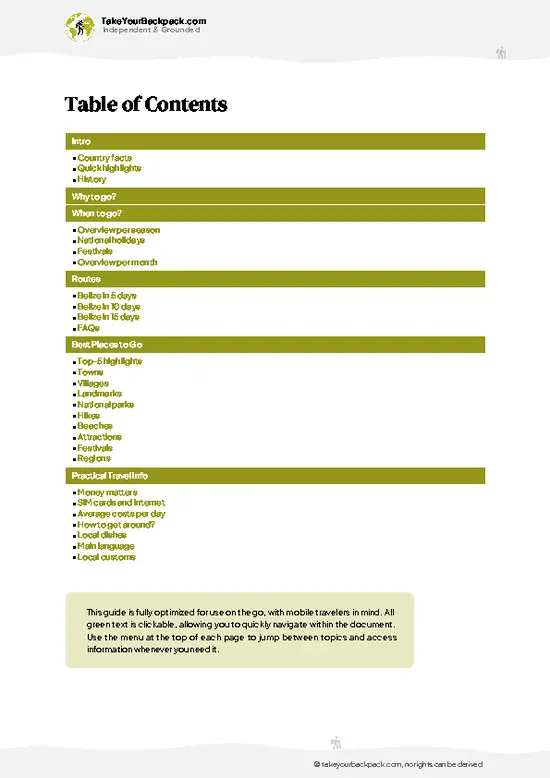
example page 2 from our offline Travel Guide for Belize
example page 3 from our offline Travel Guide for Belize
example page 4 from our offline Travel Guide for Belize
example page 5 from our offline Travel Guide for Belize
example page 6 from our offline Travel Guide for Belize
example page 7 from our offline Travel Guide for Belize
Loading the map 🌍
CLICK TO FILTER
towns
villages
landmarks
national parks
hikes
beaches
attractions
festivals
regions
SHOW COUNTRY’S BESTSHOW ALL

✨ Why go?
Ranked #3 national park in Belize
What makes it a must-see national park

St. Herman’s Blue Hole National Park rewards people who like to arrange their own day. The entrance sits right on the highway, so you can ride a local bus, step off, and be at the water within minutes, with no shuttle or guide to book. The headline is the sapphire sinkhole fed by an underground river, where you can swim in cool, clear water for as long as you like. A short walk away is St. Herman’s Cave, whose entrance you can reach on your own, and past that the forest trails are quiet enough that you often meet only birds. Camping inside the park is possible and tends to be cheap, and the self-guided format means you can hike at dawn or linger after the tour vans leave. Pack a headlamp, water shoes and snacks, and you can fill a full day without spending much.

💡 HighlightsEssential experiences to have while exploring St. Herman’s Blue Hole

  1. The Blue Hole: the sinkhole that gives the park its name, a deep turquoise pool where the Sibun River comes up from under a cave wall. Steps lead down to the water, and swimming is allowed. The water stays cool all year, so it feels wonderful after a muddy hike.
  2. St. Herman’s Cave: a limestone cave with a wide mouth, reached by a short climb of stone steps from the trail. You can look at the entrance chamber on your own, but go deeper only with a light and, ideally, a guide. The Maya used the cave, and pottery fragments have been found inside.
  3. Blue Hole Trail: a short, easy forest path that links the parking area, the pool and the cave trail. It runs under tall trees and past ferns, and it is the easiest place in the park to spot birds such as toucans and hummingbirds.
  4. Cave tubing and cave exploration:
… read more 👉
  1. The Blue Hole: the sinkhole that gives the park its name, a deep turquoise pool where the Sibun River comes up from under a cave wall. Steps lead down to the water, and swimming is allowed. The water stays cool all year, so it feels wonderful after a muddy hike.
  2. St. Herman’s Cave: a limestone cave with a wide mouth, reached by a short climb of stone steps from the trail. You can look at the entrance chamber on your own, but go deeper only with a light and, ideally, a guide. The Maya used the cave, and pottery fragments have been found inside.
  3. Blue Hole Trail: a short, easy forest path that links the parking area, the pool and the cave trail. It runs under tall trees and past ferns, and it is the easiest place in the park to spot birds such as toucans and hummingbirds.
  4. Cave tubing and cave exploration: guided trips in the surrounding cave system let you float or wade through chambers with stalactites. Guides carry the lights and the gear, which makes it the safer way to see the interior.
  5. Rainforest wildlife: the canopy hides toucans, trogons and butterflies, and quieter hours may bring signs of larger animals such as peccaries or ocelots. Go early or late, because noise from the pool drives most of it away.
  6. Forest picnic area: a simple shaded clearing near the entrance where you can eat, dry off and watch hummingbirds around the flowers.
St. Herman’s Blue Hole National Park charges only a small entry fee, and the picnic area and forest paths cost nothing extra once you are inside.
Spotted a mistake or missing something? Contact us.

Things to do around St. Herman’s Blue Hole National Park

Ratings based on Tripadvisor reviews. When you book through this link, you support our work at no extra cost to you.

🌤️ When to go?Seasonal considerations and timing

  • Dry Season (February to May): Trails are firmest, the Blue Hole swimming spot stays clearest, and cave tubing runs at its easiest. Days reach 29 to 33°C (84 to 91°F), nights drop to 19 to 22°C (66 to 72°F). Daylight lasts roughly 11 to 13 hours. Expect the most visitors and the highest tour prices, especially around Easter.
  • Early Wet Season (June to August): Short afternoon downpours turn the St. Herman’s Cave path and the jungle trails muddy. Temperatures sit at 26 to 32°C (79 to 90°F). Crowds thin and lodge rates ease by 10 to 20 percent.
  • Peak Rains (September to November): Heavy rain and tropical storm risk, with cave rivers running high and some tours canceled. Humidity is thick, but the park is nearly empty.
  • Cool Months (December to January): Fronts bring 18 to 27°C (64 to 81°F) and breezy,
… read more 👉
  • Dry Season (February to May): Trails are firmest, the Blue Hole swimming spot stays clearest, and cave tubing runs at its easiest. Days reach 29 to 33°C (84 to 91°F), nights drop to 19 to 22°C (66 to 72°F). Daylight lasts roughly 11 to 13 hours. Expect the most visitors and the highest tour prices, especially around Easter.
  • Early Wet Season (June to August): Short afternoon downpours turn the St. Herman’s Cave path and the jungle trails muddy. Temperatures sit at 26 to 32°C (79 to 90°F). Crowds thin and lodge rates ease by 10 to 20 percent.
  • Peak Rains (September to November): Heavy rain and tropical storm risk, with cave rivers running high and some tours canceled. Humidity is thick, but the park is nearly empty.
  • Cool Months (December to January): Fronts bring 18 to 27°C (64 to 81°F) and breezy, drizzly spells. Holiday weeks fill rooms and raise prices.
Aim for late February through April, and book Christmas and Easter beds well ahead.


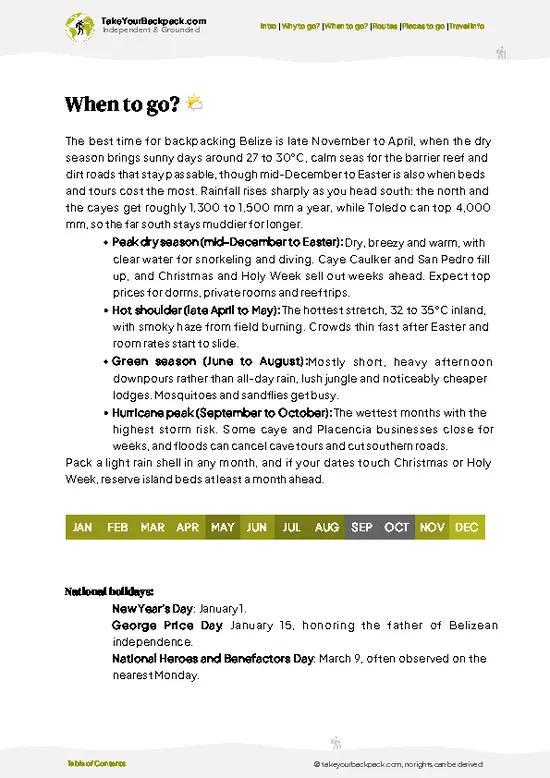
source: climatestotravel.comJANJanuary: excellent for travelingFEBFebruary: excellent for travelingMARMarch: excellent for travelingAPRApril: highly recommended for travelingMAYMay: fair for travelingJUNJune: fair for travelingJULJuly: fair for travelingAUGAugust: fair for travelingSEPSeptember: below average for travelingOCTOctober: fair for travelingNOVNovember: highly recommended for travelingDECDecember: excellent for traveling
belize-national-park-st-hermans-blue-hole-national-park
© Google |

✈️ The backpacker research shortcutBelize Travel Guide

An offline-friendly backpacking guide with optimized travel routes, ranked highlights, transport advice, and the best areas to stay.
example page 0 from our offline Travel Guide for Belize
example page 1 from our offline Travel Guide for Belize
example page 2 from our offline Travel Guide for Belize
example page 3 from our offline Travel Guide for Belize
example page 4 from our offline Travel Guide for Belize
example page 5 from our offline Travel Guide for Belize
example page 6 from our offline Travel Guide for Belize
example page 7 from our offline Travel Guide for Belize
The digital guide (168 pages) contains:
✅ 45 highlights, ranked by travel appeal
✅ Optimized 5, 10 & 15-day travel routes
✅ Cities, national parks, landmarks, beaches
✅ How to get around
✅ Offline-friendly for travel without Wi-Fi
👉 Click to see all 30+ guide features

📅 Plan smarter in minutes, not weeks
✅ Month by month travel advice
✅ Festivals & national holidays
✅ Budget expectations

🗺️ Go to the right places, skip the overrated ones
✅ Honest pros & cons of destinations
✅ Top hikes, parks & viewpoints
✅ Lesser-known places most travelers miss
✅ Clear “worth it vs skip it” guidance

🛏️ Travel smoothly without rookie mistakes
✅ Best areas to stay
✅ Transport systems explained simply
✅ Common scams & safety advice
✅ SIM cards, money & practical tips

🌍 Understand the country, not just visit it
✅ Culture & traditions
✅ 52 Essential phrases & customs
✅ Festivals worth planning around
✅ Traveler-friendly historical context
✅ Insights that make places more meaningful

📱 Built for real travel conditions
✅ Fully downloadable PDF
✅ Works completely offline
✅ Optimized for phone use
✅ Useful in remote areas & buses
✅ Everything in one place
Stop searching, start planning
Get instant access to your full guide. 30‑day money-back guarantee.
+ Add another guide for just

By proceeding you agree to our terms.
Sent to your inbox immediately after payment • 100% Secure Checkout
Best Backpacking Travel Advisor 2025 tourism awardBest Backpacking
Travel Advisor
2025
What others say about Take Your Backpack Guides:
⭐⭐⭐⭐⭐
Fantastic, amazing amount of information!
⭐⭐⭐⭐⭐
My goodness this is amazing, it's what I've been looking for hats off too you!
⭐⭐⭐⭐⭐
I think this is absolutely BRILLIANT
⭐⭐⭐⭐
Very complete and informative. It's still missing places, but I gotta to commend you
⭐⭐⭐⭐⭐
This is truly amazing, thank you, can't wait to explore it with my kids!
⭐⭐⭐⭐⭐
Awesome resource, thank you!
⭐⭐⭐⭐⭐
This is amazing! Can't wait to explore the ones I haven't seen
⭐⭐⭐⭐
I love this! Well done, great idea.
⭐⭐⭐⭐⭐
Thanks for taking the time to make this gem!
⭐⭐⭐⭐⭐
This might be the best website I've ever seen.
⭐⭐⭐⭐⭐
Congratulations, and thank you so much for your work; it's incredibly valuable.
⭐⭐⭐⭐
In all seriousness I think you did a great job pointing out the important spots
⭐⭐⭐⭐⭐
10/10 very good
⭐⭐⭐⭐⭐
As someone who's only just starting to visit regularly this is awesome, thank you.
⭐⭐⭐⭐
Thank you very much! I'm going to visit my dad, it's going to be very useful!
⭐⭐⭐⭐⭐
This is really cool! We'll be travelling for the first time and this definitely come in handy.
⭐⭐⭐⭐⭐
You are now our minister of culture, congratulations 👨‍💼
⭐⭐⭐⭐⭐
Just wanted to tell you that this is a pearl! Going to follow your recommendations.
⭐⭐⭐⭐⭐
This is so cool. I'll definitely be using the resource for my travels soon.
⭐⭐⭐⭐⭐
This is very impressive! Good work.
⭐⭐⭐⭐⭐
This is an amazing and informative site. Very well done!

🛏️ Where to stay?Best areas to stay in Belize

There are no lodges inside St. Herman’s Blue Hole National Park, so most backpackers sleep in nearby Belmopan, Belize’s tiny capital, or along the Hummingbird Highway. The park sits roughly 19 km (12 miles) southeast of Belmopan, about 25 minutes by car.

Belmopan has the cheapest and most practical beds. Expect simple guesthouses and small hotels at US$30 to 70 a night, with a handful of restaurants and the bus station that connects you to Belize City and San Ignacio. It is not exciting, but it works as a hub.

Along the highway close to the park entrance, a few jungle lodges and eco-resorts … read more 👉
There are no lodges inside St. Herman’s Blue Hole National Park, so most backpackers sleep in nearby Belmopan, Belize’s tiny capital, or along the Hummingbird Highway. The park sits roughly 19 km (12 miles) southeast of Belmopan, about 25 minutes by car.

Belmopan has the cheapest and most practical beds. Expect simple guesthouses and small hotels at US$30 to 70 a night, with a handful of restaurants and the bus station that connects you to Belize City and San Ignacio. It is not exciting, but it works as a hub.

Along the highway close to the park entrance, a few jungle lodges and eco-resorts offer cabins and the odd dorm or camping spot for about US$15 to 100, depending on style. Staying here means you can walk or take a short ride to the Blue Hole and the cave trailhead early, before tour groups arrive.

San Ignacio, around 45 minutes west of Belmopan, is the livelier alternative, with hostels from US$12 to 20 for a dorm bed, plus bars, tour agencies and day trips that include the park. Dangriga on the coast is another option, about an hour south, if you are pairing the park with Cayes.

👛 Costs (as of 22 October 2026)What things cost and how to budget

A day at St. Herman’s Blue Hole National Park costs roughly US$33 to 122 for a backpacker, with entry fees and food making up most of it. Visitors pay in Belize dollars or US dollars, and card payment is not reliable at the gate.
CategoryBudget RangeLocal Reality
Entrance feeUS$5 to 10Foreign visitors pay a higher rate than Belizeans, and it covers the Blue Hole and trails. Cave access adds a small extra charge.
Cave tour or guideUS$0 to 40The first cave chamber can be done unguided with your own light. Deeper cave visits need a licensed guide, priced per group.
Accommodation (high season)US$15 to 40Hostel dorms in San Ignacio or simple rooms in Belmopan. Jungle lodges run higher.
Local transportUS$3 to 12Buses along the Hummingbird Highway are cheap, then a short taxi or walk from the road. A
… read more 👉
A day at St. Herman’s Blue Hole National Park costs roughly US$33 to 122 for a backpacker, with entry fees and food making up most of it. Visitors pay in Belize dollars or US dollars, and card payment is not reliable at the gate.
CategoryBudget RangeLocal Reality
Entrance feeUS$5 to 10Foreign visitors pay a higher rate than Belizeans, and it covers the Blue Hole and trails. Cave access adds a small extra charge.
Cave tour or guideUS$0 to 40The first cave chamber can be done unguided with your own light. Deeper cave visits need a licensed guide, priced per group.
Accommodation (high season)US$15 to 40Hostel dorms in San Ignacio or simple rooms in Belmopan. Jungle lodges run higher.
Local transportUS$3 to 12Buses along the Hummingbird Highway are cheap, then a short taxi or walk from the road. A taxi from Belmopan costs more.
Food and suppliesUS$10 to 20Belmopan has cheap local eateries with rice and beans, stew chicken and fry jack. Bring your own water and snacks to the park.
Total Daily BudgetUS$33 to 122About US$60 is a realistic middle figure for most backpackers.


source: travelbelize.org
⚠️ Prices can change and everyone travels differently, so take this as a rough guide. Hope it helps you plan your adventure!

🥾 TrailsBest hikes in St. Herman’s Blue Hole national park

St. Herman’s Blue Hole National Park has a short network of trails, and most can be done in a single day with time left for swimming. The terrain is limestone and clay, which turns slick after rain, so shoes with grip matter.
  • Blue Hole Trail: easy, about 10 to 15 minutes one way. It is flat to gently sloping, shaded and a good spot for birds, and it ends at the steps down to the pool.
  • St. Herman’s Cave Trail: easy to moderate, roughly 30 to 45 minutes round trip. It climbs through forest to a stairway at the cave mouth, with damp rock and tree roots underfoot. Bring a headlamp, because the entrance
… read more 👉
St. Herman’s Blue Hole National Park has a short network of trails, and most can be done in a single day with time left for swimming. The terrain is limestone and clay, which turns slick after rain, so shoes with grip matter.
  • Blue Hole Trail: easy, about 10 to 15 minutes one way. It is flat to gently sloping, shaded and a good spot for birds, and it ends at the steps down to the pool.
  • St. Herman’s Cave Trail: easy to moderate, roughly 30 to 45 minutes round trip. It climbs through forest to a stairway at the cave mouth, with damp rock and tree roots underfoot. Bring a headlamp, because the entrance chamber gets dark quickly.
  • Wildlife: expect toucans, motmots, trogons and many butterflies, with the best sightings early in the morning when few people are around.
Reaching St. Herman’s Blue Hole National Park is straightforward, because buses on the Hummingbird Highway stop at the entrance and the walk from the road is short. Midday brings tour groups and a crowded pool, while early mornings and late afternoons are far quieter. An entry fee of about US$4 applies to foreign visitors, payable in local currency or US dollars, and guided cave tours cost extra. Rain can close trails or make the cave unsafe, so check conditions at the visitor center before heading in.
⚠️ Hiking info can sometimes be outdated or inaccurate. Before you hit the trail, check the latest conditions with locals. If you do spot anything that's off, I'd love to hear from you, so I can update it for fellow travelers.

🛡️ SafetySafety Tips and Common Scams in St. Herman’s Blue Hole

St. Herman’s Blue Hole National Park is a straightforward, well-managed park where the main issues are slippery footing and heat. The marked trails are short and mostly flat, but limestone and roots turn greasy after rain, so wear shoes with real grip rather than flip-flops. The Blue Hole water is cool and deep in places, and the rocky entry deserves care. Swim only in the designated area and never dive from ledges.

St. Herman’s Cave requires a flashlight or headlamp, and the inside path crosses uneven rock and shallow water. Going beyond the first chamber needs a licensed guide. Bring a spare light, since cave dark is total.

Wildlife is mostly birds, butterflies and the occasional snake or biting insect. Give any animal space and watch where you place hands. Mosquitoes and sand flies are … read more 👉
St. Herman’s Blue Hole National Park is a straightforward, well-managed park where the main issues are slippery footing and heat. The marked trails are short and mostly flat, but limestone and roots turn greasy after rain, so wear shoes with real grip rather than flip-flops. The Blue Hole water is cool and deep in places, and the rocky entry deserves care. Swim only in the designated area and never dive from ledges.

St. Herman’s Cave requires a flashlight or headlamp, and the inside path crosses uneven rock and shallow water. Going beyond the first chamber needs a licensed guide. Bring a spare light, since cave dark is total.

Wildlife is mostly birds, butterflies and the occasional snake or biting insect. Give any animal space and watch where you place hands. Mosquitoes and sand flies are active at dusk, so bring repellent. Carry drinking water, as there is little available on the trails, and keep valuables out of parked vehicles at the lot.

FAQTraveler FAQ

Plan on half a day to a full day for St. Herman’s Blue Hole National Park. The Blue Hole swim and the short cave walk take about 2 to 3 hours, and adding the Crystal Cave or tubing tours stretches it to a full day. Many travelers combine it with Belmopan or the Hummingbird Highway over one to two days.
Yes, St. Herman’s Blue Hole National Park is doable without a car. Buses between Belmopan and Dangriga run along the Hummingbird Highway and can drop you near the park entrance, roughly 25 minutes from Belmopan and costing a few dollars. From the road it is a short walk or ride, and taxis from Belmopan cost about US$25 to 40 one way.
Yes, St. Herman’s Blue Hole National Park charges an entrance fee of roughly US$5 to 10 for foreign visitors, paid at the gate. No separate permit is needed for the Blue Hole and marked trails. Deeper cave exploration requires a licensed guide, and tours typically cost about US$30 to 60 per person.
⚠️ Things can change over time, so always validate details locally before you go.

Other Belizean national parks near St. Herman’s Blue Hole

Explore more nearby:


💡 Not sure where to go next?
Create a personalized itinerary for Belize including St. Herman’s Blue Hole and the places that fit your trip.

Generate my itinerary

👉 Discover all national parks

Or checkout all Belize has to offer (think cities, towns, villages, national parks, hikes, beaches, festivals)
Country photo of Belize

We 💚 feedbackKey takeaways before you go

St. Herman’s Blue Hole National Park trips go wrong when people treat it as a quick pool stop and arrive at noon with the tour vans. I would get there first thing, swim before the crowds, then walk the cave trail with a headlamp and sturdy shoes.

✍️ Help improve this page!
The information on this page is based on in-depth research, insights shared by experienced travelers, and feedback from the local travel community in Belize. While every effort is made to keep the information accurate and current, conditions can change — so if you spot anything incorrect or outdated, please get in touch.


🙋‍♂️ Give feedback

👋 Meet the founderWho’s Behind Take Your Backpack?

Johan, backpacker and founder of TakeYourBackpackHi, I’m Johan (Netherlands 🇳🇱), the creator of TakeYourBackpack. Over the past 3 decades, I’ve backpacked through 90+ countries across six continents, gaining extensive experience with independent travel, long-term trips, and overland routes.

This site is built on a combination of firsthand travel experience and carefully curated insights from other backpackers. Many guides are based on places I’ve personally visited, while others bring together tips, observations, and practical advice shared by trusted travelers I’ve met along the way.

The goal is to provide realistic, experience-driven guidance — not generic itineraries — so you can explore destinations with better context, clearer expectations, and more confidence.