×

Benin🇧🇯 | festivalsGelede Festivalcolorful masks, women’s society, satirical dance | things to do and best time to go

Explore Ganvié FestivalExplore Goli Festival

Backpacking in Gelede
🏆 Top pickfestival ranked #2
By Johan Kruseman 🇳🇱 | Updated September 3, 2026

Forget the travel-blog myth: the Gelede Festival isn’t some sanitized, tourist-friendly masquerade staged for cameras. It’s a living, pulsing ritual rooted in the Yoruba communities of southwest Benin, especially around the town of Ketou, where the real action happens. This is not a festival you just stumble into—Gelede is a kinetic, all-senses-on-alert celebration of womanhood, ancestry, and social harmony, with masked dancers pounding the earth to the syncopated thunder of talking drums and shekeres. The crowd? Mostly locals, with a handful of outsiders who’ve earned their welcome by showing respect and patience. The vibe is electric but not performative; you’re a guest, not the main event. Expect the festival to stretch over several days, usually in the dry season, with ceremonies that start late and run deep into the night. If you crave authenticity and don’t mind a little dust and unpredictability, Gelede rewards you with raw, communal energy you won’t find on any packaged tour.

Discover everything you want to know in the 📖 Benin Travel Guide.


Get your Benin guide
55 ranked highlights, routes & tips, works offline (230 pages)
Loading the map 🌍
CLICK TO FILTER
cities
towns
landmarks
national parks
hikes
beaches
attractions
festivals
regions
SHOW COUNTRY’S BESTSHOW ALL

✨ Why go?
Ranked #2 festival in Benin
What sets this place apart

Backpackers flock to the Gelede Festival in Benin for a reason: it’s a cultural explosion that transforms the ordinary into the extraordinary. This festival isn’t just an event; it’s a temporary community where you can dive headfirst into the vibrant rhythms of Yoruba culture. The social energy is palpable, drawing people together in a shared experience that feels electric.

Planning your route around Gelede means you’re not just passing through; you’re immersing yourself in something real. The affordability of the festival compared to similar events worldwide makes it a no-brainer. You get to witness stunning performances, intricate masks, and the kind of storytelling that sticks with you long after the last drumbeat fades.

Integrating Gelede into your travel plans allows you to explore … read more 👉
Backpackers flock to the Gelede Festival in Benin for a reason: it’s a cultural explosion that transforms the ordinary into the extraordinary. This festival isn’t just an event; it’s a temporary community where you can dive headfirst into the vibrant rhythms of Yoruba culture. The social energy is palpable, drawing people together in a shared experience that feels electric.

Planning your route around Gelede means you’re not just passing through; you’re immersing yourself in something real. The affordability of the festival compared to similar events worldwide makes it a no-brainer. You get to witness stunning performances, intricate masks, and the kind of storytelling that sticks with you long after the last drumbeat fades.

Integrating Gelede into your travel plans allows you to explore the surrounding areas, enriching your journey. It’s about more than just the destination; it’s about the moments that fuel your spirit. So, gear up, embrace the chaos, and let the festival guide your adventure.
Want to include Gelede Festival in your Benin route?
Create a personalized Benin itinerary that includes Gelede Festival and the places that fit your trip — based on your travel style, budget, and available time. Get your route in seconds.

Generate my trip

💡 HighlightsPlaces and moments you shouldn't skip

  1. Gelede masks and masquerades — The carved wooden masks are the visual heart of the festival: huge, ornate, often comic or grotesque faces that hide skilled dancers. Watching masked troupes animate these figures—turning static sculpture into lively characters—is unlike most parades; it’s theater, ritual, and craft all at once.
  2. Polyrhythmic drumming and dance — The beats are relentless and layered, pulling people from the crowd into the movement. Dancers combine precise footwork, acrobatic lifts and communal choreography; the music isn’t just background, it shapes the whole day and can sweep you into a trance if you’re paying attention.
  3. Celebration of women’s power and social satire — Gelede honors female elders, fertility, and community mothers through performances that both praise and
read more 👉
  1. Gelede masks and masquerades — The carved wooden masks are the visual heart of the festival: huge, ornate, often comic or grotesque faces that hide skilled dancers. Watching masked troupes animate these figures—turning static sculpture into lively characters—is unlike most parades; it’s theater, ritual, and craft all at once.
  2. Polyrhythmic drumming and dance — The beats are relentless and layered, pulling people from the crowd into the movement. Dancers combine precise footwork, acrobatic lifts and communal choreography; the music isn’t just background, it shapes the whole day and can sweep you into a trance if you’re paying attention.
  3. Celebration of women’s power and social satire — Gelede honors female elders, fertility, and community mothers through performances that both praise and poke fun at social behavior. Expect skits and songs that deliver sharp social commentary—humorous, pointed, and deeply rooted in local moral codes.
  4. Processions and public spectacle — It’s a festival that lives in the streets and public squares: long processions, interaction between performers and spectators, and staged scenes outside temples and chiefs’ compounds. The communal atmosphere means strangers become part of the show—sit back, watch, or get gently pulled in.
  5. Sacred rites and community blessings — Underneath the party is a strong spiritual thread: libations, offerings, and protective rites aimed at fertility, harmony, and well-being. Those layers give the festival depth—what looks like entertainment is often a public act of renewal and social repair.
Spotted a mistake or missing something? Contact us.

Things to do near Gelede Festival

Ratings based on Tripadvisor reviews. When you book through this link, you support our work at no extra cost to you.

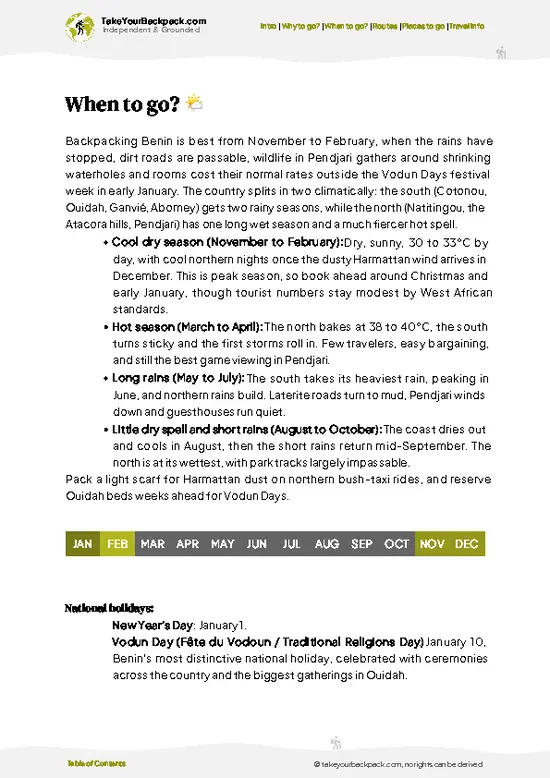
🌤️ When to go?When is the celebration of Gelede Festival?


  • Topic: Weather – The Gelede Festival thrives in the dry season, roughly November to March. Expect clear skies and low humidity, perfect for long days outdoors without the swampy discomfort of the rainy season.

  • Topic: Temperature – Daytime highs hover around 28-32°C (82-90°F), cooling to a comfortable 20-24°C (68-75°F) at night. This range keeps you energized without overheating during the vibrant street performances.

  • Topic: Daylight Hours – With about 11 to 12 hours of daylight, you get ample time to soak in the festival’s rituals and explore nearby markets before dusk.

  • Topic: Crowds – Peak festival days draw local crowds and curious travelers alike. Arriving early in the dry season means fewer tourists and better access to authentic experiences without the crush.

  • Topic: Seasonal
read more 👉

  • Topic: Weather – The Gelede Festival thrives in the dry season, roughly November to March. Expect clear skies and low humidity, perfect for long days outdoors without the swampy discomfort of the rainy season.

  • Topic: Temperature – Daytime highs hover around 28-32°C (82-90°F), cooling to a comfortable 20-24°C (68-75°F) at night. This range keeps you energized without overheating during the vibrant street performances.

  • Topic: Daylight Hours – With about 11 to 12 hours of daylight, you get ample time to soak in the festival’s rituals and explore nearby markets before dusk.

  • Topic: Crowds – Peak festival days draw local crowds and curious travelers alike. Arriving early in the dry season means fewer tourists and better access to authentic experiences without the crush.

  • Topic: Seasonal Activities – The dry season aligns with agricultural downtime, so locals throw their full energy into the festival’s elaborate dances and mask ceremonies—don’t miss this cultural crescendo.

  • Topic: Price Fluctuations – Expect accommodation and transport costs to spike during the festival’s peak weeks. Booking ahead or arriving just before the main events can save you cash and hassle.


Pro-tip: Time your visit for early dry season to dodge the crowds and rain, locking in cooler temps and better deals—energy saved here fuels your festival immersion.


source: climatestotravel.comJANJanuary: highly recommended for travelingFEBFebruary: highly recommended for travelingMARMarch: highly recommended for travelingAPRApril: not recommended for travelingMAYMay: not recommended for travelingJUNJune: not recommended for travelingJULJuly: not recommended for travelingAUGAugust: not recommended for travelingSEPSeptember: not recommended for travelingOCTOctober: not recommended for travelingNOVNovember: highly recommended for travelingDECDecember: highly recommended for traveling

✈️ The backpacker research shortcutBenin Travel Guide

An offline-friendly backpacking guide with optimized travel routes, ranked highlights, transport advice, and the best areas to stay.
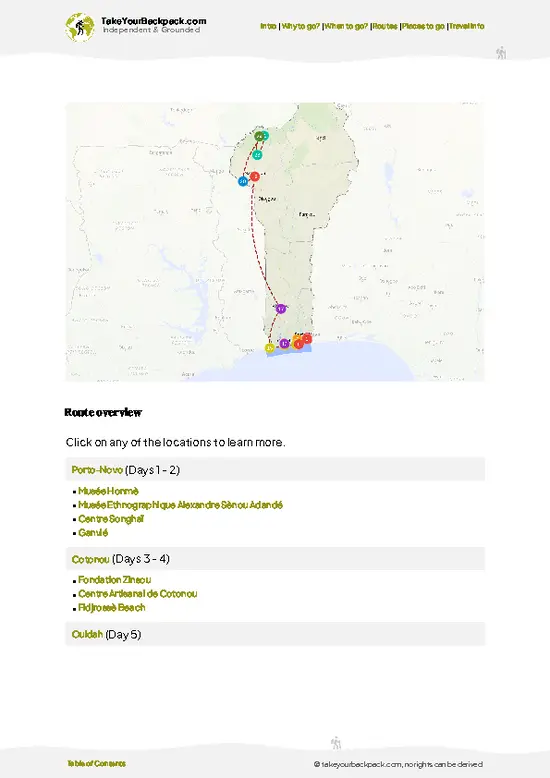
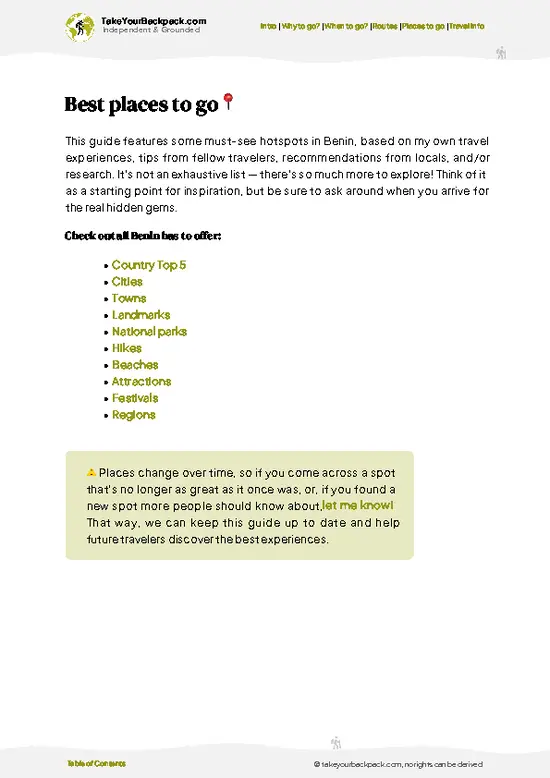
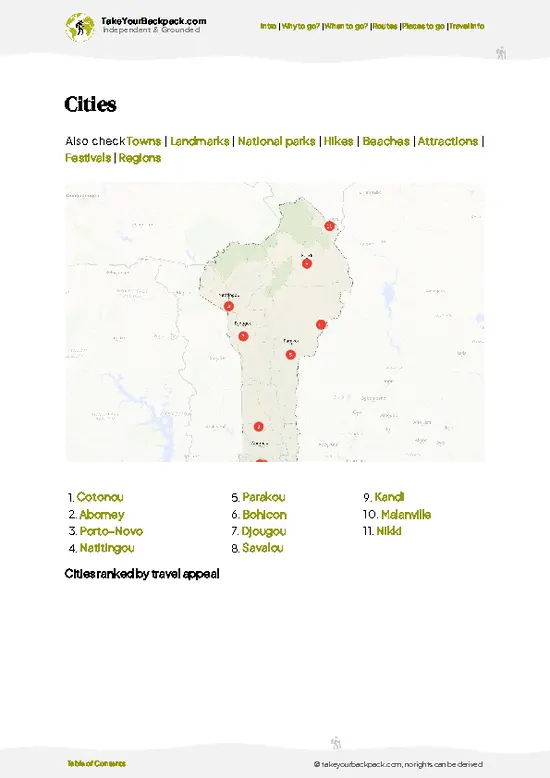
example page 0 from our offline Travel Guide for Benin
example page 1 from our offline Travel Guide for Benin
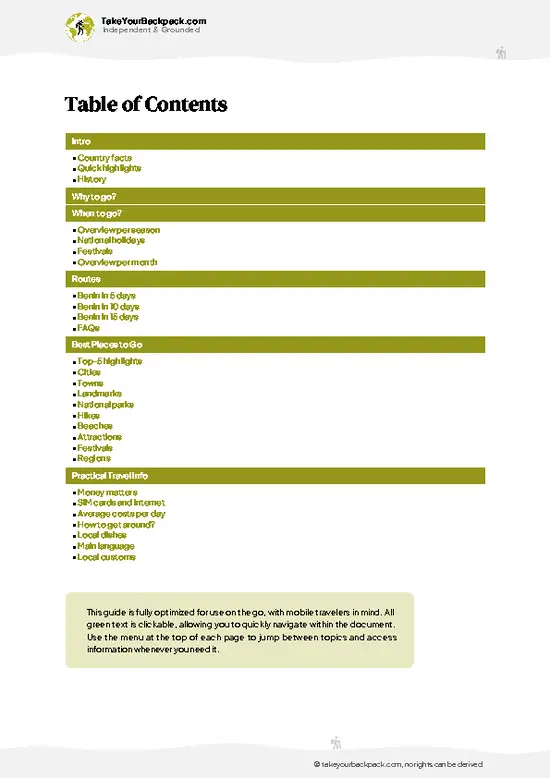
example page 2 from our offline Travel Guide for Benin
example page 3 from our offline Travel Guide for Benin
example page 4 from our offline Travel Guide for Benin
example page 5 from our offline Travel Guide for Benin
example page 6 from our offline Travel Guide for Benin
example page 7 from our offline Travel Guide for Benin
The digital guide (230 pages) contains:
55 highlights, ranked by travel appeal
Optimized 5, 10 & 15-day travel routes
Cities, national parks, landmarks, beaches
How to get around
Offline-friendly for travel without Wi-Fi
👉 Click to see all 30+ guide features

📅 Plan smarter in minutes, not weeks
Month by month travel advice
Festivals & national holidays
Budget expectations

🗺️ Go to the right places, skip the overrated ones
Honest pros & cons of destinations
Top hikes, parks & viewpoints
Lesser-known places most travelers miss
Clear “worth it vs skip it” guidance

🛏️ Travel smoothly without rookie mistakes
Best areas to stay
Transport systems explained simply
Common scams & safety advice
SIM cards, money & practical tips

🌍 Understand the country, not just visit it
Culture & traditions
52 Essential phrases & customs
Festivals worth planning around
Traveler-friendly historical context
Insights that make places more meaningful

📱 Built for real travel conditions
Fully downloadable PDF
Works completely offline
Optimized for phone use
Useful in remote areas & buses
Everything in one place
Save weeks of stressful planning
Get instant access to your full guide. 30‑day money-back guarantee.
+ Add another guide for just US$7.80

By proceeding you agree to our terms.
Sent to your inbox immediately after payment • 100% Secure Checkout
Best Backpacking Travel Advisor 2025 tourism awardBest Backpacking
Travel Advisor
2025
What others say about Take Your Backpack Guides:
⭐⭐⭐⭐⭐
Fantastic, amazing amount of information!
⭐⭐⭐⭐⭐
My goodness this is amazing, it's what I've been looking for hats off too you!
⭐⭐⭐⭐⭐
I think this is absolutely BRILLIANT
⭐⭐⭐⭐
Very complete and informative. It's still missing places, but I gotta to commend you
⭐⭐⭐⭐⭐
This is truly amazing, thank you, can't wait to explore it with my kids!
⭐⭐⭐⭐⭐
Awesome resource, thank you!
⭐⭐⭐⭐⭐
This is amazing! Can't wait to explore the ones I haven't seen
⭐⭐⭐⭐
I love this! Well done, great idea.
⭐⭐⭐⭐⭐
Thanks for taking the time to make this gem!
⭐⭐⭐⭐⭐
This might be the best website I've ever seen.
⭐⭐⭐⭐⭐
Congratulations, and thank you so much for your work; it's incredibly valuable.
⭐⭐⭐⭐
In all seriousness I think you did a great job pointing out the important spots
⭐⭐⭐⭐⭐
10/10 very good
⭐⭐⭐⭐⭐
As someone who's only just starting to visit regularly this is awesome, thank you.
⭐⭐⭐⭐
Thank you very much! I'm going to visit my dad, it's going to be very useful!
⭐⭐⭐⭐⭐
This is really cool! We'll be travelling for the first time and this definitely come in handy.
⭐⭐⭐⭐⭐
You are now our minister of culture, congratulations 👨‍💼
⭐⭐⭐⭐⭐
Just wanted to tell you that this is a pearl! Going to follow your recommendations.
⭐⭐⭐⭐⭐
This is so cool. I'll definitely be using the resource for my travels soon.
⭐⭐⭐⭐⭐
This is very impressive! Good work.
⭐⭐⭐⭐⭐
This is an amazing and informative site. Very well done!

🛏️ Where to stay?How to pick the right area

When you’re gearing up for the Gelede Festival in Benin, the right base can make all the difference. Head to Ouidah, a vibrant coastal town buzzing with energy. It’s not just close to the festival; it’s a cultural hub. You’ll find plenty of budget-friendly guesthouses and communal spaces where you can swap stories with fellow travelers. The atmosphere is welcoming, and the local food stalls are a feast for the senses.

Another solid option is Cotonou, the bustling capital. It’s a bit further from the festival, but the lively markets and nightlife make it worth the stay. Look for hostels that cater … read more 👉
When you’re gearing up for the Gelede Festival in Benin, the right base can make all the difference. Head to Ouidah, a vibrant coastal town buzzing with energy. It’s not just close to the festival; it’s a cultural hub. You’ll find plenty of budget-friendly guesthouses and communal spaces where you can swap stories with fellow travelers. The atmosphere is welcoming, and the local food stalls are a feast for the senses.

Another solid option is Cotonou, the bustling capital. It’s a bit further from the festival, but the lively markets and nightlife make it worth the stay. Look for hostels that cater to backpackers; they often organize group outings, which can be a great way to meet people and share experiences.

For a quieter vibe, consider Grand-Popo. This laid-back beach town offers a serene escape after the festival’s excitement. You’ll find eco-lodges and small inns that promote social interaction among guests.

Each of these areas has its own charm, but they all share a sense of community. Choose wisely, and you’ll preserve your energy and budget for the real magic of the festival.

👛 Costs (as of 3 September 2026)Money, prices, and spending tips

The Gelede Festival in Benin is a vibrant celebration, but navigating the costs can be tricky. Here’s how to budget effectively so you can focus on the experience rather than the expenses.
  • Festival Tickets: Expect to pay between €5 to €15 ($6 to $18) for entry. Prices can vary based on the day and specific events within the festival. Purchasing tickets in advance can save you some hassle, but be ready for potential last-minute options at the gate.
  • Accommodation: Budget around €15 to €50 ($18 to $60) per night for a basic guesthouse or hostel. If you prefer more comfort, mid-range hotels can range from €50 to €100 ($60 to $120). Book early, especially during the festival, as places fill up fast.
  • Local Transport: Factor in about €1 to €5 ($1 to $6) for local buses or shared taxis. If you’re planning
read more 👉
The Gelede Festival in Benin is a vibrant celebration, but navigating the costs can be tricky. Here’s how to budget effectively so you can focus on the experience rather than the expenses.
  • Festival Tickets: Expect to pay between €5 to €15 ($6 to $18) for entry. Prices can vary based on the day and specific events within the festival. Purchasing tickets in advance can save you some hassle, but be ready for potential last-minute options at the gate.
  • Accommodation: Budget around €15 to €50 ($18 to $60) per night for a basic guesthouse or hostel. If you prefer more comfort, mid-range hotels can range from €50 to €100 ($60 to $120). Book early, especially during the festival, as places fill up fast.
  • Local Transport: Factor in about €1 to €5 ($1 to $6) for local buses or shared taxis. If you’re planning to travel between towns or to the festival site, budget around €10 to €20 ($12 to $24) for longer rides. Always negotiate fares beforehand to avoid surprises.
  • Food & Drinks: Street food is your best friend here. You can enjoy meals for as little as €2 to €5 ($2.50 to $6). If you opt for sit-down restaurants, expect to pay around €10 to €20 ($12 to $24) per meal. Keep an eye out for local specialties that are both delicious and budget-friendly.
  • Miscellaneous Expenses: Set aside around €10 to €30 ($12 to $36) for souvenirs, tips, or unexpected costs. This cushion can help you enjoy spontaneous moments without worrying about your wallet.

Planning ahead will keep your energy focused on the festival’s rhythm rather than on your budget. Enjoy the vibrant culture and let the experience unfold!
⚠️ Prices can change and everyone travels differently, so take this as a rough guide. Hope it helps you plan your adventure!

🍲 FoodEating & Drinking in Gelede

At the Gelede Festival in Benin, food and drink are as vibrant as the celebrations themselves. You’ll find stalls bursting with local specialties like akara (bean cakes) and fufu (a starchy staple), both of which are essential to the experience. Don’t miss out on jollof rice, a spicy, savory dish that’s a crowd favorite.

For drinks, grab a bottle of palm wine; it’s a traditional favorite that pairs perfectly with the festive atmosphere. If you’re feeling adventurous, try zobo, a refreshing hibiscus drink that’s both tart and sweet.

When it comes to etiquette, sharing is key. Don’t be surprised if someone offers you a taste of their dish; it’s a sign of camaraderie. Lines can get long, so be patient and enjoy the buzz of anticipation. Cash is king here; many stalls won’t accept cards, so … read more 👉
At the Gelede Festival in Benin, food and drink are as vibrant as the celebrations themselves. You’ll find stalls bursting with local specialties like akara (bean cakes) and fufu (a starchy staple), both of which are essential to the experience. Don’t miss out on jollof rice, a spicy, savory dish that’s a crowd favorite.

For drinks, grab a bottle of palm wine; it’s a traditional favorite that pairs perfectly with the festive atmosphere. If you’re feeling adventurous, try zobo, a refreshing hibiscus drink that’s both tart and sweet.

When it comes to etiquette, sharing is key. Don’t be surprised if someone offers you a taste of their dish; it’s a sign of camaraderie. Lines can get long, so be patient and enjoy the buzz of anticipation. Cash is king here; many stalls won’t accept cards, so stock up on local currency. Serving sizes can be generous, so consider splitting dishes with friends to sample more flavors without overdoing it. Embrace the chaos, savor the tastes, and let the festival fuel your spirit!

FAQFrequently asked questions about Gelede

Gelede Festival typically takes place annually in the months of April or May, lasting about 3 to 5 days depending on the local community's schedule.
Attending the Gelede Festival is generally free of charge as it is a traditional cultural event, though small donations or contributions to local organizers may be appreciated.
No, you do not need tickets in advance for the Gelede Festival since it is an open community event held in public spaces, allowing free access to all visitors.
⚠️ Things can change over time, so always validate details locally before you go.

Other Beninese festivals near Gelede

Explore more nearby:


💡 Not sure where to go next?
Create a personalized itinerary for Benin including Gelede and the places that fit your trip.

Generate my itinerary

👉 Discover all festivals

Or checkout all Benin has to offer (think cities, towns, villages, national parks, hikes, beaches, festivals)
Country photo of Benin

We 💚 feedbackIs it worth it?

The Gelede Festival is a whirlwind of color and sound, where the energy is infectious. You’ll find yourself swept up in the rhythm, but don’t underestimate the heat—stay hydrated and take breaks. The best surprise? The genuine warmth of the locals; they’ll invite you into their world without hesitation. Just remember, the crowds can be intense. Embrace the chaos, but carve out moments for yourself. It’s all about balancing the vibrant experience with your own pace.

✍️ Help improve this page!
The information on this page is based on in-depth research, insights shared by experienced travelers, and feedback from the local travel community in Benin. While every effort is made to keep the information accurate and current, conditions can change — so if you spot anything incorrect or outdated, please get in touch.


🙋‍♂️ Give feedback

👋 Meet the founderWho’s Behind Take Your Backpack?

Johan, backpacker and founder of TakeYourBackpackHi, I’m Johan (Netherlands 🇳🇱), the creator of TakeYourBackpack. Over the past decade, I’ve backpacked through 80+ countries across six continents, gaining extensive experience with independent travel, long-term trips, and overland routes.

This site is built on a combination of firsthand travel experience and carefully curated insights from other backpackers. Many guides are based on places I’ve personally visited, while others bring together tips, observations, and practical advice shared by trusted travelers I’ve met along the way.

The goal is to provide realistic, experience-driven guidance — not generic itineraries — so you can explore destinations with better context, clearer expectations, and more confidence.

Get full Benin guide •
Instant download • 55 highlights • Full Offline guide