×

Benin🇧🇯 | festivalsFête de la St. MichelCatholic procession, Porto-Novo, church celebration | things to do and best time to go

Explore Fête de la NonvitchaExplore Boukoumbé Hiking Trail

Backpacking in Fête de la St. Michel
By Johan Kruseman 🇳🇱 | Updated September 23, 2026

If you crave air-conditioned VIP lounges, crowd control, or a festival where your shoes stay clean, Fête de la St. Michel will chew you up and spit you out. But if you’re the kind of backpacker who thrives on sweat, rhythm, and the raw pulse of a city in full celebration, this is your arena. Held in Cotonou, Benin’s restless coastal heart, Fête de la St. Michel is a street-level explosion of percussion, brass, and call-and-response chants that ripple through the city’s arteries. Locals, expats, and the occasional wide-eyed traveler all get swept into the current. The party stretches from dusk until the last drumbeat, blurring lines between performer and audience. It’s chaotic, loud, and absolutely worth it if you want to trade predictability for pure, kinetic immersion.

Discover everything you want to know in the 📖 Benin Travel Guide.


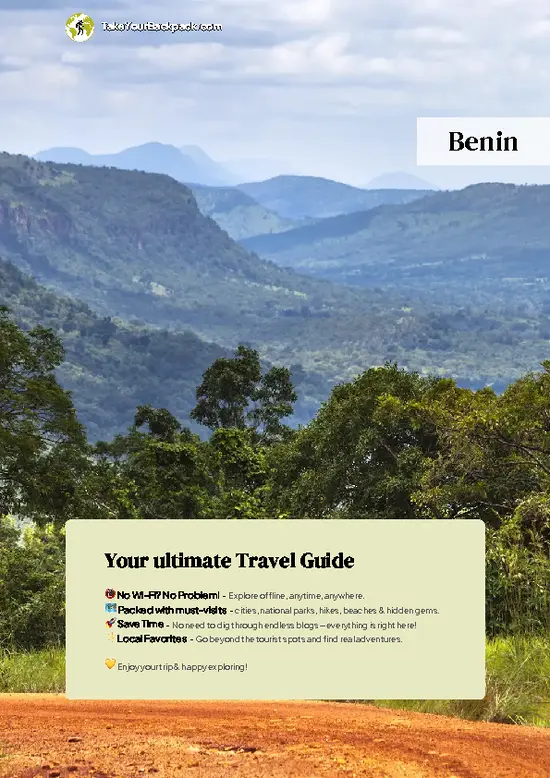
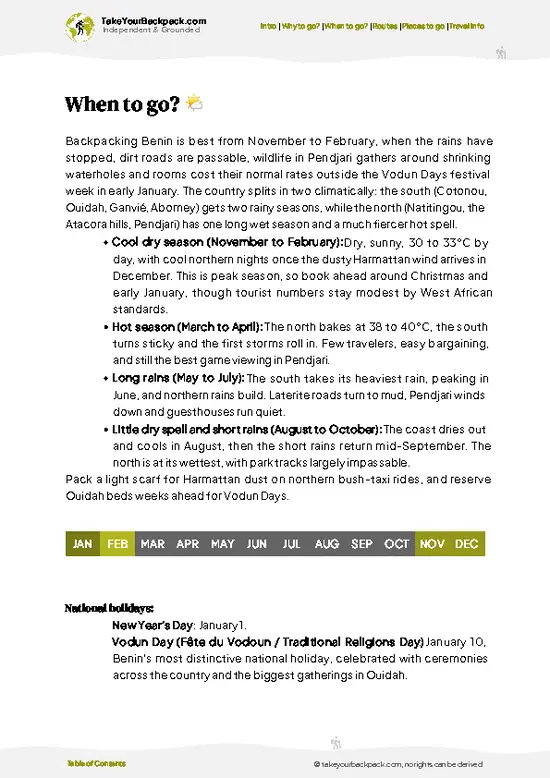
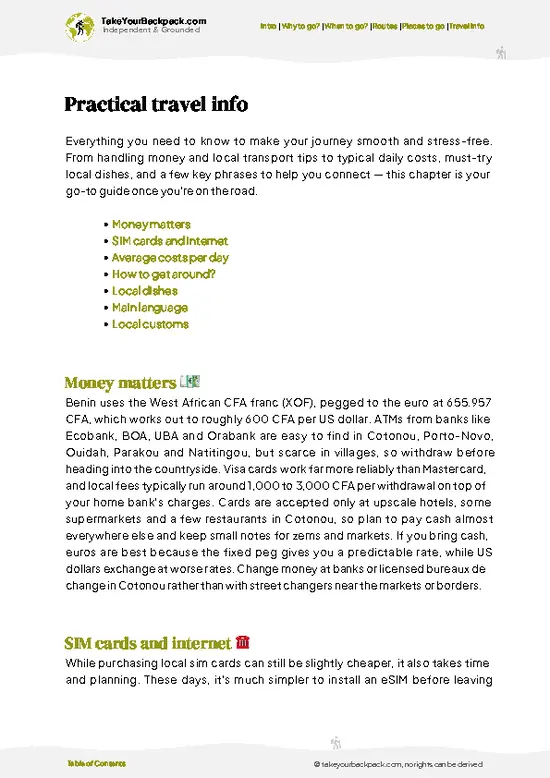
example page 0 from our offline Travel Guide for Benin
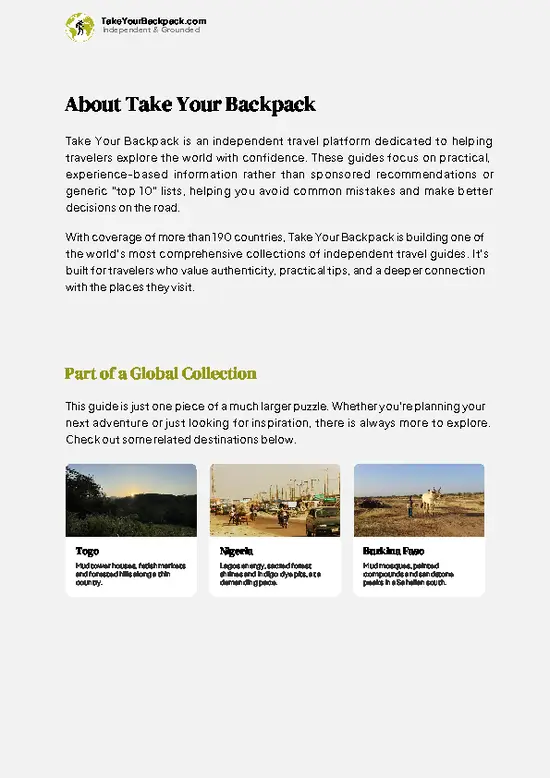
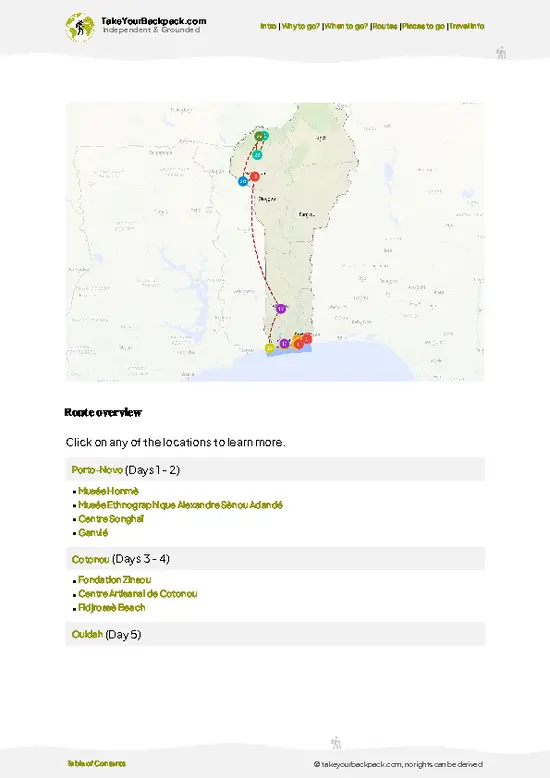
example page 1 from our offline Travel Guide for Benin
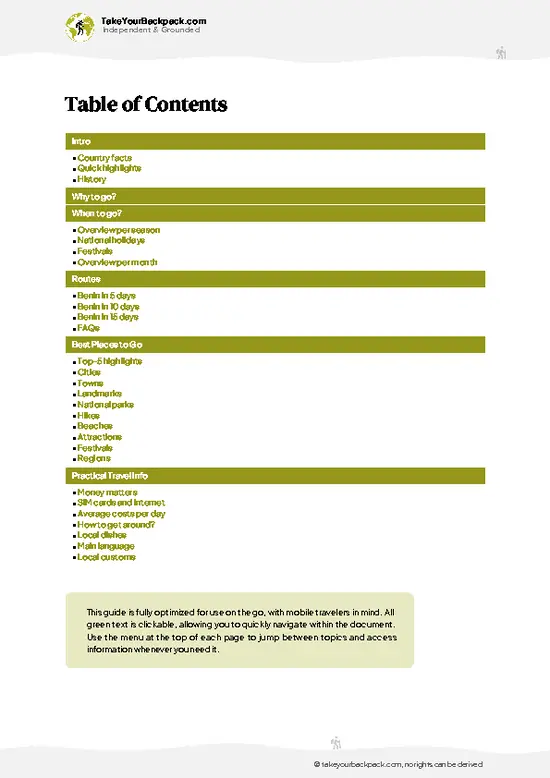
example page 2 from our offline Travel Guide for Benin
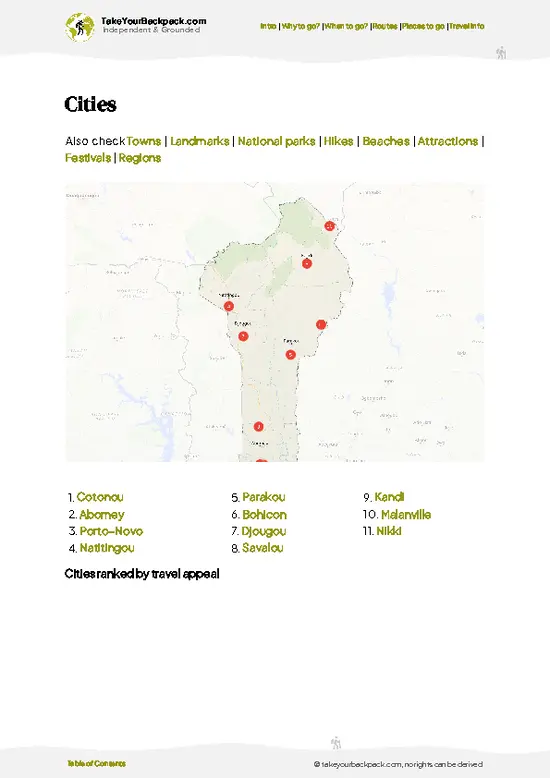
example page 3 from our offline Travel Guide for Benin
example page 4 from our offline Travel Guide for Benin
example page 5 from our offline Travel Guide for Benin
example page 6 from our offline Travel Guide for Benin
example page 7 from our offline Travel Guide for Benin
Loading the map 🌍
CLICK TO FILTER
cities
towns
landmarks
national parks
hikes
beaches
attractions
festivals
regions
SHOW COUNTRY’S BESTSHOW ALL

✨ Why go?
Ranked #99 festival in Benin
What sets this place apart

Backpackers flock to the Fête de la St. Michel in Benin for a reason. This festival is a social energy powerhouse, where the air buzzes with laughter, music, and vibrant dance. It’s not just a celebration; it’s a temporary community that welcomes you in, making you feel like part of something larger.

The cultural immersion is rich and authentic, offering a taste of local traditions that you won’t find in guidebooks. Plus, it’s incredibly affordable compared to similar events worldwide, allowing you to stretch your budget for those unforgettable moments.

Planning your route around this festival means weaving it seamlessly into your longer travel plans. You’ll find that the energy you gain here fuels your adventures beyond the festival, making every step of your journey feel alive and connected.

💡 HighlightsPlaces and moments you shouldn't skip

  • Syncretic religious processions — A standout feature is how Catholic observance of St. Michael mixes with local Vodun practices: expect processions, prayer, incense and blessing rituals that carry both solemnity and exuberance. The blend of choirs, priests, and local ritual specialists makes for a spiritual scene you won’t see in textbook church services.
  • Live drumming and dance marathons — Drummers set a hypnotic, polyrhythmic pulse that dancers answer with explosive footwork and acrobatic moves. These performances are participatory and intense—get ready for long, high-energy sets where rhythm and stamina are everything.
  • Masquerades and costume troupes — Masked performers embody ancestral spirits, animals and community characters, parading in brilliantly carved masks and hand-sewn costumes.
… read more 👉
  • Syncretic religious processions — A standout feature is how Catholic observance of St. Michael mixes with local Vodun practices: expect processions, prayer, incense and blessing rituals that carry both solemnity and exuberance. The blend of choirs, priests, and local ritual specialists makes for a spiritual scene you won’t see in textbook church services.
  • Live drumming and dance marathons — Drummers set a hypnotic, polyrhythmic pulse that dancers answer with explosive footwork and acrobatic moves. These performances are participatory and intense—get ready for long, high-energy sets where rhythm and stamina are everything.
  • Masquerades and costume troupes — Masked performers embody ancestral spirits, animals and community characters, parading in brilliantly carved masks and hand-sewn costumes. The visual impact is striking: every mask tells a story and the pageantry is as much theatre as it is ritual.
  • Street markets and local food stalls — Festival ground markets brim with grilled fish, spicy sauces, fritters, palm wine and other regional specialties, plus artisans selling woodcarvings, beads and fabrics. Food and shopping here are part of the social ritual—cheap, delicious and the best way to chat with locals.
  • Dusk-to-dawn communal ceremonies — As night falls the mood shifts: candlelit vigils, river or seaside rites, and intimate gatherings create a mystical atmosphere. These quieter, late-night moments let you see the festival’s deeper communal bonds and traditions, away from the daytime spectacle.
Spotted a mistake or missing something? Contact us.

Things to do near Fête de la St. Michel

Ratings based on Tripadvisor reviews. When you book through this link, you support our work at no extra cost to you.

🌤️ When to go?When is the celebration of Fête de la St. Michel?

  • Topic: Weather - The festival falls in late September, right at the tail end of Benin’s rainy season. Expect intermittent showers, but nothing that should drown your plans. Pack a lightweight rain jacket and quick-dry gear to stay nimble.
  • Topic: Temperature - Daytime highs hover around 28-32°C (82-90°F), with nights cooling to 22-24°C (72-75°F). It’s warm but manageable if you pace yourself and hydrate.
  • Topic: Daylight Hours - You get roughly 12 hours of daylight, plenty of time to dive into festivities and explore before the sun dips.
  • Topic: Crowds - The festival draws locals and regional visitors, but it’s not overrun by tourists. You’ll find authentic energy without the elbowing.
  • Topic: Seasonal Activities - This period syncs with harvest celebrations and traditional dances, enriching
… read more 👉
  • Topic: Weather - The festival falls in late September, right at the tail end of Benin’s rainy season. Expect intermittent showers, but nothing that should drown your plans. Pack a lightweight rain jacket and quick-dry gear to stay nimble.
  • Topic: Temperature - Daytime highs hover around 28-32°C (82-90°F), with nights cooling to 22-24°C (72-75°F). It’s warm but manageable if you pace yourself and hydrate.
  • Topic: Daylight Hours - You get roughly 12 hours of daylight, plenty of time to dive into festivities and explore before the sun dips.
  • Topic: Crowds - The festival draws locals and regional visitors, but it’s not overrun by tourists. You’ll find authentic energy without the elbowing.
  • Topic: Seasonal Activities - This period syncs with harvest celebrations and traditional dances, enriching the festival vibe beyond just the main event.
  • Topic: Price Fluctuations - Accommodation and transport costs spike slightly during the festival but remain reasonable compared to peak tourist seasons. Booking early locks in better rates.
Pro-tip: Arrive a day early to soak in the pre-festival buzz and dodge last-minute price hikes—your wallet and stamina will thank you.


source: climatestotravel.comJANJanuary: not recommended for travelingFEBFebruary: not recommended for travelingMARMarch: not recommended for travelingAPRApril: not recommended for travelingMAYMay: not recommended for travelingJUNJune: not recommended for travelingJULJuly: not recommended for travelingAUGAugust: not recommended for travelingSEPSeptember: excellent for travelingOCTOctober: not recommended for travelingNOVNovember: not recommended for travelingDECDecember: not recommended for traveling

✈️ The backpacker research shortcutBenin Travel Guide

An offline-friendly backpacking guide with optimized travel routes, ranked highlights, transport advice, and the best areas to stay.
example page 0 from our offline Travel Guide for Benin
example page 1 from our offline Travel Guide for Benin
example page 2 from our offline Travel Guide for Benin
example page 3 from our offline Travel Guide for Benin
example page 4 from our offline Travel Guide for Benin
example page 5 from our offline Travel Guide for Benin
example page 6 from our offline Travel Guide for Benin
example page 7 from our offline Travel Guide for Benin
The digital guide (213 pages) contains:
✅ 48 highlights, ranked by travel appeal
✅ Optimized 5, 10 & 15-day travel routes
✅ Cities, national parks, landmarks, beaches
✅ How to get around
✅ Offline-friendly for travel without Wi-Fi
👉 Click to see all 30+ guide features

📅 Plan smarter in minutes, not weeks
✅ Month by month travel advice
✅ Festivals & national holidays
✅ Budget expectations

🗺️ Go to the right places, skip the overrated ones
✅ Honest pros & cons of destinations
✅ Top hikes, parks & viewpoints
✅ Lesser-known places most travelers miss
✅ Clear “worth it vs skip it” guidance

🛏️ Travel smoothly without rookie mistakes
✅ Best areas to stay
✅ Transport systems explained simply
✅ Common scams & safety advice
✅ SIM cards, money & practical tips

🌍 Understand the country, not just visit it
✅ Culture & traditions
✅ 52 Essential phrases & customs
✅ Festivals worth planning around
✅ Traveler-friendly historical context
✅ Insights that make places more meaningful

📱 Built for real travel conditions
✅ Fully downloadable PDF
✅ Works completely offline
✅ Optimized for phone use
✅ Useful in remote areas & buses
✅ Everything in one place
Stop searching, start planning
Get instant access to your full guide. 30‑day money-back guarantee.
+ Add another guide for just

By proceeding you agree to our terms.
Sent to your inbox immediately after payment • 100% Secure Checkout
Best Backpacking Travel Advisor 2025 tourism awardBest Backpacking
Travel Advisor
2025
What others say about Take Your Backpack Guides:
⭐⭐⭐⭐⭐
Fantastic, amazing amount of information!
⭐⭐⭐⭐⭐
My goodness this is amazing, it's what I've been looking for hats off too you!
⭐⭐⭐⭐⭐
I think this is absolutely BRILLIANT
⭐⭐⭐⭐
Very complete and informative. It's still missing places, but I gotta to commend you
⭐⭐⭐⭐⭐
This is truly amazing, thank you, can't wait to explore it with my kids!
⭐⭐⭐⭐⭐
Awesome resource, thank you!
⭐⭐⭐⭐⭐
This is amazing! Can't wait to explore the ones I haven't seen
⭐⭐⭐⭐
I love this! Well done, great idea.
⭐⭐⭐⭐⭐
Thanks for taking the time to make this gem!
⭐⭐⭐⭐⭐
This might be the best website I've ever seen.
⭐⭐⭐⭐⭐
Congratulations, and thank you so much for your work; it's incredibly valuable.
⭐⭐⭐⭐
In all seriousness I think you did a great job pointing out the important spots
⭐⭐⭐⭐⭐
10/10 very good
⭐⭐⭐⭐⭐
As someone who's only just starting to visit regularly this is awesome, thank you.
⭐⭐⭐⭐
Thank you very much! I'm going to visit my dad, it's going to be very useful!
⭐⭐⭐⭐⭐
This is really cool! We'll be travelling for the first time and this definitely come in handy.
⭐⭐⭐⭐⭐
You are now our minister of culture, congratulations 👨‍💼
⭐⭐⭐⭐⭐
Just wanted to tell you that this is a pearl! Going to follow your recommendations.
⭐⭐⭐⭐⭐
This is so cool. I'll definitely be using the resource for my travels soon.
⭐⭐⭐⭐⭐
This is very impressive! Good work.
⭐⭐⭐⭐⭐
This is an amazing and informative site. Very well done!

🛏️ Where to stay?Best areas and accommodation options

When you’re gearing up for the Fête de la St. Michel in Benin, the right area can make all the difference. Head to Cotonou, the bustling hub where the festival’s energy pulses. This city is alive with local culture, and you’ll find plenty of budget-friendly guesthouses and hostels that are safe and welcoming.

Look for spots near the waterfront; the vibrant atmosphere is perfect for meeting fellow travelers. The communal vibe here is electric, with shared meals and stories flowing as freely as the local palm wine.

If you want a quieter retreat, consider staying in Ouidah, just a short ride … read more 👉
When you’re gearing up for the Fête de la St. Michel in Benin, the right area can make all the difference. Head to Cotonou, the bustling hub where the festival’s energy pulses. This city is alive with local culture, and you’ll find plenty of budget-friendly guesthouses and hostels that are safe and welcoming.

Look for spots near the waterfront; the vibrant atmosphere is perfect for meeting fellow travelers. The communal vibe here is electric, with shared meals and stories flowing as freely as the local palm wine.

If you want a quieter retreat, consider staying in Ouidah, just a short ride from the festival. It’s steeped in history and offers a more laid-back scene, ideal for recharging after a day of festivities.

Avoid the tourist traps by sticking to local eateries and markets. This way, you’ll save your energy and budget for the experiences that truly matter.

👛 Costs (as of 23 September 2026)What things cost and how to budget

The Fête de la St. Michel in Benin is a vibrant celebration, but navigating the costs can be tricky. Here’s a breakdown to keep your budget in check and your energy focused on the festivities.
  • Festival Tickets: Expect to pay around €5 to €15 for entry. Prices can vary based on the specific events or performances you want to catch. Some activities might be free, but don’t miss out on the ones that require a ticket for a richer experience.
  • Accommodation: Options range from budget guesthouses at about €10 to €30 per night to mid-range hotels costing €40 to €80. Booking in advance can save you a headache, especially during peak festival times. Look for places close to the action to minimize transport costs.
  • Local Transport: Public transport is affordable, with shared taxis or moto-taxis costing around
… read more 👉
The Fête de la St. Michel in Benin is a vibrant celebration, but navigating the costs can be tricky. Here’s a breakdown to keep your budget in check and your energy focused on the festivities.
  • Festival Tickets: Expect to pay around €5 to €15 for entry. Prices can vary based on the specific events or performances you want to catch. Some activities might be free, but don’t miss out on the ones that require a ticket for a richer experience.
  • Accommodation: Options range from budget guesthouses at about €10 to €30 per night to mid-range hotels costing €40 to €80. Booking in advance can save you a headache, especially during peak festival times. Look for places close to the action to minimize transport costs.
  • Local Transport: Public transport is affordable, with shared taxis or moto-taxis costing around €1 to €3 for short distances. If you’re planning to explore further, budget about €10 to €20 for a day of travel. Walking is also a great way to soak in the atmosphere.
  • Food & Drinks: Street food is your friend here. Meals can range from €2 to €5, while dining in a local restaurant might set you back €10 to €20. Don’t forget to try the local specialties! Budget for drinks, too; local beers are about €1 to €2.
  • Miscellaneous Expenses: Set aside €10 to €30 for souvenirs, tips, or unexpected costs. This can include anything from local crafts to small fees for photography at certain sites. It’s always smart to have a little extra for those spontaneous moments.

Stay sharp and plan ahead. This way, you’ll keep your budget intact and your experience rich. Enjoy the festival!
⚠️ Prices can change and everyone travels differently, so take this as a rough guide. Hope it helps you plan your adventure!

🍲 FoodWhat to Eat & Drink

At the Fête de la St. Michel in Benin, food and drink pulse with local flavor. Dive into akara, those golden, crispy bean cakes that are a festival staple. Pair them with palm wine, a sweet, fermented delight that flows freely. You’ll find stalls brimming with jollof rice, rich and spicy, and fufu, a starchy side that’s perfect for scooping up stews.

Don’t miss the grilled fish—it’s often seasoned with a local spice blend that dances on your palate. For a sweet finish, grab a piece of kuli-kuli, a crunchy peanut snack that’s both savory and satisfying.

Etiquette matters here. Sharing is common; don’t be surprised if someone offers you a taste from their plate. Lines can get long, so be patient and ready to engage with locals. Cash is king, so stash some bills for those tasty bites. Serving … read more 👉
At the Fête de la St. Michel in Benin, food and drink pulse with local flavor. Dive into akara, those golden, crispy bean cakes that are a festival staple. Pair them with palm wine, a sweet, fermented delight that flows freely. You’ll find stalls brimming with jollof rice, rich and spicy, and fufu, a starchy side that’s perfect for scooping up stews.

Don’t miss the grilled fish—it’s often seasoned with a local spice blend that dances on your palate. For a sweet finish, grab a piece of kuli-kuli, a crunchy peanut snack that’s both savory and satisfying.

Etiquette matters here. Sharing is common; don’t be surprised if someone offers you a taste from their plate. Lines can get long, so be patient and ready to engage with locals. Cash is king, so stash some bills for those tasty bites. Serving sizes are generous, so pace yourself—there’s plenty to savor!

FAQFrequently asked questions about Fête de la St. Michel

Fête de la St. Michel takes place annually on September 29th. The festival typically lasts one day but may include related events over a few days around this date.
Attending Fête de la St. Michel is generally free of charge as it is a public cultural and religious celebration. Some specific events or performances during the festival might have a small entrance fee, usually under 5 USD.
No, you do not need tickets in advance to attend the main festivities of Fête de la St. Michel. However, if there are special concerts or private events linked to the festival, advance tickets might be required.
⚠️ Things can change over time, so always validate details locally before you go.

Other Beninese festivals near Fête de la St. Michel

Explore more nearby:

  • Gelede Festival—colorful masks, women’s society, satirical dance| 1 km away
  • Egun Festival—masked spirits, ancestral homage, coastal processions| 1 km away
  • Egun Gun Festival—towering costumes, spirit channeling, Yoruba tradition| 1 km away

💡 Not sure where to go next?
Create a personalized itinerary for Benin including Fête de la St. Michel and the places that fit your trip.

Generate my itinerary

👉 Discover all festivals

Or checkout all Benin has to offer (think cities, towns, villages, national parks, hikes, beaches, festivals)
Country photo of Benin

We 💚 feedbackFinal thoughts on celebrating the Fête de la St. Michel

The Fête de la St. Michel in Benin is electric. You’ll feel the pulse of the drums and the warmth of the locals. The best surprise? The spontaneous dance-offs that break out—pure joy. Just a heads-up: the heat can be relentless. Stay hydrated and pace yourself. This festival is about savoring every moment, not just rushing to the next highlight. Enjoy the ride!

✍️ Help improve this page!
The information on this page is based on in-depth research, insights shared by experienced travelers, and feedback from the local travel community in Benin. While every effort is made to keep the information accurate and current, conditions can change — so if you spot anything incorrect or outdated, please get in touch.


🙋‍♂️ Give feedback

👋 Meet the founderWho’s Behind Take Your Backpack?

Johan, backpacker and founder of TakeYourBackpackHi, I’m Johan (Netherlands 🇳🇱), the creator of TakeYourBackpack. Over the past 3 decades, I’ve backpacked through 90+ countries across six continents, gaining extensive experience with independent travel, long-term trips, and overland routes.

This site is built on a combination of firsthand travel experience and carefully curated insights from other backpackers. Many guides are based on places I’ve personally visited, while others bring together tips, observations, and practical advice shared by trusted travelers I’ve met along the way.

The goal is to provide realistic, experience-driven guidance — not generic itineraries — so you can explore destinations with better context, clearer expectations, and more confidence.