×

Benin🇧🇯 | landmarksMount SokbaroRocky Atacora summit, Donga savanna view, village guide, farm-path descent | things to do and best time to go

Explore Cotonou’s Artisanal CenterExplore Royal Palaces of Abomey

Backpacking in Mount Sokbaro
👌 Worth visitingunique site ranked #5
By Johan Kruseman 🇳🇱 | Updated October 22, 2026

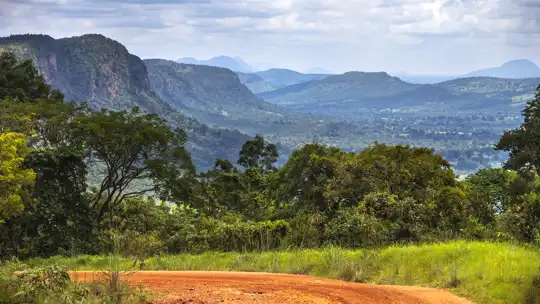
Mount Sokbaro is a rocky, scrub-covered rise of the Atacora range, and its summit gives a wide look over the dry, tawny savanna of the Donga hinterland. It sits in northwest Benin, southwest of Djougou, far from the usual coastal circuit. Expect no ticket gate, no souvenir stalls and no crowds, which is the best thing about it. The flip side is that facilities are thin and the climb is hot, with loose stones underfoot, dust in your nose and the dry scratch of grass against your shins. The summit view is the part worth your time. Skip trying to cram it into a rushed day trip. A first day works best as an early start with a local guide from the nearby village, a slow climb, a long rest at the top and a late walk back through farm plots.

Discover everything you want to know in the 📖 Benin Travel Guide.


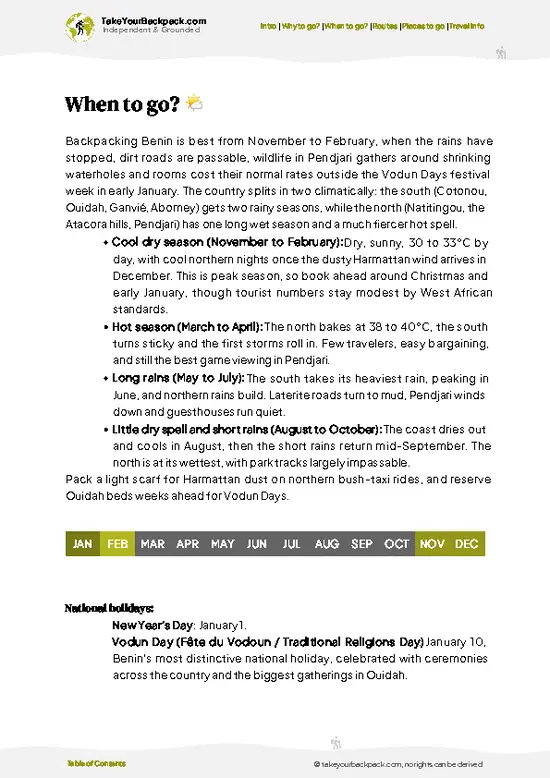
example page 0 from our offline Travel Guide for Benin
example page 1 from our offline Travel Guide for Benin
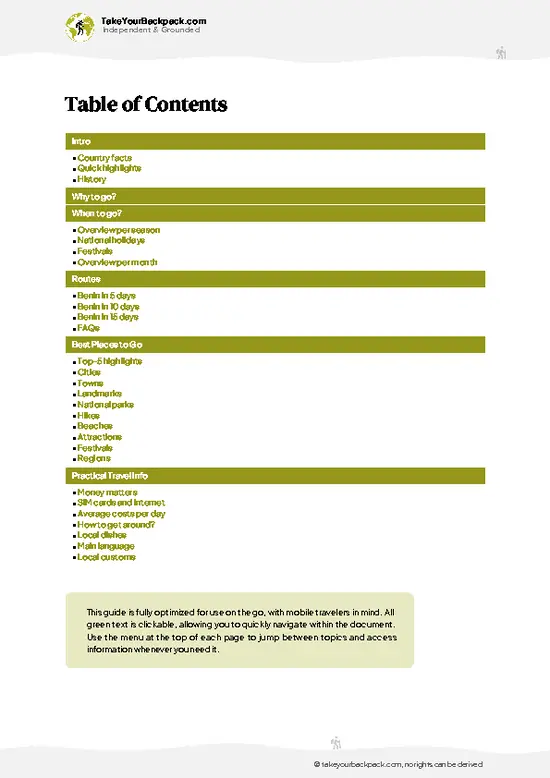
example page 2 from our offline Travel Guide for Benin
example page 3 from our offline Travel Guide for Benin
example page 4 from our offline Travel Guide for Benin
example page 5 from our offline Travel Guide for Benin
example page 6 from our offline Travel Guide for Benin
example page 7 from our offline Travel Guide for Benin
Loading the map 🌍
CLICK TO FILTER
cities
towns
landmarks
national parks
hikes
beaches
attractions
festivals
regions
SHOW COUNTRY’S BESTSHOW ALL

✨ Why go?
Ranked #5 unique site in Benin
Reasons people choose to visit here

Mount Sokbaro is for travelers who want northern Benin without a tour bus in sight. The first reason is the quiet: you share the slopes with farmers, goats and the odd bird of prey, and the hillside belongs to the people who live under it. The second is the vantage point. From the top the Atacora countryside opens out as a patchwork of woodland, fields and red-earth tracks, which helps you read the landscape you have been crossing by road. Bring a guide from the village, since that keeps the money local and keeps you on the right path. The third reason is route fit. The hill pairs well with a loop through Djougou and the wider northwest, where mud-walled architecture and market days fill the other half of a trip. Give it a morning and you leave with a better feel for the region than a dozen roadside photos would give you.

💡 HighlightsMust-see experiences and standout moments

  1. The summit viewpoint: the main reason to climb. From the top you look across the savanna of the Donga area, with woodland, farm clearings and scattered homesteads laid out below you.
  2. The rocky ascent: the path winds over bare rock and loose stone, so the climb itself is the activity. It is short enough for a fit beginner, but good shoes make a real difference.
  3. Boulders and rock faces: outcrops along the slope make natural resting places and give shade, and the weathered surfaces are good for close-up photos in low light.
  4. Savanna woodland on the slopes: dry-country trees and tall grass cover the lower flanks. Walk quietly in the early hours and you may hear birds well before you see them.
  5. Sokbaro village and its fields: the settlement at the foot of the hill is where you arrange a guide. Farm plots
… read more 👉
  1. The summit viewpoint: the main reason to climb. From the top you look across the savanna of the Donga area, with woodland, farm clearings and scattered homesteads laid out below you.
  2. The rocky ascent: the path winds over bare rock and loose stone, so the climb itself is the activity. It is short enough for a fit beginner, but good shoes make a real difference.
  3. Boulders and rock faces: outcrops along the slope make natural resting places and give shade, and the weathered surfaces are good for close-up photos in low light.
  4. Savanna woodland on the slopes: dry-country trees and tall grass cover the lower flanks. Walk quietly in the early hours and you may hear birds well before you see them.
  5. Sokbaro village and its fields: the settlement at the foot of the hill is where you arrange a guide. Farm plots sit around it, and a stroll gives you a look at everyday life in this part of the Atacora.
  6. The walk back through farmland: descending along field edges rather than retracing your steps shows you the working landscape, with footpaths, compounds and people heading home as the heat eases.
Mount Sokbaro is best experienced for a first visit through the summit viewpoint, since the whole climb and the surrounding countryside make sense once you stand up there.
Spotted a mistake or missing something? Contact us.

Things to do near Mount Sokbaro

Ratings based on Tripadvisor reviews. When you book through this link, you support our work at no extra cost to you.

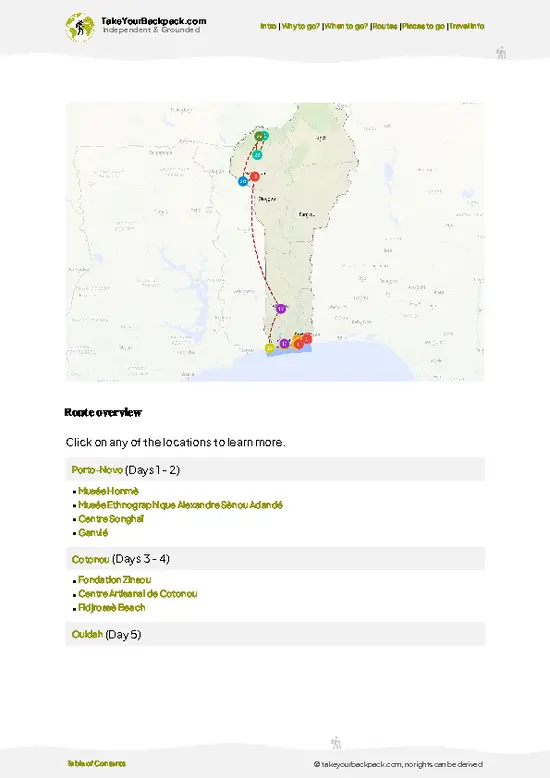
🌤️ When to go?Best time to visit Mount Sokbaro

  • Dry Season (November to February): Clear skies and the easiest hiking, with daytime highs of 30 to 35°C (86 to 95°F) and cooler mornings around 18 to 22°C (64 to 72°F). Harmattan dust can haze the views from December to January. Daylight runs about 11.5 to 12 hours.
  • Hot Season (March to May): Afternoons climb to 35 to 40°C (95 to 104°F), so start climbs at dawn. Early rains in April and May turn red tracks slick.
  • Rainy Season (June to September): Highs of 27 to 31°C (81 to 88°F), green hillsides and swollen streams. Paths get muddy and rural roads can be slow.
  • Festivals and Prices: Crowds are minimal all year, since this is a quiet corner of the Atacora region. Local transport and lodging prices barely shift with the season.
Aim for the first cool weeks of November, when the hills are still green and the haze has not yet set in.

source: climatestotravel.comJANJanuary: highly recommended for travelingFEBFebruary: highly recommended for travelingMARMarch: excellent for travelingAPRApril: fair for travelingMAYMay: fair for travelingJUNJune: fair for travelingJULJuly: fair for travelingAUGAugust: fair for travelingSEPSeptember: fair for travelingOCTOctober: fair for travelingNOVNovember: excellent for travelingDECDecember: highly recommended for traveling
when-to-go

✈️ The backpacker research shortcutBenin Travel Guide

An offline-friendly backpacking guide with optimized travel routes, ranked highlights, transport advice, and the best areas to stay.
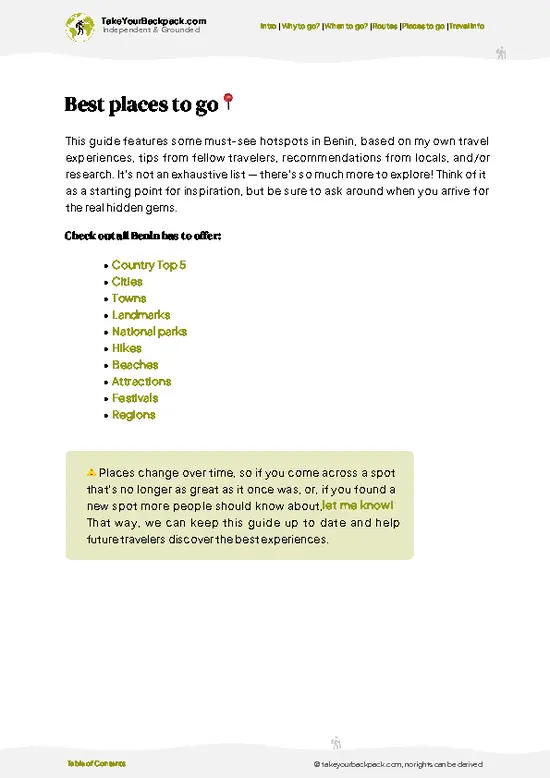
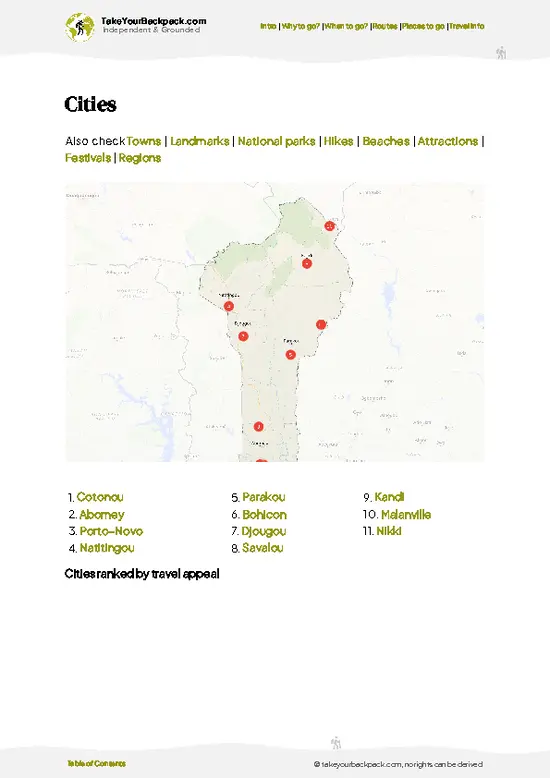
example page 0 from our offline Travel Guide for Benin
example page 1 from our offline Travel Guide for Benin
example page 2 from our offline Travel Guide for Benin
example page 3 from our offline Travel Guide for Benin
example page 4 from our offline Travel Guide for Benin
example page 5 from our offline Travel Guide for Benin
example page 6 from our offline Travel Guide for Benin
example page 7 from our offline Travel Guide for Benin
The digital guide (213 pages) contains:
✅ 48 highlights, ranked by travel appeal
✅ Optimized 5, 10 & 15-day travel routes
✅ Cities, national parks, landmarks, beaches
✅ How to get around
✅ Offline-friendly for travel without Wi-Fi
👉 Click to see all 30+ guide features

📅 Plan smarter in minutes, not weeks
✅ Month by month travel advice
✅ Festivals & national holidays
✅ Budget expectations

🗺️ Go to the right places, skip the overrated ones
✅ Honest pros & cons of destinations
✅ Top hikes, parks & viewpoints
✅ Lesser-known places most travelers miss
✅ Clear “worth it vs skip it” guidance

🛏️ Travel smoothly without rookie mistakes
✅ Best areas to stay
✅ Transport systems explained simply
✅ Common scams & safety advice
✅ SIM cards, money & practical tips

🌍 Understand the country, not just visit it
✅ Culture & traditions
✅ 52 Essential phrases & customs
✅ Festivals worth planning around
✅ Traveler-friendly historical context
✅ Insights that make places more meaningful

📱 Built for real travel conditions
✅ Fully downloadable PDF
✅ Works completely offline
✅ Optimized for phone use
✅ Useful in remote areas & buses
✅ Everything in one place
Stop searching, start planning
Get instant access to your full guide. 30‑day money-back guarantee.
+ Add another guide for just

By proceeding you agree to our terms.
Sent to your inbox immediately after payment • 100% Secure Checkout
Best Backpacking Travel Advisor 2025 tourism awardBest Backpacking
Travel Advisor
2025
What others say about Take Your Backpack Guides:
⭐⭐⭐⭐⭐
Fantastic, amazing amount of information!
⭐⭐⭐⭐⭐
My goodness this is amazing, it's what I've been looking for hats off too you!
⭐⭐⭐⭐⭐
I think this is absolutely BRILLIANT
⭐⭐⭐⭐
Very complete and informative. It's still missing places, but I gotta to commend you
⭐⭐⭐⭐⭐
This is truly amazing, thank you, can't wait to explore it with my kids!
⭐⭐⭐⭐⭐
Awesome resource, thank you!
⭐⭐⭐⭐⭐
This is amazing! Can't wait to explore the ones I haven't seen
⭐⭐⭐⭐
I love this! Well done, great idea.
⭐⭐⭐⭐⭐
Thanks for taking the time to make this gem!
⭐⭐⭐⭐⭐
This might be the best website I've ever seen.
⭐⭐⭐⭐⭐
Congratulations, and thank you so much for your work; it's incredibly valuable.
⭐⭐⭐⭐
In all seriousness I think you did a great job pointing out the important spots
⭐⭐⭐⭐⭐
10/10 very good
⭐⭐⭐⭐⭐
As someone who's only just starting to visit regularly this is awesome, thank you.
⭐⭐⭐⭐
Thank you very much! I'm going to visit my dad, it's going to be very useful!
⭐⭐⭐⭐⭐
This is really cool! We'll be travelling for the first time and this definitely come in handy.
⭐⭐⭐⭐⭐
You are now our minister of culture, congratulations 👨‍💼
⭐⭐⭐⭐⭐
Just wanted to tell you that this is a pearl! Going to follow your recommendations.
⭐⭐⭐⭐⭐
This is so cool. I'll definitely be using the resource for my travels soon.
⭐⭐⭐⭐⭐
This is very impressive! Good work.
⭐⭐⭐⭐⭐
This is an amazing and informative site. Very well done!

🛏️ Where to stay?Where staying makes the most sense

Natitingou is the practical base for Mount Sokbaro, and it is where most backpackers sleep. It is the main town of the Atacora region, with the best choice of simple guesthouses, small auberges and a few campement-style options, plus restaurants, ATMs and the bus station. Moto-taxis (zemidjans) run from here to the trailheads and nearby villages, so you can get out in the morning and be back for dinner.

The area around the central market and main road is the most convenient. You will meet other travelers over dinner, mostly people heading to the Tata Somba villages and Pendjari National Park, … read more 👉
Natitingou is the practical base for Mount Sokbaro, and it is where most backpackers sleep. It is the main town of the Atacora region, with the best choice of simple guesthouses, small auberges and a few campement-style options, plus restaurants, ATMs and the bus station. Moto-taxis (zemidjans) run from here to the trailheads and nearby villages, so you can get out in the morning and be back for dinner.

The area around the central market and main road is the most convenient. You will meet other travelers over dinner, mostly people heading to the Tata Somba villages and Pendjari National Park, and it is easy to split a driver or guide costs with them. Streets are lively until evening and generally calm at night, though you should still take a moto-taxi after dark rather than walking unlit roads.

For a quieter stay, village homestays and basic campements outside town put you closer to the hills and farmland. They are less social and less reliable for power, water and food, so bring cash and snacks. Solo travelers will get more company in Natitingou.

👛 Costs (as of 22 October 2026)Money, prices, and spending tips

A day at Mount Sokbaro costs about €8 to 15 for a backpacker based in Natitingou, with a total daily budget of €45 including a guide and lodging. Everything is paid in cash, and card payments are rare outside the larger hotels.
CategoryBudget RangeLocal Reality
Accommodation (low season)€8 to 15Simple room with fan in Natitingou, shared bathroom at the cheapest end.
Accommodation (high season)€12 to 20Rooms with private bath fill up in the dry months, so book ahead.
Local guide€8 to 15Useful for finding trails and meeting villagers; price is negotiated per group.
Entrance or village contribution€1 to 3Small informal fees may be requested by local communities.
Transport€3 to 8Moto-taxi from Natitingou to the area and back, price agreed before riding.
Food€4 to 8Rice, pounded yam, grilled chicken and
… read more 👉
A day at Mount Sokbaro costs about €8 to 15 for a backpacker based in Natitingou, with a total daily budget of €45 including a guide and lodging. Everything is paid in cash, and card payments are rare outside the larger hotels.
CategoryBudget RangeLocal Reality
Accommodation (low season)€8 to 15Simple room with fan in Natitingou, shared bathroom at the cheapest end.
Accommodation (high season)€12 to 20Rooms with private bath fill up in the dry months, so book ahead.
Local guide€8 to 15Useful for finding trails and meeting villagers; price is negotiated per group.
Entrance or village contribution€1 to 3Small informal fees may be requested by local communities.
Transport€3 to 8Moto-taxi from Natitingou to the area and back, price agreed before riding.
Food€4 to 8Rice, pounded yam, grilled chicken and sauces at local eateries.
Water and snacks€1 to 2Buy sachets or bottles in town before heading out.
Total Daily Budget€45Lower if you share guide and transport costs with other travelers.
⚠️ Prices can change and everyone travels differently, so take this as a rough guide. Hope it helps you plan your adventure!

FAQCommon questions from travelers

Mount Sokbaro is a hill area in the Atacora region of northwest Benin, close to the town of Natitingou. It is known for rocky slopes, farmland and nearby villages with traditional Somba culture. Most travelers visit it on foot with a local guide, and it pairs well with trips to Pendjari National Park.
Plan a half day for a short hike, or a full day if you want to visit nearby villages and walk without rushing. A guide costs roughly €8 to 15. Allow an extra day if you also want to see other sites around Natitingou.
Travel to Natitingou first, which is about 8 to 10 hours by bus from Cotonou, with fares around €12 to 20. From there, a moto-taxi to the Mount Sokbaro area takes roughly 20 to 40 minutes and costs about €3 to 8 each way. Ask your guesthouse to arrange a driver and guide the evening before.
⚠️ Things can change over time, so always validate details locally before you go.

Other Beninese landmarks near Mount Sokbaro

Explore more nearby:


💡 Not sure where to go next?
Create a personalized itinerary for Benin including Mount Sokbaro and the places that fit your trip.

Generate my itinerary

👉 Discover all landmarks

Or checkout all Benin has to offer (think cities, towns, villages, national parks, hikes, beaches, festivals)
Country photo of Benin

We 💚 feedbackIs it worth it?

Mount Sokbaro is often treated as a quick photo stop, and that is the mistake: people arrive at midday, climb in full heat and rush down. Go at first light instead, carry more water than seems sensible, and hire a guide from the village so you can take your time at the top. Wear shoes with grip.

✍️ Help improve this page!
The information on this page is based on in-depth research, insights shared by experienced travelers, and feedback from the local travel community in Benin. While every effort is made to keep the information accurate and current, conditions can change — so if you spot anything incorrect or outdated, please get in touch.


🙋‍♂️ Give feedback

👋 Meet the founderWho’s Behind Take Your Backpack?

Johan, backpacker and founder of TakeYourBackpackHi, I’m Johan (Netherlands 🇳🇱), the creator of TakeYourBackpack. Over the past 3 decades, I’ve backpacked through 90+ countries across six continents, gaining extensive experience with independent travel, long-term trips, and overland routes.

This site is built on a combination of firsthand travel experience and carefully curated insights from other backpackers. Many guides are based on places I’ve personally visited, while others bring together tips, observations, and practical advice shared by trusted travelers I’ve met along the way.

The goal is to provide realistic, experience-driven guidance — not generic itineraries — so you can explore destinations with better context, clearer expectations, and more confidence.