
×

Benin🇧🇯 | landmarksTemple of Pythonspython sanctuary, ritual chamber, living snakes, Ouidah landmark | things to do and best time to go

Explore Sacred Forest of KpassèExplore Musée Historique d’Abomey

Backpacking in Temple of Pythons
🌟 Highlightunique site ranked #2
By Johan Kruseman 🇳🇱 | Updated September 3, 2026

You’re barefoot on cool, dusty tiles, and the air is thick with the scent of earth and reptile musk. A python slides across your toes—slow, heavy, indifferent to your nerves. The priest’s chant echoes off the clay walls, and for a second, you forget the camera in your hand. This is the Temple of Pythons, right in the heart of Ouidah, southern Benin—a place that’s more than a photo op, but let’s be real: you’ll want proof you stood here.

Here’s the truth: the Temple is small, and yes, you’ll pay a fee to enter, plus extra if you want to snap photos. You won’t be alone; guides and other travelers cluster in the courtyard, and the experience can feel a bit orchestrated. But the real magic isn’t in the Instagram shot—it’s in the raw, living connection to Vodun tradition, the weight of history, and the way the locals treat these snakes as sacred, not spectacle. If you’re chasing authenticity, not just a bucket-list tick, this place delivers.

Discover everything you want to know in the 📖 Benin Travel Guide.


Get your Benin guide
55 ranked highlights, routes & tips, works offline (230 pages)
Loading the map 🌍
CLICK TO FILTER
cities
towns
landmarks
national parks
hikes
beaches
attractions
festivals
regions
SHOW COUNTRY’S BESTSHOW ALL

✨ Why go?
Ranked #2 unique site in Benin
What makes this unique site worth visiting

The Temple of Pythons in Benin isn’t just another stop on the tourist trail; it’s a deep dive into the local culture that’s often overshadowed by flashier attractions. Yes, you’ll encounter crowds—especially during festivals—but that’s part of the experience. The energy is palpable, and you’ll find yourself swept up in the rituals and traditions that have been practiced for generations.

What makes this place truly special is its uniqueness. Here, pythons are revered, not feared. Locals believe they’re sacred, and you can witness this firsthand as they slither freely around the temple grounds. It’s a low-cost experience, often just a small donation to support the site, making it accessible for backpackers on a budget.

Plus, it fits seamlessly into a broader route through Benin. Pair it with … read more 👉
The Temple of Pythons in Benin isn’t just another stop on the tourist trail; it’s a deep dive into the local culture that’s often overshadowed by flashier attractions. Yes, you’ll encounter crowds—especially during festivals—but that’s part of the experience. The energy is palpable, and you’ll find yourself swept up in the rituals and traditions that have been practiced for generations.

What makes this place truly special is its uniqueness. Here, pythons are revered, not feared. Locals believe they’re sacred, and you can witness this firsthand as they slither freely around the temple grounds. It’s a low-cost experience, often just a small donation to support the site, making it accessible for backpackers on a budget.

Plus, it fits seamlessly into a broader route through Benin. Pair it with a visit to the nearby Ouidah for a full day of exploration. The temple isn’t just a photo op; it’s a chance to connect with the spiritual heartbeat of the region. Don’t skip it—this is where the real magic happens.
Want to include Temple of Pythons in your Benin route?
Create a personalized Benin itinerary that includes Temple of Pythons and the places that fit your trip — based on your travel style, budget, and available time. Get your route in seconds.

Generate my trip

💡 HighlightsEssential experiences to have while visiting Temple of Pythons

  • Sacred pythons roaming the compound: These large snakes live openly around the temple and are treated like living ancestors — seeing them curled on altars or sunning on paths is the main wow. It’s a rare, slightly eerie-but-humble glimpse of animals as active participants in a living religion.
  • Main altar and offering area: A tangle of beads, cowrie shells, candles and palm-oil offerings surrounds central shrines; the smell and color are intense and immediate, making the spiritual practices tangible rather than museumized.
  • Python keepers and Vodun priests: The people who care for the snakes double as storytellers and ritual specialists — chatting with them gives context, origin myths, and practical rules (you’ll learn which snakes to admire and which to leave alone).
  • Sacred grove and traditional
read more 👉
  • Sacred pythons roaming the compound: These large snakes live openly around the temple and are treated like living ancestors — seeing them curled on altars or sunning on paths is the main wow. It’s a rare, slightly eerie-but-humble glimpse of animals as active participants in a living religion.
  • Main altar and offering area: A tangle of beads, cowrie shells, candles and palm-oil offerings surrounds central shrines; the smell and color are intense and immediate, making the spiritual practices tangible rather than museumized.
  • Python keepers and Vodun priests: The people who care for the snakes double as storytellers and ritual specialists — chatting with them gives context, origin myths, and practical rules (you’ll learn which snakes to admire and which to leave alone).
  • Sacred grove and traditional shrines: The temple sits inside a small forested area dotted with carved wooden figures, painted posts and shrine houses; the setting feels intimate and deliberately preserved, more shrine than tourist set-piece.
  • Feeding ceremonies and public rituals: When they happen, feeding sessions and short public rituals bring the place to life — sensory, loud, and raw in a way that explains why the site matters to locals, not just visitors.
  • Connection to Ouidah’s history: The temple sits in a town that’s central to West African Vodun and the transatlantic slave-trade narrative; visiting here ties spiritual practice to a larger, sometimes painful, historical map of the area.
  • Voodoo Festival (Fête du Vodoun, Jan 10): If you time it right, the annual festival floods the temple and town with processions, drumming and costumes — peak cultural immersion, but also busier and louder than an everyday visit.
  • Conservation and cultural education: The site doubles as an informal conservation area — the pythons are protected here — so you’ll come away with real insights into how local beliefs support wildlife protection, not just pretty photos.
Spotted a mistake or missing something? Contact us.

Things to do near Temple of Pythons

Ratings based on Tripadvisor reviews. When you book through this link, you support our work at no extra cost to you.

🌤️ When to go?Choosing the right time of year


  • Weather: The Temple of Pythons sits in Benin’s tropical climate, so expect a wet season from April to October. Heavy rains can turn paths muddy and slippery, making the trek less enjoyable and sometimes risky. Dry season, November to March, offers clearer skies and easier walking.

  • Temperature: Temperatures hover between 24°C to 32°C (75°F to 90°F) year-round. The dry season is slightly cooler and less humid, which makes the heat more bearable for exploring the temple grounds.

  • Daylight Hours: Daylight stays fairly consistent, around 11 to 12 hours daily. Early mornings and late afternoons are your best bets to avoid the midday heat and catch the temple’s atmosphere when it feels less touristy.

  • Crowds: The temple draws a steady stream of visitors, especially during local festivals in
read more 👉

  • Weather: The Temple of Pythons sits in Benin’s tropical climate, so expect a wet season from April to October. Heavy rains can turn paths muddy and slippery, making the trek less enjoyable and sometimes risky. Dry season, November to March, offers clearer skies and easier walking.

  • Temperature: Temperatures hover between 24°C to 32°C (75°F to 90°F) year-round. The dry season is slightly cooler and less humid, which makes the heat more bearable for exploring the temple grounds.

  • Daylight Hours: Daylight stays fairly consistent, around 11 to 12 hours daily. Early mornings and late afternoons are your best bets to avoid the midday heat and catch the temple’s atmosphere when it feels less touristy.

  • Crowds: The temple draws a steady stream of visitors, especially during local festivals in December and January. If you want to dodge the crowds, aim for the shoulder months—November or February—when the vibe is quieter but the weather still cooperates.

  • Seasonal Activities: The annual Vodun Festival in January is a spectacle, but it also means packed crowds and higher prices. If you’re after authentic cultural immersion, it’s worth the hustle. Otherwise, off-peak visits offer a more personal experience with the sacred pythons.

  • Price Fluctuations: Expect higher accommodation and tour prices during the dry season and festival months. Budget travelers will find better deals in the rainy season, but weigh that against the inconvenience of weather and trail conditions.


Pro-tip: Visit just before or after the peak festival season—November or February—to balance manageable crowds, decent weather, and fair prices.


source: climatestotravel.comJANJanuary: good for travelingFEBFebruary: highly recommended for travelingMARMarch: highly recommended for travelingAPRApril: fair for travelingMAYMay: fair for travelingJUNJune: fair for travelingJULJuly: fair for travelingAUGAugust: fair for travelingSEPSeptember: fair for travelingOCTOctober: fair for travelingNOVNovember: highly recommended for travelingDECDecember: good for traveling
benin-unique-site-temple-of-pythons
© Google |

✈️ The backpacker research shortcutBenin Travel Guide

An offline-friendly backpacking guide with optimized travel routes, ranked highlights, transport advice, and the best areas to stay.
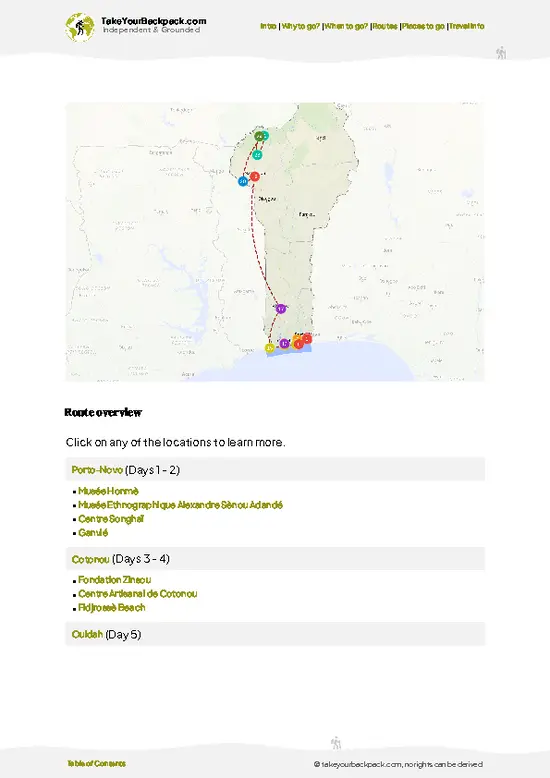
example page 0 from our offline Travel Guide for Benin
example page 1 from our offline Travel Guide for Benin
example page 2 from our offline Travel Guide for Benin
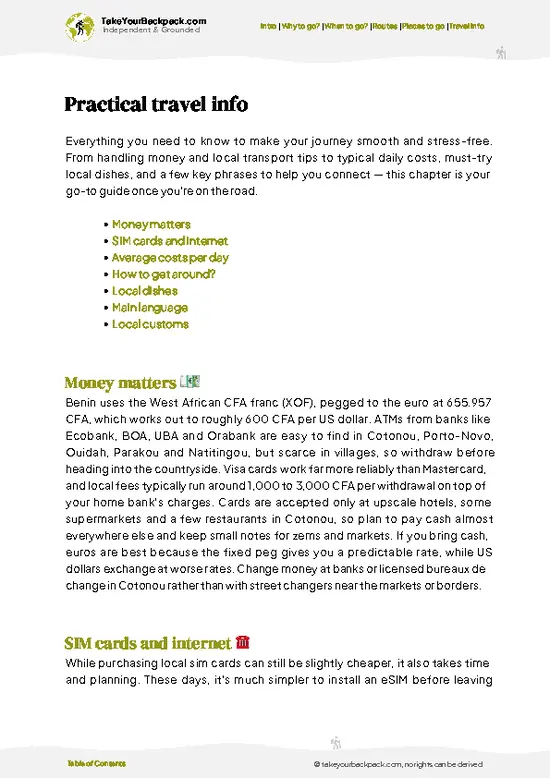
example page 3 from our offline Travel Guide for Benin
example page 4 from our offline Travel Guide for Benin
example page 5 from our offline Travel Guide for Benin
example page 6 from our offline Travel Guide for Benin
example page 7 from our offline Travel Guide for Benin
The digital guide (230 pages) contains:
55 highlights, ranked by travel appeal
Optimized 5, 10 & 15-day travel routes
Cities, national parks, landmarks, beaches
How to get around
Offline-friendly for travel without Wi-Fi
👉 Click to see all 30+ guide features

📅 Plan smarter in minutes, not weeks
Month by month travel advice
Festivals & national holidays
Budget expectations

🗺️ Go to the right places, skip the overrated ones
Honest pros & cons of destinations
Top hikes, parks & viewpoints
Lesser-known places most travelers miss
Clear “worth it vs skip it” guidance

🛏️ Travel smoothly without rookie mistakes
Best areas to stay
Transport systems explained simply
Common scams & safety advice
SIM cards, money & practical tips

🌍 Understand the country, not just visit it
Culture & traditions
52 Essential phrases & customs
Festivals worth planning around
Traveler-friendly historical context
Insights that make places more meaningful

📱 Built for real travel conditions
Fully downloadable PDF
Works completely offline
Optimized for phone use
Useful in remote areas & buses
Everything in one place
Save weeks of stressful planning
Get instant access to your full guide. 30‑day money-back guarantee.
+ Add another guide for just US$7.80

By proceeding you agree to our terms.
Sent to your inbox immediately after payment • 100% Secure Checkout
Best Backpacking Travel Advisor 2025 tourism awardBest Backpacking
Travel Advisor
2025
What others say about Take Your Backpack Guides:
⭐⭐⭐⭐⭐
Fantastic, amazing amount of information!
⭐⭐⭐⭐⭐
My goodness this is amazing, it's what I've been looking for hats off too you!
⭐⭐⭐⭐⭐
I think this is absolutely BRILLIANT
⭐⭐⭐⭐
Very complete and informative. It's still missing places, but I gotta to commend you
⭐⭐⭐⭐⭐
This is truly amazing, thank you, can't wait to explore it with my kids!
⭐⭐⭐⭐⭐
Awesome resource, thank you!
⭐⭐⭐⭐⭐
This is amazing! Can't wait to explore the ones I haven't seen
⭐⭐⭐⭐
I love this! Well done, great idea.
⭐⭐⭐⭐⭐
Thanks for taking the time to make this gem!
⭐⭐⭐⭐⭐
This might be the best website I've ever seen.
⭐⭐⭐⭐⭐
Congratulations, and thank you so much for your work; it's incredibly valuable.
⭐⭐⭐⭐
In all seriousness I think you did a great job pointing out the important spots
⭐⭐⭐⭐⭐
10/10 very good
⭐⭐⭐⭐⭐
As someone who's only just starting to visit regularly this is awesome, thank you.
⭐⭐⭐⭐
Thank you very much! I'm going to visit my dad, it's going to be very useful!
⭐⭐⭐⭐⭐
This is really cool! We'll be travelling for the first time and this definitely come in handy.
⭐⭐⭐⭐⭐
You are now our minister of culture, congratulations 👨‍💼
⭐⭐⭐⭐⭐
Just wanted to tell you that this is a pearl! Going to follow your recommendations.
⭐⭐⭐⭐⭐
This is so cool. I'll definitely be using the resource for my travels soon.
⭐⭐⭐⭐⭐
This is very impressive! Good work.
⭐⭐⭐⭐⭐
This is an amazing and informative site. Very well done!

🛏️ Where to stay?Best areas and accommodation options

The Temple of Pythons in Ouidah, Benin, is a fascinating spot, but let’s get real about where to stay nearby. First off, you’ll want to be in Ouidah itself. This town is a mix of history and culture, and it’s where the action is.

Look for accommodations near the beach or the main square. These areas are buzzing with life, making it easy to meet fellow travelers. You’ll find a range of budget-friendly options, from guesthouses to shared dorms. Safety is decent here, especially in the more populated spots, but keep your wits about you, as you would anywhere.

The vibe is laid-back, and you’ll … read more 👉
The Temple of Pythons in Ouidah, Benin, is a fascinating spot, but let’s get real about where to stay nearby. First off, you’ll want to be in Ouidah itself. This town is a mix of history and culture, and it’s where the action is.

Look for accommodations near the beach or the main square. These areas are buzzing with life, making it easy to meet fellow travelers. You’ll find a range of budget-friendly options, from guesthouses to shared dorms. Safety is decent here, especially in the more populated spots, but keep your wits about you, as you would anywhere.

The vibe is laid-back, and you’ll often find locals hanging out, which adds to the experience. Plus, being close to the Temple means you can visit early in the morning or later in the day to avoid the crowds.

Don’t miss the local markets nearby; they’re a sensory overload in the best way. You’ll get a taste of authentic Beninese life, and trust me, that’s where the real magic happens. Embrace the chaos, connect with locals, and soak in the culture. That’s what makes this journey worthwhile.

👛 Costs (as of 3 September 2026)Money, prices, and spending tips

Visiting the Temple of Pythons in Benin is an experience that comes with its own set of costs, and it’s essential to know what you’re getting into. Here’s a breakdown of typical budget categories:
  • Entry Fee: Expect to pay around €5 to €10. This fee grants you access to the temple and the surrounding area. It’s a small price for a glimpse into a unique cultural practice, but be prepared for a few extra costs along the way.
  • Guided Tours: If you want a deeper understanding, guided tours range from €10 to €30. Local guides offer insights that you won’t find in any brochure. They’ll share stories and traditions that breathe life into the experience.
  • Transportation: Getting to the temple can vary widely. A taxi from Cotonou might cost you €30 to €50, while local transport options like shared taxis
read more 👉
Visiting the Temple of Pythons in Benin is an experience that comes with its own set of costs, and it’s essential to know what you’re getting into. Here’s a breakdown of typical budget categories:
  • Entry Fee: Expect to pay around €5 to €10. This fee grants you access to the temple and the surrounding area. It’s a small price for a glimpse into a unique cultural practice, but be prepared for a few extra costs along the way.
  • Guided Tours: If you want a deeper understanding, guided tours range from €10 to €30. Local guides offer insights that you won’t find in any brochure. They’ll share stories and traditions that breathe life into the experience.
  • Transportation: Getting to the temple can vary widely. A taxi from Cotonou might cost you €30 to €50, while local transport options like shared taxis or buses can be as low as €2 to €5. Factor in the time and comfort you’re willing to trade for cost.
  • Accommodation: Nearby lodging options range from budget hostels at €10 per night to mid-range hotels around €50. If you’re looking for something more upscale, expect to pay upwards of €100. Choose based on your comfort level and how much you want to immerse yourself in local life.
  • Food and Drink: Local eateries offer meals for €2 to €10. Street food is a fantastic way to experience local flavors without breaking the bank. If you opt for a sit-down restaurant, budget around €15 to €30 for a meal.

Understanding these costs helps you prepare for a visit that’s rich in culture but not necessarily light on the wallet. The Temple of Pythons is worth the journey, but knowing what to expect can make all the difference.
⚠️ Prices can change and everyone travels differently, so take this as a rough guide. Hope it helps you plan your adventure!

FAQFrequently asked questions about Temple of Pythons

The Temple of Pythons is a sacred site located in Ouidah, Benin, known for its population of large pythons that are revered in local Vodun religion. It serves as a cultural and religious symbol, attracting visitors interested in traditional beliefs and wildlife. The temple is part of the historical route of the slave trade.
Visiting the Temple of Pythons typically takes about 1 to 2 hours, enough time to explore the temple grounds, observe the pythons safely, and learn about the site's cultural significance. Guided tours are available and can provide deeper insights within this timeframe.
To get to the Temple of Pythons, travel to Ouidah, which is about 40 kilometers west of Cotonou, Benin's largest city. From Ouidah, the temple is accessible by foot or local taxi; it is well-signposted and located near the town center, making it easy to reach without specialized transport.
⚠️ Things can change over time, so always validate details locally before you go.

Other Beninese landmarks near Temple of Pythons

Explore more nearby:


💡 Not sure where to go next?
Create a personalized itinerary for Benin including Temple of Pythons and the places that fit your trip.

Generate my itinerary

👉 Discover all landmarks

Or checkout all Benin has to offer (think cities, towns, villages, national parks, hikes, beaches, festivals)
Country photo of Benin

We 💚 feedbackSumming up the experience

The Temple of Pythons in Benin is a wild ride. Sure, it’s crowded with tourists snapping selfies, but don’t let that fool you. The real magic lies in the locals’ reverence for the pythons. You’ll feel a palpable energy as you watch them glide through the sacred spaces.

A heads-up: the vibe can shift quickly if you’re not respectful. Approach with curiosity, not entitlement. The best surprise? The stories you’ll hear from the priests. They’re the heart of this place, and their tales will stick with you long after you leave.

✍️ Help improve this page!
The information on this page is based on in-depth research, insights shared by experienced travelers, and feedback from the local travel community in Benin. While every effort is made to keep the information accurate and current, conditions can change — so if you spot anything incorrect or outdated, please get in touch.


🙋‍♂️ Give feedback

👋 Meet the founderWho’s Behind Take Your Backpack?

Johan, backpacker and founder of TakeYourBackpackHi, I’m Johan (Netherlands 🇳🇱), the creator of TakeYourBackpack. Over the past decade, I’ve backpacked through 80+ countries across six continents, gaining extensive experience with independent travel, long-term trips, and overland routes.

This site is built on a combination of firsthand travel experience and carefully curated insights from other backpackers. Many guides are based on places I’ve personally visited, while others bring together tips, observations, and practical advice shared by trusted travelers I’ve met along the way.

The goal is to provide realistic, experience-driven guidance — not generic itineraries — so you can explore destinations with better context, clearer expectations, and more confidence.

Get full Benin guide •
Instant download • 55 highlights • Full Offline guide