v2.webp)
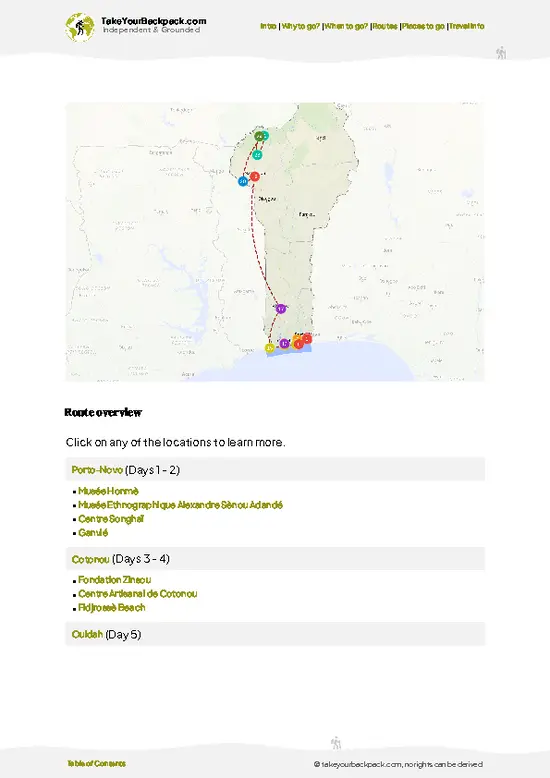
- Houegbadja and Akaba palace museum: the main attraction, where guides walk you through restored earthen halls under a huge thatched roof. The wall reliefs, ceremonial objects and royal regalia are here, and the entrance fee covers the guided tour.
- The bas-reliefs: dozens of painted clay panels on the museum walls. Each symbolizes a king or a battle, so the lion, shark and buffalo carry specific meanings.
- Gezo’s throne: a wooden seat resting on four tortoise-shaped supports, which sums up the dynasty’s imagery of power and endurance.
- Glele’s palace rooms: smaller, darker chambers with iron tools, cloths and weapons, where you grasp how a king’s court actually functioned.
- Royal tomb enclosures: the sacred burial spaces where kings are interred. They are viewed from a respectful distance, and the
- Houegbadja and Akaba palace museum: the main attraction, where guides walk you through restored earthen halls under a huge thatched roof. The wall reliefs, ceremonial objects and royal regalia are here, and the entrance fee covers the guided tour.
- The bas-reliefs: dozens of painted clay panels on the museum walls. Each symbolizes a king or a battle, so the lion, shark and buffalo carry specific meanings.
- Gezo’s throne: a wooden seat resting on four tortoise-shaped supports, which sums up the dynasty’s imagery of power and endurance.
- Glele’s palace rooms: smaller, darker chambers with iron tools, cloths and weapons, where you grasp how a king’s court actually functioned.
- Royal tomb enclosures: the sacred burial spaces where kings are interred. They are viewed from a respectful distance, and the guide explains the rituals behind them.
- Appliqué cloth workshops: local artisans stitch scenes from Dahomey’s history into cloth, and buying direct from the maker is a better souvenir than anything from a roadside stall.
- Historical Museum of Abomey courtyard: a quiet space with palace foundations and old trees, good for slowing down after the guided tour and taking in the scale of the original compound.
Spotted a mistake or missing something? Contact us.

Private Full-Day Cultural Tour in Cotonou Ganvie and Ouidah

Electric Bike Tour EN Cotonou

Zangbeto Dance and Cultural Tour in Ouidah

Private tour of Benin 3 days (Cotonou, Lake Ganvie, Ouidah)

Cotonou Private Tour

Half Day Cultural Tour of Ganvié The Venice of Africa

Painting Experience in Cotonou

Benin, Togo and Ghana Private 14 Day Tour

10-Day Tour: At the Heart of the Vodou Festival in Benin & Togo


 Best Backpacking
.jpg) Hi, I’m Johan (Netherlands 🇳🇱), the creator of TakeYourBackpack. Over the past 3 decades, I’ve backpacked through 90+ countries across six continents, gaining extensive experience with independent travel, long-term trips, and overland routes.
Hi, I’m Johan (Netherlands 🇳🇱), the creator of TakeYourBackpack. Over the past 3 decades, I’ve backpacked through 90+ countries across six continents, gaining extensive experience with independent travel, long-term trips, and overland routes.