×

Bhutan🇧🇹 | townsBumthangmonastic festivals, valley cluster, spiritual heartland | things to do and best time to go

Explore Phobjikha ValleyExplore Kanglung

Backpacking in Bumthang
🏆 Top picktown ranked #3
By Johan Kruseman 🇳🇱 | Updated September 4, 2026

Everyone talks about Bumthang as “the spiritual heart of Bhutan,” like you’re coming just to tick off temples. The monasteries matter, sure, but what actually hits you is the valley rhythm: cold, pine-scented mornings, smoke from farmhouse kitchens, fields that glow gold in late light. That’s the part that stays in your body. Bumthang sits in central Bhutan, a high, broad valley system roughly between Trongsa and Mongar, and it feels like a pause button on a long east–west route.

For backpackers, it’s more of a slow base than a checklist stop. You stay in Jakar town, wander to Jambay and Kurjey Lhakhang on foot, then push farther into side valleys for day hikes and homestays. Buses are infrequent and the road in is long and winding, so you earn it; once here, you mostly walk or grab local taxis. Nights are quiet, with a couple of simple cafés and guesthouses where you might meet a handful of other travelers, nothing like the more social scene in Thimphu or Paro. It’s safe, not cheap by regional standards, but if you’re already in Bhutan, this is where you trade city comforts for slower, colder, more spacious days.

Discover everything you want to know in the 📖 Bhutan Travel Guide.


Get your Bhutan guide
54 ranked highlights, routes & tips, works offline (222 pages)
Loading the map 🌍
CLICK TO FILTER
cities
towns
villages
landmarks
national parks
hikes
attractions
festivals
regions
SHOW COUNTRY’S BESTSHOW ALL

✨ Why go?
Ranked #3 town in Bhutan
Why Bumthang should be on your travel list

Bumthang is a backpacker’s hub in Bhutan, perfectly positioned for those who crave both cultural immersion and natural beauty. It’s not just a stopover; it’s a launchpad for nearby hikes that lead to stunning monasteries and lush valleys. The walkable streets invite you to explore local shops and taste authentic Bhutanese dishes, like ema datshi, that linger in your memory long after the meal.

Accommodations range from cozy guesthouses to small-scale hostels, fostering a friendly atmosphere where solo travelers and small groups can easily connect. You’ll find a mix of slow travelers who linger to soak in the serene vibe and those who pop in for a quick recharge before heading to the next adventure.

While the nightlife is low-key, the social scene thrives in communal dining and shared stories … read more 👉
Bumthang is a backpacker’s hub in Bhutan, perfectly positioned for those who crave both cultural immersion and natural beauty. It’s not just a stopover; it’s a launchpad for nearby hikes that lead to stunning monasteries and lush valleys. The walkable streets invite you to explore local shops and taste authentic Bhutanese dishes, like ema datshi, that linger in your memory long after the meal.

Accommodations range from cozy guesthouses to small-scale hostels, fostering a friendly atmosphere where solo travelers and small groups can easily connect. You’ll find a mix of slow travelers who linger to soak in the serene vibe and those who pop in for a quick recharge before heading to the next adventure.

While the nightlife is low-key, the social scene thrives in communal dining and shared stories over tea. This town feels like a warm embrace, making it ideal for those who appreciate a blend of quiet reflection and cultural richness. If you’re looking for a place that balances exploration with a sense of community, Bumthang is your spot.
Want to include Bumthang in your Bhutan route?
Create a personalized Bhutan itinerary that includes Bumthang and the places that fit your trip — based on your travel style, budget, and available time. Get your route in seconds.

Generate my trip

💡 HighlightsEssential experiences to have while visiting Bumthang

  1. Jakar Dzong (Yongyel Dzong) — The fortress that watches over Jakar town: impressive timber-and-stone architecture, prayer flags, and great views of the valley. It’s an active administrative and religious site so you get history, people’s lives, and a real sense of place in one stop.
  2. Kurjey Lhakhang — A compact, powerful temple complex built around the cave where Guru Rinpoche left his imprint; you can see ancient murals and the miraculous rock that marks a key story in Bhutanese Buddhism. Visiting gives insight into pilgrimage culture and local devotion.
  3. Jambay Lhakhang — One of Bhutan’s oldest temples (tradition dates it to the 7th century) with a famously lively tshechu (festival). The building’s age, local myths, and the small shrine rooms make this a must for history and ritual fans.
read more 👉
  1. Jakar Dzong (Yongyel Dzong) — The fortress that watches over Jakar town: impressive timber-and-stone architecture, prayer flags, and great views of the valley. It’s an active administrative and religious site so you get history, people’s lives, and a real sense of place in one stop.
  2. Kurjey Lhakhang — A compact, powerful temple complex built around the cave where Guru Rinpoche left his imprint; you can see ancient murals and the miraculous rock that marks a key story in Bhutanese Buddhism. Visiting gives insight into pilgrimage culture and local devotion.
  3. Jambay Lhakhang — One of Bhutan’s oldest temples (tradition dates it to the 7th century) with a famously lively tshechu (festival). The building’s age, local myths, and the small shrine rooms make this a must for history and ritual fans.
  4. Tamshing Monastery — A short walk/drive from the town center, Tamshing is famed for its 15th-century Nyingma paintings and for being the seat of Pema Lingpa’s lineage. The painted walls and intimate courtyards feel like stepping into a living art gallery of Bhutanese tantra and music.
  5. Jakar Town Market — The best place to see everyday Bumthang life: fresh produce, local cheeses, yak butter, and small stalls selling textiles and prayer beads. It’s noisy, friendly, and perfect for buying snacks or a simple souvenir while people-watching.
  6. Jakar Viewpoint & Chorten Ridge — Walk up from town to the ridge dotted with small chortens and prayer flags for sweeping valley views at sunrise or sunset. It’s low-effort, high-reward: a quiet place to absorb the landscape and see the town laid out below.
  7. Bumthang Cultural/Museum displays — Small local museums and display rooms around Jakar collect religious artifacts, old tools, and textiles that tell the valley’s story. They’re compact but rich in context—handy if you want background before visiting the temples.
  8. Traditional weaving & thangka workshops — Several family workshops and co-ops in town let you watch (and often buy) handwoven textiles and thangkas being made. Seeing the slow, precise craftwork in person is a great way to meet artisans and support local skills.
  9. Local bakeries, cafés & tea houses — Simple spots that serve local buckwheat pancakes, butter tea, and homemade sweets; these are community hubs where you’ll hear gossip, get travel tips, and meet farmers after market. Small but culturally revealing—food is part of the story here.
  10. Swiss Farm / Local cheese producers (near town) — A short local visit to see how Bumthang cheese (and small-scale dairy) is made: walk among yaks/cows, learn about traditional dairy processing, and buy fresh cheese. It’s an earthy, enjoyable look at rural foodways that feed the town.
A few great day trips just outside Jakar: the Burning Lake (Mebar Tsho) for its Guru Rinpoche legend, the Tang and Ura valleys for sweeping highland scenery and tiny villages, and Tamzhing/Tamshing festival sites if your timing matches a tshechu.
Spotted a mistake or missing something? Contact us.

Things to do around Bumthang

Ratings based on Tripadvisor reviews. When you book through this link, you support our work at no extra cost to you.

🏘️ NeighborhoodsUnderstanding the local layout

Bumthang is a tapestry of culture and nature, where every corner tells a story. Here’s how to navigate its neighborhoods like a pro.

Jakar: This is the heart of Bumthang. The vibe is lively yet laid-back, perfect for backpackers. You’ll find affordable guesthouses and local eateries serving hearty meals. Walkability is a breeze; everything is within reach. Jakar’s nightlife is low-key, with a few bars offering local brews. Ideal for short stays, but you might want to linger longer to soak in the history.

Chumey: A quieter area, Chumey is where you can escape the hustle. The atmosphere is serene, surrounded by fields and traditional farms. It’s less touristy, making it a great spot for longer stays if you want to immerse yourself in local life. Transport options are limited, so plan your … read more 👉
Bumthang is a tapestry of culture and nature, where every corner tells a story. Here’s how to navigate its neighborhoods like a pro.

Jakar: This is the heart of Bumthang. The vibe is lively yet laid-back, perfect for backpackers. You’ll find affordable guesthouses and local eateries serving hearty meals. Walkability is a breeze; everything is within reach. Jakar’s nightlife is low-key, with a few bars offering local brews. Ideal for short stays, but you might want to linger longer to soak in the history.

Chumey: A quieter area, Chumey is where you can escape the hustle. The atmosphere is serene, surrounded by fields and traditional farms. It’s less touristy, making it a great spot for longer stays if you want to immerse yourself in local life. Transport options are limited, so plan your outings carefully.

Tang: This neighborhood is a bit off the beaten path, but that’s its charm. The vibe is rustic and authentic, with stunning views of the valley. It’s perfect for those seeking solitude and adventure. Accommodations are basic but cozy. While nightlife is virtually non-existent, the hiking trails nearby make up for it. Ideal for longer stays if you’re looking to explore the outdoors.

Ura: The most remote area, Ura offers a glimpse into traditional Bhutanese life. It’s quiet, with a few homestays that provide a unique experience. The walkability is limited, but the scenery is breathtaking. Perfect for those who want to disconnect and recharge. Transport is sparse, so be prepared for a slower pace.

⌛️ 1 daySeeing the highlights in 24 hours

Bumthang, often considered the spiritual heart of Bhutan, is a tapestry of ancient temples, lush valleys, and vibrant local culture. The air here carries the scent of pine and incense, inviting you to explore its rich history and serene landscapes.

Start your morning at the Jakar Dzong, a fortress that looms over the town. The early light casts a golden hue on its whitewashed walls, making it a perfect backdrop for your first photos. Wander through the peaceful grounds, taking in the intricate woodwork and the gentle sound of the river below. From there, stroll to the nearby Jakar market, where locals sell fresh produce and handmade crafts. The colors and chatter create a lively atmosphere, and you might even snag a warm, flaky khur-le, a traditional Bhutanese bread, from a vendor.

In the … read more 👉
Bumthang, often considered the spiritual heart of Bhutan, is a tapestry of ancient temples, lush valleys, and vibrant local culture. The air here carries the scent of pine and incense, inviting you to explore its rich history and serene landscapes.

Start your morning at the Jakar Dzong, a fortress that looms over the town. The early light casts a golden hue on its whitewashed walls, making it a perfect backdrop for your first photos. Wander through the peaceful grounds, taking in the intricate woodwork and the gentle sound of the river below. From there, stroll to the nearby Jakar market, where locals sell fresh produce and handmade crafts. The colors and chatter create a lively atmosphere, and you might even snag a warm, flaky khur-le, a traditional Bhutanese bread, from a vendor.

In the afternoon, head to the less-traveled Kurjey Lhakhang. This sacred site is a short hike from the main road, but the journey is worth it. The path winds through fragrant pine trees, and as you approach, the sound of chanting fills the air. Inside, you’ll find stunning murals and the revered body imprint of Guru Rinpoche. Spend some time here in quiet reflection; it’s a place that feels alive with history.

As the sun begins to set, make your way to the charming village of Chumey. This area is often overlooked by tourists, but it offers a glimpse into local life. Visit a family-run shop where you can watch the traditional process of making yathra, a colorful woolen fabric. The warmth of the people and the vibrant textiles create a cozy atmosphere.

Wrap up your day with dinner at a local eatery in Bumthang. Try the ema datshi, a spicy chili and cheese dish that packs a punch. As you savor your meal, reflect on the day’s adventures, feeling the pulse of this unique town. Each moment in Bumthang is a reminder that the journey is just as rewarding as the destination.
Turn your Bumthang visit into an Bhutan adventure
Build a complete Bhutan route with Bumthang, hidden gems, must-see destinations, and realistic travel times included.

Generate my trip

🌤️ When to go?Weather, crowds, and seasonal trade-offs


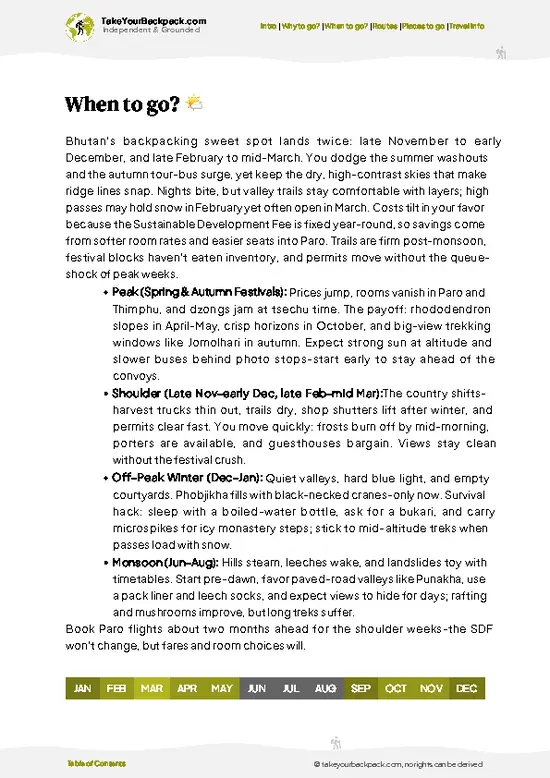
  • Weather: Bumthang’s best weather falls in spring (March to May) and autumn (September to November). These months offer crisp, clear skies and mild temperatures, perfect for trekking without the oppressive heat or heavy monsoon rains that dominate summer.

  • Temperature: Spring days hover around 15-20°C (59-68°F), cooling sharply at night to near freezing. Autumn is similar but slightly drier, with daytime highs around 18-22°C (64-72°F). Winter nights can plunge below 0°C (32°F), making early or late season visits tougher without gear.

  • Daylight Hours: Around 10-12 hours of daylight in peak seasons means you can start early and still have time to explore without rushing. The light in autumn has a golden quality that makes the valleys glow, enhancing every photo and step.

  • Crowds: Spring
read more 👉

  • Weather: Bumthang’s best weather falls in spring (March to May) and autumn (September to November). These months offer crisp, clear skies and mild temperatures, perfect for trekking without the oppressive heat or heavy monsoon rains that dominate summer.

  • Temperature: Spring days hover around 15-20°C (59-68°F), cooling sharply at night to near freezing. Autumn is similar but slightly drier, with daytime highs around 18-22°C (64-72°F). Winter nights can plunge below 0°C (32°F), making early or late season visits tougher without gear.

  • Daylight Hours: Around 10-12 hours of daylight in peak seasons means you can start early and still have time to explore without rushing. The light in autumn has a golden quality that makes the valleys glow, enhancing every photo and step.

  • Crowds: Spring and autumn attract more visitors, especially during local festivals like Jakar Tshechu. This means a livelier atmosphere but also higher demand for accommodation and guides.

  • Seasonal Activities: Festivals in spring and autumn provide a cultural feast—colorful dances, traditional music, and local markets. Summer monsoon months are quieter but soggy, limiting outdoor activities.

  • Price Fluctuations: Peak seasons see a noticeable bump in prices for lodging and transport. Booking ahead can lock in better rates, while off-season visits offer bargains but at the cost of less predictable weather.


Pro-tip: Aim for early autumn to catch clear skies, vibrant festivals, and manageable crowds—this window balances comfort, culture, and cost like a seasoned local.


source: climatestotravel.comJANJanuary: fair for travelingFEBFebruary: fair for travelingMARMarch: highly recommended for travelingAPRApril: excellent for travelingMAYMay: excellent for travelingJUNJune: fair for travelingJULJuly: below average for travelingAUGAugust: below average for travelingSEPSeptember: excellent for travelingOCTOctober: excellent for travelingNOVNovember: highly recommended for travelingDECDecember: fair for traveling
when-to-go

✈️ The backpacker research shortcutBhutan Travel Guide

An offline-friendly backpacking guide with optimized travel routes, ranked highlights, transport advice, and the best areas to stay.
example page 0 from our offline Travel Guide for Bhutan
example page 1 from our offline Travel Guide for Bhutan
example page 2 from our offline Travel Guide for Bhutan
example page 3 from our offline Travel Guide for Bhutan
example page 4 from our offline Travel Guide for Bhutan
example page 5 from our offline Travel Guide for Bhutan
example page 6 from our offline Travel Guide for Bhutan
example page 7 from our offline Travel Guide for Bhutan
The digital guide (222 pages) contains:
54 highlights, ranked by travel appeal
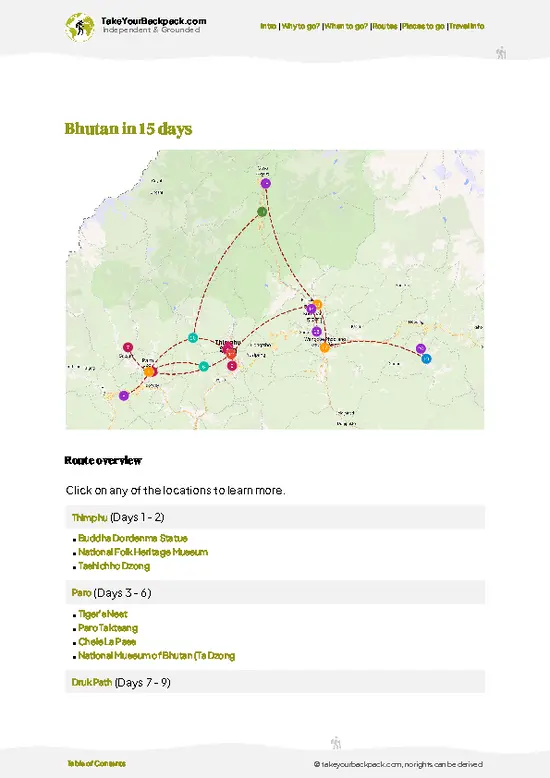
Optimized 5, 10 & 15-day travel routes
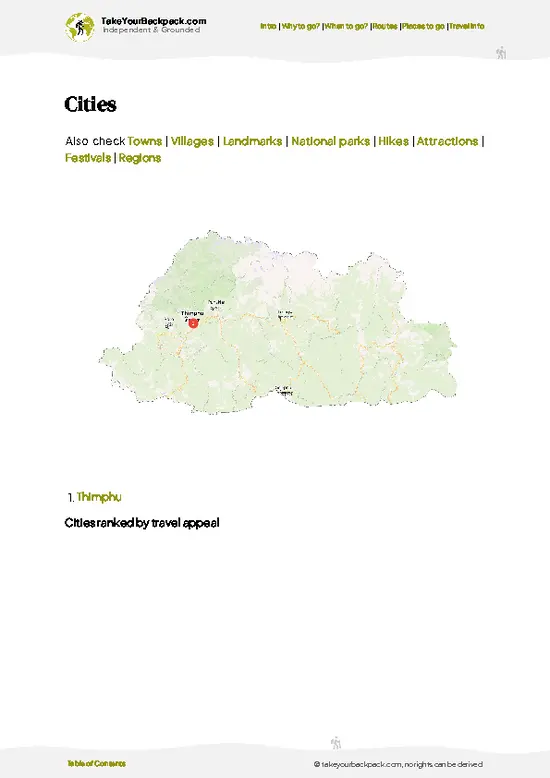
Cities, national parks, landmarks, beaches
How to get around
Offline-friendly for travel without Wi-Fi
👉 Click to see all 30+ guide features

📅 Plan smarter in minutes, not weeks
Month by month travel advice
Festivals & national holidays
Budget expectations

🗺️ Go to the right places, skip the overrated ones
Honest pros & cons of destinations
Top hikes, parks & viewpoints
Lesser-known places most travelers miss
Clear “worth it vs skip it” guidance

🛏️ Travel smoothly without rookie mistakes
Best areas to stay
Transport systems explained simply
Common scams & safety advice
SIM cards, money & practical tips

🌍 Understand the country, not just visit it
Culture & traditions
52 Essential phrases & customs
Festivals worth planning around
Traveler-friendly historical context
Insights that make places more meaningful

📱 Built for real travel conditions
Fully downloadable PDF
Works completely offline
Optimized for phone use
Useful in remote areas & buses
Everything in one place
Save weeks of stressful planning
Get instant access to your full guide. 30‑day money-back guarantee.
+ Add another guide for just US$7.80

By proceeding you agree to our terms.
Sent to your inbox immediately after payment • 100% Secure Checkout
Best Backpacking Travel Advisor 2025 tourism awardBest Backpacking
Travel Advisor
2025
What others say about Take Your Backpack Guides:
⭐⭐⭐⭐⭐
Fantastic, amazing amount of information!
⭐⭐⭐⭐⭐
My goodness this is amazing, it's what I've been looking for hats off too you!
⭐⭐⭐⭐⭐
I think this is absolutely BRILLIANT
⭐⭐⭐⭐
Very complete and informative. It's still missing places, but I gotta to commend you
⭐⭐⭐⭐⭐
This is truly amazing, thank you, can't wait to explore it with my kids!
⭐⭐⭐⭐⭐
Awesome resource, thank you!
⭐⭐⭐⭐⭐
This is amazing! Can't wait to explore the ones I haven't seen
⭐⭐⭐⭐
I love this! Well done, great idea.
⭐⭐⭐⭐⭐
Thanks for taking the time to make this gem!
⭐⭐⭐⭐⭐
This might be the best website I've ever seen.
⭐⭐⭐⭐⭐
Congratulations, and thank you so much for your work; it's incredibly valuable.
⭐⭐⭐⭐
In all seriousness I think you did a great job pointing out the important spots
⭐⭐⭐⭐⭐
10/10 very good
⭐⭐⭐⭐⭐
As someone who's only just starting to visit regularly this is awesome, thank you.
⭐⭐⭐⭐
Thank you very much! I'm going to visit my dad, it's going to be very useful!
⭐⭐⭐⭐⭐
This is really cool! We'll be travelling for the first time and this definitely come in handy.
⭐⭐⭐⭐⭐
You are now our minister of culture, congratulations 👨‍💼
⭐⭐⭐⭐⭐
Just wanted to tell you that this is a pearl! Going to follow your recommendations.
⭐⭐⭐⭐⭐
This is so cool. I'll definitely be using the resource for my travels soon.
⭐⭐⭐⭐⭐
This is very impressive! Good work.
⭐⭐⭐⭐⭐
This is an amazing and informative site. Very well done!

🛏️ Where to stay?How to pick the right area

Bumthang’s heart for backpackers pulses strongest around Jakar town, the main hub where the valley’s pulse is easiest to catch. This area is a practical choice because it’s compact—everything you need is within a short walk. The streets here hum with a mix of local chatter and the occasional clink of teacups from cozy cafes, making it a natural spot to meet fellow travelers without the forced vibe of tourist traps. The air carries a faint scent of pine and wood smoke, grounding you in the valley’s rhythm.

Compared to the more spread-out villages or the quieter outskirts, Jakar offers a social … read more 👉
Bumthang’s heart for backpackers pulses strongest around Jakar town, the main hub where the valley’s pulse is easiest to catch. This area is a practical choice because it’s compact—everything you need is within a short walk. The streets here hum with a mix of local chatter and the occasional clink of teacups from cozy cafes, making it a natural spot to meet fellow travelers without the forced vibe of tourist traps. The air carries a faint scent of pine and wood smoke, grounding you in the valley’s rhythm.

Compared to the more spread-out villages or the quieter outskirts, Jakar offers a social safety net. It’s where budget guesthouses and hostels cluster, so you’re not just booking a bed—you’re stepping into a community. Hostels here tend to be modest but clean, with shared spaces that encourage swapping stories over butter tea or Bhutanese noodles. The vibe is relaxed but lively enough to keep loneliness at bay, especially for solo backpackers.

Staying outside Jakar means fewer options and a quieter scene, which can feel isolating if you’re new to Bhutan. So, for a blend of safety, social buzz, and budget-friendly lodging, Jakar’s compact center is your best bet to unlock Bumthang’s authentic, lived-in charm.

🚌 Getting aroundMoving around without the hassle

Bumthang moves at the pace of the seasons, not the clock. The air carries the faint scent of pine and woodsmoke, and the town’s rhythm is set by the sun climbing over the hills, not by strict timetables. You won’t find a bus leaving exactly on the hour here, but you will catch a ride if you’re patient and flexible. The locals navigate with a mix of intuition and quiet efficiency, and if you lean into that flow, you’ll find the journey itself becomes part of the experience. This isn’t a place for rigid schedules; it’s a place where the landscape and the people dictate your pace, and that’s exactly why it feels so authentic.


  • Walking: Bumthang’s core villages—Jakar, Chokhor, and Tang—are compact enough to explore on foot. Walking lets you soak in the crisp mountain air, hear the distant clang
read more 👉
Bumthang moves at the pace of the seasons, not the clock. The air carries the faint scent of pine and woodsmoke, and the town’s rhythm is set by the sun climbing over the hills, not by strict timetables. You won’t find a bus leaving exactly on the hour here, but you will catch a ride if you’re patient and flexible. The locals navigate with a mix of intuition and quiet efficiency, and if you lean into that flow, you’ll find the journey itself becomes part of the experience. This isn’t a place for rigid schedules; it’s a place where the landscape and the people dictate your pace, and that’s exactly why it feels so authentic.


  • Walking: Bumthang’s core villages—Jakar, Chokhor, and Tang—are compact enough to explore on foot. Walking lets you soak in the crisp mountain air, hear the distant clang of prayer bells, and catch the subtle shifts in light as the sun arcs over the valley. It’s free, flexible, and the best way to discover tucked-away temples and local markets.


  • Local Jeep Taxis: These shared rides are the backbone of Bumthang’s transit. They don’t run on a strict schedule but usually depart when full, so expect some waiting. Fares hover around 100-150 BTN for short hops between villages. It’s bumpy, sometimes crowded, but the windows frame the valley’s patchwork of fields and forests like a moving postcard.


  • Private Taxi Hire: If you want control over timing and routes, hiring a private taxi is your best bet. Rates vary but expect around 1,500-2,000 BTN for a half-day. This option lets you chase the perfect light for photos or linger at a monastery without worrying about missing the last ride back.


  • Bus to/from Trongsa: For budget travelers connecting Bumthang to the rest of Bhutan, the bus to Trongsa is essential. It’s a slow, winding ride through mountain passes, starting early around 7 AM and wrapping up by late afternoon. Tickets cost roughly 200-300 BTN. The bus is basic but reliable, and the views out the window are worth every jolt.


  • Motorbike Rentals: For the adventurous, renting a motorbike offers unmatched freedom. Rentals start around 500 BTN per day. The roads can be rough and weather unpredictable, so this is for confident riders ready to embrace the rawness of the terrain and the scent of pine as you carve through the curves.

👛 Costs (as of 4 September 2026)How expensive it really is

Backpacking in Bumthang, Bhutan, carries a unique cost profile shaped by its remote Himalayan charm and the country’s controlled tourism policies. Here’s a realistic breakdown of what you can expect to spend daily as an independent traveler.
  • Dorm Accommodation: Dorm-style options are scarce in Bumthang, as Bhutan’s guesthouses and lodges tend to cater to mid-range travelers. Budget guesthouses typically charge around $15 to $25 USD per night for a basic room, often with shared bathrooms. Expect simple, clean spaces with local woodwork and mountain views, but no frills.
  • Meals: Food in Bumthang is straightforward and hearty. A typical meal at a local eatery costs between $3 and $7 USD. Expect rice, buckwheat noodles, local cheese, and seasonal vegetables, often cooked with a mild spice that
read more 👉
Backpacking in Bumthang, Bhutan, carries a unique cost profile shaped by its remote Himalayan charm and the country’s controlled tourism policies. Here’s a realistic breakdown of what you can expect to spend daily as an independent traveler.
  • Dorm Accommodation: Dorm-style options are scarce in Bumthang, as Bhutan’s guesthouses and lodges tend to cater to mid-range travelers. Budget guesthouses typically charge around $15 to $25 USD per night for a basic room, often with shared bathrooms. Expect simple, clean spaces with local woodwork and mountain views, but no frills.
  • Meals: Food in Bumthang is straightforward and hearty. A typical meal at a local eatery costs between $3 and $7 USD. Expect rice, buckwheat noodles, local cheese, and seasonal vegetables, often cooked with a mild spice that reflects Bhutanese flavors. Western-style meals or cafes will push the price higher, around $8 to $12 USD.
  • Local Transport: Public transport is limited. Shared taxis or minibuses connecting villages cost roughly $1 to $3 USD per trip, depending on distance. Hiring a private taxi for a day to explore the region runs about $30 to $50 USD, which can be split if you find travel companions. Walking is common for short distances, letting you soak in the crisp mountain air and pine scents.
  • Basic Activities/Entry Fees: Bhutan requires a daily tourist tariff, but independent travelers usually book through local operators who include this in the package. For those arranging independently, the government fee is about $40 USD per day, covering permits and cultural site entries. Individual monastery or museum entries might add $2 to $5 USD each. Trekking permits and guides, if needed, will increase costs.
  • Miscellaneous Expenses: This includes bottled water, snacks, phone SIM cards, and small souvenirs. Budget around $3 to $7 USD daily. Water taps are often available but carry a mineral taste, so many prefer bottled water. SIM cards with data cost about $10 to $15 USD for a basic package, lasting several days.

In total, expect to spend roughly $60 to $90 USD per day backpacking in Bumthang. This range reflects the balance between basic comfort and the unavoidable costs tied to Bhutan’s controlled tourism model. The price pays for access to a place where the air smells of pine and prayer flags flutter against a backdrop of ancient monasteries and quiet valleys—an experience that feels earned with every step.


source: bhutan.travel
⚠️ Prices can change and everyone travels differently, so take this as a rough guide. Hope it helps you plan your adventure!

🚌 Day tripsShort trips worth adding

Bumthang, Bhutan, is a backpacker’s dream base for day trips, offering a rich tapestry of culture, nature, and adventure. The town itself hums with the scent of incense and the sound of prayer flags fluttering in the wind. Here are some must-do excursions that will elevate your experience.

Jakar Dzong
Just a short walk from the heart of Bumthang, Jakar Dzong is a stunning fortress that commands the landscape. The journey takes about 30 minutes, and the entrance is free, making it a perfect stop for budget travelers. The views from the ramparts are breathtaking, especially at sunrise when the light dances on the mountains. First-timers often underestimate the time needed to explore the intricate murals and the peaceful courtyard. Plan to spend at least two hours soaking in the history and … read more 👉
Bumthang, Bhutan, is a backpacker’s dream base for day trips, offering a rich tapestry of culture, nature, and adventure. The town itself hums with the scent of incense and the sound of prayer flags fluttering in the wind. Here are some must-do excursions that will elevate your experience.

Jakar Dzong
Just a short walk from the heart of Bumthang, Jakar Dzong is a stunning fortress that commands the landscape. The journey takes about 30 minutes, and the entrance is free, making it a perfect stop for budget travelers. The views from the ramparts are breathtaking, especially at sunrise when the light dances on the mountains. First-timers often underestimate the time needed to explore the intricate murals and the peaceful courtyard. Plan to spend at least two hours soaking in the history and serenity.


Kurjey Lhakhang
A 20-minute drive from Bumthang, Kurjey Lhakhang is a sacred site where Guru Rinpoche is said to have meditated. The air here is thick with spirituality, and the scent of burning juniper fills your lungs. Entry is around 300 Ngultrum, but it’s worth every ngultrum for the chance to witness the stunning architecture and the tranquil surroundings. Visit in the early morning to avoid crowds and truly connect with the energy of the place. Many miss the small, hidden paths that lead to the nearby sacred trees, so keep your eyes peeled for those.


Tamshing Lhakhang
Just a 30-minute hike from Bumthang, Tamshing Lhakhang is a vibrant monastery filled with colorful murals and a palpable sense of history. The trek itself is invigorating, with the scent of pine and the sound of birds accompanying you. Expect to pay around 300 Ngultrum for entry. This trip is best in the fall when the air is crisp and the colors are vivid. A common mistake is to rush through; take your time to absorb the stories behind the art.


Ura Valley
A bit further afield, about an hour’s drive, Ura Valley offers a glimpse into traditional Bhutanese life. The journey is scenic, with rolling hills and terraced fields. The round trip will cost you around 1,000 Ngultrum for transport, but the experience of wandering through the quaint village and enjoying local cuisine is priceless. Late spring is ideal, as the flowers bloom and the valley comes alive. Many backpackers overlook the local eateries, but trying a bowl of traditional ema datshi here is a must.
👉 Explore Ura Valley

Mebar Tsho (Burning Lake)
Roughly 30 minutes from Bumthang, Mebar Tsho is a sacred lake with a mystical aura. The water is a striking blue, and the surrounding cliffs are steeped in legend. Entry is free, but the hike down can be slippery, so wear sturdy shoes. Early morning visits are best to catch the mist rising off the lake. First-timers often miss the small shrine tucked away on the far side of the lake, which offers a quiet spot for reflection.
Want to know what more Bhutan offers?
The Bhutan Travel Guide describes 54 highlights, from cities to national parks, from beaches to hikes

Get the Travel Guide -

🛡️ SafetyScams, Hazards, and Annoyances

Bumthang is generally safe, but a few practical tips can enhance your experience. The town’s relaxed vibe is inviting, yet it’s wise to stay aware, especially in crowded markets. Keep your belongings close; pickpockets can be a nuisance in busier areas.

If you’re solo, embrace the daylight. The streets are quieter at night, so plan your return before dusk. Walking back to your accommodation is usually fine, but stick to well-lit paths and avoid shortcuts through dark alleys.

While scams are rare, be cautious with overly friendly locals offering unsolicited help. Politely decline if someone insists on guiding you to a shop or attraction. It’s often a setup for a commission-based sale.

Overall, trust your instincts. Carry yourself with confidence, and you’ll find that the warmth of Bumthang’s … read more 👉
Bumthang is generally safe, but a few practical tips can enhance your experience. The town’s relaxed vibe is inviting, yet it’s wise to stay aware, especially in crowded markets. Keep your belongings close; pickpockets can be a nuisance in busier areas.

If you’re solo, embrace the daylight. The streets are quieter at night, so plan your return before dusk. Walking back to your accommodation is usually fine, but stick to well-lit paths and avoid shortcuts through dark alleys.

While scams are rare, be cautious with overly friendly locals offering unsolicited help. Politely decline if someone insists on guiding you to a shop or attraction. It’s often a setup for a commission-based sale.

Overall, trust your instincts. Carry yourself with confidence, and you’ll find that the warmth of Bumthang’s community far outweighs any minor annoyances. Enjoy the journey; it’s all part of the adventure.

FAQCommon questions from travelers

Yes, Bumthang is worth visiting for its rich cultural heritage and stunning natural beauty, not just as a stopover. It is considered the spiritual heartland of Bhutan with several important monasteries and temples, including Jambay Lhakhang and Kurje Lhakhang. The scenic valleys and traditional villages offer a unique experience distinct from other parts of Bhutan.
You need at least 3 to 4 days in Bumthang to explore the main valleys, visit key monasteries, and enjoy some light trekking. This allows time to acclimatize to the altitude, which ranges around 2,600 to 3,000 meters, and to experience local culture without rushing.
No, Bumthang cannot be visited as a day trip from nearby cities due to its remote location and travel times. The closest major town, Trongsa, is about 3 to 4 hours away by road, and the roads are mountainous and slow. Overnight stays in Bumthang are necessary to fully appreciate the area.
⚠️ Things can change over time, so always validate details locally before you go.

Other Bhutanese towns near Bumthang

Explore more nearby:

  • Zhemgang—river gorges, wildlife corridor, forested hills| 47 km away
  • Lhuentse—textile weaving, ancestral monasteries, eastern hills| 50 km away
  • Phobjikha—crane habitat, glacial valley, wetlands| 53 km away

💡 Not sure where to go next?
Create a personalized itinerary for Bhutan including Bumthang and the places that fit your trip.

Generate my itinerary

👉 Discover all towns

Or checkout all Bhutan has to offer (think cities, towns, villages, national parks, hikes, beaches, festivals)
Country photo of Bhutan

We 💚 feedbackWhat to keep in mind

Bumthang feels like a secret chapter in Bhutan’s story. The air is crisp, laced with the scent of pine and incense wafting from temples. Don’t miss the local cheese; it’s a delightful surprise that pairs perfectly with the region’s rich culture. Just be ready for the altitude—take it slow. Embrace the quiet moments; they’re where the magic happens. This isn’t just a destination; it’s a chance to connect with something deeper. Trust me, you’ll leave with a piece of Bumthang in your heart.

✍️ Help improve this page!
The information on this page is based on in-depth research, insights shared by experienced travelers, and feedback from the local travel community in Bhutan. While every effort is made to keep the information accurate and current, conditions can change — so if you spot anything incorrect or outdated, please get in touch.


🙋‍♂️ Give feedback

👋 Meet the founderWho’s Behind Take Your Backpack?

Johan, backpacker and founder of TakeYourBackpackHi, I’m Johan (Netherlands 🇳🇱), the creator of TakeYourBackpack. Over the past decade, I’ve backpacked through 80+ countries across six continents, gaining extensive experience with independent travel, long-term trips, and overland routes.

This site is built on a combination of firsthand travel experience and carefully curated insights from other backpackers. Many guides are based on places I’ve personally visited, while others bring together tips, observations, and practical advice shared by trusted travelers I’ve met along the way.

The goal is to provide realistic, experience-driven guidance — not generic itineraries — so you can explore destinations with better context, clearer expectations, and more confidence.

Get full Bhutan guide •
Instant download • 54 highlights • Full Offline guide