×

Bhutan🇧🇹 | villagesUra Valleyhighland hamlets, buckwheat fields, annual festival | things to do and best time to go

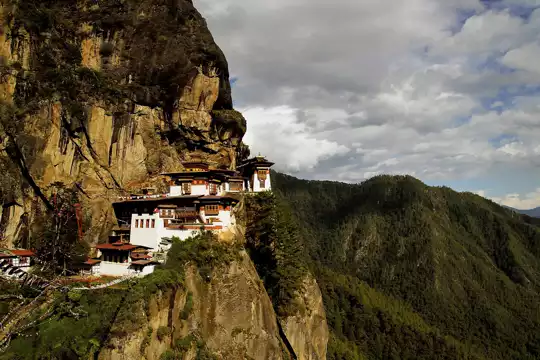
Explore TrongsaExplore Paro Taktsang

Backpacking in Ura Valley
🏆 Top pickvillage ranked #1
By Johan Kruseman 🇳🇱 | Updated September 4, 2026

Your boots crunch on frosty grass as incense drifts from a whitewashed farmhouse, cow bells clinking somewhere in the mist, the whole valley smelling faintly of woodsmoke and damp earth. This is Ura Valley, tucked in central Bhutan’s Bumthang region, over the high pass east of Jakar. For backpackers, Ura isn’t a “scene”; it’s a quiet, high-altitude village that works best as a one- or two-night pause on the east–west highway, or as a base for slow walks through fields and short ridge hikes rather than big logistics. It’s more traditional and rural than Jakar, with fewer beds, almost no nightlife, and higher Bhutan-style costs, but safer-than-safe streets, easy walkability, and long, silent evenings that feel like the country’s soul on low volume.

Discover everything you want to know in the 📖 Bhutan Travel Guide.


Get your Bhutan guide
54 ranked highlights, routes & tips, works offline (222 pages)
Loading the map 🌍
CLICK TO FILTER
cities
towns
villages
landmarks
national parks
hikes
attractions
festivals
regions
SHOW COUNTRY’S BESTSHOW ALL

✨ Why go?
Ranked #1 village in Bhutan
Why Ura Valley should be on your travel list

Ura Valley is a backpacker’s haven in Bhutan, perfectly positioned for those seeking authentic experiences. The town serves as a gateway to stunning hikes, with trails that lead you through lush landscapes and ancient monasteries. You’ll find small-scale guesthouses that offer a cozy atmosphere, making it easy to connect with fellow travelers. The local food is a treat; savor hearty dishes that reflect the region’s culture. Streets are walkable, inviting you to explore at your own pace, whether you’re a slow traveler or a solo adventurer. Most visitors stay a few days, soaking in the friendly social vibe while planning their next trek. If you appreciate a blend of tranquility and community, Ura Valley is your spot.
Want to include Ura Valley in your Bhutan route?
Create a personalized Bhutan itinerary that includes Ura Valley and the places that fit your trip — based on your travel style, budget, and available time. Get your route in seconds.

Generate my trip

💡 HighlightsKey sights and experiences for travelers

  1. Ura Lhakhang — The village’s main temple, modest but full of local history and colorful murals; it’s where villagers gather and gives a real sense of everyday spiritual life in Ura.
  2. Central Ura village (traditional farmhouses) — Walk the compact lanes and you’ll see those thick-walled wooden houses, raised grain barns and stone courtyards that show how people here have lived for generations.
  3. Mani walls and roadside chortens — Scattered through the town, these prayer walls and small stupas are perfect for slow wandering, spinning prayer wheels and feeling the quiet devotional rhythm of the place.
  4. Ura Yakchoe (Ura Festival) — If you time it right, the masked dances and local rituals are intimate and authentic—less touristy than bigger tshechus, and full of local stories and costumes.
  5. Short
read more 👉
  1. Ura Lhakhang — The village’s main temple, modest but full of local history and colorful murals; it’s where villagers gather and gives a real sense of everyday spiritual life in Ura.
  2. Central Ura village (traditional farmhouses) — Walk the compact lanes and you’ll see those thick-walled wooden houses, raised grain barns and stone courtyards that show how people here have lived for generations.
  3. Mani walls and roadside chortens — Scattered through the town, these prayer walls and small stupas are perfect for slow wandering, spinning prayer wheels and feeling the quiet devotional rhythm of the place.
  4. Ura Yakchoe (Ura Festival) — If you time it right, the masked dances and local rituals are intimate and authentic—less touristy than bigger tshechus, and full of local stories and costumes.
  5. Short ridge walks and viewpoints — Ten- to forty-minute hikes from the center lead to ridge viewpoints with wide, peaceful valley vistas; great for sunrise, sunset, or spotting grazing yaks.
  6. Yak pastures and cheese-making households — Ura is pastoral country; you can meet yak herders, watch simple cheese/butter production in family compounds and taste fresh, home-made dairy products.
  7. Village homestays and home cooking — Staying with a local family is a highlight on its own: shared meals, butter tea, stories by the fire and a real look at daily life that guesthouses can’t replicate.
  8. Traditional weaving and small craft stalls — Local women still weave and mend textiles here; drop into a workshop to see patterns being made and pick up authentic, hand-made pieces.
  9. Seasonal alpine meadows and wildflower walks — In late spring and summer the valley opens into flower-filled meadows that are pleasant, easy to explore on foot and excellent for photos and birdwatching.
  10. Community monastery courtyard and school visits — The monastery compound and nearby school offer simple, human encounters—watch novice monks practice, meet students, and see murals and community life up close.
A few easy day trips from Ura: historic Jambay Lhakhang, Kurjey and Tamshing temples in Jakar, and the famous Mebar Tsho (Burning Lake) in nearby Bumthang.
Spotted a mistake or missing something? Contact us.

Things to do near Ura Valley

Ratings based on Tripadvisor reviews. When you book through this link, you support our work at no extra cost to you.

⌛️ 1 dayHow to make the most of one day

Ura Valley, Bhutan, is a slice of tranquility wrapped in stunning landscapes and rich culture. This lesser-known gem offers a glimpse into traditional Bhutanese life, far from the bustling tourist trails. The air is crisp, filled with the scent of pine and the distant sound of a gurgling stream.

Start your morning with a stroll through the charming village of Ura. The wooden houses, adorned with intricate carvings, stand as a testament to the region’s craftsmanship. Grab a warm cup of butter tea from a local shop; the creamy, salty flavor will kickstart your day. Afterward, head to the Ura Monastery, a serene spot where you can soak in the peaceful atmosphere and admire the vibrant murals that tell stories of Buddhist teachings.

In the afternoon, venture to the nearby Ura Valley Rice Terraces. … read more 👉
Ura Valley, Bhutan, is a slice of tranquility wrapped in stunning landscapes and rich culture. This lesser-known gem offers a glimpse into traditional Bhutanese life, far from the bustling tourist trails. The air is crisp, filled with the scent of pine and the distant sound of a gurgling stream.

Start your morning with a stroll through the charming village of Ura. The wooden houses, adorned with intricate carvings, stand as a testament to the region’s craftsmanship. Grab a warm cup of butter tea from a local shop; the creamy, salty flavor will kickstart your day. Afterward, head to the Ura Monastery, a serene spot where you can soak in the peaceful atmosphere and admire the vibrant murals that tell stories of Buddhist teachings.

In the afternoon, venture to the nearby Ura Valley Rice Terraces. The sight of lush green fields cascading down the hillsides is breathtaking. If you’re feeling adventurous, take a short hike along the trails that weave through the terraces. The views are rewarding, and you might even encounter local farmers tending to their crops, giving you a taste of daily life here.

As evening falls, return to the village and enjoy a traditional dinner at a local eatery. Try the ema datshi, a spicy cheese dish that will warm you up as the sun sets behind the mountains. The day wraps up with a sense of connection to this beautiful place, leaving you with memories that linger long after you leave.
Turn your Ura Valley visit into an Bhutan adventure
Build a complete Bhutan route with Ura Valley, hidden gems, must-see destinations, and realistic travel times included.

Generate my trip

🌤️ When to go?Best time to visit Ura Valley


  • Weather: The best time to visit Ura Valley is late spring (April to June) and early autumn (September to November). These months avoid the heavy monsoon rains that saturate the valley from July to August, turning trails muddy and slippery. Clear skies dominate, offering crisp mountain views and fresh air.

  • Temperature: Spring days hover around 15-20°C (59-68°F), warming the valley without stifling humidity. Autumn cools slightly, with daytime temps between 10-18°C (50-64°F), perfect for trekking without overheating or freezing.

  • Daylight Hours: Spring and autumn provide roughly 11-12 hours of daylight, enough to start early and finish hikes comfortably before dusk, letting you savor the valley’s soft golden light.

  • Crowds: Peak seasons bring moderate crowds, especially during local festivals.
read more 👉

  • Weather: The best time to visit Ura Valley is late spring (April to June) and early autumn (September to November). These months avoid the heavy monsoon rains that saturate the valley from July to August, turning trails muddy and slippery. Clear skies dominate, offering crisp mountain views and fresh air.

  • Temperature: Spring days hover around 15-20°C (59-68°F), warming the valley without stifling humidity. Autumn cools slightly, with daytime temps between 10-18°C (50-64°F), perfect for trekking without overheating or freezing.

  • Daylight Hours: Spring and autumn provide roughly 11-12 hours of daylight, enough to start early and finish hikes comfortably before dusk, letting you savor the valley’s soft golden light.

  • Crowds: Peak seasons bring moderate crowds, especially during local festivals. Visiting just before or after these times means fewer trekkers and a more intimate experience.

  • Seasonal Activities: Spring bursts with rhododendron blooms painting the hillsides red and pink, while autumn hosts vibrant harvest festivals, offering a peek into Bhutanese culture and traditions.

  • Price Fluctuations: Accommodation and guide fees spike during peak trekking seasons and festivals. Booking slightly off-peak can save money without sacrificing weather or scenery.


Pro-tip: Aim for early autumn to catch clear skies, colorful festivals, and manageable crowds—this combo turns the hard trek into a rich, sensory reward.


source: climatestotravel.comJANJanuary: fair for travelingFEBFebruary: fair for travelingMARMarch: good for travelingAPRApril: excellent for travelingMAYMay: excellent for travelingJUNJune: excellent for travelingJULJuly: below average for travelingAUGAugust: below average for travelingSEPSeptember: excellent for travelingOCTOctober: excellent for travelingNOVNovember: highly recommended for travelingDECDecember: good for traveling
when-to-go

✈️ The backpacker research shortcutBhutan Travel Guide

An offline-friendly backpacking guide with optimized travel routes, ranked highlights, transport advice, and the best areas to stay.
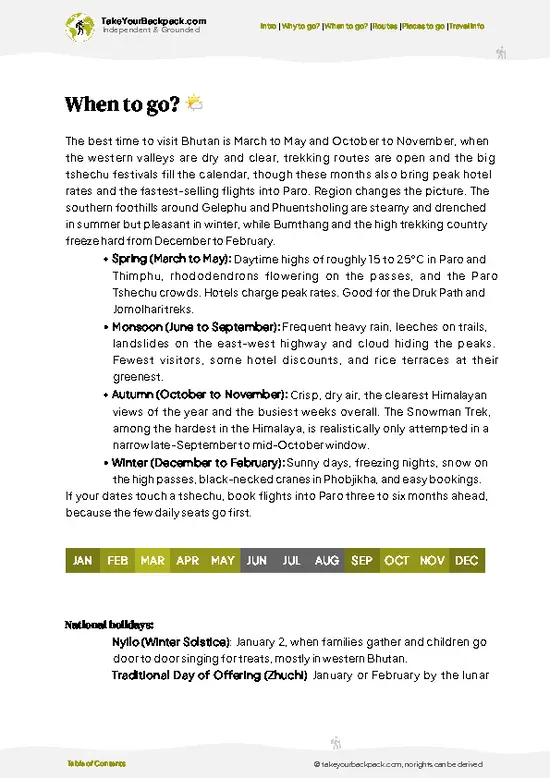
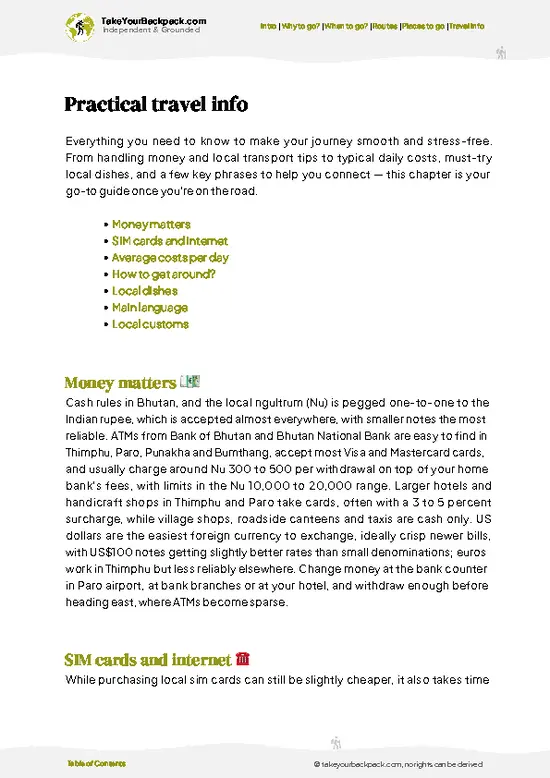
example page 0 from our offline Travel Guide for Bhutan
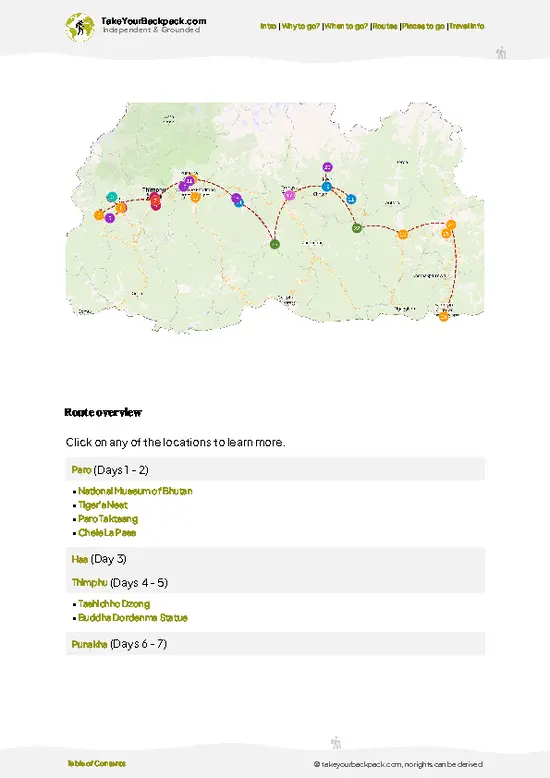
example page 1 from our offline Travel Guide for Bhutan
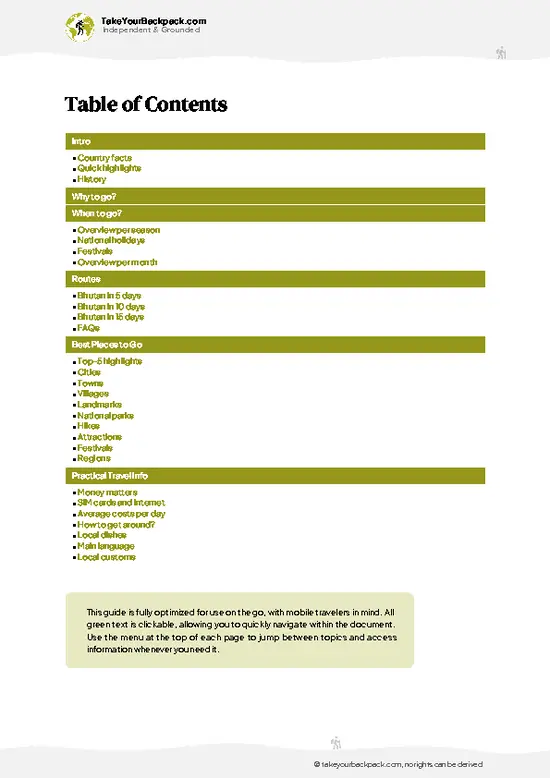
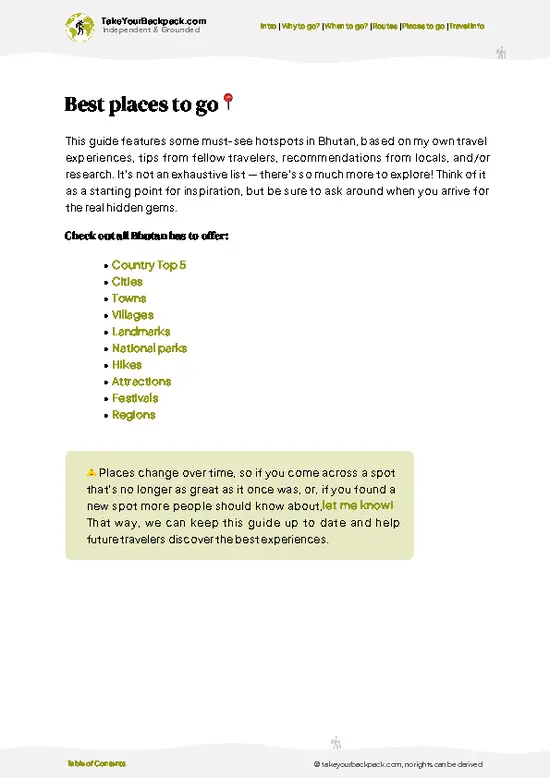
example page 2 from our offline Travel Guide for Bhutan
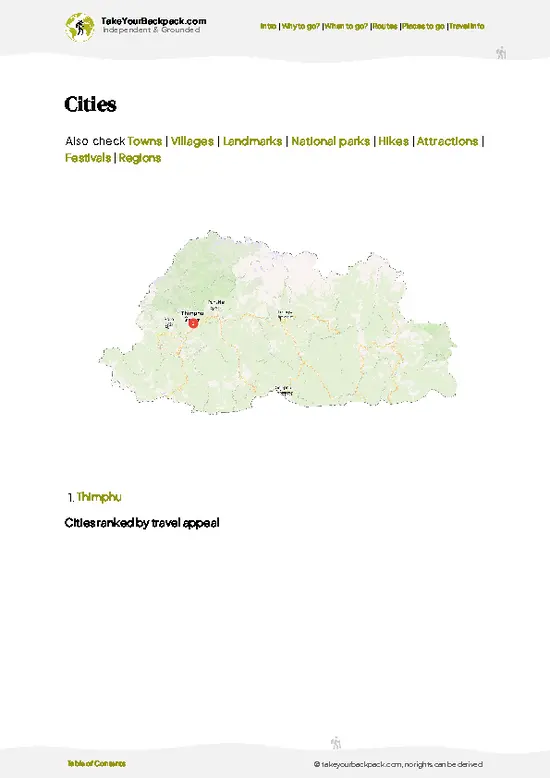
example page 3 from our offline Travel Guide for Bhutan
example page 4 from our offline Travel Guide for Bhutan
example page 5 from our offline Travel Guide for Bhutan
example page 6 from our offline Travel Guide for Bhutan
example page 7 from our offline Travel Guide for Bhutan
The digital guide (222 pages) contains:
54 highlights, ranked by travel appeal
Optimized 5, 10 & 15-day travel routes
Cities, national parks, landmarks, beaches
How to get around
Offline-friendly for travel without Wi-Fi
👉 Click to see all 30+ guide features

📅 Plan smarter in minutes, not weeks
Month by month travel advice
Festivals & national holidays
Budget expectations

🗺️ Go to the right places, skip the overrated ones
Honest pros & cons of destinations
Top hikes, parks & viewpoints
Lesser-known places most travelers miss
Clear “worth it vs skip it” guidance

🛏️ Travel smoothly without rookie mistakes
Best areas to stay
Transport systems explained simply
Common scams & safety advice
SIM cards, money & practical tips

🌍 Understand the country, not just visit it
Culture & traditions
52 Essential phrases & customs
Festivals worth planning around
Traveler-friendly historical context
Insights that make places more meaningful

📱 Built for real travel conditions
Fully downloadable PDF
Works completely offline
Optimized for phone use
Useful in remote areas & buses
Everything in one place
Save weeks of stressful planning
Get instant access to your full guide. 30‑day money-back guarantee.
+ Add another guide for just US$7.80

By proceeding you agree to our terms.
Sent to your inbox immediately after payment • 100% Secure Checkout
Best Backpacking Travel Advisor 2025 tourism awardBest Backpacking
Travel Advisor
2025
What others say about Take Your Backpack Guides:
⭐⭐⭐⭐⭐
Fantastic, amazing amount of information!
⭐⭐⭐⭐⭐
My goodness this is amazing, it's what I've been looking for hats off too you!
⭐⭐⭐⭐⭐
I think this is absolutely BRILLIANT
⭐⭐⭐⭐
Very complete and informative. It's still missing places, but I gotta to commend you
⭐⭐⭐⭐⭐
This is truly amazing, thank you, can't wait to explore it with my kids!
⭐⭐⭐⭐⭐
Awesome resource, thank you!
⭐⭐⭐⭐⭐
This is amazing! Can't wait to explore the ones I haven't seen
⭐⭐⭐⭐
I love this! Well done, great idea.
⭐⭐⭐⭐⭐
Thanks for taking the time to make this gem!
⭐⭐⭐⭐⭐
This might be the best website I've ever seen.
⭐⭐⭐⭐⭐
Congratulations, and thank you so much for your work; it's incredibly valuable.
⭐⭐⭐⭐
In all seriousness I think you did a great job pointing out the important spots
⭐⭐⭐⭐⭐
10/10 very good
⭐⭐⭐⭐⭐
As someone who's only just starting to visit regularly this is awesome, thank you.
⭐⭐⭐⭐
Thank you very much! I'm going to visit my dad, it's going to be very useful!
⭐⭐⭐⭐⭐
This is really cool! We'll be travelling for the first time and this definitely come in handy.
⭐⭐⭐⭐⭐
You are now our minister of culture, congratulations 👨‍💼
⭐⭐⭐⭐⭐
Just wanted to tell you that this is a pearl! Going to follow your recommendations.
⭐⭐⭐⭐⭐
This is so cool. I'll definitely be using the resource for my travels soon.
⭐⭐⭐⭐⭐
This is very impressive! Good work.
⭐⭐⭐⭐⭐
This is an amazing and informative site. Very well done!

🛏️ Where to stay?Best areas and accommodation options

In Ura Valley, the best spot for backpackers is the village center around Ura itself. This area pulses with a quiet energy—wood smoke curling from chimneys, the faint clatter of yak bells, and locals weaving through narrow stone paths. It’s where you’ll find the handful of guesthouses and homestays that cater to budget travelers and solo adventurers. Staying here means easy access to communal meals and shared spaces, perfect for swapping stories over butter tea.

Compared to the more remote hamlets scattered across the valley, the village center offers a safer, more social atmosphere without … read more 👉
In Ura Valley, the best spot for backpackers is the village center around Ura itself. This area pulses with a quiet energy—wood smoke curling from chimneys, the faint clatter of yak bells, and locals weaving through narrow stone paths. It’s where you’ll find the handful of guesthouses and homestays that cater to budget travelers and solo adventurers. Staying here means easy access to communal meals and shared spaces, perfect for swapping stories over butter tea.

Compared to the more remote hamlets scattered across the valley, the village center offers a safer, more social atmosphere without losing the raw, high-altitude charm. The air is crisp, and the light shifts dramatically as clouds roll over the surrounding ridges, making early mornings and late afternoons prime for soaking in the landscape. Hostels are rare, but the homestays fill that gap with warmth and local flavor, creating a natural hub for meeting fellow travelers while keeping your pack light and your wallet happy.

🚌 Getting aroundMoving around without the hassle

Ura Valley moves at its own rhythm—more like a slow, deliberate breath than a frantic pulse. The air carries the scent of pine and earth, thick with the quiet hum of village life. Here, time isn’t dictated by clocks but by the sun’s arc and the steady footsteps of locals and trekkers alike. You won’t find rigid schedules or crowded buses; instead, the flow is shaped by intuition and patience. This isn’t a place to rush. It’s a place to sync with the land and its people, where every journey is part of the experience, not just a means to an end.


  • Walking: The heart of Ura Valley travel. Trails connect villages with a mix of gentle slopes and steep climbs, perfect for soaking in the scent of rhododendrons and the distant murmur of streams. Walking is free, flexible, and the best way to absorb
read more 👉
Ura Valley moves at its own rhythm—more like a slow, deliberate breath than a frantic pulse. The air carries the scent of pine and earth, thick with the quiet hum of village life. Here, time isn’t dictated by clocks but by the sun’s arc and the steady footsteps of locals and trekkers alike. You won’t find rigid schedules or crowded buses; instead, the flow is shaped by intuition and patience. This isn’t a place to rush. It’s a place to sync with the land and its people, where every journey is part of the experience, not just a means to an end.


  • Walking: The heart of Ura Valley travel. Trails connect villages with a mix of gentle slopes and steep climbs, perfect for soaking in the scent of rhododendrons and the distant murmur of streams. Walking is free, flexible, and the best way to absorb the valley’s atmosphere at your own pace.


  • Local Jeep Services: These rugged, shared jeeps run between Ura and nearby hubs like Mongar or Trashigang. They don’t follow strict timetables—departures happen when the vehicle fills up, usually mid-morning and early afternoon. Expect a bumpy ride on narrow mountain roads for about $3–5, but it’s the fastest way to cover longer distances without breaking the bank.


  • Hired Motorbike: For the budget traveler who wants speed and freedom, renting a motorbike is a smart move. Rates hover around $15–20 per day. The roads can be rough, so it’s best if you’re comfortable with mountain riding. This option lets you chase the light and stop wherever the valley’s charm catches your eye.


  • Horseback Riding: Not a daily commute, but a practical choice for reaching remote villages or carrying gear on multi-day treks. Local guides offer rides for around $10–15 per day. The pace is slow, the connection to the landscape immediate—perfect if you want to feel the valley’s pulse beneath you.


  • Occasional Bus Services: Less frequent and less reliable, buses run between larger towns on fixed schedules, usually early morning departures. Tickets cost about $2–4. They’re slower and less comfortable than jeeps but can be a good option if you’re on a strict budget and flexible with timing.

👛 Costs (as of 4 September 2026)What things cost and how to budget

Backpacking in Ura Valley, Bhutan, feels like stepping into a quieter, slower world where every expense reflects the care and remoteness of the place. Costs here aren’t just numbers—they’re tied to the effort it takes to bring goods and services into this high-altitude valley.
  • Dorm Accommodation: Dorm-style lodging is rare in Ura Valley, but simple guesthouses offer shared rooms or basic single rooms. Expect to pay around $15 to $25 per night. These places are modest, often with thin walls and shared bathrooms, but they put you right in the heart of local life.
  • Meals: Food costs hover around $5 to $10 per meal. Most meals are hearty Bhutanese staples—rice, buckwheat, local vegetables, and sometimes yak cheese or meat. Ingredients are mostly local, but fresh produce can be limited, so meals
read more 👉
Backpacking in Ura Valley, Bhutan, feels like stepping into a quieter, slower world where every expense reflects the care and remoteness of the place. Costs here aren’t just numbers—they’re tied to the effort it takes to bring goods and services into this high-altitude valley.
  • Dorm Accommodation: Dorm-style lodging is rare in Ura Valley, but simple guesthouses offer shared rooms or basic single rooms. Expect to pay around $15 to $25 per night. These places are modest, often with thin walls and shared bathrooms, but they put you right in the heart of local life.
  • Meals: Food costs hover around $5 to $10 per meal. Most meals are hearty Bhutanese staples—rice, buckwheat, local vegetables, and sometimes yak cheese or meat. Ingredients are mostly local, but fresh produce can be limited, so meals are simple and filling rather than flashy.
  • Local Transport: Ura Valley is best explored on foot, but if you need transport, local taxis or shared jeeps cost about $5 to $10 for short trips. Roads are rough and winding, so travel is slow, and the price reflects the challenge of moving through mountainous terrain.
  • Basic Activities/Entry Fees: There are no major entry fees within Ura Valley itself, but trekking permits and national park fees apply if you’re venturing beyond. These can add $20 to $40 per day depending on the route. Guided treks are common and usually cost extra, but independent trekking is possible with proper permits.
  • Miscellaneous Expenses: Expect to spend $3 to $7 on essentials like bottled water, snacks, or phone credit. Internet access is limited and often slow, so plan accordingly. Souvenirs and local crafts are available but tend to be pricey due to transport costs.

Altogether, a realistic daily budget for backpacking in Ura Valley ranges from about $30 to $60. This covers basic lodging, meals, minimal transport, and permits. The price reflects the valley’s remote charm and the genuine effort behind every service, making each dollar feel like a step deeper into an authentic Bhutanese experience.


source: bhutan.travel
⚠️ Prices can change and everyone travels differently, so take this as a rough guide. Hope it helps you plan your adventure!

🚌 Day tripsShort trips worth adding

Ura Valley is a fantastic base for day trips, offering a blend of culture, nature, and adventure. The surrounding landscapes are breathtaking, and the journey to each destination is part of the experience.

Ura Village Trek
This gentle trek takes you through terraced fields and pine forests, leading to the charming Ura Village. The air is crisp, filled with the scent of wildflowers and the distant sound of a gurgling stream. It’s about a 2-hour hike, perfect for a leisurely morning. You’ll get a glimpse of traditional Bhutanese life, with locals tending to their fields and weaving colorful textiles. Budget around $5 for snacks and a drink. Best visited in spring when the flowers bloom, but avoid the monsoon season to sidestep muddy trails. A common mistake is underestimating the trek’s beauty; … read more 👉
Ura Valley is a fantastic base for day trips, offering a blend of culture, nature, and adventure. The surrounding landscapes are breathtaking, and the journey to each destination is part of the experience.

Ura Village Trek
This gentle trek takes you through terraced fields and pine forests, leading to the charming Ura Village. The air is crisp, filled with the scent of wildflowers and the distant sound of a gurgling stream. It’s about a 2-hour hike, perfect for a leisurely morning. You’ll get a glimpse of traditional Bhutanese life, with locals tending to their fields and weaving colorful textiles. Budget around $5 for snacks and a drink. Best visited in spring when the flowers bloom, but avoid the monsoon season to sidestep muddy trails. A common mistake is underestimating the trek’s beauty; take your time to soak it all in.


Jakar Dzong
A short drive of about 30 minutes brings you to Jakar Dzong, a fortress that stands as a testament to Bhutan’s rich history. The architecture is striking, with intricate woodwork and vibrant murals. Spend a few hours exploring the grounds and learning about its significance. Entry is free, but bring a small donation for the upkeep. Autumn is ideal for clear skies and stunning views. Many first-timers rush through; instead, linger in the courtyard to absorb the atmosphere.


Chumey Valley
Just an hour away, Chumey Valley is known for its stunning landscapes and traditional yurt-style homes. The valley is a patchwork of fields and forests, with the scent of fresh hay in the air. You can visit local artisans crafting the famous Bhutanese textiles. Plan for a half-day trip, and budget around $10 for lunch at a local eatery. Late spring or early fall offers the best weather. A common pitfall is not engaging with the locals; they often share stories that enrich your visit.
Want to know what more Bhutan offers?
The Bhutan Travel Guide describes 54 highlights, from cities to national parks, from beaches to hikes

Get the Travel Guide -

🛡️ SafetySafety Tips and Common Scams in Ura Valley

Ura Valley is generally safe, but a few practical tips can enhance your experience. Stay aware in crowded markets; pickpockets can lurk where the locals gather. If you’re solo, avoid wandering too far after dark; the streets can be dimly lit, and it’s best to stick to well-traveled paths.

While scams are rare, be cautious with overly friendly strangers offering unsolicited help. They might expect something in return. Carry yourself confidently, and don’t hesitate to politely decline. The atmosphere is welcoming, but a little street smarts goes a long way. Embrace the beauty of the valley, knowing you’re prepared for its quirks.

FAQFrequently asked questions about Ura Valley

Ura Valley is accessed by road from Bumthang, approximately 48 kilometers away, taking about 1.5 to 2 hours by car or jeep. The road is mountainous and can be rough, so a sturdy vehicle is recommended. Flights to Bumthang Airport from Paro or other Bhutanese airports are the usual starting point.
Yes, Ura Valley is worth the trip for its stunning natural beauty, traditional Bhutanese architecture, and rich cultural heritage. It offers a peaceful rural experience with scenic hiking trails and the annual Ura Yakchoe festival in January or February, which is a unique cultural event.
No, Ura Valley is not ideal for a day trip due to travel time and the desire to explore the area fully. Staying at least one night allows for better acclimatization and the chance to enjoy local sights and culture without rushing.
⚠️ Things can change over time, so always validate details locally before you go.

Other Bhutanese villages near Ura Valley

Explore more nearby:

  • Trongsa—central fortress, mountain pass, panoramic views| 39 km away
  • Lingzhi—yak herders, high-altitude outpost, stone fortress| 151 km away

💡 Not sure where to go next?
Create a personalized itinerary for Bhutan including Ura Valley and the places that fit your trip.

Generate my itinerary

👉 Discover all villages

Or checkout all Bhutan has to offer (think cities, towns, villages, national parks, hikes, beaches, festivals)
Country photo of Bhutan

We 💚 feedbackKey takeaways before you go

The Ura Valley feels like a secret world where time slows down. The air is crisp, filled with the scent of pine and wildflowers. Don’t miss the local festivals; they’re a joyful surprise that connects you to the culture. Just be ready for the altitude—it can hit hard. Embrace the challenge; the views are worth every breath.

✍️ Help improve this page!
The information on this page is based on in-depth research, insights shared by experienced travelers, and feedback from the local travel community in Bhutan. While every effort is made to keep the information accurate and current, conditions can change — so if you spot anything incorrect or outdated, please get in touch.


🙋‍♂️ Give feedback

👋 Meet the founderWho’s Behind Take Your Backpack?

Johan, backpacker and founder of TakeYourBackpackHi, I’m Johan (Netherlands 🇳🇱), the creator of TakeYourBackpack. Over the past decade, I’ve backpacked through 80+ countries across six continents, gaining extensive experience with independent travel, long-term trips, and overland routes.

This site is built on a combination of firsthand travel experience and carefully curated insights from other backpackers. Many guides are based on places I’ve personally visited, while others bring together tips, observations, and practical advice shared by trusted travelers I’ve met along the way.

The goal is to provide realistic, experience-driven guidance — not generic itineraries — so you can explore destinations with better context, clearer expectations, and more confidence.

Get full Bhutan guide •
Instant download • 54 highlights • Full Offline guide