×

Bolivia🇧🇴 | festivalsDiabladadevil masks, Andean mythology, ornate costumes | things to do and best time to go

Explore RiberaltaExplore Gran Poder

Backpacking in Diablada
👌 Worth visitingfestival ranked #4
By Johan Kruseman 🇳🇱 | Updated June 7, 2026

Ten years ago, Diablada felt raw: brass bands slightly off-key, dancers fixing masks with duct tape, kids weaving through the chaos while abuelas sold soup from dented pots. Today it’s sharper, louder, more commercial, but the core still punches through. Diablada is the devil-dance heart of Carnaval de Oruro, high on the Altiplano in western Bolivia, a few hours from La Paz. Picture relentless brass bands, pounding drums, and dancers in heavy devil costumes grinding through thin air for hours. The crowd is a mix of Bolivian families, half-frozen backpackers, and a few package-tour folks who clearly underestimated the altitude. It runs over several days, but the main parades crush your senses in the best way. It’s worth it if you like endurance-style culture: cold, noise, exhaustion, and then sudden, electric moments where the whole street moves as one.

Discover everything you want to know in the 📖 Bolivia Travel Guide.


Get your Bolivia guide
82 ranked highlights, routes & tips, works offline (350 pages)
Loading the map 🌍
CLICK TO FILTER
cities
towns
landmarks
national parks
hikes
beaches
attractions
festivals
regions
SHOW COUNTRY’S BESTSHOW ALL

✨ Why go?
Ranked #4 festival in Bolivia
Reasons people choose to celebrate the here

Backpackers flock to the Diablada festival in Bolivia for a jolt of social energy that’s hard to find elsewhere. This isn’t just a party; it’s a temporary community where you can dance, laugh, and connect with locals and fellow travelers alike. The vibrant costumes and pulsating rhythms pull you into a cultural tapestry that’s both immersive and exhilarating.

Planning your route around Diablada isn’t just about the spectacle; it’s about affordability. Compared to similar festivals worldwide, this one offers a rich experience without breaking the bank. You’ll find street food that’s delicious and cheap, allowing you to save your budget for the moments that truly matter—like sharing a drink with a new friend or joining in the dance.

Plus, it fits seamlessly into longer travel plans. After … read more 👉
Backpackers flock to the Diablada festival in Bolivia for a jolt of social energy that’s hard to find elsewhere. This isn’t just a party; it’s a temporary community where you can dance, laugh, and connect with locals and fellow travelers alike. The vibrant costumes and pulsating rhythms pull you into a cultural tapestry that’s both immersive and exhilarating.

Planning your route around Diablada isn’t just about the spectacle; it’s about affordability. Compared to similar festivals worldwide, this one offers a rich experience without breaking the bank. You’ll find street food that’s delicious and cheap, allowing you to save your budget for the moments that truly matter—like sharing a drink with a new friend or joining in the dance.

Plus, it fits seamlessly into longer travel plans. After the festival, you can explore the stunning landscapes of the Altiplano or the salt flats of Uyuni. The festival acts as a launchpad for deeper adventures, making every step of your journey feel purposeful and alive.
Want to include Diablada in your Bolivia route?
Create a personalized Bolivia itinerary that includes Diablada and the places that fit your trip — based on your travel style, budget, and available time. Get your route in seconds.

Generate my trip

💡 HighlightsDon't-miss highlights and experiences

  • The Diablada dance itself — The core spectacle: hundreds of dancers in tightly choreographed ranks acting out the epic clash of good and evil. The steps are precise, the formations huge, and the choreography mixes theatrical flair with ritual meaning, so watching a full troupe move together is mesmerising. (Personal favorite — it’s what I go back for every time.)
  • Handmade masks and costumes — These aren’t store-bought party masks: layered papier-mâché, metalwork, sequins, horns and tiny mirrors tell stories through color and detail. Seeing the craftsmanship up close — and sometimes watching artisans tweak a mask between dances — gives you a real sense of continuity with local traditions.
  • Brass bands and traditional music — The soundtrack is a pounding, syncopated mix of brass, drums and
read more 👉
  • The Diablada dance itself — The core spectacle: hundreds of dancers in tightly choreographed ranks acting out the epic clash of good and evil. The steps are precise, the formations huge, and the choreography mixes theatrical flair with ritual meaning, so watching a full troupe move together is mesmerising. (Personal favorite — it’s what I go back for every time.)
  • Handmade masks and costumes — These aren’t store-bought party masks: layered papier-mâché, metalwork, sequins, horns and tiny mirrors tell stories through color and detail. Seeing the craftsmanship up close — and sometimes watching artisans tweak a mask between dances — gives you a real sense of continuity with local traditions.
  • Brass bands and traditional music — The soundtrack is a pounding, syncopated mix of brass, drums and Andean wind instruments that drives the whole event. It’s loud, rhythmic, and contagious: even if you don’t know the steps, the music makes you sway, clap and feel the communal pulse of the festival.
  • Processions, comparsas and competitive spirit — Troupes (comparsa) march long routes, often competing for choreography, costume and endurance. There’s a playful rivalry and real pride on show — grueling for the dancers, ecstatic for spectators — which turns the streets into one long, living performance.
  • Rituals and spiritual syncretism — The Diablada blends Catholic iconography with Aymara and Quechua beliefs: offerings, blessings, and homages to saints sit alongside pre-Columbian symbolism. That mix gives the festival layers — it’s not just a parade, it’s a communal ceremony with deep cultural meaning.
Spotted a mistake or missing something? Contact us.

Things to do near Diablada

Ratings based on Tripadvisor reviews. When you book through this link, you support our work at no extra cost to you.

🌤️ When to go?When is the celebration of Diablada?


  • Topic: Weather – The Diablada festival happens in early February, smack in the middle of Bolivia’s rainy season. Expect frequent afternoon showers that can turn streets into mud pits. Pack waterproof gear and sturdy boots to keep moving without losing momentum.

  • Topic: Temperature – La Paz, the festival’s hub, sits high at 3,650 meters. Daytime temps hover around 15-20°C (59-68°F), but nights plunge to 2-5°C (36-41°F). Layer up to handle the swings without burning energy shivering or overheating.

  • Topic: Daylight Hours – February offers roughly 12 hours of daylight, giving you a solid window to catch parades and street performances. Plan your days to hit the main events early, before crowds swell and energy dips.

  • Topic: Crowds – This is peak festival season, so expect packed streets
read more 👉

  • Topic: Weather – The Diablada festival happens in early February, smack in the middle of Bolivia’s rainy season. Expect frequent afternoon showers that can turn streets into mud pits. Pack waterproof gear and sturdy boots to keep moving without losing momentum.

  • Topic: Temperature – La Paz, the festival’s hub, sits high at 3,650 meters. Daytime temps hover around 15-20°C (59-68°F), but nights plunge to 2-5°C (36-41°F). Layer up to handle the swings without burning energy shivering or overheating.

  • Topic: Daylight Hours – February offers roughly 12 hours of daylight, giving you a solid window to catch parades and street performances. Plan your days to hit the main events early, before crowds swell and energy dips.

  • Topic: Crowds – This is peak festival season, so expect packed streets and limited accommodation. Book early or prepare for a hustle finding a spot. Crowds mean energy but also higher prices and slower movement.

  • Topic: Seasonal Activities – Beyond Diablada, February’s lush landscapes invite quick hikes and cultural side trips. The rain can make trails slippery, so factor in extra time and caution to avoid wasting energy on mishaps.

  • Topic: Price Fluctuations – Festival time spikes prices on lodging, food, and transport. Lock in deals early or brace for premium costs. Stretch your budget by eating street food and using public transit.


Pro-tip: Arrive a day early to acclimate and secure your base camp—this buffer saves you from scrambling in the festival frenzy and keeps your energy focused on soaking in the spectacle.


source: climatestotravel.comJANJanuary: not recommended for travelingFEBFebruary: excellent for travelingMARMarch: not recommended for travelingAPRApril: not recommended for travelingMAYMay: not recommended for travelingJUNJune: not recommended for travelingJULJuly: not recommended for travelingAUGAugust: not recommended for travelingSEPSeptember: not recommended for travelingOCTOctober: not recommended for travelingNOVNovember: not recommended for travelingDECDecember: not recommended for traveling

✈️ The backpacker research shortcutBolivia Travel Guide

An offline-friendly backpacking guide with optimized travel routes, ranked highlights, transport advice, and the best areas to stay.
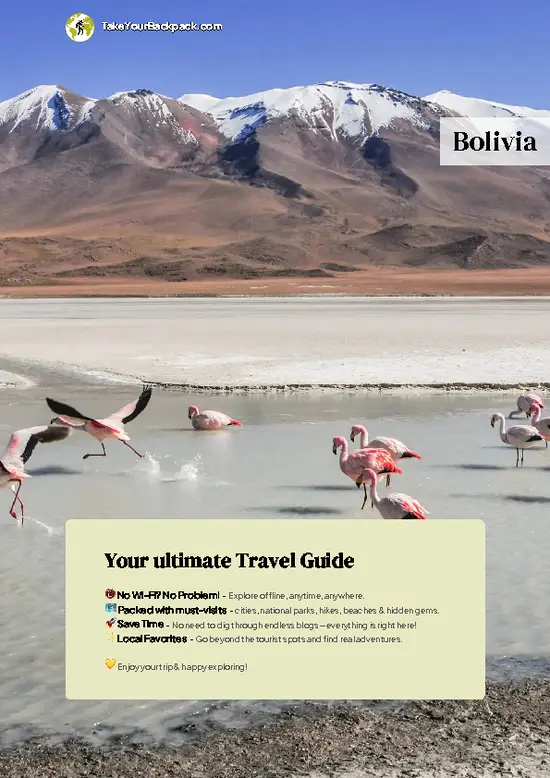
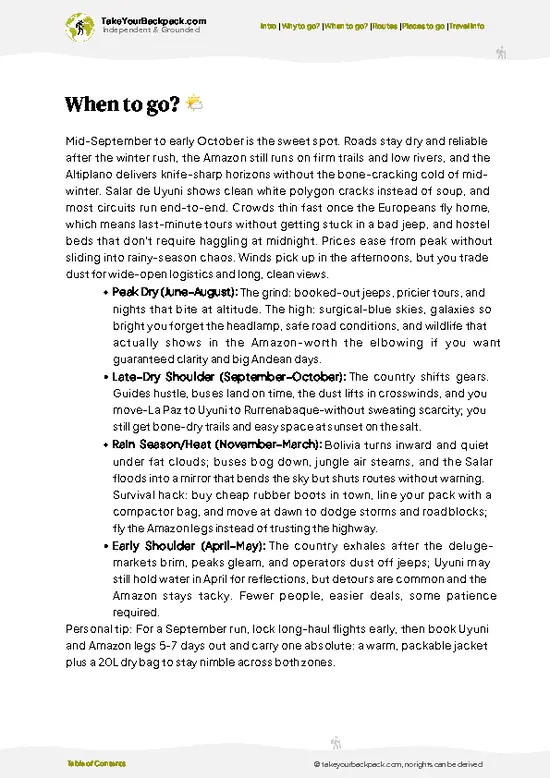
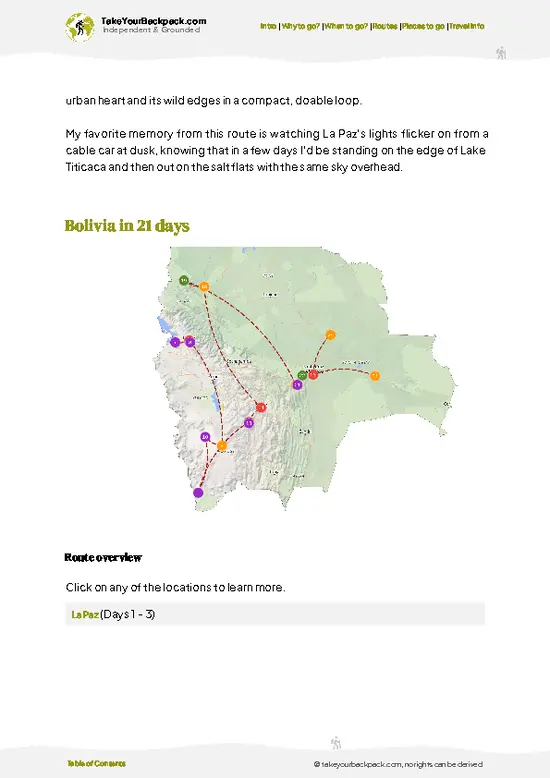
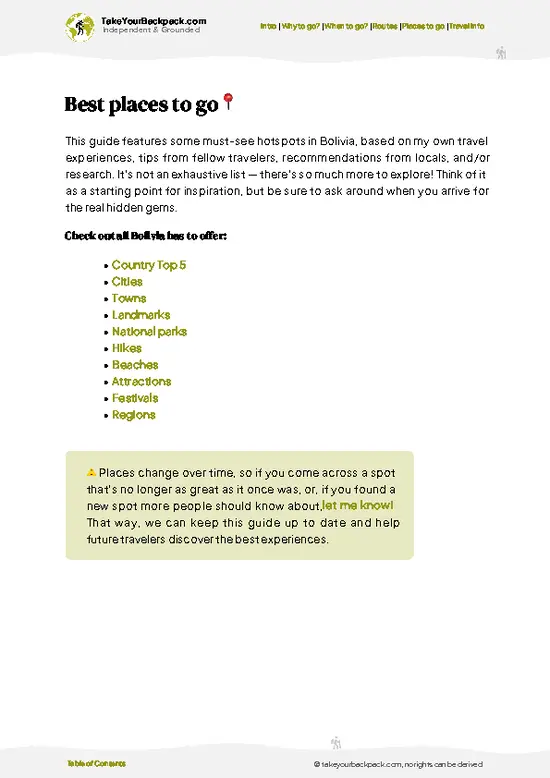
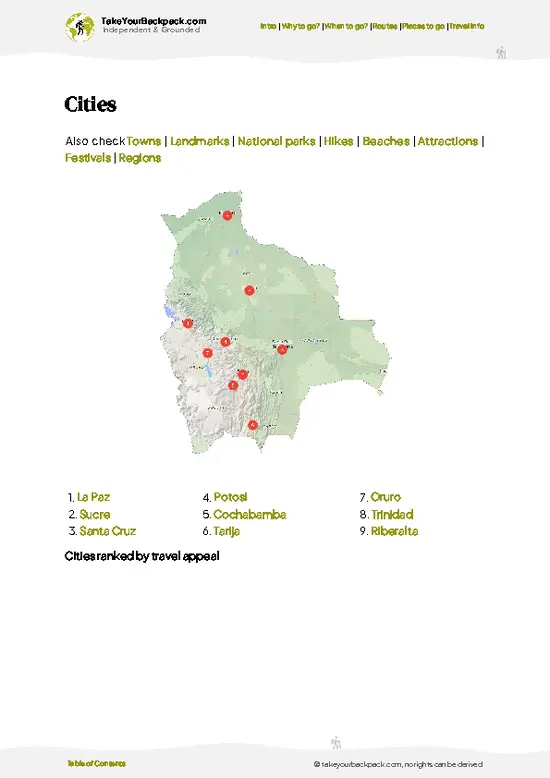
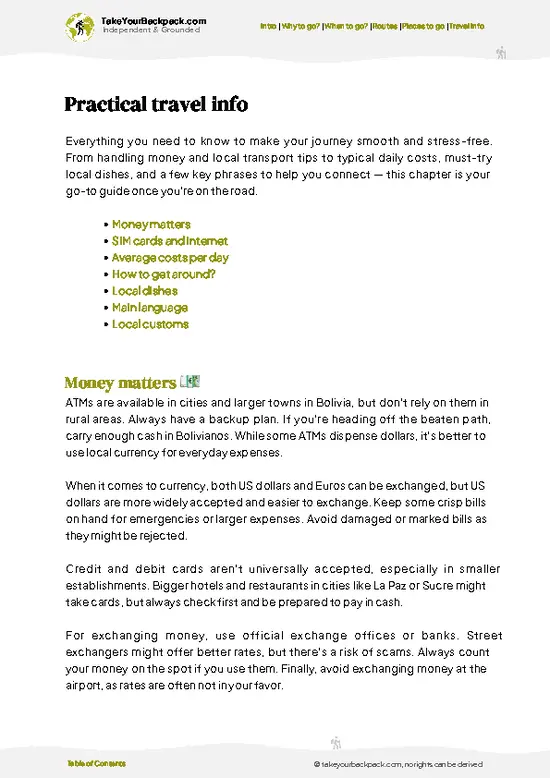
example page 0 from our offline Travel Guide for Bolivia
example page 1 from our offline Travel Guide for Bolivia
example page 2 from our offline Travel Guide for Bolivia
example page 3 from our offline Travel Guide for Bolivia
example page 4 from our offline Travel Guide for Bolivia
example page 5 from our offline Travel Guide for Bolivia
example page 6 from our offline Travel Guide for Bolivia
example page 7 from our offline Travel Guide for Bolivia
The digital guide (350 pages) contains:
82 highlights, ranked by travel appeal
Optimized 7, 14 & 21-day travel routes
Cities, national parks, landmarks, beaches
How to get around
Offline-friendly for travel without Wi-Fi
👉 Click to see all 30+ guide features

📅 Plan smarter in minutes, not weeks
Month by month travel advice
Festivals & national holidays
Budget expectations

🗺️ Go to the right places, skip the overrated ones
Honest pros & cons of destinations
Top hikes, parks & viewpoints
Lesser-known places most travelers miss
Clear “worth it vs skip it” guidance

🛏️ Travel smoothly without rookie mistakes
Best areas to stay
Transport systems explained simply
Common scams & safety advice
SIM cards, money & practical tips

🌍 Understand the country, not just visit it
Culture & traditions
52 Essential phrases & customs
Festivals worth planning around
Traveler-friendly historical context
Insights that make places more meaningful

📱 Built for real travel conditions
Fully downloadable PDF
Works completely offline
Optimized for phone use
Useful in remote areas & buses
Everything in one place
Save weeks of stressful planning
Get instant access to your full guide. 30‑day money-back guarantee.


By proceeding you agree to our terms.
Sent to your inbox immediately after payment • 100% Secure Checkout
Best Backpacking Travel Advisor 2025 tourism awardBest Backpacking
Travel Advisor
2025
What others say about Take Your Backpack Guides:
⭐⭐⭐⭐⭐
Fantastic, amazing amount of information!
⭐⭐⭐⭐⭐
My goodness this is amazing, it's what I've been looking for hats off too you!
⭐⭐⭐⭐⭐
I think this is absolutely BRILLIANT
⭐⭐⭐⭐
Very complete and informative. It's still missing places, but I gotta to commend you
⭐⭐⭐⭐⭐
This is truly amazing, thank you, can't wait to explore it with my kids!
⭐⭐⭐⭐⭐
Awesome resource, thank you!
⭐⭐⭐⭐⭐
This is amazing! Can't wait to explore the ones I haven't seen
⭐⭐⭐⭐
I love this! Well done, great idea.
⭐⭐⭐⭐⭐
Thanks for taking the time to make this gem!
⭐⭐⭐⭐⭐
This might be the best website I've ever seen.
⭐⭐⭐⭐⭐
Congratulations, and thank you so much for your work; it's incredibly valuable.
⭐⭐⭐⭐
In all seriousness I think you did a great job pointing out the important spots
⭐⭐⭐⭐⭐
10/10 very good
⭐⭐⭐⭐⭐
As someone who's only just starting to visit regularly this is awesome, thank you.
⭐⭐⭐⭐
Thank you very much! I'm going to visit my dad, it's going to be very useful!
⭐⭐⭐⭐⭐
This is really cool! We'll be travelling for the first time and this definitely come in handy.
⭐⭐⭐⭐⭐
You are now our minister of culture, congratulations 👨‍💼
⭐⭐⭐⭐⭐
Just wanted to tell you that this is a pearl! Going to follow your recommendations.
⭐⭐⭐⭐⭐
This is so cool. I'll definitely be using the resource for my travels soon.
⭐⭐⭐⭐⭐
This is very impressive! Good work.
⭐⭐⭐⭐⭐
This is an amazing and informative site. Very well done!

🛏️ Where to stay?Where staying makes the most sense

For the Diablada festival in Bolivia, you want to be in the heart of the action. Aim for accommodations in Oruro’s city center. This area buzzes with energy, especially during the festival. You’ll find a mix of hostels and budget-friendly guesthouses, all within walking distance of the parade routes.

Stay close to Plaza 10 de Febrero. It’s the epicenter of festivities, and you’ll soak up the vibrant atmosphere. The streets are alive with music, food stalls, and locals in traditional costumes. Plus, being in this area means you can easily join impromptu celebrations without the hassle of transportation. … read more 👉
For the Diablada festival in Bolivia, you want to be in the heart of the action. Aim for accommodations in Oruro’s city center. This area buzzes with energy, especially during the festival. You’ll find a mix of hostels and budget-friendly guesthouses, all within walking distance of the parade routes.

Stay close to Plaza 10 de Febrero. It’s the epicenter of festivities, and you’ll soak up the vibrant atmosphere. The streets are alive with music, food stalls, and locals in traditional costumes. Plus, being in this area means you can easily join impromptu celebrations without the hassle of transportation.

Another solid option is the San José neighborhood. It’s a bit quieter but still close enough to the action. You’ll find a friendly vibe here, perfect for solo travelers looking to connect with others.

Avoid the outskirts; they can feel isolated and less secure, especially at night. Stick to well-lit areas and keep your belongings close. This way, you’ll save your energy and budget for the real experiences—the parades, the dances, and the unforgettable moments of Diablada.

👛 Costs (as of 27 February 2026)Travel costs and budget guide for Diablada

The Diablada festival in Bolivia is a whirlwind of color, culture, and energy, but navigating the costs can feel like a maze. Here’s how to keep your budget in check while diving into this vibrant celebration.
  • Festival Tickets: Expect to pay around $10 to $30 for entry. Prices can vary based on seating and access to special areas. Grab your tickets early to avoid last-minute price hikes.
  • Accommodation: Options range from budget hostels at about $10 to $20 per night to mid-range hotels costing $40 to $80. Book ahead, especially during the festival, as places fill up fast and prices can spike.
  • Local Transport: Public transport is your friend here. Buses and shared taxis will set you back around $1 to $5 for short trips. If you’re feeling adventurous, consider walking to soak in the atmosphere,
read more 👉
The Diablada festival in Bolivia is a whirlwind of color, culture, and energy, but navigating the costs can feel like a maze. Here’s how to keep your budget in check while diving into this vibrant celebration.
  • Festival Tickets: Expect to pay around $10 to $30 for entry. Prices can vary based on seating and access to special areas. Grab your tickets early to avoid last-minute price hikes.
  • Accommodation: Options range from budget hostels at about $10 to $20 per night to mid-range hotels costing $40 to $80. Book ahead, especially during the festival, as places fill up fast and prices can spike.
  • Local Transport: Public transport is your friend here. Buses and shared taxis will set you back around $1 to $5 for short trips. If you’re feeling adventurous, consider walking to soak in the atmosphere, but keep an eye on your surroundings.
  • Food & Drinks: Street food is a must-try and usually costs between $2 to $5 per meal. Restaurants will charge around $10 to $20 for a sit-down experience. Don’t forget to budget for drinks; local beers are about $2, while cocktails can go up to $5.
  • Miscellaneous Expenses: Factor in around $20 to $50 for souvenirs, tips, and unexpected costs. It’s easy to get caught up in the excitement, so keep some cash handy for those spontaneous moments.

Stay sharp and plan ahead. This way, you’ll have the energy and funds to fully immerse yourself in the festival’s magic.
⚠️ Prices can change and everyone travels differently, so take this as a rough guide. Hope it helps you plan your adventure!

🍲 FoodLocal Flavors for Backpackers

At the Diablada festival in Bolivia, food and drink pulse with local flavor and vibrant energy. You’ll find stalls brimming with salteñas, those flaky pastries stuffed with savory meats and spices. They’re a must-try—warm, juicy, and perfect for fueling your dance moves. Don’t skip the anticuchos, skewered beef hearts marinated in a spicy sauce, grilled to perfection. They’re a street food staple that packs a punch.

As for drinks, grab a cup of chicha, a fermented corn beverage that’s both refreshing and a bit tangy. It’s a festival classic, often served in communal cups, so be ready to share and bond with fellow revelers. If you’re feeling adventurous, try the pisco sour for a kick of citrusy goodness.

Be mindful of the lines—they can get long, especially for the most popular stalls. Cash … read more 👉
At the Diablada festival in Bolivia, food and drink pulse with local flavor and vibrant energy. You’ll find stalls brimming with salteñas, those flaky pastries stuffed with savory meats and spices. They’re a must-try—warm, juicy, and perfect for fueling your dance moves. Don’t skip the anticuchos, skewered beef hearts marinated in a spicy sauce, grilled to perfection. They’re a street food staple that packs a punch.

As for drinks, grab a cup of chicha, a fermented corn beverage that’s both refreshing and a bit tangy. It’s a festival classic, often served in communal cups, so be ready to share and bond with fellow revelers. If you’re feeling adventurous, try the pisco sour for a kick of citrusy goodness.

Be mindful of the lines—they can get long, especially for the most popular stalls. Cash is king here; many vendors won’t accept cards, so stock up before diving into the food frenzy. Serving sizes can be generous, so pace yourself. This festival isn’t just about what you eat; it’s about the connections you make over shared plates and laughter. Enjoy every bite!

Other Bolivian festivals near Diablada

Explore more nearby:

  • Virgen de Urkupiña—pilgrimage, Cochabamba, religious offerings| 2 km away
  • Oruro Carnival—UNESCO heritage, massive processions, symbolic choreography| 65 km away
  • Gran Poder—La Paz streets, folkloric parades, indigenous dance troupes| 231 km away

💡 Not sure where to go next?
Create a personalized itinerary for Bolivia including Diablada and the places that fit your trip.

Generate my itinerary

👉 Discover all festivals

Or checkout all Bolivia has to offer (think cities, towns, villages, national parks, hikes, beaches, festivals)
Country photo of Bolivia

We 💚 feedbackIs it worth it?

The Diablada festival in Bolivia is a riot of color and energy, where the dance of the devil masks pulls you into a world of ancient tradition. But brace yourself: the altitude can hit hard, leaving you breathless before the festivities even start. Hydrate like it’s your job and take it slow. Embrace the challenge; it’s all part of the adventure. The moments that matter will be worth every step.

✈️ When did I visit Bolivia?
Bolivia I visited during my half year trip through South and Central America back in 2003

✍️ Help improve this page!
The information on this page is based on my own backpacking experience in Bolivia, supplemented with up-to-date research and feedback from other travelers. Travel details can change, so if you notice anything outdated or incomplete, feel free to let me know.


🙋‍♂️ Give feedback

👋 Meet the founderWho’s Behind Take Your Backpack?

Johan, backpacker and founder of TakeYourBackpackHi, I’m Johan (Netherlands 🇳🇱), the creator of TakeYourBackpack. Over the past decade, I’ve backpacked through 80+ countries across six continents, gaining extensive experience with independent travel, long-term trips, and overland routes.

This site is built on a combination of firsthand travel experience and carefully curated insights from other backpackers. Many guides are based on places I’ve personally visited, while others bring together tips, observations, and practical advice shared by trusted travelers I’ve met along the way.

The goal is to provide realistic, experience-driven guidance — not generic itineraries — so you can explore destinations with better context, clearer expectations, and more confidence.

Get full Bolivia guide •
Instant download • 82 highlights • Full Offline guide