
×

Bolivia🇧🇴 | festivalsVirgen de Urkupiñapilgrimage, Cochabamba, religious offerings | things to do and best time to go

Explore TinkuExplore Choro Trail

Backpacking in Virgen de Urkupiña
👍 Recommendedfestival ranked #3
By Johan Kruseman 🇳🇱 | Updated May 31, 2026

Ten years ago Virgen de Urkupiña felt scrappier: more local devotion, fewer grandstands, cheaper beds, and you could still squeeze into a family’s sidewalk party without stepping over selfie sticks. Today it’s louder, bigger, more commercial, and absolutely more exhausting—but also more intense and visually wild. The festival explodes out of Quillacollo, a city just west of Cochabamba in central Bolivia. Backpackers land here for brass bands, Andean folk groups, pounding drums, and endless morenada and caporales dance troupes grinding through the streets in sequins and heavy boots. The crowd is a mash-up of Bolivian pilgrims, domestic partiers, and a thin layer of wide-eyed foreigners. Expect three main days of processions, drinking, and all-night music, with side rituals in the nearby quarry where people literally smash rocks for symbolic wealth. It’s worth it if you like raw devotion and chaos; skip it if you hate noise, crowds, or drunk marching bands at 4 a.m.

Discover everything you want to know in the 📖 Bolivia Travel Guide.


Get your Bolivia guide
82 ranked highlights, routes & tips, works offline (350 pages)
Loading the map 🌍
CLICK TO FILTER
cities
towns
landmarks
national parks
hikes
beaches
attractions
festivals
regions
SHOW COUNTRY’S BESTSHOW ALL

✨ Why go?
Ranked #3 festival in Bolivia
What sets this place apart

Backpackers flock to the Virgen de Urkupiña festival in Bolivia for a shot of social energy and a taste of temporary community. This isn’t just another event; it’s a vibrant celebration that pulls you into the heart of Bolivian culture. Picture this: colorful parades, traditional music, and locals inviting you to join in. It’s an immersive experience that goes beyond mere sightseeing.

Planning your route around this festival isn’t just smart; it’s essential. The affordability of the festival compared to similar events makes it a no-brainer. You get to enjoy authentic food, music, and dance without breaking the bank. Plus, it fits seamlessly into longer travel plans. You can explore the stunning landscapes of Bolivia before diving into the festival frenzy, making every moment count.

By aligning … read more 👉
Backpackers flock to the Virgen de Urkupiña festival in Bolivia for a shot of social energy and a taste of temporary community. This isn’t just another event; it’s a vibrant celebration that pulls you into the heart of Bolivian culture. Picture this: colorful parades, traditional music, and locals inviting you to join in. It’s an immersive experience that goes beyond mere sightseeing.

Planning your route around this festival isn’t just smart; it’s essential. The affordability of the festival compared to similar events makes it a no-brainer. You get to enjoy authentic food, music, and dance without breaking the bank. Plus, it fits seamlessly into longer travel plans. You can explore the stunning landscapes of Bolivia before diving into the festival frenzy, making every moment count.

By aligning your travels with Virgen de Urkupiña, you’re not just checking off a destination; you’re diving into a rich tapestry of cultural immersion. This festival is a chance to recharge your spirit and connect with fellow travelers and locals alike. Don’t miss out on this electrifying experience!
Want to include Virgen de Urkupiña in your Bolivia route?
Create a personalized Bolivia itinerary that includes Virgen de Urkupiña and the places that fit your trip — based on your travel style, budget, and available time. Get your route in seconds.

Generate my trip

💡 HighlightsThe experiences that define the visit

  1. Pilgrimage to the Santuario — Thousands of people walk into Quillacollo from surrounding towns and countryside, many carrying candles, crosses or fulfilling promesas (vows). The mix of fatigue, faith and colorful pilgrim garb gives you an up-close look at devotion that’s honest and unfiltered — this is where the festival feels most profound.
  2. Caporales and folkloric entradas — Thunderous boots, jangling bells, embroidered costumes and tight choreography: Caporales troupes storm the streets in competitive parades alongside other traditional dance groups. It’s high-energy, photogenic and impossible to ignore — personal favorite because the rhythm pulls you right into the crowd.
  3. Candlelit vigils and masses at the Shrine — Evening services and overnight vigils around the Virgen’s chapel turn
read more 👉
  1. Pilgrimage to the Santuario — Thousands of people walk into Quillacollo from surrounding towns and countryside, many carrying candles, crosses or fulfilling promesas (vows). The mix of fatigue, faith and colorful pilgrim garb gives you an up-close look at devotion that’s honest and unfiltered — this is where the festival feels most profound.
  2. Caporales and folkloric entradas — Thunderous boots, jangling bells, embroidered costumes and tight choreography: Caporales troupes storm the streets in competitive parades alongside other traditional dance groups. It’s high-energy, photogenic and impossible to ignore — personal favorite because the rhythm pulls you right into the crowd.
  3. Candlelit vigils and masses at the Shrine — Evening services and overnight vigils around the Virgen’s chapel turn the shrine into a soft-lit hive of prayer, incense and hymns. Even if you’re not religious, the intimacy of the lights, whispered petitions and communal blessings is powerful and strangely calming.
  4. Street food, crafts and the feria — Long rows of stalls sell everything from salteñas and anticuchos to woven textiles and tiny milagros (ex-voto charms). It’s the best place to sample regional flavors, pick up a practical souvenir and watch locals haggle without the tourist gloss.
  5. Brass bands, stages and night-time atmosphere — After dark the festival flips into full-on festa: brass bandas, local rock and Andean groups on makeshift stages, and fireworks punctuating the sky. It’s loud, messy and joyful — the secular side that keeps the party going until very late.
Spotted a mistake or missing something? Contact us.

🌤️ When to go?When is the celebration of Virgen de Urkupiña?


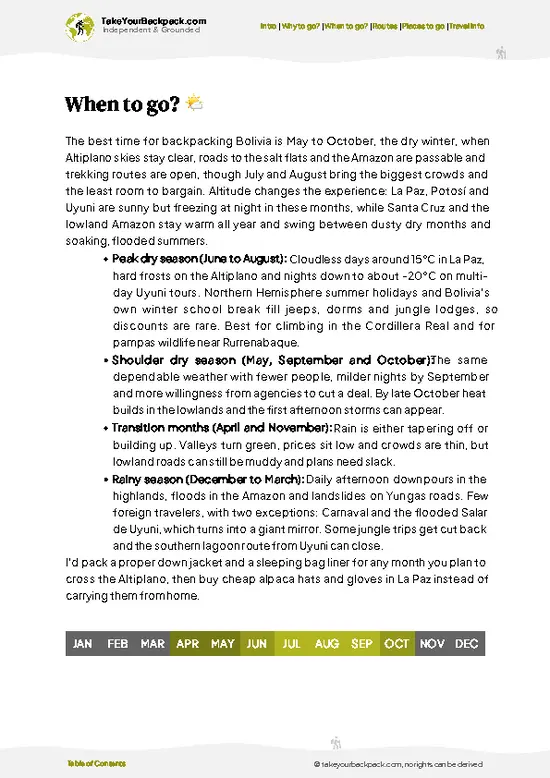
  • Topic: Weather – The festival happens in mid-August, right in Bolivia’s dry season. Expect crisp, cool mornings around 5°C (41°F) and daytime highs near 20°C (68°F). Rain is rare, so your gear stays dry and your boots don’t turn to mud magnets.

  • Topic: Temperature – Nights can dip sharply, sometimes below 0°C (32°F), so pack layers. Days warm up nicely but don’t count on sweating it out. This temperature swing keeps the energy high without the exhaustion of heat.

  • Topic: Daylight Hours – August offers about 11 to 12 hours of daylight, enough to dive into the festival’s nonstop parades and rituals without feeling rushed. Early sunsets mean you’ll catch the evening ceremonies under dramatic twilight.

  • Topic: Crowds – This is peak festival time, so expect throngs of locals and tourists.
read more 👉

  • Topic: Weather – The festival happens in mid-August, right in Bolivia’s dry season. Expect crisp, cool mornings around 5°C (41°F) and daytime highs near 20°C (68°F). Rain is rare, so your gear stays dry and your boots don’t turn to mud magnets.

  • Topic: Temperature – Nights can dip sharply, sometimes below 0°C (32°F), so pack layers. Days warm up nicely but don’t count on sweating it out. This temperature swing keeps the energy high without the exhaustion of heat.

  • Topic: Daylight Hours – August offers about 11 to 12 hours of daylight, enough to dive into the festival’s nonstop parades and rituals without feeling rushed. Early sunsets mean you’ll catch the evening ceremonies under dramatic twilight.

  • Topic: Crowds – This is peak festival time, so expect throngs of locals and tourists. The energy is electric but plan for crowded streets and limited accommodation. Book early or prepare for a lively camping or hostel scene.

  • Topic: Seasonal Activities – August is prime for cultural immersion. Beyond the festival, local markets brim with crafts and traditional foods, and the dry weather makes side hikes and city explorations comfortable.

  • Topic: Price Fluctuations – Prices spike during the festival, especially for lodging and transport. Lock in your bookings well in advance to avoid last-minute premiums that can drain your budget.


Pro-tip: Arrive a day early to acclimate and snag better deals before the festival frenzy kicks in—your energy and wallet will thank you.


source: climatestotravel.comJANJanuary: not recommended for travelingFEBFebruary: not recommended for travelingMARMarch: not recommended for travelingAPRApril: not recommended for travelingMAYMay: not recommended for travelingJUNJune: not recommended for travelingJULJuly: not recommended for travelingAUGAugust: excellent for travelingSEPSeptember: not recommended for travelingOCTOctober: not recommended for travelingNOVNovember: not recommended for travelingDECDecember: not recommended for traveling

✈️ The backpacker research shortcutBolivia Travel Guide

An offline-friendly backpacking guide with optimized travel routes, ranked highlights, transport advice, and the best areas to stay.
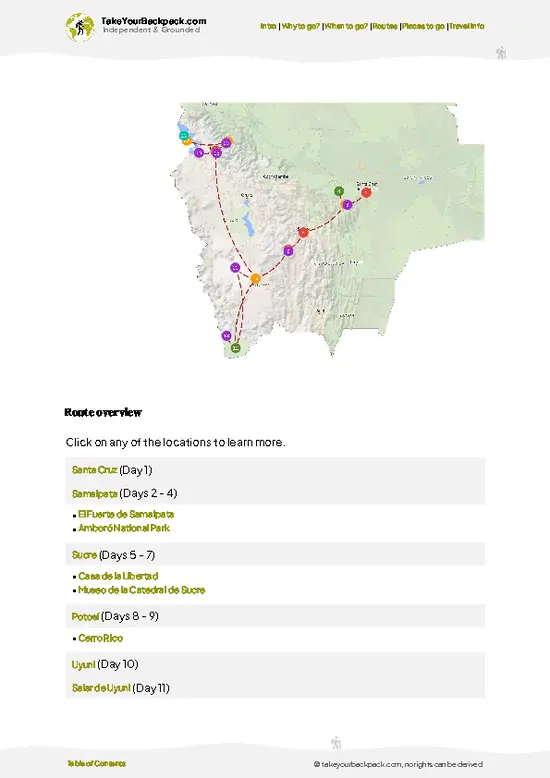
example page 0 from our offline Travel Guide for Bolivia
example page 1 from our offline Travel Guide for Bolivia
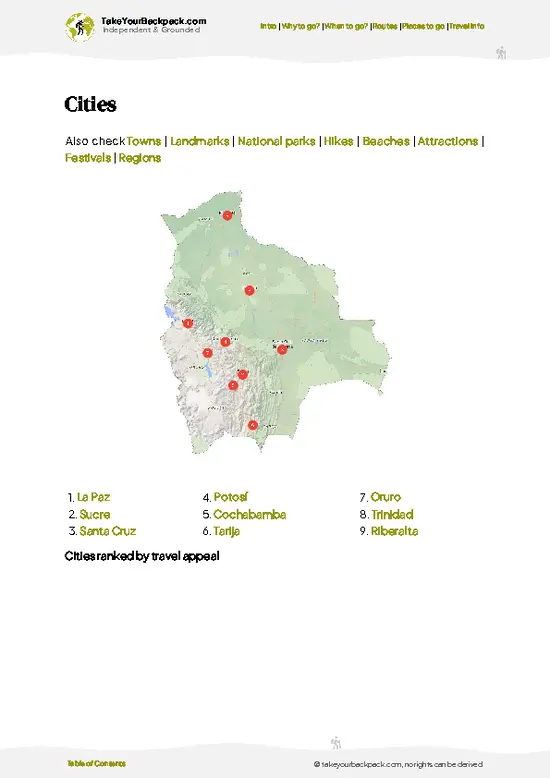
example page 2 from our offline Travel Guide for Bolivia
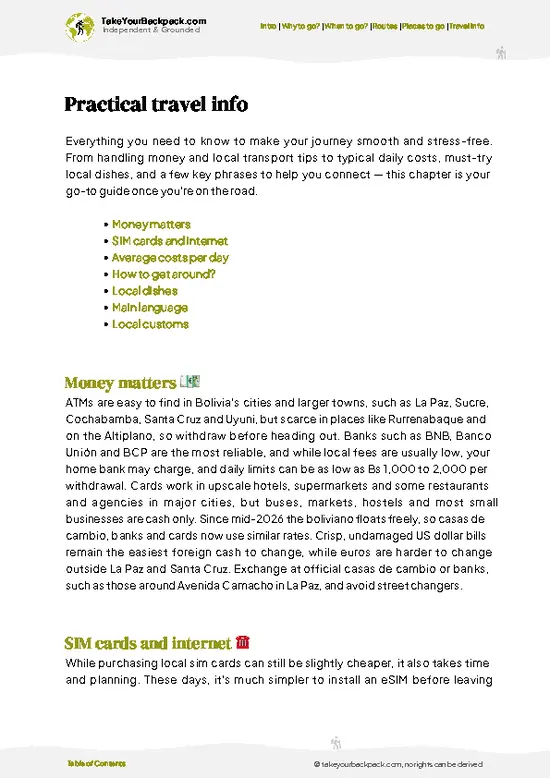
example page 3 from our offline Travel Guide for Bolivia
example page 4 from our offline Travel Guide for Bolivia
example page 5 from our offline Travel Guide for Bolivia
example page 6 from our offline Travel Guide for Bolivia
example page 7 from our offline Travel Guide for Bolivia
The digital guide (350 pages) contains:
82 highlights, ranked by travel appeal
Optimized 7, 14 & 21-day travel routes
Cities, national parks, landmarks, beaches
How to get around
Offline-friendly for travel without Wi-Fi
👉 Click to see all 30+ guide features

📅 Plan smarter in minutes, not weeks
Month by month travel advice
Festivals & national holidays
Budget expectations

🗺️ Go to the right places, skip the overrated ones
Honest pros & cons of destinations
Top hikes, parks & viewpoints
Lesser-known places most travelers miss
Clear “worth it vs skip it” guidance

🛏️ Travel smoothly without rookie mistakes
Best areas to stay
Transport systems explained simply
Common scams & safety advice
SIM cards, money & practical tips

🌍 Understand the country, not just visit it
Culture & traditions
52 Essential phrases & customs
Festivals worth planning around
Traveler-friendly historical context
Insights that make places more meaningful

📱 Built for real travel conditions
Fully downloadable PDF
Works completely offline
Optimized for phone use
Useful in remote areas & buses
Everything in one place
Save weeks of stressful planning
Get instant access to your full guide. 30‑day money-back guarantee.


By proceeding you agree to our terms.
Sent to your inbox immediately after payment • 100% Secure Checkout
Best Backpacking Travel Advisor 2025 tourism awardBest Backpacking
Travel Advisor
2025
What others say about Take Your Backpack Guides:
⭐⭐⭐⭐⭐
Fantastic, amazing amount of information!
⭐⭐⭐⭐⭐
My goodness this is amazing, it's what I've been looking for hats off too you!
⭐⭐⭐⭐⭐
I think this is absolutely BRILLIANT
⭐⭐⭐⭐
Very complete and informative. It's still missing places, but I gotta to commend you
⭐⭐⭐⭐⭐
This is truly amazing, thank you, can't wait to explore it with my kids!
⭐⭐⭐⭐⭐
Awesome resource, thank you!
⭐⭐⭐⭐⭐
This is amazing! Can't wait to explore the ones I haven't seen
⭐⭐⭐⭐
I love this! Well done, great idea.
⭐⭐⭐⭐⭐
Thanks for taking the time to make this gem!
⭐⭐⭐⭐⭐
This might be the best website I've ever seen.
⭐⭐⭐⭐⭐
Congratulations, and thank you so much for your work; it's incredibly valuable.
⭐⭐⭐⭐
In all seriousness I think you did a great job pointing out the important spots
⭐⭐⭐⭐⭐
10/10 very good
⭐⭐⭐⭐⭐
As someone who's only just starting to visit regularly this is awesome, thank you.
⭐⭐⭐⭐
Thank you very much! I'm going to visit my dad, it's going to be very useful!
⭐⭐⭐⭐⭐
This is really cool! We'll be travelling for the first time and this definitely come in handy.
⭐⭐⭐⭐⭐
You are now our minister of culture, congratulations 👨‍💼
⭐⭐⭐⭐⭐
Just wanted to tell you that this is a pearl! Going to follow your recommendations.
⭐⭐⭐⭐⭐
This is so cool. I'll definitely be using the resource for my travels soon.
⭐⭐⭐⭐⭐
This is very impressive! Good work.
⭐⭐⭐⭐⭐
This is an amazing and informative site. Very well done!

🛏️ Where to stay?Best areas to stay in Bolivia

When the Virgen de Urkupiña festival kicks off in Quillacollo, you want to be in the thick of it. The energy is electric, and the streets pulse with life. Stay close to the main square for easy access to the festivities. This area buzzes with fellow backpackers, making it a social hub. You’ll find street food vendors serving up mouthwatering salteñas and fresh juices, fueling your adventures.

Another solid option is to set up camp near the local market. It’s a vibrant spot where you can mingle with locals and other travelers. The atmosphere is lively, and you’ll get a taste of authentic Bolivian … read more 👉
When the Virgen de Urkupiña festival kicks off in Quillacollo, you want to be in the thick of it. The energy is electric, and the streets pulse with life. Stay close to the main square for easy access to the festivities. This area buzzes with fellow backpackers, making it a social hub. You’ll find street food vendors serving up mouthwatering salteñas and fresh juices, fueling your adventures.

Another solid option is to set up camp near the local market. It’s a vibrant spot where you can mingle with locals and other travelers. The atmosphere is lively, and you’ll get a taste of authentic Bolivian culture. Plus, you’ll have access to affordable meals and unique souvenirs.

If you prefer a quieter vibe, look for accommodations in the surrounding neighborhoods. They offer a more laid-back experience while still being a short walk from the action. Just keep an eye on your belongings; pickpockets can be a nuisance in crowded areas.

By choosing these strategic locations, you’ll save energy and cash for the real highlights of the festival. Enjoy the parades, the music, and the camaraderie without the stress of logistics.

👛 Costs (as of 17 February 2026)What things cost and how to budget

The Virgen de Urkupiña festival in Bolivia is a vibrant celebration, but navigating the costs can be tricky. Here’s how to budget effectively so you can focus on the experience rather than the expenses.
  • Festival Tickets: Entry to the festival is generally free, but if you want to catch the best events or reserved seating, expect to pay around $10 to $30. Some special performances might have higher fees, so keep an eye out for those.
  • Accommodation: Options vary widely. Dormitory beds in hostels start at about $10 per night, while private rooms can range from $25 to $50. If you’re looking for something more upscale, hotels can go from $60 to $120. Book early to avoid last-minute price hikes.
  • Local Transport: Getting around is straightforward. Buses and shared taxis are your best bet, costing between
read more 👉
The Virgen de Urkupiña festival in Bolivia is a vibrant celebration, but navigating the costs can be tricky. Here’s how to budget effectively so you can focus on the experience rather than the expenses.
  • Festival Tickets: Entry to the festival is generally free, but if you want to catch the best events or reserved seating, expect to pay around $10 to $30. Some special performances might have higher fees, so keep an eye out for those.
  • Accommodation: Options vary widely. Dormitory beds in hostels start at about $10 per night, while private rooms can range from $25 to $50. If you’re looking for something more upscale, hotels can go from $60 to $120. Book early to avoid last-minute price hikes.
  • Local Transport: Getting around is straightforward. Buses and shared taxis are your best bet, costing between $1 and $5 depending on distance. If you’re planning to travel to nearby attractions, budget around $10 to $20 for a day of local transport.
  • Food & Drinks: Street food is a fantastic way to fuel up, with meals costing as little as $2 to $5. Sit-down restaurants will set you back $10 to $20 for a decent meal. Don’t forget to budget for drinks; local beers are around $2, while cocktails can be $5 to $10.
  • Miscellaneous Expenses: Always have a buffer for souvenirs, tips, or unexpected costs. Set aside $20 to $50 for this category. It’s also wise to have some cash on hand, as not all vendors accept cards.

By keeping these costs in mind, you’ll preserve your energy and budget for the moments that truly matter at the festival.
⚠️ Prices can change and everyone travels differently, so take this as a rough guide. Hope it helps you plan your adventure!

🍲 FoodLocal Flavors for Backpackers

At the Virgen de Urkupiña festival in Bolivia, food and drink are as vibrant as the celebrations themselves. You’ll find stalls brimming with salteñas, those flaky pastries bursting with savory fillings, perfect for a quick bite. Don’t miss out on anticuchos, skewers of marinated beef heart grilled to perfection, served with a spicy sauce that’ll wake up your taste buds.

For something sweet, dive into buñuelos, light and crispy dough balls drizzled with syrup. Pair these delights with a refreshing chicha, a fermented corn drink that’s a staple at festivals. It’s a taste of tradition, and you’ll feel the spirit of the crowd with every sip.

Be prepared for some quirks: sharing is common, so don’t hesitate to offer a taste of your food to new friends. Lines can get long, especially for the … read more 👉
At the Virgen de Urkupiña festival in Bolivia, food and drink are as vibrant as the celebrations themselves. You’ll find stalls brimming with salteñas, those flaky pastries bursting with savory fillings, perfect for a quick bite. Don’t miss out on anticuchos, skewers of marinated beef heart grilled to perfection, served with a spicy sauce that’ll wake up your taste buds.

For something sweet, dive into buñuelos, light and crispy dough balls drizzled with syrup. Pair these delights with a refreshing chicha, a fermented corn drink that’s a staple at festivals. It’s a taste of tradition, and you’ll feel the spirit of the crowd with every sip.

Be prepared for some quirks: sharing is common, so don’t hesitate to offer a taste of your food to new friends. Lines can get long, especially for the most popular stalls, so patience is key. Bring cash; many vendors don’t accept cards, and you’ll want to snag those treats without delay. Serving sizes can vary, so keep an eye out for generous portions that might just fuel your next dance move. Embrace the chaos, savor the flavors, and let the festival sweep you away!

Other Bolivian festivals near Virgen de Urkupiña

Explore more nearby:

  • Diablada—devil masks, Andean mythology, ornate costumes| 2 km away
  • Oruro Carnival—UNESCO heritage, massive processions, symbolic choreography| 67 km away
  • Gran Poder—La Paz streets, folkloric parades, indigenous dance troupes| 230 km away

💡 Not sure where to go next?
Create a personalized itinerary for Bolivia including Virgen de Urkupiña and the places that fit your trip.

Generate my itinerary

👉 Discover all festivals

Or checkout all Bolivia has to offer (think cities, towns, villages, national parks, hikes, beaches, festivals)
Country photo of Bolivia

We 💚 feedbackParting advice and final tips

The Virgen de Urkupiña festival is a wild celebration of culture and faith, where the streets pulse with music and vibrant costumes. You’ll feel the energy in your bones. But brace yourself: the crowds can be overwhelming, and accommodation prices skyrocket. Plan ahead to secure a spot and keep your budget intact. Embrace the chaos; it’s part of the experience. Just remember, the festival’s heart beats loudest when you’re prepared.

✈️ When did I visit Bolivia?
Bolivia I visited during my half year trip through South and Central America back in 2003

✍️ Help improve this page!
The information on this page is based on my own backpacking experience in Bolivia, supplemented with up-to-date research and feedback from other travelers. Travel details can change, so if you notice anything outdated or incomplete, feel free to let me know.


🙋‍♂️ Give feedback

👋 Meet the founderWho’s Behind Take Your Backpack?

Johan, backpacker and founder of TakeYourBackpackHi, I’m Johan (Netherlands 🇳🇱), the creator of TakeYourBackpack. Over the past decade, I’ve backpacked through 80+ countries across six continents, gaining extensive experience with independent travel, long-term trips, and overland routes.

This site is built on a combination of firsthand travel experience and carefully curated insights from other backpackers. Many guides are based on places I’ve personally visited, while others bring together tips, observations, and practical advice shared by trusted travelers I’ve met along the way.

The goal is to provide realistic, experience-driven guidance — not generic itineraries — so you can explore destinations with better context, clearer expectations, and more confidence.

Get full Bolivia guide •
Instant download • 82 highlights • Full Offline guide