v2.webp)
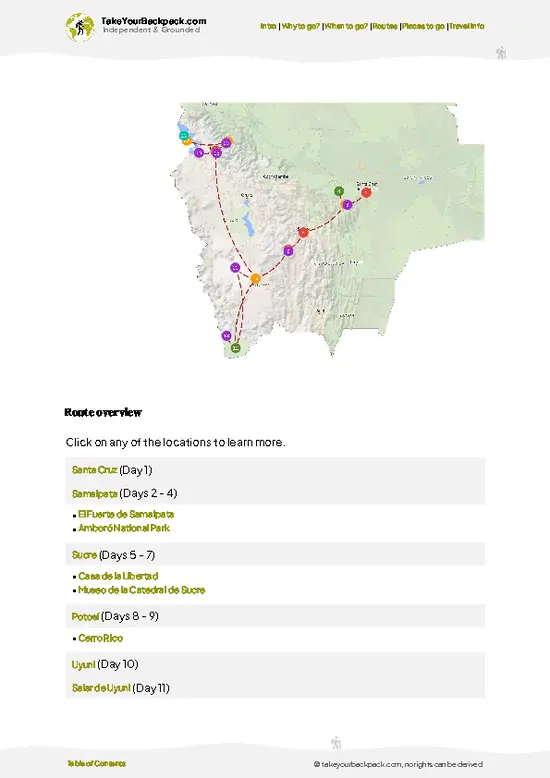
- Nevado Sajama: Bolivia’s highest mountain, a near-perfect cone of ice and rock rising to 6,542 meters. Even if you never climb it, the view from the plain is the park’s defining image.
- Queñua forest: Twisted, papery-barked trees growing at over 4,000 meters, among the highest woodlands anywhere. Walking among them with the volcano behind is surreal.
- Manasaya hot springs: Natural thermal pools a short walk from the village. Soaking here with a snowy peak in view is the ideal end to a hiking day.
- Sajama geysers: A field of steaming vents and bubbling mud pots at high altitude. Go early, when the steam is thickest and the ground is crisp with frost.
- Tomarapi: A small community with a lodge and a simple eco-tourism setup on the park’s edge. The surrounding landscape is wide open, good for spotting
- Nevado Sajama: Bolivia’s highest mountain, a near-perfect cone of ice and rock rising to 6,542 meters. Even if you never climb it, the view from the plain is the park’s defining image.
- Queñua forest: Twisted, papery-barked trees growing at over 4,000 meters, among the highest woodlands anywhere. Walking among them with the volcano behind is surreal.
- Manasaya hot springs: Natural thermal pools a short walk from the village. Soaking here with a snowy peak in view is the ideal end to a hiking day.
- Sajama geysers: A field of steaming vents and bubbling mud pots at high altitude. Go early, when the steam is thickest and the ground is crisp with frost.
- Tomarapi: A small community with a lodge and a simple eco-tourism setup on the park’s edge. The surrounding landscape is wide open, good for spotting vicuñas.
- Payachata twin volcanoes: Parinacota and Pomerape rise across the border and make a dramatic skyline from several viewpoints in the park.
- Sajama village church: A small colonial-era adobe church in the village, with a plain interior and a doorway that frames the volcano.
- Vicuña and flamingo spotting: Vicuñas graze on the open plain, while flamingos and other birds feed on shallow lagoons nearby. Bring binoculars.
Spotted a mistake or missing something? Contact us.

 Best Backpacking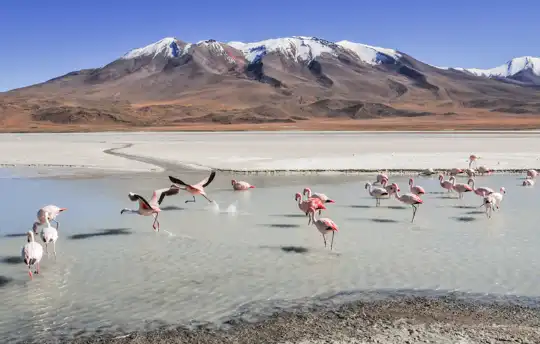
.jpg) Hi, I’m Johan (Netherlands 🇳🇱), the creator of TakeYourBackpack. Over the past 3 decades, I’ve backpacked through 90+ countries across six continents, gaining extensive experience with independent travel, long-term trips, and overland routes.
Hi, I’m Johan (Netherlands 🇳🇱), the creator of TakeYourBackpack. Over the past 3 decades, I’ve backpacked through 90+ countries across six continents, gaining extensive experience with independent travel, long-term trips, and overland routes.