v2.webp)
- Stari Grad (Old Town / Bihac Fortress) — Ruined medieval walls and towers above the Una; the views down into the river canyon are worth the climb, and the stones tell the city’s layered frontier history better than any plaque.
- Fethija Mosque — A striking Ottoman-era building that started life as a Gothic church; the mix of architectural styles and the quiet courtyard give a direct feel for Bihać’s multi-faith past.
- Museum of Una-Sana Canton (Muzej Unsko-Sanskog Kantona) — Compact, well-curated displays of archaeology, ethnography and local wartime history; good for getting the region’s story in a couple of hours without travel-bus crowds.
- Una riverfront promenade and bridges — The riverside is the city’s living room: cafes, fishermen, kids jumping into the water in summer and easy riverside
- Stari Grad (Old Town / Bihac Fortress) — Ruined medieval walls and towers above the Una; the views down into the river canyon are worth the climb, and the stones tell the city’s layered frontier history better than any plaque.
- Fethija Mosque — A striking Ottoman-era building that started life as a Gothic church; the mix of architectural styles and the quiet courtyard give a direct feel for Bihać’s multi-faith past.
- Museum of Una-Sana Canton (Muzej Unsko-Sanskog Kantona) — Compact, well-curated displays of archaeology, ethnography and local wartime history; good for getting the region’s story in a couple of hours without travel-bus crowds.
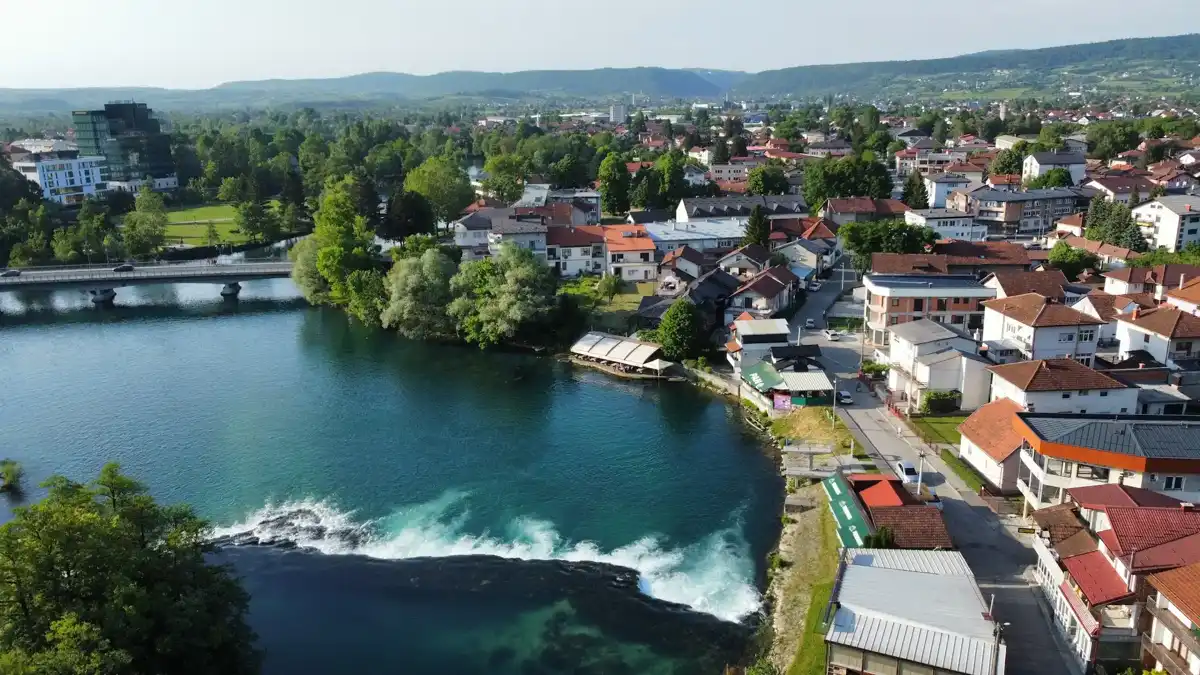
- Una riverfront promenade and bridges — The riverside is the city’s living room: cafes, fishermen, kids jumping into the water in summer and easy riverside walks that show how the Una shapes daily life here.
- Trg Krajine (City Square) and the local market — Central square energy, small bakeries and a weekday market where you can sample local cheese, smoked fish and talk to farmers — excellent people-watching and cheap eating.
- Catholic church in the old town (local parish church) — A focal point of town life and local ceremonies; even if you’re not religious, the iconography and choir-era music on Sundays give a sense of community continuity.
- Gradska galerija Bihać (City Art Gallery) — Small but lively gallery highlighting Bosnian and local Krajina artists; rotating shows are a quick way to connect with contemporary cultural voices from the city.
- Historic Jewish cemetery and heritage traces — Modest, respectfully preserved sites that point to the town’s once-diverse communities; a quiet place to reflect on the region’s multicultural layers.
- War memorials and remembrance sites — Several accessible memorials and cemeteries around town commemorate the 1990s conflict; they’re essential for understanding recent history and local memory.
- Ribarska / riverside neighborhoods and fish eateries — Narrow lanes, small family restaurants and riverside tables where locals eat fresh-caught fish; a sensory, everyday side of Bihać that feels more authentic than any guidebook photo.
Spotted a mistake or missing something? Contact us.

Krupa on Vrbas

Enjoying the River Vrbas

Unveiling Banja Luka’s urban soul: Walk & Enjoy

Banja Luka Rafting

Vrbas River Rafting Adventure with Breakfast

Rafting Trip on the Vrbas river

Private Transfer from Banja luka to Mostar Airport (OMO)

Private Wine Tasting and Tradition Tour in Banja Luka

Banja Luka Street Art and Craft Beer Trail



 Best Backpacking
.jpg) Hi, I’m Johan (Netherlands 🇳🇱), the creator of TakeYourBackpack. Over the past decade, I’ve backpacked through 80+ countries across six continents, gaining extensive experience with independent travel, long-term trips, and overland routes.
Hi, I’m Johan (Netherlands 🇳🇱), the creator of TakeYourBackpack. Over the past decade, I’ve backpacked through 80+ countries across six continents, gaining extensive experience with independent travel, long-term trips, and overland routes.