×

Botswana🇧🇼 | regionsKalahari Desertendless sand plains, fossil riverbeds, resilient wildlife, remote salt pans | things to do and best time to go

Explore Gaborone Game ReserveExplore Ghanzi

Backpacking in Kalahari Desert
🏆 Top pickregion ranked #1
By Johan Kruseman 🇳🇱 | Updated June 7, 2026

Here’s what nobody tells you: the Kalahari isn’t a true desert. It’s a living, breathing savanna, and in the rainy season, it can look more like a wild prairie than a sandscape. The Kalahari sprawls across central and southwestern Botswana, swallowing up towns like Ghanzi and stretching toward the Central Kalahari Game Reserve—one of the largest protected areas on the planet. For backpackers, the Kalahari is a test of patience and priorities. You get raw, untamed landscapes, San Bushman culture, and wildlife that feels earned, not staged. But you’ll pay for it in time and logistics: buses are infrequent, distances are punishing, and hitchhiking is a rite of passage, not a hack. Costs are lower than the Okavango Delta, but you trade the Instagram crowds for real solitude and the occasional flat tire. Compared to Maun or Chobe, the Kalahari is less polished, more unpredictable, and—if you’re after authenticity—absolutely worth the dust in your boots.

Discover everything you want to know in the 📖 Botswana Travel Guide.


Get your Botswana guide
58 ranked highlights, routes & tips, works offline (257 pages)
Loading the map 🌍
CLICK TO FILTER
cities
towns
villages
landmarks
national parks
hikes
attractions
festivals
regions
SHOW COUNTRY’S BESTSHOW ALL

✨ Why go?
Ranked #1 region in Botswana
Why visitors keep coming back

The Kalahari Desert in Botswana is a backpacker’s playground, offering a unique blend of landscapes and experiences that make it a must-visit. You can explore vast sand dunes, lush savannas, and even seasonal pans without the hassle of constant relocation. This means you can soak in the scenery and culture at a leisurely pace, embracing the art of slow travel.

Transport options are flexible. You can hop on a self-drive safari or join a local tour, giving you the freedom to choose your own adventure. Want to chase the sunset over the Kalahari’s red dunes? Go for it. Prefer to mingle with the San people and learn about their ancient traditions? You can do that too.

Mixing nature and culture is effortless here. Spend your mornings tracking wildlife and your afternoons sharing stories around … read more 👉
The Kalahari Desert in Botswana is a backpacker’s playground, offering a unique blend of landscapes and experiences that make it a must-visit. You can explore vast sand dunes, lush savannas, and even seasonal pans without the hassle of constant relocation. This means you can soak in the scenery and culture at a leisurely pace, embracing the art of slow travel.

Transport options are flexible. You can hop on a self-drive safari or join a local tour, giving you the freedom to choose your own adventure. Want to chase the sunset over the Kalahari’s red dunes? Go for it. Prefer to mingle with the San people and learn about their ancient traditions? You can do that too.

Mixing nature and culture is effortless here. Spend your mornings tracking wildlife and your afternoons sharing stories around a campfire. Each moment is a chance to connect, not just with the land, but with the people who call it home. This is where you’ll find the high-value experiences that make your trip truly memorable.
Want to include Kalahari Desert in your Botswana route?
Create a personalized Botswana itinerary that includes Kalahari Desert and the places that fit your trip — based on your travel style, budget, and available time. Get your route in seconds.

Generate my trip

💡 HighlightsThe experiences that define the visit

  • Central Kalahari Game Reserve (CKGR) — The huge, sand-swept heart of Botswana’s Kalahari: endless red dunes, wide open horizons and wildlife adapted to harsh conditions (gemsbok, brown hyenas, and the famously large, black-maned Kalahari lions). It’s remote, raw and gives you a real sense of desert scale you won’t get from a safari lodge in the wetter parks.
  • Deception Valley (Central Kalahari) — A long, flat, salt-bounded valley inside CKGR where game concentrates when water shows up. The light at dawn and dusk here is cinematic; evenings bring bright stars and the odd roar of a distant lion. Great for photographers and anyone who likes dramatic, empty landscapes.
  • Kgalagadi Transfrontier Park — Botswana side — Classic Kalahari red-sand country with sweeping dune ridges and predator action.
read more 👉
  • Central Kalahari Game Reserve (CKGR) — The huge, sand-swept heart of Botswana’s Kalahari: endless red dunes, wide open horizons and wildlife adapted to harsh conditions (gemsbok, brown hyenas, and the famously large, black-maned Kalahari lions). It’s remote, raw and gives you a real sense of desert scale you won’t get from a safari lodge in the wetter parks.
  • Deception Valley (Central Kalahari) — A long, flat, salt-bounded valley inside CKGR where game concentrates when water shows up. The light at dawn and dusk here is cinematic; evenings bring bright stars and the odd roar of a distant lion. Great for photographers and anyone who likes dramatic, empty landscapes.
  • Kgalagadi Transfrontier Park — Botswana side — Classic Kalahari red-sand country with sweeping dune ridges and predator action. Raptors and sociable carnivores (including the big-manned Kalahari lions) are highlights, but the real draw is that cinematic contrast: black pan tracks on orange dunes and endless skies.
  • Mabuasehube Pans and Campsites (Mabuasehube) — Hidden gem. Far less visited than the main parks, this patchwork of pans, seasonal waterholes and thornveld gives you solitude and unexpectedly tame wildlife. Camping here feels properly expeditionary — not polished, but utterly Kalahari.
  • Khutse Game Reserve — Hidden gem. Accessible from Gaborone but still feels off the beaten path: wide saline pans, sparse camelthorn trees and good walking/camping options. It’s a compact Kalahari sampler without the long drives and is brilliant for clear-sky stargazing and quiet wildlife encounters.
  • Ghanzi & San tracking experiences — The Ghanzi area is where you can learn traditional San tracking, local foraging and storytelling from people who’ve read Kalahari animal sign for generations. It’s a cultural, hands-on taste of desert survival skills you simply won’t replicate elsewhere.
  • Tsodilo Hills — Ancient rock-art outposts rising from the Kalahari sands: thousands of paintings on sandstone cliffs that chart thousands of years of human life in the region. The walk-up views, quiet sacredness and intimate art panels are a different side of the Kalahari — cultural history in a stark landscape.
  • Gcwihaba (Drotsky’s) Caves — Hidden gem. A surprising subterranean world near the Kalahari’s northern edge: dramatic stalactites, underground chambers and colonies of bats. Guided visits give you a cool, almost archaeic contrast to the blazing dunes outside.
  • Kubu Island (on the pans) — A small granite island studded with weathered baobabs sitting in a white salt plain. Sunsets and moonlit silhouettes here are surreal; the place has a sculptural, other-worldly feel that’s uniquely Kalahari — excellent for low-season photography and quiet reflection.
  • Lekhubu Island (Sua Pan) — Hidden gem. A lonely, boulder-strewn granite rise in the middle of the pan with fossil remains, prehistoric shoreline terraces and epic emptiness. Most visitors speed past the pans; if you stop here you get a real sense of geological time and a flattened horizon that’s pure Kalahari.
Spotted a mistake or missing something? Contact us.

⌛️ 5 daysWhat you can realistically do in a week

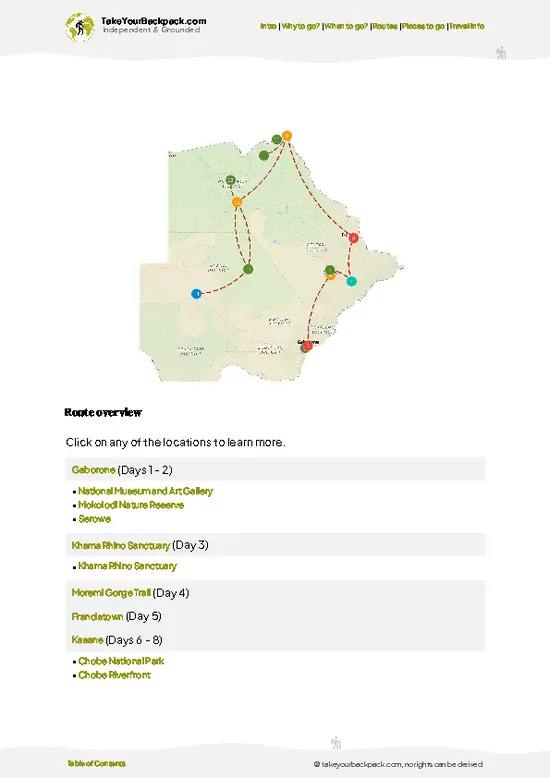
Day 1: Maun
The gateway to the Kalahari, Maun is where your adventure begins. You’ll want to spend a night here to acclimate and stock up on supplies. The transport system is straightforward: you can catch a bush taxi or rent a 4x4. This is crucial because the Kalahari’s vastness demands a reliable vehicle. Use this day to get your bearings, chat with locals, and maybe even book a guided tour for the next leg.

Day 2: Moremi Game Reserve
Head out early to Moremi, a mere two-hour drive from Maun. This reserve is a prime spot for wildlife, and the roads are well-maintained, making it accessible. You’ll sacrifice a bit of comfort for the thrill of spotting elephants and lions. The key here is timing; early mornings are when the animals are most active. Spend the night in a campsite or lodge, … read more 👉
Day 1: Maun
The gateway to the Kalahari, Maun is where your adventure begins. You’ll want to spend a night here to acclimate and stock up on supplies. The transport system is straightforward: you can catch a bush taxi or rent a 4x4. This is crucial because the Kalahari’s vastness demands a reliable vehicle. Use this day to get your bearings, chat with locals, and maybe even book a guided tour for the next leg.

Day 2: Moremi Game Reserve
Head out early to Moremi, a mere two-hour drive from Maun. This reserve is a prime spot for wildlife, and the roads are well-maintained, making it accessible. You’ll sacrifice a bit of comfort for the thrill of spotting elephants and lions. The key here is timing; early mornings are when the animals are most active. Spend the night in a campsite or lodge, soaking in the sounds of the wild.

Day 3: Okavango Delta
From Moremi, take a mokoro (traditional canoe) into the Delta. This is where the magic happens. The transport here is slow, but that’s the point. You’ll be gliding through serene waters, surrounded by lush vegetation. It’s a stark contrast to the arid Kalahari. Spend the night in a tented camp, where the stars will feel like they’re within reach.

Day 4: Kalahari Desert
Now, it’s time to head deeper into the Kalahari. Drive to Deception Valley, where you can explore the unique landscape. The roads can be rough, so brace yourself for a bumpy ride. This is where you’ll feel the isolation of the desert. An off-path reward here is a visit to a San village. Engaging with the local culture adds depth to your experience and is a worthwhile detour.

Day 5: Return to Maun
Make your way back to Maun, reflecting on the journey. This day is about logistics, but it’s also a chance to savor the memories. The drive back will take a few hours, so leave early.

The must-do day? Day 3 in the Okavango Delta. It’s the heart of Botswana’s wilderness, and the experience of drifting through its waterways is something you’ll carry with you long after you leave.
Turn your Kalahari Desert visit into an Botswana adventure
Build a complete Botswana route with Kalahari Desert, hidden gems, must-see destinations, and realistic travel times included.

Generate my trip

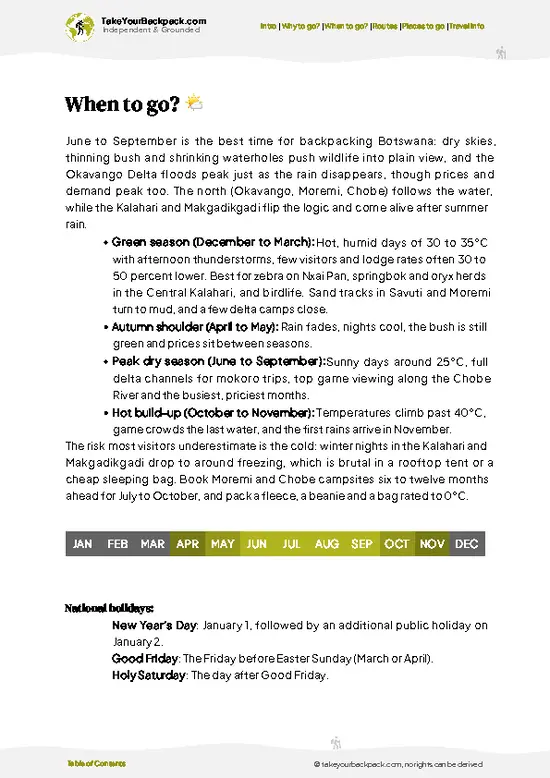
🌤️ When to go?Choosing the right time of year


  • Topic: Weather – The Kalahari’s dry season runs May to October, offering crisp mornings around 5°C (41°F) and daytime highs near 25°C (77°F). It’s the sweet spot for clear skies and minimal rain, perfect for trekking without the mud and mosquitoes.

  • Topic: Temperature – Nights can dip sharply, especially June to August, so pack layers. Daytime warmth feels like a dry heat, but the cold nights catch many off guard if they don’t prepare.

  • Topic: Daylight Hours – Expect roughly 10 to 12 hours of daylight during the dry season, enough time to squeeze in long hikes or game drives without rushing.

  • Topic: Crowds – Peak tourist season aligns with dry months, so expect more visitors at popular camps and lodges. But the vastness of the Kalahari means you can still find solitude if you know where
read more 👉

  • Topic: Weather – The Kalahari’s dry season runs May to October, offering crisp mornings around 5°C (41°F) and daytime highs near 25°C (77°F). It’s the sweet spot for clear skies and minimal rain, perfect for trekking without the mud and mosquitoes.

  • Topic: Temperature – Nights can dip sharply, especially June to August, so pack layers. Daytime warmth feels like a dry heat, but the cold nights catch many off guard if they don’t prepare.

  • Topic: Daylight Hours – Expect roughly 10 to 12 hours of daylight during the dry season, enough time to squeeze in long hikes or game drives without rushing.

  • Topic: Crowds – Peak tourist season aligns with dry months, so expect more visitors at popular camps and lodges. But the vastness of the Kalahari means you can still find solitude if you know where to look.

  • Topic: Seasonal Activities – Dry season is prime for wildlife spotting, especially predators around waterholes. The wet season (Nov-April) brings lush landscapes and migratory birds but also heat, humidity, and fewer accessible trails.

  • Topic: Price Fluctuations – Prices spike during the dry season due to demand. Booking early or targeting shoulder months (May or October) can snag better deals without sacrificing experience.


Pro-tip: Arrive just before the dry season peaks—late May or early October—to enjoy cooler temps, fewer crowds, and wallet-friendly rates while still catching the best wildlife action.


source: climatestotravel.comJANJanuary: fair for travelingFEBFebruary: fair for travelingMARMarch: fair for travelingAPRApril: good for travelingMAYMay: highly recommended for travelingJUNJune: excellent for travelingJULJuly: excellent for travelingAUGAugust: excellent for travelingSEPSeptember: excellent for travelingOCTOctober: highly recommended for travelingNOVNovember: fair for travelingDECDecember: fair for traveling
when-to-go

✈️ The backpacker research shortcutBotswana Travel Guide

An offline-friendly backpacking guide with optimized travel routes, ranked highlights, transport advice, and the best areas to stay.
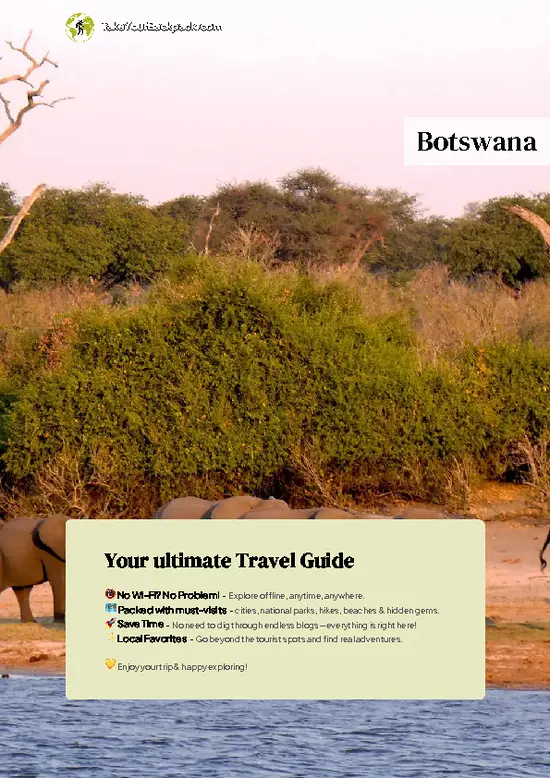
example page 0 from our offline Travel Guide for Botswana
example page 1 from our offline Travel Guide for Botswana
example page 2 from our offline Travel Guide for Botswana
example page 3 from our offline Travel Guide for Botswana
example page 4 from our offline Travel Guide for Botswana
example page 5 from our offline Travel Guide for Botswana
example page 6 from our offline Travel Guide for Botswana
example page 7 from our offline Travel Guide for Botswana
The digital guide (257 pages) contains:
58 highlights, ranked by travel appeal
Optimized 5, 10 & 15-day travel routes
Cities, national parks, landmarks, beaches
How to get around
Offline-friendly for travel without Wi-Fi
👉 Click to see all 30+ guide features

📅 Plan smarter in minutes, not weeks
Month by month travel advice
Festivals & national holidays
Budget expectations

🗺️ Go to the right places, skip the overrated ones
Honest pros & cons of destinations
Top hikes, parks & viewpoints
Lesser-known places most travelers miss
Clear “worth it vs skip it” guidance

🛏️ Travel smoothly without rookie mistakes
Best areas to stay
Transport systems explained simply
Common scams & safety advice
SIM cards, money & practical tips

🌍 Understand the country, not just visit it
Culture & traditions
52 Essential phrases & customs
Festivals worth planning around
Traveler-friendly historical context
Insights that make places more meaningful

📱 Built for real travel conditions
Fully downloadable PDF
Works completely offline
Optimized for phone use
Useful in remote areas & buses
Everything in one place
Save weeks of stressful planning
Get instant access to your full guide. 30‑day money-back guarantee.


By proceeding you agree to our terms.
Sent to your inbox immediately after payment • 100% Secure Checkout
Best Backpacking Travel Advisor 2025 tourism awardBest Backpacking
Travel Advisor
2025
What others say about Take Your Backpack Guides:
⭐⭐⭐⭐⭐
Fantastic, amazing amount of information!
⭐⭐⭐⭐⭐
My goodness this is amazing, it's what I've been looking for hats off too you!
⭐⭐⭐⭐⭐
I think this is absolutely BRILLIANT
⭐⭐⭐⭐
Very complete and informative. It's still missing places, but I gotta to commend you
⭐⭐⭐⭐⭐
This is truly amazing, thank you, can't wait to explore it with my kids!
⭐⭐⭐⭐⭐
Awesome resource, thank you!
⭐⭐⭐⭐⭐
This is amazing! Can't wait to explore the ones I haven't seen
⭐⭐⭐⭐
I love this! Well done, great idea.
⭐⭐⭐⭐⭐
Thanks for taking the time to make this gem!
⭐⭐⭐⭐⭐
This might be the best website I've ever seen.
⭐⭐⭐⭐⭐
Congratulations, and thank you so much for your work; it's incredibly valuable.
⭐⭐⭐⭐
In all seriousness I think you did a great job pointing out the important spots
⭐⭐⭐⭐⭐
10/10 very good
⭐⭐⭐⭐⭐
As someone who's only just starting to visit regularly this is awesome, thank you.
⭐⭐⭐⭐
Thank you very much! I'm going to visit my dad, it's going to be very useful!
⭐⭐⭐⭐⭐
This is really cool! We'll be travelling for the first time and this definitely come in handy.
⭐⭐⭐⭐⭐
You are now our minister of culture, congratulations 👨‍💼
⭐⭐⭐⭐⭐
Just wanted to tell you that this is a pearl! Going to follow your recommendations.
⭐⭐⭐⭐⭐
This is so cool. I'll definitely be using the resource for my travels soon.
⭐⭐⭐⭐⭐
This is very impressive! Good work.
⭐⭐⭐⭐⭐
This is an amazing and informative site. Very well done!

🛏️ Where to stay?Choosing the right base

When you’re roaming the Kalahari Desert, the right base can make all the difference. Let’s dive into the best spots for backpackers that balance safety, social vibes, and budget-friendly options.

Start with Maun. This bustling gateway to the Okavango Delta is a backpacker’s dream. You’ll find a mix of travelers here, from solo adventurers to groups gearing up for safaris. The vibe is relaxed, and the local markets are perfect for snagging fresh produce or a quick meal. Plus, it’s a great launchpad for day trips into the Delta.

Next up is Ghanzi, often overlooked but worth your time. It’s a hub … read more 👉
When you’re roaming the Kalahari Desert, the right base can make all the difference. Let’s dive into the best spots for backpackers that balance safety, social vibes, and budget-friendly options.

Start with Maun. This bustling gateway to the Okavango Delta is a backpacker’s dream. You’ll find a mix of travelers here, from solo adventurers to groups gearing up for safaris. The vibe is relaxed, and the local markets are perfect for snagging fresh produce or a quick meal. Plus, it’s a great launchpad for day trips into the Delta.

Next up is Ghanzi, often overlooked but worth your time. It’s a hub for cultural exchanges with the San people. Staying here offers a unique glimpse into their way of life. The community is welcoming, and you’ll find plenty of opportunities to connect with fellow travelers around campfires under the stars.

Don’t skip Tsabong either. This small town is a bit off the beaten path but has a charm that’s hard to resist. It’s quieter, making it ideal for those seeking a more laid-back experience. You’ll meet locals and fellow backpackers alike, sharing stories and tips over a cold drink.

Each of these spots offers a unique slice of Kalahari life, ensuring your adventure is rich with experiences and connections.

🚌 Getting aroundGetting around like a local

The Kalahari Desert isn’t about rigid schedules; it’s a dance of intuition and spontaneity. Picture this: the sun dips low, casting a golden hue over endless sands, and you’re not just a traveler; you’re part of a living, breathing landscape. Here, the rhythm is dictated by the sun and the whispers of the wind. You’ll find that transport options can feel a bit chaotic, but that’s where the magic lies. Embrace the unpredictability, and you’ll uncover the true essence of this vast expanse.


  • Shared Minibus Taxis — These are the lifeblood of budget travel in Botswana. They run frequently between major towns like Maun and Ghanzi, usually starting around 6 AM and wrapping up by 6 PM. Expect to pay about P50 to P100 for a ride, depending on distance. They’re not the fastest (think 4-6 hours for
read more 👉
The Kalahari Desert isn’t about rigid schedules; it’s a dance of intuition and spontaneity. Picture this: the sun dips low, casting a golden hue over endless sands, and you’re not just a traveler; you’re part of a living, breathing landscape. Here, the rhythm is dictated by the sun and the whispers of the wind. You’ll find that transport options can feel a bit chaotic, but that’s where the magic lies. Embrace the unpredictability, and you’ll uncover the true essence of this vast expanse.


  • Shared Minibus Taxis — These are the lifeblood of budget travel in Botswana. They run frequently between major towns like Maun and Ghanzi, usually starting around 6 AM and wrapping up by 6 PM. Expect to pay about P50 to P100 for a ride, depending on distance. They’re not the fastest (think 4-6 hours for longer trips), but they’re a great way to mingle with locals and soak in the scenery.


  • 4x4 Rentals — If you’re feeling adventurous, renting a 4x4 is a game-changer. Prices start around P800 per day, and you’ll need to book in advance, especially during peak season. This option gives you the freedom to explore at your own pace, but be prepared for some bumpy rides. Fuel up on your way out; stations can be sparse.


  • Guided Tours — For those who want a hassle-free experience, guided tours are worth considering. Prices vary widely, starting at around P1,500 for a day trip. These tours often include meals and activities, so you get a lot of bang for your buck. Just keep in mind that you’ll be on someone else’s schedule, which can be a trade-off for comfort.


  • Private Transfers — If you’re traveling with a group, private transfers can be a smart choice. Rates typically start at P1,200 for a direct route. You’ll enjoy a more comfortable ride, and the flexibility to stop for photos or snacks along the way. Just be sure to arrange these in advance.


  • Local Buses — For the truly budget-conscious, local buses are an option. They’re slow and often crowded, but the fare is usually under P50. Expect to wait for the bus to fill up before it departs, which can test your patience but also offers a slice of local life.


Here’s the insider tip: if you want to cross the Kalahari efficiently, aim for early morning departures. The heat can be brutal later in the day, and you’ll avoid the midday rush. Plus, you’ll get to enjoy the stunning sunrise over the dunes, setting the perfect tone for your adventure.

🍲 FoodLocal Cuisine & Drinks

In the Kalahari Desert, food is a celebration of the land and its people. You’ve got to try biltong, a dried meat snack that’s a staple here. It’s smoky, spiced, and perfect for munching while you’re on the move. Pair it with sorghum porridge, a local favorite that’s hearty and filling. It’s often served with a side of wild game stew, rich with flavors that tell stories of the bush.

When it comes to drinks, don’t miss out on rooibos tea. It’s naturally sweet and caffeine-free, perfect for sipping while watching the sun dip below the horizon. If you’re feeling adventurous, grab a bottle of local beer brewed from traditional grains.

For dining, head to local markets where the air is thick with the aroma of grilled meats and spices. Street vendors serve up pap—a maize dish that’s a staple—and … read more 👉
In the Kalahari Desert, food is a celebration of the land and its people. You’ve got to try biltong, a dried meat snack that’s a staple here. It’s smoky, spiced, and perfect for munching while you’re on the move. Pair it with sorghum porridge, a local favorite that’s hearty and filling. It’s often served with a side of wild game stew, rich with flavors that tell stories of the bush.

When it comes to drinks, don’t miss out on rooibos tea. It’s naturally sweet and caffeine-free, perfect for sipping while watching the sun dip below the horizon. If you’re feeling adventurous, grab a bottle of local beer brewed from traditional grains.

For dining, head to local markets where the air is thick with the aroma of grilled meats and spices. Street vendors serve up pap—a maize dish that’s a staple—and you can enjoy it with a variety of sauces. Casual cafés are great for a laid-back vibe, where you can chat with locals and soak in the atmosphere.

Etiquette is simple: share your food and enjoy communal meals. It’s all about connection here. Remember, meals can be a slow affair, so take your time and savor every bite. This isn’t just food; it’s a taste of the Kalahari spirit.

Ideas for continuing your journey

Kalahari Desert isn’t the only highlight in Botswana. Explore all what Botswana has to offer.
Country photo of Botswana

We 💚 feedbackKey takeaways before you go

When you hit the Kalahari, embrace the stillness. The nights? They’ll steal your breath with a sky full of stars. But here’s the kicker: don’t rush. Spend time with the San people; their stories will ground you in a way that no guidebook can. Just be ready for the heat—hydrate like it’s your job. And if you can, splurge on a night under the stars in a luxury tent. It’s worth every penny for that intimate connection with the wild. Trust me, you’ll leave a piece of your heart here.

✍️ Help improve this page!
The information on this page is based on in-depth research, insights shared by experienced travelers, and feedback from the local travel community in Botswana. While every effort is made to keep the information accurate and current, conditions can change — so if you spot anything incorrect or outdated, please get in touch.


🙋‍♂️ Give feedback

👋 Meet the founderWho’s Behind Take Your Backpack?

Johan, backpacker and founder of TakeYourBackpackHi, I’m Johan (Netherlands 🇳🇱), the creator of TakeYourBackpack. Over the past decade, I’ve backpacked through 80+ countries across six continents, gaining extensive experience with independent travel, long-term trips, and overland routes.

This site is built on a combination of firsthand travel experience and carefully curated insights from other backpackers. Many guides are based on places I’ve personally visited, while others bring together tips, observations, and practical advice shared by trusted travelers I’ve met along the way.

The goal is to provide realistic, experience-driven guidance — not generic itineraries — so you can explore destinations with better context, clearer expectations, and more confidence.

Get full Botswana guide •
Instant download • 58 highlights • Full Offline guide