×

Botswana🇧🇼 | townsGhanziTrans-Kalahari fuel stop, San craft shop, tracker walks, ranch ridge | things to do and best time to go

Explore Kalahari DesertExplore Kasane

Backpacking in Ghanzi
👍 Recommendedtown ranked #3
By Johan Kruseman 🇳🇱 | Updated October 22, 2026

Whether Ghanzi is a fuel stop or a two-night base depends on your interest in San culture and the Central Kalahari. If either appeals, stay. The town lies in the west of Botswana, on the Trans-Kalahari Highway between Maun and the Namibian border, roughly midway on the long drive from Maun toward Windhoek. Services are spread far apart out here, so Ghanzi is where you fill the tank, stock food and withdraw cash. Buses run along the highway only, which is why most people pass through. If you want the desert itself, arrange a ride or a guided trip through a campsite or lodge. Evenings are quiet, centered on a few campsites and the hotel bar, so you will meet other travelers, just in small numbers. Self-drivers, overlanders and the curious will like it. Anyone after nightlife or famous sights will not.

Discover everything you want to know in the 📖 Botswana Travel Guide.


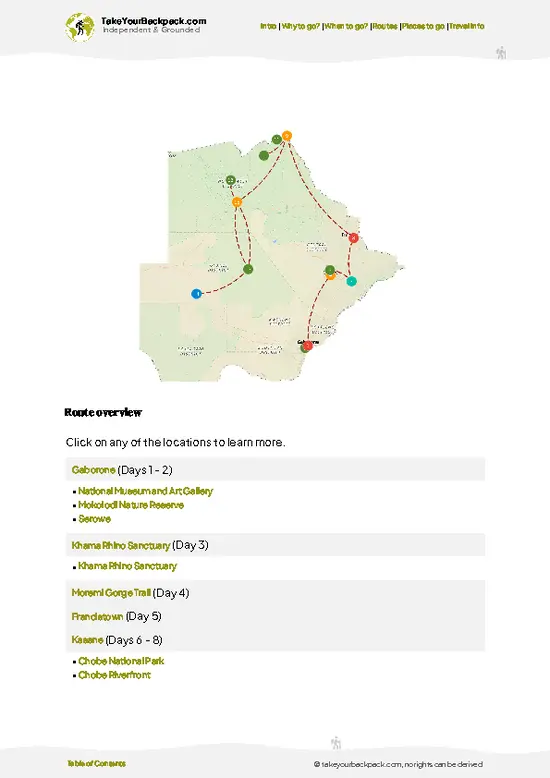
example page 0 from our offline Travel Guide for Botswana
example page 1 from our offline Travel Guide for Botswana
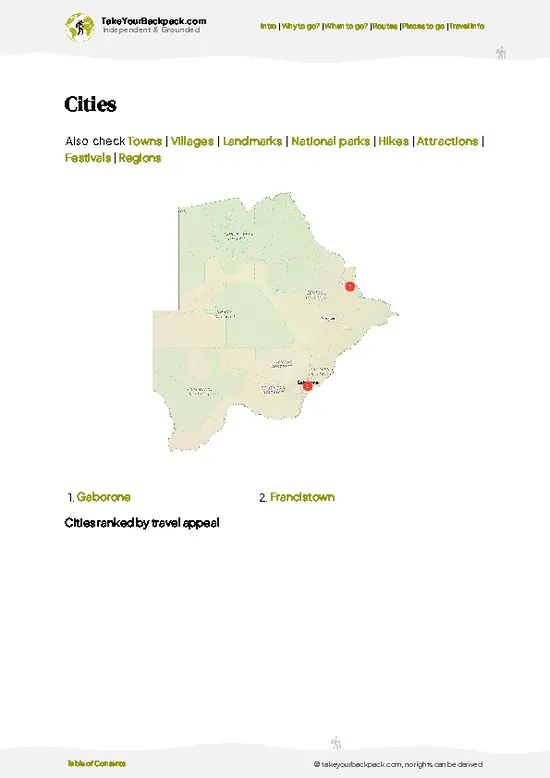
example page 2 from our offline Travel Guide for Botswana
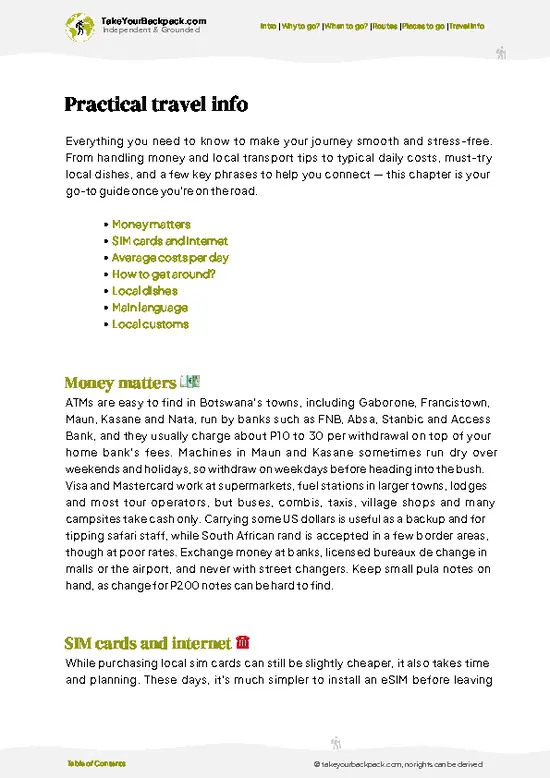
example page 3 from our offline Travel Guide for Botswana
example page 4 from our offline Travel Guide for Botswana
example page 5 from our offline Travel Guide for Botswana
example page 6 from our offline Travel Guide for Botswana
example page 7 from our offline Travel Guide for Botswana
Loading the map 🌍
CLICK TO FILTER
cities
towns
villages
landmarks
national parks
hikes
attractions
festivals
regions
SHOW COUNTRY’S BESTSHOW ALL

✨ Why go?
Ranked #3 town in Botswana
The unique appeal for travelers

Ghanzi earns a stop because it is the practical doorway to the Kalahari and the most accessible place in Botswana to meet San communities on their own terms. Cattle farms line the ridge, the town is flat and walkable, and everything you need is within a few blocks. The real draw is a guided bush walk, where San guides name the plants that hold water and show how a tracker reads sand. Add the craft shop run by the local Kuru cooperative and the art scene at D’Kar nearby, and you have a cultural stopover with substance. Most travelers stay one night. Two suits you if you want a walk plus a trip toward the Central Kalahari Game Reserve. Campsites on farmland are small, quiet and sociable around a fire. Slow travelers, self-drivers and anyone crossing between Namibia and the Okavango will get … read more 👉
Ghanzi earns a stop because it is the practical doorway to the Kalahari and the most accessible place in Botswana to meet San communities on their own terms. Cattle farms line the ridge, the town is flat and walkable, and everything you need is within a few blocks. The real draw is a guided bush walk, where San guides name the plants that hold water and show how a tracker reads sand. Add the craft shop run by the local Kuru cooperative and the art scene at D’Kar nearby, and you have a cultural stopover with substance. Most travelers stay one night. Two suits you if you want a walk plus a trip toward the Central Kalahari Game Reserve. Campsites on farmland are small, quiet and sociable around a fire. Slow travelers, self-drivers and anyone crossing between Namibia and the Okavango will get the most from it. Skip it if you need variety or a lively street scene.

💡 HighlightsKey sights and experiences for travelers

  1. Ghanzi Craft: The best-known stop in town is this outlet for the Kuru family of organizations, selling ostrich eggshell jewelry, leather work, woven baskets and prints made by San artists. Entry is free, and buying here puts money directly with the makers. Go on a weekday morning, when the shop is open and quiet. Allow 30 to 45 minutes; items run from US$3 to 150.
  2. Ghanzi Trail Blazers bush walks: A farm campsite just outside town offers guided walks with San trackers who demonstrate snares, fire-making and edible roots. Expect to pay about US$20 to 40 per person for 2 to 3 hours. Early morning is cool and animals are active. Bookings are easier made a day ahead.
  3. Kalahari Arms Hotel: The long-running hotel bar on the highway is where ranchers, truckers and overlanders mix. A beer costs roughly
… read more 👉
  1. Ghanzi Craft: The best-known stop in town is this outlet for the Kuru family of organizations, selling ostrich eggshell jewelry, leather work, woven baskets and prints made by San artists. Entry is free, and buying here puts money directly with the makers. Go on a weekday morning, when the shop is open and quiet. Allow 30 to 45 minutes; items run from US$3 to 150.
  2. Ghanzi Trail Blazers bush walks: A farm campsite just outside town offers guided walks with San trackers who demonstrate snares, fire-making and edible roots. Expect to pay about US$20 to 40 per person for 2 to 3 hours. Early morning is cool and animals are active. Bookings are easier made a day ahead.
  3. Kalahari Arms Hotel: The long-running hotel bar on the highway is where ranchers, truckers and overlanders mix. A beer costs roughly US$1.50 to 3. Come after dark for conversation and route advice. One hour is plenty.
  4. Ghanzi ridge farm country: The low limestone ridge that gave the town its water is lined with Afrikaner-founded cattle farms, and the road out of town shows them well. Walking or cycling a stretch is free. Go at sunrise, when the cattle move, birds are loud and the air is cool. Allow 1 to 2 hours.
Ghanzi also makes a good launch point for day trips to the art studios at D’Kar, the Dqae Qare game farm and the Central Kalahari Game Reserve. All four stops take about half a day in total.
Spotted a mistake or missing something? Contact us.

🏘️ NeighborhoodsUnderstanding the local layout

Ghanzi is a small, spread-out town along the Trans-Kalahari Highway, and its areas are separated by gaps of open scrub, which matters for how you move between them.
  • Town Center and Mall Area: Shops, banks with ATMs, fuel stations, supermarkets and takeaway counters cluster along the main road. This is where you resupply, because the next sizeable shops are hours away in either direction. Everything here is walkable in 15 minutes, and the day heat is why you do errands before noon.
  • Old Ghanzi and the Farm Block: Cattle ranches, started by settlers in the early 1900s, run to the north and south of town. Distances are long and there is no regular public transit, so most visitors reach farm lodges and campsites by arranged pickup or a hired vehicle. Ask the host about transfers when you book.
  • D’Kar:
… read more 👉
Ghanzi is a small, spread-out town along the Trans-Kalahari Highway, and its areas are separated by gaps of open scrub, which matters for how you move between them.
  • Town Center and Mall Area: Shops, banks with ATMs, fuel stations, supermarkets and takeaway counters cluster along the main road. This is where you resupply, because the next sizeable shops are hours away in either direction. Everything here is walkable in 15 minutes, and the day heat is why you do errands before noon.
  • Old Ghanzi and the Farm Block: Cattle ranches, started by settlers in the early 1900s, run to the north and south of town. Distances are long and there is no regular public transit, so most visitors reach farm lodges and campsites by arranged pickup or a hired vehicle. Ask the host about transfers when you book.
  • D’Kar: About 40 km southwest, this San community is known for its art studio and gallery, where paintings and textile prints are sold. Go in daylight, since shared rides thin out by afternoon, and buy direct from the studio so the money reaches the artists.
  • Bus Rank and Taxi Area: Combis and long-distance buses stop near the main road. It is quiet by evening, so arrive with your onward plan settled.
Nightlife is limited to a few bars and lodge verandas, and the town is calm after dark. Streets are poorly lit, so carry a headlamp.

⌛️ 1 dayWhat you can realistically do in a day

7:30 AM, Ghanzi Trail Blazers: Start with coffee at your campsite, then join a San-led bush walk through the thornveld. Guides show how a root holds water and how tracks are read, and the cool air makes the pace comfortable. Take about 2.5 hours and finish with a late breakfast.

11:00 AM, Ghanzi Craft: Drive or taxi back into town and browse the Kuru outlet. Look at the ostrich eggshell beadwork and linocut prints, and ask which artist made a piece before you buy. It is a calm, fixed-price stop that takes about 40 minutes.

12:00 PM, Main street errands: Walk the short central strip to stock groceries, fill the water jugs and use the ATM. Lunch comes from a local takeaway or café where you can eat a plate of grilled meat and pap alongside farm workers and teachers. This costs little and shows … read more 👉
7:30 AM, Ghanzi Trail Blazers: Start with coffee at your campsite, then join a San-led bush walk through the thornveld. Guides show how a root holds water and how tracks are read, and the cool air makes the pace comfortable. Take about 2.5 hours and finish with a late breakfast.

11:00 AM, Ghanzi Craft: Drive or taxi back into town and browse the Kuru outlet. Look at the ostrich eggshell beadwork and linocut prints, and ask which artist made a piece before you buy. It is a calm, fixed-price stop that takes about 40 minutes.

12:00 PM, Main street errands: Walk the short central strip to stock groceries, fill the water jugs and use the ATM. Lunch comes from a local takeaway or café where you can eat a plate of grilled meat and pap alongside farm workers and teachers. This costs little and shows you how ordinary Ghanzi works.

2:30 PM, Ridge farm road: Skip the afternoon heat with a rest, then take a slow drive or ride along a quiet farm road on the ridge. Few visitors go beyond the highway, yet this is where the town’s ranching history is easiest to see: long fences, windmills, cattle at water troughs and the occasional steenbok. Allow 1.5 hours.

5:00 PM, Open sky near town: Park at a safe, open spot off a quiet track and watch the sky color change over the flat bush. Birds head to roost and the temperature drops quickly, so bring a jacket.

7:00 PM, Kalahari Arms Hotel: Finish with dinner and a beer at the hotel bar, where overlanders and farmers trade road reports for the long highway ahead.

🌤️ When to go?Choosing the right time of year

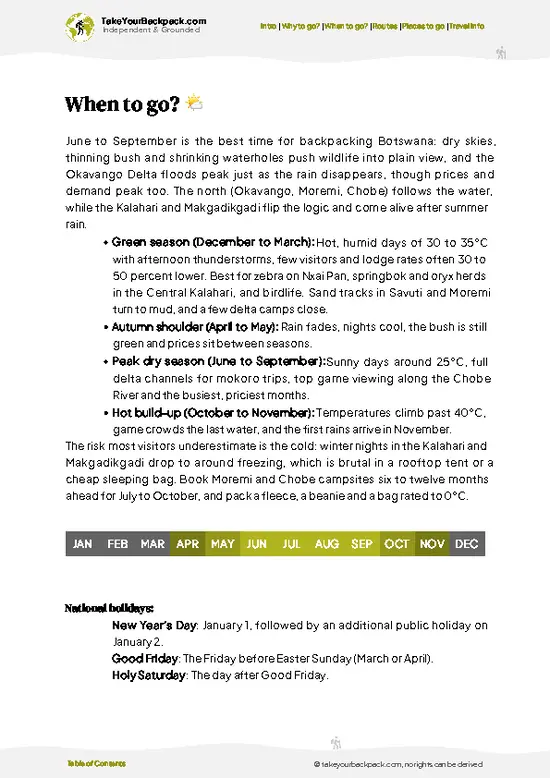
  • Cool Dry Season (May to August): Days are sunny at 22 to 26°C (72 to 79°F) and nights can drop to near freezing, around 0 to 5°C (32 to 41°F). Daylight lasts roughly 10.5 to 11 hours. Camping needs a proper sleeping bag, and prices stay moderate.
  • Hot Dry Season (September to October): Heat builds to 32 to 38°C (90 to 100°F) with dust and little shade. Game viewing around waterholes is good, and crowds remain small.
  • Rainy Season (November to March): Afternoon storms arrive with highs of 30 to 35°C (86 to 95°F). Daylight stretches to about 13.5 hours. Sand roads can turn soft, the veld goes green, and lodges often cut rates.
  • Shoulder Months (April): Rain fades, temperatures ease to 25 to 30°C (77 to 86°F), and the landscape is still green.
Book farm campsites a few weeks ahead for June to August, … read more 👉
  • Cool Dry Season (May to August): Days are sunny at 22 to 26°C (72 to 79°F) and nights can drop to near freezing, around 0 to 5°C (32 to 41°F). Daylight lasts roughly 10.5 to 11 hours. Camping needs a proper sleeping bag, and prices stay moderate.
  • Hot Dry Season (September to October): Heat builds to 32 to 38°C (90 to 100°F) with dust and little shade. Game viewing around waterholes is good, and crowds remain small.
  • Rainy Season (November to March): Afternoon storms arrive with highs of 30 to 35°C (86 to 95°F). Daylight stretches to about 13.5 hours. Sand roads can turn soft, the veld goes green, and lodges often cut rates.
  • Shoulder Months (April): Rain fades, temperatures ease to 25 to 30°C (77 to 86°F), and the landscape is still green.
Book farm campsites a few weeks ahead for June to August, when overlanders on the Trans-Kalahari route fill the best spots.


source: climatestotravel.comJANJanuary: fair for travelingFEBFebruary: fair for travelingMARMarch: fair for travelingAPRApril: good for travelingMAYMay: excellent for travelingJUNJune: excellent for travelingJULJuly: excellent for travelingAUGAugust: excellent for travelingSEPSeptember: excellent for travelingOCTOctober: highly recommended for travelingNOVNovember: fair for travelingDECDecember: fair for traveling
botswana-city-ghanzi v1
© Google |

✈️ The backpacker research shortcutBotswana Travel Guide

An offline-friendly backpacking guide with optimized travel routes, ranked highlights, transport advice, and the best areas to stay.
example page 0 from our offline Travel Guide for Botswana
example page 1 from our offline Travel Guide for Botswana
example page 2 from our offline Travel Guide for Botswana
example page 3 from our offline Travel Guide for Botswana
example page 4 from our offline Travel Guide for Botswana
example page 5 from our offline Travel Guide for Botswana
example page 6 from our offline Travel Guide for Botswana
example page 7 from our offline Travel Guide for Botswana
The digital guide (172 pages) contains:
✅ 38 highlights, ranked by travel appeal
✅ Optimized 5, 10 & 15-day travel routes
✅ Cities, national parks, landmarks, beaches
✅ How to get around
✅ Offline-friendly for travel without Wi-Fi
👉 Click to see all 30+ guide features

📅 Plan smarter in minutes, not weeks
✅ Month by month travel advice
✅ Festivals & national holidays
✅ Budget expectations

🗺️ Go to the right places, skip the overrated ones
✅ Honest pros & cons of destinations
✅ Top hikes, parks & viewpoints
✅ Lesser-known places most travelers miss
✅ Clear “worth it vs skip it” guidance

🛏️ Travel smoothly without rookie mistakes
✅ Best areas to stay
✅ Transport systems explained simply
✅ Common scams & safety advice
✅ SIM cards, money & practical tips

🌍 Understand the country, not just visit it
✅ Culture & traditions
✅ 52 Essential phrases & customs
✅ Festivals worth planning around
✅ Traveler-friendly historical context
✅ Insights that make places more meaningful

📱 Built for real travel conditions
✅ Fully downloadable PDF
✅ Works completely offline
✅ Optimized for phone use
✅ Useful in remote areas & buses
✅ Everything in one place
Stop searching, start planning
Get instant access to your full guide. 30‑day money-back guarantee.
+ Add another guide for just

By proceeding you agree to our terms.
Sent to your inbox immediately after payment • 100% Secure Checkout
Best Backpacking Travel Advisor 2025 tourism awardBest Backpacking
Travel Advisor
2025
What others say about Take Your Backpack Guides:
⭐⭐⭐⭐⭐
Fantastic, amazing amount of information!
⭐⭐⭐⭐⭐
My goodness this is amazing, it's what I've been looking for hats off too you!
⭐⭐⭐⭐⭐
I think this is absolutely BRILLIANT
⭐⭐⭐⭐
Very complete and informative. It's still missing places, but I gotta to commend you
⭐⭐⭐⭐⭐
This is truly amazing, thank you, can't wait to explore it with my kids!
⭐⭐⭐⭐⭐
Awesome resource, thank you!
⭐⭐⭐⭐⭐
This is amazing! Can't wait to explore the ones I haven't seen
⭐⭐⭐⭐
I love this! Well done, great idea.
⭐⭐⭐⭐⭐
Thanks for taking the time to make this gem!
⭐⭐⭐⭐⭐
This might be the best website I've ever seen.
⭐⭐⭐⭐⭐
Congratulations, and thank you so much for your work; it's incredibly valuable.
⭐⭐⭐⭐
In all seriousness I think you did a great job pointing out the important spots
⭐⭐⭐⭐⭐
10/10 very good
⭐⭐⭐⭐⭐
As someone who's only just starting to visit regularly this is awesome, thank you.
⭐⭐⭐⭐
Thank you very much! I'm going to visit my dad, it's going to be very useful!
⭐⭐⭐⭐⭐
This is really cool! We'll be travelling for the first time and this definitely come in handy.
⭐⭐⭐⭐⭐
You are now our minister of culture, congratulations 👨‍💼
⭐⭐⭐⭐⭐
Just wanted to tell you that this is a pearl! Going to follow your recommendations.
⭐⭐⭐⭐⭐
This is so cool. I'll definitely be using the resource for my travels soon.
⭐⭐⭐⭐⭐
This is very impressive! Good work.
⭐⭐⭐⭐⭐
This is an amazing and informative site. Very well done!

🛏️ Where to stay?Best areas and accommodation options

The best budget base is the area along or close to the main road in town, with a second choice of a farm campsite on the outskirts. Budget beds in Ghanzi are limited, with a handful of guesthouses, a few backpacker-priced rooms and campgrounds, so book ahead from June to August.
Staying in town means you can walk to supermarkets, ATMs and the bus stop, which matters because combis and long-distance buses leave early. Expect dorms or simple rooms at roughly US$15 to 30 and camping at about US$8 to 15 a person. The streets are quiet at night, with little noise beyond the occasional passing truck … read more 👉
The best budget base is the area along or close to the main road in town, with a second choice of a farm campsite on the outskirts. Budget beds in Ghanzi are limited, with a handful of guesthouses, a few backpacker-priced rooms and campgrounds, so book ahead from June to August.
Staying in town means you can walk to supermarkets, ATMs and the bus stop, which matters because combis and long-distance buses leave early. Expect dorms or simple rooms at roughly US$15 to 30 and camping at about US$8 to 15 a person. The streets are quiet at night, with little noise beyond the occasional passing truck on the highway. Lighting is dim outside the center, so choose a place within a short walk of the shops if you arrive late.
Farm campsites on the outskirts are cheaper and darker, with big skies and a bush atmosphere, and some offer shaded pitches with shared ablutions. Transport is the weak point, because there are no regular combis out there. Arrange a pickup in advance or arrive by your own vehicle. Self-caterers should stock up in town first, since farm sites rarely sell food.

🚌 Getting aroundHow to get from A to B

Ghanzi has no city bus network, and a shared combi ride toward nearby settlements costs about US$1 to 4, paid in cash in pula directly to the driver or conductor. Combis leave only when full, so a short wait is normal. The town is small enough to cross on foot, but the sun and long gaps between sites push most people to a vehicle for anything beyond the main road.
  • Walking: Free, and sensible for the shops, banks and bus stop within the center. Streets are wide with little shade, so walk in the cooler morning hours and carry water. After dark, use a headlamp because lighting is patchy.
  • Combis (minibuses): These link Ghanzi with D’Kar, Kuke and other villages, at roughly US$1 to 4 per ride. Most run in the morning and early afternoon, and few go after about 5 pm. Ask the driver for the return
… read more 👉
Ghanzi has no city bus network, and a shared combi ride toward nearby settlements costs about US$1 to 4, paid in cash in pula directly to the driver or conductor. Combis leave only when full, so a short wait is normal. The town is small enough to cross on foot, but the sun and long gaps between sites push most people to a vehicle for anything beyond the main road.
  • Walking: Free, and sensible for the shops, banks and bus stop within the center. Streets are wide with little shade, so walk in the cooler morning hours and carry water. After dark, use a headlamp because lighting is patchy.
  • Combis (minibuses): These link Ghanzi with D’Kar, Kuke and other villages, at roughly US$1 to 4 per ride. Most run in the morning and early afternoon, and few go after about 5 pm. Ask the driver for the return time before leaving.
  • Long-distance buses: Services on the Trans-Kalahari corridor connect Ghanzi with Maun (about 4 to 5 hours) and Gaborone (about 10 to 12 hours), at roughly US$15 to 30 depending on the route. Departures cluster in the morning, and the stop is on the main road, so confirm times a day before.
  • Taxis: Local cabs cover short hops in town for about US$2 to 5 and can be hired for farm or D’Kar trips at negotiated rates, usually US$30 to 60 for a return. Agree the price and waiting time first, since there are no meters.
  • Hitching and rental cars: Traffic is sparse, so hitching works only on the highway and needs patience and a full water supply. A rental or lodge-arranged transfer costs more, around US$60 to 100 a day for a car, but suits the farm block, where sand tracks and distances make independent movement hard.
Fuel stations are in town only for long stretches, so fill up before leaving.

👛 Costs (as of 22 October 2026)How expensive it really is

Ghanzi costs roughly US$51 to 112 a day for a backpacker, with transport and activities being the swing factors because distances are long. Prices run higher than in many African towns since goods travel far to reach the Kalahari.
CategoryBudget RangeLocal Reality
Dorm accommodationUS$15 to 30 (high season)Simple guesthouse rooms and campgrounds; camping runs about US$8 to 15 and rates dip in the rainy months.
MealsUS$12 to 22Supermarket self-catering and takeaway counters are cheapest; a sit-down meal runs about US$7 to 12.
Local transportUS$4 to 15Combis cost US$1 to 4 a ride, and taxis US$2 to 5 within town.
Basic activities/entry feesUS$15 to 35San walks run US$25 to 50, while the D’Kar gallery is free to browse.
Miscellaneous expensesUS$5 to 10Water, snacks, data and the occasional drink.
Total
… read more 👉
Ghanzi costs roughly US$51 to 112 a day for a backpacker, with transport and activities being the swing factors because distances are long. Prices run higher than in many African towns since goods travel far to reach the Kalahari.
CategoryBudget RangeLocal Reality
Dorm accommodationUS$15 to 30 (high season)Simple guesthouse rooms and campgrounds; camping runs about US$8 to 15 and rates dip in the rainy months.
MealsUS$12 to 22Supermarket self-catering and takeaway counters are cheapest; a sit-down meal runs about US$7 to 12.
Local transportUS$4 to 15Combis cost US$1 to 4 a ride, and taxis US$2 to 5 within town.
Basic activities/entry feesUS$15 to 35San walks run US$25 to 50, while the D’Kar gallery is free to browse.
Miscellaneous expensesUS$5 to 10Water, snacks, data and the occasional drink.
Total Daily BudgetUS$51 to 112Budget about US$75 on an average day.
Buy groceries in town before heading to a farm campsite, as on-site food is pricier and often limited.
⚠️ Prices can change and everyone travels differently, so take this as a rough guide. Hope it helps you plan your adventure!

🚌 Day tripsExploring the surroundings

Ghanzi works well as a base for half-day and full-day outings, though without your own vehicle you rely on combis, taxis or arranged transfers, so plan a day ahead.
D’Kar Art Studio:
The San community of D’Kar, about 40 km southwest, is known for paintings and prints made in the local studio and gallery. A combi costs roughly US$2 to 4 each way, and a taxi return about US$30 to 50. Arrive before midday, because returns thin out later, and ask before photographing artists. Allow three hours.

Bushman Walk on a Farm:
Several farms arrange guided walks with San guides who explain tracking, medicinal plants and snares. Expect to pay about US$25 to 50 a person for two to three hours, and book through your lodge, as pickup is usually included. Go in the cooler months from May to August, when walking … read more 👉
Ghanzi works well as a base for half-day and full-day outings, though without your own vehicle you rely on combis, taxis or arranged transfers, so plan a day ahead.
D’Kar Art Studio:
The San community of D’Kar, about 40 km southwest, is known for paintings and prints made in the local studio and gallery. A combi costs roughly US$2 to 4 each way, and a taxi return about US$30 to 50. Arrive before midday, because returns thin out later, and ask before photographing artists. Allow three hours.

Bushman Walk on a Farm:
Several farms arrange guided walks with San guides who explain tracking, medicinal plants and snares. Expect to pay about US$25 to 50 a person for two to three hours, and book through your lodge, as pickup is usually included. Go in the cooler months from May to August, when walking midday is bearable. Wear closed shoes, since thorns are everywhere.

Dqae Qare Game Farm Area:
South of town along the highway, game drives and nature walks show springbok, gemsbok and kudu in open Kalahari scrub. Budget about US$30 to 70 for a guided activity, plus transport of US$30 to 60 if you arrange a taxi. First-timers often skip sunscreen and water, so carry at least 3 liters each.

Kuke Fence Viewpoint:
The veterinary cordon fence to the north marks the edge of cattle country and gives a look at how disease control shapes the region. The drive takes about an hour each way and works best with your own vehicle or a hired driver at roughly US$50 to 80 for the day. Fuel up beforehand.

🛡️ SafetyTraveler Safety Guide

Ghanzi is a calm, low-crime town, and most problems are small. Opportunistic theft from unattended bags or parked vehicles happens, so keep valuables out of sight and lock the car, including at the fuel stations along the highway. After dark the streets are poorly lit and some stretches are empty, so walk with a headlamp, stay on the main road, and use a taxi for longer distances. Solo travelers, women included, generally report few issues, though a lone walk outside town at night is not worth it. Some bars get loud on weekends, and drunk driving is a real hazard on the highway, so avoid night driving. Livestock and wildlife wander onto roads, which is the bigger risk behind the wheel. Carry cash in small notes for combis, because change is limited. Scams are rare; agree taxi prices before getting in.

FAQCommon questions from travelers

Ghanzi is worth a stop of a day or two for the San culture, Kalahari farmland and quiet campsites, rather than only a fuel break. D’Kar’s art studio is about 40 km away, and guided bushman walks cost around US$25 to 50. Pair it with Maun, roughly 4 to 5 hours by road, for a fuller Botswana route.
Two nights suit most travelers in Ghanzi: one full day for a guided San walk or D’Kar and another to rest and resupply. Add a third night if you want a game farm activity or have no vehicle and must work around combi times. Camping costs about US$8 to 15 a night.
Ghanzi is not a day trip from a nearby city, because Maun is about 4 to 5 hours away and the nearest larger centers are farther. A round trip from Maun would eat most of the day on the road, with buses costing roughly US$15 to 30 each way. Staying at least one night in Ghanzi is the practical choice.
⚠️ Things can change over time, so always validate details locally before you go.

Other Botswanan towns near Ghanzi

Explore more nearby:

  • Maun—Okavango Delta gateway, safari operators, airstrips| 264 km away
  • Serowe—royal heritage, BaNgwato capital, hilltop views| 527 km away
  • Lobatse—court buildings, meat industry, border proximity| 567 km away

💡 Not sure where to go next?
Create a personalized itinerary for Botswana including Ghanzi and the places that fit your trip.

Generate my itinerary

👉 Discover all towns

Or checkout all Botswana has to offer (think cities, towns, villages, national parks, hikes, beaches, festivals)
Country photo of Botswana

We 💚 feedbackWhat to keep in mind

Ghanzi will suit self-drivers, overlanders and culturally curious travelers who like quiet evenings and a good conversation at the bar. I would book the San-led bush walk the day before, and I would skip any plan that treats the town as a stop of less than one night. Fill your fuel tank and water jugs before leaving, because the next stretch of road is long.

✍️ Help improve this page!
The information on this page is based on in-depth research, insights shared by experienced travelers, and feedback from the local travel community in Botswana. While every effort is made to keep the information accurate and current, conditions can change — so if you spot anything incorrect or outdated, please get in touch.


🙋‍♂️ Give feedback

👋 Meet the founderWho’s Behind Take Your Backpack?

Johan, backpacker and founder of TakeYourBackpackHi, I’m Johan (Netherlands 🇳🇱), the creator of TakeYourBackpack. Over the past 3 decades, I’ve backpacked through 90+ countries across six continents, gaining extensive experience with independent travel, long-term trips, and overland routes.

This site is built on a combination of firsthand travel experience and carefully curated insights from other backpackers. Many guides are based on places I’ve personally visited, while others bring together tips, observations, and practical advice shared by trusted travelers I’ve met along the way.

The goal is to provide realistic, experience-driven guidance — not generic itineraries — so you can explore destinations with better context, clearer expectations, and more confidence.