×

Botswana🇧🇼 | townsNataroad junction, birding hotspot, salt pan access | things to do and best time to go

Explore ShakaweExplore Orapa

Backpacking in Nata
🌟 Highlighttown ranked #4
By Johan Kruseman 🇳🇱 | Updated June 21, 2026

Nata isn’t just a pit stop for fuel and fried chicken—if you arrive after the rains, you’ll find the pans alive with flamingos and pelicans, a spectacle that most guidebooks barely mention. Smack in northeastern Botswana, where the A3 and A33 highways cross, Nata is the dusty handshake between the Okavango Delta and the Makgadikgadi salt pans. The town itself is small, with a few shops, a petrol station, and the kind of sun that bakes the sand into memory. For backpackers, Nata is less a destination and more a strategic crossroads: it’s where you pause, shake the grit from your shoes, and decide if you’re heading deeper into the wild or circling back toward civilization. There’s no old town to wander, but the Nata Bird Sanctuary is close enough to reach by bike or a shared taxi, and the sunsets over the pans are worth every mosquito bite. Hostels are basic, social life is what you make of it—expect quiet evenings, not pub crawls. Compared to Maun or Kasane, Nata is cheaper, less polished, and far more relaxed, but you’ll need patience for slow buses and the occasional power cut. Safety is straightforward: keep your wits, and your valuables, close.

Discover everything you want to know in the 📖 Botswana Travel Guide.


Get your Botswana guide
58 ranked highlights, routes & tips, works offline (257 pages)
Loading the map 🌍
CLICK TO FILTER
cities
towns
villages
landmarks
national parks
hikes
attractions
festivals
regions
SHOW COUNTRY’S BESTSHOW ALL

✨ Why go?
Ranked #4 town in Botswana
The unique appeal for travelers

Nata serves as a strategic waypoint for backpackers exploring Botswana’s wild heart. Its proximity to the Makgadikgadi Pan makes it a perfect base for those eager to experience vast salt flats and unique wildlife. You can easily hop on a local tour to witness the stunning sunsets over the pan or join a guided hike to spot flamingos in the wet season.

The town’s small-scale hostels and guesthouses offer a cozy atmosphere, ideal for solo travelers or small groups looking to connect. You’ll find friendly locals serving up traditional dishes at street stalls, where the aroma of grilled meats and spices fills the air.

Nata’s walkable streets encourage exploration, making it easy to meet fellow travelers or simply soak in the laid-back vibe. Most backpackers stay for a couple of days, balancing … read more 👉
Nata serves as a strategic waypoint for backpackers exploring Botswana’s wild heart. Its proximity to the Makgadikgadi Pan makes it a perfect base for those eager to experience vast salt flats and unique wildlife. You can easily hop on a local tour to witness the stunning sunsets over the pan or join a guided hike to spot flamingos in the wet season.

The town’s small-scale hostels and guesthouses offer a cozy atmosphere, ideal for solo travelers or small groups looking to connect. You’ll find friendly locals serving up traditional dishes at street stalls, where the aroma of grilled meats and spices fills the air.

Nata’s walkable streets encourage exploration, making it easy to meet fellow travelers or simply soak in the laid-back vibe. Most backpackers stay for a couple of days, balancing adventure with relaxation. If you’re a slow traveler or a hiker, Nata’s charm lies in its simplicity and the chance to recharge before diving deeper into Botswana’s wilderness.
Want to include Nata in your Botswana route?
Create a personalized Botswana itinerary that includes Nata and the places that fit your trip — based on your travel style, budget, and available time. Get your route in seconds.

Generate my trip

💡 HighlightsPlaces and moments you shouldn't skip

  • Nata Bird Sanctuary — The village’s standout attraction: community-run wetland hides and short trails that put you face-to-face with huge flocks of flamingos and dozens of other waterbirds when the pans and channels fill. It’s both a real birding hotspot and a place where tourism money goes directly back to local people.
  • Nata Lodge (restaurant & viewpoint) — The main travel hub in town with a reliable restaurant, bar and simple camping. It’s where locals and overland drivers converge, and it’s the practical place to arrange short trips into the surrounding pans and get local advice from people who know the area.
  • Nata Village Market and Craft Stalls — Small, informal stalls near the main road selling beadwork, woven baskets, curios and fresh produce. Visiting the market gives a quick, honest
read more 👉
  • Nata Bird Sanctuary — The village’s standout attraction: community-run wetland hides and short trails that put you face-to-face with huge flocks of flamingos and dozens of other waterbirds when the pans and channels fill. It’s both a real birding hotspot and a place where tourism money goes directly back to local people.
  • Nata Lodge (restaurant & viewpoint) — The main travel hub in town with a reliable restaurant, bar and simple camping. It’s where locals and overland drivers converge, and it’s the practical place to arrange short trips into the surrounding pans and get local advice from people who know the area.
  • Nata Village Market and Craft Stalls — Small, informal stalls near the main road selling beadwork, woven baskets, curios and fresh produce. Visiting the market gives a quick, honest look at everyday life in Nata and a chance to buy authentic local handicrafts directly from makers.
  • Nata River and Roadside Viewpoints — Short, walkable spots around the Nata River crossing where you can watch riverine birdlife, seasonal water flows and village activity. These little stops are great for quick photography, a short walk and reading the landscape that drains into the pans.
For day trips outside Nata, explore the Makgadikgadi Pans and Sua/Ntwetwe pan flats, Kubu Island’s rock kopjes and stone baobabs, and Nxai Pan National Park with its famous Baines Baobabs.
Spotted a mistake or missing something? Contact us.
🏘️ NeighborhoodsNeighborhood guide to Nata

Nata, Botswana, is a small town that serves as a gateway to the stunning Makgadikgadi Pans and the rich wildlife of the region. Here’s how to navigate its neighborhoods for a smooth backpacking experience.

Town Center
This is the heartbeat of Nata. You’ll find local markets buzzing with vendors selling fresh produce and crafts. The vibe is lively but not overwhelming. Accommodation options are budget-friendly, making it ideal for short stays. Walkability is high; everything is within a few blocks. Grab a cold drink at a local bar in the evening, but don’t expect a wild nightlife scene.

Nata Lodge Area
A bit more upscale, this area offers a mix of comfort and nature. The lodge has a beautiful setting with views of the surrounding landscape. It’s perfect for longer stays if you want to … read more 👉
Nata, Botswana, is a small town that serves as a gateway to the stunning Makgadikgadi Pans and the rich wildlife of the region. Here’s how to navigate its neighborhoods for a smooth backpacking experience.

Town Center
This is the heartbeat of Nata. You’ll find local markets buzzing with vendors selling fresh produce and crafts. The vibe is lively but not overwhelming. Accommodation options are budget-friendly, making it ideal for short stays. Walkability is high; everything is within a few blocks. Grab a cold drink at a local bar in the evening, but don’t expect a wild nightlife scene.

Nata Lodge Area
A bit more upscale, this area offers a mix of comfort and nature. The lodge has a beautiful setting with views of the surrounding landscape. It’s perfect for longer stays if you want to soak in the tranquility. Transport options are available, but you might need to arrange shuttles for excursions. The atmosphere is serene, making it a great spot for unwinding after a day of exploration.

Makgadikgadi Pans Access
This area is all about adventure. It’s where you’ll find tours heading out to the pans. The vibe is rugged and raw, attracting those looking for a unique experience. Accommodation here can be basic, but it’s worth it for the proximity to the pans. Expect to spend more time outdoors than in your room, so pack accordingly. Transport is often arranged through tour operators, making logistics easier.

⌛️ 1 dayHow to make the most of one day

Nata, Botswana, is a small town that pulses with the rhythm of everyday life, offering a glimpse into local culture far from the tourist trail. The air is often thick with the scent of earth after rain, and the sounds of chatter and laughter fill the streets. It’s a place where you can connect with the community and experience the essence of Botswana.

Start your morning at the Nata Bird Sanctuary. The early light casts a golden hue over the wetlands, and the chorus of birdsong is a natural alarm clock. Grab a local guide to help you spot the vibrant flamingos and other migratory birds. This isn’t just a birdwatching spot; it’s a chance to soak in the tranquility of the landscape, with the sun rising over the water, reflecting off the stillness.

Afterward, head into the heart of Nata for … read more 👉
Nata, Botswana, is a small town that pulses with the rhythm of everyday life, offering a glimpse into local culture far from the tourist trail. The air is often thick with the scent of earth after rain, and the sounds of chatter and laughter fill the streets. It’s a place where you can connect with the community and experience the essence of Botswana.

Start your morning at the Nata Bird Sanctuary. The early light casts a golden hue over the wetlands, and the chorus of birdsong is a natural alarm clock. Grab a local guide to help you spot the vibrant flamingos and other migratory birds. This isn’t just a birdwatching spot; it’s a chance to soak in the tranquility of the landscape, with the sun rising over the water, reflecting off the stillness.

Afterward, head into the heart of Nata for lunch. The local eateries serve up traditional dishes like seswaa (shredded beef) and pap (maize porridge). Try the small café on the corner of Main Street, where the owner greets you like family. The food is simple but bursting with flavor, and the atmosphere is warm and inviting.

In the afternoon, wander through the nearby neighborhoods. Visit the local market, where vendors sell everything from handmade crafts to fresh produce. Engage with the locals; their stories are as rich as the colors of their wares. This is the kind of experience that makes you feel like you’re part of the community, not just a visitor.

As evening approaches, find a spot to watch the sunset over the Nata River. The sky transforms into a canvas of oranges and purples, and the air cools, bringing a refreshing breeze. For dinner, seek out a family-run restaurant that serves traditional Botswana cuisine. The warmth of the people and the flavors of the food will cap off your day perfectly.

Nata may not be on every tourist’s radar, but it’s a place where the heart of Botswana beats strong, offering a day filled with genuine experiences and connections.
Turn your Nata visit into an Botswana adventure
Build a complete Botswana route with Nata, hidden gems, must-see destinations, and realistic travel times included.

Generate my trip

🌤️ When to go?When to go for the best experience


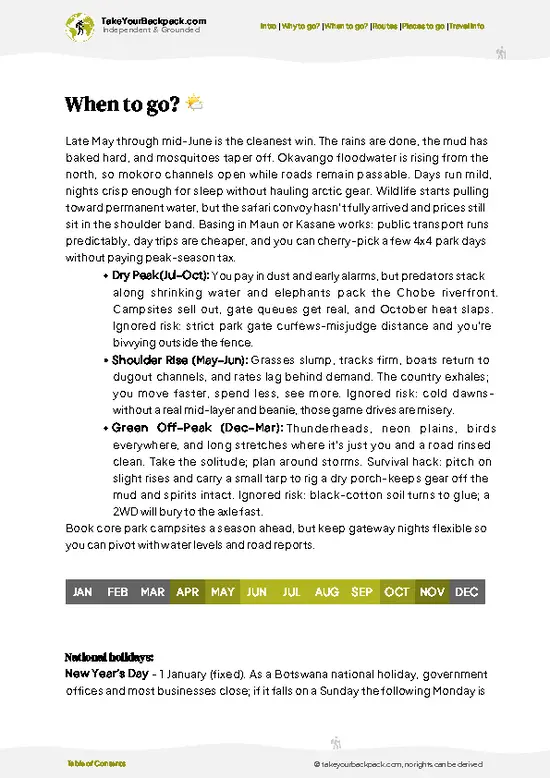
  • Weather: Nata’s dry season from May to October is your best bet. The skies clear, the air crisps to around 20-25°C (68-77°F), and the dust settles, making every sunrise and sunset sharp and vivid. The wet season (November to April) brings heavy rains, turning roads to mud traps and skies to thick gray, which can stall your plans.

  • Temperature: Daytime highs in the dry season hover around a comfortable 25°C (77°F), but nights dip to a chilly 5-10°C (41-50°F). Pack layers. The wet season heats up to 30°C+ (86°F+), but humidity can sap your energy fast.

  • Daylight Hours: Expect roughly 11 to 12 hours of daylight year-round. The dry season’s clear skies mean you get full, golden light from dawn to dusk—perfect for photography and long hikes.

  • Crowds: Nata is never overrun, but the dry season
read more 👉

  • Weather: Nata’s dry season from May to October is your best bet. The skies clear, the air crisps to around 20-25°C (68-77°F), and the dust settles, making every sunrise and sunset sharp and vivid. The wet season (November to April) brings heavy rains, turning roads to mud traps and skies to thick gray, which can stall your plans.

  • Temperature: Daytime highs in the dry season hover around a comfortable 25°C (77°F), but nights dip to a chilly 5-10°C (41-50°F). Pack layers. The wet season heats up to 30°C+ (86°F+), but humidity can sap your energy fast.

  • Daylight Hours: Expect roughly 11 to 12 hours of daylight year-round. The dry season’s clear skies mean you get full, golden light from dawn to dusk—perfect for photography and long hikes.

  • Crowds: Nata is never overrun, but the dry season draws more safari-goers and birdwatchers, especially around the salt pans. You’ll find a quiet buzz rather than silence, which adds to the atmosphere without feeling crowded.

  • Seasonal Activities: Dry months are prime for spotting wildlife congregating near waterholes and for birdwatching, especially flamingos at the salt pans. Wet season bursts with lush greenery and newborn animals but expect limited access to some trails.

  • Price Fluctuations: Expect higher prices during the dry season when demand peaks. Accommodations and tours can cost 20-30% less in the wet season, but factor in the trade-off with accessibility and comfort.


Pro-tip: Aim for late August to early October—dry, cool mornings and longer, warm afternoons give you the best balance of comfort, wildlife activity, and fewer muddy hassles.


source: climatestotravel.comJANJanuary: fair for travelingFEBFebruary: fair for travelingMARMarch: fair for travelingAPRApril: good for travelingMAYMay: highly recommended for travelingJUNJune: excellent for travelingJULJuly: excellent for travelingAUGAugust: excellent for travelingSEPSeptember: excellent for travelingOCTOctober: excellent for travelingNOVNovember: fair for travelingDECDecember: fair for traveling
botswana-city-nata v1
© Google |

✈️ The backpacker research shortcutBotswana Travel Guide

An offline-friendly backpacking guide with optimized travel routes, ranked highlights, transport advice, and the best areas to stay.
example page 0 from our offline Travel Guide for Botswana
example page 1 from our offline Travel Guide for Botswana
example page 2 from our offline Travel Guide for Botswana
example page 3 from our offline Travel Guide for Botswana
example page 4 from our offline Travel Guide for Botswana
example page 5 from our offline Travel Guide for Botswana
example page 6 from our offline Travel Guide for Botswana
example page 7 from our offline Travel Guide for Botswana
The digital guide (257 pages) contains:
58 highlights, ranked by travel appeal
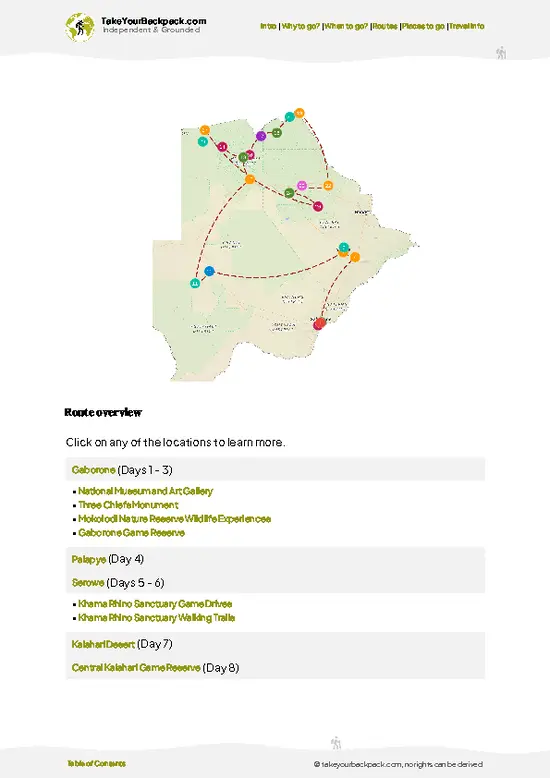
Optimized 5, 10 & 15-day travel routes
Cities, national parks, landmarks, beaches
How to get around
Offline-friendly for travel without Wi-Fi
👉 Click to see all 30+ guide features

📅 Plan smarter in minutes, not weeks
Month by month travel advice
Festivals & national holidays
Budget expectations

🗺️ Go to the right places, skip the overrated ones
Honest pros & cons of destinations
Top hikes, parks & viewpoints
Lesser-known places most travelers miss
Clear “worth it vs skip it” guidance

🛏️ Travel smoothly without rookie mistakes
Best areas to stay
Transport systems explained simply
Common scams & safety advice
SIM cards, money & practical tips

🌍 Understand the country, not just visit it
Culture & traditions
52 Essential phrases & customs
Festivals worth planning around
Traveler-friendly historical context
Insights that make places more meaningful

📱 Built for real travel conditions
Fully downloadable PDF
Works completely offline
Optimized for phone use
Useful in remote areas & buses
Everything in one place
Save weeks of stressful planning
Get instant access to your full guide. 30‑day money-back guarantee.


By proceeding you agree to our terms.
Sent to your inbox immediately after payment • 100% Secure Checkout
Best Backpacking Travel Advisor 2025 tourism awardBest Backpacking
Travel Advisor
2025
What others say about Take Your Backpack Guides:
⭐⭐⭐⭐⭐
Fantastic, amazing amount of information!
⭐⭐⭐⭐⭐
My goodness this is amazing, it's what I've been looking for hats off too you!
⭐⭐⭐⭐⭐
I think this is absolutely BRILLIANT
⭐⭐⭐⭐
Very complete and informative. It's still missing places, but I gotta to commend you
⭐⭐⭐⭐⭐
This is truly amazing, thank you, can't wait to explore it with my kids!
⭐⭐⭐⭐⭐
Awesome resource, thank you!
⭐⭐⭐⭐⭐
This is amazing! Can't wait to explore the ones I haven't seen
⭐⭐⭐⭐
I love this! Well done, great idea.
⭐⭐⭐⭐⭐
Thanks for taking the time to make this gem!
⭐⭐⭐⭐⭐
This might be the best website I've ever seen.
⭐⭐⭐⭐⭐
Congratulations, and thank you so much for your work; it's incredibly valuable.
⭐⭐⭐⭐
In all seriousness I think you did a great job pointing out the important spots
⭐⭐⭐⭐⭐
10/10 very good
⭐⭐⭐⭐⭐
As someone who's only just starting to visit regularly this is awesome, thank you.
⭐⭐⭐⭐
Thank you very much! I'm going to visit my dad, it's going to be very useful!
⭐⭐⭐⭐⭐
This is really cool! We'll be travelling for the first time and this definitely come in handy.
⭐⭐⭐⭐⭐
You are now our minister of culture, congratulations 👨‍💼
⭐⭐⭐⭐⭐
Just wanted to tell you that this is a pearl! Going to follow your recommendations.
⭐⭐⭐⭐⭐
This is so cool. I'll definitely be using the resource for my travels soon.
⭐⭐⭐⭐⭐
This is very impressive! Good work.
⭐⭐⭐⭐⭐
This is an amazing and informative site. Very well done!

🛏️ Where to stay?Best areas to stay in Botswana

In Nata, the best spot for backpackers is the area around the town center, where the pulse of local life hums steadily without overwhelming. This neighborhood strikes a balance between safety and social buzz, making it a natural magnet for solo travelers and budget adventurers. The streets here are lined with small shops and eateries where the scent of grilled meats and fresh bread drifts through the air, inviting you to linger and connect with locals and fellow travelers alike.

Staying close to the center means easy access to the handful of hostels that cater specifically to backpackers. These … read more 👉
In Nata, the best spot for backpackers is the area around the town center, where the pulse of local life hums steadily without overwhelming. This neighborhood strikes a balance between safety and social buzz, making it a natural magnet for solo travelers and budget adventurers. The streets here are lined with small shops and eateries where the scent of grilled meats and fresh bread drifts through the air, inviting you to linger and connect with locals and fellow travelers alike.

Staying close to the center means easy access to the handful of hostels that cater specifically to backpackers. These places aren’t just beds; they’re social hubs where stories are swapped over shared meals and the occasional campfire under a sky so vast and clear it feels like the stars are within reach. The vibe is relaxed but lively, a welcome contrast to the quieter, more residential outskirts where options thin out and the atmosphere turns more subdued and less inviting for newcomers.

Choosing the town center area also means you’re never far from transport links heading out to the Okavango Delta or Makgadikgadi Pans, so your onward journey feels seamless rather than a logistical headache. In Nata, this neighborhood isn’t just a place to crash—it’s where the trip truly begins.

🚌 Getting aroundHow to get around Nata

Nata moves at its own rhythm—less a clock-driven city, more a place where the sun’s angle and the dusty wind dictate your pace. The town’s heartbeat is slow but steady, with moments of quiet punctuated by bursts of local chatter and the occasional rumble of a passing truck. Streets are dusty, the air carries a faint scent of dry earth and distant smoke from cooking fires. This isn’t a place where you’ll find strict timetables or polished transit hubs. Instead, you’ll navigate by intuition, local cues, and a bit of patience. Understanding this flow means you’re not just avoiding frustration—you’re stepping into the town’s natural tempo, which makes every journey feel like part of the experience, not just a means to an end.


  • Walking: The most reliable and immersive way to get around Nata,
read more 👉
Nata moves at its own rhythm—less a clock-driven city, more a place where the sun’s angle and the dusty wind dictate your pace. The town’s heartbeat is slow but steady, with moments of quiet punctuated by bursts of local chatter and the occasional rumble of a passing truck. Streets are dusty, the air carries a faint scent of dry earth and distant smoke from cooking fires. This isn’t a place where you’ll find strict timetables or polished transit hubs. Instead, you’ll navigate by intuition, local cues, and a bit of patience. Understanding this flow means you’re not just avoiding frustration—you’re stepping into the town’s natural tempo, which makes every journey feel like part of the experience, not just a means to an end.


  • Walking: The most reliable and immersive way to get around Nata, especially within the town center. Distances are short, and the terrain is flat but dusty, so sturdy shoes and a hat are essentials. Walking lets you soak in the local sights and sounds—vendors calling out, children playing, and the occasional stray dog weaving through the streets. No cost, flexible timing, and the best way to catch the town’s atmosphere.


  • Shared Minibus Taxis (Combis): These are the backbone of local transit, running from early morning (around 6 AM) until early evening (about 6 PM). Fares are cheap, usually under a dollar, but expect crowded conditions and frequent stops. They don’t run on a strict schedule—departures happen when full—so timing is flexible but unpredictable. Perfect if you want to cover longer distances without breaking the bank, but bring patience and a readiness to squeeze in.


  • Local Bicycles: Renting a bike is a smart move if you want to cover more ground than walking but keep control over your schedule. Rentals are affordable, often under $10 per day, and the flat landscape makes pedaling easy. Early mornings and late afternoons are the best times to ride, avoiding the midday heat. Bikes give you freedom to explore outskirts and nearby villages at your own pace, with the added bonus of a breeze to cut through the dust.


  • Motorcycle Taxis (Okadas): For quick, short hops, these are the fastest option. They’re available throughout the day and can weave through traffic and rough roads with ease. Fares vary but are generally affordable for short trips. Helmets aren’t always standard, so if you’re not comfortable with a bit of risk, stick to other options. Great for when time is tight or you’re carrying gear that’s too heavy for walking or biking.


  • Private Car Hire: If your budget allows, renting a car or hiring a driver offers unmatched flexibility and comfort. This is the only option that guarantees air conditioning and a smooth ride on the rougher roads outside town. Prices are higher, but if you’re planning day trips to nearby attractions or traveling with a group, it’s a worthy splurge that saves time and energy.

👛 Costs (as of 14 April 2026)What things cost and how to budget

Backpacking through Nata, Botswana, means balancing the raw charm of a small town with practical costs that keep your trip smooth and your wallet intact. Here’s what you can expect to spend daily, broken down so you know exactly where your money goes.
  • Dorm Accommodation: Dorm beds in Nata’s guesthouses or hostels typically run between $15 and $25 per night. These places are basic but clean, often with a fan and shared bathrooms. Expect simple comfort rather than luxury, which suits the laid-back vibe of the town.
  • Meals: Eating local is both a treat and a budget saver. A hearty meal at a small local eatery costs around $5 to $8. If you stick to street food or buy groceries for self-catering, you can push this down to $3 to $5 per meal. Fresh fruits and staples like maize porridge are affordable
read more 👉
Backpacking through Nata, Botswana, means balancing the raw charm of a small town with practical costs that keep your trip smooth and your wallet intact. Here’s what you can expect to spend daily, broken down so you know exactly where your money goes.
  • Dorm Accommodation: Dorm beds in Nata’s guesthouses or hostels typically run between $15 and $25 per night. These places are basic but clean, often with a fan and shared bathrooms. Expect simple comfort rather than luxury, which suits the laid-back vibe of the town.
  • Meals: Eating local is both a treat and a budget saver. A hearty meal at a small local eatery costs around $5 to $8. If you stick to street food or buy groceries for self-catering, you can push this down to $3 to $5 per meal. Fresh fruits and staples like maize porridge are affordable and filling.
  • Local Transport: Nata is small, so walking covers most ground. For longer trips, shared minibus taxis charge about $1 to $2 per ride within town. If you’re heading to nearby attractions, budget around $10 to $15 for a return trip by minibus or shared shuttle.
  • Basic Activities/Entry Fees: The main draw is the Nata Bird Sanctuary, where entry costs roughly $10. Guided walks or boat tours add another $15 to $25, depending on the season and group size. These activities are worth it for the close-up wildlife experience and the quiet, dusty light of the salt pans at sunset.
  • Miscellaneous Expenses: Think bottled water ($1), occasional snacks, or small souvenirs. Budget around $3 to $5 daily here. Internet access can be patchy and sometimes requires buying a local SIM card or topping up data, which costs about $5 for a decent package.

Add it all up, and you’re looking at a daily spend of roughly $35 to $55. This range covers the essentials without skimping on the experience, letting you soak in the dry air, the wide-open skies, and the slow rhythm of life in Nata without constant money stress.


source: botswanatourism.co.bw
⚠️ Prices can change and everyone travels differently, so take this as a rough guide. Hope it helps you plan your adventure!

🚌 Day tripsEasy escapes and nearby places

Nata, Botswana, is a backpacker’s dream base, offering easy access to some of the region’s most captivating landscapes and experiences. Here are a few day trips that will elevate your adventure.

Makgadikgadi Pan
A surreal expanse of salt flats, the Makgadikgadi Pan is a must-see. The shimmering white surface stretches endlessly, especially stunning at sunrise when the light dances across the crust. It’s about a 1.5-hour drive from Nata, and you can expect to spend around $20 for transport and entry fees. The best time to visit is during the dry season, from May to October, when the stark beauty is at its peak. A common mistake? Underestimating the sun—bring plenty of water and sunscreen.


Nata Bird Sanctuary
Just a short 30-minute ride from town, the Nata Bird Sanctuary is a paradise … read more 👉
Nata, Botswana, is a backpacker’s dream base, offering easy access to some of the region’s most captivating landscapes and experiences. Here are a few day trips that will elevate your adventure.

Makgadikgadi Pan
A surreal expanse of salt flats, the Makgadikgadi Pan is a must-see. The shimmering white surface stretches endlessly, especially stunning at sunrise when the light dances across the crust. It’s about a 1.5-hour drive from Nata, and you can expect to spend around $20 for transport and entry fees. The best time to visit is during the dry season, from May to October, when the stark beauty is at its peak. A common mistake? Underestimating the sun—bring plenty of water and sunscreen.


Nata Bird Sanctuary
Just a short 30-minute ride from town, the Nata Bird Sanctuary is a paradise for birdwatchers. The air is filled with the calls of hundreds of species, especially during the wet season from November to March. Entry is around $5, and you can easily spend a few hours wandering the trails, soaking in the sights and sounds. Many first-timers rush through; take your time to truly appreciate the vibrant ecosystem.


Elephant Sands
About an hour from Nata, Elephant Sands offers a unique chance to see elephants up close. The lodge has a watering hole that attracts these majestic creatures, especially in the dry months. The experience is free if you just want to observe from the outside, but a drink at the bar can enhance the atmosphere. The best time to go is late afternoon when the elephants are most active. Don’t forget your camera—this is a moment you’ll want to capture.


Tsodilo Hills
A bit further afield, about two hours from Nata, the Tsodilo Hills are rich in history and culture. Known for their ancient rock art, the hills are a UNESCO World Heritage site. The entry fee is around $10, and a guided tour is highly recommended to truly understand the significance of the art. The best time to visit is during the cooler months, from May to September. Many visitors overlook the cultural aspect; take the time to connect with your guide and learn the stories behind the paintings.
👉 Explore Tsodilo Hills
Want to know what more Botswana offers?
The Botswana Travel Guide describes 58 highlights, from cities to national parks, from beaches to hikes

Get the Travel Guide -

🛡️ SafetyTraveler Safety Guide

Nata, Botswana, is generally safe, but a few practical tips can enhance your experience. The town has a relaxed vibe, but like anywhere, stay aware in crowded markets or bus stations. Keep your belongings close; petty theft can happen, especially in busy areas.

If you’re traveling solo, consider your surroundings after dark. The streets are quiet, and while most locals are friendly, it’s wise to stick to well-lit areas. A confident stride and a friendly smile can go a long way in establishing rapport.

Scams are rare, but be cautious with unofficial taxi services. Always opt for registered taxis or arrange transport through your accommodation. Annoyances like persistent vendors can test your patience, but a polite “no, thank you” usually suffices. Embrace the local culture, and you’ll find that most interactions are genuine and warm.

Other Botswanan towns near Nata

Explore more nearby:

  • Sowa Town—salt pans, mining operations, company housing| 40 km away
  • Letlhakane—diamond mining, transient workforce, arid setting| 147 km away
  • Orapa—closed mining town, security checkpoints, planned streets| 151 km away

💡 Not sure where to go next?
Create a personalized itinerary for Botswana including Nata and the places that fit your trip.

Generate my itinerary

👉 Discover all towns

Or checkout all Botswana has to offer (think cities, towns, villages, national parks, hikes, beaches, festivals)
Country photo of Botswana

We 💚 feedbackKey takeaways before you go

Nata has a pulse that’s both laid-back and electric. The sunsets here? They paint the sky in colors you didn’t know existed. Don’t miss the local markets; the spices and chatter will pull you in. But a heads-up: the heat can be relentless, so hydrate like it’s your job. Embrace the slow pace, and you’ll find the real magic in the small moments—like sharing stories with locals over a cold drink. It’s the kind of place that stays with you long after you leave.

✍️ Help improve this page!
The information on this page is based on in-depth research, insights shared by experienced travelers, and feedback from the local travel community in Botswana. While every effort is made to keep the information accurate and current, conditions can change — so if you spot anything incorrect or outdated, please get in touch.


🙋‍♂️ Give feedback

👋 Meet the founderWho’s Behind Take Your Backpack?

Johan, backpacker and founder of TakeYourBackpackHi, I’m Johan (Netherlands 🇳🇱), the creator of TakeYourBackpack. Over the past decade, I’ve backpacked through 80+ countries across six continents, gaining extensive experience with independent travel, long-term trips, and overland routes.

This site is built on a combination of firsthand travel experience and carefully curated insights from other backpackers. Many guides are based on places I’ve personally visited, while others bring together tips, observations, and practical advice shared by trusted travelers I’ve met along the way.

The goal is to provide realistic, experience-driven guidance — not generic itineraries — so you can explore destinations with better context, clearer expectations, and more confidence.

Get full Botswana guide •
Instant download • 58 highlights • Full Offline guide