×

Botswana🇧🇼 | townsOrapaclosed mining town, security checkpoints, planned streets | things to do and best time to go

Explore NataExplore Mochudi

Backpacking in Orapa
👍 Recommendedtown ranked #8
By Johan Kruseman 🇳🇱 | Updated June 19, 2026

Orapa used to be a closed-off company town, the kind of place where the only outsiders wore hard hats and carried ID badges. Today, the gates are less forbidding, but Orapa still feels like a world apart—set deep in Botswana’s northern scrub, halfway between Francistown’s bustle and the wild promise of Makgadikgadi. For backpackers, Orapa is more pit stop than pilgrimage. The diamond mine dominates everything: you’ll sense it in the dust, the hum of machinery, the way the town’s rhythm is set by shift changes, not sunsets. There’s no old center to wander, no street food scene to linger over. But if you’re plotting a route between the salt pans and the Okavango, Orapa’s supermarkets and guesthouses offer a practical breather. It’s safe, orderly, and less social than Maun or Nata—don’t expect hostel camaraderie or late-night bars. Buses run, but you’ll need patience and a knack for small-town schedules. Orapa isn’t scenic, but it’s real, and sometimes that’s the point.

Discover everything you want to know in the 📖 Botswana Travel Guide.


Get your Botswana guide
58 ranked highlights, routes & tips, works offline (257 pages)
Loading the map 🌍
CLICK TO FILTER
cities
towns
villages
landmarks
national parks
hikes
attractions
festivals
regions
SHOW COUNTRY’S BESTSHOW ALL

✨ Why go?
Ranked #8 town in Botswana
What makes it a must-see town

Orapa serves as a gateway for backpackers exploring Botswana’s wild heart. Its convenience lies in proximity to stunning hikes and the serene beaches of nearby lakes. You’ll find small-scale hostels and guesthouses that foster a friendly, communal vibe, perfect for solo travelers or small groups looking to connect. The walkable streets invite you to sample local food, where the scent of grilled meats mingles with the chatter of locals. Most travelers stay briefly, using Orapa as a launchpad for adventures, but those who linger appreciate the slow pace and the chance to soak in the culture. If you’re after a laid-back atmosphere with easy access to nature, Orapa is a solid choice for your backpacking route.
Want to include Orapa in your Botswana route?
Create a personalized Botswana itinerary that includes Orapa and the places that fit your trip — based on your travel style, budget, and available time. Get your route in seconds.

Generate my trip

💡 HighlightsKey sights and experiences for travelers

  • Orapa Diamond Mine (viewing/visitor arrangements with Debswana) — The town exists because of this behemoth; arranged tours or visits (book ahead and go with a guide) give the best window into Botswana’s diamond industry, massive open-pit operations and the town’s history tied to mining.
  • Debswana Visitor/Information area — Where available, this small information hub or reception area (usually run by Debswana) explains the mine’s social and economic impact on the town—good for context before you walk the town or take a mine visit.
  • Orapa Airport (airstrip) — Small, practical and oddly atmospheric: watching charter flights come and go or meeting people travelling in and out gives a real sense of how remote mining towns link to the rest of Botswana.
  • Orapa Town Market / Main Mall — Low-key
read more 👉
  • Orapa Diamond Mine (viewing/visitor arrangements with Debswana) — The town exists because of this behemoth; arranged tours or visits (book ahead and go with a guide) give the best window into Botswana’s diamond industry, massive open-pit operations and the town’s history tied to mining.
  • Debswana Visitor/Information area — Where available, this small information hub or reception area (usually run by Debswana) explains the mine’s social and economic impact on the town—good for context before you walk the town or take a mine visit.
  • Orapa Airport (airstrip) — Small, practical and oddly atmospheric: watching charter flights come and go or meeting people travelling in and out gives a real sense of how remote mining towns link to the rest of Botswana.
  • Orapa Town Market / Main Mall — Low-key but lively: a place to buy basics, chat with locals, pick up snacks or the occasional handmade item. Market days are where you see everyday life in town.
  • Orapa Community Centre (cultural events and workshops) — The hub for local gatherings, dances, workshops and occasional exhibitions. If there’s a community event on, it’s the best place to meet residents and see local culture in action.
  • Sports and Recreation Grounds — Football matches, weekend cricket and public events happen here; joining or watching a match is an easy, authentic way to connect with locals and the town’s social rhythm.
  • Orapa Country Club / Hotel bar and lounge — The town’s informal social living room: public bar, occasional live music and the best spot to swap travel notes with long-term residents, contract workers and other visitors.
  • Local churches and Sunday gatherings — Church life is a central social institution in Orapa; attending a service or community tea (ask first) gives a respectful, human insight into local life and community networks.
  • Edge-of-town stargazing spots — With low general light pollution away from the mine and main street, the western edge of Orapa is surprisingly good for stars. Bring a blanket and a torch; the Milky Way can be spectacular.
  • Main Road shebeens and roadside eateries — Small, informal places where town people gather. Food is basic but real, conversation is direct, and it’s one of the few places where you’ll get unfiltered local colour—go with a local if you can.
A few real, visitable highlights just outside Orapa that make great day trips: the Sowa/Sua Pan salt flats (Makgadikgadi region), the neighbouring town of Letlhakane for local markets and mineside perspectives, and the wider Makgadikgadi/Sua Pan area for pans, seasonal birdlife and dramatic stargazing.
Spotted a mistake or missing something? Contact us.
🏘️ NeighborhoodsNeighborhood guide to Orapa

Orapa, a mining town in Botswana, offers a unique blend of local culture and practical amenities for backpackers. Here’s how to navigate its neighborhoods:

Central Orapa: This is the heart of the town, where you’ll find essential services and local eateries. The vibe is bustling but not overwhelming. It’s walkable, making it easy to explore on foot. Costs are moderate, with budget-friendly accommodations available. Perfect for short stays, you can soak in the local atmosphere without feeling rushed.

Orapa Game Park Area: A bit quieter, this area is ideal for nature lovers. The scent of acacia trees fills the air, and you might spot wildlife nearby. While it’s less walkable, the tranquility makes it worth it. Accommodations here can be pricier, but the experience is richer. Great for longer … read more 👉
Orapa, a mining town in Botswana, offers a unique blend of local culture and practical amenities for backpackers. Here’s how to navigate its neighborhoods:

Central Orapa: This is the heart of the town, where you’ll find essential services and local eateries. The vibe is bustling but not overwhelming. It’s walkable, making it easy to explore on foot. Costs are moderate, with budget-friendly accommodations available. Perfect for short stays, you can soak in the local atmosphere without feeling rushed.

Orapa Game Park Area: A bit quieter, this area is ideal for nature lovers. The scent of acacia trees fills the air, and you might spot wildlife nearby. While it’s less walkable, the tranquility makes it worth it. Accommodations here can be pricier, but the experience is richer. Great for longer stays if you want to immerse yourself in Botswana’s natural beauty.

Residential Zones: These neighborhoods offer a glimpse into everyday life. The atmosphere is relaxed, with friendly locals. Transport options are limited, so be prepared to walk or bike. Costs are lower, making it suitable for budget travelers looking for an authentic experience. Perfect for those who want to stay longer and connect with the community.

⌛️ 1 day1-day itinerary for Orapa

Orapa, Botswana, is a diamond mining town that pulses with a unique blend of industry and community spirit. It’s not on every traveler’s radar, but that’s what makes it special. The town’s heart beats in its vibrant neighborhoods, where the scent of local cuisine wafts through the air, mingling with the dust of the red earth.

Start your morning at the Orapa Shopping Complex. Grab a cup of strong, local coffee and a traditional vetkoek from a nearby vendor. The crispy exterior and soft, warm interior will fuel your day. Afterward, take a stroll through the residential areas, where you can see the colorful homes and hear the laughter of children playing. This is a slice of everyday life that many tourists miss.

In the afternoon, head to the Orapa Game Park. It’s a short drive away and often … read more 👉
Orapa, Botswana, is a diamond mining town that pulses with a unique blend of industry and community spirit. It’s not on every traveler’s radar, but that’s what makes it special. The town’s heart beats in its vibrant neighborhoods, where the scent of local cuisine wafts through the air, mingling with the dust of the red earth.

Start your morning at the Orapa Shopping Complex. Grab a cup of strong, local coffee and a traditional vetkoek from a nearby vendor. The crispy exterior and soft, warm interior will fuel your day. Afterward, take a stroll through the residential areas, where you can see the colorful homes and hear the laughter of children playing. This is a slice of everyday life that many tourists miss.

In the afternoon, head to the Orapa Game Park. It’s a short drive away and often overlooked. Here, you can spot wildlife like zebras and giraffes against the backdrop of the setting sun. Bring a picnic; the park has shaded spots perfect for a leisurely lunch while you soak in the sounds of nature.

As evening falls, return to town and visit the local market. The vibrant stalls are filled with handmade crafts and fresh produce. Engage with the vendors; their stories add depth to your experience. End your day with a meal at a local eatery, where you can savor traditional dishes like seswaa, slow-cooked beef that melts in your mouth.

In Orapa, every moment is a chance to connect with the land and its people, making your day not just a visit, but a meaningful journey.
Turn your Orapa visit into an Botswana adventure
Build a complete Botswana route with Orapa, hidden gems, must-see destinations, and realistic travel times included.

Generate my trip

🌤️ When to go?Choosing the right time of year


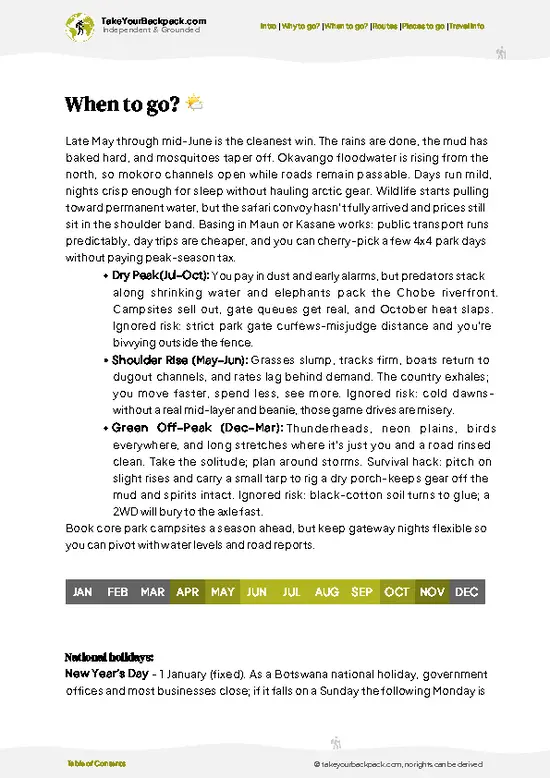
  • Weather: Orapa’s dry season from May to September is your best bet. The skies clear, the dust settles, and the air feels crisp—perfect for trekking without the sticky heat or sudden downpours.

  • Temperature: Expect daytime highs around 25-30°C (77-86°F) during dry months, with nights dropping to a cool 5-10°C (41-50°F). This swing means layering is your friend—warm mornings, sun-soaked afternoons, and brisk evenings.

  • Daylight Hours: June offers roughly 10.5 hours of daylight, enough to squeeze in long hikes or explore local spots without rushing, but not so much that you burn out under the sun.

  • Crowds: Orapa isn’t a tourist hotspot, so crowds are minimal year-round. However, the dry season draws a few more visitors, mainly mining professionals and occasional backpackers, keeping the
read more 👉

  • Weather: Orapa’s dry season from May to September is your best bet. The skies clear, the dust settles, and the air feels crisp—perfect for trekking without the sticky heat or sudden downpours.

  • Temperature: Expect daytime highs around 25-30°C (77-86°F) during dry months, with nights dropping to a cool 5-10°C (41-50°F). This swing means layering is your friend—warm mornings, sun-soaked afternoons, and brisk evenings.

  • Daylight Hours: June offers roughly 10.5 hours of daylight, enough to squeeze in long hikes or explore local spots without rushing, but not so much that you burn out under the sun.

  • Crowds: Orapa isn’t a tourist hotspot, so crowds are minimal year-round. However, the dry season draws a few more visitors, mainly mining professionals and occasional backpackers, keeping the vibe low-key but lively.

  • Seasonal Activities: Wildlife viewing peaks in the dry season as animals gather around shrinking waterholes. The dusty landscape sharpens the contrast, making sightings more dramatic and photo-worthy.

  • Price Fluctuations: Accommodation and local services stay fairly stable, but expect slight hikes during the dry season when demand nudges up. Booking ahead can lock in better rates.


Pro-tip: Aim for early dry season—May to June—when the air is fresh, the crowds are just waking up, and the landscape still holds a hint of green before the full dust settles.


source: climatestotravel.comJANJanuary: fair for travelingFEBFebruary: fair for travelingMARMarch: fair for travelingAPRApril: good for travelingMAYMay: excellent for travelingJUNJune: excellent for travelingJULJuly: highly recommended for travelingAUGAugust: highly recommended for travelingSEPSeptember: highly recommended for travelingOCTOctober: good for travelingNOVNovember: fair for travelingDECDecember: fair for traveling
when-to-go

✈️ The backpacker research shortcutBotswana Travel Guide

An offline-friendly backpacking guide with optimized travel routes, ranked highlights, transport advice, and the best areas to stay.
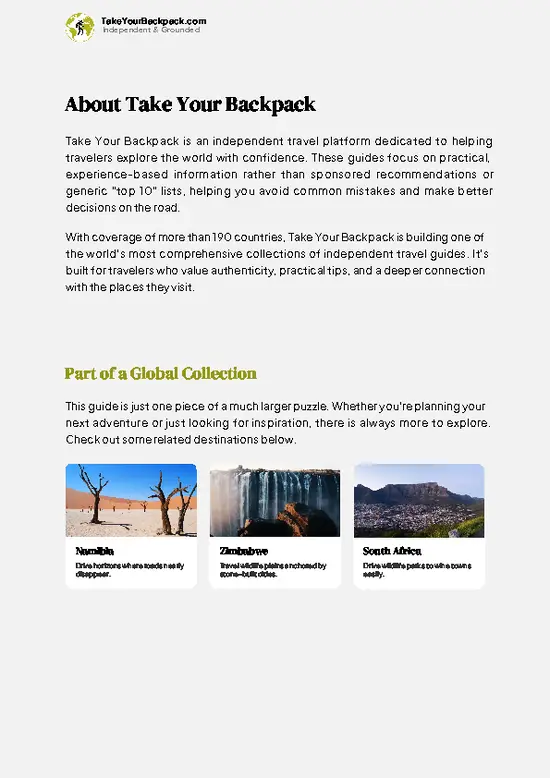
example page 0 from our offline Travel Guide for Botswana
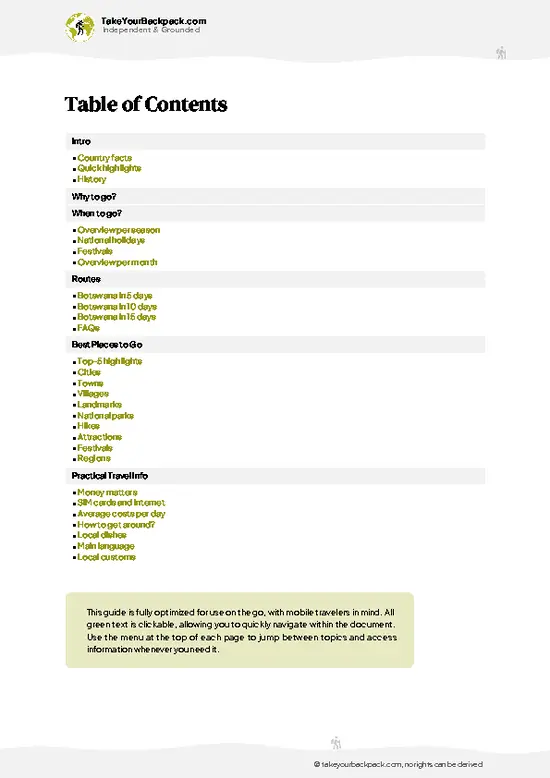
example page 1 from our offline Travel Guide for Botswana
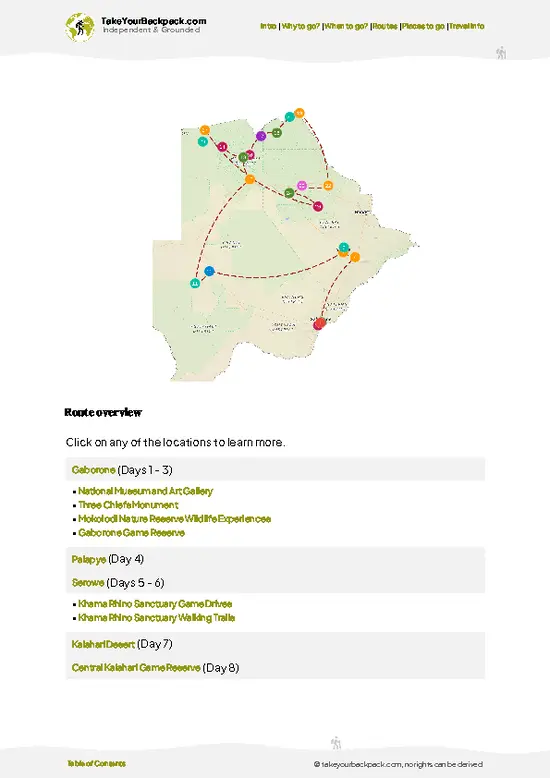
example page 2 from our offline Travel Guide for Botswana
example page 3 from our offline Travel Guide for Botswana
example page 4 from our offline Travel Guide for Botswana
example page 5 from our offline Travel Guide for Botswana
example page 6 from our offline Travel Guide for Botswana
example page 7 from our offline Travel Guide for Botswana
The digital guide (257 pages) contains:
58 highlights, ranked by travel appeal
Optimized 5, 10 & 15-day travel routes
Cities, national parks, landmarks, beaches
How to get around
Offline-friendly for travel without Wi-Fi
👉 Click to see all 30+ guide features

📅 Plan smarter in minutes, not weeks
Month by month travel advice
Festivals & national holidays
Budget expectations

🗺️ Go to the right places, skip the overrated ones
Honest pros & cons of destinations
Top hikes, parks & viewpoints
Lesser-known places most travelers miss
Clear “worth it vs skip it” guidance

🛏️ Travel smoothly without rookie mistakes
Best areas to stay
Transport systems explained simply
Common scams & safety advice
SIM cards, money & practical tips

🌍 Understand the country, not just visit it
Culture & traditions
52 Essential phrases & customs
Festivals worth planning around
Traveler-friendly historical context
Insights that make places more meaningful

📱 Built for real travel conditions
Fully downloadable PDF
Works completely offline
Optimized for phone use
Useful in remote areas & buses
Everything in one place
Save weeks of stressful planning
Get instant access to your full guide. 30‑day money-back guarantee.


By proceeding you agree to our terms.
Sent to your inbox immediately after payment • 100% Secure Checkout
Best Backpacking Travel Advisor 2025 tourism awardBest Backpacking
Travel Advisor
2025
What others say about Take Your Backpack Guides:
⭐⭐⭐⭐⭐
Fantastic, amazing amount of information!
⭐⭐⭐⭐⭐
My goodness this is amazing, it's what I've been looking for hats off too you!
⭐⭐⭐⭐⭐
I think this is absolutely BRILLIANT
⭐⭐⭐⭐
Very complete and informative. It's still missing places, but I gotta to commend you
⭐⭐⭐⭐⭐
This is truly amazing, thank you, can't wait to explore it with my kids!
⭐⭐⭐⭐⭐
Awesome resource, thank you!
⭐⭐⭐⭐⭐
This is amazing! Can't wait to explore the ones I haven't seen
⭐⭐⭐⭐
I love this! Well done, great idea.
⭐⭐⭐⭐⭐
Thanks for taking the time to make this gem!
⭐⭐⭐⭐⭐
This might be the best website I've ever seen.
⭐⭐⭐⭐⭐
Congratulations, and thank you so much for your work; it's incredibly valuable.
⭐⭐⭐⭐
In all seriousness I think you did a great job pointing out the important spots
⭐⭐⭐⭐⭐
10/10 very good
⭐⭐⭐⭐⭐
As someone who's only just starting to visit regularly this is awesome, thank you.
⭐⭐⭐⭐
Thank you very much! I'm going to visit my dad, it's going to be very useful!
⭐⭐⭐⭐⭐
This is really cool! We'll be travelling for the first time and this definitely come in handy.
⭐⭐⭐⭐⭐
You are now our minister of culture, congratulations 👨‍💼
⭐⭐⭐⭐⭐
Just wanted to tell you that this is a pearl! Going to follow your recommendations.
⭐⭐⭐⭐⭐
This is so cool. I'll definitely be using the resource for my travels soon.
⭐⭐⭐⭐⭐
This is very impressive! Good work.
⭐⭐⭐⭐⭐
This is an amazing and informative site. Very well done!

🛏️ Where to stay?How to pick the right area

Orapa’s heart for backpackers pulses strongest around the town center and the nearby residential blocks. This is where you’ll find the safest streets, lit by the warm glow of street lamps that cut through the dry, dusty air. The town center hums quietly in the evenings, with small shops and local eateries offering a chance to mingle with miners and locals alike—perfect for solo travelers craving connection without the touristy gloss.

Compared to the outskirts, which feel more isolated and industrial, the central neighborhoods offer a grounded sense of community. Hostels and budget lodgings cluster … read more 👉
Orapa’s heart for backpackers pulses strongest around the town center and the nearby residential blocks. This is where you’ll find the safest streets, lit by the warm glow of street lamps that cut through the dry, dusty air. The town center hums quietly in the evenings, with small shops and local eateries offering a chance to mingle with miners and locals alike—perfect for solo travelers craving connection without the touristy gloss.

Compared to the outskirts, which feel more isolated and industrial, the central neighborhoods offer a grounded sense of community. Hostels and budget lodgings cluster here, often simple but clean, with shared spaces that encourage swapping stories over a cup of strong Botswana tea. The vibe is unpretentious and welcoming, a low-key social hub where you can recharge without the noise of bigger towns.

Staying here means you’re not just passing through; you’re stepping into the rhythm of Orapa life, where safety and sociability aren’t luxuries but the baseline. This makes the town center and its immediate surroundings the smart choice for backpackers who want to feel both secure and part of the local pulse.

🚌 Getting aroundMoving around without the hassle

Orapa moves at its own rhythm—a blend of purposeful industry and the slow, deliberate pace of a desert town. The sun hits hard, casting sharp shadows on the dusty streets where the hum of mining trucks punctuates the quiet. Here, time isn’t about strict timetables but about catching the right moment between shifts and market stalls. The air carries a faint metallic tang mixed with the dry scent of acacia trees, grounding you in a place where every movement feels measured yet unhurried. To navigate Orapa like a local, you’ll need to sync with this flow—lean into the gaps between the bustle and the calm, and you’ll find your way with ease.


  • Walking: The heart of Orapa is compact enough to explore on foot. Streets are mostly flat but dusty, so sturdy shoes are a must. Walking lets you soak
read more 👉
Orapa moves at its own rhythm—a blend of purposeful industry and the slow, deliberate pace of a desert town. The sun hits hard, casting sharp shadows on the dusty streets where the hum of mining trucks punctuates the quiet. Here, time isn’t about strict timetables but about catching the right moment between shifts and market stalls. The air carries a faint metallic tang mixed with the dry scent of acacia trees, grounding you in a place where every movement feels measured yet unhurried. To navigate Orapa like a local, you’ll need to sync with this flow—lean into the gaps between the bustle and the calm, and you’ll find your way with ease.


  • Walking: The heart of Orapa is compact enough to explore on foot. Streets are mostly flat but dusty, so sturdy shoes are a must. Walking lets you soak in the subtle shifts in light and the occasional breeze that cools the afternoon heat. It’s free, flexible, and the best way to catch the town’s quiet moments.


  • Shared Minibus Taxis: These are the lifeblood of local transit, running from early morning around 6:30 AM until about 7 PM. Fares hover around 5-10 BWP (Botswana Pula), making them budget-friendly. They’re not the fastest—expect stops and starts as they pick up passengers—but they offer a genuine slice of daily life and connect you to nearby villages and the busier parts of town.


  • Private Taxis: More expensive but faster and more comfortable, private taxis are your go-to if you’re carrying gear or want to beat the heat. Negotiate fares upfront; a short trip within town typically costs 30-50 BWP. They don’t run on a schedule, so you can flag one down or book by phone, which is handy for late evenings when minibuses have stopped.


  • Bicycle Rentals: If you’re up for a bit of exercise and want to cover more ground without losing the tactile feel of the town, renting a bike is a smart move. Rentals cost about 50-70 BWP per day. The roads are mostly quiet, but watch for loose gravel and sudden dust clouds stirred by passing vehicles.

👛 Costs (as of 13 April 2026)Travel costs and budget guide for Orapa

Backpacking in Orapa, Botswana, comes with a straightforward cost structure, but it’s shaped by the town’s remote mining-town vibe and limited tourist infrastructure. Here’s what you can expect to spend daily.
  • Dorm Accommodation: Orapa isn’t a backpacker hotspot, so dorm-style hostels are scarce. Budget travelers usually find basic guesthouses or worker lodges charging around $15 to $25 per night. These places are functional, with simple beds and shared bathrooms, often lacking the social buzz of a hostel but offering a clean, no-frills place to crash.
  • Meals: Food options lean heavily on local eateries and small shops. Expect to spend about $5 to $10 per meal if you stick to local dishes like pap (maize porridge) with meat or vegetables. Western-style meals or imported goods will push costs
read more 👉
Backpacking in Orapa, Botswana, comes with a straightforward cost structure, but it’s shaped by the town’s remote mining-town vibe and limited tourist infrastructure. Here’s what you can expect to spend daily.
  • Dorm Accommodation: Orapa isn’t a backpacker hotspot, so dorm-style hostels are scarce. Budget travelers usually find basic guesthouses or worker lodges charging around $15 to $25 per night. These places are functional, with simple beds and shared bathrooms, often lacking the social buzz of a hostel but offering a clean, no-frills place to crash.
  • Meals: Food options lean heavily on local eateries and small shops. Expect to spend about $5 to $10 per meal if you stick to local dishes like pap (maize porridge) with meat or vegetables. Western-style meals or imported goods will push costs higher, around $10 to $15. Cooking your own food is limited by accommodation facilities but can save money if possible.
  • Local Transport: The town is compact, so walking covers most needs. For longer trips or to nearby villages, shared minibuses or taxis cost roughly $1 to $3 per ride. Renting a bike is rare and not well-supported, so plan on foot or local rides for getting around.
  • Basic Activities/Entry Fees: Orapa’s main draw is the diamond mine and surrounding nature. Tours of the mine are tightly controlled and often off-limits to casual visitors, so expect minimal activity costs here. Visiting local markets or community events is free or costs a small donation ($0 to $5). Nature walks or nearby wildlife spots might have entry fees around $5 to $10.
  • Miscellaneous Expenses: Internet access is patchy and often expensive, around $2 to $5 per hour in cafes or lodges. Bottled water and snacks add another $2 to $5 daily. Keep a buffer for unexpected costs like phone credit or small tips.

All told, a realistic daily budget for backpacking in Orapa falls between $30 and $55. This range reflects the town’s limited but functional options, where simplicity and local flavor define the experience more than tourist comforts. Planning with these numbers in mind helps you avoid surprises and keeps your trip smooth.


source: botswanatourism.co.bw
⚠️ Prices can change and everyone travels differently, so take this as a rough guide. Hope it helps you plan your adventure!

🚌 Day tripsExploring the surroundings

Orapa, Botswana, is a backpacker’s gateway to some of the most captivating landscapes and experiences in the region. With its strategic location, you can easily embark on day trips that blend adventure with the essence of Botswana’s natural beauty.

Makgadikgadi Pan
A trip to the Makgadikgadi Pan is like stepping onto another planet. The vast salt flats stretch endlessly, creating a surreal landscape that’s best explored during the dry season, from May to October. It takes about an hour and a half to reach, and you can expect to spend around $20 for transport. Don’t miss the sunset; the colors explode across the horizon, a sight that feels like a reward for the journey. Many first-timers underestimate the chill of the evening—bring a jacket!


Tsodilo Hills
Tsodilo Hills, known as the … read more 👉
Orapa, Botswana, is a backpacker’s gateway to some of the most captivating landscapes and experiences in the region. With its strategic location, you can easily embark on day trips that blend adventure with the essence of Botswana’s natural beauty.

Makgadikgadi Pan
A trip to the Makgadikgadi Pan is like stepping onto another planet. The vast salt flats stretch endlessly, creating a surreal landscape that’s best explored during the dry season, from May to October. It takes about an hour and a half to reach, and you can expect to spend around $20 for transport. Don’t miss the sunset; the colors explode across the horizon, a sight that feels like a reward for the journey. Many first-timers underestimate the chill of the evening—bring a jacket!


Tsodilo Hills
Tsodilo Hills, known as the “Louvre of the Desert,” is a UNESCO World Heritage site packed with ancient rock art. It’s about a two-hour drive from Orapa, and the entrance fee is around $5. The best time to visit is early morning or late afternoon when the light dances on the rocks, revealing intricate paintings that tell stories of the San people. A common mistake is rushing through; take your time to absorb the spiritual energy of the place.
👉 Explore Tsodilo Hills

Chobe National Park
While a bit further at roughly three hours away, Chobe National Park is worth every minute. Known for its massive elephant population, a day trip here can cost around $50 for a guided tour. The best months to visit are during the dry season when animals congregate around water sources. Many backpackers overlook the early morning game drives; this is when the park comes alive, and you’ll avoid the crowds.
👉 Explore Chobe National Park

Orapa Game Park
Just a stone’s throw from town, Orapa Game Park offers a quick escape into the wild. You can hop in a taxi for about $10 and be there in under 30 minutes. The park is home to various wildlife, including giraffes and zebras. The best time to visit is during the cooler months, from May to September. A common rookie mistake is not bringing enough water; it’s essential to stay hydrated while exploring.
Want to know what more Botswana offers?
The Botswana Travel Guide describes 58 highlights, from cities to national parks, from beaches to hikes

Get the Travel Guide -

🛡️ SafetyStaying Safe: What Travelers Should Know

Orapa is generally safe, but like any place, a bit of awareness goes a long way. Stick to well-lit areas at night, especially if you’re solo. The streets can feel quiet, so keep your phone handy for navigation and avoid distractions.

While scams are rare, be cautious around informal vendors; they might not always have your best interest at heart. If you’re approached by someone offering unsolicited help, a polite but firm decline usually suffices.

Carry yourself confidently, and engage with locals when you can. Their warmth is genuine, and it often leads to richer experiences. Just remember, a little vigilance enhances your adventure.

Other Botswanan towns near Orapa

Explore more nearby:

  • Letlhakane—diamond mining, transient workforce, arid setting| 24 km away
  • Sowa Town—salt pans, mining operations, company housing| 123 km away
  • Nata—road junction, birding hotspot, salt pan access| 151 km away

💡 Not sure where to go next?
Create a personalized itinerary for Botswana including Orapa and the places that fit your trip.

Generate my itinerary

👉 Discover all towns

Or checkout all Botswana has to offer (think cities, towns, villages, national parks, hikes, beaches, festivals)
Country photo of Botswana

We 💚 feedbackWhat to keep in mind

Orapa has a raw, unfiltered vibe that feels like stepping into a living postcard. The best surprise? The warmth of the locals—everyone’s ready to share a story or a laugh. Just be prepared for the heat; it can be relentless. Embrace the sweat, and you’ll find the beauty in every moment.

✍️ Help improve this page!
The information on this page is based on in-depth research, insights shared by experienced travelers, and feedback from the local travel community in Botswana. While every effort is made to keep the information accurate and current, conditions can change — so if you spot anything incorrect or outdated, please get in touch.


🙋‍♂️ Give feedback

👋 Meet the founderWho’s Behind Take Your Backpack?

Johan, backpacker and founder of TakeYourBackpackHi, I’m Johan (Netherlands 🇳🇱), the creator of TakeYourBackpack. Over the past decade, I’ve backpacked through 80+ countries across six continents, gaining extensive experience with independent travel, long-term trips, and overland routes.

This site is built on a combination of firsthand travel experience and carefully curated insights from other backpackers. Many guides are based on places I’ve personally visited, while others bring together tips, observations, and practical advice shared by trusted travelers I’ve met along the way.

The goal is to provide realistic, experience-driven guidance — not generic itineraries — so you can explore destinations with better context, clearer expectations, and more confidence.

Get full Botswana guide •
Instant download • 58 highlights • Full Offline guide