×

Botswana🇧🇼 | national parksNxai Pan National ParkBaines' Baobabs, Kudiakam Pan, green-season zebra, waterhole elephants | things to do and best time to go

Explore Moremi Game ReserveExplore Okavango Delta

Backpacking in Nxai Pan
👍 Recommendednational park ranked #5
By Johan Kruseman 🇳🇱 | Updated October 22, 2026

Baines’ Baobabs stand at the edge of Kudiakam Pan, a group of seven huge trees that Thomas Baines painted in 1862 and that still lean the same way today. Nxai Pan National Park sits in the north of Botswana, north of the Makgadikgadi Pans and about 135 kilometers east of Maun by road. The sand tracks are soft and slow, so you earn every sighting: elephants at the waterhole, springbok on the open grassland, and a horizon with no fence on it. Hiking is limited because lions and elephants roam freely, so walking happens only with a guide or around camp. Crowds are thin, and the silence at night is total. Compared with Makgadikgadi Pans National Park next door, Nxai Pan has more grass, more game and a greener, less salt-white look.

Discover everything you want to know in the 📖 Botswana Travel Guide.


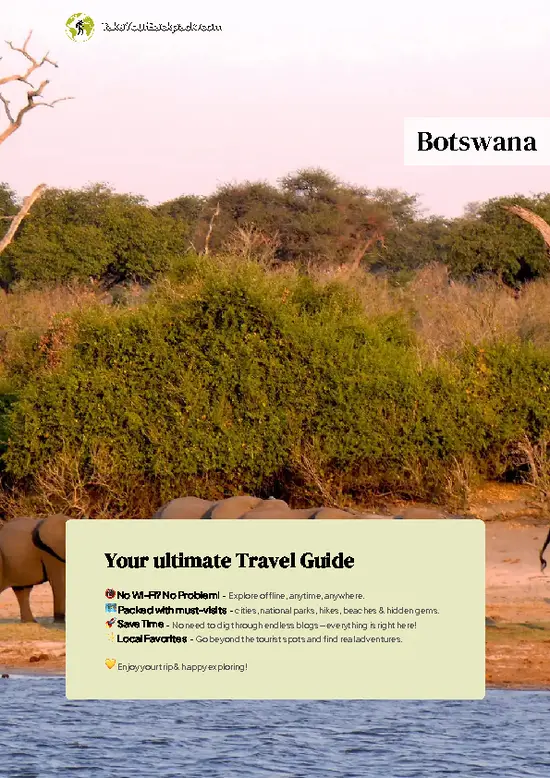
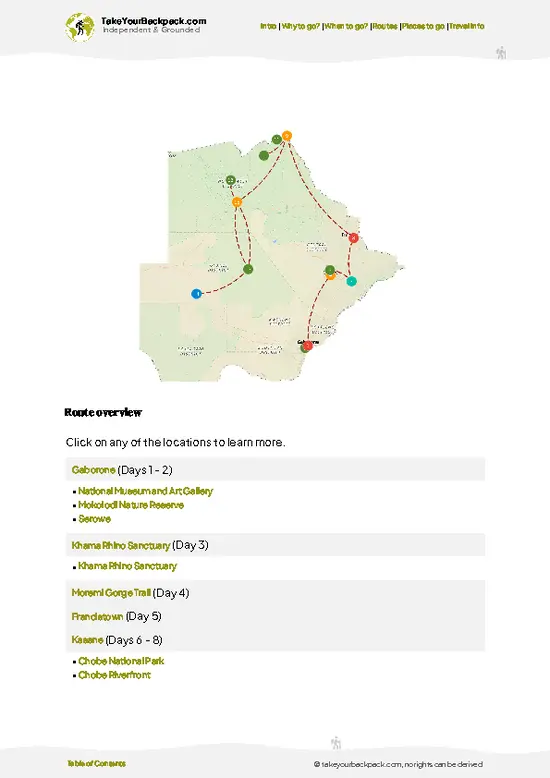
example page 0 from our offline Travel Guide for Botswana
example page 1 from our offline Travel Guide for Botswana
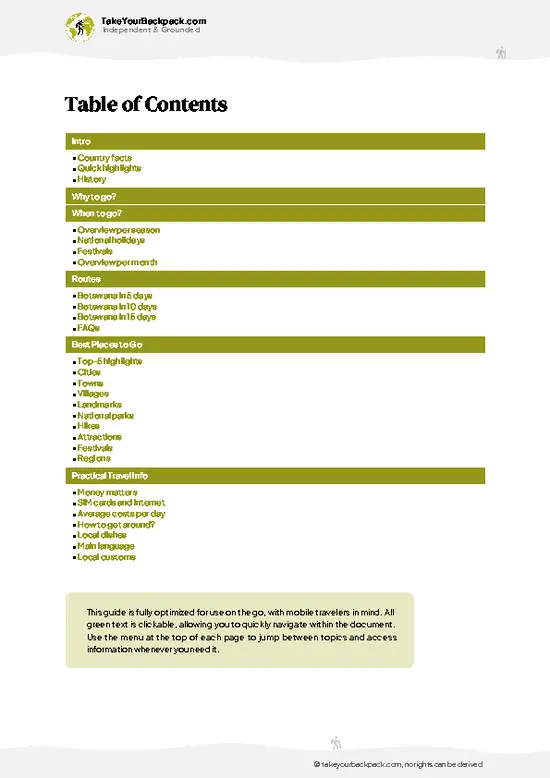
example page 2 from our offline Travel Guide for Botswana
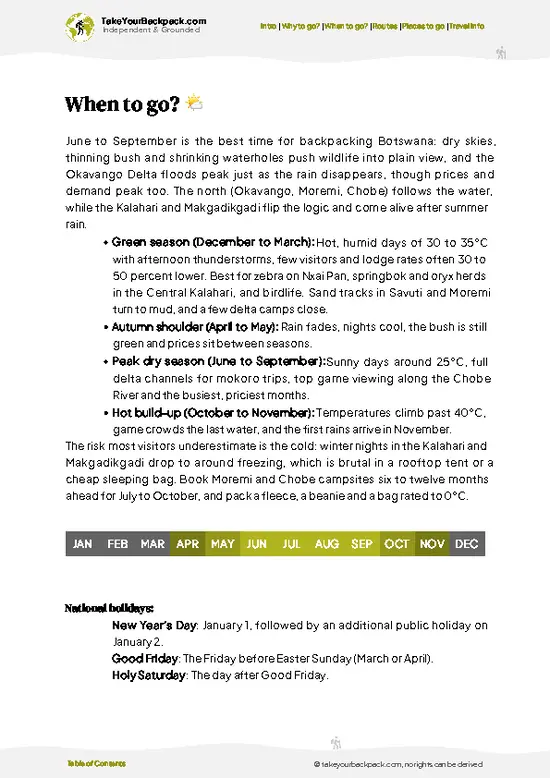
example page 3 from our offline Travel Guide for Botswana
example page 4 from our offline Travel Guide for Botswana
example page 5 from our offline Travel Guide for Botswana
example page 6 from our offline Travel Guide for Botswana
example page 7 from our offline Travel Guide for Botswana
Loading the map 🌍
CLICK TO FILTER
cities
towns
villages
landmarks
national parks
hikes
attractions
festivals
regions
SHOW COUNTRY’S BESTSHOW ALL

✨ Why go?
Ranked #5 national park in Botswana
What makes this national park worth exploring

Nxai Pan National Park suits backpackers who like making their own plans and carrying their own gear. A self-drive 4x4 and a tent are enough, and the sand tracks make the trip feel earned rather than packaged. Most visitors who come this way want to camp, and the campsites here put you close to animals without a fence. The Baines’ Baobabs are the focal point, a sunrise and sunset subject that you can reach under your own steam, then sit beneath with a flask of coffee for as long as you like. The other draw is the seasonal zebra migration that fills the pan after the rains, when thousands of animals arrive from the Boteti side. Guided tours exist, yet this park rewards independent travelers who are comfortable with deep sand, limited fuel and long quiet stretches.

💡 HighlightsEssential experiences to have while exploring Nxai Pan

  1. Baines’ Baobabs: seven ancient trees on Kudiakam Pan, painted by Thomas Baines in 1862. The open salt flat behind them makes the scene look unchanged since then.
  2. Nxai Pan waterhole: elephants, giraffe, oryx and springbok gather here, and the dry season brings the biggest herds at close range.
  3. Kudiakam Pan: a wide, pale pan with a flat horizon and big sky, good for long views and stargazing far from any light.
  4. Zebra migration: after the rains, large herds of zebra and wildebeest move onto the green pans, followed by predators.
  5. Lions and cheetah on the grasslands: open ground makes cats easier to spot than in thick bush, especially near the waterholes.
  6. Birdlife: after rain the pans draw migrant waterbirds and raptors, and ostriches roam the open grass all year.
  7. Night sky: with no towns for hundreds
… read more 👉
  1. Baines’ Baobabs: seven ancient trees on Kudiakam Pan, painted by Thomas Baines in 1862. The open salt flat behind them makes the scene look unchanged since then.
  2. Nxai Pan waterhole: elephants, giraffe, oryx and springbok gather here, and the dry season brings the biggest herds at close range.
  3. Kudiakam Pan: a wide, pale pan with a flat horizon and big sky, good for long views and stargazing far from any light.
  4. Zebra migration: after the rains, large herds of zebra and wildebeest move onto the green pans, followed by predators.
  5. Lions and cheetah on the grasslands: open ground makes cats easier to spot than in thick bush, especially near the waterholes.
  6. Birdlife: after rain the pans draw migrant waterbirds and raptors, and ostriches roam the open grass all year.
  7. Night sky: with no towns for hundreds of kilometers, the Milky Way casts a visible glow over camp.
Nxai Pan National Park is best started with the Baines’ Baobabs, because the light is gentlest when the sun is low and the track there is easiest before the sand heats up.
Spotted a mistake or missing something? Contact us.

Things to do near Nxai Pan National Park

Ratings based on Tripadvisor reviews. When you book through this link, you support our work at no extra cost to you.

🌤️ When to go?Choosing the right time of year

  • Green Season (Nov to Mar): Pans fill, zebra and wildebeest arrive, and the sky turns dramatic with afternoon storms. Days reach 32-38°C (90-100°F), nights 18-22°C (64-72°F). Roads turn to deep sand or mud, and lodges drop rates by roughly 30 to 40 percent. Daylight runs about 13.5 hours.
  • Cool Dry Season (May to Aug): Days are 24-28°C (75-82°F), but nights fall to 3-8°C (37-46°F), sometimes near freezing. Herds of elephant gather at the waterhole, and the sand tracks are firm. Daylight is about 11 hours. Expect higher prices and the most campers.
  • Hot Dry Season (Sep to Oct): Afternoons climb to 36-40°C (97-104°F). Game is sparse at the water but easy to find, and crowds thin out. Prices ease from the July peak.
Book campsites months ahead for June to August, and aim for April or May if you want green grass with dry tracks.

source: climatestotravel.comJANJanuary: fair for travelingFEBFebruary: fair for travelingMARMarch: good for travelingAPRApril: good for travelingMAYMay: highly recommended for travelingJUNJune: excellent for travelingJULJuly: excellent for travelingAUGAugust: excellent for travelingSEPSeptember: highly recommended for travelingOCTOctober: highly recommended for travelingNOVNovember: fair for travelingDECDecember: fair for traveling
botswana-national-park-nxai-pan-national-park v1
© Google |

✈️ The backpacker research shortcutBotswana Travel Guide

An offline-friendly backpacking guide with optimized travel routes, ranked highlights, transport advice, and the best areas to stay.
example page 0 from our offline Travel Guide for Botswana
example page 1 from our offline Travel Guide for Botswana
example page 2 from our offline Travel Guide for Botswana
example page 3 from our offline Travel Guide for Botswana
example page 4 from our offline Travel Guide for Botswana
example page 5 from our offline Travel Guide for Botswana
example page 6 from our offline Travel Guide for Botswana
example page 7 from our offline Travel Guide for Botswana
The digital guide (172 pages) contains:
✅ 38 highlights, ranked by travel appeal
✅ Optimized 5, 10 & 15-day travel routes
✅ Cities, national parks, landmarks, beaches
✅ How to get around
✅ Offline-friendly for travel without Wi-Fi
👉 Click to see all 30+ guide features

📅 Plan smarter in minutes, not weeks
✅ Month by month travel advice
✅ Festivals & national holidays
✅ Budget expectations

🗺️ Go to the right places, skip the overrated ones
✅ Honest pros & cons of destinations
✅ Top hikes, parks & viewpoints
✅ Lesser-known places most travelers miss
✅ Clear “worth it vs skip it” guidance

🛏️ Travel smoothly without rookie mistakes
✅ Best areas to stay
✅ Transport systems explained simply
✅ Common scams & safety advice
✅ SIM cards, money & practical tips

🌍 Understand the country, not just visit it
✅ Culture & traditions
✅ 52 Essential phrases & customs
✅ Festivals worth planning around
✅ Traveler-friendly historical context
✅ Insights that make places more meaningful

📱 Built for real travel conditions
✅ Fully downloadable PDF
✅ Works completely offline
✅ Optimized for phone use
✅ Useful in remote areas & buses
✅ Everything in one place
Stop searching, start planning
Get instant access to your full guide. 30‑day money-back guarantee.
+ Add another guide for just

By proceeding you agree to our terms.
Sent to your inbox immediately after payment • 100% Secure Checkout
Best Backpacking Travel Advisor 2025 tourism awardBest Backpacking
Travel Advisor
2025
What others say about Take Your Backpack Guides:
⭐⭐⭐⭐⭐
Fantastic, amazing amount of information!
⭐⭐⭐⭐⭐
My goodness this is amazing, it's what I've been looking for hats off too you!
⭐⭐⭐⭐⭐
I think this is absolutely BRILLIANT
⭐⭐⭐⭐
Very complete and informative. It's still missing places, but I gotta to commend you
⭐⭐⭐⭐⭐
This is truly amazing, thank you, can't wait to explore it with my kids!
⭐⭐⭐⭐⭐
Awesome resource, thank you!
⭐⭐⭐⭐⭐
This is amazing! Can't wait to explore the ones I haven't seen
⭐⭐⭐⭐
I love this! Well done, great idea.
⭐⭐⭐⭐⭐
Thanks for taking the time to make this gem!
⭐⭐⭐⭐⭐
This might be the best website I've ever seen.
⭐⭐⭐⭐⭐
Congratulations, and thank you so much for your work; it's incredibly valuable.
⭐⭐⭐⭐
In all seriousness I think you did a great job pointing out the important spots
⭐⭐⭐⭐⭐
10/10 very good
⭐⭐⭐⭐⭐
As someone who's only just starting to visit regularly this is awesome, thank you.
⭐⭐⭐⭐
Thank you very much! I'm going to visit my dad, it's going to be very useful!
⭐⭐⭐⭐⭐
This is really cool! We'll be travelling for the first time and this definitely come in handy.
⭐⭐⭐⭐⭐
You are now our minister of culture, congratulations 👨‍💼
⭐⭐⭐⭐⭐
Just wanted to tell you that this is a pearl! Going to follow your recommendations.
⭐⭐⭐⭐⭐
This is so cool. I'll definitely be using the resource for my travels soon.
⭐⭐⭐⭐⭐
This is very impressive! Good work.
⭐⭐⭐⭐⭐
This is an amazing and informative site. Very well done!

🛏️ Where to stay?Best areas and accommodation options

The best option is the camping inside the park, since no towns sit nearby and Maun, about 135 km (84 miles) southwest, is the only real base for supplies and cheap beds.
Inside Nxai Pan National Park, the public campsite at South Camp has basic sites with shared ablution blocks, cold showers and no power. Book through the Botswana parks reservation system, as walk-ups are rarely guaranteed a spot. Sites near Baines’ Baobabs, on the Nxai Pan road toward Kudiakam Pan, are equally basic and remote, so bring all water and food. A small number of fly-in or guided safari lodges operate on the edge of … read more 👉
The best option is the camping inside the park, since no towns sit nearby and Maun, about 135 km (84 miles) southwest, is the only real base for supplies and cheap beds.
Inside Nxai Pan National Park, the public campsite at South Camp has basic sites with shared ablution blocks, cold showers and no power. Book through the Botswana parks reservation system, as walk-ups are rarely guaranteed a spot. Sites near Baines’ Baobabs, on the Nxai Pan road toward Kudiakam Pan, are equally basic and remote, so bring all water and food. A small number of fly-in or guided safari lodges operate on the edge of the pan, and they sit well above backpacker budgets.
In Maun, backpackers stay at hostels and campgrounds along the Thamalakane River, such as Audi Camp and Old Bridge Backpackers, which offer dorms, tent pitches and safari bookings. Maun also has the supermarkets, fuel and 4x4 rental you need before heading into the pans. Many travelers pair a night in Maun with a night at Khumaga or Makgadikgadi to break up the drive.

👛 Costs (as of 22 October 2026)How expensive it really is

A self-drive camper in Nxai Pan National Park should budget about US$135 to 175 per person per day, with one campsite night in high season. Costs depend heavily on how many people share the vehicle.
CategoryBudget RangeLocal Reality
Entrance feeUS$15-25Non-resident fees apply per person per day, with an extra charge per vehicle. Pay in pula by card or cash at the gate or when booking.
Camping (high season)US$30-50Basic public sites with shared toilets and cold showers. Rates are lower in the green season.
Vehicle hireUS$40-70A 4x4 with camping gear shared between a group costs more overall but less per head. Fuel is extra.
Food and suppliesUS$15-25Buy everything in Maun, including water, since the park has no shops.
FuelUS$20-30Fill up in Maun. The sandy tracks use far more fuel than tarmac.
Total
… read more 👉
A self-drive camper in Nxai Pan National Park should budget about US$135 to 175 per person per day, with one campsite night in high season. Costs depend heavily on how many people share the vehicle.
CategoryBudget RangeLocal Reality
Entrance feeUS$15-25Non-resident fees apply per person per day, with an extra charge per vehicle. Pay in pula by card or cash at the gate or when booking.
Camping (high season)US$30-50Basic public sites with shared toilets and cold showers. Rates are lower in the green season.
Vehicle hireUS$40-70A 4x4 with camping gear shared between a group costs more overall but less per head. Fuel is extra.
Food and suppliesUS$15-25Buy everything in Maun, including water, since the park has no shops.
FuelUS$20-30Fill up in Maun. The sandy tracks use far more fuel than tarmac.
Total Daily BudgetUS$120-200Roughly US$150 per person is typical for a shared vehicle.
⚠️ Prices can change and everyone travels differently, so take this as a rough guide. Hope it helps you plan your adventure!

🥾 TrailsTrail guide for Nxai Pan national park

Nxai Pan National Park has no marked hiking trails in the usual sense, because predators and elephants move freely and walking alone is not safe. Most movement is by 4x4 on soft sand tracks, with short guided walks arranged through camps.
  • Baobab loop: a drive from the main camp area to Baines’ Baobabs, roughly 1.5 to 2 hours each way on deep sand. Easy to moderate for drivers, with flat terrain and open pans.
  • Guided bush walk: short walks with a licensed guide around camp, about 1 to 2 hours, easy, with tracks, dung and small animals to read.
  • Waterhole circuit: a loop of the main pan, 2 to 3 hours,
… read more 👉
Nxai Pan National Park has no marked hiking trails in the usual sense, because predators and elephants move freely and walking alone is not safe. Most movement is by 4x4 on soft sand tracks, with short guided walks arranged through camps.
  • Baobab loop: a drive from the main camp area to Baines’ Baobabs, roughly 1.5 to 2 hours each way on deep sand. Easy to moderate for drivers, with flat terrain and open pans.
  • Guided bush walk: short walks with a licensed guide around camp, about 1 to 2 hours, easy, with tracks, dung and small animals to read.
  • Waterhole circuit: a loop of the main pan, 2 to 3 hours, flat, good for elephants, giraffe and springbok.
  • Pan edge stroll: a short walk near the baobabs is possible in daylight when staff allow it, flat and exposed, with little shade.
Wildlife is the main attraction, and the terrain is open grassland, mopane scrub and salt pans. Practical details matter here. The road from Maun turns to sand after the Nata junction, and a high-clearance 4x4 is necessary. Public transport does not reach the park, so most travelers drive themselves or join a camping tour. The park is quiet compared with Chobe, with few vehicles on most days. An entrance fee applies and is collected at the gate, with camping booked separately.
⚠️ Hiking info can sometimes be outdated or inaccurate. Before you hit the trail, check the latest conditions with locals. If you do spot anything that's off, I'd love to hear from you, so I can update it for fellow travelers.

🛡️ SafetyTraveler Safety Guide

Nxai Pan is straightforward if you treat it as a remote, self-sufficient wilderness. The biggest hazard is the sand: tracks are deep, so you need a high-clearance 4x4, reduced tire pressure and a recovery kit, as help can be hours away. Fuel, water (at least 5 liters per person per day) and a spare tire are non-negotiable. Mobile signal is patchy, so carry a satellite messenger.
Heat peaks from September to October, while winter nights can fall below 5°C, so pack a warm sleeping bag. Elephants, lions, hyenas and jackals pass through the campsites. Keep food locked in the vehicle, stay in your tent at night, and never walk beyond camp, since this is not a walking park. Give elephants plenty of space at the waterhole and reverse slowly if one approaches. In the green season, storms can make tracks impassable for a day.

FAQCommon questions from travelers

Two nights is the sweet spot for Nxai Pan National Park, giving you one full day of driving between the pan, the waterhole and Baines’ Baobabs. Add a third night if you want to loop on to Makgadikgadi or Kudiakam Pan. The drive from Maun takes about 2 to 3 hours.
Visiting Nxai Pan National Park without your own vehicle is difficult, as there is no public transport and the tracks are deep sand. The practical options are a guided mobile camping safari or a transfer from Maun, which is roughly 135 km away. Tour operators in Maun run 1 to 3 day trips, typically from US$150 per person per day.
Yes, Nxai Pan National Park charges an entrance fee, and you must book your campsite in advance since there are no day-use permits without a plan. Non-resident rates are roughly US$15 to 25 per person per day, plus a vehicle fee. Payment is made in pula, and the gate is about 40 km north of the Maun to Nata road at Gweta junction.
⚠️ Things can change over time, so always validate details locally before you go.

Other Botswanan national parks near Nxai Pan

Explore more nearby:


💡 Not sure where to go next?
Create a personalized itinerary for Botswana including Nxai Pan and the places that fit your trip.

Generate my itinerary

👉 Discover all national parks

Or checkout all Botswana has to offer (think cities, towns, villages, national parks, hikes, beaches, festivals)
Country photo of Botswana

We 💚 feedbackSumming up the experience

Nxai Pan National Park is at its best in the green season, after the first heavy rains, when the pans turn to grass and the zebra arrive. If you go in the dry months instead, aim for early morning at the waterhole. Bring more water and fuel than seems sensible, and plan to stay at least two nights.

✍️ Help improve this page!
The information on this page is based on in-depth research, insights shared by experienced travelers, and feedback from the local travel community in Botswana. While every effort is made to keep the information accurate and current, conditions can change — so if you spot anything incorrect or outdated, please get in touch.


🙋‍♂️ Give feedback

👋 Meet the founderWho’s Behind Take Your Backpack?

Johan, backpacker and founder of TakeYourBackpackHi, I’m Johan (Netherlands 🇳🇱), the creator of TakeYourBackpack. Over the past 3 decades, I’ve backpacked through 90+ countries across six continents, gaining extensive experience with independent travel, long-term trips, and overland routes.

This site is built on a combination of firsthand travel experience and carefully curated insights from other backpackers. Many guides are based on places I’ve personally visited, while others bring together tips, observations, and practical advice shared by trusted travelers I’ve met along the way.

The goal is to provide realistic, experience-driven guidance — not generic itineraries — so you can explore destinations with better context, clearer expectations, and more confidence.