
×

Brazil🇧🇷 | townsCaxambúMineral springs, spa parks, tiled fountains, mountain air | things to do and best time to go

Explore CapitólioExplore Gonçalves

Backpacking in Caxambú
👀 For curious travelerstown ranked #25
By Johan Kruseman 🇳🇱 | Updated June 9, 2026

Forget the idea that Caxambú is just another sleepy spa town where you’ll be sipping mineral water with retirees. Caxambú sits in the southern tip of Minas Gerais, a few hours north of São Paulo, and it’s more than a pit stop for the wellness crowd. For backpackers, the town is a gentle landing—think leafy streets, a walkable historic core, and the constant scent of eucalyptus after rain. The main draw is the Parque das Águas, a rambling park where locals fill bottles from ornate mineral fountains and old men play chess under jacaranda trees. It’s not a nightlife hub; evenings are slow, with cafés and pastelarias instead of bars. You’ll find a handful of hostels and pousadas, but don’t expect a parade of international backpackers—this is where you come to decompress, not to party. Buses connect Caxambú to São Lourenço and the Mantiqueira mountains, making it a practical base for day hikes or as a mellow stop between busier cities. Compared to São Lourenço, Caxambú is quieter, less polished, and easier on the wallet. Safety is rarely a concern, but the pace is slow—if you crave action, keep moving. If you want to soak up small-town Brazil with a side of mineral springs and mountain air, linger a day or two.

Discover everything you want to know in the 📖 Brazil Travel Guide.


Get your Brazil guide
152 ranked highlights, routes & tips, works offline (515 pages)
Loading the map 🌍
CLICK TO FILTER
cities
towns
villages
landmarks
national parks
hikes
beaches
attractions
festivals
regions
SHOW COUNTRY’S BESTSHOW ALL

✨ Why go?
Ranked #25 town in Brazil
The unique appeal for travelers

Caxambú draws backpackers not for flashy attractions but for its strategic spot on the Minas Gerais route, especially for those moving between the Serra da Mantiqueira mountains and the historic towns nearby. The town’s compact size means you can navigate its quiet streets on foot, soaking in the scent of fresh coffee roasting from local cafés and the occasional waft of homemade pão de queijo from small bakeries. It’s a practical pause for hikers who’ve just tackled nearby trails or those gearing up for longer treks, offering simple guesthouses where the vibe is low-key and welcoming rather than party-driven. Travelers often linger a couple of days here, enjoying the slower pace and the chance to connect with locals over hearty, home-cooked meals that highlight regional flavors without the … read more 👉
Caxambú draws backpackers not for flashy attractions but for its strategic spot on the Minas Gerais route, especially for those moving between the Serra da Mantiqueira mountains and the historic towns nearby. The town’s compact size means you can navigate its quiet streets on foot, soaking in the scent of fresh coffee roasting from local cafés and the occasional waft of homemade pão de queijo from small bakeries. It’s a practical pause for hikers who’ve just tackled nearby trails or those gearing up for longer treks, offering simple guesthouses where the vibe is low-key and welcoming rather than party-driven. Travelers often linger a couple of days here, enjoying the slower pace and the chance to connect with locals over hearty, home-cooked meals that highlight regional flavors without the tourist markup. Caxambú’s social scene is gentle—more about shared stories at a communal table than loud bars—making it ideal for solo travelers or small groups who appreciate authenticity over nightlife. If you’re a slow traveler who values a town that feels lived-in, with easy access to nature and culture but without the rush, Caxambú fits perfectly as a restful waypoint rather than a destination to race through.
Want to include Caxambú in your Brazil route?
Create a personalized Brazil itinerary that includes Caxambú and the places that fit your trip — based on your travel style, budget, and available time. Get your route in seconds.

Generate my trip

💡 HighlightsWhat this place is best known for

Parque das Águas de Caxambú
The heart of Caxambú beats beneath the canopy of this historic park, where mineral springs bubble up from the earth with a faint metallic tang in the air. You’ll see locals filling jugs at the Dona Isabel spring, and you’ll taste the difference—each fountain has its own mineral profile, from salty to effervescent. The park’s 19th-century pavilions and ironwork recall the days when Brazilian emperors came here to “take the waters.” Early morning is best, when the mist still hangs low and the air is cool. Entry is modest (about R$10), and you’ll want at least two hours to wander, sip, and watch the chess games under the trees.


Teleférico de Caxambú (Cable Car)
The cable car isn’t just a ride—it’s a slow, creaking ascent above the tiled roofs and jacaranda trees, … read more 👉
Parque das Águas de Caxambú
The heart of Caxambú beats beneath the canopy of this historic park, where mineral springs bubble up from the earth with a faint metallic tang in the air. You’ll see locals filling jugs at the Dona Isabel spring, and you’ll taste the difference—each fountain has its own mineral profile, from salty to effervescent. The park’s 19th-century pavilions and ironwork recall the days when Brazilian emperors came here to “take the waters.” Early morning is best, when the mist still hangs low and the air is cool. Entry is modest (about R$10), and you’ll want at least two hours to wander, sip, and watch the chess games under the trees.


Teleférico de Caxambú (Cable Car)
The cable car isn’t just a ride—it’s a slow, creaking ascent above the tiled roofs and jacaranda trees, with the Serra da Mantiqueira mountains rolling out in blue-green waves. The ride up to Morro Caxambu is short (about 5 minutes), but the view from the top is the real prize: a 360-degree panorama, the town laid out like a model train set, and the wind carrying the scent of eucalyptus. Go late afternoon for golden light and fewer crowds. Tickets run around R$30 round-trip. Budget 45 minutes to an hour, including time to linger at the summit.


Balneário Hidroterápico
This isn’t your average spa. The Balneário is a living relic of Brazil’s belle époque, with marble tubs, stained glass, and a faint whiff of sulfur in the air. Treatments range from mineral baths to Scottish showers—think jets of water pounding your back in a room that feels like a Wes Anderson set. It’s a ritual for locals and a curiosity for travelers. Go on a weekday morning for quieter vibes. Entry plus a basic treatment starts at R$40; allow 1-2 hours to soak in the experience.


Coreto Municipal (Bandstand) & Praça 16 de Setembro
The bandstand isn’t just a photo op—it’s the pulse of Caxambú’s social life. On weekends, the square fills with music, laughter, and the aroma of fresh pão de queijo from nearby bakeries. Sit on a bench, watch the old men play cards, and let the rhythm of small-town Brazil sink in. Free, of course, and best in the late afternoon when the square comes alive. Stay as long as you like; even 20 minutes here gives you a sense of the town’s soul.


Basílica Nossa Senhora da Saúde
This basilica is more than a landmark; it’s a place where sunlight filters through colored glass and the hush inside feels like a cool drink after a hot walk. The church’s neo-Gothic façade stands out against the town’s low skyline, and the interior is a quiet retreat from the bustle outside. Visit during the late morning, when the light is best for photos and contemplation. Free entry; 20-30 minutes is enough unless you catch a service.


If you’re itching to stretch your legs beyond town, the imperial city of São Lourenço, the waterfalls of Baependi, and the mystical energy of Aiuruoca are all within easy day-trip range. São Lourenço’s own Parque das Águas is my personal favorite for a full-on mineral spring immersion.
Spotted a mistake or missing something? Contact us.

🏘️ NeighborhoodsUnderstanding the local layout

Caxambú is a small town with a laid-back rhythm, shaped by its thermal springs and modest tourist flow. Knowing where to land can make your stay feel like a smooth glide rather than a clumsy stumble.

Centro
This is the heartbeat of Caxambú, where the main square pulses with local life. It’s your best bet for walkability—everything from markets to cafes sits within easy reach. Prices here lean toward mid-range, with plenty of budget guesthouses mixed in. Nightlife is low-key but genuine, mostly centered around small bars and street vendors. Ideal if you want to be in the thick of things without the chaos of a big city. Perfect for short stays or if you want to soak in local rhythms without a car.

Parque das Águas
Named after the town’s famous thermal waters, this area is quieter and greener. … read more 👉
Caxambú is a small town with a laid-back rhythm, shaped by its thermal springs and modest tourist flow. Knowing where to land can make your stay feel like a smooth glide rather than a clumsy stumble.

Centro
This is the heartbeat of Caxambú, where the main square pulses with local life. It’s your best bet for walkability—everything from markets to cafes sits within easy reach. Prices here lean toward mid-range, with plenty of budget guesthouses mixed in. Nightlife is low-key but genuine, mostly centered around small bars and street vendors. Ideal if you want to be in the thick of things without the chaos of a big city. Perfect for short stays or if you want to soak in local rhythms without a car.

Parque das Águas
Named after the town’s famous thermal waters, this area is quieter and greener. It’s where you’ll find the spa resorts and parks, so expect a more relaxed vibe with a touch of wellness culture. Walkability dips a bit here—you’ll want a bike or a short taxi ride to Centro. Prices skew higher due to the resorts, but it’s worth it if you’re after a longer, restorative stay. Nightlife is minimal, so bring a book or plan evening strolls under the soft glow of street lamps.

Vila Nova
A residential neighborhood on the outskirts, Vila Nova offers the cheapest lodging options but demands some planning. Public transport is sparse, so having your own wheels or relying on taxis is key. The vibe is quiet and local, with few tourist amenities. This area suits backpackers who want to stretch their budget and don’t mind a short commute to the town center. It’s a practical choice for longer stays if you’re okay with a slower pace and less immediate access to nightlife or dining.

Understanding these pockets of Caxambú lets you pick your own pace—whether you want to dive into the town’s pulse or unwind by the springs without distractions.

⌛️ 1 daySeeing the highlights in 24 hours

Caxambu is a town that wears its mineral springs like a badge of honor, but it’s more than just a spa stop. The air here carries a faint, earthy tang from the bubbling waters, and the streets hum with a quiet, old-world charm that feels like a slow breath away from the rush of bigger cities. It’s a place where the morning mist clings to the leafy avenues of the Centro neighborhood, inviting you to step out and explore before the sun climbs too high.

Start your day with a walk through the Parque das Águas, the heart of Caxambu’s mineral water culture. The park’s fountains aren’t just for show—they’re the reason the town exists. Sip the waters from different springs, each with its own taste and supposed health benefit. The light filtering through the tall trees here is soft and dappled, perfect … read more 👉
Caxambu is a town that wears its mineral springs like a badge of honor, but it’s more than just a spa stop. The air here carries a faint, earthy tang from the bubbling waters, and the streets hum with a quiet, old-world charm that feels like a slow breath away from the rush of bigger cities. It’s a place where the morning mist clings to the leafy avenues of the Centro neighborhood, inviting you to step out and explore before the sun climbs too high.

Start your day with a walk through the Parque das Águas, the heart of Caxambu’s mineral water culture. The park’s fountains aren’t just for show—they’re the reason the town exists. Sip the waters from different springs, each with its own taste and supposed health benefit. The light filtering through the tall trees here is soft and dappled, perfect for a slow, mindful stroll. Nearby, the old-fashioned kiosks offer a chance to grab a fresh pão de queijo and a strong café—fuel for the day ahead.

By afternoon, head to Vila Verde, a quieter neighborhood that’s often overlooked but worth the detour. Here, you’ll find a local bakery that serves up some of the best doce de leite you’ll taste in Minas Gerais, along with a friendly atmosphere that feels like a warm invitation rather than a tourist trap. After indulging, take a short walk to the Igreja Matriz de São Sebastião. The church’s baroque details catch the light in a way that makes you pause, a reminder of the town’s layered history beyond its springs.

As evening falls, make your way back toward the town center and settle into a small, family-run restaurant. The menus here lean heavily on Minas Gerais comfort food—think feijão tropeiro or a hearty tutu à mineira. The atmosphere is relaxed, with the soft clink of glasses and low conversation blending into the night. If you’re lucky, you might catch a local musician playing in the background, the notes weaving through the warm, mineral-scented air. By the time you step outside, the town feels like a secret you’ve earned, not just a stop on a map.
Turn your Caxambú visit into an Brazil adventure
Build a complete Brazil route with Caxambú, hidden gems, must-see destinations, and realistic travel times included.

Generate my trip

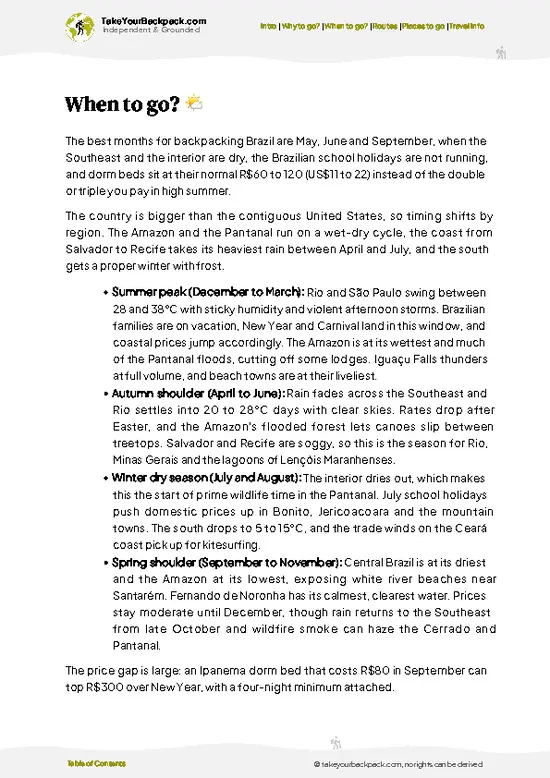
🌤️ When to go?Best time to visit Caxambú


  • Topic: Weather and Temperature – Caxambú basks in a mild climate year-round, but the sweet spot is from April to September. Expect daytime highs around 20-25°C (68-77°F) and cooler nights dipping to 10-15°C (50-59°F). This dry season means crisp air and fewer sudden showers, perfect for hiking and exploring without the sticky humidity that clings in summer.

  • Topic: Daylight Hours – Between May and August, daylight stretches to about 11-12 hours, giving you ample time to soak in the mineral springs and stroll the town’s leafy streets before dusk. The light has a soft, golden quality late in the afternoon, ideal for photos and quiet reflection.

  • Topic: Crowds – Peak tourist season hits December through February, when Brazilians flock here for holidays. Visiting outside this window, especially
read more 👉

  • Topic: Weather and Temperature – Caxambú basks in a mild climate year-round, but the sweet spot is from April to September. Expect daytime highs around 20-25°C (68-77°F) and cooler nights dipping to 10-15°C (50-59°F). This dry season means crisp air and fewer sudden showers, perfect for hiking and exploring without the sticky humidity that clings in summer.

  • Topic: Daylight Hours – Between May and August, daylight stretches to about 11-12 hours, giving you ample time to soak in the mineral springs and stroll the town’s leafy streets before dusk. The light has a soft, golden quality late in the afternoon, ideal for photos and quiet reflection.

  • Topic: Crowds – Peak tourist season hits December through February, when Brazilians flock here for holidays. Visiting outside this window, especially in the shoulder months of March and October, means fewer crowds at the spas and trails, letting you enjoy the town’s calm without elbowing through groups.

  • Topic: Seasonal Activities – The winter months (June to August) bring local festivals celebrating the town’s mineral water heritage, with live music and food stalls that add a lively backdrop to your visit. Summer (December to February) offers more outdoor swimming opportunities but watch for occasional rain.

  • Topic: Price Fluctuations – Accommodation and services peak in price during the Brazilian summer holidays (December to February). Booking in the shoulder seasons (April-May or September-October) can save you 20-30%, and you’ll get better deals on spa treatments and guided tours.


Pro-tip: Aim for late April or early September to catch mild weather, thinner crowds, and wallet-friendly prices—plus that crisp, fresh air that makes every mineral bath feel like a reset button.


source: climatestotravel.comJANJanuary: good for travelingFEBFebruary: good for travelingMARMarch: highly recommended for travelingAPRApril: excellent for travelingMAYMay: excellent for travelingJUNJune: excellent for travelingJULJuly: excellent for travelingAUGAugust: excellent for travelingSEPSeptember: excellent for travelingOCTOctober: highly recommended for travelingNOVNovember: good for travelingDECDecember: good for traveling
when-to-go

✈️ The backpacker research shortcutBrazil Travel Guide

An offline-friendly backpacking guide with optimized travel routes, ranked highlights, transport advice, and the best areas to stay.
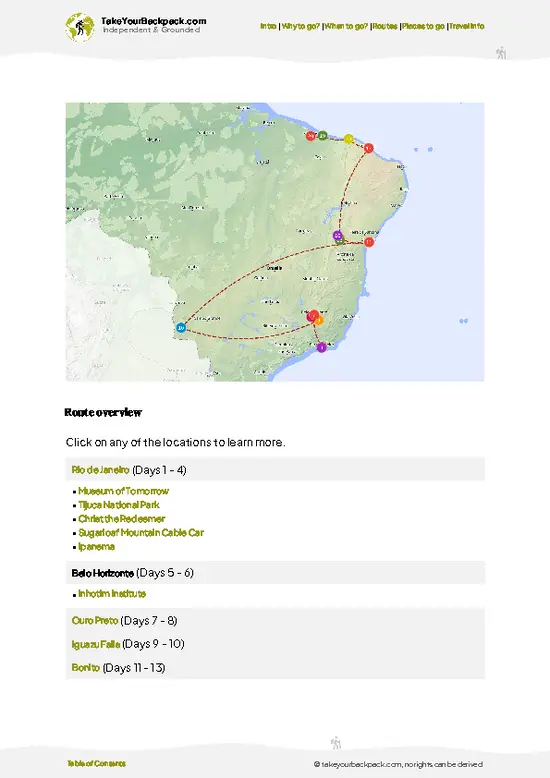
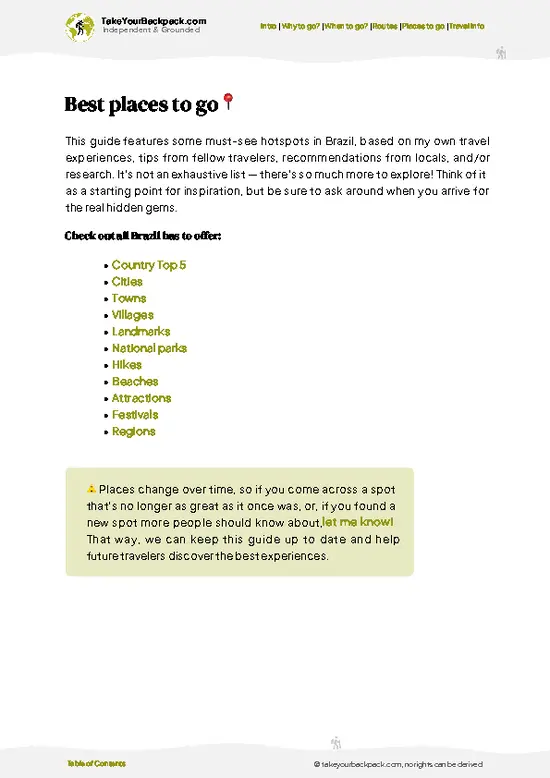
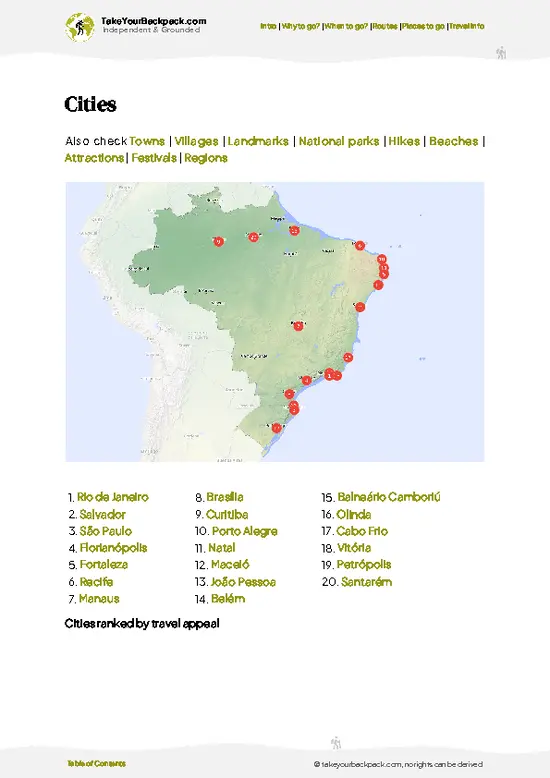
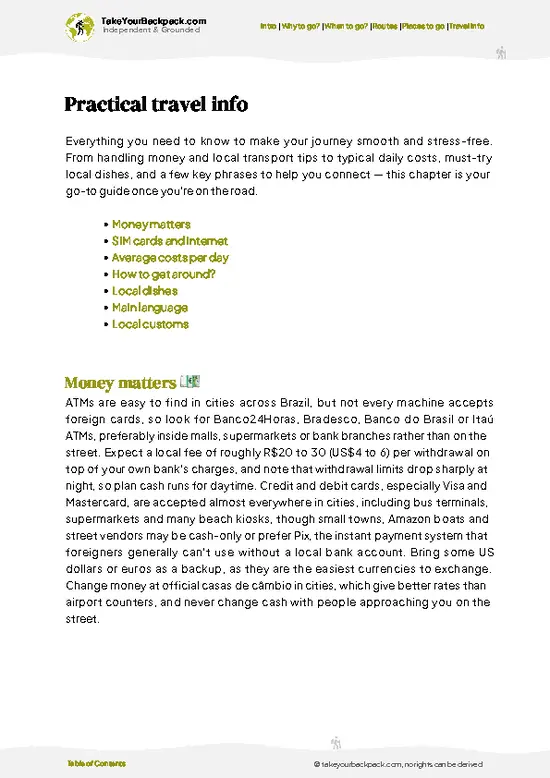
example page 0 from our offline Travel Guide for Brazil
example page 1 from our offline Travel Guide for Brazil
example page 2 from our offline Travel Guide for Brazil
example page 3 from our offline Travel Guide for Brazil
example page 4 from our offline Travel Guide for Brazil
example page 5 from our offline Travel Guide for Brazil
example page 6 from our offline Travel Guide for Brazil
example page 7 from our offline Travel Guide for Brazil
The digital guide (515 pages) contains:
152 highlights, ranked by travel appeal
Optimized 14, 21 & 30-day travel routes
Cities, national parks, landmarks, beaches
How to get around
Offline-friendly for travel without Wi-Fi
👉 Click to see all 30+ guide features

📅 Plan smarter in minutes, not weeks
Month by month travel advice
Festivals & national holidays
Budget expectations

🗺️ Go to the right places, skip the overrated ones
Honest pros & cons of destinations
Top hikes, parks & viewpoints
Lesser-known places most travelers miss
Clear “worth it vs skip it” guidance

🛏️ Travel smoothly without rookie mistakes
Best areas to stay
Transport systems explained simply
Common scams & safety advice
SIM cards, money & practical tips

🌍 Understand the country, not just visit it
Culture & traditions
52 Essential phrases & customs
Festivals worth planning around
Traveler-friendly historical context
Insights that make places more meaningful

📱 Built for real travel conditions
Fully downloadable PDF
Works completely offline
Optimized for phone use
Useful in remote areas & buses
Everything in one place
Save weeks of stressful planning
Get instant access to your full guide. 30‑day money-back guarantee.


By proceeding you agree to our terms.
Sent to your inbox immediately after payment • 100% Secure Checkout
Best Backpacking Travel Advisor 2025 tourism awardBest Backpacking
Travel Advisor
2025
What others say about Take Your Backpack Guides:
⭐⭐⭐⭐⭐
Fantastic, amazing amount of information!
⭐⭐⭐⭐⭐
My goodness this is amazing, it's what I've been looking for hats off too you!
⭐⭐⭐⭐⭐
I think this is absolutely BRILLIANT
⭐⭐⭐⭐
Very complete and informative. It's still missing places, but I gotta to commend you
⭐⭐⭐⭐⭐
This is truly amazing, thank you, can't wait to explore it with my kids!
⭐⭐⭐⭐⭐
Awesome resource, thank you!
⭐⭐⭐⭐⭐
This is amazing! Can't wait to explore the ones I haven't seen
⭐⭐⭐⭐
I love this! Well done, great idea.
⭐⭐⭐⭐⭐
Thanks for taking the time to make this gem!
⭐⭐⭐⭐⭐
This might be the best website I've ever seen.
⭐⭐⭐⭐⭐
Congratulations, and thank you so much for your work; it's incredibly valuable.
⭐⭐⭐⭐
In all seriousness I think you did a great job pointing out the important spots
⭐⭐⭐⭐⭐
10/10 very good
⭐⭐⭐⭐⭐
As someone who's only just starting to visit regularly this is awesome, thank you.
⭐⭐⭐⭐
Thank you very much! I'm going to visit my dad, it's going to be very useful!
⭐⭐⭐⭐⭐
This is really cool! We'll be travelling for the first time and this definitely come in handy.
⭐⭐⭐⭐⭐
You are now our minister of culture, congratulations 👨‍💼
⭐⭐⭐⭐⭐
Just wanted to tell you that this is a pearl! Going to follow your recommendations.
⭐⭐⭐⭐⭐
This is so cool. I'll definitely be using the resource for my travels soon.
⭐⭐⭐⭐⭐
This is very impressive! Good work.
⭐⭐⭐⭐⭐
This is an amazing and informative site. Very well done!

🛏️ Where to stay?Best areas to stay in Brazil

In Caxambu, the best spot for backpackers is the area around the city center, especially near the Praça das Águas. This neighborhood pulses with life during the day, thanks to the famous mineral water fountains that give the town its character. The air here carries a faint, earthy scent mixed with the crispness of bubbling springs—a subtle reminder of why you’re here. It’s safe, walkable, and packed with budget-friendly hostels that cater to solo travelers and groups alike. Staying here means you’re never far from the social buzz—cafés spill out onto the sidewalks, and evening strolls turn into … read more 👉
In Caxambu, the best spot for backpackers is the area around the city center, especially near the Praça das Águas. This neighborhood pulses with life during the day, thanks to the famous mineral water fountains that give the town its character. The air here carries a faint, earthy scent mixed with the crispness of bubbling springs—a subtle reminder of why you’re here. It’s safe, walkable, and packed with budget-friendly hostels that cater to solo travelers and groups alike. Staying here means you’re never far from the social buzz—cafés spill out onto the sidewalks, and evening strolls turn into casual conversations with fellow travelers or locals.

Compared to the quieter, more residential zones on the outskirts, the city center keeps you plugged into Caxambu’s heartbeat. You’ll find it easier to meet people, swap stories, and get tips on hidden trails or local eateries without needing a car or complicated transit. The vibe is relaxed but lively, with a mix of families, retirees, and backpackers all drawn to the healing waters and the town’s gentle pace. If you stray too far from this hub, you risk losing that spontaneous social energy and the convenience of having everything—markets, parks, and the thermal baths—within easy reach. For a backpacker, that’s the difference between a trip that feels like a chore and one that feels like a slow, rewarding discovery.

🚌 Getting aroundHow to get around Caxambú

Caxambú moves at a pace that feels like a slow exhale after a long hike—unhurried but deliberate. The town’s rhythm isn’t dictated by rigid timetables or the frantic buzz of a city grid; instead, it’s a blend of casual local chatter, the occasional rumble of a bus engine, and the steady shuffle of feet on cobblestones. The light here softens by late afternoon, casting long shadows that invite you to slow down and take in the scent of eucalyptus and fresh earth. This isn’t a place where you’ll find a strict schedule posted on every corner. Instead, you learn to read the flow—when the market buzzes, when the buses start to fill, and when the streets empty into quiet pockets. Understanding this flow is your key to moving through Caxambú like a local, not just a visitor.


  • Walking: The heart
read more 👉
Caxambú moves at a pace that feels like a slow exhale after a long hike—unhurried but deliberate. The town’s rhythm isn’t dictated by rigid timetables or the frantic buzz of a city grid; instead, it’s a blend of casual local chatter, the occasional rumble of a bus engine, and the steady shuffle of feet on cobblestones. The light here softens by late afternoon, casting long shadows that invite you to slow down and take in the scent of eucalyptus and fresh earth. This isn’t a place where you’ll find a strict schedule posted on every corner. Instead, you learn to read the flow—when the market buzzes, when the buses start to fill, and when the streets empty into quiet pockets. Understanding this flow is your key to moving through Caxambú like a local, not just a visitor.


  • Walking: The heart of Caxambú is compact and best explored on foot. Streets are uneven but manageable, with plenty of shaded spots to pause. Walking lets you catch the subtle shifts in the town’s atmosphere—from the early morning aroma of fresh bread to the late afternoon hum of locals gathering. No cost, naturally, and the best way to absorb the town’s texture.


  • Local Buses (ônibus municipais): These are the budget traveler’s backbone. They run roughly from 6:00 AM to 8:00 PM, though don’t expect a strict timetable—buses often leave when full. Tickets cost around 3-5 BRL, making them affordable but sometimes crowded and slow, especially during market days. The ride is bumpy but offers a genuine glimpse of daily life, with stops that aren’t always announced, so keep an eye out.


  • Intercity Vans (vans intermunicipais): For trips to nearby towns or the train station, these vans are faster and more frequent than buses, running from about 5:30 AM to 9:00 PM. Prices hover around 10-15 BRL. Vans fill quickly and depart once full, so timing your arrival at the van stop is part of the game. They’re less comfortable than buses but shave off travel time significantly.


  • Motorcycle Taxis (mototáxis): When time is tight or you’re carrying gear, mototáxis are a quick, if slightly adrenaline-fueled, option. They operate all day and into the evening, with fares negotiated upfront—expect to pay around 5-10 BRL for short trips within town. The wind in your face and the scent of rain or dust make these rides memorable, but they’re best for short hops rather than long hauls.


  • Taxi Services: Less common and pricier, taxis are usually reserved for airport runs or late-night travel when other options dwindle. Fares start around 20 BRL and climb depending on distance and time. They offer comfort and reliability but don’t expect to hail one on the street easily; pre-booking or hotel calls are the norm.

👛 Costs (as of 30 May 2026)Money, prices, and spending tips

Backpacking in Caxambú, Brazil, offers a budget-friendly experience with modest daily expenses.
  • Dorm accommodation: Expect to pay around USD8 to 15 per night for a bed in a shared hostel dormitory, which is common for budget travelers.
  • Meals: Local eateries and street food will cost approximately USD5 to 10 per day, covering breakfast, lunch, and dinner with typical Brazilian fare.
  • Local transport: Public buses and shared vans are affordable, usually costing USD1 to 3 per trip within town.
  • Basic activities/entry fees: Entry to thermal baths and local parks ranges from USD3 to 7, making it easy to enjoy the main attractions without breaking the bank.
  • Miscellaneous expenses: Budget around USD3 to 5 for extras like bottled water, snacks, or small souvenirs.
Overall, you can comfortably explore Caxambú … read more 👉
Backpacking in Caxambú, Brazil, offers a budget-friendly experience with modest daily expenses.
  • Dorm accommodation: Expect to pay around USD8 to 15 per night for a bed in a shared hostel dormitory, which is common for budget travelers.
  • Meals: Local eateries and street food will cost approximately USD5 to 10 per day, covering breakfast, lunch, and dinner with typical Brazilian fare.
  • Local transport: Public buses and shared vans are affordable, usually costing USD1 to 3 per trip within town.
  • Basic activities/entry fees: Entry to thermal baths and local parks ranges from USD3 to 7, making it easy to enjoy the main attractions without breaking the bank.
  • Miscellaneous expenses: Budget around USD3 to 5 for extras like bottled water, snacks, or small souvenirs.
Overall, you can comfortably explore Caxambú on a daily budget of USD25 to 45, balancing comfort and local experiences without overspending.


source: numbeo.com
⚠️ Prices can change and everyone travels differently, so take this as a rough guide. Hope it helps you plan your adventure!

🚌 Day tripsShort trips worth adding

Caxambú is a surprisingly savvy hub for backpackers who want to explore Minas Gerais without the hassle of constant packing and moving. The town’s compact size and reliable local transport make it a launchpad for day trips that feel like a deep dive into Brazil’s natural and cultural richness.

Serra da Mantiqueira
Just a 40-minute bus ride from Caxambú, the Serra da Mantiqueira mountain range offers a breath of fresh air—literally. The crisp, pine-scented breeze contrasts sharply with the town’s mineral springs, and the trails here are manageable for most fitness levels. You’ll pay under 10 BRL for the round-trip bus, and the best time to go is during the dry season from May to September when the trails aren’t muddy and the views stretch clear. Don’t make the rookie mistake of underestimating … read more 👉
Caxambú is a surprisingly savvy hub for backpackers who want to explore Minas Gerais without the hassle of constant packing and moving. The town’s compact size and reliable local transport make it a launchpad for day trips that feel like a deep dive into Brazil’s natural and cultural richness.

Serra da Mantiqueira
Just a 40-minute bus ride from Caxambú, the Serra da Mantiqueira mountain range offers a breath of fresh air—literally. The crisp, pine-scented breeze contrasts sharply with the town’s mineral springs, and the trails here are manageable for most fitness levels. You’ll pay under 10 BRL for the round-trip bus, and the best time to go is during the dry season from May to September when the trails aren’t muddy and the views stretch clear. Don’t make the rookie mistake of underestimating the sun; pack sunscreen and water. The payoff is panoramic vistas that make the early wake-up call worth it.


São Lourenço
A 1.5-hour bus ride south, São Lourenço is a spa town with a different vibe but equally compelling mineral waters. It’s a budget-friendly trip—bus fare hovers around 15 BRL—and you can spend the day wandering the Parque das Águas, sampling waters with distinct tastes and supposed health benefits. The town’s open-air market is a sensory overload of local crafts and food smells, perfect for a slow afternoon. Avoid weekends if you want to dodge crowds and get a more authentic feel.


Pedra do Baú
For those craving a bit of adventure, Pedra do Baú is a two-hour bus ride away and a must for climbers and hikers. The granite rock formations rise sharply against the sky, offering routes for all skill levels. The bus costs about 20 BRL each way, and you’ll want to start early to beat the heat and secure a spot with a local guide if you’re not experienced. The dry months from April to October provide the best grip on the rocks. First-timers often underestimate the steepness and the need for sturdy shoes—flip-flops won’t cut it here.


Parque das Águas de Caxambú
If you prefer to stay close but want a day that feels like a mini-retreat, the Parque das Águas right in town is a no-brainer. It’s a low-cost option with entry fees under 10 BRL, where you can soak in thermal pools and stroll through gardens that smell faintly of eucalyptus and earth. Early mornings or late afternoons are ideal to avoid the midday crowd and catch the soft, golden light filtering through the trees.


Using Caxambú as your base means you’re never more than a couple of hours from a new landscape or cultural experience. The town’s affordable transport and compact layout keep your day trips efficient, so you spend less time in transit and more time soaking in the unique flavors of Minas Gerais.
Want to know what more Brazil offers?
The Brazil Travel Guide describes 152 highlights, from cities to national parks, from beaches to hikes

Get the Travel Guide -

🛡️ SafetySafety Tips and Common Scams in Caxambú

Caxambú carries a relaxed vibe that puts most travelers at ease, but like any place where tourists mix with locals, a bit of street smarts goes a long way. The town’s center, especially near the thermal springs and main square, can get lively by day, which means pockets of distraction where pickpockets might slip in unnoticed. Keep your valuables close—think zipped pockets or a discreet money belt—and stay aware when the crowd thickens, especially during local events or market days.

Solo travelers will find the town generally safe, but once night falls, the quieter streets can feel a little deserted. Stick to well-lit, busier routes if you’re out late, and avoid wandering into the dim alleys where the streetlamps flicker out early. There’s no widespread scam epidemic here, but a common annoyance … read more 👉
Caxambú carries a relaxed vibe that puts most travelers at ease, but like any place where tourists mix with locals, a bit of street smarts goes a long way. The town’s center, especially near the thermal springs and main square, can get lively by day, which means pockets of distraction where pickpockets might slip in unnoticed. Keep your valuables close—think zipped pockets or a discreet money belt—and stay aware when the crowd thickens, especially during local events or market days.

Solo travelers will find the town generally safe, but once night falls, the quieter streets can feel a little deserted. Stick to well-lit, busier routes if you’re out late, and avoid wandering into the dim alleys where the streetlamps flicker out early. There’s no widespread scam epidemic here, but a common annoyance is the occasional overenthusiastic vendor who might push souvenirs or spa treatments harder than you want. A firm but polite “no, obrigado” usually does the trick.

In Caxambú, blending in by moving confidently and keeping your wits about you unlocks the town’s charm without fuss.

Other Brazilian towns near Caxambú

Explore more nearby:

  • Campos do Jordão—Mountain climate, Swiss-style chalets, pine forests, winter events| 110 km away
  • São João del Rei—Baroque churches, steam train, local festivals, riverfront| 116 km away
  • Gonçalves—Mountain cabins, hiking routes, organic farms, misty valleys| 122 km away

💡 Not sure where to go next?
Create a personalized itinerary for Brazil including Caxambú and the places that fit your trip.

Generate my itinerary

👉 Discover all towns

Or checkout all Brazil has to offer (think cities, towns, villages, national parks, hikes, beaches, festivals)
Country photo of Brazil

We 💚 feedbackWhat to keep in mind

Caxambu’s real draw is its mineral springs—there’s something about the crisp, earthy scent mingling with the cool mist that makes you slow down and breathe deeper. But heads-up: the town’s pace can feel a bit too laid-back if you’re craving nightlife or a bustling scene. It’s a place to recharge quietly, not party hard. If you’re after calm and a touch of old-school spa charm, this spot delivers.

✈️ When did I visit Brazil?
Call it good timing or luck, but I was able to celebrate Carnaval in Rio de Janeiro in February 2022, after a round trip in the north and east coast.

✍️ Help improve this page!
The information on this page is based on my own backpacking experience in Brazil, supplemented with up-to-date research and feedback from other travelers. Travel details can change, so if you notice anything outdated or incomplete, feel free to let me know.


🙋‍♂️ Give feedback

👋 Meet the founderWho’s Behind Take Your Backpack?

Johan, backpacker and founder of TakeYourBackpackHi, I’m Johan (Netherlands 🇳🇱), the creator of TakeYourBackpack. Over the past decade, I’ve backpacked through 80+ countries across six continents, gaining extensive experience with independent travel, long-term trips, and overland routes.

This site is built on a combination of firsthand travel experience and carefully curated insights from other backpackers. Many guides are based on places I’ve personally visited, while others bring together tips, observations, and practical advice shared by trusted travelers I’ve met along the way.

The goal is to provide realistic, experience-driven guidance — not generic itineraries — so you can explore destinations with better context, clearer expectations, and more confidence.

Get full Brazil guide •
Instant download • 152 highlights • Full Offline guide