×

Brazil🇧🇷 | best townsTop-Rated 10 towns in Brazil

Brazil is a land of diverse towns, each with its own unique charm and cultural heartbeat. From the vibrant streets of Salvador to the serene beaches of Paraty, the right town choice can shape your entire backpacking experience. Understanding regional differences is crucial; the Amazon’s remote villages offer a stark contrast to the bustling urban life of São Paulo.

Towns in Brazil are defined by their local culture, walkability, and seasonal nuances. For instance, visiting during Carnival in Rio de Janeiro transforms the city into a pulsating party, while off-peak seasons can reveal a quieter, more authentic side. Each region has its own vibe—Northeast towns are known for their rich Afro-Brazilian heritage, while Southern towns showcase European influences.

Choosing wisely impacts your budget and safety. Some towns are more tourist-friendly, while others may require a bit more savvy to navigate. The ease of travel varies significantly; some places are well-connected by public transport, while others demand a bit of legwork. Ultimately, immersing yourself in the local culture hinges on selecting the right town, making it essential for any independent traveler to consider these factors carefully.

By Johan Kruseman 🇳🇱 | Updated June 10, 2026
Explore the best villages in Brazil

Why go?Key Factors That Shape the Experience

Brazil’s towns are a microcosm of its vast cultural landscape, each offering a unique slice of life that reflects the country’s rich history and diverse influences. Unlike many other countries, where urban centers dominate, Brazil’s towns provide a refreshing contrast. They embody a slower pace, allowing travelers to engage deeply with local customs, culinary delights, and the vibrant rhythms of daily life.

The cultural tapestry of Brazil is woven from Indigenous, African, and European threads, and this blend is palpable in its towns. Each region showcases distinct traditions, from the festivals of the Northeast to the culinary influences of the South. This diversity means that travelers can experience a variety of lifestyles and flavors without the need for extensive travel. However, clustering … read more 👉
Brazil’s towns are a microcosm of its vast cultural landscape, each offering a unique slice of life that reflects the country’s rich history and diverse influences. Unlike many other countries, where urban centers dominate, Brazil’s towns provide a refreshing contrast. They embody a slower pace, allowing travelers to engage deeply with local customs, culinary delights, and the vibrant rhythms of daily life.

The cultural tapestry of Brazil is woven from Indigenous, African, and European threads, and this blend is palpable in its towns. Each region showcases distinct traditions, from the festivals of the Northeast to the culinary influences of the South. This diversity means that travelers can experience a variety of lifestyles and flavors without the need for extensive travel. However, clustering towns can significantly impact itinerary planning. While it may seem efficient to hop from one town to another, the reality is that travel times can be deceptive. Roads may be less developed, and public transport options can be limited, leading to longer journeys than anticipated.

Accessibility is another crucial factor. Some towns are well-connected, while others require more effort to reach. This trade-off often means sacrificing time for a more immersive experience. The towns that are harder to access often reward those who make the effort with a more authentic glimpse into local life. Conversely, the more accessible towns may cater to tourists, diluting the local charm that makes these places special.

Geographically, Brazil’s vastness plays a significant role in shaping the travel experience. The climate varies widely, from the tropical heat of the Amazon to the cooler temperatures in the South. This diversity influences not only the activities available but also the best times to visit. Travelers should consider these climatic factors when planning their journeys, as they can affect everything from outdoor adventures to local festivals.

Infrastructural challenges also come into play. While major cities have modern amenities, many towns may lack reliable services. This can lead to unexpected costs or inconveniences, so it’s wise to prepare accordingly. Understanding these constraints allows travelers to preserve their energy and budget for the moments that truly matter—those genuine interactions and experiences that define a trip to Brazil.

Ultimately, the towns of Brazil are not just stops along the way; they are destinations that invite exploration and connection. Embracing the nuances of travel in Brazil means appreciating the depth of each town, recognizing the trade-offs, and savoring the journey as much as the destination.
Why These Made the Cut
The list of best towns in Brazil is created based on charm, local culture, atmosphere, hidden gems, and visitor appeal. If you feel a town is missing in this list, please let us know.

When to go?Seasonal Guide to Visiting

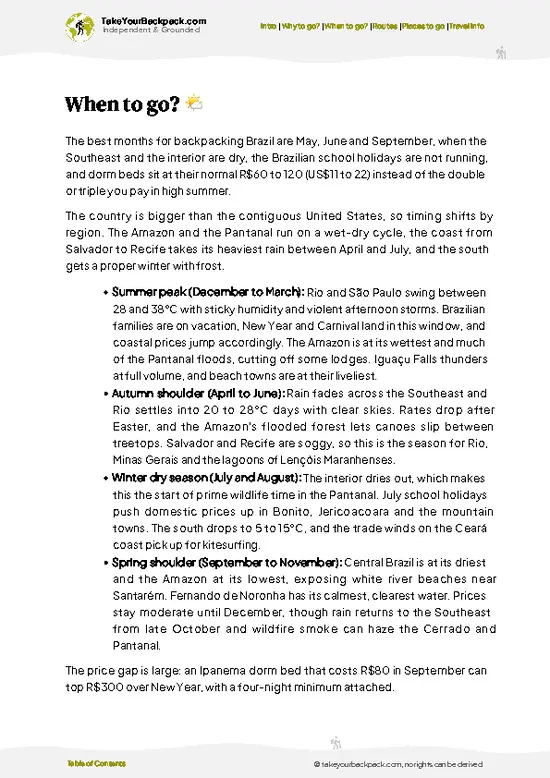
Brazil’s towns pulse with life, but the rhythm changes throughout the year. Understanding when to visit is crucial for experiencing the local charm without the chaos.

Weather plays a significant role. Brazil’s climate varies widely, but generally, the summer months bring heat and humidity, especially in the northern regions. Expect afternoon showers, which can dampen plans but also cool things down. The southern regions experience milder winters, making them ideal for exploring without the sweltering heat.

Optimal months for visiting typically fall between May and September. This period offers pleasant temperatures and lower humidity, allowing for comfortable exploration. The dry season in many areas means fewer interruptions from rain, making it easier to enjoy outdoor activities and … read more 👉
Brazil’s towns pulse with life, but the rhythm changes throughout the year. Understanding when to visit is crucial for experiencing the local charm without the chaos.

Weather plays a significant role. Brazil’s climate varies widely, but generally, the summer months bring heat and humidity, especially in the northern regions. Expect afternoon showers, which can dampen plans but also cool things down. The southern regions experience milder winters, making them ideal for exploring without the sweltering heat.

Optimal months for visiting typically fall between May and September. This period offers pleasant temperatures and lower humidity, allowing for comfortable exploration. The dry season in many areas means fewer interruptions from rain, making it easier to enjoy outdoor activities and local festivals.

Shoulder seasons—the months just before and after peak periods—can be a savvy choice. These times often see fewer tourists, which means less crowded streets and more authentic interactions with locals. However, expect some trade-offs. Prices may still be high in popular areas, and certain attractions might have limited hours or be closed for maintenance.

Peak periods can be a double-edged sword. Major holidays and festivals draw crowds, creating vibrant atmospheres but also overwhelming congestion. Prices for accommodations and services can skyrocket, and securing reservations becomes a challenge. If the goal is to immerse in local culture, timing visits around these events can be rewarding, but it requires careful planning.

Seasonal constraints are essential to consider. The rainy season can lead to flooding in some regions, impacting travel plans and accessibility. Conversely, the dry season might mean higher prices and more tourists. Balancing these factors is key to maximizing the experience while minimizing stress.

In summary, timing your visit to Brazil’s towns is about aligning with local rhythms. Understanding weather patterns, peak periods, and the nuances of shoulder seasons will help preserve energy and budget for the moments that truly matter.

town hoppingTips for Visiting Multiple Destinations

General Routing Logic

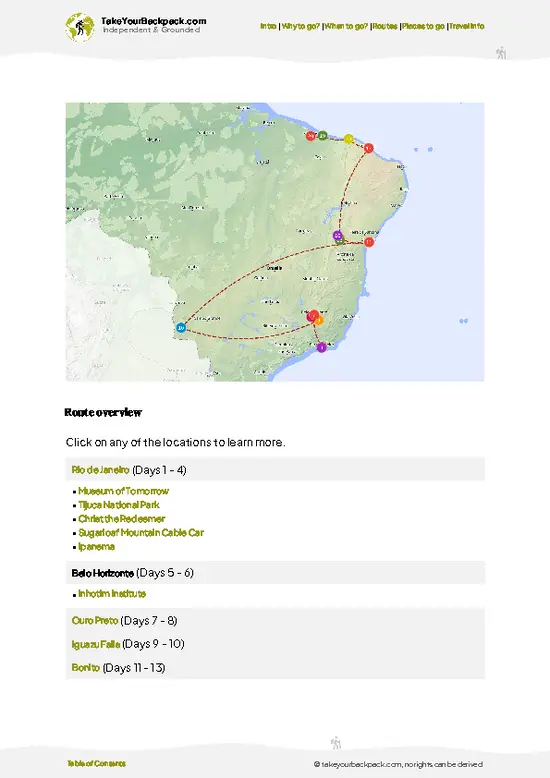
Brazil is vast, and the best way to tackle it is by clustering towns regionally. Start in the south with places like Porto Alegre and Curitiba, then make your way north through São Paulo and Rio de Janeiro. This path not only minimizes travel time but also allows for a gradual shift in culture and landscape. Heading northeast, towns like Salvador and Recife offer a rich Afro-Brazilian heritage, while the Amazon region beckons with Manaus and its surrounding natural wonders.

Typical Time Needed

Plan for at least two to three days in each town. This pacing allows for exploration without feeling rushed. Some towns, like Rio, may warrant an extra day or two for iconic sights and local experiences. In contrast, smaller towns can often be enjoyed in a day, but don’t underestimate … read more 👉

General Routing Logic

Brazil is vast, and the best way to tackle it is by clustering towns regionally. Start in the south with places like Porto Alegre and Curitiba, then make your way north through São Paulo and Rio de Janeiro. This path not only minimizes travel time but also allows for a gradual shift in culture and landscape. Heading northeast, towns like Salvador and Recife offer a rich Afro-Brazilian heritage, while the Amazon region beckons with Manaus and its surrounding natural wonders.

Typical Time Needed

Plan for at least two to three days in each town. This pacing allows for exploration without feeling rushed. Some towns, like Rio, may warrant an extra day or two for iconic sights and local experiences. In contrast, smaller towns can often be enjoyed in a day, but don’t underestimate the charm of lingering.

Common Planning Mistakes

One major pitfall is over-scheduling. Brazil’s charm lies in its laid-back vibe; trying to cram too many towns into a short period can lead to burnout. Avoid the temptation to hop from one place to another every day. Instead, prioritize quality over quantity. Another mistake is neglecting local transport options. Brazil has a mix of efficient buses and domestic flights, but understanding the schedules and routes can save time and money.

Trade-offs and Constraints

Speed versus depth of experience is a constant balancing act. Rushing through towns may save time but will rob you of authentic interactions and local flavors. Budget versus comfort is another consideration; while flights can be pricier, they often save hours compared to long bus rides. Weigh the cost against the value of your time.

Effort versus reward also plays a role. Some towns may require a bit more effort to reach, but the payoff can be immense. For instance, venturing into the Pantanal or Chapada Diamantina may take time and planning, but the unique wildlife and stunning landscapes are worth it.

Flexibility and Strategic Planning

Flexibility is key. Weather can change plans, and local festivals can alter transport availability. Build in buffer days to accommodate unexpected adventures or delays. Strategic planning means knowing when to stick to your itinerary and when to go with the flow. Embrace the spontaneity that Brazil offers; sometimes the best experiences come from unplanned detours.

The ListMust-Visit towns in Brazil

1 Paraty

Cobblestone lanes, colonial port, tidal streets, literary events

Navigate a preserved old town where tides flood the streets, and explore a blend of coastal scenery and cultural festivals.

2 Ouro Preto

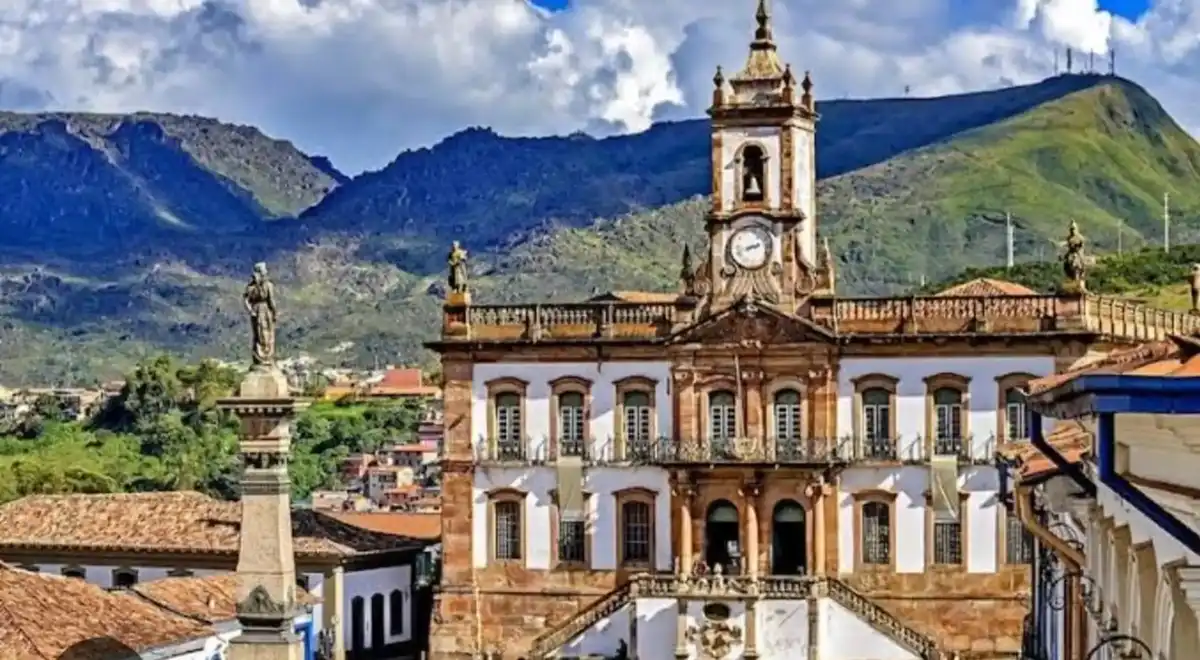
Baroque churches, steep alleys, student life, gold rush relics

Climb hilly streets past ornate facades and discover a city where colonial architecture and university culture intersect.

3 Lençois

Chapada Diamantina, hiking trails, colonial facades, river beaches

Base yourself in a small town gateway to caves, waterfalls, and plateaus, with easy access to the national park’s best treks.

4 Trancoso

Quadrado square, cliffside views, boutique pousadas, laid-back nightlife

Relax in grassy plazas, walk to scenic overlooks, and stay in stylish lodgings near quiet stretches of sand.

5 Arraial do Cabo

Clear waters, sand dunes, boat tours, marine life

Dive or snorkel in transparent bays, take boat trips to remote beaches, and spot dolphins along the Atlantic coast.

6 Búzios

Peninsula beaches, nightlife, boutique hotels, cobbled promenade

Switch between sheltered coves, dine at waterfront restaurants, and enjoy a lively atmosphere after sunset.

7 Ilhabela

Archipelago, waterfalls, jeep tours, sailing

Cross by ferry to an island with forested peaks, swim in freshwater pools, and access remote beaches by trail or boat.

8 Maragogi

Coral reefs, natural pools, coconut groves, coastal villages

Snorkel in turquoise waters, explore tidal pools teeming with marine life, and relax along palm-fringed beaches on the Alagoas coast.

9 Alter do Chão

Amazonian beaches, river islands, floating bars, forest excursions

Swim in freshwater lagoons, relax on white-sand riverbanks, and take boat trips into the surrounding rainforest.

10 Tiradentes

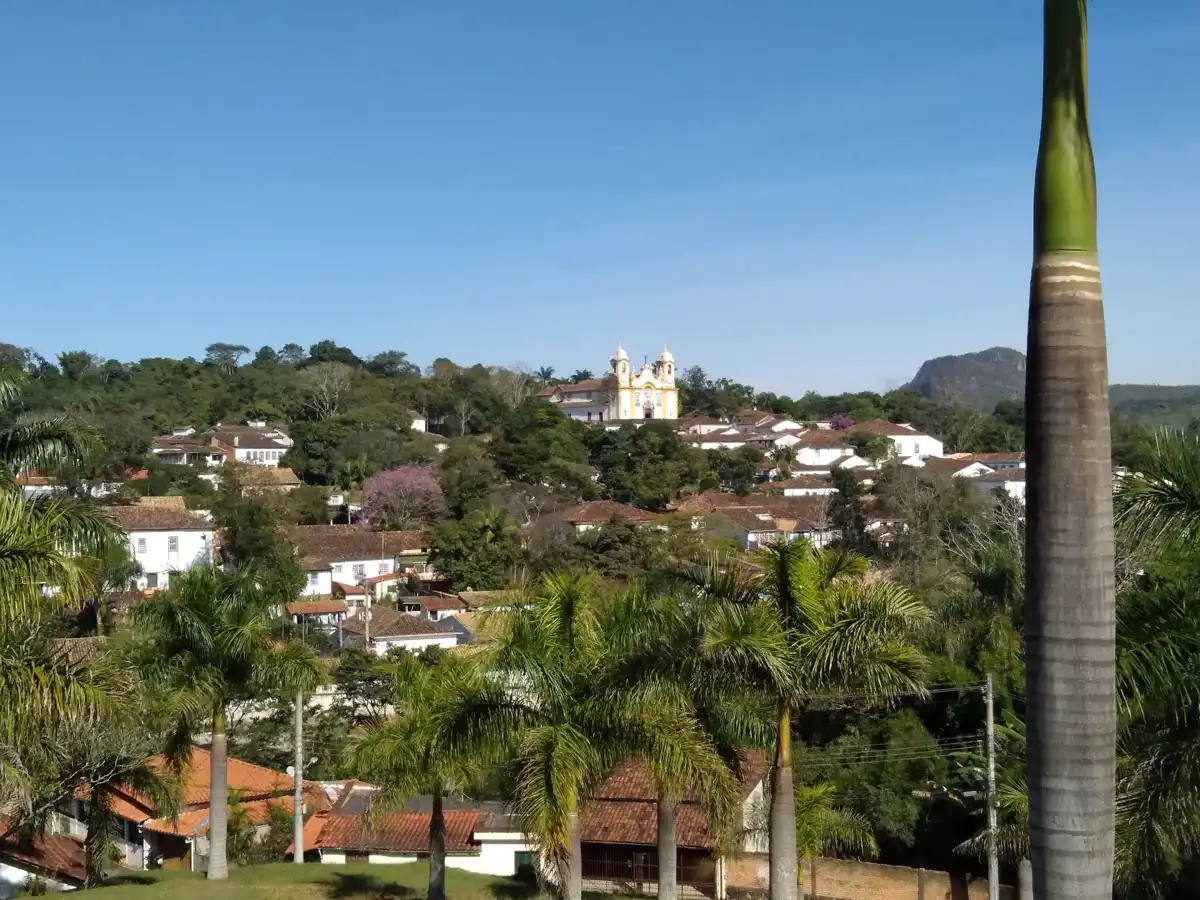
Preserved colonial core, gourmet food, mountain backdrop, artisan shops

Sample regional cuisine, browse local crafts, and explore a compact town framed by the Serra de São José hills.

11 Pirenópolis

Artisan markets, waterfalls, stone bridges, horse culture

Join local festivities, visit craft shops, and cool off in nearby cascades after exploring the town’s preserved colonial core.

brazil-city-pirenopolis
© Google | Alberto Costa

12 Alto Paraíso de Goiás

Cerrado landscapes, waterfalls, crystal shops, spiritual retreats

Hike through rugged plateaus, swim in clear pools, and encounter a community drawn by the region’s natural and mystical reputation.

13 Itacaré

Surf breaks, rainforest trails, river mouths, reggae bars

Surf Atlantic waves, hike through lush forest to hidden beaches, and unwind in a laid-back town with a musical edge.

brazil-city-itacare
© Google |

14 Gramado

Alpine architecture, chocolate shops, hydrangea gardens, winter festivals

Stroll among European-style chalets, sample regional sweets, and visit during colder months for seasonal events and floral displays.

brazil-city-gramado
© Google | Breno Carvalho

15 Campos do Jordão

Mountain climate, Swiss-style chalets, pine forests, winter events

Escape to cool highlands, walk among pine groves, and experience a town known for seasonal festivals and alpine-inspired architecture.

16 Ubatuba

Surf beaches, Atlantic rainforest, sea turtle center, island hopping

Alternate between surfing, hiking in protected forest, and exploring offshore islands with abundant marine life.

17 Diamantina

Colonial streets, mining heritage, live serenades, hillside views

Wander cobbled lanes lined with 18th-century buildings and discover a city shaped by diamond rush history and local music traditions.

brazil-city-diamantina
© Google | Luciano Sato

18 São Miguel dos Milagres

Quiet beaches, coral coast, rustic inns, fishing boats

Walk along nearly empty sands, swim in calm sea, and stay in simple lodgings close to traditional coastal communities.

19 Capitólio

Canyons, blue lakes, boat rides, lookout points

Cruise through dramatic gorges, swim in clear reservoirs, and hike to panoramic vistas over Minas Gerais’ lake district.

20 Piranhas

Cangaço history, São Francisco river, sandstone cliffs, pastel houses

Trace the legacy of outlaws along riverbanks, admire colorful facades, and climb viewpoints overlooking the semi-arid landscape.

21 São João del Rei

Baroque churches, steam train, local festivals, riverfront

Ride a historic train, attend traditional celebrations, and explore a town where colonial architecture meets modern life.

22 Brotas

Adventure sports, river canyons, rural lodges, ziplining

Experience whitewater rafting, rappel down cliffs, and unwind in countryside inns surrounded by São Paulo’s inland wilderness.

23 Ilha do Mel

Car-free island, sandy trails, lighthouses, Atlantic forest

Travel by foot or bike along sandy paths, visit remote beaches, and stay in simple guesthouses surrounded by nature.

24 Gonçalves

Mountain cabins, hiking routes, organic farms, misty valleys

Stay in rustic lodges, trek through cloud forests, and visit small farms producing cheese and honey in the Serra da Mantiqueira.

25 Caxambú

Mineral springs, spa parks, tiled fountains, mountain air

Sample natural spring waters, stroll landscaped gardens, and enjoy a town known for therapeutic baths and cool climate.

26 President Figueiredo

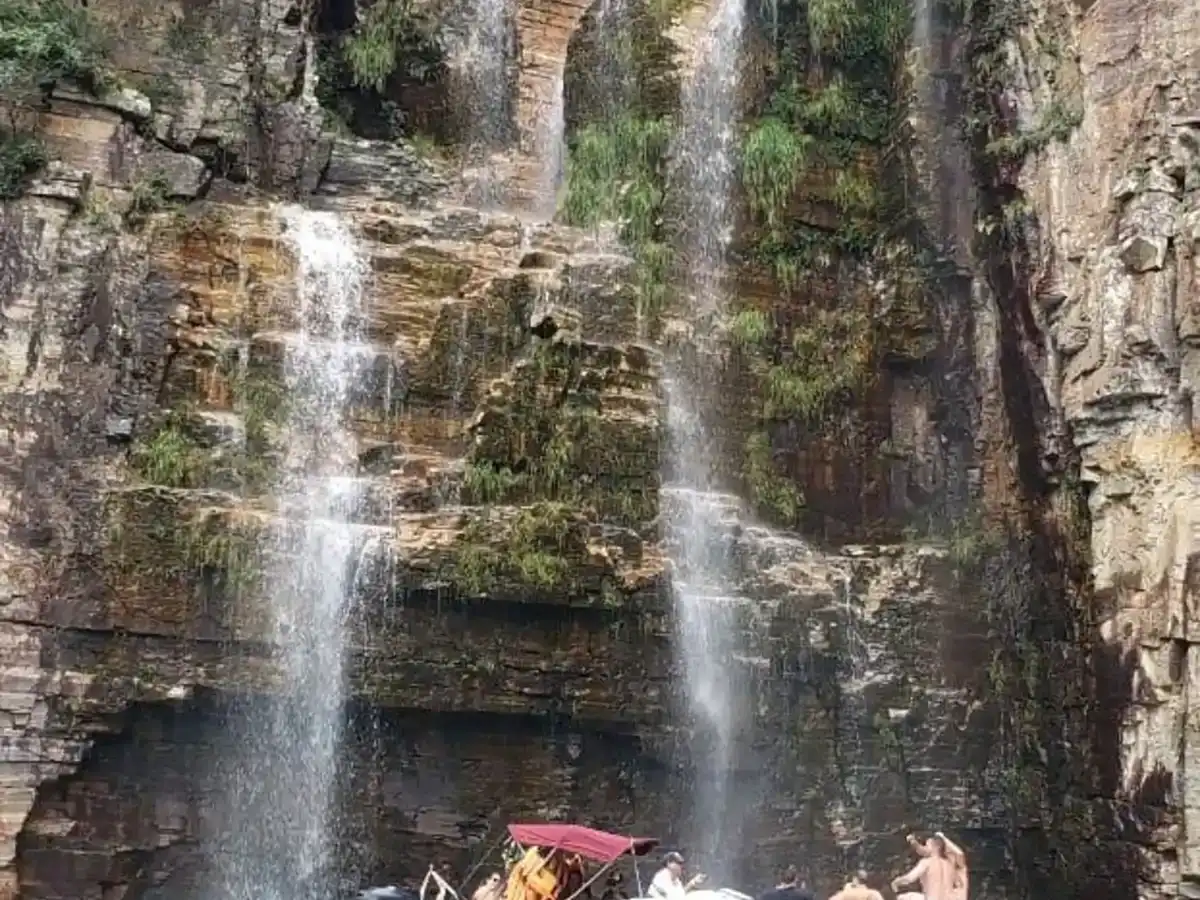
Amazon rainforest, waterfalls, caves, wildlife watching

Venture into dense forest to find hidden cascades, limestone formations, and opportunities for spotting birds and monkeys.

brazil-city-president-figueiredo
© Google | Aldenor Filho

Think you know Brazil?

Prove you’re a true local — uncover 16 lesser-known towns in Brazil that locals tend to keep to themselves.
Loading the map 🌍

Expert viewExpert Commentary on towns

Regional Clusters
Brazil is a vast country, and its towns reflect a mosaic of cultures, landscapes, and histories. I’d recommend focusing on three main clusters: the coastal towns, the interior gems, and the Amazonian enclaves. Each offers a unique slice of Brazilian life, but don’t bite off more than you can chew. Aim for about five to seven towns in total. This allows you to dive deep without feeling rushed.

Coastal towns like those in Bahia and Rio de Janeiro state are often bustling with energy, vibrant markets, and stunning beaches. The interior towns, particularly in Minas Gerais, offer a slower pace, rich colonial architecture, and a chance to savor local cuisine. The Amazonian towns, while more remote, provide an unparalleled opportunity to connect with nature and indigenous cultures. … read more 👉
Regional Clusters
Brazil is a vast country, and its towns reflect a mosaic of cultures, landscapes, and histories. I’d recommend focusing on three main clusters: the coastal towns, the interior gems, and the Amazonian enclaves. Each offers a unique slice of Brazilian life, but don’t bite off more than you can chew. Aim for about five to seven towns in total. This allows you to dive deep without feeling rushed.

Coastal towns like those in Bahia and Rio de Janeiro state are often bustling with energy, vibrant markets, and stunning beaches. The interior towns, particularly in Minas Gerais, offer a slower pace, rich colonial architecture, and a chance to savor local cuisine. The Amazonian towns, while more remote, provide an unparalleled opportunity to connect with nature and indigenous cultures. Just remember, travel between these clusters can be time-consuming. Factor in transportation logistics, as some areas may require long bus rides or even flights.

Travel Rhythm
Brazil’s rhythm is laid-back, but don’t confuse that with a lack of adventure. Each region has its own tempo. Coastal towns often have a lively nightlife and a plethora of activities, while interior towns invite you to slow down and soak in the local vibe. You’ll want to balance your itinerary to avoid burnout.

Plan for at least a week in each cluster, allowing for spontaneous exploration. If you’re in a coastal town, don’t just hit the beach; explore local festivals or markets. In the interior, take time to chat with locals over a cup of coffee. This is where you’ll find the heart of Brazil. But be prepared: some towns may not have the infrastructure you’re used to. Wi-Fi can be spotty, and public transport may not run as frequently as you’d like. Embrace the unpredictability; it’s part of the experience.

Local Charm
Brazilian towns are rich in local charm, but that charm often comes with quirks. Expect to encounter a mix of colonial architecture, lively street art, and mouthwatering street food. Each town has its own personality, shaped by its history and the people who call it home.

However, not every town will have the same level of tourist infrastructure. Some may lack English-speaking locals or have limited dining options. This is where you’ll need to be adaptable. Carry a translation app, learn a few key phrases in Portuguese, and be open to trying local dishes, even if they’re outside your comfort zone. You might discover a new favorite!

Logistical Considerations
When planning your trip, consider the logistics carefully. Brazil’s size means that distances can be deceptive. A town that looks close on a map might take hours to reach due to road conditions or transportation options. Domestic flights can be a lifesaver, but they can also eat into your budget.

Budget-wise, expect to spend more in tourist-heavy areas, especially along the coast. Interior towns often offer better value, but you may sacrifice some amenities. Always have a buffer in your budget for unexpected expenses, whether it’s an extra night’s stay or a local tour that catches your eye.

Safety is another crucial factor. While many towns are safe, some areas may have higher crime rates. Stay informed about local conditions and avoid flaunting valuables. Trust your instincts; if a place feels off, it’s okay to leave.

Cultural Considerations
Brazil is a melting pot of cultures, and each town has its own customs and traditions. Festivals are a big deal, and timing your visit to coincide with local events can enrich your experience. However, be aware that during major festivals, accommodations can fill up quickly, and prices may spike.

Respect local customs, especially in more traditional towns. Dress modestly when visiting religious sites and be mindful of local etiquette. Brazilians are generally warm and welcoming, but understanding their cultural nuances will go a long way in building rapport.

Trade-offs and Constraints
Every choice comes with trade-offs. If you prioritize coastal towns for their nightlife and beaches, you might miss out on the rich history and culinary delights of the interior. Conversely, if you focus on the interior, you may sacrifice the vibrant energy of the coast.

Consider your travel style. If you thrive on spontaneity, lean towards towns with a more relaxed vibe. If you prefer structure, plan your itinerary around key attractions and events. Either way, be flexible. The best experiences often come from unplanned moments.

In summary, Brazil’s towns offer a wealth of experiences, but navigating them requires thoughtful planning. Embrace the diversity, respect local cultures, and be prepared for the unexpected. This is where the true magic of Brazil lies.

✈️ The backpacker research shortcutBrazil Travel Guide

An offline-friendly backpacking guide with optimized travel routes, ranked highlights, transport advice, and the best areas to stay.
example page 0 from our offline Travel Guide for Brazil
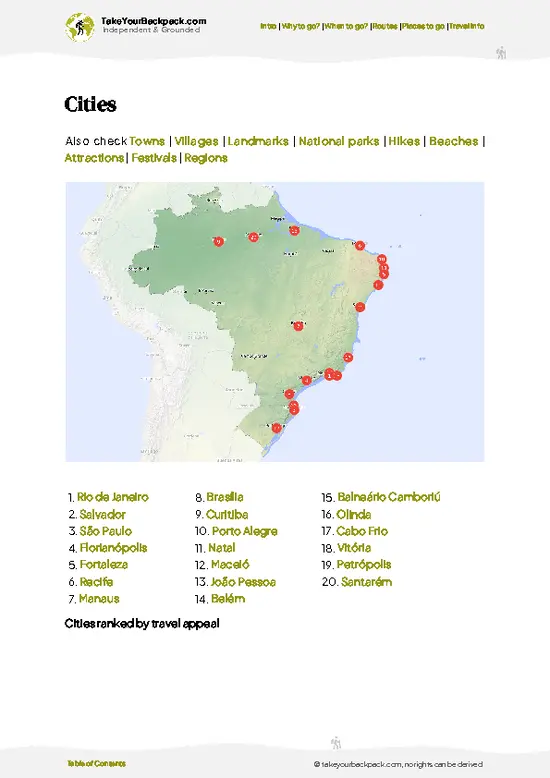
example page 1 from our offline Travel Guide for Brazil
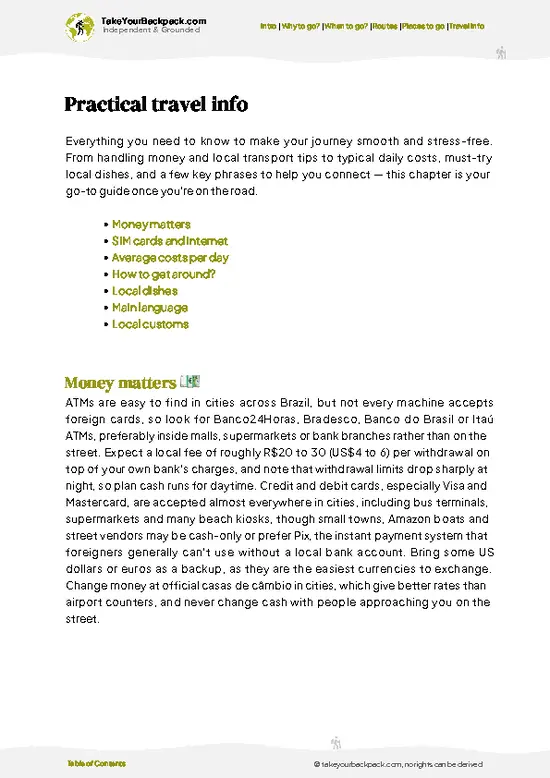
example page 2 from our offline Travel Guide for Brazil
example page 3 from our offline Travel Guide for Brazil
example page 4 from our offline Travel Guide for Brazil
example page 5 from our offline Travel Guide for Brazil
example page 6 from our offline Travel Guide for Brazil
example page 7 from our offline Travel Guide for Brazil
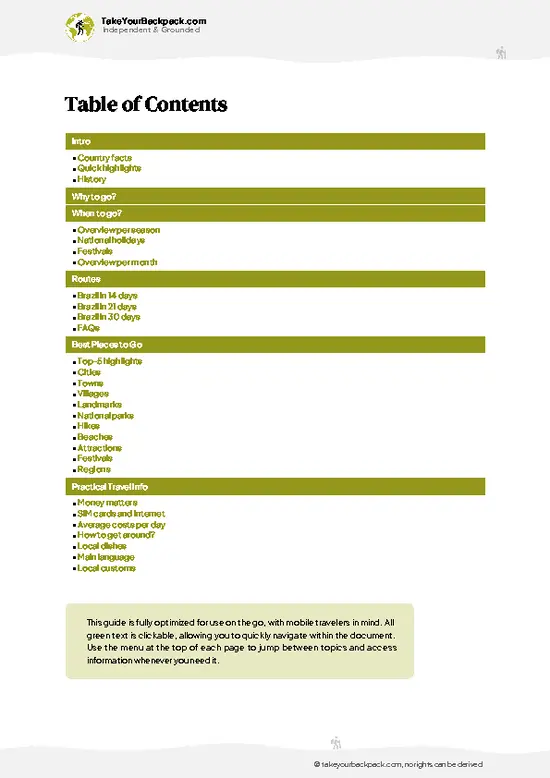
The digital guide (515 pages) contains:
152 highlights, ranked by travel appeal
Optimized 14, 21 & 30-day travel routes
Cities, national parks, landmarks, beaches
How to get around
Offline-friendly for travel without Wi-Fi
👉 Click to see all 30+ guide features

📅 Plan smarter in minutes, not weeks
Month by month travel advice
Festivals & national holidays
Budget expectations

🗺️ Go to the right places, skip the overrated ones
Honest pros & cons of destinations
Top hikes, parks & viewpoints
Lesser-known places most travelers miss
Clear “worth it vs skip it” guidance

🛏️ Travel smoothly without rookie mistakes
Best areas to stay
Transport systems explained simply
Common scams & safety advice
SIM cards, money & practical tips

🌍 Understand the country, not just visit it
Culture & traditions
52 Essential phrases & customs
Festivals worth planning around
Traveler-friendly historical context
Insights that make places more meaningful

📱 Built for real travel conditions
Fully downloadable PDF
Works completely offline
Optimized for phone use
Useful in remote areas & buses
Everything in one place
Save weeks of stressful planning
Get instant access to your full guide. 30‑day money-back guarantee.


By proceeding you agree to our terms.
Sent to your inbox immediately after payment • 100% Secure Checkout
Best Backpacking Travel Advisor 2025 tourism awardBest Backpacking
Travel Advisor
2025
What others say about Take Your Backpack Guides:
⭐⭐⭐⭐⭐
Fantastic, amazing amount of information!
⭐⭐⭐⭐⭐
My goodness this is amazing, it's what I've been looking for hats off too you!
⭐⭐⭐⭐⭐
I think this is absolutely BRILLIANT
⭐⭐⭐⭐
Very complete and informative. It's still missing places, but I gotta to commend you
⭐⭐⭐⭐⭐
This is truly amazing, thank you, can't wait to explore it with my kids!
⭐⭐⭐⭐⭐
Awesome resource, thank you!
⭐⭐⭐⭐⭐
This is amazing! Can't wait to explore the ones I haven't seen
⭐⭐⭐⭐
I love this! Well done, great idea.
⭐⭐⭐⭐⭐
Thanks for taking the time to make this gem!
⭐⭐⭐⭐⭐
This might be the best website I've ever seen.
⭐⭐⭐⭐⭐
Congratulations, and thank you so much for your work; it's incredibly valuable.
⭐⭐⭐⭐
In all seriousness I think you did a great job pointing out the important spots
⭐⭐⭐⭐⭐
10/10 very good
⭐⭐⭐⭐⭐
As someone who's only just starting to visit regularly this is awesome, thank you.
⭐⭐⭐⭐
Thank you very much! I'm going to visit my dad, it's going to be very useful!
⭐⭐⭐⭐⭐
This is really cool! We'll be travelling for the first time and this definitely come in handy.
⭐⭐⭐⭐⭐
You are now our minister of culture, congratulations 👨‍💼
⭐⭐⭐⭐⭐
Just wanted to tell you that this is a pearl! Going to follow your recommendations.
⭐⭐⭐⭐⭐
This is so cool. I'll definitely be using the resource for my travels soon.
⭐⭐⭐⭐⭐
This is very impressive! Good work.
⭐⭐⭐⭐⭐
This is an amazing and informative site. Very well done!

🛏️ Where to stay?Top Places to Consider Staying

Yes — hostels and budget accommodation are widespread across Brazil, concentrated in tourist neighborhoods of major cities and popular beach towns, so backpackers will find options nearly everywhere.
Big-city hubs with the most choices include Copacabana and Ipanema in Rio (direct beach access and tourist policing but crowded and pricier), Santa Teresa (charismatic, close to sights, steep streets and pickpocket risk) and Lapa (best nightlife, loud and riskier at night); in São Paulo, Centro is very cheap and central but gritty after dark while Vila Madalena offers safer nightlife at slightly higher rates; coastal towns concentrate budget stays around Pelourinho and Barra in Salvador, Lagoa read more 👉
Yes — hostels and budget accommodation are widespread across Brazil, concentrated in tourist neighborhoods of major cities and popular beach towns, so backpackers will find options nearly everywhere.
Big-city hubs with the most choices include Copacabana and Ipanema in Rio (direct beach access and tourist policing but crowded and pricier), Santa Teresa (charismatic, close to sights, steep streets and pickpocket risk) and Lapa (best nightlife, loud and riskier at night); in São Paulo, Centro is very cheap and central but gritty after dark while Vila Madalena offers safer nightlife at slightly higher rates; coastal towns concentrate budget stays around Pelourinho and Barra in Salvador, Lagoa da Conceição and central areas in Florianópolis, and beach districts in Recife and Fortaleza, each trading proximity to beaches and nightlife for variable safety and higher peak-season prices.
Expect dorms and shared bathrooms, seasonal price spikes during Carnaval and summer, limited English outside core tourist zones, use lockers, keep valuables out of sight, avoid isolated streets at night, and book ahead for high season or festival dates.

If you enjoy meeting fellow travelers, consider choosing hostels with high ratings for atmosphere. On the other hand, if you prefer having your own space, a hotel might be a better option.

BrazilMore Places Across Brazil

👋 Meet the founderWho’s Behind Take Your Backpack?

Johan, backpacker and founder of TakeYourBackpackHi, I’m Johan (Netherlands 🇳🇱), the creator of TakeYourBackpack. Over the past decade, I’ve backpacked through 80+ countries across six continents, gaining extensive experience with independent travel, long-term trips, and overland routes.

This site is built on a combination of firsthand travel experience and carefully curated insights from other backpackers. Many guides are based on places I’ve personally visited, while others bring together tips, observations, and practical advice shared by trusted travelers I’ve met along the way.

The goal is to provide realistic, experience-driven guidance — not generic itineraries — so you can explore destinations with better context, clearer expectations, and more confidence.

Get full Brazil guide •
Instant download • 152 highlights • Full Offline guide