×

Brazil🇧🇷 | national parksChapada das Mesas National ParkRed cliffs, cerrado plateaus, seasonal waterfalls | things to do and best time to go

Explore Guaricana National ParkExplore Serra da Capivara National Park

Backpacking in Chapada das Mesas
By Johan Kruseman 🇳🇱 | Updated October 19, 2026

Red dust clings to your boots as you scramble up a sun-baked ledge, the air thick with the scent of wet stone and distant woodsmoke. Chapada das Mesas National Park sits in Maranhão, northeast Brazil—far from the tourist conveyor belt. This is a place for those who want waterfalls without the selfie-stick parade, but you’ll earn every view. The hiking is raw and sometimes poorly marked; expect to sweat, and expect to ask locals for directions. Scenery is the reward: sandstone mesas, plunging blue pools, and toucans flapping overhead. Wildlife is shy but present if you’re patient. Getting here is a slog—public transport is patchy, and you’ll need a car or a guide. Entrance fees are reasonable, but some waterfalls are on private land and charge extra. Camping is basic at best; most travelers opt for simple pousadas in Carolina, the nearest town. Compared to Chapada Diamantina or Lençóis Maranhenses, Chapada das Mesas is wilder, less polished, and refreshingly free of crowds—if you’re willing to work for it.

Discover everything you want to know in the 📖 Brazil Travel Guide.


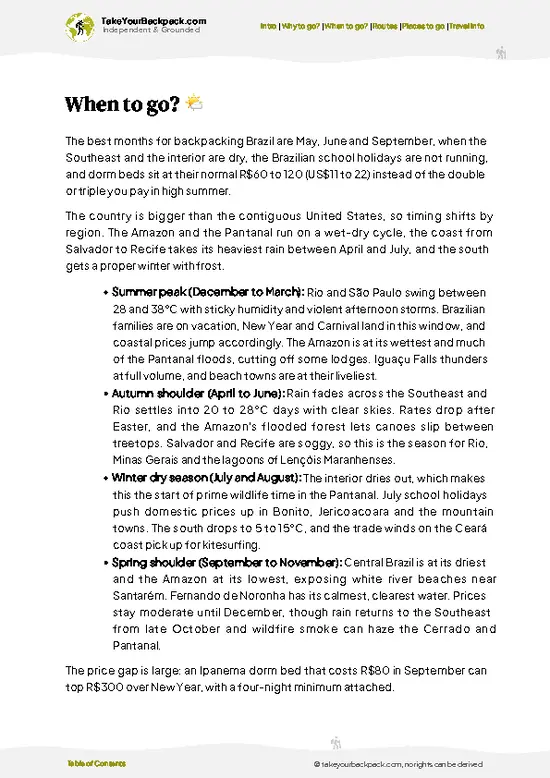
example page 0 from our offline Travel Guide for Brazil
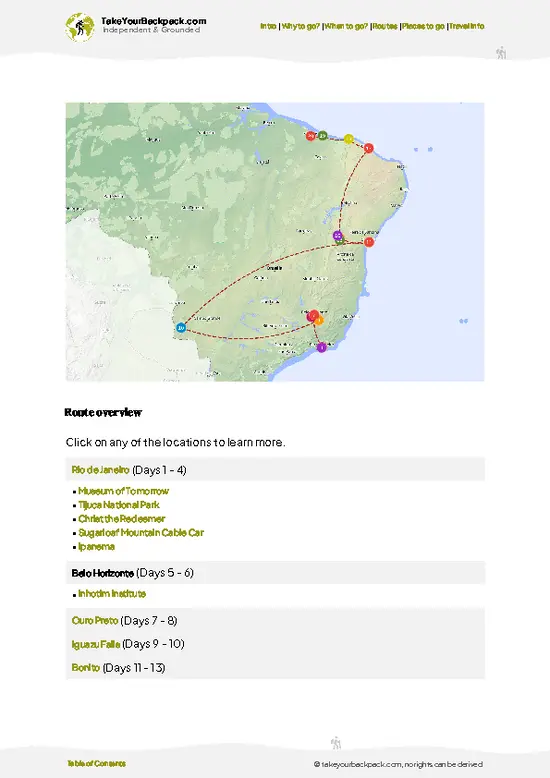
example page 1 from our offline Travel Guide for Brazil
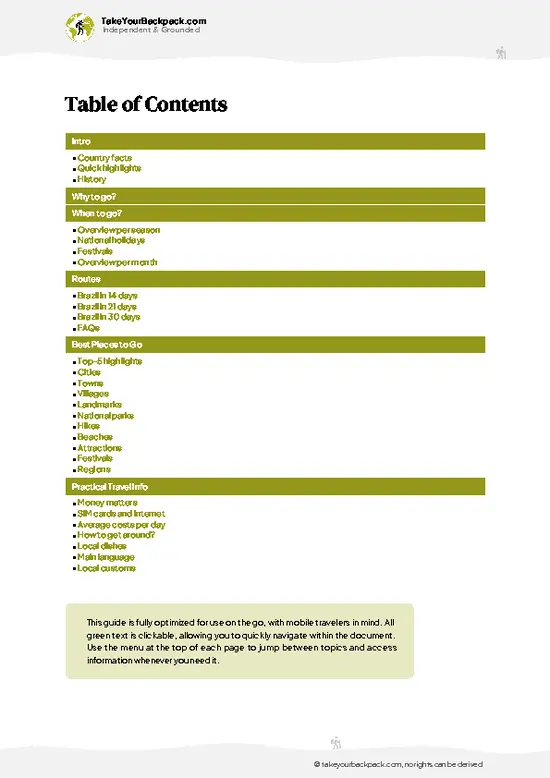
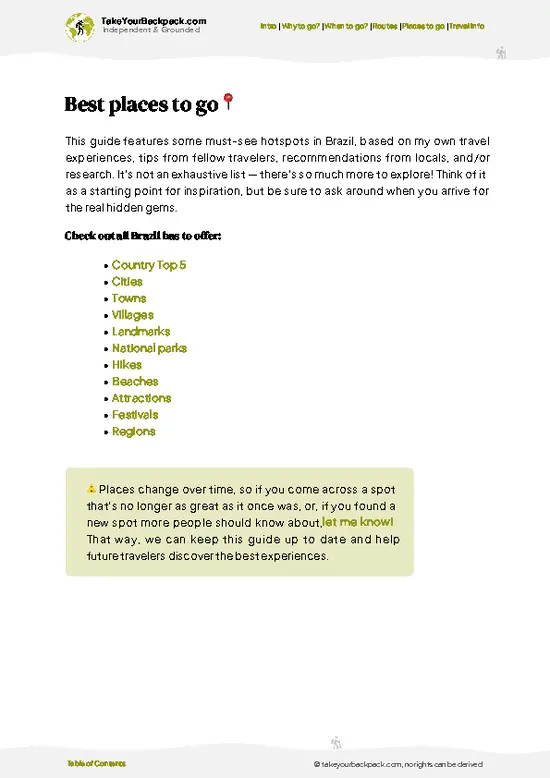
example page 2 from our offline Travel Guide for Brazil
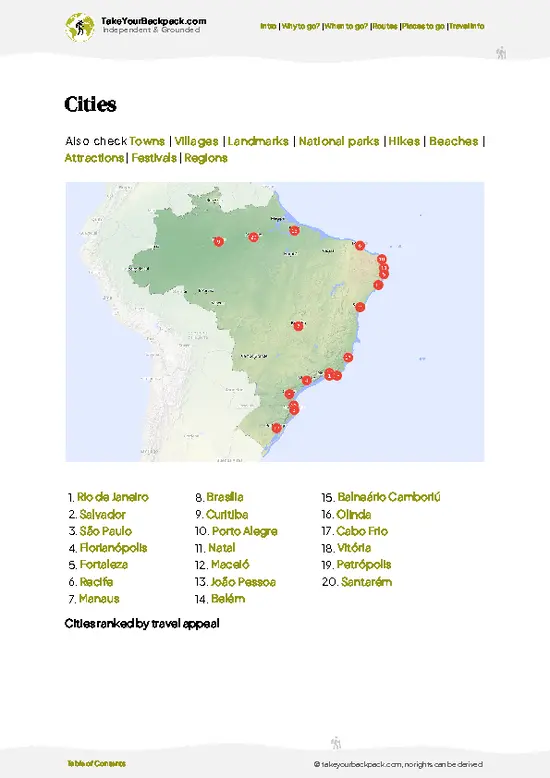
example page 3 from our offline Travel Guide for Brazil
example page 4 from our offline Travel Guide for Brazil
example page 5 from our offline Travel Guide for Brazil
example page 6 from our offline Travel Guide for Brazil
example page 7 from our offline Travel Guide for Brazil
Loading the map 🌍
CLICK TO FILTER
cities
towns
villages
landmarks
national parks
hikes
beaches
attractions
festivals
regions
SHOW COUNTRY’S BESTSHOW ALL

✨ Why go?
Ranked #99 national park in Brazil
What makes it a must-see national park

Backpackers pick Chapada das Mesas National Park because it offers a rare blend of independent exploration and rugged beauty without the crowds that drain your energy or wallet. The park’s trail variety is a major draw—everything from short, manageable hikes to full-day treks that reveal waterfalls, canyons, and plateaus. You won’t find a maze of commercialized paths here, which means you can set your own pace and soak in the landscape without feeling rushed or herded.

Budget travelers appreciate the camping options and hostels nearby, which keep costs low and the vibe authentic. Unlike some parks that push pricey guided tours, Chapada das Mesas suits self-guided travelers perfectly. The trails are well-marked, and local maps are reliable enough to avoid the stress of getting lost. That said, … read more 👉
Backpackers pick Chapada das Mesas National Park because it offers a rare blend of independent exploration and rugged beauty without the crowds that drain your energy or wallet. The park’s trail variety is a major draw—everything from short, manageable hikes to full-day treks that reveal waterfalls, canyons, and plateaus. You won’t find a maze of commercialized paths here, which means you can set your own pace and soak in the landscape without feeling rushed or herded.

Budget travelers appreciate the camping options and hostels nearby, which keep costs low and the vibe authentic. Unlike some parks that push pricey guided tours, Chapada das Mesas suits self-guided travelers perfectly. The trails are well-marked, and local maps are reliable enough to avoid the stress of getting lost. That said, don’t underestimate the terrain—bring sturdy boots and enough water. The park’s remoteness means you won’t find many services inside, so preparation is key.

Choosing Chapada das Mesas means investing your energy in genuine adventure, not in navigating tourist traps or inflated prices. It’s a place where your effort pays off in quiet moments and wild landscapes, not in flashy amenities.

💡 HighlightsDon't-miss highlights and experiences

Encanto Azul
This isn’t just a swimming hole—it’s a geological trick of the light. Encanto Azul is a deep, limestone pool where the water turns a surreal electric blue under the midday sun. The clarity is so extreme you’ll see fish hovering in what looks like midair. It’s not a secret, but the access road is rough enough to keep the crowds thin. Go early to avoid the tour vans and to catch the sun at the right angle. The water is cold, but after a day in Maranhão’s heat, you’ll be grateful for it.


Poço Azul
Not to be confused with Encanto Azul, though the names are similar and the experience is equally worth your time. Poço Azul is a natural pool fed by a spring, surrounded by dense cerrado vegetation. The water is glass-clear, and the pool is larger and more open than Encanto Azul. You can … read more 👉
Encanto Azul
This isn’t just a swimming hole—it’s a geological trick of the light. Encanto Azul is a deep, limestone pool where the water turns a surreal electric blue under the midday sun. The clarity is so extreme you’ll see fish hovering in what looks like midair. It’s not a secret, but the access road is rough enough to keep the crowds thin. Go early to avoid the tour vans and to catch the sun at the right angle. The water is cold, but after a day in Maranhão’s heat, you’ll be grateful for it.


Poço Azul
Not to be confused with Encanto Azul, though the names are similar and the experience is equally worth your time. Poço Azul is a natural pool fed by a spring, surrounded by dense cerrado vegetation. The water is glass-clear, and the pool is larger and more open than Encanto Azul. You can swim, float, or just sit on the rocks and watch the light shift through the water. There’s a small fee to enter, and it’s cash only—don’t expect card readers out here.


Cachoeira do Prata
If you want waterfalls, this is the one that delivers. Cachoeira do Prata is a series of falls, not just a single drop, and the volume of water is impressive during the rainy season. The hike in is manageable but long enough to keep out the flip-flop crowd. Bring your own snacks and water; there’s nothing for sale at the site. The falls are powerful, loud, and the spray cools the air for a perfect lunch stop.


Cachoeira de São Romão
This is the park’s heavyweight. São Romão is one of the largest waterfalls in the region, both in height and sheer force. The road in is rough—high clearance vehicles only, and in the rainy season, it’s sometimes impassable. But if you make it, you can walk behind the curtain of water, which is a rare experience in Brazil. The sound is thunderous, and the air is thick with mist. This is my personal favorite: the scale, the isolation, and the raw power of the falls make the effort worthwhile.


Morro do Chapéu
The park’s namesake mesa is a flat-topped hill that dominates the skyline. The hike up isn’t technical, but it’s exposed—bring sun protection and plenty of water. From the summit, you get a panoramic view of the park’s patchwork of cerrado, gallery forest, and sandstone cliffs. It’s the best spot for orientation and for understanding the park’s scale. Go late in the day for the best light and to avoid the worst of the heat.
Spotted a mistake or missing something? Contact us.

🌤️ When to go?Seasonal considerations and timing

  • Weather: The dry season from May to September is your best bet. Rainfall drops significantly, making trails safer and waterfalls more accessible. Avoid the wet season (October to April), when heavy rains can turn paths into mud traps and some areas may close.
  • Temperature: Daytime highs hover around 25-30°C (77-86°F) during the dry months, comfortable for hiking without overheating. Nights can dip to 15°C (59°F), so pack a light jacket. The wet season brings warmer, more humid conditions, often above 30°C (86°F), which can sap your energy fast.
  • Daylight Hours: June and July offer the longest daylight, roughly 11-12 hours, giving you more time to explore without rushing. Shorter days in December and January mean less daylight for trekking, so plan accordingly.
  • Crowds: The dry season attracts
… read more 👉
  • Weather: The dry season from May to September is your best bet. Rainfall drops significantly, making trails safer and waterfalls more accessible. Avoid the wet season (October to April), when heavy rains can turn paths into mud traps and some areas may close.
  • Temperature: Daytime highs hover around 25-30°C (77-86°F) during the dry months, comfortable for hiking without overheating. Nights can dip to 15°C (59°F), so pack a light jacket. The wet season brings warmer, more humid conditions, often above 30°C (86°F), which can sap your energy fast.
  • Daylight Hours: June and July offer the longest daylight, roughly 11-12 hours, giving you more time to explore without rushing. Shorter days in December and January mean less daylight for trekking, so plan accordingly.
  • Crowds: The dry season attracts more visitors, especially July and August. Expect busier trails and higher accommodation demand. If you prefer solitude, aim for shoulder months like May or September.
  • Seasonal Activities: Waterfalls are at their peak flow early in the dry season (May-June), perfect for swimming and photography. Later months see lower water levels but better trail conditions for longer hikes.
  • Price Fluctuations: Accommodation and tour prices rise during the dry season’s peak months due to demand. Booking in advance can save you money. The wet season offers lower prices but comes with the risk of disrupted plans.
Pro-tip: Target late May or early September for a sweet spot—good weather, fewer crowds, and better prices. You’ll keep your energy and budget intact for the park’s best moments.


source: climatestotravel.comJANJanuary: fair for travelingFEBFebruary: fair for travelingMARMarch: fair for travelingAPRApril: fair for travelingMAYMay: highly recommended for travelingJUNJune: excellent for travelingJULJuly: highly recommended for travelingAUGAugust: highly recommended for travelingSEPSeptember: highly recommended for travelingOCTOctober: fair for travelingNOVNovember: fair for travelingDECDecember: fair for traveling
when-to-go

✈️ The backpacker research shortcutBrazil Travel Guide

An offline-friendly backpacking guide with optimized travel routes, ranked highlights, transport advice, and the best areas to stay.
example page 0 from our offline Travel Guide for Brazil
example page 1 from our offline Travel Guide for Brazil
example page 2 from our offline Travel Guide for Brazil
example page 3 from our offline Travel Guide for Brazil
example page 4 from our offline Travel Guide for Brazil
example page 5 from our offline Travel Guide for Brazil
example page 6 from our offline Travel Guide for Brazil
example page 7 from our offline Travel Guide for Brazil
The digital guide (410 pages) contains:
✅ 146 highlights, ranked by travel appeal
✅ Optimized 14, 21 & 30-day travel routes
✅ Cities, national parks, landmarks, beaches
✅ How to get around
✅ Offline-friendly for travel without Wi-Fi
👉 Click to see all 30+ guide features

📅 Plan smarter in minutes, not weeks
✅ Month by month travel advice
✅ Festivals & national holidays
✅ Budget expectations

🗺️ Go to the right places, skip the overrated ones
✅ Honest pros & cons of destinations
✅ Top hikes, parks & viewpoints
✅ Lesser-known places most travelers miss
✅ Clear “worth it vs skip it” guidance

🛏️ Travel smoothly without rookie mistakes
✅ Best areas to stay
✅ Transport systems explained simply
✅ Common scams & safety advice
✅ SIM cards, money & practical tips

🌍 Understand the country, not just visit it
✅ Culture & traditions
✅ 52 Essential phrases & customs
✅ Festivals worth planning around
✅ Traveler-friendly historical context
✅ Insights that make places more meaningful

📱 Built for real travel conditions
✅ Fully downloadable PDF
✅ Works completely offline
✅ Optimized for phone use
✅ Useful in remote areas & buses
✅ Everything in one place
Stop searching, start planning
Get instant access to your full guide. 30‑day money-back guarantee.
+ Add another guide for just

By proceeding you agree to our terms.
Sent to your inbox immediately after payment • 100% Secure Checkout
Best Backpacking Travel Advisor 2025 tourism awardBest Backpacking
Travel Advisor
2025
What others say about Take Your Backpack Guides:
⭐⭐⭐⭐⭐
Fantastic, amazing amount of information!
⭐⭐⭐⭐⭐
My goodness this is amazing, it's what I've been looking for hats off too you!
⭐⭐⭐⭐⭐
I think this is absolutely BRILLIANT
⭐⭐⭐⭐
Very complete and informative. It's still missing places, but I gotta to commend you
⭐⭐⭐⭐⭐
This is truly amazing, thank you, can't wait to explore it with my kids!
⭐⭐⭐⭐⭐
Awesome resource, thank you!
⭐⭐⭐⭐⭐
This is amazing! Can't wait to explore the ones I haven't seen
⭐⭐⭐⭐
I love this! Well done, great idea.
⭐⭐⭐⭐⭐
Thanks for taking the time to make this gem!
⭐⭐⭐⭐⭐
This might be the best website I've ever seen.
⭐⭐⭐⭐⭐
Congratulations, and thank you so much for your work; it's incredibly valuable.
⭐⭐⭐⭐
In all seriousness I think you did a great job pointing out the important spots
⭐⭐⭐⭐⭐
10/10 very good
⭐⭐⭐⭐⭐
As someone who's only just starting to visit regularly this is awesome, thank you.
⭐⭐⭐⭐
Thank you very much! I'm going to visit my dad, it's going to be very useful!
⭐⭐⭐⭐⭐
This is really cool! We'll be travelling for the first time and this definitely come in handy.
⭐⭐⭐⭐⭐
You are now our minister of culture, congratulations 👨‍💼
⭐⭐⭐⭐⭐
Just wanted to tell you that this is a pearl! Going to follow your recommendations.
⭐⭐⭐⭐⭐
This is so cool. I'll definitely be using the resource for my travels soon.
⭐⭐⭐⭐⭐
This is very impressive! Good work.
⭐⭐⭐⭐⭐
This is an amazing and informative site. Very well done!

🛏️ Where to stay?How to pick the right area

Chapada das Mesas National Park doesn’t offer accommodations inside its boundaries. That’s a key point to lock in before you plan your trip. The park is protected land, and overnight stays are limited to camping in designated areas, which requires preparation and permits. If you’re not set up for backcountry camping, you’ll want to base yourself in nearby towns.

The most practical hub is Carolina, about 30 kilometers from the park entrance. Carolina is the gateway for most visitors and has a handful of budget-friendly pousadas and hostels tailored to backpackers. Don’t expect luxury here—think … read more 👉
Chapada das Mesas National Park doesn’t offer accommodations inside its boundaries. That’s a key point to lock in before you plan your trip. The park is protected land, and overnight stays are limited to camping in designated areas, which requires preparation and permits. If you’re not set up for backcountry camping, you’ll want to base yourself in nearby towns.

The most practical hub is Carolina, about 30 kilometers from the park entrance. Carolina is the gateway for most visitors and has a handful of budget-friendly pousadas and hostels tailored to backpackers. Don’t expect luxury here—think simple rooms, basic amenities, and a chance to mingle with other travelers and locals. It’s a good trade-off for proximity and convenience.

Another option is the smaller town of Riachão, which offers fewer choices but a quieter vibe. It’s a bit further out, so factor in transportation time and costs. Public transport is limited, so having your own vehicle or arranging a tour is almost mandatory.

A heads-up: services in these towns are modest. Don’t count on reliable Wi-Fi or 24/7 shops. Stock up on essentials in Carolina before heading into the park. Also, be ready for basic infrastructure—electricity can be spotty, and phone signal is patchy in the park itself.

Bottom line: plan to stay outside the park, in Carolina or Riachão, and treat your accommodations as a functional base rather than a comfort zone. This approach saves your energy and budget for what really counts—the trails, waterfalls, and landscapes that make Chapada das Mesas worth the trip.

👛 Costs (as of 19 October 2026)Travel costs and budget guide for Chapada das Mesas

As of the most recent estimates, visiting Chapada das Mesas National Park in Brazil involves an entrance fee of approximately R$80 per adult. Additional costs for individual attractions range from R$40 to R$200 per person, depending on the specific site. Please note that these prices are subject to change, and it's advisable to check the official website for the most current information.

source: danae-explore.com
⚠️ Prices can change and everyone travels differently, so take this as a rough guide. Hope it helps you plan your adventure!

🥾 TrailsExploring Chapada das Mesas: trails, terrain, and views

Chapada das Mesas National Park in Brazil offers a rugged playground for hikers who appreciate raw landscapes over polished tourist trails. The park is a sprawling expanse of sandstone plateaus, deep canyons, and waterfalls that demand a bit of grit to explore properly. The terrain is uneven and often rocky, with steep climbs that can sap your energy if you’re not prepared. It’s not a place for casual strolls; expect to navigate loose stones, occasional mud patches, and some scrambling over rocks. The reward is a landscape that feels untouched, with panoramic views that stretch over vast savannahs … read more 👉
Chapada das Mesas National Park in Brazil offers a rugged playground for hikers who appreciate raw landscapes over polished tourist trails. The park is a sprawling expanse of sandstone plateaus, deep canyons, and waterfalls that demand a bit of grit to explore properly. The terrain is uneven and often rocky, with steep climbs that can sap your energy if you’re not prepared. It’s not a place for casual strolls; expect to navigate loose stones, occasional mud patches, and some scrambling over rocks. The reward is a landscape that feels untouched, with panoramic views that stretch over vast savannahs and dense patches of cerrado vegetation. Wildlife is present but shy—watch for birds like the colorful araras and the occasional capuchin monkey, but don’t expect a safari. The park’s remoteness means you’ll often have stretches of trail to yourself, which is a rare luxury.

The park does have a few designated trails worth noting:

Trilha do Cânion do Itapecuru
  • Length: Approximately 8 km round trip
  • Estimated Duration: 4 to 5 hours
  • Difficulty Level: Moderate to challenging
  • Key Features: Canyon views, waterfalls, natural pools for swimming
  • Terrain: Rocky paths with steep descents and ascents, some narrow ledges

Trilha da Cachoeira São Romão
  • Length: About 6 km round trip
  • Estimated Duration: 3 to 4 hours
  • Difficulty Level: Moderate
  • Key Features: One of the park’s largest waterfalls, swimming spots, diverse flora
  • Terrain: Mixed dirt trails and rocky sections, some slippery areas near water

Trilha do Poço Azul
  • Length: Roughly 4 km round trip
  • Estimated Duration: 2 to 3 hours
  • Difficulty Level: Easy to moderate
  • Key Features: Crystal-clear blue pools, birdwatching opportunities
  • Terrain: Mostly flat with some gentle inclines, well-marked paths

Getting to Chapada das Mesas isn’t straightforward if you rely on public transport. The nearest town with decent bus connections is Carolina, which serves as the gateway to the park. From there, you’ll likely need to arrange a taxi or local guide to reach trailheads, as the park’s access roads are rough and poorly marked. This is not a place where you can just hop on a bus and start hiking. The park is not crowded, especially outside of Brazilian holiday periods, so you won’t be jostling for space on the trails. That said, the lack of crowds means fewer facilities and less immediate help if you run into trouble. Prepare accordingly.

There is an entrance fee, modest but mandatory, which helps maintain the park’s infrastructure and conservation efforts. Don’t expect visitor centers with extensive amenities; the park’s charm is in its wildness, but that also means you need to bring your own water, snacks, and first aid supplies. Respect the environment and plan your visit with enough daylight to avoid tricky descents in fading light. Chapada das Mesas rewards those who come prepared and ready to embrace its demanding, yet deeply satisfying, hiking opportunities.
⚠️ Hiking info can sometimes be outdated or inaccurate. Before you hit the trail, check the latest conditions with locals. If you do spot anything that's off, I'd love to hear from you, so I can update it for fellow travelers.

🛡️ SafetyScams, Hazards, and Annoyances

Chapada das Mesas National Park offers trails that are generally well-marked and manageable, but don’t mistake that for a walk in the park. The terrain varies from flat stretches to steep climbs, often on loose rock or sandy soil, so sturdy hiking boots with good grip are non-negotiable. River crossings are common, especially during the rainy season from November to April, when water levels rise quickly. Timing your hikes for the dry season or early morning hours helps avoid slippery paths and sudden weather shifts.

Wildlife encounters here are mostly low-key—expect to see birds, insects, and small mammals rather than anything threatening. Still, respect the animals by keeping your distance and avoiding feeding them; it’s about preserving their natural behavior and your safety. Sun exposure … read more 👉
Chapada das Mesas National Park offers trails that are generally well-marked and manageable, but don’t mistake that for a walk in the park. The terrain varies from flat stretches to steep climbs, often on loose rock or sandy soil, so sturdy hiking boots with good grip are non-negotiable. River crossings are common, especially during the rainy season from November to April, when water levels rise quickly. Timing your hikes for the dry season or early morning hours helps avoid slippery paths and sudden weather shifts.

Wildlife encounters here are mostly low-key—expect to see birds, insects, and small mammals rather than anything threatening. Still, respect the animals by keeping your distance and avoiding feeding them; it’s about preserving their natural behavior and your safety. Sun exposure is another factor; the open landscapes offer little shade, so a wide-brimmed hat, sunscreen, and plenty of water are essentials to prevent fatigue and dehydration.

Navigation is straightforward, but don’t rely solely on trail signs—carry a map or GPS, especially if you plan to explore less-traveled routes. The biggest mistake first-timers make is underestimating the heat and overestimating their pace. Slow down, hydrate often, and save your energy for the views that make the effort worthwhile.

FAQTraveler FAQ

3 to 4 days are recommended to explore Chapada das Mesas National Park thoroughly. This allows time to visit key attractions like the São Romão and Cachoeira da Velha waterfalls and to hike some of the main trails. More days may be needed if you want a relaxed pace or to explore less accessible areas.
Yes, you can visit Chapada das Mesas National Park without a car, but it requires planning. Local tours and shuttle services operate from nearby towns like Carolina, which is about 12 km from the park entrance. Public transportation options are limited, so organized tours or private transfers are the most practical alternatives.
Yes, there is an entrance fee to Chapada das Mesas National Park. The fee is approximately 20 BRL per person, payable at the park entrance. No special permit is required for general visits, but guided tours may have additional costs.
⚠️ Things can change over time, so always validate details locally before you go.

Other Brazilian national parks near Chapada das Mesas

Explore more nearby:


💡 Not sure where to go next?
Create a personalized itinerary for Brazil including Chapada das Mesas and the places that fit your trip.

Generate my itinerary

👉 Discover all national parks

Or checkout all Brazil has to offer (think cities, towns, villages, national parks, hikes, beaches, festivals)
Country photo of Brazil

We 💚 feedbackIs it worth it?

Chapada das Mesas delivers on raw, rugged beauty—waterfalls that don’t just look good in photos but demand a sweaty hike that makes the payoff real. Just know this: infrastructure is sparse. Roads can be rough, and services limited, so plan carefully. If you’re after polished comfort, this isn’t your spot. But if you want to trade convenience for a landscape that feels genuinely untouched, it’s worth every bit of the effort.

✈️ When did I visit Brazil?
Call it good timing or luck, but I was able to celebrate Carnaval in Rio de Janeiro in February 2022, after a round trip in the north and east coast.

✍️ Help improve this page!
The information on this page is based on my own backpacking experience in Brazil, supplemented with up-to-date research and feedback from other travelers. Travel details can change, so if you notice anything outdated or incomplete, feel free to let me know.


🙋‍♂️ Give feedback

👋 Meet the founderWho’s Behind Take Your Backpack?

Johan, backpacker and founder of TakeYourBackpackHi, I’m Johan (Netherlands 🇳🇱), the creator of TakeYourBackpack. Over the past 3 decades, I’ve backpacked through 90+ countries across six continents, gaining extensive experience with independent travel, long-term trips, and overland routes.

This site is built on a combination of firsthand travel experience and carefully curated insights from other backpackers. Many guides are based on places I’ve personally visited, while others bring together tips, observations, and practical advice shared by trusted travelers I’ve met along the way.

The goal is to provide realistic, experience-driven guidance — not generic itineraries — so you can explore destinations with better context, clearer expectations, and more confidence.