×

Brazil🇧🇷 | regionsCosta VerdeColonial Paraty, car-free islands, forest trails, fishing hamlets | things to do and best time to go

Explore BonitoExplore Fernando de Noronha

Backpacking in Costa Verde
👍 Recommendedregion ranked #4
By Johan Kruseman 🇳🇱 | Updated October 19, 2026

The bus from Rio hugs the coast, and the first thing that hits you at Paraty is the sound: rubber soles and sandals skidding over round river stones, with a fishing boat engine somewhere beyond the church. That was my arrival, and I walked straight to the water without dropping my pack. Costa Verde is the Atlantic coast of Rio de Janeiro state in Brazil, running southwest from Rio toward São Paulo. The mountains drop right into the sea, so you get over 300 islands, forest trails and small coves in one stretch. Paraty’s colonial center is the best base. Ilha Grande gives you car-free jungle hiking. Angra dos Reis itself is mostly a port, so skip it. Weekends and holidays get packed, and prices climb. A first day works well like this: wander Paraty’s old streets in the morning, then take an afternoon boat to a nearby beach and eat grilled fish by the sand.

Discover everything you want to know in the 📖 Brazil Travel Guide.


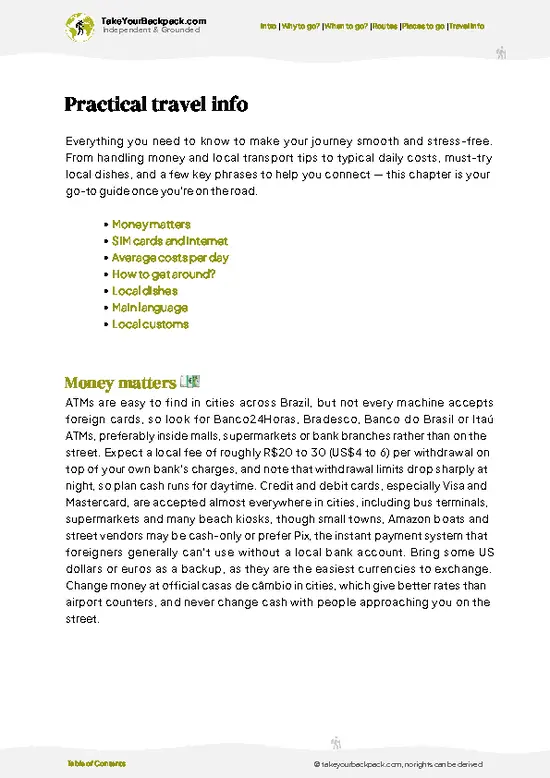
example page 0 from our offline Travel Guide for Brazil
example page 1 from our offline Travel Guide for Brazil
example page 2 from our offline Travel Guide for Brazil
example page 3 from our offline Travel Guide for Brazil
example page 4 from our offline Travel Guide for Brazil
example page 5 from our offline Travel Guide for Brazil
example page 6 from our offline Travel Guide for Brazil
example page 7 from our offline Travel Guide for Brazil
Loading the map 🌍
CLICK TO FILTER
cities
towns
villages
landmarks
national parks
hikes
beaches
attractions
festivals
regions
SHOW COUNTRY’S BESTSHOW ALL

✨ Why go?
Ranked #4 region in Brazil
What sets this place apart

Costa Verde works for backpackers because one coastline holds very different days without much repacking. You can spend a morning in the cobbled colonial center of Paraty, then reach a forest trail or empty beach by afternoon. Ilha Grande has no cars, so getting from one beach to the next means walking jungle paths or hopping on a small boat, which slows everything down in a good way. The coast is also easy to string together. Buses run along the highway between Rio, Angra and Paraty, and local boats and schooners cover the islands and bays, so you can move at whatever pace suits you. Add the cachaça distilleries in the hills behind Paraty and the Serra da Bocaina forest, and you can mix culture with nature without a rental car. Hostels and guesthouses cluster in a few towns, which makes meeting other travelers simple.

💡 HighlightsMust-see experiences and standout moments

  1. Paraty Historic Center: Car-free colonial streets of uneven stones, whitewashed houses and the Igreja de Santa Rita, with streets that flood slightly at spring high tides.
  2. Ilha Grande Lopes Mendes Beach: A long, wild surf beach reached by a forest trail from Vila do Abraão, with no development behind it.
  3. Vila do Abraão: The main village on Ilha Grande, a sandy lane of pousadas, bars and trail starts.
  4. Lagoa Azul: A calm, clear bay on Ilha Grande where snorkeling over fish is easy from a boat.
  5. Praia de Trindade: A beach village south of Paraty with natural rock pools, hostels and surf, and a relaxed hippie feel.
  6. Pico do Papagaio trail: A steep hike on Ilha Grande to the Pico do Papagaio, with panoramic views over the bay for those who start early.
  7. Cachoeira da Pedra Branca: A waterfall and swimming
… read more 👉
  1. Paraty Historic Center: Car-free colonial streets of uneven stones, whitewashed houses and the Igreja de Santa Rita, with streets that flood slightly at spring high tides.
  2. Ilha Grande Lopes Mendes Beach: A long, wild surf beach reached by a forest trail from Vila do Abraão, with no development behind it.
  3. Vila do Abraão: The main village on Ilha Grande, a sandy lane of pousadas, bars and trail starts.
  4. Lagoa Azul: A calm, clear bay on Ilha Grande where snorkeling over fish is easy from a boat.
  5. Praia de Trindade: A beach village south of Paraty with natural rock pools, hostels and surf, and a relaxed hippie feel.
  6. Pico do Papagaio trail: A steep hike on Ilha Grande to the Pico do Papagaio, with panoramic views over the bay for those who start early.
  7. Cachoeira da Pedra Branca: A waterfall and swimming spot in the hills near Paraty, popular with locals and much quieter than the beaches.
  8. Paraty-Mirim: A small fishing community with a quiet beach and an old church, reached along the coast road and often missed by visitors.
  9. Saco do Mamanguá: A tropical fjord-like inlet south of Paraty, best explored by kayak or small boat through calm mangrove water.
  10. Praia do Sono: A remote fishing hamlet and long beach, reached by trail or boat, where the road simply stops.
If time is short, skip Vila do Abraão’s waterfront souvenir stalls and put the hours into a beach instead.
Spotted a mistake or missing something? Contact us.

Things to do near Costa Verde

Ratings based on Tripadvisor reviews. When you book through this link, you support our work at no extra cost to you.

⌛️ 5 days5-day itinerary for Costa Verde

Paraty is best done on foot in the cooler morning, then with a long break under shade when the sun is highest.
Day 1: Paraty: Start in the historic center, because the stones are quiet before the day-trippers arrive. Walk to the waterfront for the fishing boats, then spend the afternoon at a café or on a boat trip. This keeps you off crowded buses on arrival day.
Day 2: Trindade: A local bus climbs and drops along the coast road to Trindade. Swim in the rock pools and sleep close to the sand, so you can see the beach in the best light without rushing back.
Day 3: Ilha Grande: Return to the mainland and take the ferry to Vila do Abraão. Ferries run on a schedule, which sets your timing, so book the earlier crossing and use the afternoon for Lagoa Azul by boat.
Day 4: Lopes Mendes: Walk over the … read more 👉
Paraty is best done on foot in the cooler morning, then with a long break under shade when the sun is highest.
Day 1: Paraty: Start in the historic center, because the stones are quiet before the day-trippers arrive. Walk to the waterfront for the fishing boats, then spend the afternoon at a café or on a boat trip. This keeps you off crowded buses on arrival day.
Day 2: Trindade: A local bus climbs and drops along the coast road to Trindade. Swim in the rock pools and sleep close to the sand, so you can see the beach in the best light without rushing back.
Day 3: Ilha Grande: Return to the mainland and take the ferry to Vila do Abraão. Ferries run on a schedule, which sets your timing, so book the earlier crossing and use the afternoon for Lagoa Azul by boat.
Day 4: Lopes Mendes: Walk over the island forest to the long surf beach. The trail takes a few hours, so it fills the day and leaves you tired in a good way.
Day 5: Detour to Saco do Mamanguá: For a detour, join a kayak or boat trip into the inlet from Paraty. It adds calm water and mangrove quiet without changing your onward bus.
If you only get one day, make it Day 4. The trail through Ilha Grande’s forest ending at an empty beach is the best day on this coast.

🌤️ When to go?Best time to visit Costa Verde

May to September is the most comfortable window, with daytime highs of 22 to 27°C (72 to 81°F) and the lowest rainfall on the coast between Paraty and Angra dos Reis.
  • Dry Season (May to September): Trails like the Paraty-Mambucaba stretch and the Ilha Grande routes are firmer underfoot, the sea stays clear for snorkeling, and nights dip to about 15 to 18°C (59 to 64°F). Daylight lasts roughly 11 hours. Prices stay moderate except around the July school holidays.
  • Summer (December to March): Expect 28 to 35°C (82 to 95°F), thick humidity and afternoon downpours. Beaches fill, Christmas to Carnival is the priciest stretch, and beds can cost double.
  • Shoulder Months (April, October, November): Temperatures run 24 to 29°C (75 to 84°F), crowds thin and rates drop. Showers are brief, and the water is
… read more 👉
May to September is the most comfortable window, with daytime highs of 22 to 27°C (72 to 81°F) and the lowest rainfall on the coast between Paraty and Angra dos Reis.
  • Dry Season (May to September): Trails like the Paraty-Mambucaba stretch and the Ilha Grande routes are firmer underfoot, the sea stays clear for snorkeling, and nights dip to about 15 to 18°C (59 to 64°F). Daylight lasts roughly 11 hours. Prices stay moderate except around the July school holidays.
  • Summer (December to March): Expect 28 to 35°C (82 to 95°F), thick humidity and afternoon downpours. Beaches fill, Christmas to Carnival is the priciest stretch, and beds can cost double.
  • Shoulder Months (April, October, November): Temperatures run 24 to 29°C (75 to 84°F), crowds thin and rates drop. Showers are brief, and the water is warm enough for long swims.
  • Festival Periods: Paraty’s literary festival in July and the Holy Week processions bring crowds and higher prices, so book ahead.
Aim for a weekday in May or September, when boats run on schedule and the beaches are nearly empty.


source: climatestotravel.comJANJanuary: fair for travelingFEBFebruary: fair for travelingMARMarch: fair for travelingAPRApril: fair for travelingMAYMay: excellent for travelingJUNJune: excellent for travelingJULJuly: highly recommended for travelingAUGAugust: highly recommended for travelingSEPSeptember: excellent for travelingOCTOctober: fair for travelingNOVNovember: fair for travelingDECDecember: fair for traveling
when-to-go

✈️ The backpacker research shortcutBrazil Travel Guide

An offline-friendly backpacking guide with optimized travel routes, ranked highlights, transport advice, and the best areas to stay.
example page 0 from our offline Travel Guide for Brazil
example page 1 from our offline Travel Guide for Brazil
example page 2 from our offline Travel Guide for Brazil
example page 3 from our offline Travel Guide for Brazil
example page 4 from our offline Travel Guide for Brazil
example page 5 from our offline Travel Guide for Brazil
example page 6 from our offline Travel Guide for Brazil
example page 7 from our offline Travel Guide for Brazil
The digital guide (410 pages) contains:
✅ 146 highlights, ranked by travel appeal
✅ Optimized 14, 21 & 30-day travel routes
✅ Cities, national parks, landmarks, beaches
✅ How to get around
✅ Offline-friendly for travel without Wi-Fi
👉 Click to see all 30+ guide features

📅 Plan smarter in minutes, not weeks
✅ Month by month travel advice
✅ Festivals & national holidays
✅ Budget expectations

🗺️ Go to the right places, skip the overrated ones
✅ Honest pros & cons of destinations
✅ Top hikes, parks & viewpoints
✅ Lesser-known places most travelers miss
✅ Clear “worth it vs skip it” guidance

🛏️ Travel smoothly without rookie mistakes
✅ Best areas to stay
✅ Transport systems explained simply
✅ Common scams & safety advice
✅ SIM cards, money & practical tips

🌍 Understand the country, not just visit it
✅ Culture & traditions
✅ 52 Essential phrases & customs
✅ Festivals worth planning around
✅ Traveler-friendly historical context
✅ Insights that make places more meaningful

📱 Built for real travel conditions
✅ Fully downloadable PDF
✅ Works completely offline
✅ Optimized for phone use
✅ Useful in remote areas & buses
✅ Everything in one place
Stop searching, start planning
Get instant access to your full guide. 30‑day money-back guarantee.
+ Add another guide for just

By proceeding you agree to our terms.
Sent to your inbox immediately after payment • 100% Secure Checkout
Best Backpacking Travel Advisor 2025 tourism awardBest Backpacking
Travel Advisor
2025
What others say about Take Your Backpack Guides:
⭐⭐⭐⭐⭐
Fantastic, amazing amount of information!
⭐⭐⭐⭐⭐
My goodness this is amazing, it's what I've been looking for hats off too you!
⭐⭐⭐⭐⭐
I think this is absolutely BRILLIANT
⭐⭐⭐⭐
Very complete and informative. It's still missing places, but I gotta to commend you
⭐⭐⭐⭐⭐
This is truly amazing, thank you, can't wait to explore it with my kids!
⭐⭐⭐⭐⭐
Awesome resource, thank you!
⭐⭐⭐⭐⭐
This is amazing! Can't wait to explore the ones I haven't seen
⭐⭐⭐⭐
I love this! Well done, great idea.
⭐⭐⭐⭐⭐
Thanks for taking the time to make this gem!
⭐⭐⭐⭐⭐
This might be the best website I've ever seen.
⭐⭐⭐⭐⭐
Congratulations, and thank you so much for your work; it's incredibly valuable.
⭐⭐⭐⭐
In all seriousness I think you did a great job pointing out the important spots
⭐⭐⭐⭐⭐
10/10 very good
⭐⭐⭐⭐⭐
As someone who's only just starting to visit regularly this is awesome, thank you.
⭐⭐⭐⭐
Thank you very much! I'm going to visit my dad, it's going to be very useful!
⭐⭐⭐⭐⭐
This is really cool! We'll be travelling for the first time and this definitely come in handy.
⭐⭐⭐⭐⭐
You are now our minister of culture, congratulations 👨‍💼
⭐⭐⭐⭐⭐
Just wanted to tell you that this is a pearl! Going to follow your recommendations.
⭐⭐⭐⭐⭐
This is so cool. I'll definitely be using the resource for my travels soon.
⭐⭐⭐⭐⭐
This is very impressive! Good work.
⭐⭐⭐⭐⭐
This is an amazing and informative site. Very well done!

🛏️ Where to stay?Best areas to stay in Brazil

Paraty is the best base for most backpackers, with a walkable car-free old town, a dense hostel scene and easy boat trips to nearby islands and beaches. Evenings are social, with live music in the squares and groups forming over caipirinhas. Dorm beds run about US$15 to 30, and the area is safe for solo travelers who stick to the lit center after dark.
Ilha Grande, reached by ferry, suits travelers who want trails and beaches with no cars. Vila do Abraão has the hostels, simple guesthouses and dive shops, and you meet hikers heading to Lopes Mendes beach. Beds cost US$15 to 35, and prices climb … read more 👉
Paraty is the best base for most backpackers, with a walkable car-free old town, a dense hostel scene and easy boat trips to nearby islands and beaches. Evenings are social, with live music in the squares and groups forming over caipirinhas. Dorm beds run about US$15 to 30, and the area is safe for solo travelers who stick to the lit center after dark.
Ilha Grande, reached by ferry, suits travelers who want trails and beaches with no cars. Vila do Abraão has the hostels, simple guesthouses and dive shops, and you meet hikers heading to Lopes Mendes beach. Beds cost US$15 to 35, and prices climb in January.
Angra dos Reis works as a practical overnight stop before the ferry, but there is little to do in town, so one night is plenty.
Trindade is a small fishing village with beachside hostels and campsites, popular with surfers and people who like quiet nights. Camping costs US$8 to 15, and the vibe is relaxed and friendly.
For a calmer stay, Paraty Mirim has a handful of guesthouses and a quiet bay, though nightlife is nearly absent.

🚌 Getting aroundGetting around like a local

Buses along the BR-101 coast road are the easiest way for a backpacker to move between towns, because they run often, cost little and drop you in the centers where hostels cluster. They are reliable on the main Rio to Paraty corridor, but slower and less frequent once you head off the highway. Traffic jams on summer weekends can add an hour or more.
  • Intercity Bus: Rio to Paraty takes 4 to 5 hours and costs US$15 to 25, with several departures daily. Seats recline, the air conditioning is strong (bring a layer), and the ride ends with the road dropping toward green mountains and a bay full of boats.
  • Local Bus: Paraty to Trindade runs about 40 minutes for US$2 to 3, with a handful of daily departures. The road twists through forest and ends at a beach where you can swim in natural rock pools.
  • Boats
… read more 👉
Buses along the BR-101 coast road are the easiest way for a backpacker to move between towns, because they run often, cost little and drop you in the centers where hostels cluster. They are reliable on the main Rio to Paraty corridor, but slower and less frequent once you head off the highway. Traffic jams on summer weekends can add an hour or more.
  • Intercity Bus: Rio to Paraty takes 4 to 5 hours and costs US$15 to 25, with several departures daily. Seats recline, the air conditioning is strong (bring a layer), and the ride ends with the road dropping toward green mountains and a bay full of boats.
  • Local Bus: Paraty to Trindade runs about 40 minutes for US$2 to 3, with a handful of daily departures. The road twists through forest and ends at a beach where you can swim in natural rock pools.
  • Boats and Ferries: The Ilha Grande ferry from Angra dos Reis takes about 80 minutes and costs US$9 to 15. Skip the pricey private speedboats unless you are in a group of four. The slow ferry gives you the island appearing out of the haze, plus time to chat with fellow backpackers.
  • Shared Vans and Taxis: Vans cover short hops such as Paraty to Laranjeiras for US$3 to 6, while taxis cost US$15 to 30 for the same ride. Vans are worth it for the savings and the local conversation, but taxis only make sense late at night.
  • Bicycle and Walking: Paraty’s old town is cobbled and flat, and it is closed to cars. Rent a bike for US$5 to 8 a day and ride out to the nearby waterfalls and cachaça distilleries. Walking the historic center takes an hour and costs nothing.
Check the bus and boat timetables the day before, since tides and weather can change departures, and buy tickets at the station rather than from touts on the street.

🍲 FoodLocal Flavors for Backpackers

Start with peixe com banana-da-terra, fish stewed with plantain, a Costa Verde classic with a soft, sweet edge against the salty broth. Fresh moqueca and camarão (shrimp) turn up at beach kiosks, often for US$10 to 18 a plate. Look for azul-marinho, a Paraty fish stew cooked with green banana in an iron pot, which turns the broth bluish, and sweet pastel de banana when you want something cheap and fried.
The local drink is cachaça, distilled in the hills around Paraty, and the caipirinha comes with lime sharp enough to wake you up. Try Gabriela, a Paraty cachaça flavored with honey, clove and cinnamon. Distillery tastings cost US$3 to 8, and sugarcane juice from street stalls costs about US$1.50.
Backpackers eat well at por quilo buffets, where you pay by weight, usually US$8 to 14 for a full … read more 👉
Start with peixe com banana-da-terra, fish stewed with plantain, a Costa Verde classic with a soft, sweet edge against the salty broth. Fresh moqueca and camarão (shrimp) turn up at beach kiosks, often for US$10 to 18 a plate. Look for azul-marinho, a Paraty fish stew cooked with green banana in an iron pot, which turns the broth bluish, and sweet pastel de banana when you want something cheap and fried.
The local drink is cachaça, distilled in the hills around Paraty, and the caipirinha comes with lime sharp enough to wake you up. Try Gabriela, a Paraty cachaça flavored with honey, clove and cinnamon. Distillery tastings cost US$3 to 8, and sugarcane juice from street stalls costs about US$1.50.
Backpackers eat well at por quilo buffets, where you pay by weight, usually US$8 to 14 for a full plate. Bakeries serve coffee with pão de queijo in the morning, and evening street stalls grill skewers near the old town squares.
Tipping of 10 percent is usually added to the bill, and lunch is the main meal, often lingering past 2 pm. Say com gelo if you want ice in your juice, and expect sand on your feet at beach restaurants.

FAQCommon questions from travelers

Costa Verde rewards 4 to 7 days. Two days cover Paraty’s old town and nearby waterfalls, while two or three more let you reach Ilha Grande and Trindade. Adding a few extra days gives time for beach hopping and hikes like the Lopes Mendes trail, which takes about 1.5 hours one way.
Buses along the BR-101 link Rio, Angra dos Reis and Paraty, with fares of about US$15 to 25 for the 4 to 5 hour ride from Rio to Paraty. Local buses and shared vans reach Trindade and other beaches for US$2 to 6. In Costa Verde, ferries from Angra dos Reis run about 80 minutes to Ilha Grande for US$9 to 15, and Paraty’s old town is best walked or cycled.
Costa Verde is known for Paraty’s colonial center, a car-free grid of cobbled streets with white-washed Portuguese buildings from the 1700s. Ilha Grande, with its car-free trails and beaches such as Lopes Mendes, is another highlight. The coast also produces cachaça, with distilleries around Paraty offering tastings for US$3 to 8, and it is backed by Atlantic rainforest that drops right to the sea.
⚠️ Things can change over time, so always validate details locally before you go.

Other Brazilian regions near Costa Verde

Explore more nearby:

  • Ilha Grande—Jungle hiking, Lopes Mendes surf, former prison ruins, boat-only beaches| 47 km away
  • Ilha do Mel—Car-free sand paths, tide-timed walks, lighthouse hill, surf coves| 455 km away
  • Bonito—Spring-fed rivers, cave lakes, sinkhole macaws, guided snorkeling| 1234 km away

💡 Not sure where to go next?
Create a personalized itinerary for Brazil including Costa Verde and the places that fit your trip.

Generate my itinerary

👉 Discover all regions

Or checkout all Brazil has to offer (think cities, towns, villages, national parks, hikes, beaches, festivals)
Country photo of Brazil

We 💚 feedbackSumming up the experience

Costa Verde looks all about beaches, but the old Paraty streets flood at spring high tides, and the water slides between the stones in the morning. I would plan a visit around that and bring sandals you can wade in. Keep a spare day, because boats get canceled when the sea turns rough.

✈️ When did I visit Brazil?
Call it good timing or luck, but I was able to celebrate Carnaval in Rio de Janeiro in February 2022, after a round trip in the north and east coast.

✍️ Help improve this page!
The information on this page is based on my own backpacking experience in Brazil, supplemented with up-to-date research and feedback from other travelers. Travel details can change, so if you notice anything outdated or incomplete, feel free to let me know.


🙋‍♂️ Give feedback

👋 Meet the founderWho’s Behind Take Your Backpack?

Johan, backpacker and founder of TakeYourBackpackHi, I’m Johan (Netherlands 🇳🇱), the creator of TakeYourBackpack. Over the past 3 decades, I’ve backpacked through 90+ countries across six continents, gaining extensive experience with independent travel, long-term trips, and overland routes.

This site is built on a combination of firsthand travel experience and carefully curated insights from other backpackers. Many guides are based on places I’ve personally visited, while others bring together tips, observations, and practical advice shared by trusted travelers I’ve met along the way.

The goal is to provide realistic, experience-driven guidance — not generic itineraries — so you can explore destinations with better context, clearer expectations, and more confidence.