
×

Brazil🇧🇷 | regionsFernando de NoronhaTurtle bays, cliff lookouts, capped visitor numbers, marine park | things to do and best time to go

Explore Costa VerdeExplore Ilha Grande

Backpacking in Fernando de Noronha
UNESCO World Heritage site
By Johan Kruseman 🇳🇱 | Updated October 19, 2026

The snorkel mask was still sitting in my rented buggy when the first sea turtle glided under the rocks below the Baía do Sancho ladder, and I watched it as a green smudge from the surface. That was my mistake, and the lesson is simple: carry your mask everywhere, because the best water here shows up without warning. Fernando de Noronha is an Atlantic archipelago off the northeast coast of Brazil, and the main island is a marine park where the sea is clear enough to count fish from a cliff edge. Sancho, Leão and Atalaia are among the best beaches in the country, and the turtles, dolphins and reefs earn the trip. Skip the village nightlife, which is a handful of restaurants and forró bars, and skip boat tours that repeat what the free trails already give you. Everything is pricey and visitor numbers are capped. You will like it most if you want reefs, hikes and quiet. You won’t if you need nightlife or a tight budget.

Discover everything you want to know in the 📖 Brazil Travel Guide.


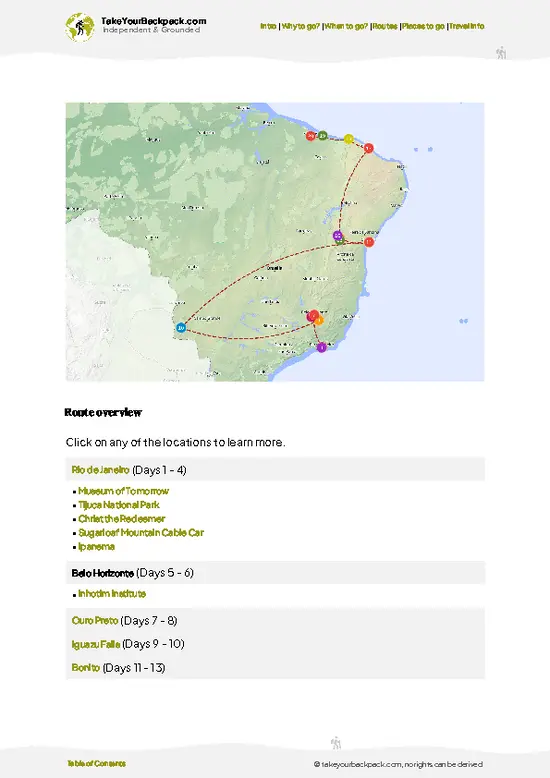
example page 0 from our offline Travel Guide for Brazil
example page 1 from our offline Travel Guide for Brazil
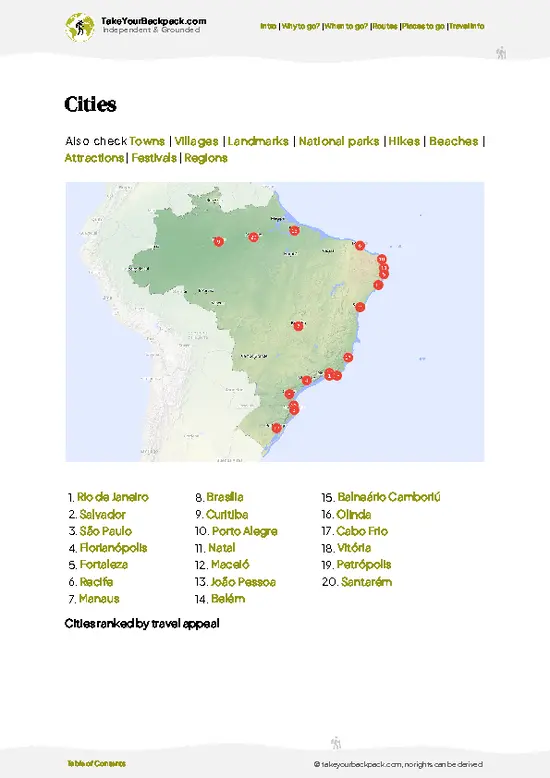
example page 2 from our offline Travel Guide for Brazil
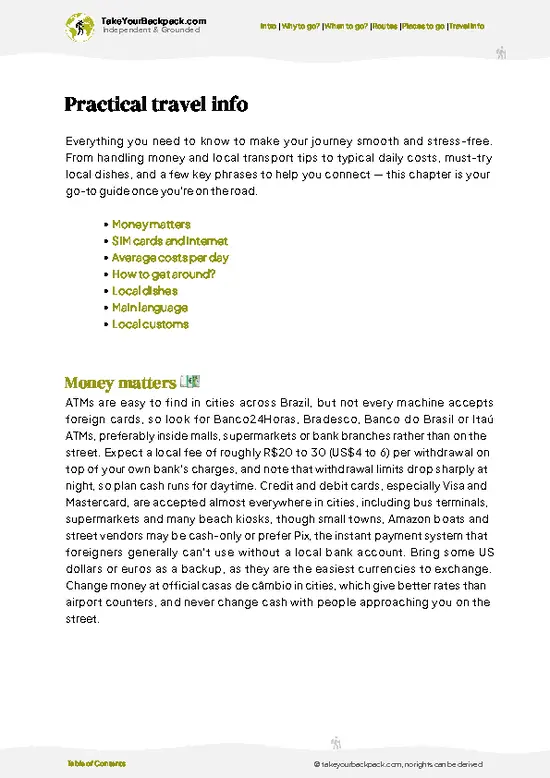
example page 3 from our offline Travel Guide for Brazil
example page 4 from our offline Travel Guide for Brazil
example page 5 from our offline Travel Guide for Brazil
example page 6 from our offline Travel Guide for Brazil
example page 7 from our offline Travel Guide for Brazil
Loading the map 🌍
CLICK TO FILTER
cities
towns
villages
landmarks
national parks
hikes
beaches
attractions
festivals
regions
SHOW COUNTRY’S BESTSHOW ALL

✨ Why go?
Ranked #1 region in Brazil
Why visitors keep coming back

Fernando de Noronha packs several kinds of days onto one main island, and that is the strongest argument for going. A single paved road, the BR-363, links the village of Remédios with beaches to the north and south, so you sleep in one bed and still reach a surf bay, a turtle-nesting beach and a mangrove without repacking. Buggies, taxis and a public bus all use that road, and many trailheads start almost at the shoulder, so you can mix modes as the day demands.
The water does most of the work. Snorkeling from the sand at Baía do Sancho costs nothing beyond the park entry, and the lookout above Baía dos Golfinhos is where spinner dolphins gather in the morning. You see wildlife without booking a boat.
The island also suits slow travel. Mornings go to hikes and beaches, midday to shade and a … read more 👉
Fernando de Noronha packs several kinds of days onto one main island, and that is the strongest argument for going. A single paved road, the BR-363, links the village of Remédios with beaches to the north and south, so you sleep in one bed and still reach a surf bay, a turtle-nesting beach and a mangrove without repacking. Buggies, taxis and a public bus all use that road, and many trailheads start almost at the shoulder, so you can mix modes as the day demands.
The water does most of the work. Snorkeling from the sand at Baía do Sancho costs nothing beyond the park entry, and the lookout above Baía dos Golfinhos is where spinner dolphins gather in the morning. You see wildlife without booking a boat.
The island also suits slow travel. Mornings go to hikes and beaches, midday to shade and a long lunch, and late afternoon to the fort ruins and viewpoints above the village. Nature and history sit close enough that you can fit both into one easy day, with time left for another swim.

💡 HighlightsKey sights and experiences for travelers

  1. Baía do Sancho: reached by a steep stairway and metal ladder through a cliff crevice, it opens onto a sheltered cove with turtles and reef fish right off the sand. Go early, before the tour groups arrive.
  2. Baía dos Porcos and Morro Dois Irmãos: natural tide pools sit below two sharp rock spires, and snorkeling at low tide shows small reef fish in warm, calm water.
  3. Praia do Leão: a long, wide beach where green turtles nest, backed by dunes and pale rock. Come at dusk, when the light softens and the island is quiet.
  4. Mirante dos Golfinhos: a clifftop lookout over the bay where spinner dolphins rest and feed in the morning. You watch them from above with the national park ticket, with no boat needed.
  5. Praia do Atalaia: natural pools in the rock hold fish at low tide. Daily visitor numbers are limited
… read more 👉
  1. Baía do Sancho: reached by a steep stairway and metal ladder through a cliff crevice, it opens onto a sheltered cove with turtles and reef fish right off the sand. Go early, before the tour groups arrive.
  2. Baía dos Porcos and Morro Dois Irmãos: natural tide pools sit below two sharp rock spires, and snorkeling at low tide shows small reef fish in warm, calm water.
  3. Praia do Leão: a long, wide beach where green turtles nest, backed by dunes and pale rock. Come at dusk, when the light softens and the island is quiet.
  4. Mirante dos Golfinhos: a clifftop lookout over the bay where spinner dolphins rest and feed in the morning. You watch them from above with the national park ticket, with no boat needed.
  5. Praia do Atalaia: natural pools in the rock hold fish at low tide. Daily visitor numbers are limited and guided, so you need to reserve ahead.
  6. Projeto Tamar visitor center: a research base for sea turtle conservation, with tanks, exhibits and clear explanations of the nesting cycle you may spot on the beaches.
  7. Forte de Nossa Senhora dos Remédios: a hilltop colonial fortress above the village, with stone walls, old cannons and views over the port and the Morro do Pico spire.
  8. Praia do Sueste and its mangrove: a calm bay where reef sharks and turtles swim in the shallows, next to what is regarded as the only oceanic island mangrove in the Atlantic.
  9. Buraco da Raquel: a small, quiet viewpoint and rock formation that most day-trippers pass without stopping. It makes a good, empty photo stop.
  10. Forte de São Pedro do Boldró: crumbling coastal fort walls on a headland, with views over rough water and one of the better places to watch the sun go down.
The Sueste mangrove gets skipped because the beach beside it draws everyone's eyes, yet the boardwalk and roots hold crabs, birds and young fish found nowhere else on the island.
Spotted a mistake or missing something? Contact us.

Things to do around Fernando de Noronha

Ratings based on Tripadvisor reviews. When you book through this link, you support our work at no extra cost to you.

⌛️ 5 daysA smart one-week plan

Day 1: Vila dos Remédios: Start in the village, because the island's only real town sets up everything else: your park ticket, a buggy or taxi arrangement and the bus timetable. The BR-363 is the one road that matters, so the island's pace is set by how long you spend at each stop and by tide tables, not by connections. Walk up to the Forte de Nossa Senhora dos Remédios in the afternoon, then eat early.
Day 2: Baía do Sancho: Take days 2 and 3 for the northern beaches, starting at Sancho before the crowds, then moving to Baía dos Porcos and Praia do Leão as the tide changes. Between swims, stop at the Mirante dos Golfinhos in the morning for dolphins. Keep your mask in your daypack, and carry water, since shade is limited. On day 3, book the Atalaia tide pools for an early slot, then spend … read more 👉
Day 1: Vila dos Remédios: Start in the village, because the island's only real town sets up everything else: your park ticket, a buggy or taxi arrangement and the bus timetable. The BR-363 is the one road that matters, so the island's pace is set by how long you spend at each stop and by tide tables, not by connections. Walk up to the Forte de Nossa Senhora dos Remédios in the afternoon, then eat early.
Day 2: Baía do Sancho: Take days 2 and 3 for the northern beaches, starting at Sancho before the crowds, then moving to Baía dos Porcos and Praia do Leão as the tide changes. Between swims, stop at the Mirante dos Golfinhos in the morning for dolphins. Keep your mask in your daypack, and carry water, since shade is limited. On day 3, book the Atalaia tide pools for an early slot, then spend the afternoon at Projeto Tamar.
The detour is Buraco da Raquel, a short roadside stop that adds a quiet viewpoint without any extra planning or time on the road.
Day 4: Praia do Sueste: Use days 4 and 5 for the southern side and the quieter edges. Spend day 4 at Sueste, walk the mangrove boardwalk and swim with turtles and small reef sharks in the shallow bay. On day 5, take a slow circuit past the forts and watch sunset from Boldró before a late dinner and an easy exit.
If only one day justifies the trip, I would pick day 2. Sancho at first light, with turtles under you and no one else in the water, is the island at its best.

🌤️ When to go?Best time to visit Fernando de Noronha

  • Dry Season (August to January): Seas run calm and clear, with visibility often 25 to 50 meters for diving. Days sit around 27 to 30°C (81 to 86°F) with little rain. Sunrise comes early and days run roughly 12 hours long, so you get long beach afternoons.
  • Rainy Season (February to July): Expect short, heavy showers, peaking March to June, with temperatures still 26 to 30°C (79 to 86°F). Water turns murkier, but the island goes green and waterfalls fill. Prices for rooms drop noticeably.
  • Surf Season (December to March): Big north-shore swells hit Cacimba do Padre and draw surfers, while the south side stays flat for swimming.
  • Turtle Season (December to May): Green turtles nest and hatch on island beaches, usually at night, and dolphins fill Baía dos Golfinhos year-round.
  • Crowds and Prices: July,
… read more 👉
  • Dry Season (August to January): Seas run calm and clear, with visibility often 25 to 50 meters for diving. Days sit around 27 to 30°C (81 to 86°F) with little rain. Sunrise comes early and days run roughly 12 hours long, so you get long beach afternoons.
  • Rainy Season (February to July): Expect short, heavy showers, peaking March to June, with temperatures still 26 to 30°C (79 to 86°F). Water turns murkier, but the island goes green and waterfalls fill. Prices for rooms drop noticeably.
  • Surf Season (December to March): Big north-shore swells hit Cacimba do Padre and draw surfers, while the south side stays flat for swimming.
  • Turtle Season (December to May): Green turtles nest and hatch on island beaches, usually at night, and dolphins fill Baía dos Golfinhos year-round.
  • Crowds and Prices: July, December to January and Carnival are the busiest and priciest weeks. The park fee climbs the longer you stay.
Book flights and a room several months ahead for the dry season, and plan for September to November if you want calm water without the holiday peak.


source: climatestotravel.comJANJanuary: highly recommended for travelingFEBFebruary: highly recommended for travelingMARMarch: fair for travelingAPRApril: fair for travelingMAYMay: fair for travelingJUNJune: fair for travelingJULJuly: fair for travelingAUGAugust: excellent for travelingSEPSeptember: excellent for travelingOCTOctober: highly recommended for travelingNOVNovember: good for travelingDECDecember: highly recommended for traveling
when-to-go

✈️ The backpacker research shortcutBrazil Travel Guide

An offline-friendly backpacking guide with optimized travel routes, ranked highlights, transport advice, and the best areas to stay.
example page 0 from our offline Travel Guide for Brazil
example page 1 from our offline Travel Guide for Brazil
example page 2 from our offline Travel Guide for Brazil
example page 3 from our offline Travel Guide for Brazil
example page 4 from our offline Travel Guide for Brazil
example page 5 from our offline Travel Guide for Brazil
example page 6 from our offline Travel Guide for Brazil
example page 7 from our offline Travel Guide for Brazil
The digital guide (410 pages) contains:
✅ 146 highlights, ranked by travel appeal
✅ Optimized 14, 21 & 30-day travel routes
✅ Cities, national parks, landmarks, beaches
✅ How to get around
✅ Offline-friendly for travel without Wi-Fi
👉 Click to see all 30+ guide features

📅 Plan smarter in minutes, not weeks
✅ Month by month travel advice
✅ Festivals & national holidays
✅ Budget expectations

🗺️ Go to the right places, skip the overrated ones
✅ Honest pros & cons of destinations
✅ Top hikes, parks & viewpoints
✅ Lesser-known places most travelers miss
✅ Clear “worth it vs skip it” guidance

🛏️ Travel smoothly without rookie mistakes
✅ Best areas to stay
✅ Transport systems explained simply
✅ Common scams & safety advice
✅ SIM cards, money & practical tips

🌍 Understand the country, not just visit it
✅ Culture & traditions
✅ 52 Essential phrases & customs
✅ Festivals worth planning around
✅ Traveler-friendly historical context
✅ Insights that make places more meaningful

📱 Built for real travel conditions
✅ Fully downloadable PDF
✅ Works completely offline
✅ Optimized for phone use
✅ Useful in remote areas & buses
✅ Everything in one place
Stop searching, start planning
Get instant access to your full guide. 30‑day money-back guarantee.
+ Add another guide for just

By proceeding you agree to our terms.
Sent to your inbox immediately after payment • 100% Secure Checkout
Best Backpacking Travel Advisor 2025 tourism awardBest Backpacking
Travel Advisor
2025
What others say about Take Your Backpack Guides:
⭐⭐⭐⭐⭐
Fantastic, amazing amount of information!
⭐⭐⭐⭐⭐
My goodness this is amazing, it's what I've been looking for hats off too you!
⭐⭐⭐⭐⭐
I think this is absolutely BRILLIANT
⭐⭐⭐⭐
Very complete and informative. It's still missing places, but I gotta to commend you
⭐⭐⭐⭐⭐
This is truly amazing, thank you, can't wait to explore it with my kids!
⭐⭐⭐⭐⭐
Awesome resource, thank you!
⭐⭐⭐⭐⭐
This is amazing! Can't wait to explore the ones I haven't seen
⭐⭐⭐⭐
I love this! Well done, great idea.
⭐⭐⭐⭐⭐
Thanks for taking the time to make this gem!
⭐⭐⭐⭐⭐
This might be the best website I've ever seen.
⭐⭐⭐⭐⭐
Congratulations, and thank you so much for your work; it's incredibly valuable.
⭐⭐⭐⭐
In all seriousness I think you did a great job pointing out the important spots
⭐⭐⭐⭐⭐
10/10 very good
⭐⭐⭐⭐⭐
As someone who's only just starting to visit regularly this is awesome, thank you.
⭐⭐⭐⭐
Thank you very much! I'm going to visit my dad, it's going to be very useful!
⭐⭐⭐⭐⭐
This is really cool! We'll be travelling for the first time and this definitely come in handy.
⭐⭐⭐⭐⭐
You are now our minister of culture, congratulations 👨‍💼
⭐⭐⭐⭐⭐
Just wanted to tell you that this is a pearl! Going to follow your recommendations.
⭐⭐⭐⭐⭐
This is so cool. I'll definitely be using the resource for my travels soon.
⭐⭐⭐⭐⭐
This is very impressive! Good work.
⭐⭐⭐⭐⭐
This is an amazing and informative site. Very well done!

🛏️ Where to stay?How to pick the right area

Vila dos Remédios is the best base for backpackers on Fernando de Noronha, since it holds most of the island’s budget beds, shops, tour agencies and evening social scene. Prices here are steep for Brazil, with a basic room or pousada bed around US$60 to 130 a night in season, and the island has few true dorms, so book early.
Staying in the Vila means you can walk to the main square, the old fort and the sunset gathering at Forte dos Remédios, and meet other travelers over cheap evening food. The bus stops here, which saves you a rental on days you stay local. It is the safest option too, with lit … read more 👉
Vila dos Remédios is the best base for backpackers on Fernando de Noronha, since it holds most of the island’s budget beds, shops, tour agencies and evening social scene. Prices here are steep for Brazil, with a basic room or pousada bed around US$60 to 130 a night in season, and the island has few true dorms, so book early.
Staying in the Vila means you can walk to the main square, the old fort and the sunset gathering at Forte dos Remédios, and meet other travelers over cheap evening food. The bus stops here, which saves you a rental on days you stay local. It is the safest option too, with lit streets and a steady stream of people until late.
Floresta Velha and Floresta Nova, the quieter neighborhoods just outside, offer simple guesthouses and homestays at slightly lower prices. They are a 15 to 25 minute walk from the center, and mornings start with birdsong rather than motorbikes.
Boldró and Praia do Sancho side areas offer stays with sea views, but they are pricier and more isolated, with fewer bars and little to do at night. If you prefer to meet people and cook your own meals, pick a room with a kitchen in the Vila and save money on restaurants.

🚌 Getting aroundMoving around without the hassle

Renting a buggy is the easiest way to get around Fernando de Noronha, because the island has one main paved road (BR-363) and every beach trailhead sits off it. Costs run about US$70 to 110 a day, so split one with two or three people. The ride is bumpy and open to the sun, and you get to stop at any lookout you like when the light is right.
  • Buggy rental: US$70 to 110 per day plus fuel, and it fits two to four people. You will park on dirt shoulders and hop between Praia do Sancho, Leão and Conceição in a single afternoon. Worth every cent if you share it.
  • Public bus: The island bus runs the length of the BR-363 from Vila dos Remédios to Sueste, costing roughly US$1 to 2 per ride, with services every hour or so in daytime. It is slow but cheap, and it puts you on a trailhead without a rental
… read more 👉
Renting a buggy is the easiest way to get around Fernando de Noronha, because the island has one main paved road (BR-363) and every beach trailhead sits off it. Costs run about US$70 to 110 a day, so split one with two or three people. The ride is bumpy and open to the sun, and you get to stop at any lookout you like when the light is right.
  • Buggy rental: US$70 to 110 per day plus fuel, and it fits two to four people. You will park on dirt shoulders and hop between Praia do Sancho, Leão and Conceição in a single afternoon. Worth every cent if you share it.
  • Public bus: The island bus runs the length of the BR-363 from Vila dos Remédios to Sueste, costing roughly US$1 to 2 per ride, with services every hour or so in daytime. It is slow but cheap, and it puts you on a trailhead without a rental fee.
  • Taxi: Taxis cost about US$8 to 25 per ride depending on distance, and drivers double as guides who know the quiet coves. Use them for airport transfers and late dinners when the bus has stopped.
  • Walking and trails: The Sancho trail and the Atalaia and Sueste paths are on foot, free or covered by the park fee. Shoes with grip matter on the Sancho ladder, and the view of the bay at the bottom is the best on the island.
  • Boat tours: Cruises around the Mar de Dentro run about US$40 to 70 and pass dolphin-watching waters and islets. Skip the ones packed with forty people. A smaller sailing trip gives you real time in the water at sunset.
Skip the bike unless you are fit, since the hills are steep and the heat flattens you by midday. Book your buggy as soon as your flight is confirmed because high-season stock runs out, and carry cash for taxis, as card machines sometimes fail.

🍲 FoodWhat to Eat & Drink

Seafood runs the table on Fernando de Noronha. Look for peixe na brasa (grilled fish) with pirão, a thick cassava porridge cooked in fish broth, and moqueca, a coconut and dendê oil stew with a deep orange color and a warm, smoky scent. Tapioca crepes filled with cheese or coconut appear at breakfast stands, and açaí bowls cool you down after a hike.
For drinks, order a caipirinha made with local cachaça, fresh coconut water from a beach kiosk, or cajá and passion fruit juices. Evening beers go well with pastéis and fried fish bites as the sun drops over the bay.
Eat where locals do. Simple self-service per-kilo restaurants in Vila dos Remédios charge about US$10 to 20 a plate and are the cheapest hot meal. Beach kiosks at Praia do Porto and Conceição sell snacks and cold drinks, and the evening … read more 👉
Seafood runs the table on Fernando de Noronha. Look for peixe na brasa (grilled fish) with pirão, a thick cassava porridge cooked in fish broth, and moqueca, a coconut and dendê oil stew with a deep orange color and a warm, smoky scent. Tapioca crepes filled with cheese or coconut appear at breakfast stands, and açaí bowls cool you down after a hike.
For drinks, order a caipirinha made with local cachaça, fresh coconut water from a beach kiosk, or cajá and passion fruit juices. Evening beers go well with pastéis and fried fish bites as the sun drops over the bay.
Eat where locals do. Simple self-service per-kilo restaurants in Vila dos Remédios charge about US$10 to 20 a plate and are the cheapest hot meal. Beach kiosks at Praia do Porto and Conceição sell snacks and cold drinks, and the evening food trucks near the main square offer burgers and crepes for around US$6 to 12. Everything is imported, so groceries cost more than on the mainland, and self-catering saves little.
Tipping is usually 10 percent and often included in the bill. Service is relaxed, so expect slow meals and enjoy them. Carry cash, and bring a water bottle, since refills are easy at most guesthouses.

FAQCommon questions from travelers

Four to five days gives you enough time to see the main beaches and do a dive or boat trip on Fernando de Noronha. Day one covers Vila dos Remédios and Forte dos Remédios, day two Baía do Sancho and Baía dos Porcos, and day three Atalaia tide pools, which require booking. Add a day for diving or the Sueste turtle beach if you can.
Public buses run along the BR-363 from Vila dos Remédios to Sueste for about US$1 to 2 per ride, which works for most beaches on Fernando de Noronha. Taxis cost roughly US$8 to 25 and cover the remaining stops, and many lookouts are within walking distance of the road. Buggies are the usual choice for flexibility at about US$70 to 110 a day.
Fernando de Noronha is known for clear water, dolphins in Baía dos Golfinhos, and diving with turtles and reef sharks, along with beaches like Baía do Sancho, often rated among the best in the world. The island is a UNESCO World Heritage site and a marine national park, with a daily environmental fee that rises with your length of stay. Surfers also come for Cacimba do Padre between December and March.
⚠️ Things can change over time, so always validate details locally before you go.

Other Brazilian regions near Fernando de Noronha

Explore more nearby:

  • Atol das Rocas—Algae-ring atoll, lemon shark pools, seabird colonies, turtle nesting| 152 km away
  • Alagoas—Tidal reef pools, palm-lined lagoon beaches, São Francisco canyon, Baroque river towns| 796 km away
  • Ilha do Marajó—Water buffalo ranches, mangrove channels, Belém ferry, river-mouth beaches| 1932 km away

💡 Not sure where to go next?
Create a personalized itinerary for Brazil including Fernando de Noronha and the places that fit your trip.

Generate my itinerary

👉 Discover all regions

Or checkout all Brazil has to offer (think cities, towns, villages, national parks, hikes, beaches, festivals)
Country photo of Brazil

We 💚 feedbackKey takeaways before you go

Fernando de Noronha suits snorkelers, hikers and anyone happy to spend a few days on beaches, tide pools and viewpoints with little else competing for attention. Divers will find plenty to do, but nightlife seekers and strict budgeters will be frustrated. I would carry my own mask, book Atalaia early and rent a buggy for at least two days, which gives you the freedom to reach the coves at quiet hours.

✈️ When did I visit Brazil?
Call it good timing or luck, but I was able to celebrate Carnaval in Rio de Janeiro in February 2022, after a round trip in the north and east coast.

✍️ Help improve this page!
The information on this page is based on my own backpacking experience in Brazil, supplemented with up-to-date research and feedback from other travelers. Travel details can change, so if you notice anything outdated or incomplete, feel free to let me know.


🙋‍♂️ Give feedback

👋 Meet the founderWho’s Behind Take Your Backpack?

Johan, backpacker and founder of TakeYourBackpackHi, I’m Johan (Netherlands 🇳🇱), the creator of TakeYourBackpack. Over the past 3 decades, I’ve backpacked through 90+ countries across six continents, gaining extensive experience with independent travel, long-term trips, and overland routes.

This site is built on a combination of firsthand travel experience and carefully curated insights from other backpackers. Many guides are based on places I’ve personally visited, while others bring together tips, observations, and practical advice shared by trusted travelers I’ve met along the way.

The goal is to provide realistic, experience-driven guidance — not generic itineraries — so you can explore destinations with better context, clearer expectations, and more confidence.